
Finding the right roofer isn't about casting a wide net; it's about making a focused list of 3-5 highly qualified candidates. The real trick is to dig deeper than a quick Google search and tap into genuine local knowledge to find pros with a proven track record right in your neighborhood.
Building Your Shortlist of Potential Roofers
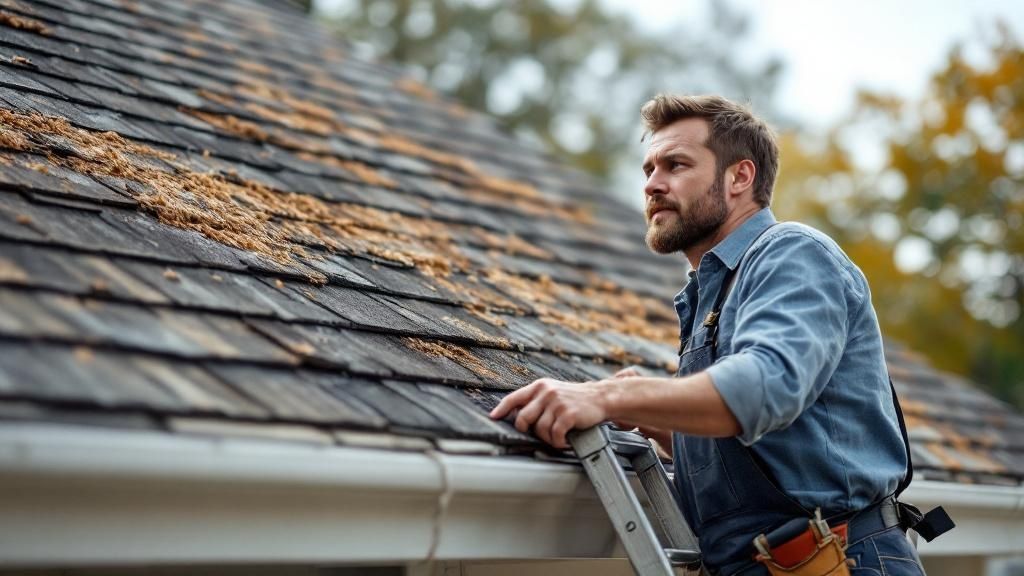
The success of your new roof really boils down to the quality of the people you consider for the job. If you rush the search, you'll likely end up with the first person who answers the phone, not the best one. Taking a more deliberate, methodical approach from the start means you're vetting a group of already strong contenders.
Starting your search close to home gives you an immediate leg up. Local roofers have a reputation to protect, and they know the specific building codes and weather patterns your home has to deal with.
Where to Find Reputable Contractors
Often, the best leads are just a conversation away. Before you get lost in online ads, try these hyper-local sources first:
- Ask Your Neighbors: This is my go-to recommendation. Chat with people on your street who've had their roofs replaced recently. Ask them how it went—were the contractors on time? Was the communication good? How does the roof look now? A firsthand referral is pure gold.
- Talk to Local Building Suppliers: The folks at the local lumberyard or roofing supply store see contractors all day long. They know who pays their bills, who buys quality materials, and who runs a professional crew. Their insight can be incredibly valuable.
- Check Online Community Groups: Your neighborhood's Facebook or Nextdoor group can be a treasure trove of unfiltered reviews. You'll quickly see the same company names popping up in positive recommendations.
As you build your list, it can be helpful to see how other trades are evaluated. For instance, guides for finding top-rated skylight installers often highlight the same key principles: a focus on experience, solid reputation, and happy customers.
The goal isn't to get a quote from every roofer in town. It's to identify a handful of pros who consistently deliver quality work right where you live. This focused list of three to five contractors is the foundation for everything that comes next.
Dotting Your I's and Crossing Your T's: Licenses and Insurance
You’ve got a solid list of potential roofers. Now comes the single most important step for protecting yourself and your home: verification. Before you get a single estimate, you need to confirm that every contractor is properly licensed and fully insured. This isn't just red tape; it's your financial safety net.
Think about it. What happens if a roofer accidentally drops a bundle of shingles on your brand-new air conditioning unit? Or worse, what if one of their crew members falls and gets seriously injured? If the contractor doesn't have the right insurance, you could be the one paying for the damage or the medical bills.
This is why checking credentials is a deal-breaker. A true professional will have their documentation ready and won't hesitate to share it.
The Two Policies That Matter Most
When you ask for proof of insurance, you need to see a document called a Certificate of Insurance (COI). Don't just glance at it—look for two specific types of coverage:
- General Liability Insurance: This is what protects your property. It covers everything from a broken window to a damaged garden bed or a ladder scratch on your siding. Without it, you’re on the hook for their mistakes.
- Workers' Compensation Insurance: This protects the people working on your roof. If a roofer gets hurt, this policy covers their medical care and lost wages. It’s absolutely critical for shielding you from a potential lawsuit.
Expert Tip: Don't just accept a piece of paper handed to you by the contractor. The best way to verify coverage is to have their insurance agent email the Certificate of Insurance directly to you. This proves the policy is currently active and hasn't been doctored.
Checking Licenses and a Commitment to Safety
Beyond insurance, your roofer must have the proper licenses for your state and city. You can usually look this up online on your state's contractor licensing board website. An active license is the bare minimum, proving they've met local requirements to operate legally. Seeing what a fully-credentialed company looks like can be helpful; you can check out our qualifications to see a real-world example.
This paperwork is also a good indicator of a company’s culture around safety, which is a huge deal in roofing. It's consistently ranked as one of the most dangerous jobs in the country. With 85% of contractors reporting a shortage of skilled labor, according to roofing industry statistics from RoofLink, you want to be sure you’re hiring a crew that is well-trained and puts safety first.
If any contractor gives you the run-around or makes excuses when you ask for these documents, that's a massive red flag. Thank them for their time and cross them off your list. No exceptions.
Digging into a Roofer's Experience and Reputation
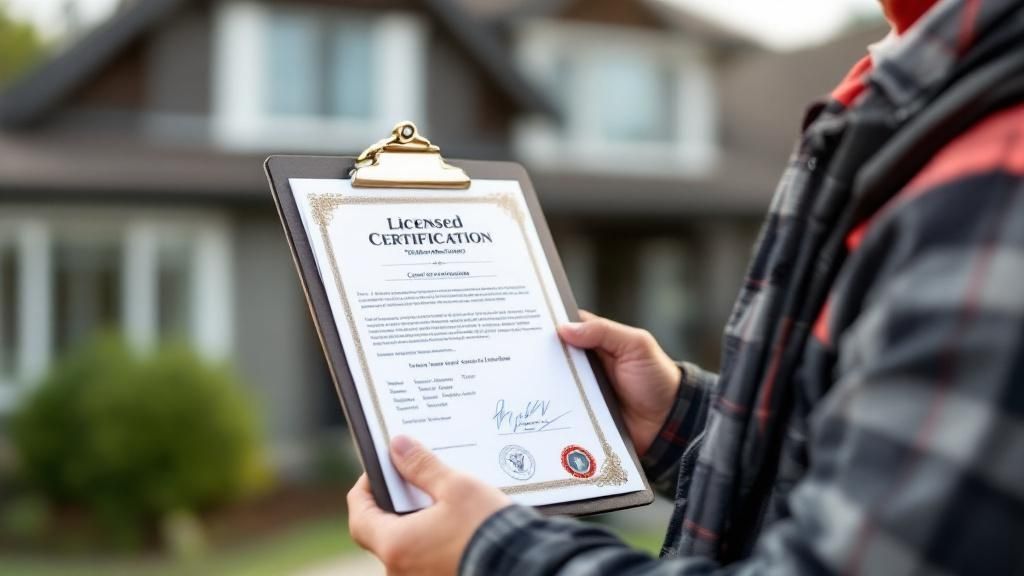
So, you've checked off the basics—they're licensed and insured. Now comes the real detective work: figuring out if they actually know what they’re doing. A roofer's track record is one of the best predictors of how your own project will turn out.
Longevity in the business is a pretty good sign. A company that has been around for a while has likely weathered a few storms (both literally and figuratively) and has a system that works. But years in business isn't the whole story.
You need to know if they have the right kind of experience for your roof. If you're set on a standing seam metal roof, you don't want a team whose entire portfolio is asphalt shingles. There are all kinds of specialized roofing services out there, so get specific and ask to see examples of their work with the exact materials and style you have in mind.
Look Beyond the 5-Star Average
Online reviews are a great place to start, but you have to learn how to read them. A 4.8-star average is nice, but the real gold is in the comments. Are you seeing a pattern of people praising the crew’s professionalism and how spotless they left the yard? Or are there recurring grumbles about missed deadlines and shoddy communication?
With high demand in recent years, some roofing companies have seen explosive growth—some firms have reported over 4,600% revenue growth. That's great for them, but sometimes rapid expansion can come at the cost of quality. It just makes doing your homework that much more important.
A glossy portfolio shows you what they can do. Talking to past clients tells you what they actually do. Always ask for a list of recent, local projects and get the contact info for at least three references.
When you call those references, don't just ask if they were "happy" with the work. Have a few targeted questions ready to go.
- How was their communication from start to finish? Did you always know what was going on?
- Any surprises when the final bill came? Did it match the initial estimate?
- What was the cleanup like? Did you find nails in your driveway for weeks?
- And the most important question: Would you hire them again in a heartbeat?
An enthusiastic "yes!" to that last one is about the best green light you can get.
Comparing Roofing Estimates and Contracts Like a Pro
You've done the legwork and have a few estimates in hand. Great. Now comes the most critical part of the process, and it’s where a lot of homeowners get tripped up. It's so easy to just glance at the final price and pick the lowest number. Don't do it. The cheapest bid is almost never the best value for your home.
To really understand what you’re getting, you have to break down each proposal, line by line. Think of a good estimate not as a price tag, but as a detailed blueprint for your new roof. It should spell out everything—materials, labor, permits, and even how they’ll handle the cleanup and waste disposal.
Decoding the Details in Your Estimate
A vague, one-line item like "install new roof" is a huge red flag. That kind of ambiguity is where hidden costs and low-quality materials love to hide.
What you're looking for is a complete breakdown of every single component. A professional quote will name names—the exact brand and type of shingles, the specific underlayment being used, the kind of flashing, and the ventilation products. This is the only way you can do a true apples-to-apples comparison. It also helps to get a feel for the available roofing product options so you know what you're looking at.
If a bid comes in way lower than the others, your alarm bells should be ringing. I've seen it a hundred times. Some contractors cut corners to lower their price, maybe by using fewer nails than the manufacturer requires, skimping on crucial ice and water shields, or hiring cheap, inexperienced day labor. These shortcuts seem like savings now, but they can void your material warranty and lead to a failing roof just a few years down the road.
This simple guide can help you spot the good from the bad when you're comparing quotes.
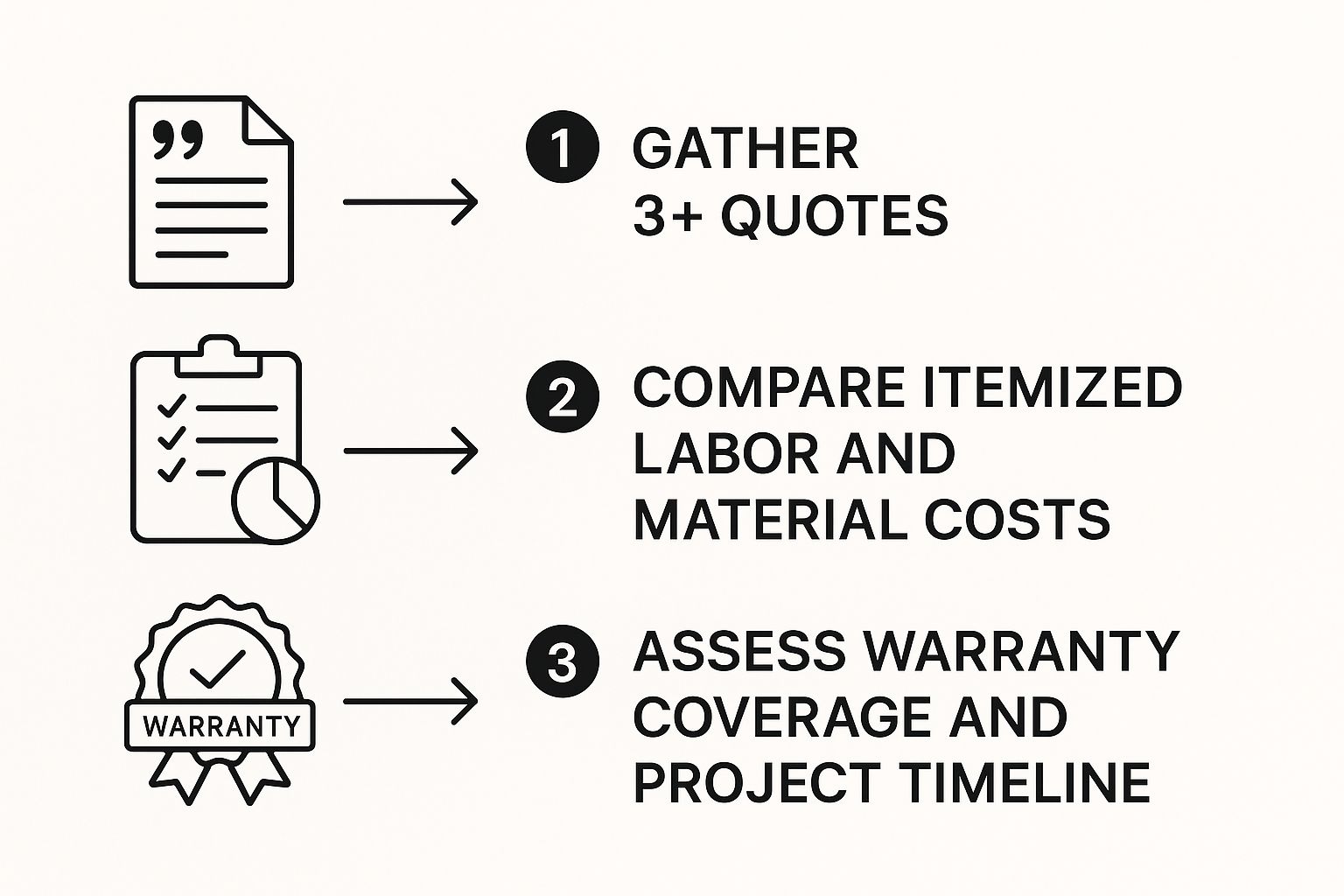
Following a process like this ensures you’re not just comparing price tags, but the actual long-term value and peace of mind each contractor is offering.
To make this even easier, use a simple checklist to keep track of the key details from each estimate you receive. It helps you see everything side-by-side and quickly spot any major differences or missing information.
Roofing Estimate Comparison Checklist
| Checklist Item | Contractor A | Contractor B | Contractor C |
|---|---|---|---|
| Total Project Cost | |||
| Material Brand & Type Specified | |||
| Underlayment Type Specified | |||
| Ice & Water Shield Included | |||
| Drip Edge & Flashing Detailed | |||
| Ventilation Plan Included | |||
| Cleanup & Debris Removal Cost | |||
| Permit Costs Itemized | |||
| Workmanship Warranty (Years) | |||
| Material Warranty Detailed | |||
| Project Timeline (Start/End) | |||
| Payment Schedule Detailed |
This kind of organized comparison is the best way to ensure you're making a fully informed decision, not just an emotional one based on price.
What Your Roofing Contract Must Include
The estimate outlines the plan, but the contract is the legally binding document that protects you. Never, ever sign a contract that feels incomplete or leaves you with questions. It needs to be rock-solid.
A proper roofing contract should always include these non-negotiables:
- A Detailed Project Timeline: This isn't just a suggestion. It needs a firm start date and a realistic, estimated completion date.
- A Clear Payment Schedule: You should never pay the full amount upfront. A common, fair structure is one-third to start the job, another third at the halfway point, and the final payment only after you've done a final walkthrough and are completely satisfied.
- Comprehensive Warranty Information: This is two-fold. It must include both the manufacturer’s warranty for the materials and the contractor’s workmanship warranty, which covers the installation itself.
Choosing a roofer is a big decision. You're joining the nearly 31% of homeowners who have undertaken a roof project recently. With the U.S. roofing industry on track to hit $76.4 billion, you want to be sure you're working with a true professional who will protect your investment.
Making Your Final Decision with Confidence

You’ve done the hard work of vetting and comparing, and now one contractor is likely pulling ahead of the pack. Before you sign anything, though, there’s one last meeting that can make or break your entire project experience.
This is your chance to sit down with your top choice and walk through the contract together, line by line. Don't let yourself be rushed. This final review ensures every verbal promise and every discussed detail is officially in writing, preventing any misunderstandings down the road.
Finalizing the Project Details
Think of this meeting as the pre-game huddle. It’s the perfect time to nail down the day-to-day logistics and get answers to any lingering questions. Getting this stuff sorted out now saves a lot of headaches later.
Make sure you cover a few key points:
- Daily Cleanup: How will they keep your property tidy at the end of each day? Let's be specific—where is the dumpster going, and what’s the plan to protect your prized rose bushes?
- Communication: Who is your go-to person on the crew? Will you get updates via text, email, or a phone call? Knowing the plan for progress reports or delays is crucial.
- Contingency Plans: What happens if they tear off the old shingles and find rotted decking underneath? A real pro will have a standard procedure for this, involving photos, clear communication, and a formal change order before doing any extra work.
This final conversation is as much about the contract as it is about confirming your gut feeling. A contractor who is patient and thorough now is likely to be the same way once the hammers start swinging.
This is also when you'll lock in the payment schedule. A massive red flag is a contractor demanding the full payment upfront. A fair contract will have a clear, milestone-based payment plan that protects everyone. The final check shouldn't be written until you’ve done a final walkthrough and are 100% happy with the work.
Following these final steps helps you lock in a contractor who is committed to transparency and a job well done. Reading through some recent customer reviews and testimonials can offer that final piece of mind. With every detail confirmed, you can sign that contract feeling completely confident in your choice.
Answering Those Lingering Questions Before You Hire
You’ve done the research, checked the references, and narrowed down your list. But even with the best preparation, a few final questions always seem to surface just before you sign on the dotted line. Let's tackle some of the most common ones I hear from homeowners.
How Much Should I Expect to Pay Upfront?
A down payment is standard practice, but the amount is what really matters. For most roofing jobs, you should expect to pay between 10% and 30% of the total project cost upfront. This initial payment gives the contractor the funds needed to order materials and schedule their crew.
If a roofer asks for more than a third of the total price, or—and this is a huge red flag—demands the full payment before a single shingle is laid, you should be very wary. That's not how professionals operate. It puts you in a risky position with little to no leverage if things go wrong.
A fair payment schedule should feel comfortable for both parties. It gives the contractor the capital to get started while ensuring you hold the final payment until the job is done right and you're completely satisfied.
Does Hiring a Local Company Really Matter?
Absolutely. Choosing a local roofer is one of the smartest decisions you can make. They're not just a name from a Google search; they’re part of your community. A local contractor understands the unique demands of our area's weather and knows the ins and outs of local building codes and permitting, which can save you major headaches.
Plus, a local company has a reputation to protect right here where you live. They're more invested in doing quality work and will be around to honor their workmanship warranty if an issue pops up a few years down the road. You can't get that same accountability from an out-of-town storm chaser.
What Happens if They Find Hidden Damage?
This is a great question because it happens more often than you'd think. It's impossible to see the condition of the roof decking until the old shingles are torn off. A reputable contractor will have a clear, pre-defined process for this exact scenario spelled out in their contract.
Here’s what that process should look like:
- The crew immediately stops work on that section of the roof.
- They thoroughly document the damage with photos or video so you can see the problem for yourself.
- They'll write up a formal "change order" that details the extra work and materials required, along with the exact cost.
- No extra work begins—and no extra costs are added to your bill—until you’ve reviewed the change order and given your written approval.
This kind of transparency is the hallmark of a contractor you can trust to have your back.
If you're looking for a roofer who can answer all your questions with honesty and expertise, trust a reputable local team. With years of experience, a professional company can provide reliable, high-quality roofing services you can count on. Get your free, no-obligation estimate today.