
Finding the right commercial roofing contractor isn't about casting the widest net; it's about making a smart, targeted cast. You're not just looking for any roofer—you need a specialist. Building a quality shortlist starts by knowing where to look and what to ask, filtering out the noise to find genuine contenders, not just the companies with the biggest advertising budgets.
Building Your Initial List of Local Commercial Roofers

Let's be honest, starting the search can feel like a chore. The goal isn't to find every roofer in a fifty-mile radius. It's to identify a handful of highly qualified pros who actually get the demands of commercial properties. This isn't like a residential shingle job. Commercial roofing is a different beast altogether, involving complex materials, stringent building codes, and a much larger investment. Nailing this first step is critical.
The American roofing industry is massive—a market pegged at around $56.7 billion in 2024, with nearly 99,000 different businesses. That includes everyone from two-guys-in-a-truck operations to huge national firms. With so many options, you need a solid strategy to find the right partner. You can explore more data on the roofing market to get a sense of the scale.
Where to Look for Qualified Contractors
Your gut instinct might be to just Google it, but digging a little deeper will pay off big time. Instead of generic searches, I always recommend focusing on platforms and professional networks where the real experts hang out. This lets you sidestep the flashy ads and get right to the proven professionals.
Here are the best places to start your hunt:
- Local Business Directories: Don't underestimate the power of the Better Business Bureau (BBB) or your local Chamber of Commerce. These sites often have ratings, complaint histories, and other credentials that give you a real picture of a company.
- Manufacturer Websites: This is a pro-level tip. Top-tier material manufacturers like GAF, Carlisle SynTec, or Firestone have "certified contractor" locators on their sites. To get certified, a roofer has to be trained and vetted by the manufacturer, which is a huge mark of quality.
- Building Material Suppliers: Call your local commercial roofing supply houses. These are the folks who see the contractors every single day. They know who pays their bills, who buys quality materials, and who is consistently busy—all signs of a well-run, reliable business.
Here's a key takeaway: Look past the paid ads. A contractor who is certified by a major manufacturer or has a great reputation with local suppliers is a much safer bet than one who just ranks high on Google.
Refining Your Search Terms
When you do use a search engine, you have to be specific. Vague terms will land you a mixed bag of residential and commercial guys, and many won't be qualified for your project.
Get granular with your search phrases to zero in on the right experts:
- "TPO roofing installers near [Your City]"
- "EPDM flat roof repair specialists"
- "Commercial metal roofing contractors in [Your County]"
- "Licensed and insured commercial roofers"
This targeted approach immediately filters out the generalists and puts you in touch with specialists who have the exact experience you need. By combining these focused search methods, you'll build a solid list of potential partners and set yourself up for a much smoother vetting process.
How to Properly Vet Potential Roofing Contractors

You’ve got a short list of potential commercial roofing contractors. Great. Now comes the most important part—the deep dive. This isn't just a formality; it's how you protect your property, your budget, and your peace of mind.
Think of this as the interview stage. Proper due diligence is what separates the true professionals from the rest, ensuring you only deal with legitimate, qualified, and fully protected companies.
Verify Licensing and Credentials
First things first: licenses. Don't just ask if they're licensed; ask for the specific license number for their trade. A general business license isn't enough.
Most states have an online portal where you can look up a contractor’s license number in a matter of seconds. You can see if it's active and check for any disciplinary actions. If a roofer gets cagey about sharing this info, that's a massive red flag. Cross them off the list and move on.
Confirm Comprehensive Insurance Coverage
Insurance is the big one. It's completely non-negotiable. If a contractor steps onto your property without the right coverage, you are exposing yourself to enormous financial risk. Any professional roofer will carry two key policies.
-
General Liability Insurance: This protects your property from damage caused during the project. For a commercial job, you should be looking for coverage of at least $1,000,000, sometimes more depending on the project's scale.
-
Worker's Compensation Insurance: This is what covers their crew if someone gets hurt on your property. Without it, you could be the one facing a lawsuit for medical bills if an accident happens.
A legitimate contractor will have no problem providing their insurance certificates. Your job isn't done yet, though. Call the insurance provider listed on the certificate to confirm the policies are active and the coverage is what they claim. This is one of the most important calls you will make.
Look for Manufacturer Certifications
Beyond the basics, manufacturer certifications are a true mark of a pro. These aren't just pieces of paper; they mean the contractor has been professionally trained by companies like GAF, Carlisle, or Firestone to install their roofing systems the right way.
This certification often unlocks access to the best warranties—the ones backed directly by the manufacturer. That's an extra layer of protection that can be invaluable down the road. For a more detailed look at this, our guide on how to choose a roofing contractor has some great pointers.
It's also worth asking if they use any construction scheduling software tools. A company that invests in modern project management is usually more organized and much better at keeping you in the loop.
By checking these three key areas—licensing, insurance, and certifications—you can confidently filter your list down to the best of the best.
Making Sense of Roofing Quotes and Project Scope
So, you’ve got a stack of quotes from a few commercial roofing contractors. Great. But now comes the real work: figuring out what those numbers actually mean.
It’s tempting to just jump on the lowest bid, but that can be a huge mistake. A cheap quote without a detailed scope of work is a recipe for disaster, often leading to surprise change orders and shoddy work that will cost you more down the road. This is the moment you need to look past the final price and really dig into what each contractor is proposing.
Deconstructing a Professional Roofing Proposal
A professional, transparent quote is more than just a number on a page; it’s a detailed blueprint for your project. A vague estimate is a serious red flag.
A good proposal breaks everything down so you can make a true apples-to-apples comparison. It shows the contractor has actually done their homework on your specific building.
Here’s what you need to look for in every single quote:
- Detailed Material Specifications: The proposal absolutely must list the exact type, brand, and thickness of all materials. This includes everything from the roofing membrane (like TPO or EPDM) to the insulation and even the fasteners. A lazy description like "standard materials" is completely unacceptable.
- Itemized Labor Costs: Labor is a huge chunk of the budget. A solid quote will clearly separate the costs for tearing off the old roof, installing the new system, and handling the final site cleanup.
- Project Timeline: You need a plan. The contractor should give you an estimated start date and a target completion date. They should also outline their typical working hours and explain how they'll minimize disruption to your business.
- Warranty Information: This is non-negotiable. The quote must clearly spell out the terms for both their own workmanship warranty and the manufacturer’s material warranty. Know what’s covered, and for how long.
This visual checklist breaks down what to look for when you're reviewing a proposal for your property.
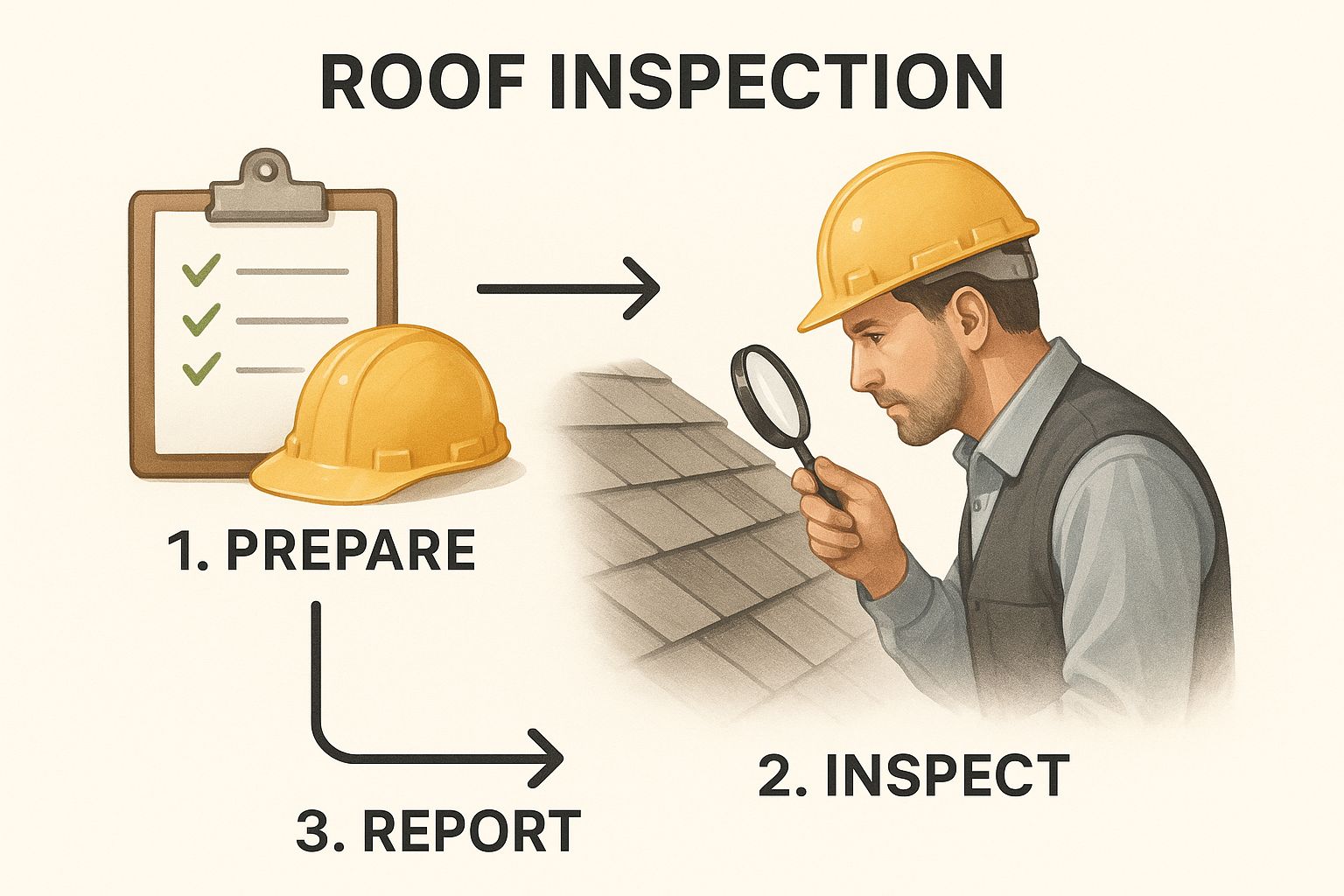
Ultimately, a comprehensive quote leaves no room for guessing. It ensures you and the contractor are on the same page about every single detail before any work begins.
Spotting Hidden Costs and Cut Corners
When you lay detailed quotes side-by-side, it’s often easy to see where some contractors might be cutting corners to give you a lower price. An unusually low bid is almost always a sign of trouble. It could mean they’re planning to use cheap, inferior materials, hiring uninsured labor, or simply don't understand the full scope of your project.
To keep everything straight, use a simple checklist to compare the key components of each bid.
Commercial Roofing Quote Comparison Checklist
| Checklist Item | Contractor A | Contractor B | Contractor C |
|---|---|---|---|
| Material Brand & Type Specified? | ☐ | ☐ | ☐ |
| Material Thickness Listed? | ☐ | ☐ | ☐ |
| Insulation R-Value Included? | ☐ | ☐ | ☐ |
| Labor Costs Itemized? | ☐ | ☐ | ☐ |
| Cleanup & Debris Removal Included? | ☐ | ☐ | ☐ |
| Permit Costs Addressed? | ☐ | ☐ | ☐ |
| Project Timeline Provided? | ☐ | ☐ | ☐ |
| Workmanship Warranty Details? | ☐ | ☐ | ☐ |
| Manufacturer Warranty Details? | ☐ | ☐ | ☐ |
| Proof of Insurance Included? | ☐ | ☐ | ☐ |
This simple tool helps you spot inconsistencies and ensures you're comparing offers fairly. A quick glance can reveal which contractor has provided the most thorough and professional proposal.
Be very wary of quotes that lump everything into one or two generic line items. Transparency is the hallmark of a trustworthy contractor. A detailed breakdown proves they have a solid plan and aren't trying to hide anything.
Since most commercial roofing projects are priced by the square foot, using a general square footage cost estimator can give you a helpful baseline. It will help you see if the quotes you’re getting are in a reasonable range for your area.
If one bid comes in way lower than the others, it’s time to ask some direct questions about their material choices and labor. Getting full clarity on the specifics of different roofing estimates is the only way to protect your investment and make a decision you won't regret.
Don't Just Take Their Word for It—Verify Their Track Record
A glossy proposal and a slick sales pitch are nice, but they don't mean much on their own. The real proof is in their past work. You need to see for yourself how they’ve performed on other jobs and hear directly from the people who have already hired them.
Think of it this way: a truly great contractor is proud of their work. They’ll be more than happy to show it off and connect you with satisfied clients. If you ask for a portfolio or references and get excuses or vague replies, that’s a massive red flag. It’s time to move on.
How to Do a Real Reference Check
Calling references shouldn't be a simple "check-the-box" activity. This is your chance to get the unfiltered story. You're not just asking if they were happy with the new roof; you're digging into the entire experience of working with this company, warts and all.
Go into these calls with a plan. A few well-crafted questions will tell you far more than a generic "how did it go?"
Here are the questions I always recommend my clients ask:
- Communication: "How was the communication from start to finish? Did you always know who to call with a question, and did they actually get back to you in a timely manner?"
- Problem-Solving: "No project is perfect. What unexpected issues popped up, and more importantly, how did their team handle them?"
- Budget & Timeline: "Did they stick to the schedule and the budget they promised? If things changed, did they explain why and get your approval beforehand?"
- On-Site Professionalism: "What was their crew like? Did they keep the site clean and safe? Were they respectful of your tenants and daily operations?"
- The Aftermath: "Have you had any leaks or problems since the job was finished? If you had to make a warranty claim, how responsive were they?"
The goal here is to understand the entire process. A great final product is important, but a nightmare process to get there is something you want to avoid at all costs.
Scrutinize Their Project Portfolio
A contractor’s portfolio is their professional resume, and you need to review it like a hiring manager. Don't just flip through the highlight reel of finished photos. Look for proof that they have the specific experience your building requires.
Drill down into the details. If you have a large, flat-roofed warehouse and need a TPO system, you want to see that they’ve successfully completed dozens of similar projects. A roofer whose portfolio is full of small, sloped-roof retail buildings might do great work, but they aren't the right specialist for your job.
Look for a consistent history of projects that match your:
- Roofing System: Do they have deep experience with the specific material you need (TPO, EPDM, metal, etc.)?
- Building Size & Complexity: Have they worked on buildings of a similar scale to yours?
- Industry: Experience with facilities like yours—be it a warehouse, medical office, or retail center—is a huge plus.
Seeing is believing. When you can look at a portfolio and see a dozen projects just like yours, all successfully completed, it gives you the confidence that you're hiring a true partner, not just another contractor.
Picking the Right Commercial Roofing System
Finding the right contractor is crucial, but they’re only half of the equation. The other half? The actual roofing system they install on your building.
Choosing the best material for your property is a major decision. It will directly affect everything from your initial investment to your building's long-term energy costs. When you understand your options, you can have a much more meaningful conversation with potential roofers and make sure their recommendations truly fit your needs.
The commercial roofing industry is booming for a reason. It's projected to hit a value of around USD 37.3 billion by 2033, a huge leap driven by demand for better, more durable, and energy-saving roofs. This isn't just an abstract number; it shows a real shift toward smarter roofing investments. You can see a full breakdown of the commercial roofing market growth on Business Research Insights.
Common Commercial Roofing Materials
You'll find a lot of options out there, but most modern commercial buildings with flat or low-slope roofs rely on a handful of proven systems. Each one comes with its own set of pros and cons, and the best choice really depends on your building, budget, and local climate.
-
TPO (Thermoplastic Olefin): This is a very popular single-ply membrane, mostly because it's so energy-efficient. The typically white surface is great at reflecting sunlight, which can make a noticeable dent in your summer cooling bills. It's also tough against punctures and chemical exposure.
-
EPDM (Ethylene Propylene Diene Monomer): You've probably heard this called a "rubber roof." EPDM is an incredibly durable synthetic rubber that holds up well against the elements. It has a fantastic lifespan, often lasting well over 30 years. Since it's usually black, it can help absorb heat and melt snow in colder regions.
-
PVC (Polyvinyl Chloride): Another strong single-ply option, PVC is known for its exceptional resistance to fire, grease, and chemicals. This makes it a go-to choice for buildings like restaurants or manufacturing plants that have rooftop vents expelling harsh substances.
A key question to ask any contractor is why they are recommending a specific system for your building. A good roofer won't just push their favorite material; they'll explain how their choice addresses your property's unique design, its use, and the local weather patterns.
The Shift Toward Energy-Efficient Roofing
These days, you can't talk about roofing without talking about energy efficiency. "Cool roofs"—which are usually the white or light-colored TPO or PVC systems—can dramatically lower the temperature of your roof's surface.
That simple change has a big impact. A cooler roof means your air conditioning system doesn't have to work nearly as hard, leading to significant savings on your energy bills over the life of the roof.
Making the right call means finding the sweet spot between the upfront installation cost and the long-term savings and performance. A roof that's slightly more expensive initially but highly reflective could easily pay for itself in just a few years. To get into the nitty-gritty, check out our guide on the different types of commercial roofing systems to see what makes the most sense for your investment.
Final Questions to Ask Before You Hire a Roofer
You’ve done the legwork. You’ve sifted through local contractors, checked their credentials, and compared a handful of detailed bids. Now you're right on the edge of making a decision.
Before you sign that contract, there are a few final, crucial questions to ask. This isn't about second-guessing your choice; it's about making sure everyone is crystal clear on the details. Think of this as the last-minute huddle before the project kicks off—it ensures no surprises and a smooth process from day one.
Nailing Down the Money and Project Logistics
Every roofing company runs its jobs a little differently. You need to understand their specific process for payments and day-to-day operations to avoid any friction later on. A seasoned professional will have no problem giving you straight answers here.
I always tell property owners to ask these questions point-blank:
- What does your payment schedule look like? This is non-negotiable. A trustworthy contractor will never ask for 100% of the money upfront. Typically, you'll see a deposit for materials, followed by payments at key project milestones, with the final balance due only after the job is complete and you've signed off on it.
- Who will be my go-to person on site? Communication can make or break a project. Will you be talking to the owner, a dedicated project manager, or the crew foreman? Knowing exactly who to call when you have a question is essential.
- How do you handle unexpected delays? Let's be realistic—things happen. Bad weather rolls in, or a specific material is back-ordered. What’s important is how they manage it. Ask them how they communicate these bumps in the road and what their contingency plan is for getting the project back on schedule.
My advice? Don't just talk about this stuff—get it in writing. A contract that clearly outlines these logistical and financial details is your best protection. It ensures everyone is on the same page before a single shingle is laid.
What Happens After the Job is Done?
The job isn’t truly over when the last truck pulls away. Your relationship with a great roofer should extend well beyond the installation, covering warranties and future maintenance. This long-term support is a huge part of the value you're paying for.
A contractor's willingness to stand behind their work for years to come is a massive indicator of quality. With the North American roofing market projected to grow at a 6.6% CAGR, driven largely by commercial projects just like yours, the competition is fierce. The best roofers set themselves apart with exceptional long-term service. You can read more about these roofing market trends to see just how critical post-project support has become.
So, make sure you get answers to these final two questions:
- Can you walk me through your warranty claim process? If an issue pops up down the road, what happens? Who do you call? What's their typical response time, and what kind of documentation will you need? A confusing or vague answer is a red flag.
- Do you offer an ongoing maintenance plan? A new roof is a major investment, and regular inspections are the single best way to protect it and maximize its lifespan. A roofer who offers a proactive maintenance program isn't just looking for a one-time job; they're a true partner invested in the long-term health of your building.
Getting clear, confident answers here provides the peace of mind that you’re not just hiring a crew for a few weeks, but building a relationship with a team you can count on for the life of your roof.
Your commercial property deserves the best protection. At Penn Ohio Roofing & Siding Group, we combine over 25 years of experience with an unwavering commitment to quality and customer satisfaction. If you’re looking for a reliable, professional, and experienced team for your next roofing project, we’re here to help. Contact us today for a free, no-obligation estimate and experience the difference a dedicated partner can make. https://pennohiorc.com