
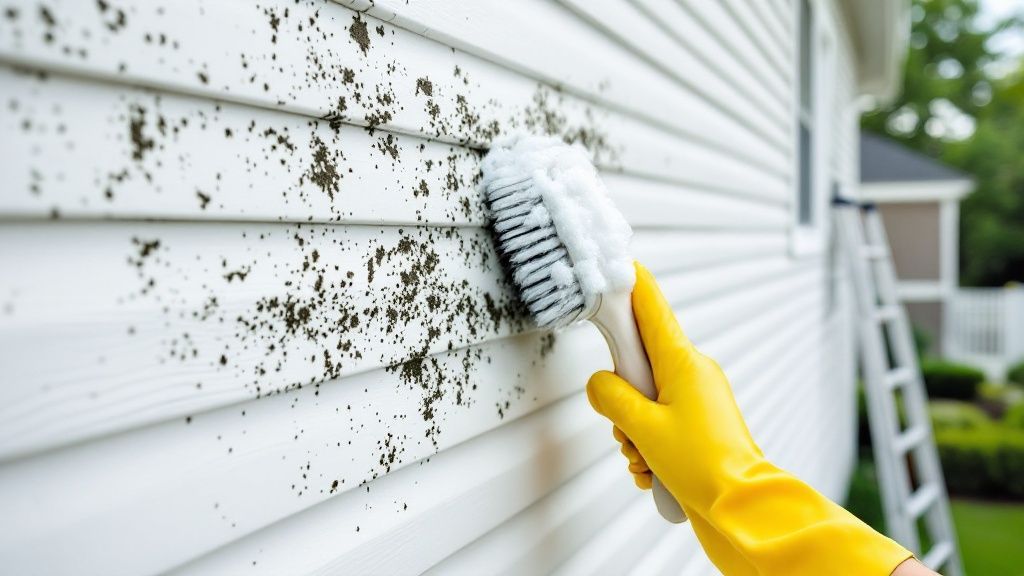
Cleaning mold off vinyl siding is usually a straightforward job.All you need is a soft-bristled brush and a good cleaning solution. You can mix your own using water and vinegar, oxygen bleach, or grab a commercial cleaner designed for the task.
If you're tackling a large area, a pressure washer on a low setting can be a real time-saver. Just remember to always spray at a downward angle—this keeps water from getting forced up behind the panels, which can cause serious problems down the road.
Why Does Mold Keep Coming Back on My Vinyl Siding?
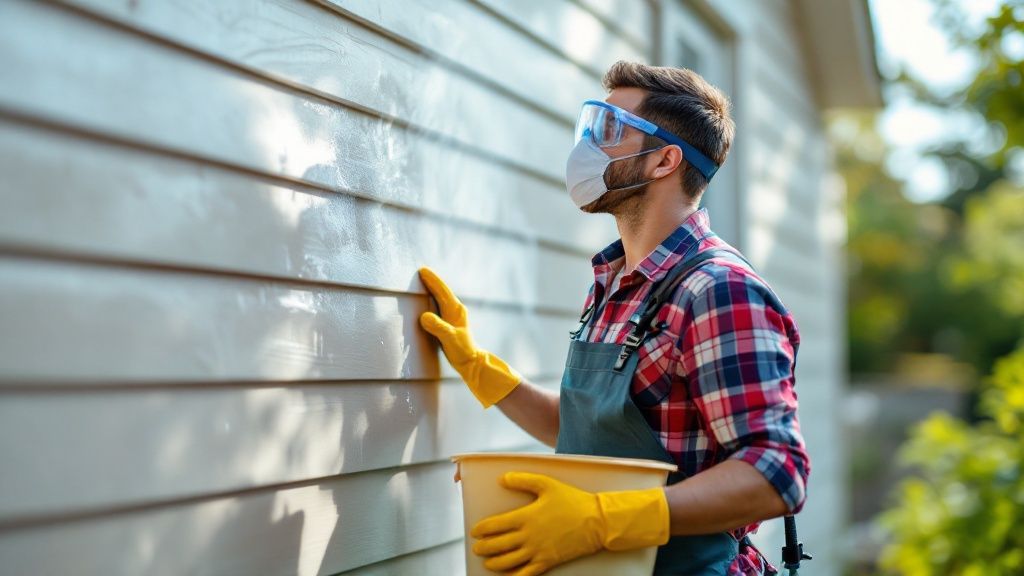
Ever feel like you just finished cleaning your siding, only to see those ugly green or black streaks creeping back a few months later? It’s a frustratingly common experience. This happens because mold isn't just surface-level grime; it's a living organism that’s found the perfect environment to thrive on the side of your house.
The number one culprit, without a doubt, is moisture. Mold can't grow without it. This is exactly why you'll often find the worst of it on the north side of a house—it gets the least sun and takes forever to dry out after it rains.
Common Reasons You Have Siding Mold
Several everyday factors can create a moisture-rich environment perfect for mold. Pinpointing these is the key to finding a real, long-term solution instead of just treating the symptoms.
- Lingering Shade: Big, beautiful trees or even a neighbor's house can cast long shadows, preventing the sun from naturally drying your siding.
- High Humidity: If you live in a damp or humid climate, the air itself can carry enough moisture for mold spores to settle in and multiply.
- Lack of Airflow: Bushes, shrubs, and vines planted right up against the house are a major problem. They trap moisture against the siding and completely block air from circulating.
Getting to the root of the problem is everything. If you don't fix the underlying moisture and shade issues, you're signing up to scrub your siding every single year. The real goal is to make your home's exterior an unfriendly place for mold to live.
Mold growth on vinyl siding is a familiar headache for homeowners, especially in damp and shady areas. Home maintenance experts confirm that mildew and mold love to grow on vinyl siding in cloudy, humid climates—conditions found all over North America and Europe. To get a better handle on how your climate affects siding, check out the insights on BobVila.com.
Of course, knowing your siding's own resilience is just as important. It might be worth exploring different types of modern siding options to see what holds up best against the elements in your specific area.
Choosing the Right Cleaning Solution for the Job
Figuring out the best way to get mold off your vinyl siding isn't a one-size-fits-all deal. What works for a few light spots of mildew won't cut it for a stubborn patch that’s been growing all winter. The right cleaner really boils down to how bad the growth is and what you're comfortable spraying around your home and family.
Your options range from simple DIY mixes you can whip up in a bucket to more powerful commercial products designed for tough jobs. For most homeowners, it's best to start simple and scale up only if you need to.
Handling Mildew and Light Stains
If you've just noticed a few faint green or black specks, a gentle, homemade solution is usually all you need. A lot of people, myself included, prefer to start with something eco-friendly that won't harm kids, pets, or the flower beds right next to the house.
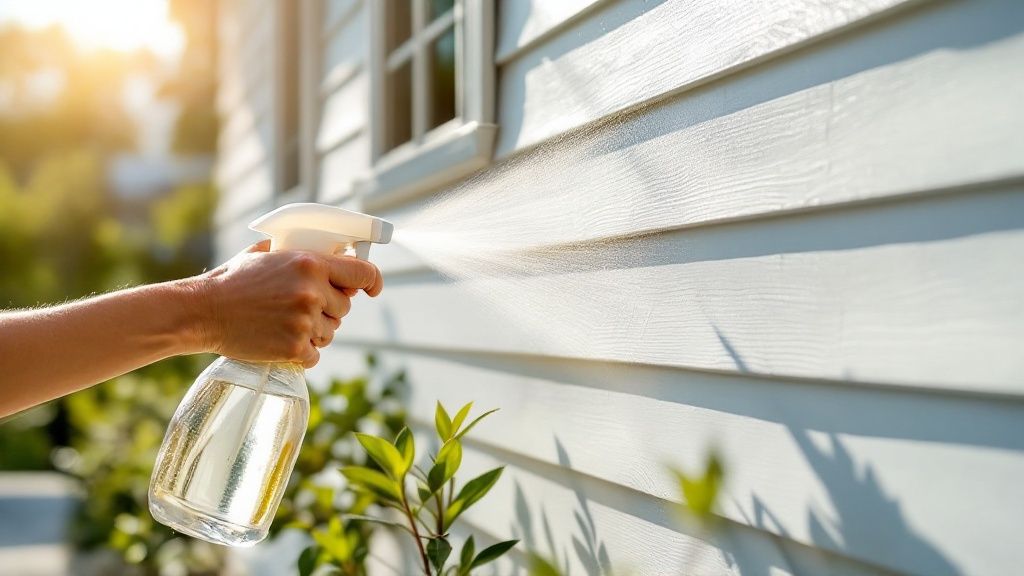
One of the most effective and safest options is a simple vinegar and water mix. Just combine one part white vinegar with three parts water in a spray bottle or garden sprayer. The acetic acid in vinegar is fantastic at breaking down early-stage mold without resorting to harsh chemicals. It’s a classic for a reason—it’s cheap, safe, and it works. Proper cleaning is a key part of maintaining siding longevity.
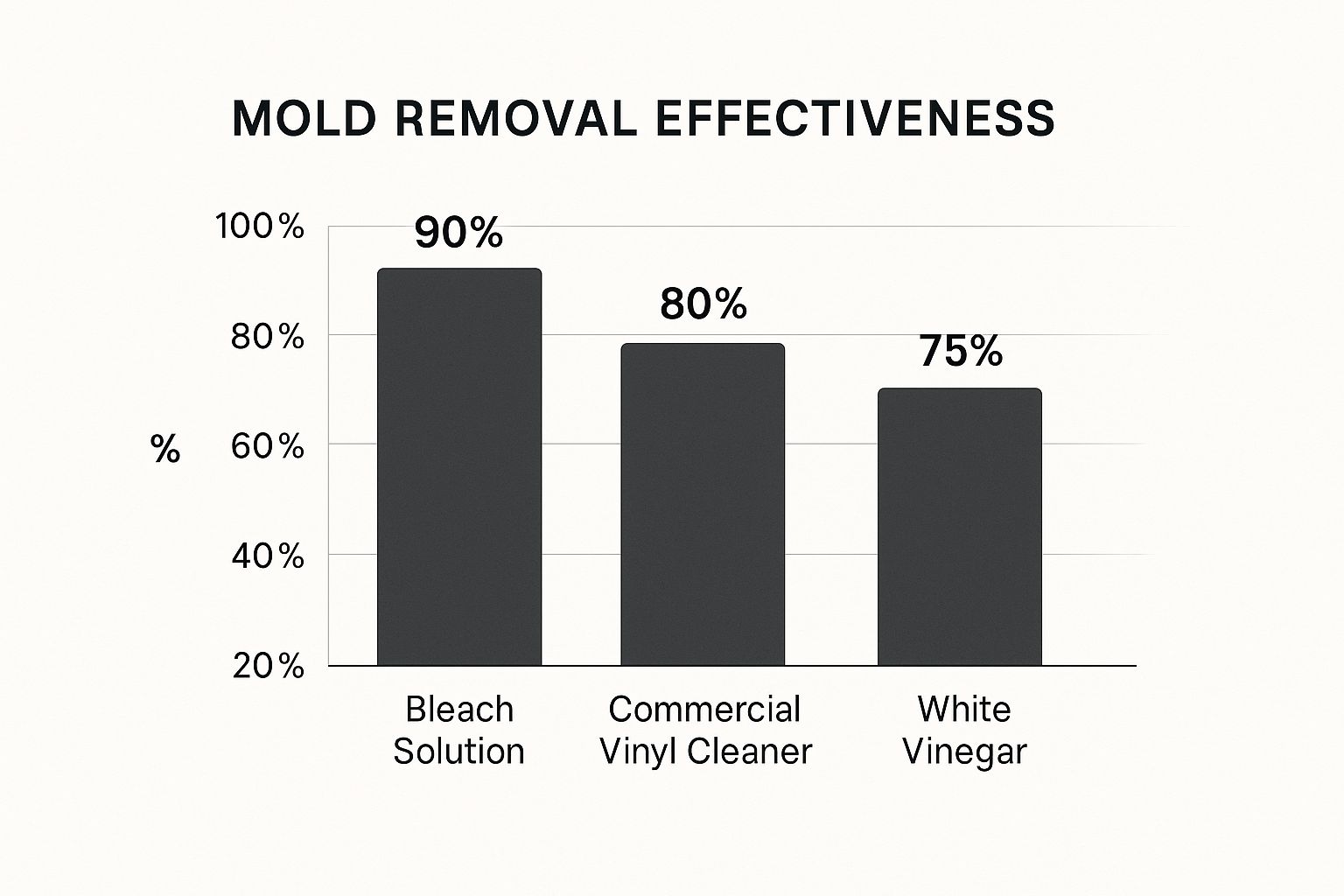
As you can see, you don't always need the strongest possible chemical. While bleach certainly works, both commercial cleaners and a simple vinegar solution are highly effective for the kind of mold most of us find on our siding.
Tackling Tough Mold and Heavy Growth
Now, if your siding looks more like a science experiment gone wrong, you’ll need to bring in some bigger guns. This is where you might consider oxygen bleach or, as a last resort, traditional chlorine bleach.
-
Oxygen Bleach: This is my go-to recommendation when vinegar isn't enough. It's a non-chlorine bleach that works by releasing oxygen ions to break down the mold. The best part? It's color-safe, so it won't fade your siding, and it’s much gentler on surrounding plants than its chlorine-based cousin.
-
Chlorine Bleach: This is the nuclear option. While it's incredibly effective at killing mold on contact, chlorine bleach is also extremely harsh. It can—and will—kill your lawn, shrubs, and flowers. It can also potentially discolor your vinyl siding, leaving it with a blotchy, faded look. Use it with extreme caution and only when necessary.
Before you go spraying your entire house, it's smart to compare your options to make sure you're using the right tool for the job.
Comparing Vinyl Siding Mold Cleaners
| Cleaning Agent | Best For | Pros | Cons |
|---|---|---|---|
| Vinegar & Water | Light mildew, small spots, preventative cleaning | Eco-friendly, safe for plants/pets, very inexpensive | May not be strong enough for set-in stains or heavy growth |
| Oxygen Bleach | Moderate mold, larger areas, colored siding | Plant-safe, won't discolor siding, effective on stains | More expensive than vinegar or chlorine bleach |
| Chlorine Bleach | Severe, widespread mold and stubborn stains | Extremely powerful, kills mold and mildew on contact | Can damage plants, discolor siding, harsh fumes |
| Commercial Cleaners | All levels of mold, convenience | Formulated specifically for siding, often includes surfactants | Can be costly, may contain harsh chemicals (check labels) |
Ultimately, the best choice depends on balancing cleaning power with safety for your home's exterior and landscaping.
Always—and I mean always—test your cleaning solution on a small, hidden spot first. Pick an area behind a bush or under a deck. This simple step can save you from accidentally discoloring your entire house. It’s a five-minute check that prevents a major headache.
Getting Hands-On: The Manual Scrubbing Method
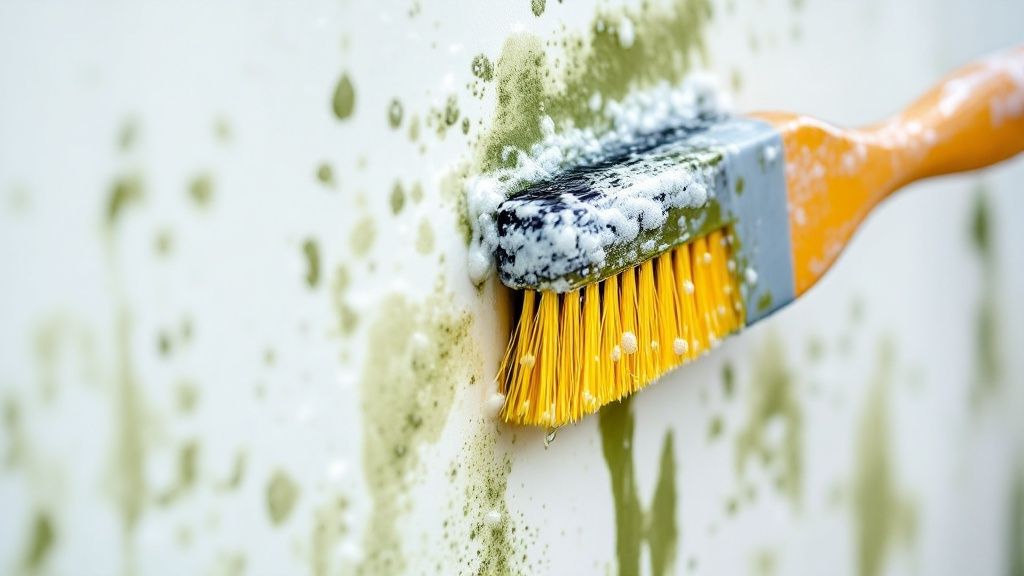
Sometimes, you just can't beat good old-fashioned elbow grease. A hands-on scrub gives you total control, which is perfect if you don't have a pressure washer or have delicate plants you want to protect. It’s also the most thorough way to ensure you've gotten into every nook and cranny where mold might be hiding.
Before you even think about mixing your cleaning solution, do a quick sweep of the area. Get any patio furniture, planters, or your grill moved a safe distance away. If you have garden beds right up against the house, cover them with some plastic sheeting. This will shield your prized petunias from any cleaner runoff.
How to Scrub for a Streak-Free Finish
Here’s a pro tip that sounds backward but works every time: always start at the bottom and work your way up.
Clean the siding in small, manageable sections—think five-foot chunks at a time. This simple trick prevents the cleaning solution from dripping down onto the dirty siding below, which is what causes those ugly, hard-to-remove streaks.
Grab a long-handled, soft-bristled brush and gently work the cleaner into the siding using circular motions.
A soft brush is non-negotiable here. Anything stiffer can easily scratch the vinyl. Those tiny scratches not only look bad but also create the perfect hideout for future dirt and mold spores. Remember, you're cleaning it, not sanding it.
Once you’ve finished scrubbing a section, give it a good rinse with your garden hose before the soap has a chance to dry. As you move up the wall, make sure to overlap your sections just a bit to avoid missing any spots. After the whole wall is scrubbed and rinsed, do one final rinse from top to bottom to wash away any lingering residue.
It definitely takes more effort, but this method guarantees a deep, detailed clean. Interestingly, many of these same principles apply to other materials; we cover similar techniques in our guide on how to clean aluminum siding.
How to Use a Pressure Washer Without Damaging Your Siding
A pressure washer can be a total game-changer for cleaning siding, saving you hours of scrubbing. But with all that power comes real risk. If you're not careful, you can easily force water up behind the vinyl panels, creating a perfect breeding ground for more mold, or even crack the siding itself.
The secret to avoiding disaster is all in the setup. Before you even think about starting the engine, check your nozzle. For vinyl siding, you'll want to use a 25-degree (green) or 40-degree (white) tip. These create a wider fan of spray, which cleans a good-sized area without blasting it with a damaging, concentrated jet of water.
Mastering the Right Spraying Technique
Once you’ve got the right nozzle, your technique is what makes the difference between a pristine home and a repair bill. The number one rule is to always spray at a downward angle. Never aim the wand straight on or, even worse, upward. That’s how you drive water behind the seams of your siding, where it gets trapped and causes all sorts of problems.
Next up is distance. You need to keep the nozzle tip at least 12 to 18 inches away from the siding at all times. Get any closer, and you risk etching or even cracking the vinyl.
Keep the wand moving in a steady, fluid motion. Use long, overlapping sweeps, just like you would if you were spray painting a car. This ensures an even clean without letting the pressure linger on one spot for too long.
I always tell people to think of it like spray painting, not sandblasting. The goal is a gentle, consistent wash, not an aggressive blast. Damage happens when you get impatient and move in too close.
Pressure washing is a fantastic tool, but it demands respect. To recap the best practices:
- Use the lowest pressure setting that gets the job done.
- Always maintain a safe distance from the siding.
- Keep the spray angled downward.
- Stay in constant, smooth motion.
For a deeper dive into professional tips, you can explore more about safe pressure washing on This Old House.
To really get a handle on the equipment and proper methods, it’s worth checking out a comprehensive guide on power washing. By understanding the machine and following these simple rules, you can get a pro-level clean without the pro-level cost of repairs.
Keeping Your Siding Mold-Free for Good
It feels great to stand back and see your vinyl siding looking spotless again. But the real win? Making sure that pesky mold doesn't come creeping back. Once you shift your mindset from just cleaning to actively preventing, you'll save yourself a world of hassle down the road.
The secret is to rob mold of what it loves most: moisture and shade. And the best place to start is right in your own yard. Overgrown bushes and trees planted flush against the house are notorious for trapping damp air, creating the perfect five-star resort for mold growth.
Create a Siding-Friendly Environment
One of the single most effective things you can do is simply trim back the greenery. It's a weekend job that pays off all year long.
- Give It Room to Breathe: You want to see at least 18 to 24 inches of clear space between your siding and any shrubs. This buffer zone is crucial for allowing air to circulate, which dries your siding quickly after a rainstorm.
- Let There Be Light: Take a look at your trees. Are any branches hanging over the roof or casting your walls in perpetual shade? Pruning them back allows sunlight to hit the siding, which is a natural enemy of mold.
I always tell homeowners to think of their siding like it needs to breathe. When you crowd it with plants, you’re just trapping humidity against the house and inviting trouble. That little bit of space makes all the difference.
You'll also want to check on any water sources near the foundation. Make sure your sprinkler heads are aimed at the lawn, not the walls—a common mistake I see all the time.
Finally, don't forget to look up. Clogged gutters are a primary culprit. When they’re full of leaves and gunk, rainwater has nowhere to go but over the edge and straight down your siding. Keeping them clean is non-negotiable.
Making these simple tasks part of your yearly home maintenance routine completely changes the game. By understanding these strategies for preventing mold on exterior surfaces, you can spend more time enjoying your home and less time scrubbing it.
Got Questions About Siding Mold? We’ve Got Answers.
When you're staring down a patch of green or black funk on the side of your house, a few questions are bound to come up. It's totally normal. Let's walk through some of the most common things homeowners ask so you can tackle this project with confidence.
Is It Mold or Mildew? And Does It Matter?
First things first, people often throw the words "mold" and "mildew" around like they're the same thing. They're both fungi that love moisture, but there's a slight difference.
Think of mildew as mold's less-aggressive cousin. It’s usually a powdery, surface-level growth that's gray or white. Mold, on the other hand, is the real problem child. It can be fuzzy or slimy, often in shades of dark green or black, and it tries to root itself deeper into surfaces.
The good news? The cleaning solutions we've talked about will knock out both. So, while it's interesting to know the difference, you don't need a biology degree to get your siding clean.
How Often Should I Be Cleaning My Siding?
This is a big one. For most homes, giving your siding a good wash once a year is a great rule of thumb. It keeps the grime from getting out of hand and turning into a weekend-long project.
However, your home’s location is a huge factor. If you live in a damp, humid climate or have a lot of tree cover that casts shade on your house, you might need to be more vigilant. In those cases, I'd recommend a quick inspection in the spring and fall. A little preventative maintenance goes a long way.
Will Bleach Ruin My Siding?
Homeowners get nervous about this, and for good reason. The question isn't just if you can use bleach, but what kind of bleach.
Standard chlorine bleach? I'd steer clear. It's an aggressive chemical that can absolutely strip the color from your vinyl siding, leaving you with permanent, splotchy faded spots. I've seen it happen, and it's not a pretty sight.
A much better option is an oxygen-based bleach. It's designed to be color-safe but still has the power to kill stubborn mold and mildew.
No matter what you’re using—whether it's a DIY vinegar mix or a store-bought cleaner—always test it on a hidden spot first. Behind a bush, under the deck… find a small, out-of-the-way area. A five-minute test can save you from a huge, costly headache.
Can I Just Paint Over the Mold?
Please, don't do this. It might seem like a quick fix, but painting over mold is one of the worst shortcuts you can take.
You're essentially just trapping the mold and its moisture against the siding. The fungus will continue to thrive underneath the new paint, which will eventually peel and bubble. More importantly, it can lead to rot and structural issues down the road. You absolutely have to kill and remove all the mold before a single drop of paint touches that siding. It's the only way to ensure the new paint sticks and your finish actually lasts.
Sometimes, you'll find that the problem goes beyond a simple cleaning. If your siding is cracked, warped, or just past its prime, it might be time for a professional touch. For any siding repair or replacement needs, Penn Ohio Roofing & Siding Group is here to help protect your home's exterior. You can learn more about our siding services on our website.