Finding a trustworthy roofing company in Farrell, PA, can feel like a huge undertaking. Let's be honest, it's a big decision. But you can turn this overwhelming task into a straightforward project with the right approach. It all comes down to looking beyond a quick Google search and using reliable, local sources to build a solid list of potential hires.
Finding The Right Local Roofing Professionals
Kicking off the search for a new roofer means putting on your detective hat for a bit, but it's time well spent to protect your home. The U.S. roofing industry is massive—it's projected to hit $33.44 billion by 2030. That means there's no shortage of contractors out there, which makes vetting them properly more critical than ever.
So, where do you start? Right in your own backyard.
Talk to your neighbors, ask friends at work, or bring it up with family. People who've recently had roof work done are usually more than willing to share the good, the bad, and the ugly. These firsthand accounts are gold.
Tapping Into Community Knowledge
Beyond your immediate circle, think about who sees local roofers in action every day. The staff at building supply stores right here in the Farrell area are a fantastic resource. They know who buys quality materials and who has a reputation for doing things the right way.
This strategy of vetting local pros isn't unique to roofing. In fact, many of the same principles in this guide on finding residential painting contractors can give you a great framework for evaluating any home service expert.
The infographic below breaks down a simple, three-part strategy for pinpointing the best local roofing candidates.
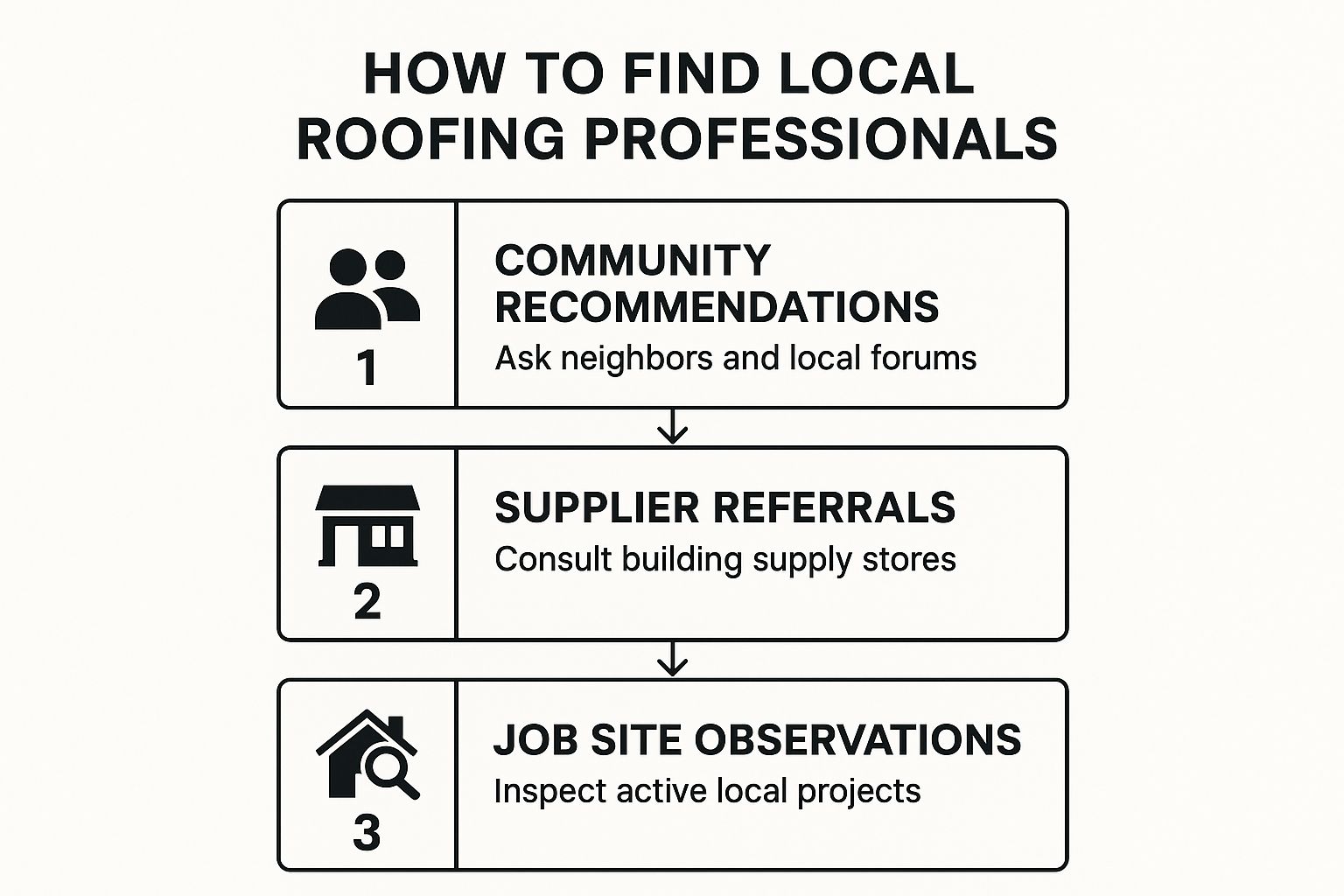
As you can see, combining word-of-mouth with professional insights is a powerful way to build your initial list.
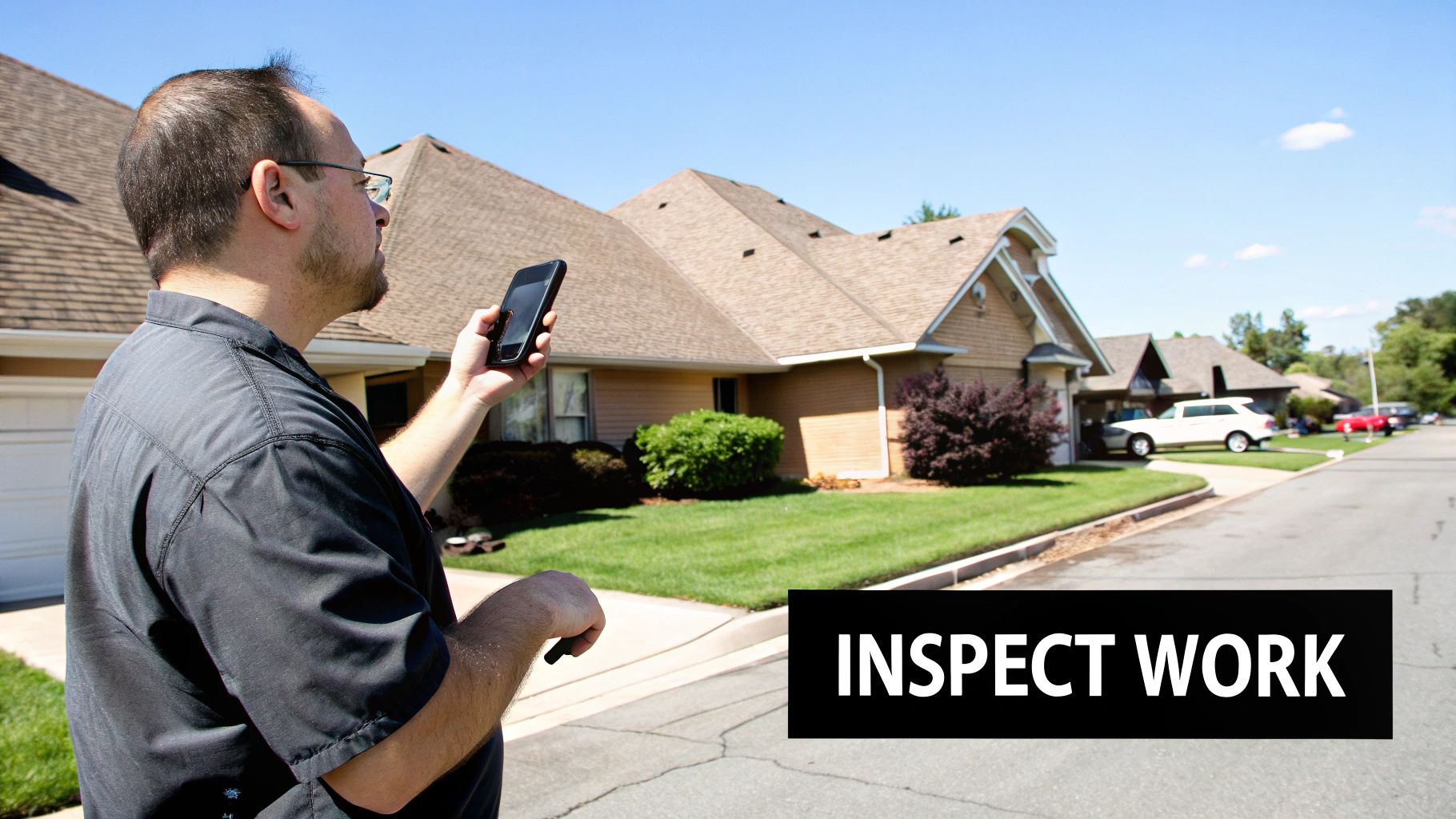
Here’s another tip that people often forget: just look around. See a crew working on a roof in your neighborhood? Take a moment to observe. Notice their professionalism, how clean they keep the job site, and the general quality of their work from the street. You can learn a lot from just watching.
Don't Skip the Paperwork: Verifying Credentials and Insurance
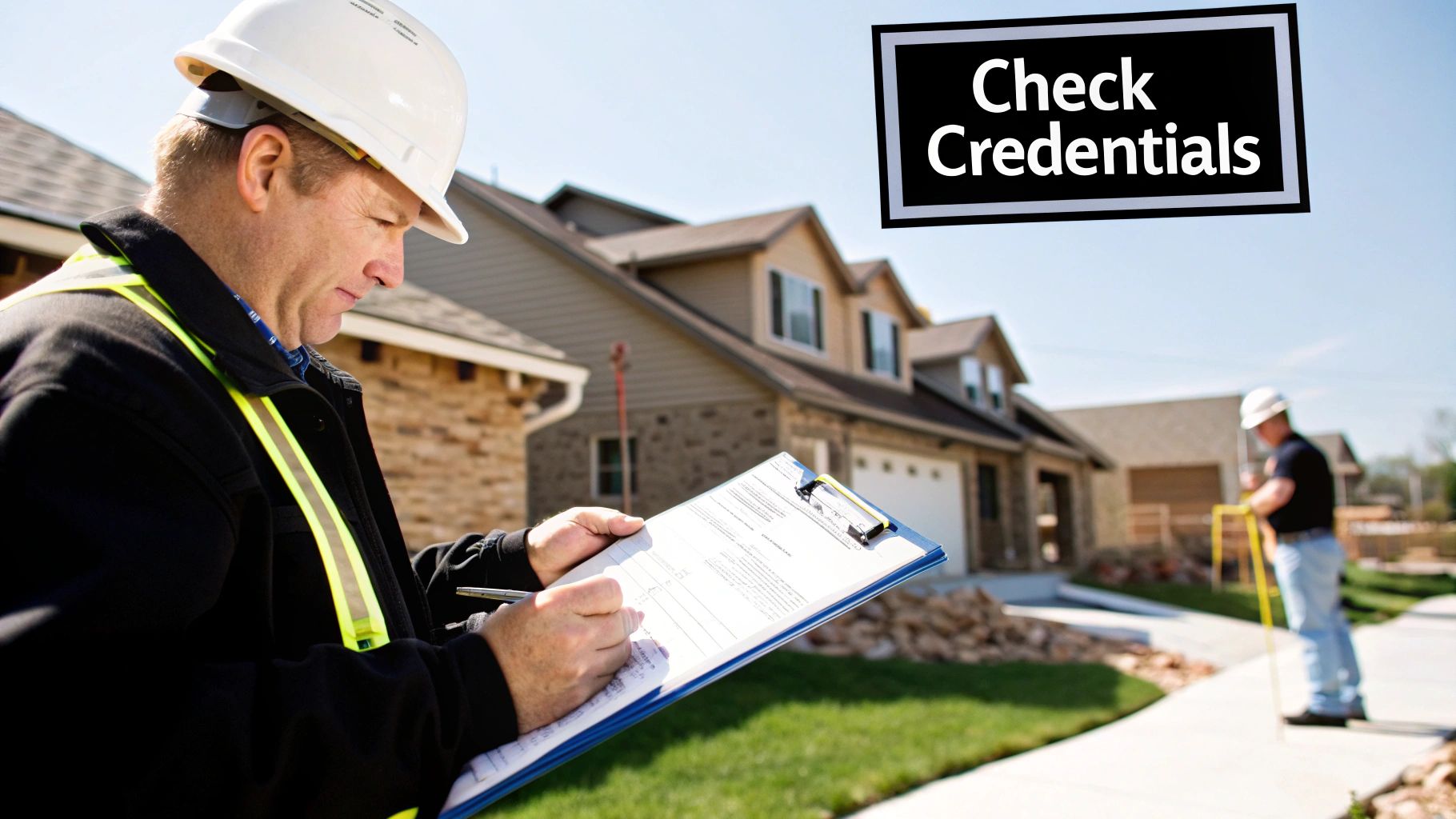
Once you've narrowed your list down to a few promising roofers, it’s time to get serious. This next part—the vetting process—is arguably the most important thing you'll do to protect yourself, your home, and your wallet. Any legitimate roofing company in Farrell, PA, will be ready and willing to provide proof they are who they say they are.
Hiring a roofer without proper insurance is a massive gamble. Think about it: if an uninsured worker gets hurt on your property, you could be the one facing a lawsuit and a mountain of medical bills. It’s a nightmare scenario that’s completely avoidable with a little due diligence.
Your Must-Have Document Checklist
Before you even start talking numbers or looking at a quote, there are a few documents you absolutely must see. These are the deal-breakers that separate the real pros from the "fly-by-night" outfits.
- Pennsylvania Contractor License: Any contractor doing more than $5,000 of work per year in PA needs to be registered. This is your first check to ensure they're a legitimate business operating legally in the state.
- Proof of General Liability Insurance: This is what protects your property. If a ladder slips and shatters a bay window or a truck backs over your prized rose bushes, this insurance covers it—not your homeowner's policy.
- Proof of Workers' Compensation Insurance: This one is non-negotiable. It protects the roofer's crew if they get injured on the job. Without it, you could be held liable.
The roofing industry is growing fast, with employment projected to jump six percent by 2033. That means more crews on more roofs, making it more important than ever to confirm every single person on your property is covered.
A roofer's willingness to quickly provide their license and insurance certificates speaks volumes about their professionalism. If they hesitate or give you excuses, that’s a huge red flag. Walk away.
This quick reference checklist will help you keep track of the essentials as you vet potential contractors.
Essential Roofer Vetting Checklist
| Verification Item | What to Ask For | Why It Matters |
|---|---|---|
| State Registration | PA Contractor Registration Number (HIC#) | Confirms they are legally allowed to work in Pennsylvania. |
| General Liability | Certificate of Insurance (COI) | Protects your home and property from accidental damage. |
| Workers' Compensation | Certificate of Insurance (COI) | Protects you from liability if a worker is injured on your job site. |
| Manufacturer Certifications | Certification from brands like GAF or Owens Corning | Shows they have specialized training and can offer enhanced warranties. |
Checking these boxes gives you the peace of mind that you're working with a responsible professional.
For a more detailed breakdown of what to look for, our guide on how to choose a roofing contractor offers some great additional tips. A smart final move is to call the insurance provider listed on the certificate to confirm the policy is still active. It only takes a few minutes and ensures you're fully protected.
How to Decode and Compare Roofing Quotes

Once you’ve narrowed down your list, the quotes will start rolling in. This is the moment of truth, but it’s a huge mistake to just skip to the bottom-line price. The quality of the quote itself tells you a lot about the contractor. A detailed, itemized proposal signals a professional, while a vague, one-page estimate is a major red flag.
Think of a proper quote from a roofing company in Farrell, PA, as the blueprint for your project. It needs to break down every single component of the job, so there are no nasty financial surprises waiting for you down the road.
Looking Beyond the Final Price
Let me be blunt: the cheapest bid is almost never the best deal. More often than not, it's a warning. An unusually low price is a strong indicator that a contractor is cutting corners somewhere—either with subpar materials, uninsured labor, or by skipping critical steps. You need to compare the value of each offer, not just the cost.
So, what does a good, comprehensive quote actually look like? It will always specify:
- Specific Material Brands and Types: The quote shouldn't just say "shingles." It needs to name the manufacturer (like GAF or Owens Corning), the exact product line, and the color you chose.
- The Full Scope of Work: A professional lays out the entire process. This includes tearing off the old roof, the cost for replacing any rotted decking (usually priced per sheet), installing new underlayment and flashing, and the plan for final cleanup and debris removal.
- Labor Costs and Project Timeline: Labor is a huge chunk of the total cost. The estimate should be clear about labor charges and give you a realistic start date and how long they expect the job to take.
When you're evaluating quotes, it's also smart to think long-term. Considering which upgrades offer the best home renovations for resale value can help you make a wise investment. A new roof is a fantastic selling point, but only when it’s done right.
Spotting Red Flags in an Estimate
Vague language is a contractor's best friend and a homeowner's worst nightmare. If you see fuzzy terms like "replace flashing as needed" without a clear cost or material type, push back. Get every detail clarified in writing before you sign anything. This one step can save you from a world of headaches and disputes later on.
A contractor who gives you a quote from the ground without ever climbing a ladder to properly inspect your roof is a definite no-go. A real pro knows they need to get up there to check the decking, flashing, and ventilation system up close.
Finally, trust your gut when it comes to sales pressure. A reliable roofer is confident in their work and will give you the space to review their proposal and weigh your options. If anyone tries to rush you with a "special price that's only good for today," show them the door. That's a classic sign of someone who knows their offer won't stand up to scrutiny.
Get a Real Feel for Their Work and Reputation
When you're hiring a roofer, their past work is the single best predictor of your future experience. Online reviews are a decent start, but to really understand a company's quality, you need to dig into their local track record right here in Farrell, PA. A roofer who’s proud of their work will be more than happy to show it off.
Don't just take their word for it, or rely solely on curated testimonials. Getting feedback from actual local customers gives you a much clearer picture of what it's like to work with them day-to-day. That kind of firsthand insight is priceless.
Look Beyond the 5-Star Ratings
Ask any roofer you're considering for a portfolio of their recent jobs in and around Farrell. A confident, established contractor should have a list of local addresses ready to go. Take a quick drive by a few of these properties—it’s a simple way to judge their work for yourself.
From the street, you can spot a lot. Look for things like:
- Are the shingle lines perfectly straight?
- Does the metal flashing around chimneys and vents look tight and professionally installed?
- Does the entire roof just look clean and well-put-together?
This little field trip tells you a story about their craftsmanship that a photo gallery never could. It shows you how their work holds up after the crew is long gone.
A roofer's portfolio isn't just a collection of nice photos; it's hard evidence of their skill. If they hesitate to show you actual local work, that should tell you everything you need to know about their experience in our area.
Go one step further and ask for at least three local references—and actually call them. Don't just ask if they were "happy." You need to get specific to learn what really matters.
Smart Questions to Ask a Roofer's References
- How did they handle communication? Were you always in the loop?
- What was the job site like at the end of the day? Was it kept clean and safe?
- Did the project stick to the timeline and the original budget? Any surprises?
- Most importantly, have you had any problems with the roof since they finished?
Asking these kinds of questions helps you look past the sales pitch and see the truth about a contractor's process and reliability. It's how you hire someone with complete confidence. You can also see what our customers have to say by checking out our customer reviews page.
Don't Sign Anything Until You've Read Every Word
The contract isn't just a formality—it’s the single most important document protecting you and your home. When you get that final agreement from your chosen roofing company in Farrell, PA, your job is to become its biggest critic. A pro will hand you a detailed, easy-to-understand contract; a vague one is a huge warning sign.
It should spell out everything. I mean everything. The specific brand and color of the shingles, the type of underlayment, the kind of flashing—it all needs to be in there. If it just says "new shingles," push back. That’s not good enough and leaves the door open for an unscrupulous contractor to use cheaper materials than what you discussed.
What to Look For in the Fine Print
Pay close attention to the payment terms. How much is the deposit? When is the final balance due? A reputable roofer will never ask for the full amount upfront.
Your contract also needs a plan for the unexpected. What happens if they tear off the old shingles and find a section of rotted decking underneath? This is where a "change order" process comes in. It's a formal, written approval you give before they do any extra work and charge you for it. Without this clause, you could be in for a nasty surprise on your final bill.
Here's a pro tip that can save you a world of headaches: Make sure your contract includes a lien waiver. This is a document stating that the contractor has paid their suppliers and any subcontractors. Without it, if your roofer fails to pay their bills, the supplier could legally come after you for the money by placing a lien on your property.
Finally, let's talk warranties. You actually get two of them, and they are completely different.
- Manufacturer's Warranty: This comes from the company that made the shingles (like GAF or Owens Corning). It covers defects in the actual product. One brand might offer a 25-year warranty, while another offers a 50-year limited lifetime warranty, so know what you're getting.
- Workmanship Warranty: This is your roofer's personal guarantee on their installation quality. If a leak appears a year later because of a poorly installed vent or sloppy flashing, this is the warranty that covers it. Most leaks are due to installation errors, not faulty shingles, making this warranty incredibly important.
Taking the time to understand these details is what separates a smooth, successful project from a homeowner's nightmare.
Farrell Homeowners' Final Questions Answered
Even after you've narrowed down your choices, a few final questions can make all the difference. Getting these last details ironed out will help you sign that contract feeling completely confident. Here are some of the things we hear most often from homeowners right before they make their final decision.
How Long Should a New Roof Actually Last Around Here?
This really comes down to two things: the material you choose and how well it's installed. Around here, asphalt shingles are incredibly popular, and you can reasonably expect a new shingle roof to last 20 to 30 years.
But you have other options. A good metal roof, for instance, can last 40 to 70 years, and something premium like slate could genuinely outlive you by lasting over a century. The key to getting the most out of any material in our four-season climate is making sure your attic has proper ventilation—it’s a detail a true pro will never overlook.
When Is the Best Time of Year to Replace My Roof?
Ideally, you'll want to schedule your roof replacement from late spring through early fall. The warmer, drier weather is perfect for helping new asphalt shingles properly seal and create that crucial watertight barrier. This gives them time to cure and get ready for whatever winter throws at them.
Can a skilled crew replace a roof outside of that window? Absolutely. But booking during the peak season just removes a lot of the potential headaches from weather delays and helps guarantee the best outcome for your money.
A quick tip on costs: Always make sure your contract specifies how unexpected expenses are handled. A professional will include a "change order" process. This means if they find something unexpected, like rotted decking under your old shingles, they have to get your written approval before doing the extra work and charging you for it. This simple clause protects you from surprise bills.
Do I Really Need a Permit for a New Roof in Farrell?
Yes, you almost certainly do. A full roof replacement in the Farrell area requires a municipal building permit. This isn't just red tape; it's a safeguard that ensures the job is done correctly and meets local safety codes.
Any reputable roofing contractor will take care of the entire permit process for you. It should be listed as part of their service in the contract. This takes the burden off your shoulders and proves they're committed to doing everything by the book.
Ready to protect your home with a roof you can trust? The team at Penn Ohio Roofing & Siding Group has the experience and dedication to get the job done right. For a free, no-obligation estimate, visit us online.