
Let’s get straight to the point: what does a new asphalt shingle roof actually cost? Nationally, the average homeowner can expect to pay around $9,932 for a full replacement. Most projects fall somewhere in the range of $6,119 to $13,802, but that number can swing quite a bit depending on your specific situation.
The final price tag hinges on a few key things: the size of your house, the complexity of your roof’s design, and of course, the quality of the shingles you pick.
Your Guide to Understanding Roof Replacement Costs
Trying to budget for a new roof can feel like you’re trying to hit a moving target. But it all starts to make sense once you break down where the money goes. Your final bill is a mix of materials, the labor to install them, and several other services that are crucial for a long-lasting, watertight roof.
Think of it like buying a car. You have the base price, but the final cost changes with the engine you choose, the trim package, and any other upgrades. A roof is no different—the type of shingle and the unique details of your home are the biggest factors.
The Foundation of Roofing Quotes
When you start talking to contractors, you'll hear the term "roofing square" thrown around a lot. This isn't a physical item; it's the industry's standard unit of measurement.
A roofing square is simply 100 square feet of roof surface. Contractors use it to calculate the materials they’ll need and to create clear, consistent pricing. This makes it much easier for you to compare quotes from different companies.
So, if your home has a 2,000-square-foot roof, that translates to 20 roofing squares. When a contractor gives you a price "per square," they're telling you the cost for each 100-square-foot section.
It’s no secret that these costs have been on the rise. Back in 2015, replacing a standard asphalt roof on a 2,000-square-foot home was about $6,500. Today, that figure has jumped by nearly 53%, driven by increases in both material and labor costs.
A Quick Look at Shingle Costs
The single biggest factor you can control in your budget is the type of asphalt shingle you select. They generally fall into three tiers, each offering a different mix of cost, lifespan, and style.
To give you a clearer picture, here’s a quick breakdown of what you can expect to pay for the different types of asphalt shingles on a standard 2,000 sq. ft. roof.
Quick Guide to Asphalt Shingle Replacement Costs by Type
| Shingle Type | Average Cost Per Square Foot | Estimated Total Cost for 2,000 sq. ft. Roof |
|---|---|---|
| 3-Tab Shingles | $3.50 – $6.50 | $7,000 – $13,000 |
| Architectural Shingles | $4.75 – $9.00 | $9,500 – $18,000 |
| Luxury Shingles | $5.50 – $10.50+ | $11,000 – $21,000+ |
As you can see, the choice of shingle makes a significant difference in the overall cost. Beyond the immediate expense, savvy property owners also understand the importance of mastering rental property maintenance costs to protect their investment for years to come.
Decoding Your Roofing Quote Line by Line

Getting a roofing estimate can feel a little overwhelming. You're handed a document packed with industry jargon and line items that don't always make sense at first glance. But taking the time to understand it is the key to knowing exactly what you're paying for.
A good, honest quote isn't just a single number at the bottom of the page. It's a transparent breakdown of every single material and service that goes into your new roof. Think of it as a detailed recipe—each ingredient is listed for a reason, and together they create a final product you can trust. Let's walk through the components you'll find on a professional estimate.
Core Materials: The Building Blocks
Naturally, the first thing you'll notice is the cost of the shingles themselves. This usually makes up about 15-20% of the total cost to replace asphalt shingles. But the shingles are just the part you see from the street. A complete roofing system relies on several other critical materials working together underneath.
A truly detailed quote should spell these out for you:
- Underlayment: This is the water-resistant sheet that gets laid down on the bare wood of your roof deck before any shingles go on. It’s your second line of defense against moisture.
- Ice and Water Shield: Think of this as a super-tough, sticky membrane. We apply it to the most vulnerable spots—the edges, valleys, and around chimneys—to prevent leaks from ice dams and heavy, wind-driven rain.
- Starter Strips: These are special shingles that go along the eaves. Their job is to create a strong, continuous seal for that first row of shingles, which is crucial for preventing wind from lifting them up.
- Ridge Cap Shingles: Your roof’s peak, or ridge, needs its own special covering. These shingles are designed specifically for that high-stress area, giving it a finished look and protecting it from the elements.
- Flashing: You’ll see this on your quote, too. Flashing is the metal work installed anywhere the roof bumps up against something vertical, like a wall, dormer, or chimney. It’s absolutely essential for directing water away from these seams.
Seeing each of these items listed separately is a great sign. It tells you the contractor is thorough and isn't cutting corners on the non-negotiable parts of a long-lasting roof.
Labor Costs: The Skill Behind the Install
Labor is almost always the biggest piece of the puzzle, often accounting for 40-50% of the total price. It’s easy to think of this as just the cost of nailing on shingles, but it's so much more than that. This is the price for a skilled, experienced crew to manage the entire project from the moment they arrive to the final cleanup.
A professional roofing crew’s labor charge includes the meticulous process of tearing off every layer of the old roof, inspecting the underlying wood deck for damage, preparing the surface, and flawlessly installing the new roofing system.
This isn't a job you want to rush. Improper installation can void your shingle manufacturer's warranty and lead to major problems down the road. This is why investing in skilled, professional labor is one of the smartest decisions you can make for your home.
Additional Services and Fees
Finally, beyond the main materials and labor, a few other charges are necessary to do the job right and keep everything above board. You should expect to see these as separate line items on your estimate.
Here’s what to look for:
- Tear-Off and Debris Disposal: This covers the work of stripping off all the old roofing materials and the cost of the dumpster needed to haul it all away for proper disposal.
- Permits: Most local townships and cities require a building permit for a full roof replacement. This fee covers the permit itself and the contractor’s time handling the paperwork.
- Contingency for Decking Repair: A good contractor will prepare you for the unknown. They might include a line item for replacing sheets of the underlying wood decking, priced per sheet. This way, if we pull off the old shingles and find some rotten wood, you already know what the cost will be—no surprises.
By understanding what each of these line items means, you can turn a confusing quote into a clear project plan. This knowledge gives you the power to compare estimates apples-to-apples and feel confident that you're investing in a complete, high-quality roofing system built to last.
Hidden Factors That Drive Up Your Final Cost
Ever wonder why two seemingly identical homes can get wildly different roofing quotes? The answer isn't just about the square footage or the shingles you pick. The real story is often found in the "hidden" details of your home's specific structure and condition, and these can have a major impact on the final price tag.
Getting a handle on these variables is the key to understanding the true scope of your project. It helps explain why one contractor's estimate might be higher than another and saves you from the sticker shock when the final bill comes.
The Impact of Roof Pitch and Complexity
Think of your roof's pitch—its steepness—as a direct influence on labor costs. A low-slope roof that's easy to walk on is a straightforward job. The crew can move around safely and efficiently, which means the work gets done faster and costs less.
But a steep roof? That's a whole different ballgame. It's like climbing a mountain instead of walking on a flat path. This kind of job demands extra safety gear like harnesses and roof jacks just for the crew to move around. Everything, from tearing off the old shingles to installing the new ones, takes longer. That extra time and risk naturally translate to a higher labor bill.
It's not just the pitch, either. Other features of your roof add layers of complexity, and each one requires a lot more time and precision from the installers.
- Skylights: These aren't just windows; they have to be worked around carefully, with new flashing installed to create a perfect, watertight seal.
- Chimneys: Just like skylights, chimneys break up the roofline and demand expert flashing and sealing to prevent leaks down the road.
- Valleys and Dormers: Every valley (where two roof planes meet) and dormer adds corners and seams. Each one needs meticulous cutting and fitting of materials to get it right.
Every one of these architectural elements adds both time and material costs to the job, and you'll see that reflected in your final quote.
Dealing with Unforeseen Structural Issues
The biggest—and most common—surprise in any roof replacement is often lurking right under the old shingles. I’m talking about the wooden deck (or sheathing) that serves as the foundation for your entire roofing system. From the ground, there's simply no way to know what shape it's in.
It's only after the old roof is torn off that a contractor can get a good look. This is when we discover problems like soft spots from moisture, water damage, or even outright rot. You can't just ignore damaged decking. Putting a beautiful new roof over a weak foundation is just asking for it to fail prematurely.
A professional, reputable contractor will always stop and address any rotten or damaged decking before they lay a single new shingle. It might add an unexpected cost, but it's an absolutely non-negotiable step to protect the structural integrity and long life of your new roof.
This is exactly why I always tell homeowners to build a contingency fund of 10-15% into their total roofing budget. Having that buffer means you’re prepared to handle these necessary repairs without derailing the project's finances. A solid deck and the protective layer above it are crucial for a roof that lasts, which is why it's so important to understand what roof underlayment is and the vital role it plays. This financial cushion gives you peace of mind, knowing the job will be done right, no matter what surprises we uncover.
How Your Shingle Choice and Location Impact the Budget
When you start pricing out a new asphalt shingle roof, you’ll quickly realize there’s no one-size-fits-all number. The final cost isn't pulled from some national price list; it’s shaped by two powerful factors: the specific shingles you pick and the place you call home. Think of these as the two main ingredients that create a unique financial recipe for every single roofing project.
Your geographic location plays a huge role in the final bill. Labor rates, how easily materials can be sourced, and local building codes can be wildly different from one state to the next—or even just one county over. For example, a roof replacement in a hurricane-prone coastal town will have much stricter wind resistance codes. That often means using specialized materials and installation techniques that simply aren't needed in a calmer Midwest climate.
These regional differences can drive a serious wedge in pricing. In some major markets, the average cost for a shingle roof replacement can be around $10,500, falling into a broad range of $7,500 to $24,000. Meanwhile, homeowners in parts of the Midwest or Southeast might see a more typical cost of $6,000 to $12,000 for a standard roof. That gap really shows you just how much local economic factors come into play.
Choosing Your Shingles: A Balance of Cost and Value
Beyond your zip code, the biggest choice you'll make is the type of asphalt shingle you want on your roof. This decision is a classic trade-off between how much you invest upfront and what you get back in long-term performance. While it’s tempting to grab the cheapest option and call it a day, it’s vital to think about lifespan, durability, and even curb appeal to find the best overall value.
Here’s a quick rundown of how the three main types of asphalt shingles stack up:
- 3-Tab Shingles: This is your basic, most budget-friendly shingle. They have a flat, single-layer design that creates a uniform look but also gives them the shortest lifespan, usually around 15-20 years. They’re a perfectly fine choice if your primary goal is to minimize the initial replacement cost.
- Architectural (Dimensional) Shingles: By far the most popular choice for homeowners today. Architectural shingles feature a thicker, multi-layered build. This design not only gives the roof a richer, more textured look but also delivers far better durability and a longer lifespan, often lasting 30 years or more.
- Luxury (Premium) Shingles: At the very top of the line, luxury shingles are crafted to mimic the appearance of natural materials like slate or cedar shakes. They are the heaviest and most durable asphalt shingles you can buy, offering maximum protection and a high-end look, with lifespans that can stretch to 50 years.
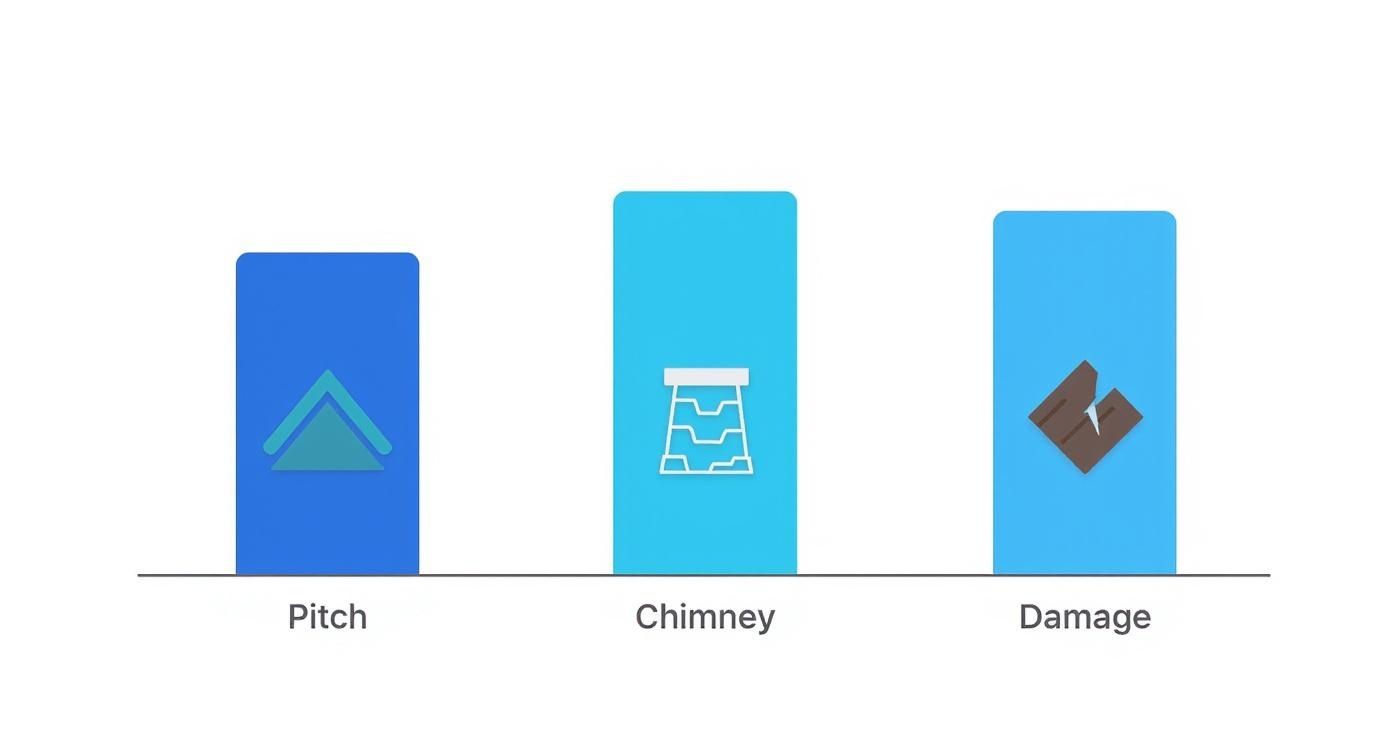
As you can see, factors like your roof's pitch, the number of features like chimneys, and any hidden damage are all critical pieces of the final price puzzle. If you want to dive deeper into the pros and cons of the most common options, our guide on three-tab vs. dimensional shingles breaks it all down for you.
Making a Smart Financial Decision
At the end of the day, picking the right shingle comes down to matching your home’s needs with your financial reality. A 3-tab shingle might save you some cash right now, but an architectural shingle could offer a much better return on investment over time by pushing your next replacement further down the road.
Your roof is a long-term investment in your home's safety and value. Choosing a shingle should be about finding the optimal balance between what you can afford today and the performance you'll need for decades to come.
To get a handle on your roofing project’s expenses, it helps to understand the basics of solid financial planning. Learning how to create an effective budget can empower you to make a choice that protects both your house and your wallet.
Visualizing Your Investment with Sample Estimates
All this talk about cost drivers, roofing squares, and per-foot pricing can feel a bit abstract. So, let's bring these numbers to life. To help you get a real feel for the cost to replace asphalt shingles, we'll walk through two very different, but very common, roofing projects.
Seeing how all the variables we’ve discussed—size, materials, complexity—stack up in a practical example is the best way to understand where your money is actually going.

We’ll look at a simple, straightforward job and then a more complex one. The goal is to show you exactly how factors like your home's size, roof pitch, and shingle choice can dramatically change the final estimate.
Cost Estimate Comparison: Two Sample Roof Replacements
The table below breaks down the potential costs for our two example homes. Notice how the price for each line item changes based on the roof's specific needs—it's never just a simple multiplication of square footage.
| Cost Item | Scenario A: 1,500 sq. ft. Ranch (3-Tab Shingles) | Scenario B: 2,800 sq. ft. Two-Story (Architectural Shingles) |
|---|---|---|
| Materials | $2,400 – $3,500 | $7,800 – $9,500 |
| Labor | $2,500 – $3,800 | $6,000 – $8,500 |
| Tear-Off & Disposal | $500 – $800 | $1,000 – $1,600 |
| Permits & Fees | $250 – $500 | $400 – $750 |
| Contingency Fund (10%) | $565 – $860 | $1,520 – $2,035 |
| Total Estimated Cost | $6,215 – $9,460 | $16,720 – $22,385 |
As you can see, the final price tag isn't just about the size of the roof. The complexity, shingle type, and labor intensity all play a huge role in the bottom line. Let's dig into why these numbers are so different.
Scenario A: The Simple Ranch Home
First up, picture a classic single-story ranch house. The roof is about 1,500 square feet (or 15 roofing squares) and has a simple, low-pitch design. The owner chose standard 3-tab shingles to keep the project affordable.
This job is as straightforward as they come. There's only one layer of old shingles to tear off, and a quick inspection shows the underlying wood deck is solid. The low pitch makes it safe and quick for the crew to move around, and the simple roofline means no tricky cuts or detailed flashing around dormers or skylights. Everything points to an efficient, cost-effective project.
Scenario B: The Complex Two-Story House
Now, let's shift gears to a larger, two-story home with a 2,800 square foot roof (28 squares). This roof is much more complex—it’s got a steep pitch, multiple gables, and a chimney that requires custom flashing. The owners are upgrading to a high-quality architectural shingle for better durability and curb appeal.
Right away, the labor costs jump. The steep pitch means the crew needs extra safety gear and works more slowly. The complex roof shape demands more time for precise cuts and careful installation, and of course, the larger area requires more materials. Each of these factors adds to the final bill.
Both of these are everyday roofing jobs, but their unique characteristics lead to vastly different costs. This comparison makes it crystal clear: a roofing estimate is so much more than the price of shingles—it's a direct reflection of your home's unique architectural DNA.
It’s no surprise that the asphalt shingle market was valued at $8.8 billion in 2024; after all, asphalt is used on over 75% of all residential roofs in the country. A huge driver of that market is the popularity of higher-end architectural shingles, which typically run between $4.11 and $5.57 per square foot. Homeowners are increasingly choosing them for that perfect blend of toughness and style. You can find more asphalt shingle market insights on gminsights.com.
A Practical Approach to Budgeting
Whether your home looks more like Scenario A or B, smart financial planning is non-negotiable. The single most important thing you can do is build a contingency fund directly into your budget.
Plan on setting aside an extra 10-15% of the total estimated cost. This isn't for fancy upgrades; it's your safety net. If the crew tears off the old shingles and finds a few sheets of rotten decking, this fund covers the necessary replacement without derailing your project or forcing you to cut corners. It’s the best tool you have for ensuring total peace of mind.
Taking the Next Step: Getting an Accurate Quote for Your Roof
Alright, you've made it this far. You've got a much clearer picture of what goes into the cost of replacing your asphalt shingles. We’ve unpacked the numbers, looked at what drives the price up or down, and talked about everything from materials to your roof’s specific quirks.
But here’s the thing: an online guide, no matter how detailed, can only get you into the right ballpark.
The only way to know the exact cost for your home is to have a professional get their boots on your roof for an in-person inspection.
An accurate quote is so much more than a price tag. It's a comprehensive game plan for your home. It’s built on a roofer physically inspecting your roof's current condition, taking precise measurements, and spotting any underlying issues that a satellite image would miss.
This hands-on assessment is the only way to get a firm, reliable price without any nasty surprises later.
Turning Knowledge into Action
Now that you're armed with all this information, you can talk to a roofer with confidence. You know the right questions to ask and can actually understand what you're looking at when they hand you a proposal. Your next move is to find a trusted local expert to turn all this general knowledge into a solid plan for your property.
Finding the right contractor is every bit as crucial as picking the right shingles. For a deep dive on what to look for, our guide on how to choose a roofing contractor is a great resource. A true professional will always give you a detailed, no-strings-attached estimate that breaks down every single cost.
Here at Penn Ohio Roofing & Siding Group, we operate on a foundation of total transparency. Our team is ready to come out, give your roof a thorough inspection, and provide you with a detailed quote that’s easy to understand. We’re here to answer every question and make sure you feel completely comfortable with your decision.
When you're ready to get a real number for your project, give us a call to schedule your free, no-pressure estimate. We're available 24/7 to help you protect your home with a roof built to last.
Your Top Questions About Shingle Replacement Costs, Answered
Planning a roof replacement brings up a lot of questions. It's totally normal. You're not just thinking about the final price—you're wondering about the process, the materials, and what really delivers long-term value. We get these questions all the time, so we’ve put together some straightforward answers to help you feel more confident as you move forward.
Think of this as your quick guide for those "what if" and "how does that work" moments.
Can I Just Install New Shingles Over My Old Ones to Save a Few Bucks?
Laying new shingles over an old layer—often called a "roof-over"—might seem like a smart way to cut costs, but it’s almost always a bad idea. In fact, most reputable roofers will advise against it. Why? Because a complete tear-off is the only way to see what’s really going on underneath.
Your contractor needs to inspect the wooden roof deck for soft spots, rot, or water damage. Covering up hidden problems is just asking for much bigger, more expensive trouble later on. A second layer of shingles also adds a tremendous amount of weight to your home’s structure and can instantly void the manufacturer’s warranty on your brand-new shingles. Investing in a proper tear-off is the right call for a secure, long-lasting roof.
How Long Will My House Be a Construction Zone During a Roof Replacement?
You'll be surprised how fast a professional crew works. For an average-sized home, a full asphalt shingle replacement is usually done in just 1 to 3 days.
Of course, a few things can affect that timeline. Bad weather is the most common culprit. The complexity of your roof also plays a big part—a steep pitch, lots of dormers, or multiple intersecting rooflines will naturally take more time. If we pull off the old shingles and find unexpected structural repairs are needed, that will add to the schedule. A good team will always keep you in the loop and work efficiently to get your home back to normal as quickly as possible, right down to the final cleanup.
Will My Homeowners Insurance Pay for a New Roof?
This is the big one we hear all the time. The short answer is: sometimes. Homeowners insurance is designed to cover roof replacement when the damage is from a sudden, unexpected event. Think major hail storms, high winds that rip shingles off, or a tree falling on your house. These are often called "acts of God."
What insurance won't cover is a roof that's simply old and worn out from age and regular wear and tear. If you think your roof was damaged in a recent storm, your first step should be to take photos and call your insurance agent to start the claims process. From there, a professional roofer can provide the detailed inspection report and estimate you'll need to support your claim.
Now you have a much clearer picture of what to expect. When you're ready to get a precise, no-nonsense quote for your home, the experts at Penn Ohio Roofing & Siding Group are here to help. We provide free, detailed estimates and are available 24/7 to help you protect your biggest asset.