
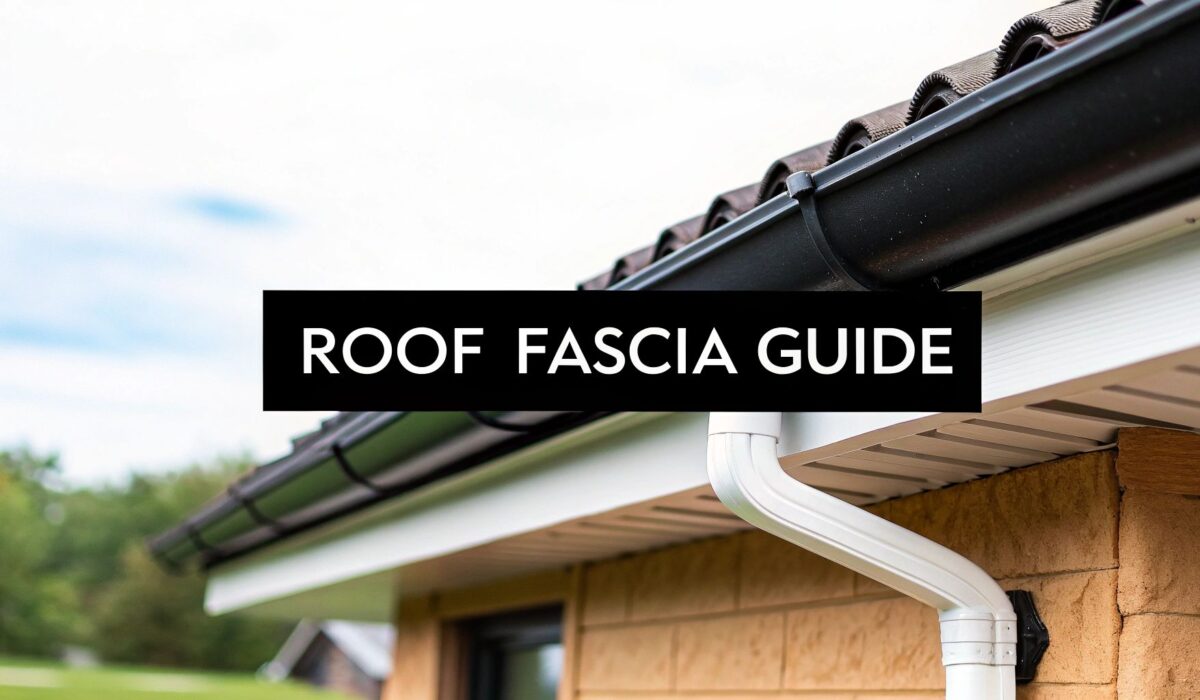
So, what exactly is the fascia on a house?
Simply put, the fascia is that long, straight board running horizontally along the lower edge of your roof. It's fixed directly to the roof trusses and essentially caps off the end of the rafters, right behind the gutters. You've seen it a thousand times, but you might not have known its name.
Think of it as the trim for your roofline—the finishing touch that makes everything look clean and complete. But it does a lot more than just look good.
The Unsung Hero of Your Roofline
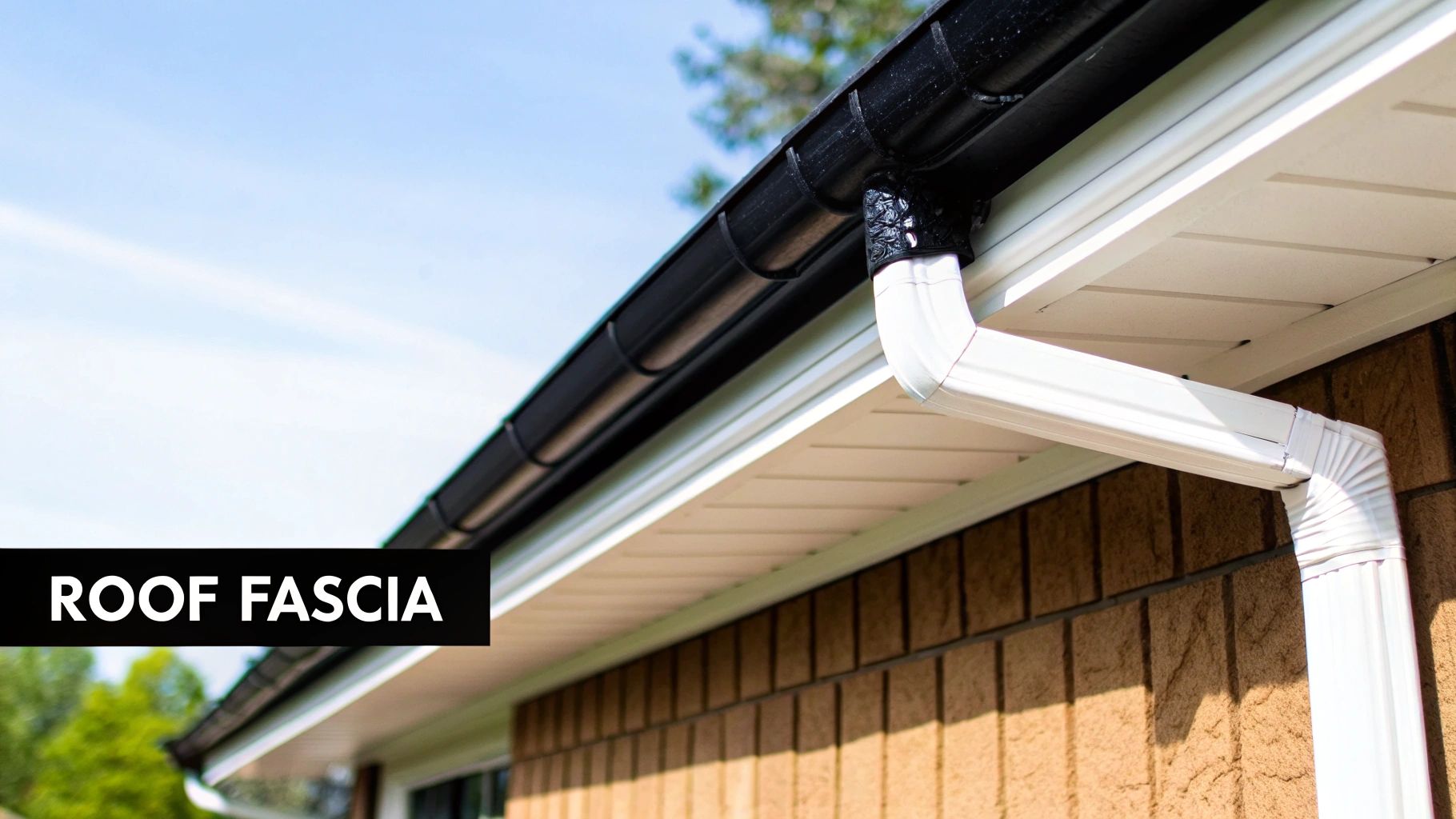
While it might not get the same attention as shingles or gutters, the fascia board is one of the hardest-working parts of your entire roofing system. It's the last line of defense for the vulnerable edges of your roof, shielding the underlying wood structure from rain, snow, and wind.
This component is so critical that its importance became clear through trial and error. Many older homes from the early 20th century were built without proper fascia boards, which led to widespread problems with rotted rafters and failing gutters. This bit of history really highlights why fascia is now a standard, essential part of modern construction. You can dig deeper into the history of fascias and soffits to see how building practices have evolved.
Acting as a gatekeeper, the fascia seals off the openings at the end of your rafters. This simple barrier is surprisingly effective at preventing birds, squirrels, and wasps from turning your attic into their new home.
A Foundation for Your Gutter System
Beyond acting as a shield, the fascia board has a crucial structural job: it provides a solid, stable surface for mounting your gutters.
Your gutters have to handle a lot—torrential downpours, heavy snow, ice, and piles of wet leaves. All that weight needs a strong anchor point, and the fascia is it.
A properly installed fascia board is the backbone of your gutter system. It directly supports the weight of your gutters, ensuring rainwater is channeled away from your home's foundation effectively.
If your fascia is weak or rotten, your gutters will eventually sag, pull away from the house, and fail. This can lead to serious water damage to your foundation, siding, and landscaping.
To give you a clearer picture, let's break down its main jobs.
Roof Fascia Key Functions at a Glance
This table provides a quick summary of the essential roles the fascia board plays in protecting and finishing your roof.
| Function | Why It Matters |
|---|---|
| Gutter Support | Provides a strong, flat surface to securely mount the entire gutter system. |
| Weather Protection | Shields the ends of the roof rafters and trusses from rain, snow, and ice damage. |
| Pest Barrier | Blocks access for insects, birds, and rodents trying to enter the attic or roof. |
| Aesthetic Finishing | Covers exposed rafters, creating a clean, polished look and boosting curb appeal. |
| Soffit Support | Often supports the lower edge of the soffit panels underneath the eaves. |
As you can see, this simple board pulls a lot of weight, both literally and figuratively, in keeping your home safe and looking its best.
Enhancing Your Home's Curb Appeal
Finally, let’s not forget the aesthetics. The fascia creates that smooth, crisp line at the edge of the roof that ties the whole look of your home together.
It covers up the often-uneven ends of the rafters, providing a polished and professional finish. It’s a small detail that makes a huge difference in your home's overall curb appeal.
Fascia, Soffit, and Gutters Explained
It’s completely understandable to get the parts along your roof’s edge mixed up—they all work together as a tight-knit team. Let's break it down. You have the fascia, which is that vertical board you see facing straight out. Then there’s the soffit, the horizontal panel tucked neatly underneath the roof's overhang.
Here's a simple way to think about it: if the fascia is the "face" of your roof's edge, the soffit is the "ceiling" of that same overhang. The soffit's main job is a big one: it lets your attic breathe. By providing ventilation, it helps control temperature and stops moisture from getting trapped, which is absolutely critical for keeping your entire roof structure healthy.
Lastly, you have the gutters. These are the open channels mounted directly onto the fascia board. Their purpose is straightforward but incredibly important—they catch all the rainwater sheeting off your roof and guide it away from your home’s foundation.
How These Three Parts Interconnect
The relationship between your fascia, soffit, and gutters is all about teamwork and mutual support.
- Fascia as the Backbone: The fascia provides a strong, flat surface for the gutters to attach to. Without a solid fascia, your gutters would quickly sag, pull away, and fail.
- Soffit as the Underside: The soffit panels fit right between the fascia and the side of your house. They essentially seal everything up, keeping pests, birds, and bad weather out from under your rafters.
- Gutters as the Drainage System: The gutters rely on the fascia to hold them up so they can do their water-management job. In turn, by directing water away, they protect the fascia and your foundation from rot and water damage.
This whole system is so interconnected that when one part fails, it can start a domino effect. For instance, a simple gutter clog can cause water to spill over the sides, constantly soaking the wooden fascia. Before you know it, you have wood rot that can spread to the soffit and even the rafter tails.
Since gutters are mounted right on the fascia, keeping them clean is key to protecting everything else. Gutter cleaning isn't without its risks, so it's smart to be aware of the dangers of DIY gutter cleaning to stay safe.
To see how we keep this whole system in top shape, you can learn more about our https://pennohiorc.com/gutters-soffits-fascia/. When these three parts work in harmony, your roofline stays strong, dry, and looking sharp.
Choosing the Right Fascia Material for Your Home
When it comes to your roof's fascia, the material you choose makes all the difference. It impacts everything from how long it lasts and how much upkeep it needs to the overall curb appeal of your home. It’s really a balancing act between your local climate, your budget, and the style you're going for.
Think of the fascia as the linchpin of your roof's edge. This diagram shows how it all fits together, with the fascia board supporting the gutters and being protected from below by the soffit.
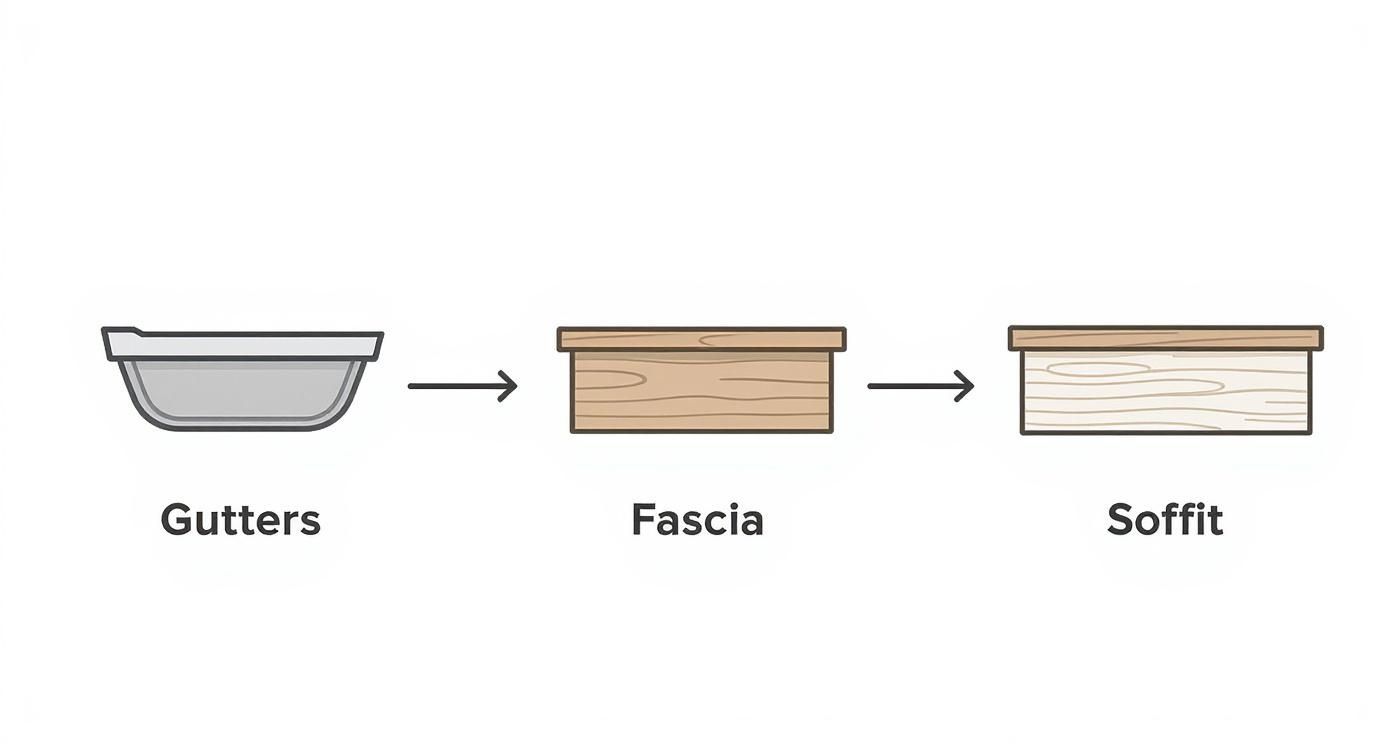
With that picture in mind, let's break down the most common materials you'll find out there.
Comparing Roof Fascia Materials
Making the right choice can feel overwhelming, but a quick side-by-side comparison can help you see which option is the best fit for your home and your priorities.
| Material | Pros | Cons | Average Lifespan |
|---|---|---|---|
| Wood | – Classic, natural look – Affordable and easy to paint – Easily cut and shaped on-site |
– Prone to rot, mold, and pests – Requires frequent painting/sealing – Can warp or split over time |
10-15 years |
| Vinyl (PVC) | – Low maintenance (no painting) – Resists moisture and rot – Comes in various colors |
– Can become brittle in extreme cold – Colors may fade in the sun – Less "premium" look than wood |
20-30 years |
| Aluminum | – Highly durable and weatherproof – Lightweight and won't rust – Available in pre-finished colors |
– More expensive than wood or vinyl – Can be dented by impacts (ladders, hail) – Can be noisy during temperature changes |
25+ years |
| Composite | – Extremely durable and long-lasting – Resists rot, insects, and moisture – Mimics the look of wood with low upkeep |
– The most expensive option – Heavier than other materials – Can be difficult to paint if you change your mind |
25-50 years |
Ultimately, the ideal material depends on what you value most. If you love the timeless look of a heritage home, wood might be worth the extra work. But if your goal is to install it and forget about it, a composite or aluminum fascia is probably the smarter investment.
Spotting the Warning Signs: When Your Fascia Needs Attention
Catching fascia problems early can save you a world of hurt later on. Think of it as the first line of defense for your roof's edge. Since it’s constantly battered by rain, sun, and wind, it's often one of the first places to cry for help. If you know what to look for, you can nip issues in the bud before they spiral into costly, whole-house repairs.
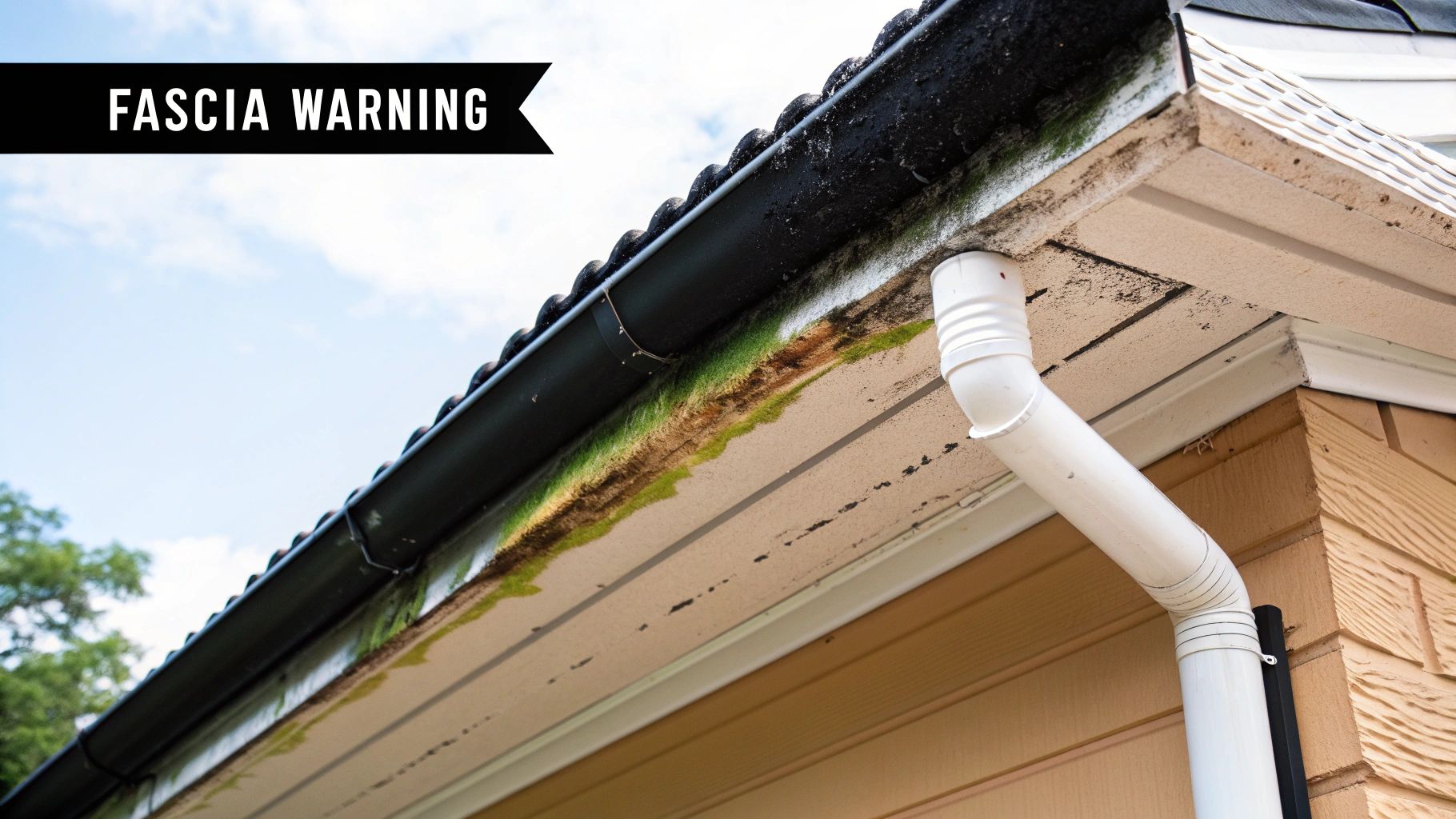
The most obvious red flags are right there on the board itself. Peeling, flaking, or blistering paint is a classic first sign that moisture has breached the surface. If you see actual cracks and splits, or if you can gently press a screwdriver into a soft, spongy spot, you've got wood rot on your hands.
Water stains and dark discoloration are also huge clues. These stains often point to a bigger problem, like chronically overflowing gutters or even a hidden roof leak. That's why it's so critical to know the basics of finding a roof leak before water damage works its way into your home's structure.
Look for the Not-So-Obvious Clues
Sometimes, the fascia board might look okay from a distance, but other signs tell a different story. Are your gutters sagging or pulling away from the house? That’s a major warning. It usually means the fascia they're attached to has rotted and can no longer bear the weight, especially during a heavy downpour.
Watch out for pests, too. To birds, wasps, and squirrels, a soft, rotting fascia board is a "Vacancy" sign. They'll chew or peck their way in to build nests, opening up your roof structure to even more damage.
Don't feel singled out if you see these issues; this kind of upkeep is incredibly common. In fact, roughly 31% of homeowners have dealt with roof repairs or maintenance in the last three years, and fascia is frequently part of the job.
A quick walk around your house a few times a year is your best defense. Grab some binoculars if you need to and keep an eye out for these tell-tale signs:
- Peeling or Bubbling Paint: This is the canary in the coal mine, signaling that moisture is getting in.
- Visible Cracks or Holes: Small openings are an invitation for water and pests to move in and will only get worse.
- Water Stains or Dark Spots: A clear sign of constant moisture, usually from clogged gutters.
- Sagging Gutters: A heavy hint that the fascia behind them is failing and can't support the load.
- Mold or Mildew: Look for black, green, or fuzzy patches, especially on shaded or damp sections of the roofline.
Deciding Between Fascia Repair and Replacement
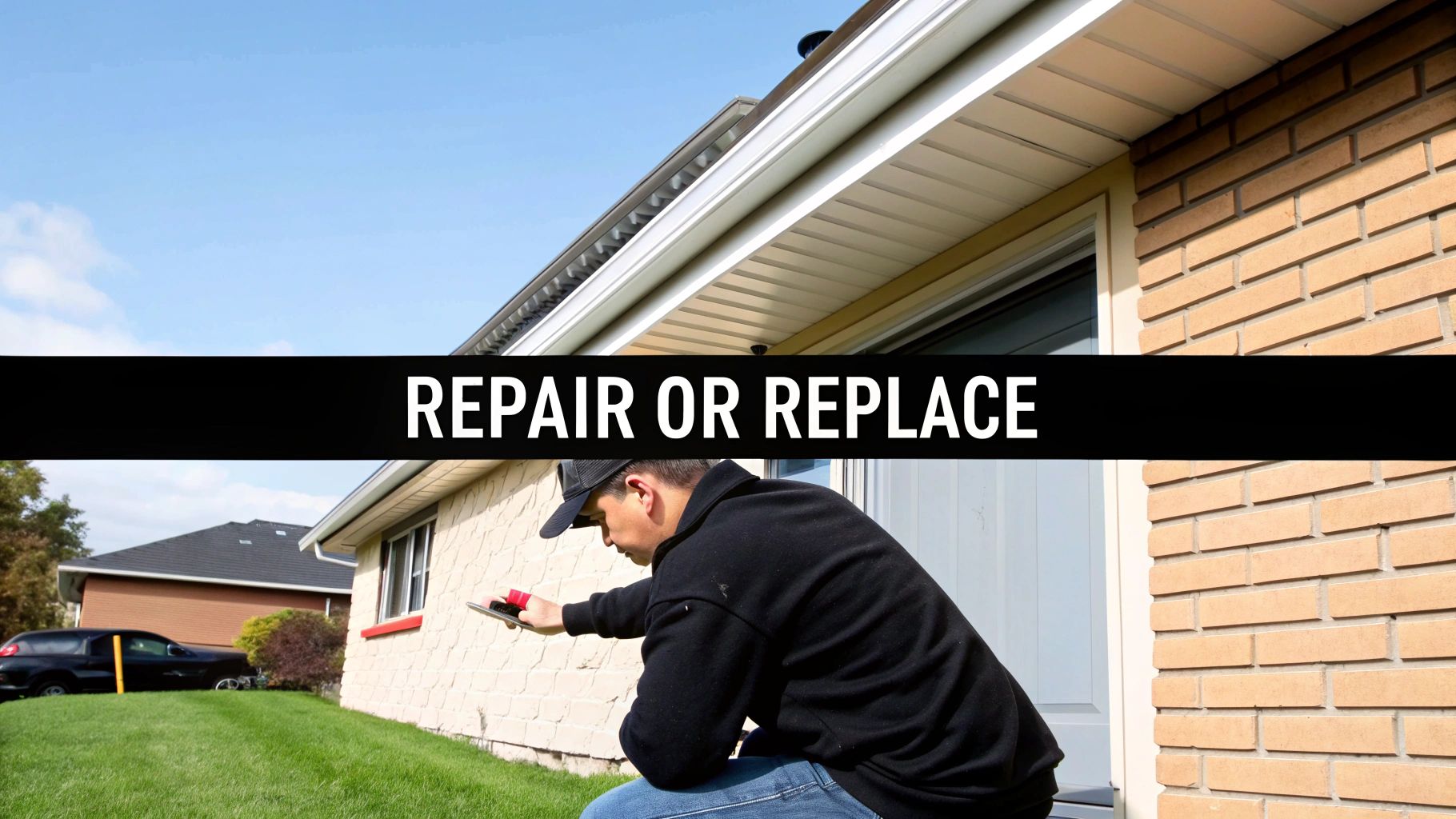
Once you spot damage on your fascia, you're faced with a big question: can you get away with a simple patch job, or is it time for a full replacement? The right answer really boils down to how bad the problem is.
If you’re just dealing with small, isolated issues, a repair is often perfectly fine. For instance, a little bit of peeling paint on an otherwise sound board can usually be scraped, sanded, and repainted without much fuss. A tiny crack that hasn't compromised the board's strength might just need a good quality caulk and a coat of paint.
But remember, these quick fixes only work if the fascia itself is still structurally solid.
When Replacement Is the Only Option
When the damage is widespread or affects the board’s integrity, replacement isn't just a good idea—it's the only real solution. You simply can't "repair" wood rot. You have to cut it out completely.
Think of rot like an iceberg; the small soft spot you see on the surface is often just the tip of a much bigger moisture problem lurking underneath. This same logic often applies to the broader decision of roof repair vs replacement, where you have to get to the root of the problem.
A full replacement is almost always the call in these scenarios:
- Widespread Rot: If you can poke a screwdriver into multiple soft or spongy sections, the board is done for.
- Large Cracks: Major splits are a huge red flag. A cracked fascia can’t safely hold up a heavy, water-filled gutter.
- Warping or Sagging: If you see the board bending, bowing, or pulling away from the roofline, its structural life is over.
Trying to patch up a failing fascia board is just kicking the can down the road. It puts your gutters at risk of collapsing and opens the door for water to sneak into your roof's structure, causing much more expensive damage.
While a handy homeowner might tackle a small paint job, anything more serious really calls for a professional. A roofing expert can properly diagnose the extent of the damage, ensure the new fascia is installed to last, and make sure everything is sealed up tight to prevent it from happening again. To see what that involves, you can learn more about how the pros repair roof eaves to keep homes protected.
Your Fascia Questions, Answered
If you're like most homeowners, you probably don't think about your fascia board until something looks wrong. To clear things up, we've put together answers to some of the most common questions we hear from our clients.
How Much Does It Cost to Replace Fascia on a Roof?
This is the big question, and the honest answer is: it depends. The final price tag is a mix of a few key things: the material you choose, how many feet of fascia your home needs, and the cost of labor in our area.
Vinyl is typically the most wallet-friendly choice, while composite materials or high-end woods will be on the pricier side. For a typical home, you could be looking at a range from several hundred to a few thousand dollars for a full replacement.
The only way to get a number you can count on is to have a professional come out and give you a detailed quote. That's how you'll get a price that truly reflects your home's specific needs and the materials you want.
Can Fascia Be Repaired Without Taking the Gutters Off?
For a tiny, superficial fix—like touching up a peeling paint spot on an otherwise solid board—you might be able to get away with it.
But for anything more serious, especially rot or structural damage, the gutters have to come off. It's non-negotiable for a proper replacement, too. Removing them is the only way to get full access to the old fascia and make sure the new board is installed perfectly. This guarantees everything is sealed up tight when the gutters go back on, which is crucial for preventing future water damage.
How Often Should I Check on My Roof Fascia?
A good habit to get into is giving your fascia a quick visual inspection twice a year, ideally in the spring and fall.
This timing works out perfectly because it’s usually when you're cleaning out your gutters anyway, so you’re already up there with a good view of the boards. It's also smart to take a peek after any major storm rolls through, just to make sure high winds or debris didn't cause any new problems.
If you've spotted any of these red flags on your own home, it's best not to let the problem linger. The expert team at Penn Ohio Roofing & Siding Group can give you a professional inspection and a lasting solution to protect your investment. Contact us today for a free estimate and let's get your home back in top shape.