When you need a roofing company in Sharpsville, PA, you’re not just hiring someone to nail down shingles. You're entrusting them with your home's most critical line of defense against our wild Mercer County weather. From heavy lake-effect snow to the brutal freeze-thaw cycles, your roof takes a beating year after year.
That’s why finding a roofer with genuine local experience isn't just a bonus—it's essential.
Why a Sharpsville Roofer is Your Best Bet
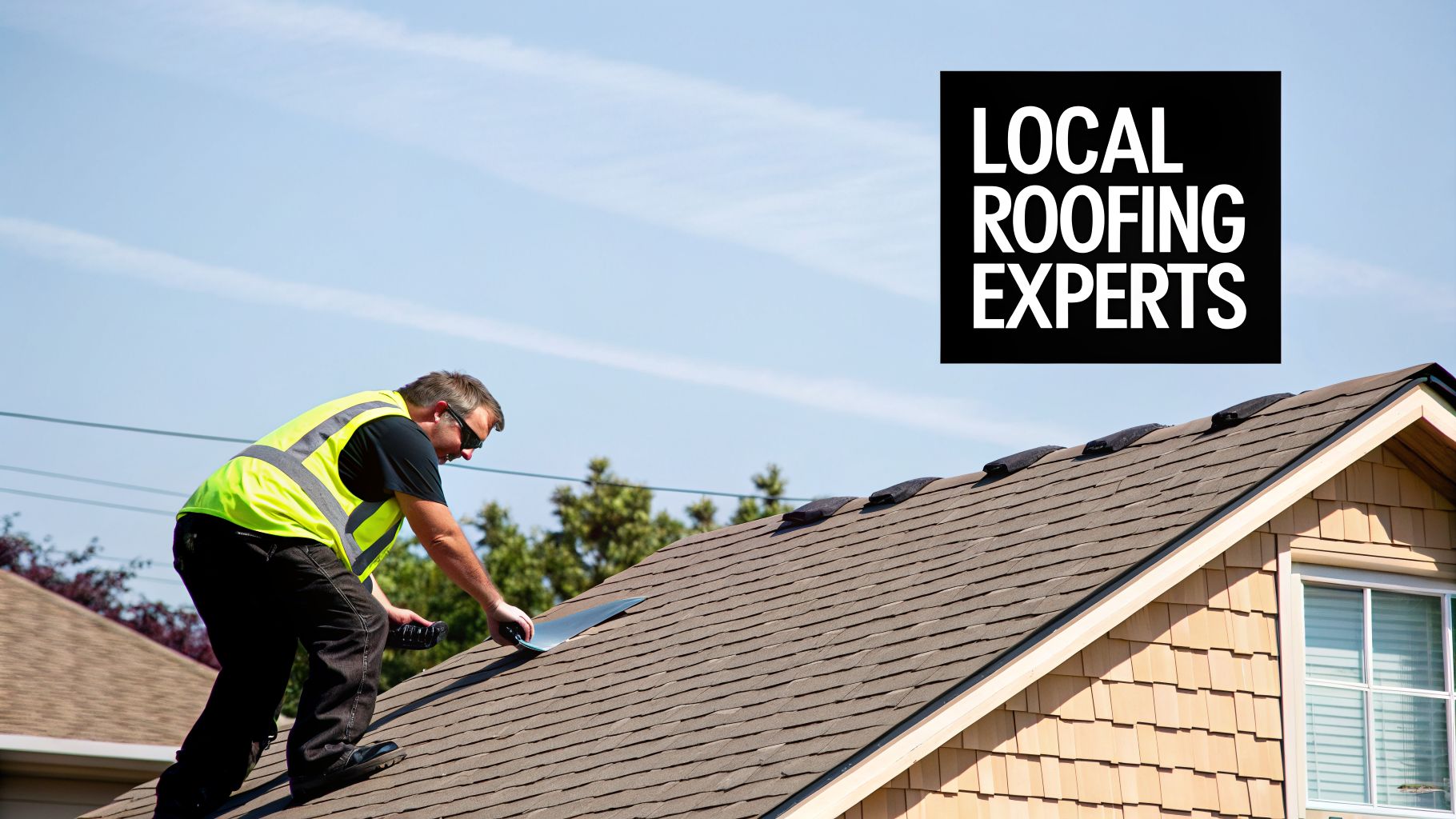
Think about it. An out-of-town contractor might not fully appreciate how our specific climate stresses a roof. They might use materials or techniques that work fine elsewhere but can't stand up to the constant expansion and contraction that causes shingles here to crack and fail.
A truly local roofer, on the other hand, has seen it all. They know firsthand which shingles hold up best against our summer humidity and how to properly ventilate an attic to prevent the destructive ice dams that plague so many Pennsylvania homes in winter. Their expertise is built on decades of real-world results, not just a textbook.
Beyond the Price Tag: Finding a True Partner
Choosing the right expert goes far beyond just collecting a few quotes. You need to dig a little deeper to ensure you're getting lasting value and peace of mind.
Throughout this guide, we'll walk you through the crucial steps every homeowner should take:
- Checking Credentials: We'll show you exactly how to verify that a company is properly licensed and insured, protecting you from liability.
- Decoding Estimates: Learn to read between the lines of a proposal, spot potential hidden fees, and understand what a fair price really looks like.
- Inspecting Warranties: Not all warranties are created equal. You need to know what to look for to ensure your investment is genuinely protected.
The goal is to find a long-term partner for your home, not just a one-time contractor. A reliable, family-owned business with deep roots in the community has a reputation to protect with every single job.
This local knowledge is especially vital when it comes to unexpected issues. A roofer familiar with our region will be experienced in providing comprehensive storm damage repair services that address problems before they spiral out of control.
If you’re already dealing with leaks or damage, you might find our specific advice on what to do when you need roof repair in Sharpsville PA helpful.
How to Verify Your Roofer Is Licensed and Insured
Before you even think about shingle colors or look at a single quote, there's a crucial first step: vetting a contractor's credentials. This is more than just checking a box; it’s about protecting your home, your family, and your wallet.
Any reputable roofing company in Sharpsville, PA, will have their paperwork in order and be happy to prove it. If you get any pushback on this, that’s your first red flag.
What to Ask for and Why It Matters
So, you hear the phrase “licensed and insured” all the time, but what does it actually mean? It’s your financial shield, and each piece plays a specific role.
First, let's talk about licensing. In Pennsylvania, any contractor doing more than $5,000 worth of home improvements in a year needs to be registered with the Attorney General. Ask for their HICPA registration number. It’s a quick way to confirm they're a legitimate business operating above board.
Next—and I can't stress this enough—is insurance. This is an absolute deal-breaker. You need to verify two types:
- General Liability: This is for your property. If a crew member drops a tool and shatters a skylight or a ladder falls and crushes your prize-winning rose bushes, this policy covers the damage. Without it, that cost could fall on you.
- Workers' Compensation: This is for the crew. Roofing is a dangerous job, and accidents happen. If a worker gets injured on your property and the company doesn’t have this coverage, you could be on the hook for their medical bills. It’s a nightmare scenario for any homeowner.
Here’s a pro tip: Don’t just accept a photocopy of an insurance certificate from the contractor. Ask for a Certificate of Insurance (COI) to be sent to you directly from their insurance agent. This proves the policy is active and hasn't lapsed.
Finally, look beyond the bare minimum. Awards and manufacturer certifications might seem like marketing fluff, but they’re actually a great sign. Things like top-tier manufacturer awards aren't bought; they're earned. They show that a roofer is committed to high standards, ongoing training, and quality installation—the kind of company that stands by its work long after the last nail is hammered in.
If you want to dig deeper into what separates the pros from the pretenders, we’ve put together a full guide on how to choose a roofing contractor.
Decoding Roofing Estimates to Avoid Hidden Costs
Getting a few estimates is the easy part. The real challenge is figuring out what they’re actually telling you, because the cheapest quote is almost never the best value. I’ve seen it countless times: a vague, one-line price that seems like a great deal at first glance is often a red flag for hidden charges down the road. A professional roofing company in Sharpsville, PA, won’t leave you guessing; they’ll provide a detailed proposal that builds your confidence.
The goal is to compare apples to apples. You need to be able to hold two or three estimates side-by-side and see exactly what you’re paying for. A quality bid breaks down every single component of the job, leaving no room for expensive surprises once the work has started.
Key Line Items to Scrutinize
A transparent quote will always break down the major cost centers. When you get an estimate, comb through it and look for these specific details:
- Materials: Does it just say "shingles"? That’s not good enough. The estimate should specify the exact brand, type, and color of shingles (e.g., GAF Timberline HDZ in Charcoal), along with the type of underlayment and flashing being used.
- Labor: This covers the cost of the installation crew. If this number seems shockingly low compared to other bids, the contractor might be cutting corners with an inexperienced or uninsured team.
- Tear-Off and Disposal: Removing your old roof and hauling away the debris costs money for labor and disposal fees. Make sure this is explicitly listed as a line item. If it's not, you could get hit with a surprise bill at the end.
- Decking Replacement: You never know what’s hiding under old shingles until they’re gone. It’s common to find some rotted or damaged wood decking. A good roofer anticipates this and includes a per-sheet cost for replacing plywood, so you know exactly what it will cost if repairs are needed.
Before you even get to the estimate, though, you need to know you're dealing with a legitimate business. Credentials matter.
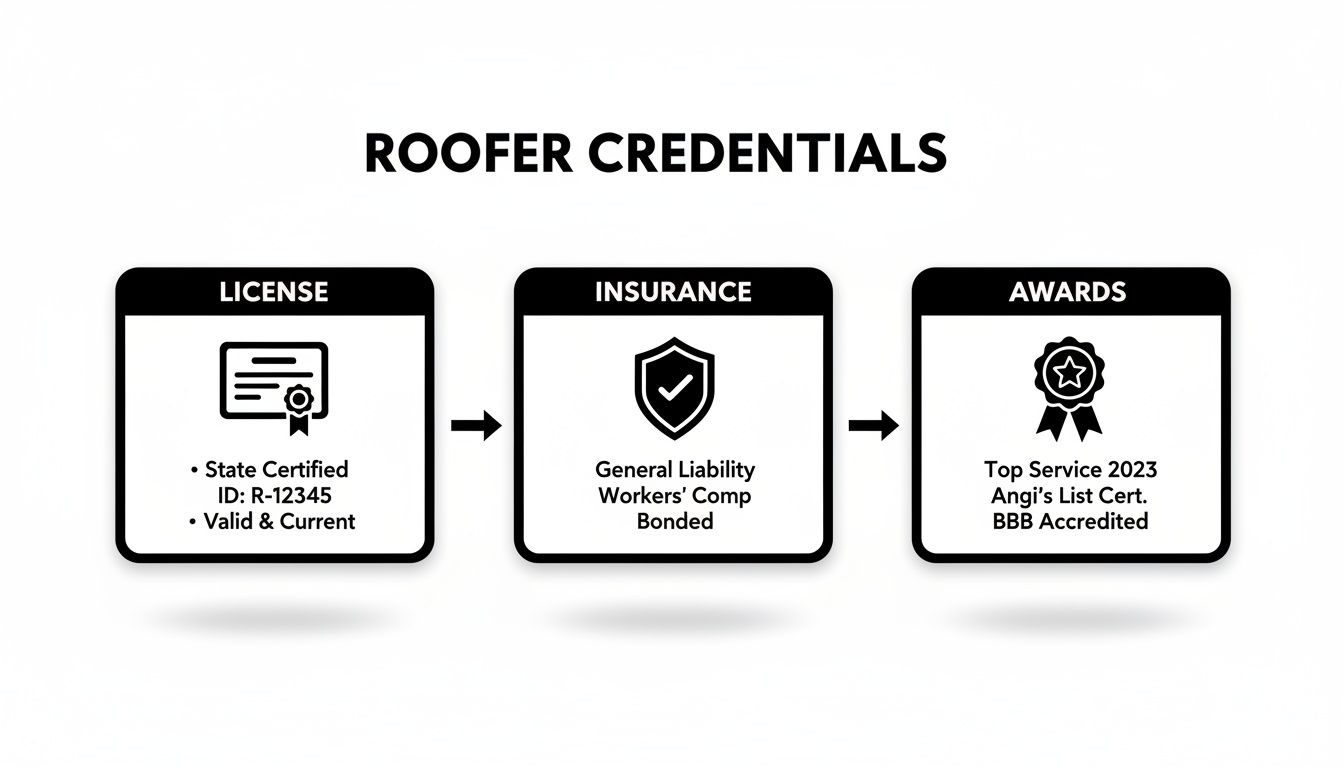
As you can see, things like proper licensing, solid insurance coverage, and a history of good work are the foundation of a contractor's reliability. Don't skip this step.
To help you sort through the paperwork, I've put together a quick checklist. Use this table to compare the quotes you receive side-by-side.
Roofing Estimate Comparison Checklist
| Checklist Item | What to Look For | Red Flag |
|---|---|---|
| Company Information | Full company name, address, phone number, and PA license number are clearly listed. | Missing contact information or license details. |
| Material Details | Specific brand, product line, and color of shingles (e.g., GAF Timberline HDZ). | Vague terms like "architectural shingles" or "quality underlayment." |
| Scope of Work | Detailed description of tear-off, installation, site cleanup, and disposal. | A single line item for the entire job with no breakdown. |
| Plywood/Decking Costs | A clear "per-sheet" price for replacing any damaged roof decking. | No mention of potential wood replacement costs. |
| Warranty Information | Separate details for the manufacturer's material warranty and the roofer's workmanship warranty. | A single, vague "warranty" without specifying who covers what. |
| Payment Schedule | A reasonable deposit (typically 10-30%) with the balance due upon completion. | A demand for 50% or more upfront before any materials arrive. |
| Project Timeline | An estimated start date and projected duration for the project. | No timeline is provided or a refusal to commit to a general schedule. |
This checklist isn't just about finding the lowest price; it's about finding the best—and safest—investment for your home.
Red Flags That Signal Trouble
Beyond what’s written on the estimate, pay attention to the contractor's behavior. High-pressure sales tactics are a classic sign of trouble. If a roofer is pushing you to sign a contract on the spot with a "today only" price, they’re more interested in their commission than your roof.
A suspiciously low bid is another major warning. It often means the contractor is cutting corners by using subpar materials, hiring uninsured labor, or skipping critical steps like proper flashing installation.
For instance, a bad quote might just say, "New Roof: $12,000." That tells you nothing. A proper, detailed proposal will break it down: costs for 30 squares of GAF Timberline HDZ shingles, a specific synthetic underlayment, ice and water shield for valleys and eaves, new drip edge, and the disposal fees. The detailed quote might have a higher total, but it represents the true cost without any games.
Choosing Materials and Warranties That Last
The best installation crew in the world can't make cheap materials last. When you're looking for a roofing company in Sharpsville, PA, you need a partner who understands how our local weather impacts a roof—not just someone trying to sell you the shingle of the week.
Your home’s design, your budget, and the brutal freeze-thaw cycles we get in Sharpsville all factor into the right choice. For many, architectural asphalt shingles hit the sweet spot between cost, durability, and aesthetics. They’re built tough to handle high winds and fight off those ugly algae stains. Metal roofing is another fantastic option, gaining ground for its incredible lifespan and energy savings, though the upfront cost is higher.
Understanding Your Warranty Protection
Here’s something that trips up a lot of homeowners: the warranty. You don't just get one warranty; you actually get two, and they cover completely different things. It’s critical to understand what each one does.
- Manufacturer's Warranty: This comes straight from the shingle maker (like GAF). It covers factory defects in the materials themselves—things like shingles that crack way too early or lose their protective granules.
- Workmanship Warranty: This is your roofer's personal promise. It covers the quality of the installation. If a leak pops up because of shoddy flashing work or poorly fastened shingles, this is the warranty that protects you.
A workmanship warranty is where a roofer really shows their cards. It’s a direct measure of how much confidence they have in their own crew and their own work. A short or vague workmanship warranty should be a major red flag.
A basic workmanship warranty might only cover a year or two. But the truly elite, certified contractors often stand behind their work for 10, 25, or even 50 years. This isn't just a random number; it's protection earned through rigorous manufacturer training and a proven track record. A long warranty tells you the roofer built that roof by the book and is willing to bet their reputation on it for decades.
Of course, a roof is more than just shingles. To get a better sense of all the parts that create a complete roofing system, you can explore our guide on the different types of roofing for homes. At the end of the day, a rock-solid warranty from a dependable roofing company in Sharpsville, PA, is what lets you sleep soundly through the next storm.
Why Local Experience and Emergency Service Matter
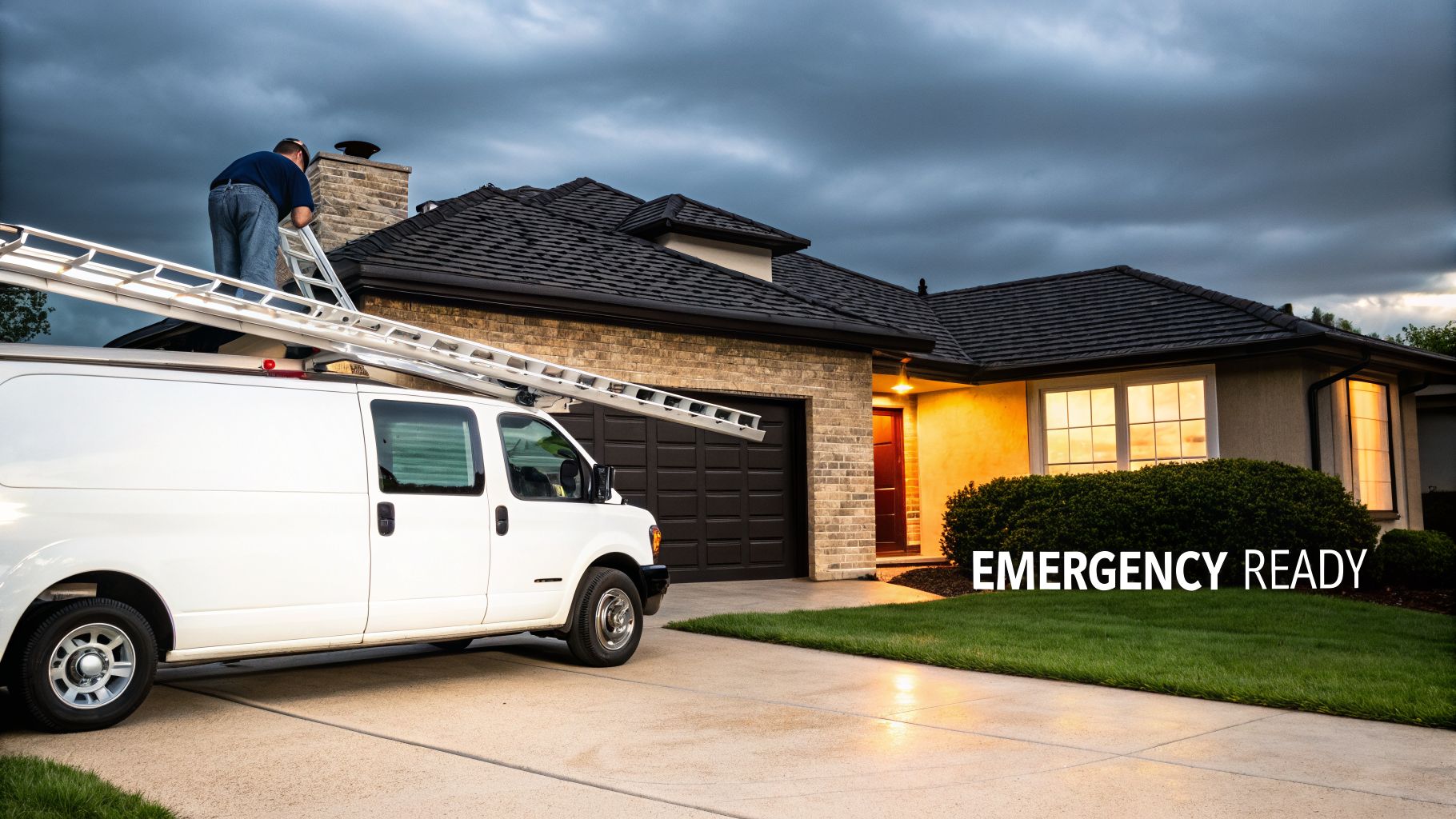
When you’re getting quotes for a new roof, it's tempting to get laser-focused on the price tag and shingle type. But there are a couple of things that often get overlooked, and they can make all the difference: local experience and emergency availability.
Hiring a roofing company in Sharpsville, PA, that has been serving this area for years isn’t just about supporting a local business. It's about hiring someone whose reputation is built right here in our community, not spread thin across the country.
Think about it. A roofer who’s spent decades working in Mercer, Beaver, and Lawrence counties knows our weather inside and out. They’ve seen what a brutal Pennsylvania winter or a surprise summer squall can do to a roof, and they know which materials actually hold up. They won't have to guess or look up local building codes—that knowledge is built from years of hands-on work.
When Disaster Strikes: The Need for 24/7 Help
Let's be honest, roofing emergencies don’t stick to a 9-to-5 schedule. High winds can rip shingles off in the middle of the night, and a fallen tree limb doesn't care if it's a holiday weekend. When you have a hole in your roof and water pouring in, you need help, and you need it fast.
This is where having a local roofer with 24/7 emergency services is a true lifesaver.
Instead of frantically searching online for a stranger during a full-blown crisis, you can make one call to a team you already trust. They can get to your home quickly, get a tarp over the damage to prevent further issues, and give you a solid plan for permanent repairs once the storm passes. It's about having peace of mind when you need it most.
With older homes across our area and the rise in storm-related insurance claims, the demand for fast-response roofing work is higher than ever. In fact, many of the latest trends shaping the roofing industry on ConsumerAffairs.com point directly to the growing need for rapid, reliable service.
A 25-year track record in a community isn't just a number; it's a testament to consistent quality and unwavering reliability. It proves a company has weathered economic shifts and stood by its work for decades, earning the trust of your neighbors.
At the end of the day, a home is most people's biggest investment. When you're hiring someone to protect it, you want to choose from reputable tradies who have proven their commitment to quality work. A long history in your own backyard is one of the surest signs you've found one.
Frequently Asked Questions About Roofing in Sharpsville
Getting a new roof is a big deal, so it's only natural to have a few questions. As a roofer serving the roofing company in Sharpsville, PA, there are a handful of concerns I hear from homeowners almost every day. Let's get you some straight answers.
How Long Does a Roof Replacement Typically Take?
This is usually the first thing everyone wants to know. For a standard-sized house here in Sharpsville, a full roof replacement—from tearing off the old shingles to the final cleanup—typically takes about 1 to 3 days.
Of course, that’s an estimate. A few things can stretch the timeline:
- The Roof's Design: A straightforward, low-pitched roof is much quicker to work on than one with lots of steep angles, valleys, and dormers.
- Surprises Underneath: We never know the true condition of the wooden roof deck until the old shingles are gone. If we find soft or rotted wood, it has to be replaced, which adds time to the job.
- Weather: This is the big one. We simply can't work safely in rain or high winds.
A good contractor will always walk you through the expected schedule and keep you in the loop if any delays pop up.
What Should I Do If My Roof Leaks During a Storm?
First, don't panic. Your immediate goal is to control the water inside your house. Grab buckets, pans, or towels to catch the drips and move any furniture or electronics out from under the leak.
The most important thing to remember is to stay off the roof yourself. A wet, stormy roof is incredibly dangerous, even for a professional. Your next call should be to a roofer who offers 24/7 emergency services. A good team can get a temporary tarp in place to stop more water from getting in until the storm passes and they can make a proper, permanent repair.
Is It Better to Repair or Fully Replace My Roof?
The honest answer? It depends entirely on the age of your roof and the type of damage we're looking at.
A simple repair makes sense if the roof is still in its prime and has a localized problem, like a few shingles that blew off in a windstorm. It's a targeted, cost-effective fix.
However, if your roof is pushing 20-25 years old or showing signs of widespread failure—think shingles that are curling up at the edges, large bald spots where the protective granules have worn away, or leaks in multiple spots—then a replacement is the smarter long-term investment. Patching an old, failing roof is just throwing good money after bad.
When you need a trusted partner who can give you clear answers and top-quality work, reach out to Penn Ohio Roofing & Siding Group. We’re here to provide a free estimate and expert guidance for your home. You can find out more by visiting us at https://pennohiorc.com.