So, you're trying to decide between architectural and composition shingles. Which one is the right call for your home? For most homeowners I talk to, architectural shingles are the better long-term investment. They simply offer more durability, a longer lifespan, and a much richer look. That said, composition (or 3-tab) shingles are a solid, budget-conscious choice, especially if you have short-term needs or are roofing a shed or detached garage.
Your Guide to Choosing the Right Shingle
Picking the right shingle is a huge decision for any property owner. It doesn't just affect your home's curb appeal and resale value; it's your primary defense against the wind, rain, and hail we see all the time in our area. Both architectural and composition shingles are made from asphalt, but that's where the similarities end. They're built for completely different levels of performance and style.
The first step is seeing them for what they are. Architectural shingles have a multi-layer, laminated construction that gives them a beautiful, dimensional appearance, much like expensive slate or wood shakes. On the other side, you have composition shingles—often just called 3-tab shingles—which have a flatter, more uniform look thanks to their single-layer design.
At-a-Glance Comparison
To cut right to the chase, here’s a quick breakdown of how architectural and composition shingles stack up against each other. This table zeroes in on the factors that matter most to homeowners, from the initial price tag to how they hold up over time.
| Feature | Architectural Shingles | Composition (3-Tab) Shingles |
|---|---|---|
| Typical Lifespan | 30-50 Years | 15-20 Years |
| Wind Resistance | Up to 130 MPH | 60-70 MPH |
| Upfront Cost | Moderate to High | Low |
| Appearance | Dimensional, Textured | Flat, Uniform |
| Warranty | Often 50 Years (Limited Lifetime) | 20-25 Years |
Key Takeaway: The choice really boils down to your budget versus long-term value. While 3-tab shingles will save you money on the initial installation, architectural shingles can last twice as long and provide far better weather protection. Over the life of the roof, they often end up being the more cost-effective option.
This is just the starting point, of course. Now that you see the high-level differences, we can dig into what really separates these two roofing mainstays. As we look closer at their construction, performance, and the real costs involved, you'll get the clarity you need to pick the perfect shingle for your home.
Architectural vs. Composition Shingles: What's the Difference?
Before you can choose the right shingle for your home, it helps to know exactly what you’re looking at. Both architectural and composition shingles are types of asphalt shingles, but that's where the similarities end. Their construction, appearance, and what they’re built to do are completely different.
Think of it this way: a basic sedan and a luxury SUV will both get you down the road, but how they look, feel, and handle are worlds apart. It's the same idea when comparing these two popular roofing options.
The Classic Choice: Composition (3-Tab) Shingles
When most people picture a standard asphalt shingle, they're thinking of a composition shingle. In the roofing world, we almost always call them 3-tab shingles. Their design is simple and effective: a single, flat layer of asphalt over a fiberglass mat, all coated with protective mineral granules.
They get the name "3-tab" because of the cutouts on the bottom edge that create the look of three individual tabs per shingle. This creates a very uniform, flat pattern across the roof. Because of this straightforward, single-layer construction, they are lightweight and have long been the go-to for budget-conscious projects.
The Modern Standard: Architectural Shingles
Architectural shingles are a huge leap forward in roofing technology. Unlike the single flat piece of a 3-tab, an architectural shingle is a laminated product, meaning multiple layers of asphalt and fiberglass are fused together.
This multi-layer build results in a shingle that is noticeably thicker, heavier, and far more durable. The real magic, though, is in the appearance. The layers are cut into different shapes and sizes, giving the final roof a rich, textured appearance with a lot of dimension.
Architectural shingles were specifically designed to mimic the beautiful, high-end look of materials like natural wood shakes or slate—without the hefty price tag and demanding upkeep.
This blend of superior looks and durability has completely reshaped the market. Architectural shingles, also known as dimensional shingles, have shot past their older counterparts to claim a dominant 57.78% market share. Homeowners are clearly choosing to invest in better aesthetics and performance. To see a side-by-side visual, check out our guide on dimensional vs 3-tab shingles.
This market shift isn't just about curb appeal. That extra thickness and weight from the laminated layers directly translate to better resistance against wind, hail, and water—something we'll break down in the next section.
How Shingles Perform When It Really Counts
A roof’s true test isn’t on a calm, sunny day—it’s how it holds up when a storm is bearing down. When we compare architectural shingles to basic composition shingles, performance is where the two pull apart, and the differences are night and day. It really comes down to how they're built; the thicker, multi-layered design of an architectural shingle gives it a toughness that a flat 3-tab shingle just can’t replicate.
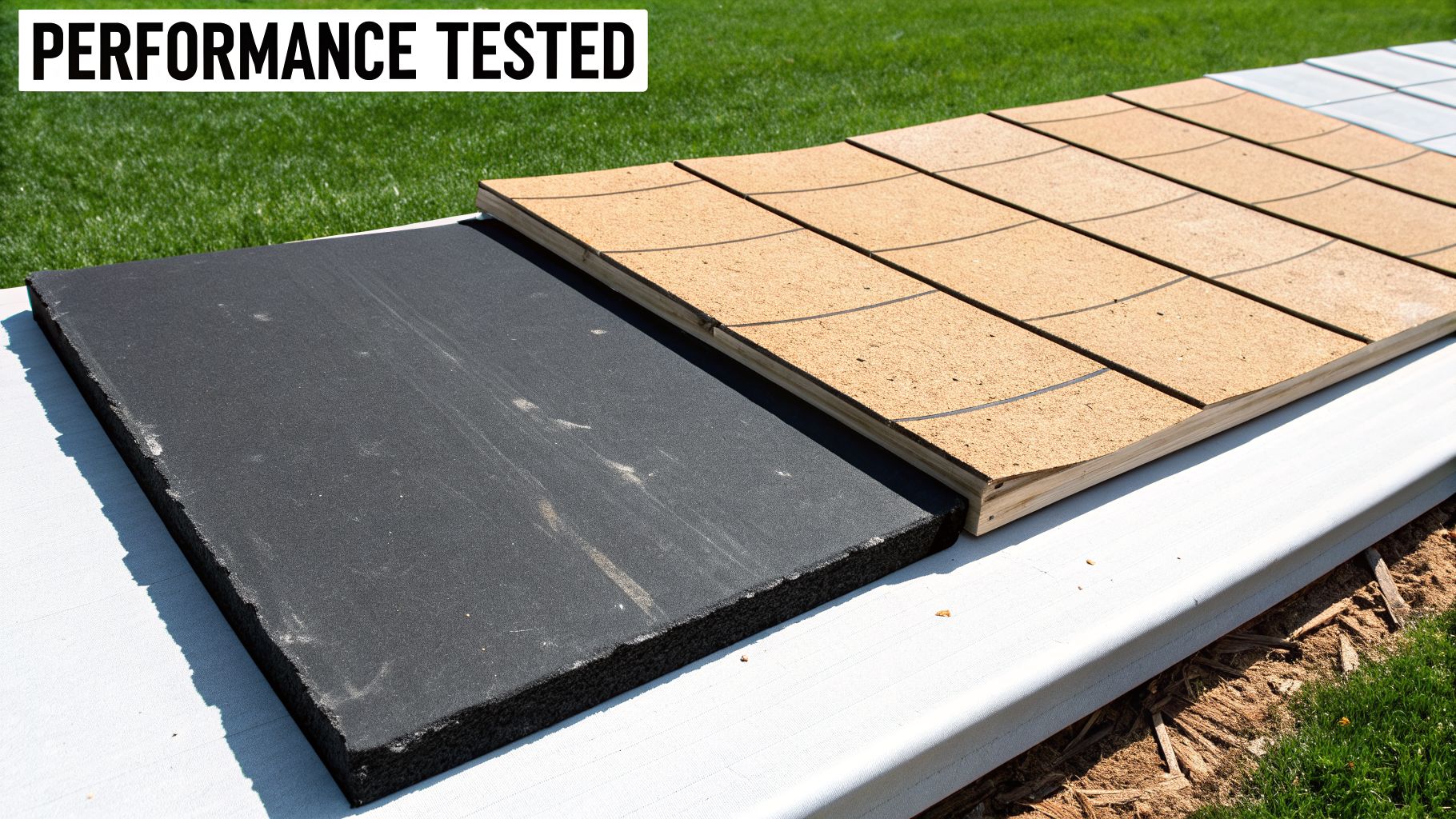
Think of it this way: a 3-tab shingle is a single, flat piece of material. An architectural shingle, on the other hand, is a laminated system, often weighing up to 50% more. That extra weight and thickness aren’t for show—they're the foundation of its strength against wind, hail, and water.
Wind Resistance and Uplift
Here in Ohio and Pennsylvania, we get our fair share of powerful storms with serious wind gusts. This is where you see the biggest performance gap between the two shingle types. The lightweight, single-layer design of a 3-tab shingle is its biggest weakness.
Standard 3-tab composition shingles are generally rated for wind speeds of only 60 to 70 mph. Once winds get stronger than that, they can easily get under those flat tabs, break the factory sealant, and start peeling shingles right off your roof deck. We’ve seen it happen time and time again after a major storm.
In contrast, architectural shingles are specifically engineered for high-wind conditions. Their laminated construction and sheer weight help them stay sealed and flat, preventing uplift. Most architectural shingles start with a 110 mph wind warranty, and many premium lines are rated for an impressive 130 mph.
For homeowners in Hermitage, Mercer County, and Trumbull County, that difference is everything. A 130 mph rating means your roof is built to withstand the force of a Category 3 hurricane. That’s a level of security—and peace of mind—that a basic 3-tab shingle can't come close to providing.
Impact and Hail Resistance
The multi-layer build of architectural shingles also gives them a huge advantage against impacts from hail or falling debris. When something hits your roof, you want the shingle to absorb and spread out that force to prevent a puncture or crack.
A 3-tab shingle’s thin, single layer offers very little cushioning. A direct hit from a quarter-sized piece of hail can easily fracture the shingle or knock off the protective granules, which exposes the raw asphalt to the sun. Once that happens, the shingle starts to break down quickly.
Architectural shingles, with their fused, thicker profile, create a much more effective barrier. That lamination helps absorb the shock, preventing cracks and keeping the vital granules in place. While no asphalt shingle is completely "hail-proof," the robust construction of an architectural shingle gives your roof a far better fighting chance.
Water Shedding and Leak Prevention
Both shingle types are designed to keep water out, of course, but their long-term reliability differs. The repeating, uniform cutouts on a 3-tab shingle create a grid of seams across your roof. If a shingle gets damaged or lifts even slightly in the wind, water has a clear path to get underneath.
Architectural shingles have a more random, overlapping pattern. This design not only creates that desirable dimensional look but also makes it much harder for water to find a straight path to your roof deck. Fewer, less-defined seams mean they are inherently better at preventing leaks over their entire lifespan. This is all backed up by a quality roof underlayment, which acts as a critical second line of defense. You can find out more about its importance by reading our guide on how roof underlayment works.
Algae Resistance and Overall Durability
Those ugly black streaks you see on older roofs? That’s blue-green algae. Most modern shingles include copper or zinc-infused granules to fight it, but the shingle's durability determines how long that protection actually lasts. Architectural shingles have a thicker layer of granules that adhere better, keeping the algae resistance effective for much longer.
This enhanced durability is why architectural shingles are becoming the go-to choice, accounting for a huge portion of the 60% of U.S. homes with asphalt shingle roofs. Especially in climates with harsh winters and humid summers, their multi-layer design holds up better, shedding ice and resisting granule loss. This allows them to far outlast the 15-20 year lifespan of 3-tabs, often qualifying for 50-year limited warranties instead of just 25.
To make the choice clearer, here’s a direct comparison of the key features that matter most.
Architectural vs. Composition (3-Tab) Shingle Feature Comparison
This table breaks down the core differences in performance, cost, and longevity to help you see exactly what you’re getting with each option.
| Feature | Architectural Shingles | Composition (3-Tab) Shingles |
|---|---|---|
| Wind Rating | 110-130 MPH | 60-70 MPH |
| Hail Resistance | Good to Excellent (Thicker, multi-layer) | Fair (Thinner, single-layer) |
| Water Shedding | Excellent (Fewer, overlapping seams) | Good (More uniform seams) |
| Algae Resistance | Excellent (Durable granule adhesion) | Good (Can degrade faster) |
As you can see, the practical advantages of architectural shingles are significant. While 3-tab shingles can serve as a functional, budget-friendly roof covering, they simply don’t offer the same level of long-term, rugged protection. For homeowners who want a roof built to last against the elements, architectural shingles are the superior investment.
Analyzing the Financial Investment and Long-Term Value
When it comes to choosing a new roof, it’s easy to get hung up on the sticker price. But as any experienced roofer will tell you, the real cost isn't just about the initial check you write. To understand the true financial picture, you have to look at the total cost of ownership over the roof's entire life. That’s where you’ll find the real value.

There's no denying that composition (3-tab) shingles are the go-to for homeowners on a tight budget because of their lower upfront cost. But that initial savings often comes at the expense of long-term durability and performance.
Upfront Cost Versus Long-Term Savings
Let's talk numbers. The financial conversation almost always starts with the installation price, and it's true that architectural shingles typically cost 15-20% more upfront than their 3-tab counterparts. While that difference isn't small, it's only the first chapter of the story.
Now, think about lifespan. A standard 3-tab roof will probably give you 15 to 20 years of service, if you're lucky. A professionally installed architectural shingle roof, on the other hand, can easily last 30 to 50 years. This means you could find yourself replacing a 3-tab roof twice, maybe even three times, in the same span you'd have a single architectural roof.
The Return on Investment (ROI): Once you factor in the cost of a second full roof replacement—with all the associated materials, labor, and disposal fees—the architectural shingle roof almost always proves to be the more cost-effective choice in the long run.
The market trends back this up. The U.S. roofing industry is projected to jump from USD 29.65 billion in 2026 to a massive USD 51.17 billion by 2033, with architectural shingles leading that charge. They are growing at double the pace of 3-tabs as more homeowners, real estate agents, and insurers recognize the value in durability and appearance, which translates to higher home values and fewer insurance claims.
Impact on Property Value and Curb Appeal
Never underestimate the power of curb appeal. Your roof can make up as much as 40% of what people see from the street, and a worn-out, flat-looking roof can drag down your entire property's value. A new, high-quality roof isn't just a maintenance item; it's a major selling point.
Architectural shingles, with their rich, dimensional look that mimics natural slate or wood shakes, give your home an instant and significant aesthetic upgrade. This premium appearance is a big deal to potential buyers, who often view a great roof as a sign of a well-cared-for home.
- Higher Resale Value: A house with a new architectural roof screams "move-in ready," signaling no major upcoming expenses for the new owner.
- Faster Sale: In a competitive market, great curb appeal helps your home pop, often leading to a quicker sale.
- Better Appraisals: Home appraisers absolutely factor in the roof's condition and material quality when calculating a property's value.
If you think you might sell your home in the next decade, investing in an architectural roof can deliver a substantial return. Of course, no matter which shingle you pick, proper maintenance is essential for protecting your home's biggest asset and getting the most out of your investment.
Reduced Repair and Maintenance Costs
The superior toughness of architectural shingles directly translates to lower maintenance bills over the years. Because they are thicker and have much higher wind resistance, they are far less likely to get damaged during a storm, which means fewer calls for emergency repairs.
Over a 30-year timeframe, the small costs of patching and replacing blown-off 3-tab shingles can really add up, slowly eating away at any money you saved upfront. To get a better handle on all the factors involved in a replacement project, check out our guide on the cost to replace asphalt shingles.
At the end of the day, choosing architectural shingles is an investment in your peace of mind and your home's long-term financial health.
Enhancing Your Home's Curb Appeal
A roof is so much more than a shield against the elements; it's one of the first and biggest things people see. When weighing architectural shingles vs. composition shingles, you're making a major decision that directly impacts your home's entire look and feel. This is where the visual differences between the two become impossible to ignore.
Let’s start with the classic composition shingles, which you’ll often hear called 3-tab shingles. They get their name from their simple, single-layer design with cutouts that create a repeating, flat pattern. It’s a functional, no-frills look that gets the job done but lacks the depth and character most homeowners are looking for today.
The Visual Power of Architectural Shingles
Architectural shingles were engineered precisely to solve that "flat" problem. By laminating multiple layers of shingle material together, manufacturers can create a rich, textured appearance that adds instant dimension and character to any roofline.
This sophisticated construction opens up a world of design possibilities:
- Mimicking High-End Materials: They are masterfully designed to look like classic, high-end roofing materials such as natural slate or wood shakes. This gives you that premium, elegant appearance without the astronomical cost and constant upkeep.
- Dimensionality and Shadow Lines: The random thickness of the shingle tabs creates deep, dramatic shadow lines. This simple effect makes your roof look more substantial and gives it a dynamic, visually interesting quality from any angle.
The difference is like comparing a plain, painted wall to one with custom trim and texture. An architectural shingle adds layers of detail that catch the light, drawing the eye and giving your home a custom-built, high-end feel.
Color and Style Options
Beyond the texture itself, architectural shingles come in a much wider and more sophisticated color palette. Instead of just solid, flat colors, you’ll find granule blends that create a vibrant, multi-tonal look across the roof.
These blends can feature subtle variations of browns, grays, and reds, allowing you to perfectly match or complement your home's siding, trim, and landscaping. For example, a blend of charcoal and pewter grays can give a traditional home a stately, slate-like elegance. On the other hand, a mix of earthy browns and reds can deliver a rustic, wood-shake vibe.
Composition shingles are far more limited, typically only available in a handful of solid colors. This offers far less opportunity to customize the look of your home.
Ultimately, your choice of shingle is a defining factor in your home's overall aesthetic and a huge contributor to its curb appeal. While a 3-tab roof provides a clean, traditional look, it simply can't compete with the dramatic visual impact of an architectural shingle. For any homeowner in Hermitage looking to boost their property's style and value, the aesthetic advantages of architectural shingles are clear.
Making the Right Choice for Your Home
So, how do you actually choose between architectural and composition (3-tab) shingles? There’s no single right answer, but there’s definitely a right choice for your home. It all comes down to balancing your budget, how long you plan to live in the house, and the kind of protection you really need.
For the vast majority of homeowners we work with, architectural shingles are simply the better long-term investment. Their toughness and longer lifespan just make more financial sense over the years. That said, the classic 3-tab composition shingle absolutely has its place for certain projects where the upfront cost is the number one concern.
This decision tree gives you a quick visual guide for thinking through the choice.
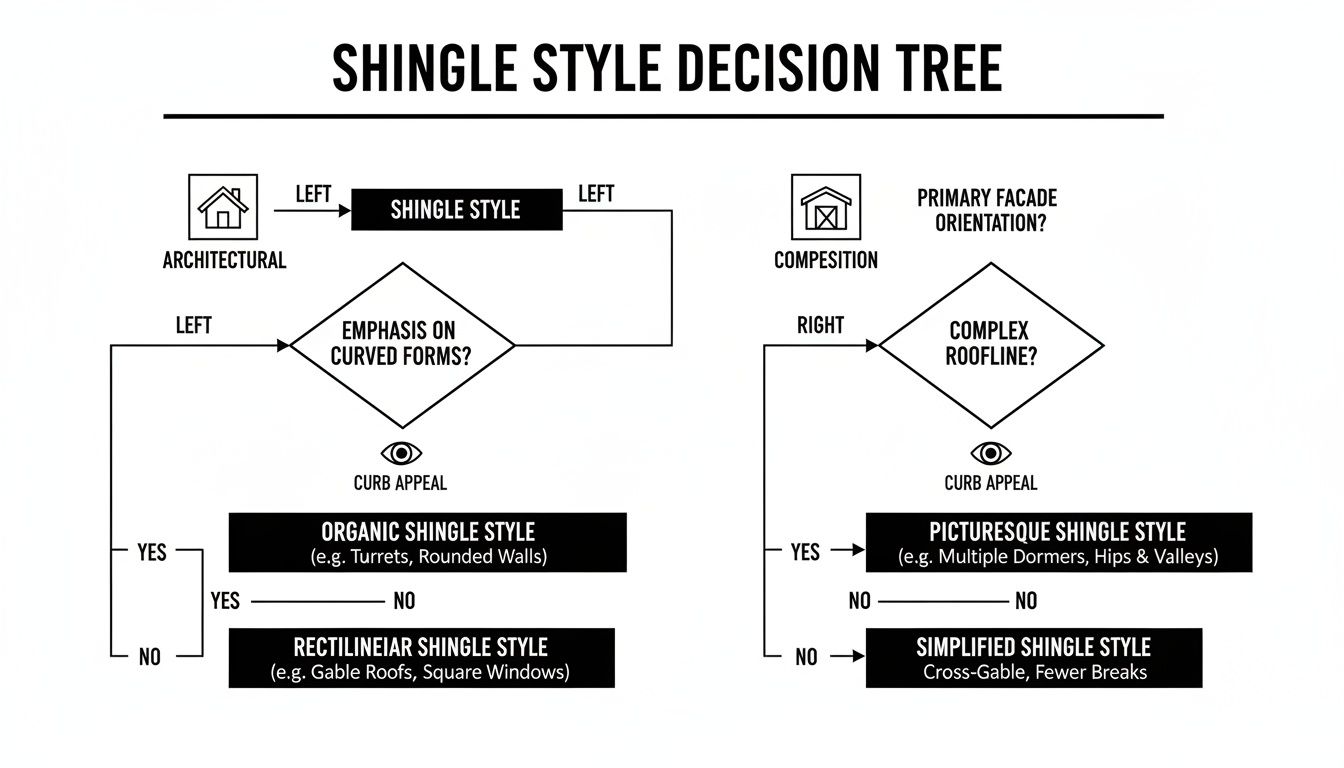
As you can see, the path often splits depending on whether you’re roofing your primary home or a secondary building.
The Case for Architectural Shingles
Architectural shingles are the go-to for homeowners who see their roof as a critical investment in their property’s safety and value. If any of these sound like you, an architectural shingle is almost certainly the right call.
- You're in Your "Forever Home": If you plan on staying put for more than 15 years, the 30 to 50-year lifespan of architectural shingles is a no-brainer. It saves you from having to think about—and pay for—another roof replacement down the road.
- You Live in a Tough Weather Area: Here in Hermitage, Mercer, and Trumbull counties, we get our fair share of nasty storms. The 110-130 mph wind warranty on architectural shingles isn't just a number; it's real peace of mind when the wind starts howling.
- Curb Appeal Matters to You: If you want to boost your home’s appearance and resale value, there’s no contest. The dimensional, high-end look of architectural shingles gives your home an immediate and noticeable upgrade.
Choosing architectural shingles is about investing in durability, a beautiful look, and long-term confidence in your roof. It's the standard for residential roofing projects today because it delivers proven, lasting value.
Where Composition Shingles Still Make Sense
While architectural shingles have become the modern standard, the old-school 3-tab composition shingle isn't obsolete. Its main advantage has always been its low upfront cost, which makes it a smart, practical choice in a few key situations.
You might want to stick with 3-tab composition shingles if you're:
- Working on a Very Tight Budget: When you need a new roof now and the initial cost is the most important factor, the savings from 3-tab can make a project possible.
- Roofing a Shed or Detached Garage: For outbuildings, barns, or sheds, 3-tab shingles are a perfectly good, cost-effective solution. Premium looks and maximum wind resistance usually aren't as critical for these structures.
- Managing a Rental Property: If you’re a landlord focused on minimizing immediate expenses on a rental unit, 3-tab shingles provide a functional, affordable roof that gets the job done.
A Simple Decision Checklist
To pin down your final choice, just run through these questions. Your answers will steer you toward the shingle that best fits your goals.
- Your Timeline: Do I need a roof that will last 30+ years, or is 15-20 years enough for my plans?
- Your Budget: Is my main priority keeping the initial cost as low as possible, or can I invest more now to save later?
- Your Climate: Is my home in an area where high winds make a 130 mph wind rating a significant advantage?
- Your Aesthetics: How much does the roof’s appearance contribute to my home's curb appeal and potential resale value?
- Your Building: Am I roofing the house I live in, or is this for a secondary structure like a garage or barn?
By thinking through these five points, you can feel confident in your decision, knowing you’ve picked a roof that will serve your home well for years to come.
Frequently Asked Questions About Shingles
We get asked a lot of the same questions by homeowners trying to make sense of their roofing options. Let's tackle some of the most common ones head-on so you can feel good about your final decision.
Can You Install Architectural Shingles Over an Existing 3-Tab Roof?
This is a big one, and the short answer is no, you shouldn't. While some building codes might technically allow it, putting a new roof over an old one—a "layover"—is a bad idea that nearly every professional roofer will advise against. For one, you're piling an enormous amount of extra weight onto your home's structure.
More importantly, a layover just covers up problems. Any soft spots, hidden leaks, or rot in the roof deck get trapped underneath, where they can turn into major structural failures later on. To get a truly secure, watertight roof and a valid manufacturer's warranty, a complete tear-off of the old shingles is the only way to go. It’s the right way to start fresh.
How Do Warranties Differ Between Shingle Types?
The warranty tells you everything you need to know about a manufacturer's confidence in their product. The gap between 3-tab and architectural shingles is massive, and it's reflected right there in the warranty paperwork.
- Composition (3-Tab) Shingles: You’re typically looking at a 20 to 25-year limited warranty. The key word is "limited," as the coverage is almost always prorated, meaning its value drops sharply after just a few years.
- Architectural Shingles: These usually feature a "limited lifetime" warranty, which is often defined as 50 years. The real benefit, though, is the non-prorated coverage for the first 10 to 20 years. Terms like SureStart™ or SmartChoice® Protection mean the manufacturer covers 100% of material and often labor costs for defects during that initial period.
The Bottom Line: A warranty is more than just a number—it’s a direct signal of the shingle’s quality. The ironclad warranty on architectural shingles is one of the clearest signs of their superior long-term value.
Are Architectural Shingles a More Environmentally Friendly Option?
Yes, and for a couple of very practical reasons. First and foremost, they simply last longer. Since architectural shingles can last twice as long as 3-tab shingles, you're replacing your roof less often. That directly translates to less roofing waste heading to the landfill over the life of your home.
Beyond just longevity, many manufacturers are now incorporating recycled materials into their architectural shingles. While asphalt is a petroleum-based product, the industry is making real progress. When you factor in the longer lifespan, architectural shingles are easily the greener choice in the architectural shingle vs composition shingle comparison.
Choosing the right shingle protects your biggest investment for years, even decades, to come. If you still have questions or you’re ready to see some samples for your own home, the team at Penn Ohio Roofing & Siding Group is here to help. With 25 years of experience, we can guide you to the perfect roofing solution.
Contact us today for a free, no-obligation estimate. You can learn more and schedule your free estimate on our website.