Choosing a new roof is one of the most significant decisions a homeowner can make. It's not just about shelter; it's about long-term value, protection, and peace of mind. While traditional options like asphalt shingles have been popular for decades, a growing number of homeowners in Mercer, Beaver, and Lawrence counties are discovering the superior advantages of a modern alternative. This shift is happening for a reason, as the tangible benefits of metal roofing offer a compelling case for those seeking a smarter, more resilient solution for their property.
This guide moves beyond the surface to provide a detailed breakdown of why metal is an exceptional choice. We will explore seven key advantages, from exceptional longevity and storm protection to significant energy savings and minimal maintenance demands. You will learn precisely how this roofing system can enhance your home's durability, efficiency, and overall value for decades to come. Forget the outdated perceptions of old-fashioned tin roofs; today's advanced metal roofing options deliver a sophisticated, high-performance investment that pays for itself over time. Let's examine why your next roof should be metal.
1. Exceptional Longevity and Durability: A Roof for a Lifetime
One of the most significant benefits of metal roofing is its remarkable lifespan. When you invest in a new roof, you’re looking for a solution that provides lasting peace of mind, not a temporary fix. Metal roofing systems deliver on this promise, offering a service life that far exceeds many traditional materials.
With professional installation and routine care, a metal roof can protect your home for 40 to 70 years. This longevity stems from the material's inherent strength and resistance to common roofing problems like cracking, shrinking, and erosion, which often plague less durable options. You're not just purchasing a covering; you're making a multi-generational investment in your property's structural integrity.
Lifespan: Metal vs. Asphalt
The difference in durability becomes clear when comparing metal to traditional asphalt shingles. Asphalt roofs typically require a full replacement every 15 to 20 years, meaning a homeowner might need to replace their roof two or even three times during the lifespan of a single metal roof.
This bar chart clearly illustrates the substantial difference in expected service life between the two materials.
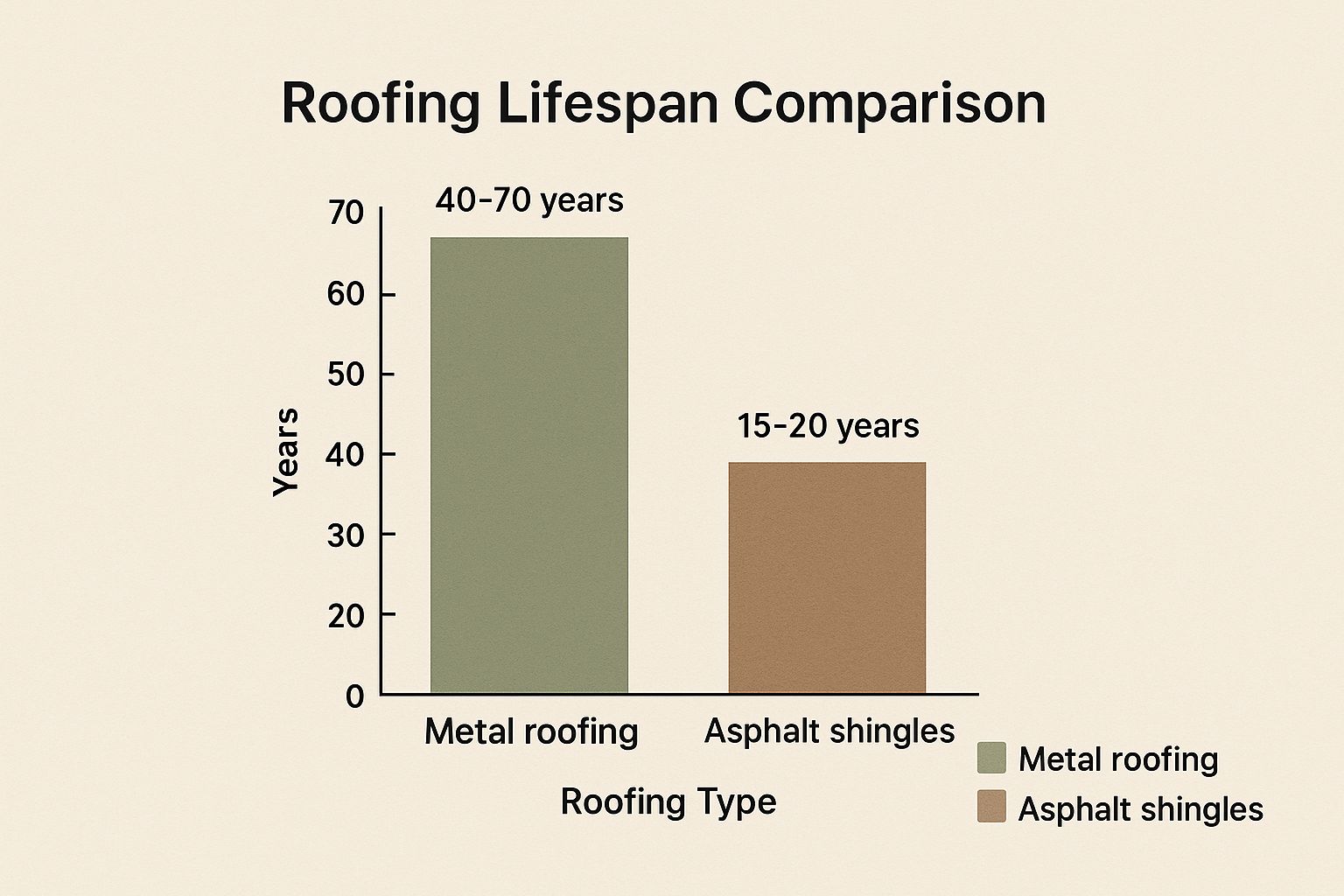
As the chart shows, metal roofing offers at least double, and often triple, the longevity of asphalt shingles, making it a superior long-term asset for your home.
Practical Tips for Maximum Longevity
To ensure your roof reaches its maximum potential lifespan, consider these actionable steps:
- Choose Premium Coatings: Opt for a high-quality finish like Kynar 500® to ensure maximum color retention and protection against fading and chalking.
- Prioritize Professional Installation: Correct installation is non-negotiable. An experienced team ensures your roof is installed to manufacturer specifications, which is crucial for performance and warranty compliance.
- Schedule Regular Inspections: A quick inspection every two years, and especially after severe weather events, can identify minor issues like scuffs or loose fasteners before they become major problems.
- Address Scratches Promptly: If a branch or debris scratches the surface, use a manufacturer-approved touch-up paint to restore the protective layer and prevent rust.
For a more comprehensive look at all the factors involved, explore our detailed guide on the pros and cons of metal roofing.
2. Superior Energy Efficiency: Lower Bills and Enhanced Comfort
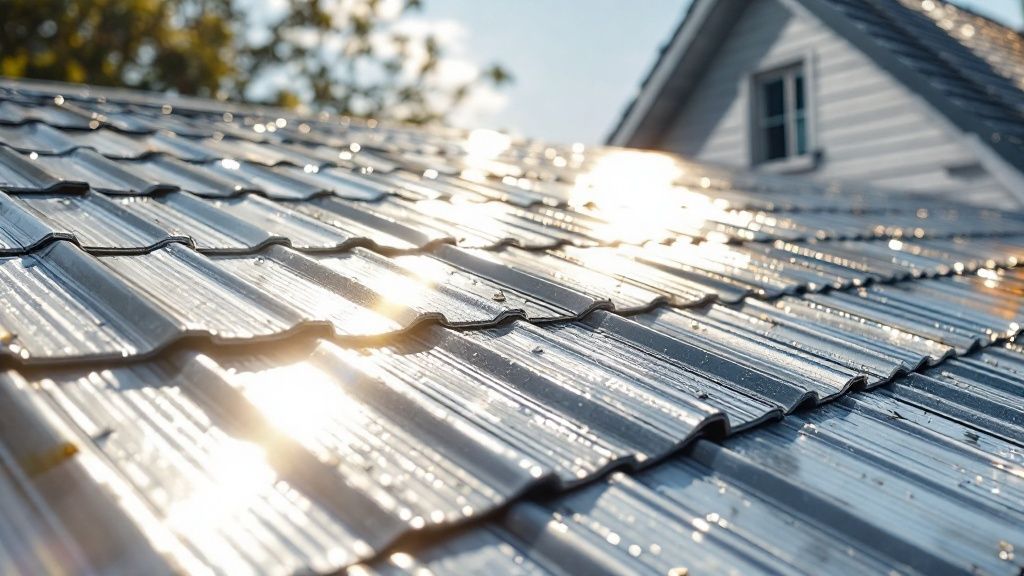
Beyond its longevity, one of the most compelling benefits of metal roofing is its outstanding energy efficiency. Unlike traditional materials like asphalt, which absorb and retain solar radiant heat, metal roofs are designed to reflect it away from your home. This reflective quality significantly reduces the heat transferred into your attic and living spaces, directly translating to lower cooling costs.
During hot Pennsylvania and Ohio summers, this can lead to a substantial reduction in your energy bills, often by as much as 10-25%. The roof acts as a thermal barrier, helping to maintain a more consistent and comfortable indoor temperature year-round, which lessens the strain on your HVAC system.
Energy Savings in Action
The impact of this efficiency is well-documented. LEED-certified commercial buildings often use reflective metal roofing to achieve critical energy credits. Similarly, studies on residential homes in hot climates have shown cooling cost reductions of over 20% after switching to a properly coated metal roof. This same principle applies to local warehouses and agricultural buildings, where cutting energy expenses is crucial for operational budgets. Beyond reducing your reliance on heating and cooling systems, it's helpful to understand the actual cost of running air conditioning to see the full financial impact of these energy-saving choices.
Practical Tips for Maximum Energy Efficiency
To get the most out of your energy-efficient metal roof, consider these key strategies:
- Select Light Colors: Lighter shades like white, beige, or light gray offer the highest solar reflectivity, maximizing heat reflection and minimizing absorption.
- Combine with Proper Attic Insulation: A well-insulated attic works in tandem with your metal roof, preventing any residual heat from entering your home and keeping conditioned air from escaping.
- Ensure Adequate Ventilation: A properly installed ventilation system, including ridge and soffit vents, allows hot air to escape the attic, further reducing the heat load on your home.
- Choose a "Cool Roof" Coating: Many modern metal roofs come with specialized pigment coatings designed to reflect infrared radiation, keeping the surface temperature cooler even in darker colors.
3. Low Maintenance Requirements
Another one of the top benefits of metal roofing is how little upkeep it requires. Traditional materials often demand frequent repairs, cleaning, or treatments to stay effective. Metal roofing, however, maintains its integrity and appearance with minimal homeowner intervention, saving you both time and money over the decades.
The smooth, non-porous surface of a metal roof naturally sheds debris like leaves, pine needles, and snow. This quality also makes it highly resistant to the growth of moss, algae, and fungus, which can cause significant damage and discoloration to materials like asphalt or wood. You get a roof that not only performs exceptionally but also looks clean with very little effort.

A "Set It and Forget It" Mentality
While no roof is completely maintenance-free, metal comes incredibly close. Consider agricultural buildings with metal roofs that still look great and function perfectly after 30 years with nothing more than an occasional rinse. For homeowners, this translates to less time spent on ladders and more time enjoying your home, with routine upkeep often limited to simple gutter cleaning.
This low-maintenance nature is a significant advantage over asphalt shingles, which may need periodic shingle replacement, granule cleaning from gutters, and treatments to prevent algae streaking. Metal's resilience simplifies homeownership, freeing you from the constant worry of roof-related chores.
Practical Tips for Minimal Maintenance
To ensure your metal roof stays in prime condition with the least amount of effort, follow these simple, actionable steps:
- Keep Gutters Clear: Remove leaves and debris from your gutters, especially in the fall and spring, to ensure proper water drainage and prevent water from backing up under the panels.
- Conduct Annual Visual Inspections: Once a year, safely check for any loose fasteners, scuffs, or sealant issues around vents and flashing. Catching these minor things early is key.
- Clean Gently When Needed: If cleaning is necessary, use plain water or a mild detergent with a soft-bristled brush or cloth. Avoid pressure washers and harsh chemicals that could damage the finish.
- Address Scratches Promptly: If a branch causes a deep scratch, use a manufacturer-recommended touch-up paint to seal the area and prevent any potential for corrosion.
4. Fire Resistance and Safety
When considering the safety of your home or commercial property, your roof is the first line of defense against external threats, including fire. One of the most critical benefits of metal roofing is its exceptional fire resistance. Metal is a non-combustible material, which means it will not ignite and fuel a fire, providing a crucial layer of protection for the structure underneath.
Metal roofing systems typically carry a Class A fire rating, the highest classification available. This rating signifies that the material can withstand severe fire exposure without catching fire or allowing flames to penetrate the roof deck. For homeowners, particularly those in areas prone to wildfires or with nearby trees, this feature provides invaluable peace of mind.
Fire Resistance: A Critical Advantage
The safety advantage of metal becomes starkly clear in high-risk scenarios. Unlike wood shakes that can easily ignite from airborne embers or asphalt shingles that can melt and burn under intense heat, metal roofing acts as a protective shield. This quality is why it is often mandated for commercial buildings and preferred in regions with strict fire safety codes.
For example, homeowners in wildfire-prone areas like California often find that metal roofs are a key component in surviving fire seasons. Likewise, many insurance companies recognize this superior safety profile and may offer premium reductions for homes protected by a Class A-rated metal roof, making it a sound financial decision as well.
Practical Tips for Maximizing Fire Safety
To fully leverage the fire-resistant qualities of a metal roof, follow these actionable steps:
- Verify Class A Certification: Always confirm that the specific metal roofing product you choose comes with a certified Class A fire rating. Your installer should provide this documentation.
- Pair with Fire-Resistant Underlayment: For an even more robust system, use a fire-resistant underlayment beneath the metal panels to add an extra layer of protection.
- Maintain Defensible Space: Keep your roof and gutters clear of flammable debris like leaves and pine needles. Also, maintain a clear, "defensible" space around your property by trimming back trees and overgrown vegetation.
- Complete the System: Consider installing metal gutters and downspouts alongside your roof. This creates a cohesive, non-combustible system that prevents embers from finding a flammable ignition point.
5. Environmental Sustainability: A Responsible Choice for the Future
Choosing a new roof is an opportunity to make a positive impact on the environment. Metal roofing stands out as one of the most sustainable options available, aligning perfectly with modern green building practices. Unlike many traditional materials that end up in landfills, metal is part of a circular economy, offering significant environmental benefits that last for decades.
Metal roofing systems are highly sustainable because they are made from a high percentage of recycled materials, often between 25% and 95%. Furthermore, at the end of its exceptionally long service life, a metal roof is 100% recyclable. This means the material can be repurposed into new products without any loss of quality, drastically reducing landfill waste and the need for virgin resources.
The Landfill Problem: Metal vs. Asphalt
The environmental contrast between metal and asphalt is stark. Each year, an estimated 11 million tons of asphalt shingle waste are dumped into U.S. landfills, where they sit for centuries. Because metal is fully recyclable, it avoids this fate entirely. This closed-loop lifecycle is one of the key environmental benefits of metal roofing, making it an investment in both your property and the planet.
For homeowners and property managers aiming for green building certifications like LEED, recycled metal roofing is a common component used to achieve high sustainability ratings. Its eco-friendly properties contribute valuable points toward certification, highlighting its role in responsible construction.
Practical Tips for a Greener Roof
To maximize the environmental advantages of your new roof, follow these actionable steps:
- Choose High-Recycled Content: When selecting a material, ask about its recycled content. Opting for panels with a higher percentage of recycled steel or aluminum reduces the overall environmental footprint of your project.
- Plan for End-of-Life Recycling: While your roof will last for decades, it’s wise to have a plan. Partner with a responsible installer who understands local recycling protocols and can ensure the material is properly handled at the end of its lifecycle.
- Integrate Solar Technology: Metal roofs provide the perfect, durable platform for solar panel installations. The longevity of a metal roof ensures it will outlast the solar panels themselves, avoiding the need for a costly roof replacement when it's time to upgrade your solar array.
- Select "Cool Roof" Colors: Lighter-colored metal roofs with reflective coatings can significantly reduce solar heat gain, lowering your home's cooling costs by up to 40% and decreasing your reliance on HVAC systems.
6. Weather Resistance and Storm Protection
One of the most critical benefits of metal roofing is its incredible resilience against severe weather. Homeowners in the Penn Ohio region know that weather can be unpredictable, from heavy snow loads to high-speed winds. Metal roofing provides a superior level of protection, offering security when your home needs it most.
Engineered to perform in extreme conditions, metal roofing systems can withstand hurricane-force winds up to 140+ mph, resist significant impact from hail, and bear heavy snow loads without buckling. The interlocking panel design and secure fastening systems create a unified, monolithic barrier that prevents wind uplift and water intrusion far more effectively than traditional materials.
Performance in Extreme Conditions
The durability of metal is proven in some of the harshest climates. In Florida, homes with metal roofs regularly withstand Category 4 hurricanes, while in Colorado, they resist damage from softball-sized hail that would destroy an asphalt roof. Similarly, in northern states, metal’s strength and slick surface help shed heavy snow, preventing dangerous ice dams from forming.
This robust performance is a key reason why metal is a smart, long-term choice. Instead of worrying about leaks, punctures, or torn shingles after every major storm, you can have confidence that your roof is built to endure the elements. While a metal roof provides excellent protection from above, a truly resilient home considers all vulnerabilities. You can further fortify your home against severe weather and ensure your windows are just as prepared for extreme conditions when you explore hurricane protection window film solutions.
Practical Tips for Maximum Weather Protection
To guarantee your roof delivers the best possible storm protection, follow these professional recommendations:
- Verify Wind Uplift Ratings: Ensure the specific metal roofing system you choose is tested and rated to meet or exceed the wind speed requirements for your local area.
- Ensure Proper Fastener Spacing: Correct installation is key. Expert crews ensure fasteners are spaced according to manufacturer specifications to maximize wind resistance.
- Install Snow Guards in Key Areas: In climates with heavy snowfall, installing snow guards prevents large sheets of snow from sliding off dangerously, protecting walkways and landscaping below.
- Select a Quality Underlayment: The underlayment provides a crucial secondary barrier against water intrusion. You can explore how different types of roof underlayment contribute to a fully weatherproof system.
7. Lightweight Construction Advantage
Beyond its strength, one of the most practical benefits of metal roofing is its surprisingly low weight. When considering a roofing material, its impact on your home’s structural load is a critical factor. Metal roofing excels in this area, offering robust protection without overburdening your home's framework.
A typical metal roof weighs between 50 to 150 pounds per square (a 10×10 foot area). This is a fraction of the weight of traditional materials. For example, concrete tiles can weigh over 750 pounds per square, and slate can be even heavier. This reduced structural load makes metal an ideal choice for a wide range of properties, from new builds to historic renovations.
Weight: Metal vs. Traditional Materials
The difference in weight is substantial and offers significant structural advantages. Heavier materials require more robust, and often more expensive, framing to support them. In some cases, a home’s existing structure simply cannot handle the load of materials like tile or slate without costly reinforcements.
Metal’s lightweight nature often allows it to be installed directly over existing asphalt shingles, saving on the cost and labor of a tear-off. This versatility makes it an excellent solution for retrofit projects where structural integrity is a primary concern.
Practical Tips for a Lightweight Installation
To leverage the full advantage of a lightweight metal roof, proper planning and installation are key:
- Verify Structural Capacity: Although metal is light, always have a professional assess your home’s existing structure to ensure it can support the new system, especially if you live in an area with heavy snow potential.
- Plan for Thermal Movement: Metal expands and contracts with temperature changes. A proper installation accounts for this thermal movement with appropriate fasteners and panel design to prevent stress on the structure.
- Secure Fastening in High-Wind Zones: In areas prone to high winds, the lightweight nature of metal requires a robust fastening pattern to ensure panels remain secure and provide maximum uplift resistance.
- Consider Transportation Logistics: For properties in remote or hard-to-access locations, the lighter weight of metal roofing panels makes transportation and handling on-site significantly easier and more cost-effective.
For a deeper dive into the technical aspects of installation, our metal roofing installation guide provides more detailed information.
7-Key Benefits Comparison of Metal Roofing
| Feature / Aspect | Exceptional Longevity and Durability | Superior Energy Efficiency | Low Maintenance Requirements | Fire Resistance and Safety | Environmental Sustainability | Weather Resistance and Storm Protection | Lightweight Construction Advantage |
|---|---|---|---|---|---|---|---|
| Implementation Complexity 🔄 | Medium-high: Requires specialized installation and repairs | Medium: Coatings and ventilation integration needed | Low-medium: Basic cleaning and inspections | Medium: Needs fire-resistant underlayment and grounding | Medium: Sourcing recycled content and managing lifecycle | Medium-high: Proper fastening and installation critical | Medium: Structural load calculations and fastening adjustments |
| Resource Requirements 💡 | High upfront cost; premium materials and coatings | Moderate: Reflective coatings and ventilation systems | Low: Minimal tools, occasional professional service | Moderate: Fire-resistant materials and underlayment | Moderate-high: Recycled metals and energy-intensive production | High: Impact-resistant materials and fastening systems | Low: Lightweight materials reduce structural demands |
| Expected Outcomes 📊 | ⭐⭐⭐⭐⭐ Long lifespan (40-70 years), durable in extreme weather | ⭐⭐⭐⭐ 10-25% cooling energy savings, improved comfort | ⭐⭐⭐⭐ Reduced maintenance frequency and costs | ⭐⭐⭐⭐ Class A fire rating, enhanced safety | ⭐⭐⭐⭐ Lower environmental footprint, high recyclability | ⭐⭐⭐⭐⭐ Superior storm protection, wind resistance up to 140+ mph | ⭐⭐⭐⭐ Reduced structural load, easier installation |
| Ideal Use Cases 💡 | Historic, coastal, commercial, or extreme weather-prone roofs | Hot climates, LEED buildings, energy-efficient homes | Agricultural, residential, industrial with minimal maintenance | Wildfire-prone areas, fire-code sensitive buildings | Green building projects, solar-ready installations | Hurricane, hail, snow-prone regions | Retrofit projects, earthquake zones, lightweight framing needs |
| Key Advantages ⭐ / ⚡ | ⭐ Longevity, low long-term cost, impact resistance | ⚡ Energy savings, thermal comfort, environmental sustainability | ⚡ Minimal upkeep, self-cleaning, resistant to biological growth | ⭐ Fire safety, insurance discounts, ember protection | ⭐ Supports circular economy, reduces landfill waste | ⭐ Structural integrity, storm damage reduction | ⚡ Easier handling, reduced structural demands |
Is a Metal Roof the Right Choice for Your Home?
We've explored the comprehensive list of advantages that make metal roofing a superior choice for modern homeowners. From its exceptional longevity that can last over 50 years to its remarkable energy efficiency that lowers utility bills, the evidence is clear. A metal roof isn't just a covering; it's a long-term investment in your property's value, safety, and sustainability.
Recapping the Key Benefits of Metal Roofing
Making the right decision for a project as significant as a roof replacement requires weighing all the factors. Let's briefly revisit the powerful arguments in favor of metal:
- Lifetime Value: While the initial cost may be higher than traditional materials like asphalt shingles, the long-term value is unmatched. With a lifespan of 50-70 years or more, you avoid the recurring expense and hassle of re-roofing every two decades.
- Unbeatable Protection: Metal roofs offer superior resistance to fire, wind, hail, and heavy snow loads. This robust defense provides peace of mind, knowing your home and family are protected against the harshest weather conditions Ohio and Pennsylvania can deliver.
- Sustainable and Efficient: By reflecting solar radiant heat, a metal roof can significantly reduce cooling costs in the summer. Furthermore, being made from recyclable materials and being 100% recyclable at the end of its life, it stands as a truly eco-friendly choice.
- Effortless Ownership: The low maintenance requirements of metal roofing free you from the constant worry of cracked, curling, or missing shingles. A simple annual inspection is often all that's needed to ensure it remains in peak condition for decades.
From Information to Action: Your Next Steps
Understanding these benefits is the first step, but how do they apply to your specific home? The answer lies in a professional assessment. A qualified expert can evaluate your current roof structure, discuss your aesthetic preferences, and provide a clear picture of the costs and long-term savings involved. This personalized approach ensures you're not just buying a product, but investing in a tailored solution that fits your home's unique needs and your financial goals.
The decision to upgrade your roof is a significant one, but it's also an opportunity to make a lasting improvement that pays dividends for years to come. By choosing metal, you're not just getting a new roof; you're investing in durability, efficiency, and ultimate peace of mind. This is your chance to break the cycle of temporary fixes and install a permanent solution that enhances your home's protection and value from day one.
Ready to see how the benefits of metal roofing can transform your home? The experts at Penn Ohio Roofing & Siding Group have over 25 years of experience installing high-performance metal roofing systems and can provide a detailed, no-obligation estimate tailored to your property. Contact us today to schedule your consultation and take the first step toward a lifetime roofing solution.