Trying to find the right roofing company can be a real headache. Just typing "best roofing company near me" into a search bar unleashes a flood of options, and it’s tough to know who to trust. This guide is designed to cut right through that noise. Think of it as your clear, practical roadmap to finding and hiring a roofer you can truly count on.
Your Search for a Trusted Local Roofer Starts Here
Your home is your biggest investment, and the roof is its first line of defense against everything nature throws at it. Choosing a roofer isn't just about getting the cheapest quote. It’s about ensuring quality work, getting durable materials, and securing a solid warranty that lets you sleep at night. We're going to skip the generic advice and get straight to what actually works: verifying credentials, making sense of estimates, spotting red flags, and asking the questions that matter.
Why Vetting Your Roofer Is Non-Negotiable
The roofing industry is huge. As of 2025, there are nearly 100,000 roofing companies operating in the U.S. alone, making the market incredibly competitive and, frankly, a bit fragmented. That massive number is precisely why you have to do your homework.
With the average roof replacement running about $11,500, this isn't a small weekend project—it's a major financial decision. Add to that the fact that 77% of industry professionals see residential roofing sales growing, and you can see why being thorough is more important than ever.
Picking a roofer from a quick search without doing any real digging is like handing over your house keys to a stranger. The risks—from subpar work to serious legal troubles—are just too high to ignore.
It's More Than Just a Roof
A new roof does more than just keep the rain out. It's a significant home improvement that boosts curb appeal, can make your home more energy-efficient, and protects the very structure you live in. A well-installed, high-quality roof is also a proven way to increase your property value.
This guide will give you the tools you need to hire with complete confidence. We’ll walk through the essentials to make your search for a local roofer a success:
- How to build a solid shortlist of local, reputable contractors.
- The right way to verify the non-negotiables, like licenses and insurance.
- Breaking down estimates so you can compare apples to apples.
- Spotting the common red flags that should make you run the other way.
By the end, you'll be able to move forward with a trusted partner who will protect your home for years to come, turning a stressful task into a successful project.
Finding Your Shortlist of Local Roofers
So, you've typed "best roofing company near me" into a search bar and now you're staring at a wall of ads and paid results. It can feel a bit overwhelming, right? Let's cut through that noise.
The goal isn't to call every roofer in Hermitage. The real first step is to build a solid, pre-vetted list of just three to five local professionals. We're looking for quality over quantity here, focusing on companies that are genuinely worth your time.
Start With Your Community, Not a Search Engine
Before you get lost in online reviews, the most reliable leads are often right in your own backyard. These are the recommendations that can't be bought or faked.
Think about your own neighborhood. See a new roof that looks sharp? Don't be shy—ask your neighbor who they used and what their experience was like. A quick chat over the fence can give you more honest insight than a dozen online testimonials.
A few other hyper-local resources can be a goldmine:
- Neighborhood Social Media: Those Hermitage and Mercer County Facebook groups are perfect for this. People are usually quick to share both glowing reviews and horror stories.
- The Nextdoor App: Since it’s all about your specific neighborhood, you can get referrals from people who live just down the street.
Here's a pro tip: Swing by a local building supply store. The folks at the contractor desk know who's who. They see which roofers are busy, who pays their bills, and most importantly, who’s buying top-shelf materials instead of the cheap stuff.
Use Vetting Services to Filter the Rest
Once you have a couple of names from your local network, you can round out your list by checking sources that do some of the vetting for you. These organizations have standards that contractors must meet, which weeds out a lot of questionable operators right from the start.
A great place to begin is the Better Business Bureau (BBB). Look up the companies on your list. You can see their official rating, read through customer feedback, and find out if they have a history of unresolved complaints. A roofer who has maintained a strong BBB rating for years is usually a solid bet.
Check for Elite Manufacturer Certifications
This is one of the most powerful signs of a top-tier contractor. Major manufacturers like GAF have certification programs that are incredibly tough to get into. For example, seeing that a company is a GAF Master Elite® Contractor tells you a lot.
Why does that little badge matter so much?
- They've Been Vetted: To even qualify, a roofer has to prove they are fully licensed, carry adequate insurance, have a fantastic reputation, and commit to ongoing training.
- You Get Better Warranties: Only certified installers can offer the best warranties, like the GAF Golden Pledge® Warranty. This covers not just the materials, but the workmanship, too.
- It’s Proof of Expertise: It means the manufacturer themselves trusts this company to install their products correctly. It's a huge stamp of approval.
By mixing personal referrals with these professional checks, you'll have a fantastic starting list. You're no longer just picking random names from a search page. You’re working from a hand-picked pool of roofers who have already earned trust in the community and the industry. This is how you find a contractor you can truly count on.
How to Verify Credentials and Insurance
You've got a solid shortlist of local roofers—great! But now comes the part that really separates the pros from the pretenders: verification. Think of this as your due diligence. It's the one step that protects you from shoddy work, financial nightmares, and contractors who disappear when you need them most.
Honestly, skipping this is a gamble you just can't afford to take. A legitimate, established roofer will have all their documents in order and won't hesitate for a second when you ask to see them. If you get excuses or pushback, consider it a massive red flag and move on.
Confirming State Licensing
First up, let's talk licensing. Here in Pennsylvania, any contractor doing more than $5,000 worth of home improvement work a year must be registered with the Attorney General's office under the Home Improvement Consumer Protection Act (HICPA). This isn't just bureaucratic red tape; it’s a baseline level of protection for you, the homeowner.
Verifying this is surprisingly easy.
- Ask for their HICPA Number: Any real contractor will have this number handy.
- Check the State Database: Head over to the official Pennsylvania Attorney General's website. They have a public database where you can search by the company's name or their HICPA number.
- Look at Their Status: Make sure their registration is active and in good standing. The database might also show a history of any formal complaints or legal actions, which is incredibly valuable information.
This quick check takes five minutes, tops. But it tells you right away if the business is recognized by the state and legally allowed to work on your home.
The Two Types of Insurance You Must See
Insurance is your financial safety net, plain and simple. If an uninsured worker gets hurt on your property or a ladder crashes through your living room window, you could be the one footing the bill. It's a scary thought, but it happens.
Every roofer you consider needs to carry two specific types of insurance, no exceptions.
- General Liability Insurance: This covers damage to your property. If a crew member accidentally damages your siding, breaks a window, or ruins your prize-winning rose bushes, this is the policy that pays for it, not you.
- Workers' Compensation Insurance: This is the big one. Roofing is a dangerous job. This insurance protects the workers, covering their medical bills and lost wages if they get injured on your roof. Without it, you could be personally sued for those costs.
A professional will gladly provide a Certificate of Insurance (COI). But don't just glance at it and file it away.
Crucial Tip: A piece of paper can be faked or outdated. Your next step is to call the insurance agency listed on the certificate. Verify the policy is still active, confirm the coverage limits are sufficient for a residential project, and ask if there have been any lapses.
This extra phone call ensures the coverage is real and currently in effect. It’s also smart to understand how insurance works from your side of things, especially if you ever need to file a claim. To get a better handle on that, you can dive into our guide to the roof insurance claim process.
Local Presence and Spotting Storm Chasers
Finally, make sure the company is actually local. Do they have a physical office in Hermitage, Sharon, or somewhere else in Mercer County? A company with deep roots in the community has a reputation to protect. They live here, work here, and aren't going to vanish after they cash your check.
This is especially important for spotting "storm chasers." These are out-of-state crews that flood an area right after a big hailstorm or wind event. They knock on every door, use high-pressure tactics, and offer deals that seem too good to be true (because they are).
Here’s how to spot a storm chaser:
- Their truck has out-of-state license plates.
- They can't give you a local address for their office.
- They pressure you to sign a contract on the spot.
- They ask for a huge cash deposit before any work starts.
A reputable local roofer builds their business on trust and community relationships. They'll be here for years to come, ready to stand by their work and honor their warranty.
Decoding Roofing Quotes And Estimates
Getting a few roofing quotes in hand is a good first step, but now the real work begins. It’s easy to get tunnel vision and just look at the final number, but I can tell you from experience, the lowest bid is rarely the best deal. More often than not, a surprisingly cheap quote is a sign of cut corners, subpar materials, or hidden costs that will pop up later.
Think of a professional, detailed estimate as the blueprint for your project. It shows the contractor has done their homework, inspected your roof properly, and is willing to be completely transparent about where your money is going.
The Anatomy Of A Professional Roofing Quote
A real pro won't just scribble a number on the back of a business card. You should expect a comprehensive document that breaks down every single component of the job. Vague, one-line quotes are a massive red flag—they leave the door wide open for misunderstandings and surprise charges once the work starts.
A solid quote should always itemize these key areas:
- Materials: It should list the specific brand, type, and color of the shingles, underlayment, flashing, and any ventilation products. "Shingles" isn't enough information.
- Labor Costs: This covers the crew who will be on your roof. The cost often reflects the skill and experience you're paying for.
- Tear-Off and Disposal: This is the cost for removing your old roof and hauling away the debris. You want to make sure this is included.
- Permit Fees: The quote should be clear about who is pulling the necessary local permits and what those fees are.
When you see this level of detail, you can feel much more confident you're dealing with a company that plans ahead and communicates honestly.
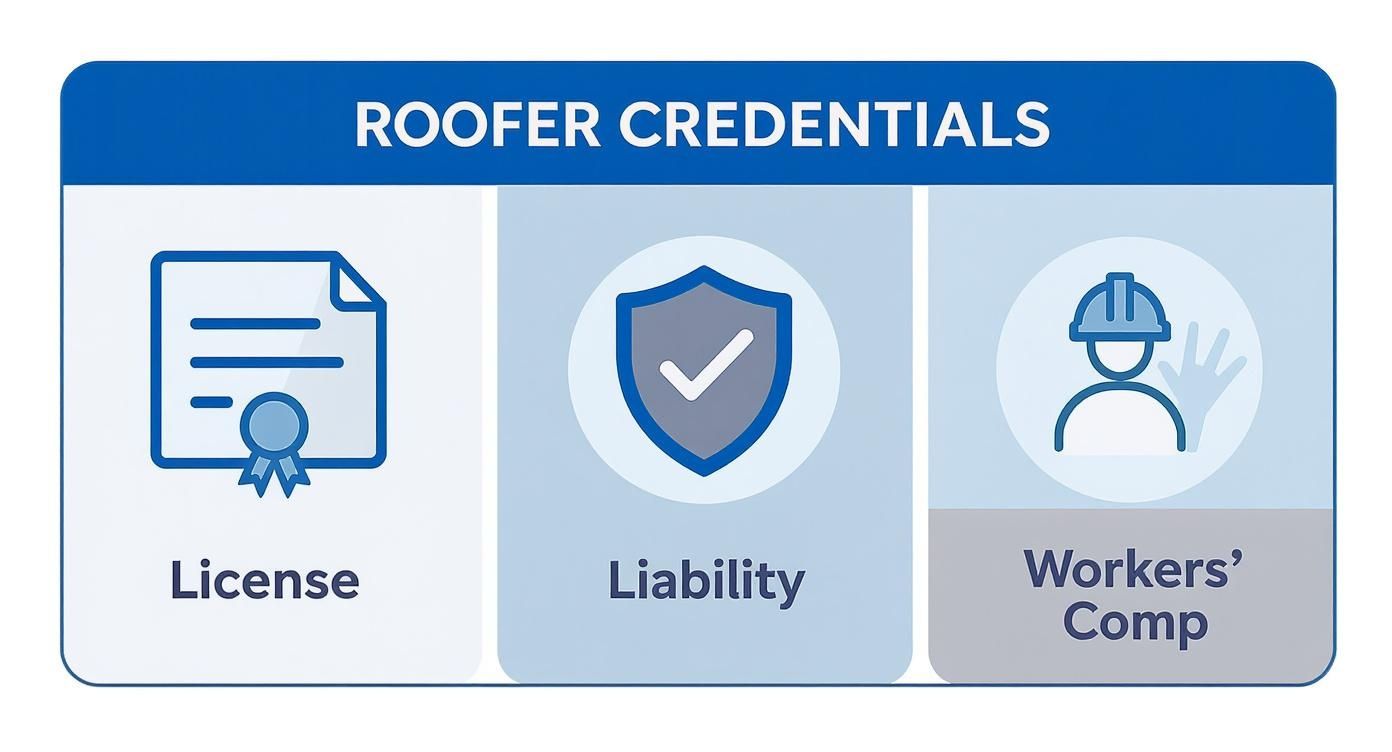
This is a great visual reminder of the non-negotiables. Before you even dive deep into the numbers on a quote, make sure any roofer you're considering has their license, liability insurance, and workers' comp in order.
Comparing Materials The Smart Way
The single biggest variable in any roofing estimate is almost always the materials. You could see two quotes that are thousands of dollars apart, and the difference often comes down to the quality of the shingles.
For instance, basic 3-tab asphalt shingles are your entry-level, most budget-friendly option. But architectural shingles, while they cost more upfront, give you a much richer, dimensional look and are built to last longer. They also tend to come with better warranties.
The best shingle for your roof isn't just about what you can afford; it's about performance. Here in Hermitage, our weather throws a bit of everything at us—snow, heavy rain, and intense sun. The right material has to stand up to all of it, year after year.
Take some time to understand the different popular roofing materials and what they offer. This knowledge helps you ask better questions and figure out what’s truly best for your home. It also gives you a clearer picture of your budget—you can get a better sense of how different choices impact the bottom line by looking into the cost of different shingle types.
Spotting Red Flags In An Estimate
Just as a detailed quote builds trust, a sloppy or vague one should set off alarm bells. As you lay your estimates out side-by-side, keep an eye out for these tell-tale signs of a contractor you might want to avoid.
Here’s what to watch for:
- Vague Descriptions: An estimate that just says "roof repair" or "install new roof" is a no-go. Without specifics on materials and the scope of work, you're setting yourself up for a nasty surprise.
- High-Pressure Sales Tactics: If a contractor says you have to sign right now to get a "special deal," walk away. Reputable companies want you to be comfortable with your decision and will give you the time you need.
- No Mention of Warranties: A professional quote will clearly state the manufacturer's warranty on the materials and the roofer's own workmanship warranty. If it's missing, that's a problem.
- A Shockingly Low Bid: An estimate that's way cheaper than the others is almost always too good to be true. It often means they're cutting corners with cheap materials, uninsured labor, or worse.
Roofing Estimate Comparison Checklist
To make this process easier, use a simple table like the one below. It helps you compare the key details from each quote apples-to-apples, so you can see beyond just the price and evaluate the true value each company is offering.
| Checklist Item | Company A Details | Company B Details | Company C Details |
|---|---|---|---|
| Total Price | |||
| Shingle Brand & Type | |||
| Underlayment Specified | |||
| Flashing Details | |||
| Ventilation Included | |||
| Tear-Off/Disposal Costs | |||
| Permit Costs Included | |||
| Workmanship Warranty | |||
| Material Warranty | |||
| Projected Start Date | |||
| Estimated Timeline |
By taking the time to truly decode each estimate, you put yourself in the driver's seat. You’ll be able to confidently choose a roofing partner based on quality and transparency, not just price, ensuring you get a roof that protects your home for decades to come.
Asking the Right Questions Before You Sign
You've got the estimates, done your homework, and now you’re down to your top choice. This final conversation is crucial. It’s your last chance to nail down every detail and get that gut feeling of confidence before you sign a contract.
Think of it less like a final quote review and more like a job interview. You're not just buying a pile of shingles; you're entrusting a team with the protection of your biggest investment—your home. The quality of their answers here tells you everything you need to know about their professionalism and what to expect once the work starts.
Any roofer worth their salt will welcome this conversation. They'll have ready, confident answers because they do this every day. If you get vague responses, hesitation, or feel like they're brushing you off, that’s a huge red flag.
Clarifying Project Logistics and Timelines
Before the first hammer swings, you need a clear mental picture of how the project is going to unfold day-to-day. Understanding the logistics helps you prepare your home and family, minimizing the chaos that a big project can bring. Don't be shy about digging into the specifics here, because the details are what make a project smooth or stressful.
Here’s what you absolutely need to cover:
- What’s the game plan for the start date and duration? Of course, weather can throw a wrench in things. But a pro should be able to give you a solid window, like, "We're planning to start the week of June 10th, and the job itself should take 3 to 4 days."
- Who is my go-to person on site? You need one name and one phone number for when you have questions. Will you be talking to the owner, a dedicated project manager, or the lead guy on the crew?
- What are your crew's working hours? Knowing if they'll be there from 7 AM to 5 PM helps you manage pets, kids, and your own schedule.
A contractor who can't give you a clear timeline or a dedicated point of contact probably isn't organized enough to manage your project well. How they communicate now is how they'll communicate during the job.
Protecting Your Property and Handling the Unexpected
Let’s be honest: a roof replacement is a messy, disruptive job. Between the debris, heavy equipment, and constant foot traffic, your home and yard can take a beating if the crew isn't careful. A top-tier company has a non-negotiable plan for protecting your property like it's their own.
You also need a plan for the unknown. Nobody has X-ray vision to see what’s under your old roof. Discovering rotted decking is a common curveball, and how a roofer plans to handle that tells you a lot about their integrity.
Get specific with these questions:
- How exactly will you protect my landscaping, siding, and driveway? Look for answers that go beyond a simple "we're careful." You want to hear things like tarps for flower beds, plywood shields for windows, and dumpsters on rubber wheels to avoid cracking your driveway.
- What happens if you find rotted wood or other damage? A trustworthy roofer will have a standard procedure. They should tell you they’ll stop work, show you the problem (with pictures), and get your approval on a written change order before adding costs and moving forward.
- What's your cleanup process? The best crews don't just clean up at the very end. They tidy up daily and finish the job with a thorough magnetic sweep of the entire property to catch any stray nails.
Understanding Your Warranties Inside and Out
Pay close attention here. This is easily one of the most misunderstood—and most critical—parts of the deal. Many homeowners assume a warranty is a warranty, but they vary wildly. For almost every new roof, you get two completely separate warranties. Knowing the difference can save you a world of hurt down the road.
- The Manufacturer's Warranty: This comes directly from the shingle maker (like GAF or CertainTeed). It covers defects in the actual materials. You should get a copy of this and understand its terms and length.
- The Workmanship Warranty: This is the contractor’s guarantee on their labor. This is the big one. An estimated 90% of all roof failures are caused by installer error, not faulty shingles. This warranty is your real protection.
A solid workmanship warranty should be for at least 10 years and cover both the labor and materials to fix any installation mistakes. It's also smart to ask if the warranty is transferable if you sell your home—that can be a great perk for potential buyers.
For an even deeper dive, we’ve put together a full checklist of questions to ask roofers before you make that final decision.
Getting It in Writing and Prepping for a New Roof
You've done the legwork. You’ve sorted through the quotes, grilled the contractors, and now you’ve found the right team for the job. This is the final step: turning that handshake into a solid, written agreement and getting your home ready for the project.
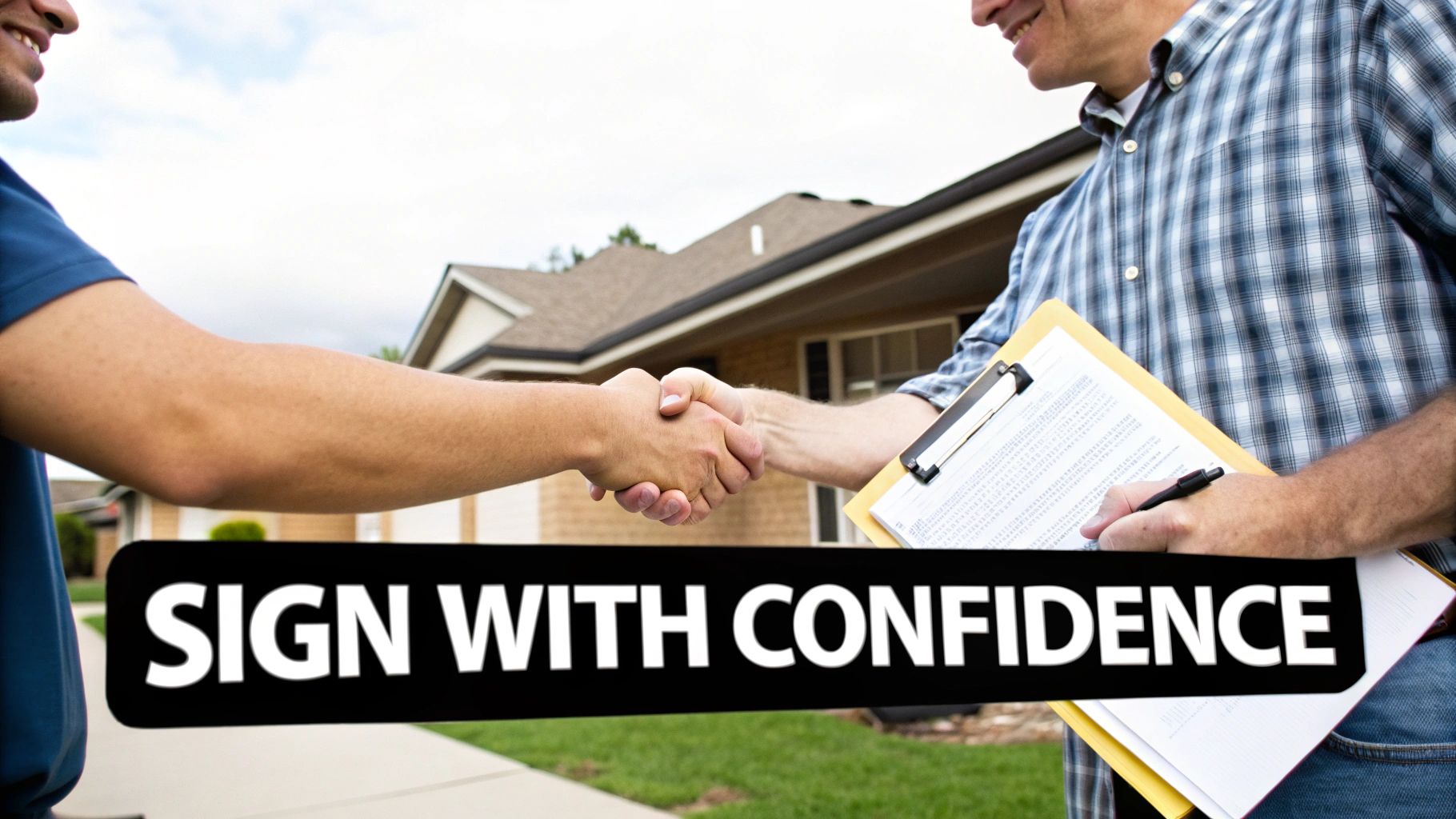
This contract is more than just a piece of paper; it’s the blueprint for your entire project and your primary form of protection. Verbal agreements and vague promises won't cut it. Every single detail you’ve discussed needs to be translated into this legally binding document to avoid any confusion later on.
The Contract: Your Project’s Rulebook
Before your pen ever touches that paper, go through the contract with a fine-tooth comb. It needs to be a complete and accurate reflection of everything you’ve agreed upon. If something you discussed isn't in there, now is the time to speak up and get it added in writing.
A rock-solid contract should spell out:
- The Full Scope of Work: A detailed list of every task, from removing the old shingles right down to the magnetic sweep for nails during final cleanup.
- Specific Materials: It shouldn't just say "shingles." It needs to list the exact brand, model, and color of the shingles, underlayment, flashing, and everything else being installed.
- The Bottom Line: A crystal-clear breakdown of the total project cost, including all taxes, permit fees, and charges for debris disposal. No surprise fees.
- Payment Terms: How much is due and when? A clear, scheduled payment plan is non-negotiable.
- Warranty Details: The contract should specify both the manufacturer's warranty on the materials and the contractor’s separate warranty covering their workmanship.
A word of caution: Never, ever pay for the entire job upfront. A standard deposit to cover materials, usually around 10-30%, is perfectly reasonable. Paying in full before the work is done strips you of all your leverage and puts you at enormous financial risk.
Getting Your Home Ready for Installation Day
With the contract signed and a start date on the calendar, a little prep work on your part can make a world of difference. Taking a few proactive steps helps the crew work more efficiently and, more importantly, protects your home and property from the controlled chaos of a roof replacement.
Honestly, a prepared homeowner makes the entire process smoother for everyone involved. It shows you're a partner in getting the job done right and helps avoid those little hiccups that can cause delays.
Your Pre-Work Homeowner Checklist
Here’s a simple checklist to run through in the days leading up to the project:
- Clear the Deck: Move everything—patio furniture, grills, planters, your kids' toys—at least 15 feet away from the house. This gives the crew a safe working perimeter and keeps your stuff from getting damaged by falling debris.
- Make Way for the Crew: Make sure there's a clear path for their trucks and equipment. Park your cars down the street or at the very end of your driveway. They’ll need to get their dump trailer or truck as close to the house as possible.
- Secure Your Interior: All that hammering on the roof creates vibrations that travel right through the walls. It’s a smart move to take down any pictures, mirrors, or fragile decorations from your walls and shelves, just in case.
- Give the Neighbors a Heads-Up: This is just a good neighbor policy. A quick chat to let them know to expect some noise and extra vehicles for a few days can go a long way. It’s a simple courtesy that prevents complaints and keeps the peace.
Have More Questions? We've Got Answers
Even with a solid plan, a few questions always come up when you're on the hunt for a great local roofer. Let's tackle some of the most common ones we hear from homeowners.
How Many Quotes Do I Really Need?
We always tell our neighbors to get at least three detailed, written estimates from different, well-qualified roofers. This isn't just about finding the lowest price.
Getting a few bids side-by-side lets you compare the full picture: the scope of work they’re proposing, the specific materials they plan to use, and even the professionalism of the company itself. It’s the single best way to make sure you’re getting a fair market price for a job done right.
What's the Difference Between a Material and a Workmanship Warranty?
This is a big one, and it's crucial to understand the distinction.
A material warranty comes directly from the manufacturer—think of brands like GAF or Owens Corning. It covers defects in the actual shingles or other roofing products.
A workmanship warranty is the roofing contractor’s personal promise to you. It guarantees the quality of their installation work. Since the vast majority of roof failures trace back to installation errors, not faulty materials, a strong workmanship warranty is your most important protection. Make sure you get both in writing.
Be on the lookout for red flags. Things like suspiciously low bids, high-pressure sales tactics, or demands for a large cash deposit should make you pause. If a contractor can't show you a current license and proof of insurance, or doesn't have a physical business address, walk away. And be extra wary of anyone who just shows up at your door after a big storm.
If you're in Hermitage or the surrounding counties and want a transparent, professional roofing experience, trust the experts at Penn Ohio Roofing & Siding Group. Contact us today for a free, no-obligation estimate.