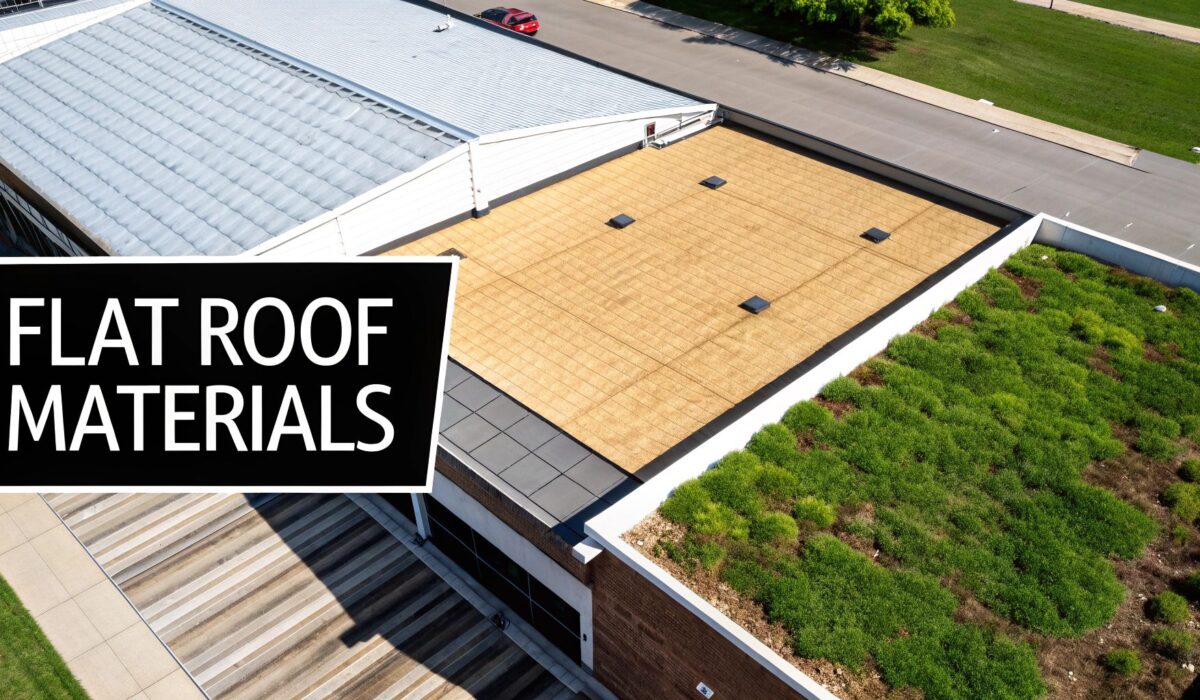
When you're trying to find the single best roofing material for a flat roof, you quickly learn there's no magic bullet. It's all about finding a system that fits your building, your local climate, and your budget. For most jobs these days, modern single-ply membranes like TPO, EPDM, and PVC hit the sweet spot, offering a great balance of toughness, longevity, and value compared to older methods.
Let's cut through the noise and get into a real-world comparison that addresses the actual challenges you face with a flat roof.
Understanding Your Flat Roofing Options
Picking the right material for a flat or low-slope roof is a major decision, one that directly affects how well your property is protected and how much you'll spend on maintenance down the road. Unlike a pitched roof that lets gravity do the heavy lifting, a flat roof needs an absolutely seamless, waterproof barrier to keep moisture out. That fundamental difference is why we use such specialized materials.
The demand for these systems is booming, thanks to more commercial construction and urban growth. The global flat roofing market, sitting at around USD 43.43 billion today, is expected to climb to USD 66.3 billion by 2032. You can read more about the flat roofing market's growth and trends to see where the industry is headed.
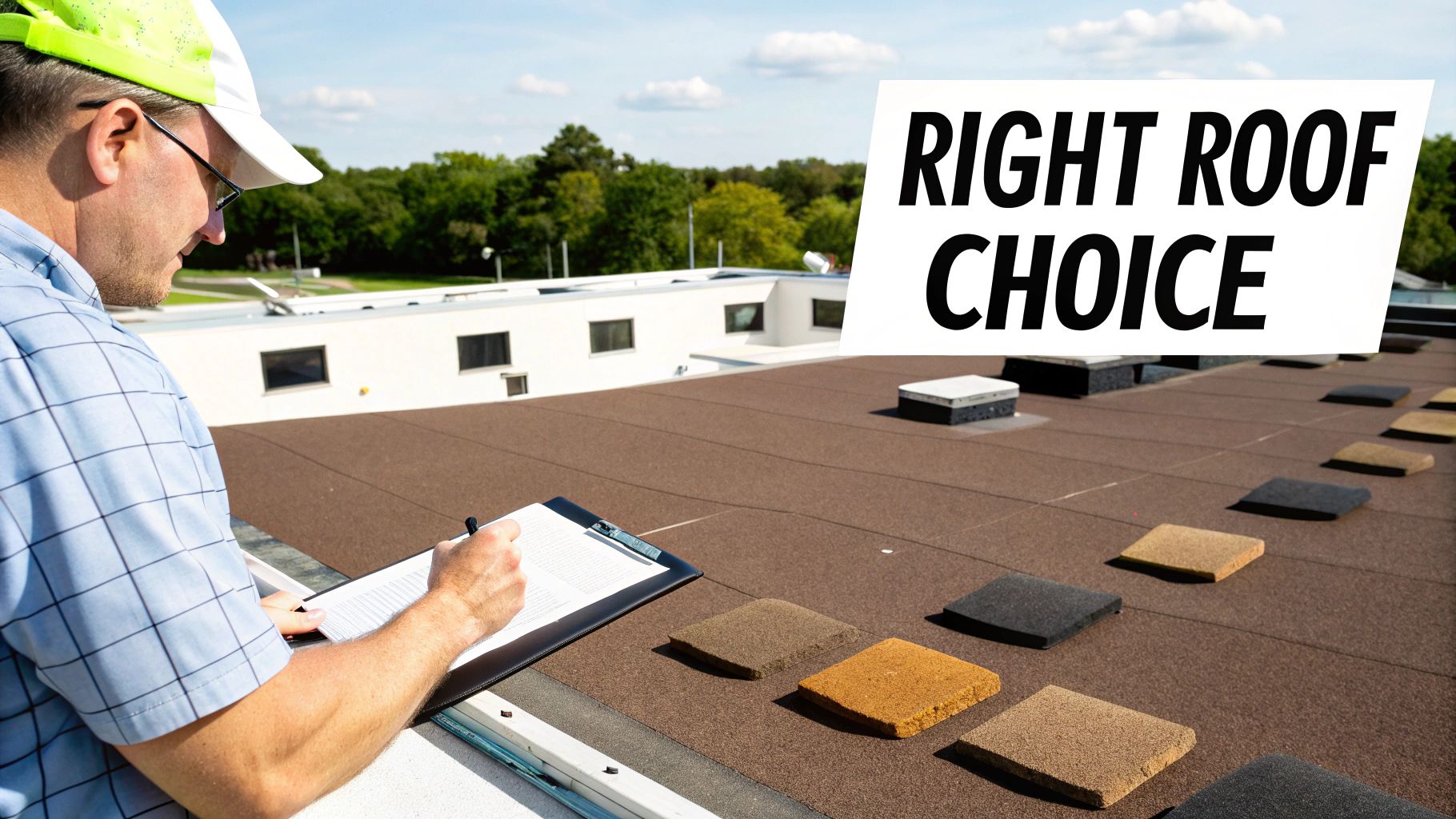
This guide is designed to break down the most reliable options on the market so you can make a choice you feel confident about.
A Quick Look at Common Materials
Before we get into the nitty-gritty, it helps to have a quick overview of the main players. Every material has its own strengths, making it a better fit for certain situations. Some are fantastic at reflecting sunlight and cutting down energy bills, while others are built like a tank to resist punctures or chemical exposure.
The "best" choice is almost always situational. A restaurant roof that gets hit with grease and chemicals has completely different needs than a residential garage roof in a cold, wet climate like western Pennsylvania.
To give you a starting point, the table below summarizes the materials we’ll be comparing. Think of it as a cheat sheet to keep in mind as we explore what makes each one tick.
At-a-Glance Comparison of Flat Roofing Materials
| Material | Average Lifespan | Cost Profile | Primary Advantage |
|---|---|---|---|
| TPO Membrane | 15-25 Years | Mid-Range | High energy efficiency and heat-welded seams. |
| EPDM Rubber | 20-30+ Years | Mid-Range | Superior durability and flexibility in cold climates. |
| PVC Membrane | 20-30+ Years | Premium | Excellent chemical, fire, and puncture resistance. |
| Modified Bitumen | 10-20 Years | Economical | Proven performance with great tear resistance. |
This quick rundown sets the stage for a deeper dive into what really matters: how these materials perform in the real world and which one is the right long-term investment for your property.
Comparing Single-Ply Membrane Roofing Systems
When you start looking into modern flat roofing, you'll hear a lot about single-ply membranes. These aren't your grandfather's tar-and-gravel roofs. They are advanced materials, rolled out like a giant sheet, engineered to create one seamless, waterproof layer across your entire roof deck. It's a massive leap forward from the old, built-up methods.
The big three in this space are TPO, EPDM, and PVC. On the surface, they might seem pretty similar, but their chemical DNA is what sets them apart. Each one is the best roofing material for a flat roof under very different circumstances. Getting these differences right is the key to a smart, long-term investment in protecting your building.
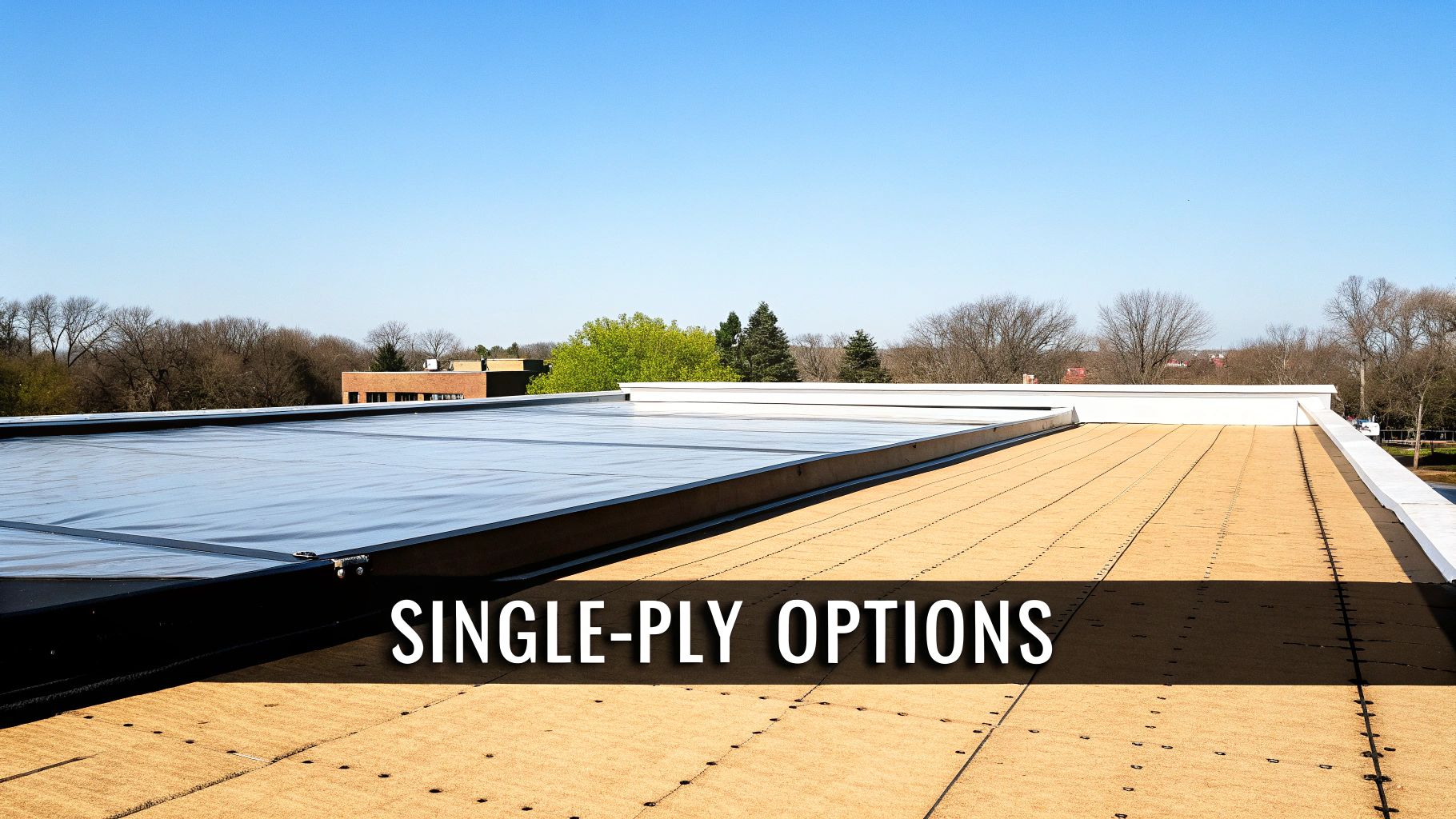
Let's move past the spec sheets and dig into how these materials actually perform in the real world—from the punishing winters we get here in western Pennsylvania to the specific demands of a busy commercial kitchen.
TPO: The Energy-Efficient Champion
Thermoplastic Polyolefin (TPO) has quickly become a go-to choice for commercial flat roofs, and it's easy to see why. Its biggest selling point is that brilliant white, reflective surface. Think of it as a mirror for the sun's rays.
This isn't just a minor perk; it's a serious energy-saving tool. For big box stores or warehouses with massive air conditioning bills, a TPO roof can drastically lower the surface temperature. That takes a huge strain off the HVAC system, and you'll see the difference in your summer energy costs.
In fact, Thermoplastic Polyolefin (TPO) is one of the most widely used flat roofing materials on the planet. It's on track to capture the biggest slice of the U.S. roofing market, projected to hit about 23.09% in 2025. Building owners love it for its energy efficiency, durability, and ability to bounce heat right off the roof. You can find more details on this trend in the U.S. roofing materials market report from databridgemarketresearch.com.
EPDM: The Durable Workhorse for Harsh Climates
Ethylene Propylene Diene Monomer (EPDM) is a synthetic rubber membrane that’s been protecting buildings for over 60 years. It’s a true workhorse, proven to stand up to extreme temperature swings.
Where some materials get brittle and crack in the cold, EPDM stays flexible. This elasticity is its superpower. It allows the roof to expand and contract with the building during our freeze-thaw cycles without splitting apart—a non-negotiable feature for durability here in Pennsylvania and Ohio.
EPDM’s incredible flexibility and puncture resistance make it the top contender for roofs in hail-prone areas or those with a lot of foot traffic. Its proven history of lasting 30 years or more gives property owners serious peace of mind.
While EPDM is traditionally black (which actually helps melt snow in the winter), you can now get it in a white, reflective version. This gives you the option to balance that legendary durability with some energy efficiency.
PVC: The Specialist for Demanding Environments
Polyvinyl Chloride (PVC) is the premium player among single-ply membranes. It's engineered for the toughest jobs. Its defining feature? Unbeatable resistance to chemicals, grease, and fire.
This makes PVC the only real choice for certain commercial buildings. Think about a restaurant roof that's constantly bombarded with grease from kitchen exhaust vents. Those oils will eat away at other materials over time, but PVC is built to handle it.
The same goes for manufacturing plants or facilities that use harsh chemicals. PVC's tough chemical resistance is a must-have. Plus, its natural fire resistance provides an extra layer of safety, often helping a building meet stricter fire codes. To see how we put these systems in place, check out our single-ply roof installation and repair services.
Seams and Installation: The Make-or-Break Factor
While TPO, EPDM, and PVC each have their strengths, they all depend on one thing for long-term success: perfect installation, especially at the seams. A tiny flaw here can lead to a massive failure down the road.
- TPO and PVC: These are "thermoplastic" materials. We use special hot-air welders to fuse the seams together. This process creates a permanent, molecular bond that’s often stronger than the membrane itself, turning multiple sheets into one giant, monolithic waterproof surface.
- EPDM: As a "thermoset" rubber, EPDM seams are sealed differently, using special tapes and adhesives. When done right by a skilled crew, these seams are incredibly strong. But their quality is 100% dependent on the installer's technique.
So, how do you choose? It really boils down to your building’s specific job. If you want to slash energy costs on a large commercial space, TPO is a front-runner. If you need bulletproof durability for a cold climate, EPDM is the proven champion. And if you have a specialized industrial or restaurant environment, PVC offers a level of protection nothing else can touch.
A Closer Look at Multi-Layer and Liquid-Applied Roofing
While single-ply membranes are a popular modern choice, some of the most resilient, battle-tested flat roofing systems are built with multiple layers or are applied as a seamless liquid. These systems, like Built-Up Roofing (BUR), Modified Bitumen, and Spray Polyurethane Foam (SPF), offer unique advantages, especially for high-traffic commercial rooftops or buildings with unusual shapes.
They represent a different approach to weatherproofing—moving away from a single sheet of material toward either layered redundancy or a single, monolithic, sprayed-on barrier. Deciding between them means weighing raw toughness against installation complexity and built-in features like insulation. Getting into these details is crucial when a single-ply system just isn't the right answer for your building.
Built-Up Roofing: The Original Heavyweight Champion
Built-Up Roofing, better known as BUR or simply "tar and gravel," is the classic flat roofing system. It's been around for over 100 years for a reason. Its strength comes from its construction: multiple, alternating layers of reinforcing fabrics (felts) and bitumen (asphalt). Think of it like a roofing lasagna. This layered design creates incredible redundancy, meaning a puncture on the top layer doesn't spell disaster because several backup layers are waiting underneath.
This multi-ply construction makes BUR exceptionally tough against foot traffic and heavy equipment, a great fit for commercial roofs that see a lot of maintenance activity. The final layer of gravel or crushed stone on top does a fantastic job of protecting the system from UV rays and improving fire resistance. But all that toughness has a downside—BUR is incredibly heavy and requires a strong roof deck to support it. The hot tar installation can also be pretty intense and smelly.
Modified Bitumen: A Flexible, Modern Take
You can think of Modified Bitumen (Mod-Bit) as the next generation of BUR. It takes the proven, asphalt-based concept and improves it by adding polymers, creating a more flexible and resilient material that's manufactured in easy-to-handle rolls. This approach gives you the multi-layer security of BUR but with far better elasticity and a simpler installation process.
Mod-Bit comes in two main flavors, each designed for different environments:
- SBS (Styrene-Butadiene-Styrene): This type has rubber-like qualities, giving it fantastic flexibility in the cold. For a climate like ours here in western Pennsylvania, SBS is an excellent choice because it can handle the constant expansion and contraction of our freeze-thaw cycles without cracking.
- APP (Atactic Polypropylene): This version is more plastic-like, which gives it better resistance to high heat and UV damage. You’ll see APP used more often in hotter, sun-drenched regions.
Modified Bitumen really bridges the gap between old-school durability and modern performance. It delivers the tear resistance you expect from a multi-ply system but in a much more manageable and adaptable package, making it a true workhorse for countless commercial buildings.
Spray Polyurethane Foam: The Seamless Insulator
Spray Polyurethane Foam (SPF) roofing is in a class of its own. Unlike systems that use rolls of material, SPF is applied as a liquid that expands on contact, hardening into a solid, closed-cell foam. This process creates a completely seamless, monolithic barrier across the entire roof. Its biggest advantage is right there in the description: no seams means no weak points for water to exploit.
Because it's spray-applied, SPF conforms perfectly to any roof shape imaginable. This makes it the go-to solution for roofs with complex layouts, lots of pipes, vents, or other penetrations that would be a nightmare to flash with traditional materials. But SPF isn't just a waterproofing system; it's also a phenomenal insulator, adding serious R-value to your building and helping slash energy bills. When you're looking at different systems, it's worth understanding the performance of spray foam insulation to see how it stacks up.
The foam is protected by a tough, UV-resistant elastomeric coating. While SPF is lightweight and incredibly energy-efficient, the installation demands specialized equipment and true expertise. That protective top coat also needs to be inspected and reapplied every 10-15 years to keep the system performing at its best. For an SPF roof, your choice of contractor is everything.
A Look at Metal and Green Roofing Systems
When we move past the more common membrane and multi-ply systems, we get into some really interesting, high-performance options: metal and vegetative "green" roofs. These aren't your everyday choices. They're a serious investment, either in striking architectural design or in long-term environmental sustainability.
Frankly, choosing one of these systems requires a different way of thinking. You're not just replacing a roof; you're transforming it into a lasting asset. This could mean a durable, visually impressive feature that defines your building, or a living, breathing part of its ecosystem.
Metal Roofing for Low-Slope Applications
Most people picture metal roofs on barns or steep-sloped homes, but standing seam metal is a fantastic, premium choice for low-slope commercial buildings, too. Made from steel or aluminum, its biggest selling point is sheer longevity. A well-installed metal roof can easily last 50 years or more, blowing most other materials out of the water.
How does it do it? The design is incredibly smart. Long panels stretch from the roof's highest point to its edge, and they're joined together by raised, mechanically-crimped seams. This simple but effective design keeps the most vulnerable part—the seam—up and out of the path of water, which dramatically cuts down on leak potential.
Be warned, though: a low-slope metal roof is only as good as its installer. This is a complex job, far more intricate than rolling out a membrane. It demands absolute precision in panel alignment, specialized seaming tools, and a deep understanding of how metal expands and contracts with temperature changes.
A metal roof on a low-slope building is a true architectural statement. It delivers unmatched fire resistance, incredible strength against heavy snow and wind, and a clean, modern look that can significantly boost a property's value and curb appeal.
Vegetative or "Green" Roofing Systems
A green roof is exactly what it sounds like: a living, breathing system built right on top of a flat roof structure. It’s a multi-layered assembly that includes a top-tier waterproof membrane, a root barrier, a drainage system, lightweight soil, and carefully chosen plants. This approach turns an otherwise unused space into something functional and sustainable.
The advantages are huge. A green roof adds a thick layer of natural insulation, which helps slash heating and cooling costs by keeping the roof temperature stable all year round. It's also a champion of stormwater management, soaking up massive amounts of rain that would otherwise overwhelm local sewer systems.
But here’s the most overlooked benefit: it protects the roof underneath. The soil and plants act as a natural shield, blocking the harsh UV rays and extreme temperature swings that destroy roofing materials over time. By taking the brunt of the weather, a green roof can effectively double the lifespan of the waterproofing membrane below. It's a powerful long-term play for any building owner focused on sustainability and operational savings.
Making Your Final Decision on a Flat Roof Material
Picking the right flat roofing material isn't just about the initial price tag or a manufacturer's warranty. It’s about finding a system that truly fits your building's needs, your local climate, and your long-term financial goals. Let's cut through the noise and focus on the four make-or-break factors that will point you to the best solution.
This diagram can help you start thinking about your main priority—are you playing the long game with durability, or is sustainability a key driver for your project?
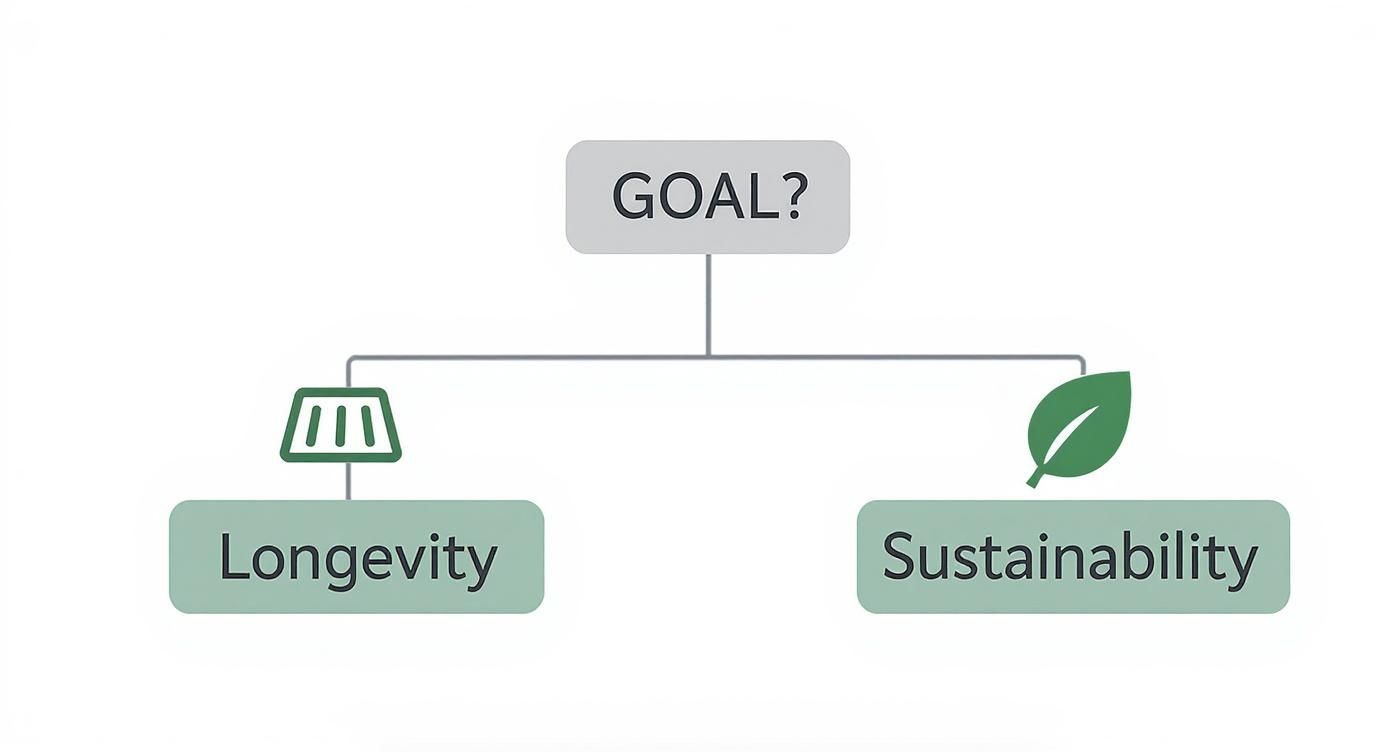
Ultimately, your choice will be a blend of these factors, starting with the two most immediate influences: the weather outside and the activity inside.
Climate and Weather Resistance
The first filter in your decision should always be your local environment. Here in western Pennsylvania and Ohio, we deal with brutal freeze-thaw cycles that can wreck a less forgiving roofing material, causing it to become brittle and crack under the stress.
This is where a material like EPDM rubber really proves its worth. Its incredible flexibility allows it to expand and contract with wild temperature swings without failing. On the flip side, a reflective TPO or PVC roof is a fantastic choice to combat summer heat, which can dramatically lower air conditioning costs for a large commercial facility.
Building Use and Foot Traffic
Next up: what happens on and around your roof every day? A quiet warehouse roof that only sees a maintenance worker twice a year has very different needs than a restaurant roof constantly blasted with grease and chemicals from exhaust fans.
For that restaurant, PVC is the undisputed champion due to its top-tier chemical and grease resistance. But if your roof has HVAC units that require constant service visits, you need something that can handle the foot traffic. A multi-ply system like Built-Up Roofing (BUR) or Modified Bitumen provides a level of puncture and abrasion resistance that most single-ply membranes just can't match.
The right material doesn't just protect you from storms; it stands up to the specific operational stresses of your business. A mismatch here is a recipe for premature failure and expensive repairs.
Getting a handle on how different materials perform will also help you budget for the future. You can learn more about what to expect by reading our guide on flat roof repair costs.
Budget and Long-Term ROI
It’s easy to get fixated on the upfront cost, but the real story is in the long-term return on investment (ROI). A cheaper roof that needs constant patching and a full replacement in 10-15 years will almost always cost you more than a premium system designed to last 30 years or more.
Take a standing seam metal roof, for example. It has a high initial cost, but it can easily last over 50 years with very little maintenance, delivering incredible lifetime value. Meanwhile, an energy-efficient TPO roof can pay for itself over time through significant savings on cooling bills. To make a smart financial decision, you have to look at the full lifecycle cost: installation, energy savings, maintenance, and expected lifespan.
Installation and Maintenance Requirements
Finally, remember this: the best roofing material in the world will fail if it's installed improperly. Bad seams, sloppy flashing, and incorrect detailing are the primary causes of roof failure. This makes your choice of contractor just as important as your choice of material.
A professional installation is a complex system. It relies on specialized components like high-performance fasteners to create watertight seals and ensure the roof can withstand high winds. The market for flat roof fasteners alone was valued at USD 729.9 million in the U.S. and is projected to hit USD 1.12 billion by 2033. This highlights just how critical these small parts are in securing materials like TPO and EPDM against weather and thermal stress.
A quality installation ensures every single component works together perfectly. It protects your investment, keeps your warranty intact, and gives you a durable, weather-tight roof that will last for decades.
Matching Roofing Materials to Project Needs
Use this matrix to see how different materials perform against key decision criteria. It’s a quick way to narrow down your options based on what matters most for your specific building and climate.
| Material | Cold Climate Performance | Energy Efficiency | Puncture Resistance | Chemical Resistance |
|---|---|---|---|---|
| EPDM | Excellent | Poor (black), Good (white) | Good | Poor |
| TPO | Good | Excellent | Good | Good |
| PVC | Very Good | Excellent | Very Good | Excellent |
| Mod-Bit | Good | Fair | Excellent | Good |
| BUR | Good | Poor | Excellent | Good |
| SPF | Very Good | Excellent | Fair | Very Good |
| Metal | Excellent | Very Good | Excellent | Very Good |
This table provides a high-level overview, but a professional assessment is the best way to confirm which material is the right fit for the unique conditions of your property.
Partner with a Flat Roofing Expert
You've done the research and have a good idea of what material might work. That's a huge step, but it’s only half the battle. Here's the truth: the most expensive, high-tech roofing system in the world will fail if it's not installed with skill and precision.
Ultimately, the best roofing material for a flat roof is the one that's a perfect match for your building and is installed by a true professional. A flawless installation is what turns a roll of material into a durable, watertight asset that gives you real peace of mind.
Protecting your investment starts with a solid plan. We bring decades of hands-on experience to the table, helping you cut through the noise and navigate the complexities of each system. Our team will make sure your final choice aligns perfectly with how you use your building, our challenging local climate, and your long-term budget.
Your Next Steps for a Reliable Roof
Once you've zeroed in on a material, finding the right installation partner is the most critical decision you'll make. A great contractor doesn't just put the roof on; they become a long-term partner in protecting your property. We believe this is so important that we created a guide on how to choose a roofing contractor to help building owners like you make the right call.
Your choice of contractor is just as critical as your choice of material. The workmanship warranty, attention to detail at seams and flashings, and commitment to post-installation support are what separate an adequate roof from an exceptional one.
We offer a full spectrum of services designed to get the most out of your flat roof. Whether you need emergency leak repairs to stop damage in its tracks or a proactive maintenance plan to prevent problems from ever starting, our goal is simple: to make sure your roof performs day in and day out, for years to come.
Give our team a call today for a free, no-obligation inspection and estimate. Let’s talk about the right solution for your building and show you firsthand how expert installation makes all the difference.
Your Flat Roof Questions, Answered
When it's time to choose a new flat roof, I've found that most property owners in Pennsylvania and Ohio circle back to the same core questions. They want to know about longevity, installation, and what really causes problems down the line. Getting straight answers is the only way to feel good about your decision.
Let's walk through some of the most common questions we get asked every day. Understanding these points will help you pick the right material and ensure your investment protects your building for years to come.
How Long Should a New Flat Roof Last?
The lifespan of a flat roof really comes down to three things: the quality of the material, the skill of the crew putting it down, and a commitment to regular maintenance. There’s no one-size-fits-all answer, but you can definitely get a good idea of what to expect from different systems.
For instance, a professionally installed EPDM rubber or PVC membrane roof can easily last 20 to 30 years, sometimes even longer. These are engineered for the long haul. TPO systems are right behind them, usually giving you a solid 15 to 25 years. On the more traditional side, a multi-ply system like Modified Bitumen will typically last between 10 and 20 years. The key to hitting—and even beating—these numbers is getting a professional inspection every few years.
Can a New Flat Roof Be Installed Over an Old One?
Sometimes, yes. We call this a "roof-over" or a "recover," and it can be a great way to save on costs if the existing roof and its underlying structure are in good shape. Building codes are the first hurdle; most areas only allow a maximum of two roof layers to keep the weight on the building's structure within safe limits.
But I’ll be honest, a full tear-off is almost always the better long-term play. It's the only way we can get a good look at the roof deck underneath. This is our chance to find and fix hidden problems like trapped moisture, rot, or insulation that’s seen better days. You really need an expert to get up there and make the final call on whether a roof-over is a safe bet or just kicking the can down the road.
A roof-over might save money upfront, but it can mask serious underlying issues that lead to much more expensive problems down the road. A complete tear-off provides a clean slate and ensures the entire system is sound from the deck up.
What Is the Most Common Cause of Flat Roof Leaks?
Leaks almost never happen in the wide-open field of a roofing membrane. After decades in this business, I can tell you that the real trouble spots are always the details—the seams, the edges, and anywhere something pokes through the roof.
Here are the usual suspects:
- Seam Failures: If the seams connecting the sheets of material aren't welded or adhered perfectly, they're the first place water will find its way in.
- Flashing Issues: The flashing is the material that seals the roof around vents, pipes, skylights, and HVAC units. If it fails, you've got a direct path for water.
- Perimeter Edges: If the edges of the roof aren't secured properly, wind and water can work their way underneath the membrane.
Nearly every one of these problems comes back to a poor installation job. Another major factor is ponding water—that's water that sits on your roof for more than 48 hours because of bad drainage. It puts constant stress on those seams and flashings, breaking them down over time and practically guaranteeing a leak. This is exactly why getting the design and installation right from the start is non-negotiable.
Choosing and installing the right flat roofing system is a major decision. The experts at Penn Ohio Roofing & Siding Group can provide a free, detailed inspection to help you find the perfect solution for your property's needs and budget. Contact us today to get started.