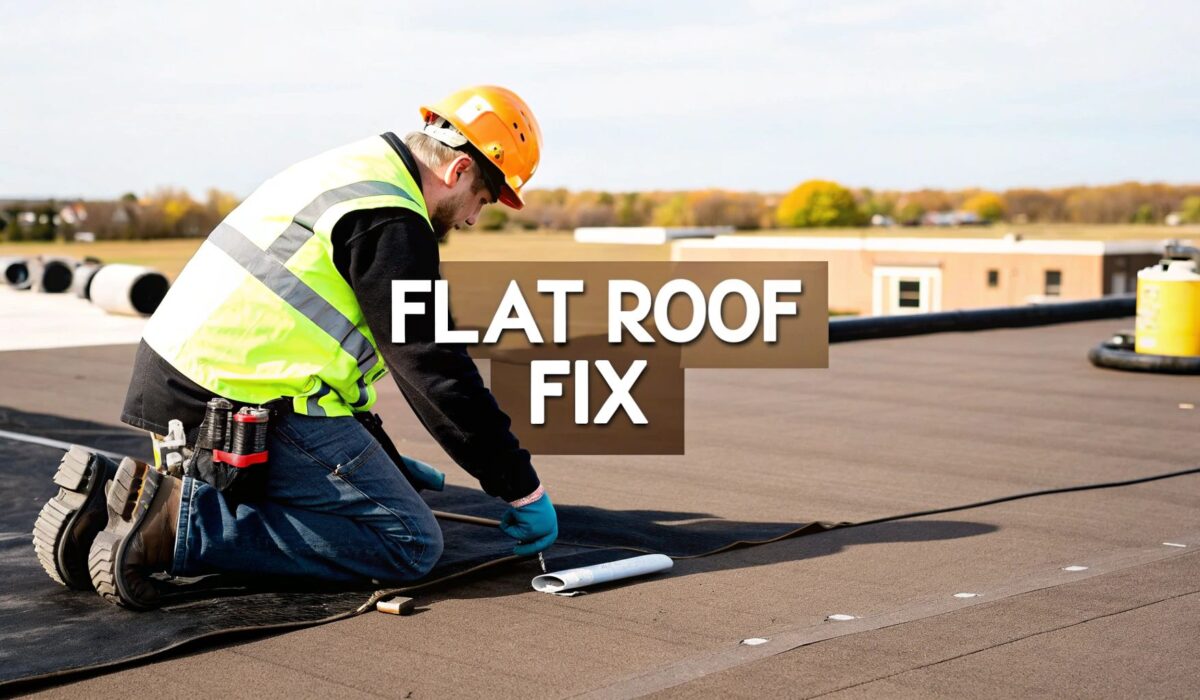
When you start looking into flat roof repair in Sharon PA, the first thing to get a handle on is the unique beating our local weather dishes out. Catching problems early is everything; it’s the difference between a simple fix and a major, wallet-draining overhaul. Let’s walk through what to look for, specifically with Pennsylvania’s seasons in mind.
Recognizing Flat Roof Problems in the Sharon Climate
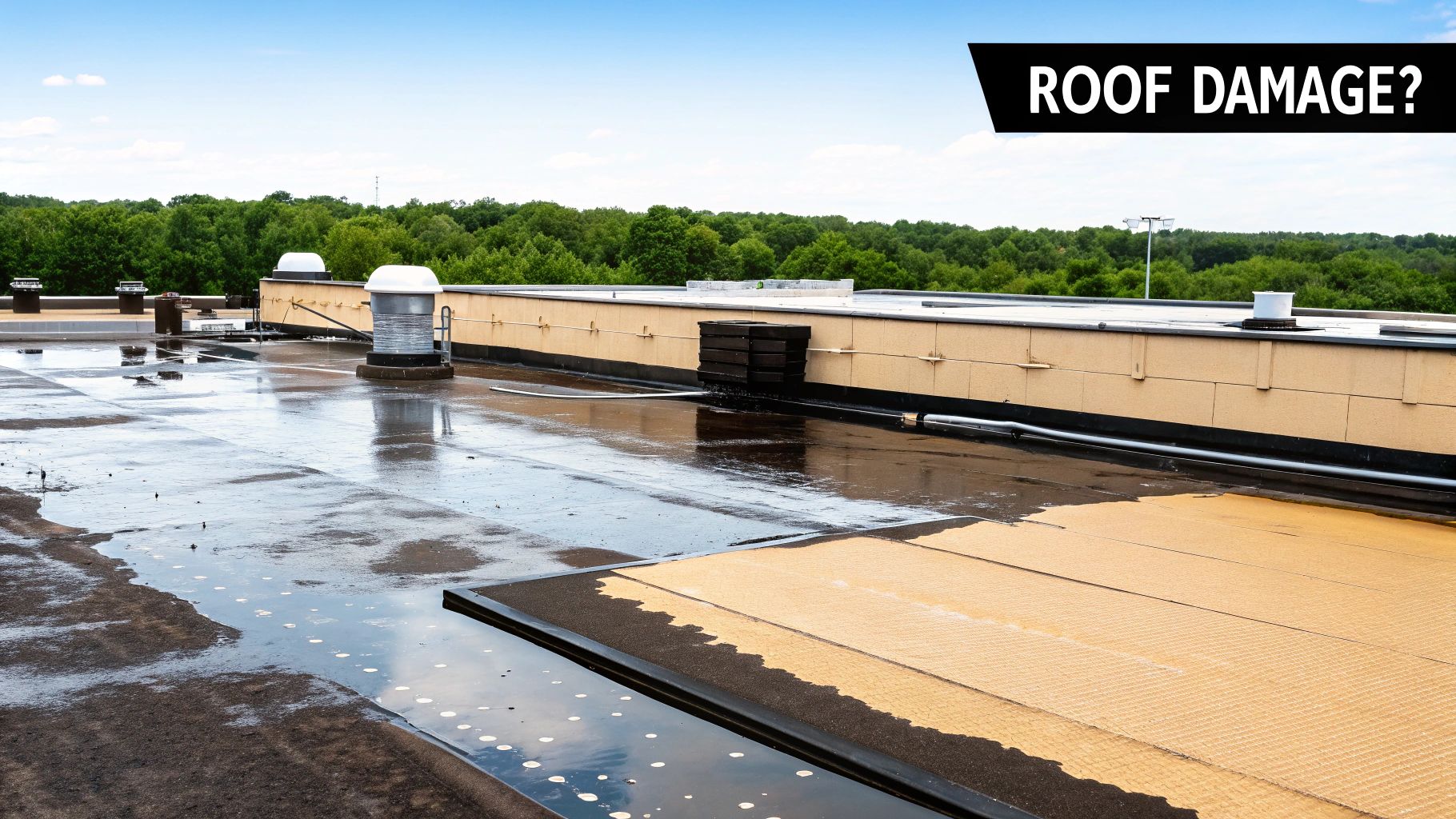
Flat roofs in Sharon have it rough. They face a relentless cycle of heavy winter snow, slushy spring thaws, and sticky summer humidity that puts a unique kind of stress on the materials.
Unlike a sloped roof that lets gravity do the work of shedding water, a flat roof has to actively manage every drop. That constant exposure to standing water and ice makes them far more vulnerable to specific types of failures. Knowing what those are is half the battle.
The Impact of Freeze-Thaw Cycles
If there’s one public enemy for flat roofs around here, it’s the freeze-thaw cycle. Water finds its way into the tiniest cracks and seams during warmer parts of the day. Then, when temperatures plummet overnight, it freezes and expands, forcing those small openings wider.
This relentless process is especially hard on the most vulnerable parts of your roof:
- Seams and Flashing: These are the joints where roofing materials meet or where the roof connects to walls, vents, and pipes. They're prime real estate for water to exploit.
- Membrane Integrity: Over years of being stretched and stressed, the roofing material itself can become brittle, leading to widespread cracking.
You'll spot the damage as separated seams or noticeable gaps around flashing—basically, open invitations for water to get in.
Common Visual Warning Signs
You don't need to be a pro to spot the early warning signs. A quick visual check from a safe spot can tell you a lot if you know what you're looking for.
Ponding water—puddles that stick around for more than 48 hours after it rains—is a serious red flag. It means your drainage is failing and puts an incredible amount of weight and stress on the roof structure, which just speeds up the breakdown of materials.
Also, keep an eye out for blistering, which looks like bubbles or pockets on the roof surface. Another bad sign is "alligatoring," a pattern of deep, interconnected cracks that looks just like its name suggests. Both mean the material is getting old and losing its waterproofing ability.
Don't forget that other installations, like rooftop HVAC units, can also be a source of—or victim of—roof problems. It's helpful to be aware of how these systems interact, which you can do by understanding issues with rooftop units.
This kind of proactive awareness is becoming more important than ever. With extreme weather on the rise, the U.S. roofing industry is projected to reach $76.4 billion in revenue by 2025, largely driven by repairs from climate-related damage that affects roofs everywhere, including right here in Sharon.
How to Confidently Assess Roof Damage Yourself
That sinking feeling you get when a water spot appears on the ceiling is all too familiar. But don't panic just yet. Before you pick up the phone, a careful look at your flat roof can tell you a lot about what you're dealing with. This isn't about becoming a roofing pro overnight; it's about getting a clear picture so you know whether you're facing a simple fix or need to call for a flat roof repair in Sharon PA.
Let's start with the most important rule: safety first. Never, ever get on a roof during a storm, right after one, or if there's any ice. Always wear shoes with a good grip—think rubber soles—and make absolutely certain your ladder is on solid ground and secure before you even think about climbing.
Your Visual Inspection Checklist
Once you're safely up top, the trick is to be methodical. Don't just wander aimlessly. Have a game plan, starting with the usual suspects where water loves to sneak in.
Zero in on these key areas first:
- Seams and Edges: Walk the seams where pieces of roofing material meet. Are they peeling back, cracked, or separating? Pay extra attention to the edges where the roof meets the building's walls—these are prime spots for trouble.
- Flashing: Take a close look at the flashing (the material sealing the gaps) around every single thing that pokes through your roof. That means vents, pipes, skylights, and your HVAC unit. Dried-out, cracked sealant or visible gaps are practically an open invitation for leaks.
- Drainage Systems: Your drains, scuppers, and gutters have to be clear. If they're clogged with leaves, twigs, or other gunk, water has nowhere to go. It just sits there, creating a heavy, stagnant pool that puts a massive strain on your roof.
This chart breaks down what we typically find on flat roofs right here in the Sharon area.
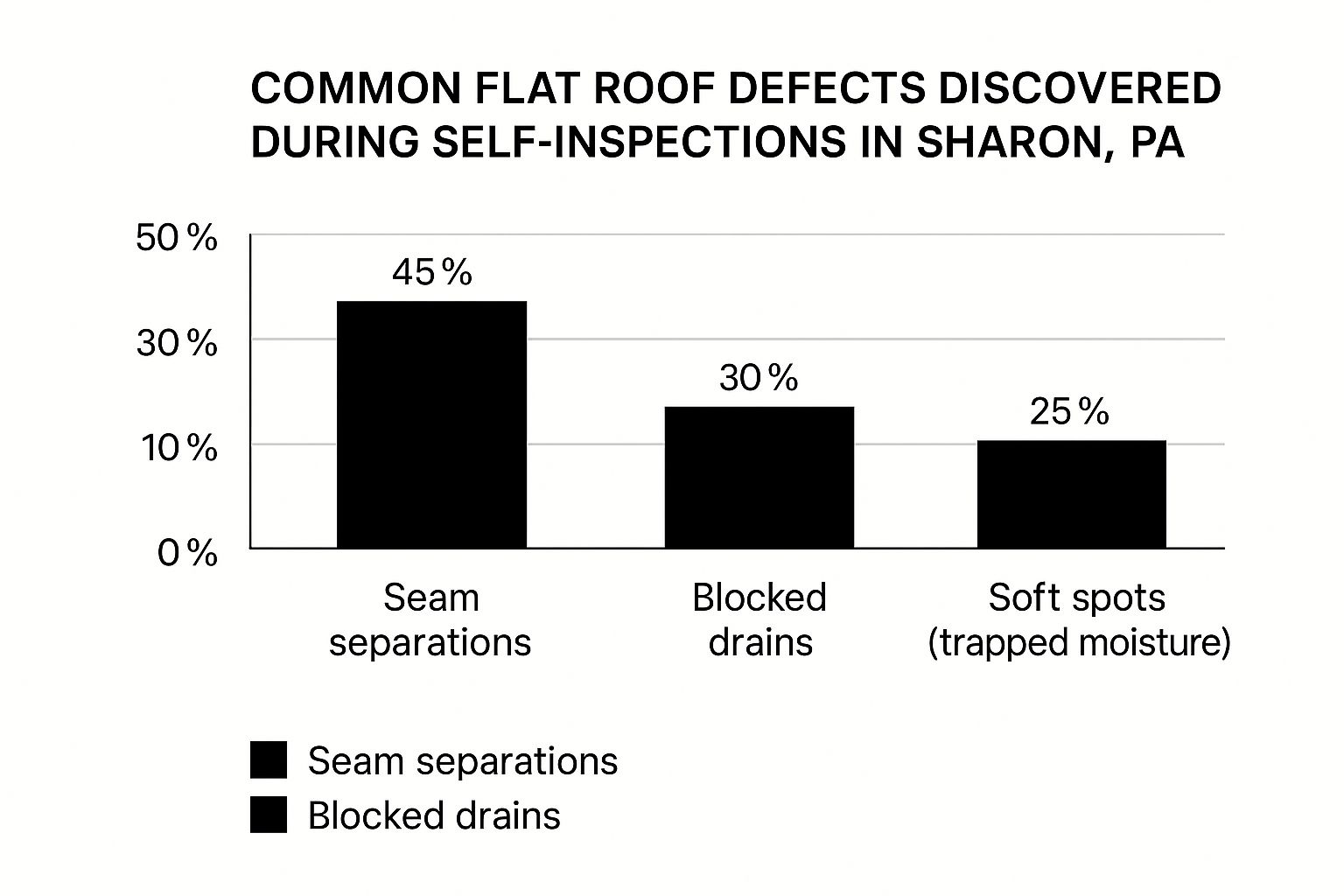
As you can see, 45% of the problems—nearly half!—come from bad seams. It’s absolutely the first thing you should check.
Probing for Hidden Moisture
Some of the worst damage is the kind you can't see. Moisture can get trapped under the roofing membrane and just soak the insulation, causing rot and structural issues long before you ever see a drip inside.
To find it, you have to use your feet. Carefully walk the entire roof surface. You're feeling for anything that seems off. If an area feels soft, spongy, or gives more than the rest of the roof, that’s a major red flag. It’s a classic sign of waterlogged insulation. You don’t need to stomp on it; a gentle, deliberate pace will tell you what you need to know.
A soft spot on a flat roof is like a bruise; it tells you there's damage happening below the surface. Ignoring it allows the problem to spread, turning a localized repair into a much larger and more expensive project.
Knowing the difference between a minor cleanup and a serious problem is key. A few leaves in a drain? You can handle that. But if you see large blisters on the roof surface or find big sections of that spongy, saturated insulation, it's time to call a professional right away. If you've managed to spot where water is getting in, our guide on finding a roof leak offers more tips for tracking it. This quick inspection arms you with the knowledge you need for a smarter conversation about what comes next.
Choosing the Right Materials for a Lasting Repair
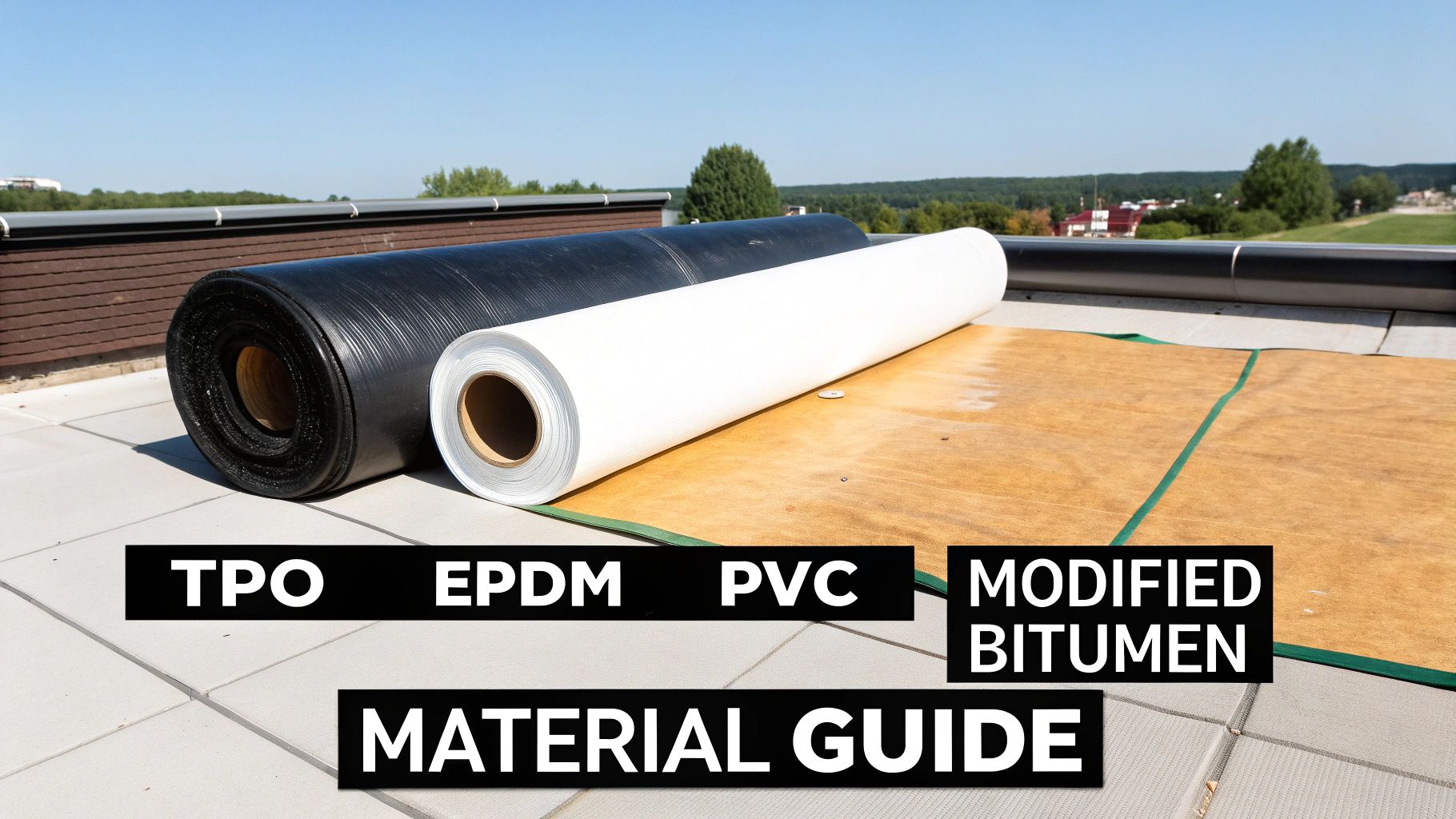
So, you’ve found the problem. Now comes the most important part of any flat roof repair in Sharon, PA: picking the right material to fix it. A quick patch might seem like an easy win, but if you want that repair to hold up against Pennsylvania's wild weather, the material matters. A lot. This isn't just about plugging a hole; it’s about making sure your roof's primary shield is solid again.
Flat roof materials aren't interchangeable. Each one has its own strengths, designed for different types of damage, roofs, and budgets. Getting a handle on the basics of TPO, EPDM, and Modified Bitumen will help you know exactly what you're looking at when you get a repair quote.
A Quick Look at Common Flat Roof Materials
Making the right call starts with knowing what’s out there. The perfect patch for a small seam split on a rubber roof would be a total failure on a different type of system with a large puncture.
-
TPO (Thermoplastic Olefin): This is that white membrane you see on a lot of commercial buildings. It’s fantastic for energy efficiency because it reflects sunlight, which can really help with cooling bills in the summer. We typically repair TPO by heat-welding a new patch over the damaged spot, creating a seamless, waterproof bond that’s incredibly strong.
-
EPDM (Ethylene Propylene Diene Monomer): This is the classic black "rubber roof." It's known for being tough and flexible, which is a huge advantage in our area with all the freezing and thawing. When we repair small tears or seam issues, we use special primers and super-flexible sealants made specifically to bond with the rubber surface.
-
Modified Bitumen: Think of this as the modern, high-tech version of an old-school tar-and-gravel roof. It’s a multi-layered system that’s incredibly tough and resists punctures well. Patches are usually "torched down," meaning we use heat to melt the material and fuse it to the existing roof for a perfect seal.
Of course, the membrane you see on top is only one piece of the puzzle. The layers underneath provide critical support and extra protection. It’s worth taking a moment to understand what roof underlayment is to see how the whole system works together.
When you're dealing with flat roof repairs in Sharon, PA, matching the right material to the job is everything. Here’s a quick breakdown to help you compare the most common options we work with.
Comparison of Flat Roof Repair Materials
| Material Type | Best For | Estimated Cost | Durability in PA Climate |
|---|---|---|---|
| TPO | Energy-conscious building owners; repairs on existing TPO roofs. | Moderate | Excellent; welded seams hold up well to weather extremes. |
| EPDM | Buildings needing high flexibility; long-term durability against freeze-thaw cycles. | Low-to-Moderate | Very High; extremely resilient but can absorb heat. |
| Modified Bitumen | High-traffic roofs; areas prone to punctures or impacts. | Moderate-to-High | Excellent; tough, multi-layer protection is ideal. |
This table gives you a starting point. A professional roofer can help you pinpoint the best solution based on your specific roof's condition and the type of damage it has.
Factoring in Cost and Longevity
Nobody wants to overspend, but cost has to be balanced with long-term performance. In my experience, most flat roof problems stem from material breakdown, leaks at the seams, and structural issues that Sharon's climate just makes worse over time.
Think about this: as of 2025, a full replacement for an average 1,500-square-foot flat roof can run anywhere from $10,000 to $22,500. With material and labor costs on the rise, staying on top of repairs is the smartest way to avoid a huge bill down the road.
A slightly more expensive repair using a high-quality, compatible material is a far better investment than a cheap, temporary fix that fails during the next heavy storm.
The real goal is to match the repair material to your existing roof and the specific damage. Sometimes a simple, professional-grade sealant is all you need. Other times, a more substantial patch is the only way to guarantee a lasting fix. Getting it right the first time is what protects your investment for years to come.
Why Professional Repair Is a Smart Investment
The urge to tackle a roof leak yourself is understandable. It seems like a quick patch could save you a few bucks, and who doesn't like saving money? But with flat roofs, what looks like a simple fix on the surface can quickly spiral into a complicated, and frankly, dangerous job. This is one of those times where calling in a pro isn't a luxury—it's essential for protecting your building.
A DIY repair gone wrong often causes more headaches than it solves. I've seen it countless times: someone uses the wrong type of sealant from a big-box store, and instead of sealing the leak, it traps moisture underneath the patch. This creates a perfect environment for rot, silently eating away at the roof deck. You won't even know it's happening until you've got a much bigger, more expensive problem on your hands.
The technical skills for a permanent fix, like properly heat-welding a TPO membrane seam or meticulously flashing a vent pipe, are earned through years of hands-on work. These aren't just minor details; they're the critical difference between a temporary plug and a genuinely watertight seal that will last.
Understanding the Real Risks Involved
Putting aside the risk to your property for a moment, let's talk about personal safety. Working on any roof has its dangers, but flat roofs have their own unique set of hazards. They're often cluttered with HVAC units, electrical conduits, and skylights, creating a minefield of trip hazards. This is a huge reason why flat roof repair in Sharon PA is a job for trained professionals who have the right gear and, just as importantly, the right insurance.
Roofing is consistently ranked as one of the most dangerous jobs out there. The numbers are sobering: the profession sees a fatality rate of about 40 deaths per 100,000 full-time workers. In 2021 alone, roofing contractors experienced a 17% jump in injury cases. While falls are the most common culprit, electrocutions are another serious threat, accounting for roughly 11% of roofing-related deaths. That's a stark reminder of the hidden dangers lurking around those rooftop electrical components. You can dig into more roofing industry statistics to truly grasp the risks involved.
Peace of mind is an underrated benefit of hiring a professional. Knowing your roof was repaired correctly by a qualified, insured team means you won't be worrying every time a storm rolls through Sharon.
The Value of Experience and Equipment
A seasoned roofer brings more than just tools to the job; they bring a trained eye. They can spot the subtle signs of trouble that most people would miss, like compressed insulation indicating a long-term leak or fasteners that are starting to back out. Catching these things early prevents a small issue from becoming a catastrophic failure down the road.
Professionals also show up with specialized equipment and commercial-grade materials you just can't find at the local hardware store. Their access to superior sealants, durable membranes, and the right application tools ensures the repair isn't just done right, but that it's built to survive years of Pennsylvania's brutal freeze-thaw cycles.
When you get down to it, paying for a professional repair isn't just an expense. It's an investment in safety, durability, and the long-term health of your property.
Proactive Maintenance to Extend Your Roof’s Lifespan
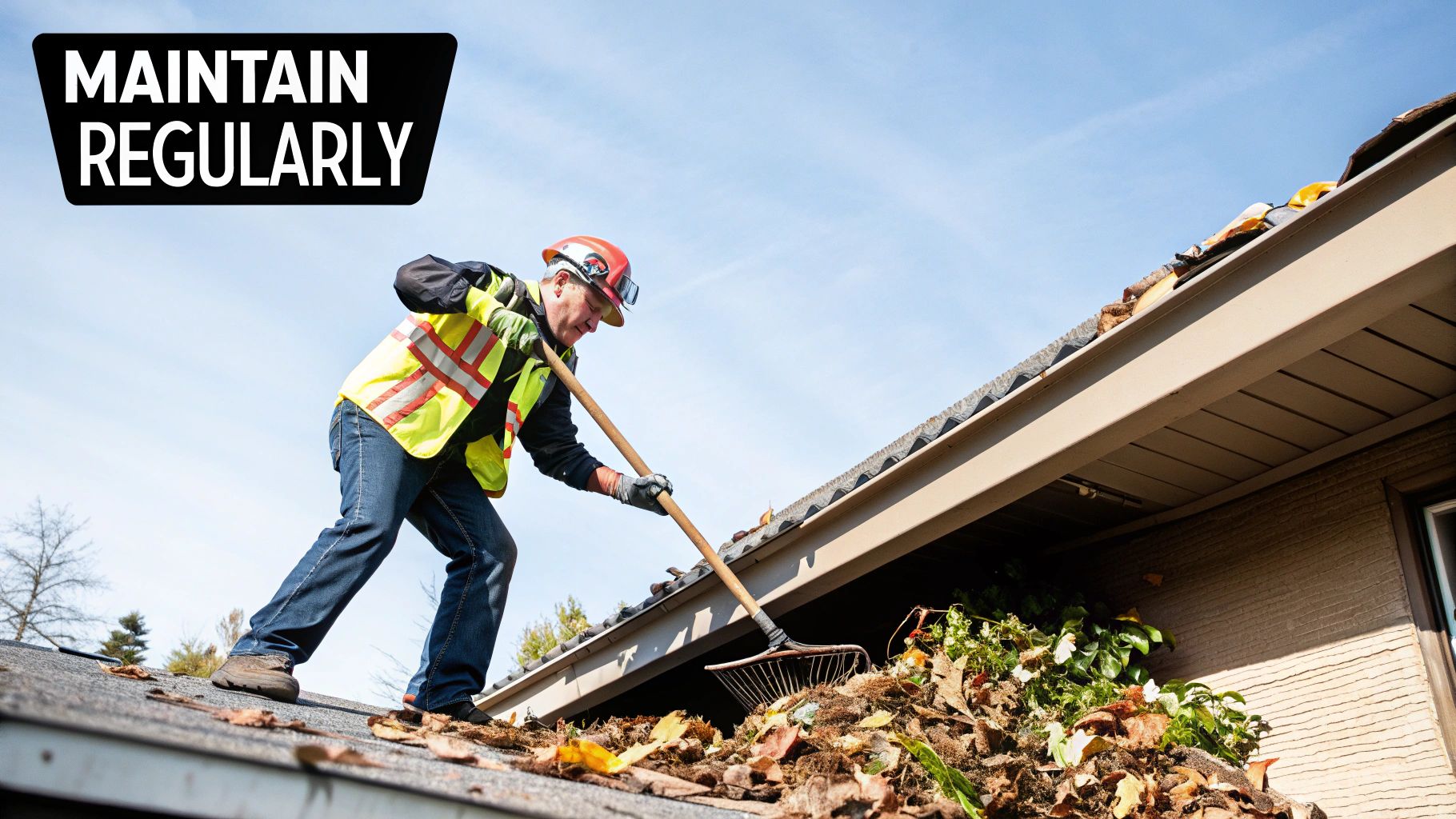
When it comes to flat roof repair in Sharon PA, the best fix is the one you never have to make. While you'll eventually need a pro for significant damage, a consistent maintenance routine is your first and best defense against problems popping up in the first place.
This isn't about climbing up on your roof every weekend. It's about a few smart habits that will protect your building and your budget. Think of it as shifting from emergency-response mode to actively preserving the life of your roof. Just a couple of inspections a year can mean the difference between clearing a clogged drain and dealing with a catastrophic leak. This is especially true here in Sharon, where our weather can really put a roof through its paces.
Your Seasonal Maintenance Checklist
Good roof care follows the seasons. Our local climate gives us a pretty clear playbook for what to do and when.
In the fall, it's all about clearing debris. Before the first snow flies, you have to get leaves, twigs, and any other gunk out of your drains and scuppers. It’s a non-negotiable task. Why? A drain clogged with autumn leaves becomes a solid ice dam in winter, and that’s when melting snow and ice get forced under your roofing membrane.
Once spring arrives and the last of the snow is gone, it’s time to see what winter left behind. Get up there and do a thorough visual check. Look for any new cracks, blisters, or seams that have pulled apart from the constant freezing and thawing. This is also the perfect time to give the surface a good cleaning to get rid of the grime that built up over the winter.
A proactive maintenance plan is like a regular check-up for your roof. It won’t stop every single issue, but it drastically cuts down your risk of a sudden, expensive emergency by letting you spot the warning signs early.
Key Habits for Year-Round Roof Health
Beyond those big seasonal clean-ups, a few simple routines will go a long way in keeping your flat roof in prime condition. Consider these the golden rules for any flat roof owner in our area.
Here’s a straightforward plan that really works:
- Twice-Yearly Visual Checks: Make it a point every spring and fall to safely get a look at your roof. You’re on the lookout for ponding water, debris piling up, and any obvious damage to the roof surface or the flashing around vents and pipes.
- Keep Drainage Systems Clear: I can't stress this enough. Clogged gutters, scuppers, and drains are the #1 cause of ponding water. That standing water adds a tremendous amount of weight and stress to your roof’s structure and materials.
- Monitor Sealants: The caulking around pipes, vents, and rooftop HVAC units doesn't last forever. It dries out and cracks. Keep a close eye on these weak spots and touch them up before water has a chance to work its way in.
Turning these simple actions into a regular habit puts you in control. You stop being a victim of the weather and become a prepared property owner, saving yourself a ton of money and headaches down the road.
Your Flat Roof Questions, Answered
When you're dealing with something as critical as your building's roof, you need straightforward answers. I get a lot of the same questions from property owners in Sharon, so I've put together some quick, no-nonsense insights to help you feel confident about your next steps.
How Often Should I Get My Flat Roof Inspected in Sharon, PA?
Around here, with our distinct seasons, you should absolutely aim for a professional inspection twice a year. I tell my clients to schedule one in the spring to see what winter left behind, and another in the fall to get ready for the snow and ice ahead.
Beyond that, it's a smart habit to give it a quick look yourself after a big storm—from a safe spot, of course. You're just looking for the obvious stuff like new puddles that aren't draining or a bunch of branches piled up. Catching things early is the name of the game.
Can I Just Fix My Flat Roof Myself?
Look, I get the appeal of a DIY fix. If you've got a tiny, surface-level crack you want to seal, you might be okay. But honestly, most flat roof repairs are trickier than they seem.
The biggest risk? A patch that isn't done perfectly can trap moisture. That water has nowhere to go and starts rotting the underlying structure. Suddenly, you've got a much bigger, more expensive problem, and you've likely voided your roof's warranty. Between the safety risks of being on a roof and the technical skill involved in things like welding seams or installing flashing, calling a pro is almost always the right call for a repair that actually lasts.
What's the Average Lifespan for a Flat Roof in Pennsylvania?
This really comes down to the material and how well you take care of it. With the weather we get in Sharon, maintenance makes all the difference. But here's a rough idea of what you can expect:
- EPDM (Rubber): This is a workhorse. You can often get 20-30 years out of an EPDM roof.
- TPO: A solid option that typically gives you 15-25 years of service.
- Modified Bitumen: Generally, you're looking at a lifespan of 10-20 years.
Staying on top of maintenance and getting small repairs done quickly is how you hit the high end of those ranges.
When Is It Time to Replace My Roof Instead of Repairing It?
There comes a point where patching things up just doesn't make sense anymore. If you're seeing widespread, chronic problems, it's probably time to start thinking about a full replacement.
If you've got blistering or deep cracks covering more than 25% of your roof, or you're chasing new leaks every few months, the roof is telling you it's done. Another big tell is when the cost of another repair is getting close to 50% of what a new roof would cost. At that point, a replacement is the smarter long-term investment.
Don't wait for a small leak to turn into a major headache. For honest advice and professional repairs in the Sharon area, the experienced team at Penn Ohio Roofing & Siding Group has you covered.
Contact us today for a free estimate and let us give you a lasting solution that protects your property.