So, how long should a roof actually last? It's the million-dollar question for any homeowner. The quick answer is that a standard asphalt shingle roof will typically give you 20 to 30 years of service. If you've invested in a more robust material like metal or slate, you could be looking at 50 years or even a lifetime.
Think of it like the tires on your car. The manufacturer gives you a mileage rating, but your actual results will come down to driving habits, road conditions, and how well you maintain them. A roof is no different.
Understanding Your Roof's Expected Lifespan
Figuring out how long your roof will hold up isn't about finding one magic number. It's really about understanding the specific factors that are working for—or against—its durability every single day.
Your roof is constantly battling the elements, from the blazing summer sun to torrential rain and winter ice. Its ability to win that battle year after year comes down to its core material, the skill of the installers, and the attention you give it over time.
Key Factors Influencing Roof Longevity
A few key variables dictate how long you can expect your roof to protect your home. If any one of these is off, it can seriously shorten the roof's functional life, sometimes by half.
- The Material Itself: This is the biggest piece of the puzzle. Asphalt, metal, wood, and slate all have very different built-in lifespans.
- Quality of Installation: You can have the best materials in the world, but if they're installed poorly, you're headed for trouble. Proper ventilation, secure flashing, and correct fastening are non-negotiable for a long-lasting roof.
- Your Local Climate: A roof in a calm, temperate area will almost always outlast one in a region with brutal temperature swings, hurricane-force winds, or relentless UV exposure.
- Ongoing Maintenance: Catching small problems early is the secret to a long roof life. Regular inspections and minor repairs prevent small leaks or damaged shingles from turning into a catastrophic failure.
To give you a clearer picture, this visual guide breaks down the average lifespans for the most common roofing materials.
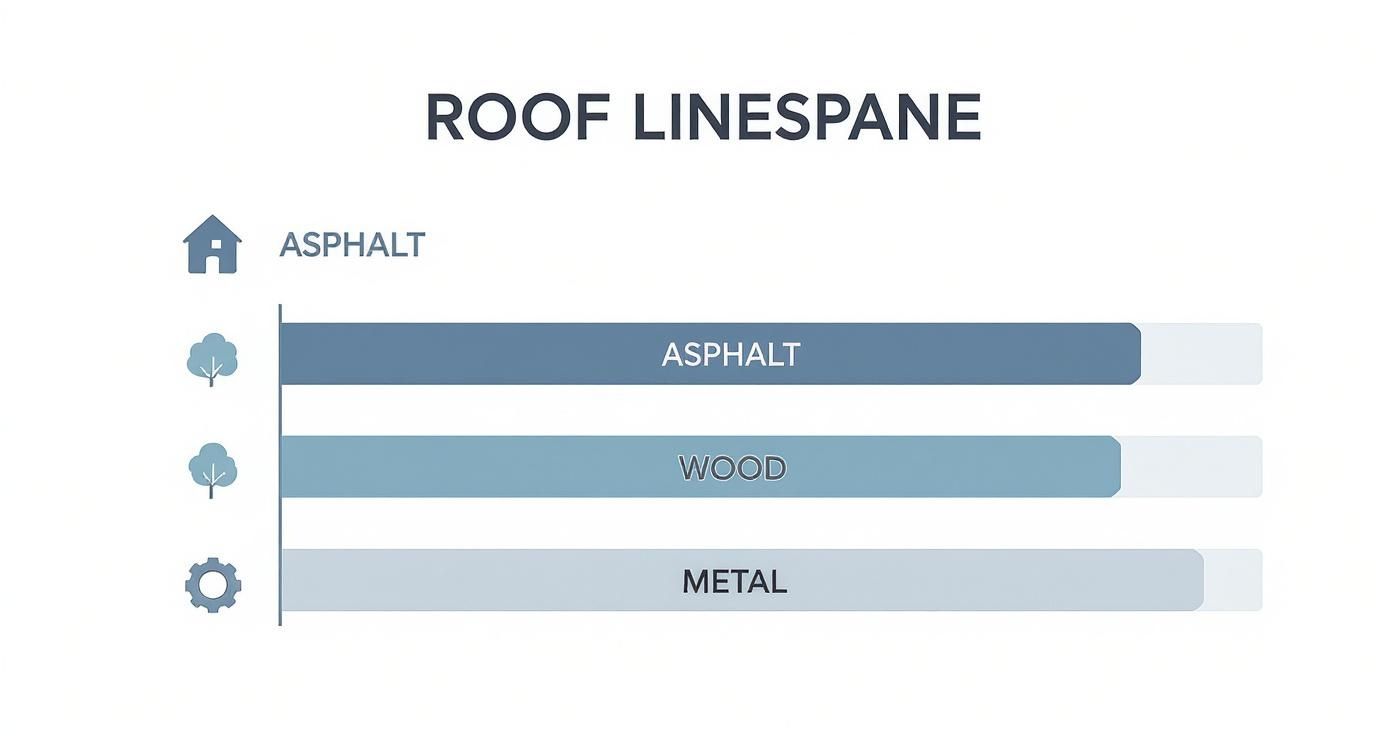
As you can see, while asphalt is a dependable choice for a few decades, premium options like metal and slate are in a completely different league when it comes to longevity.
A roof's lifespan isn't just a number—it's a direct reflection of material science, installation craftsmanship, and environmental resilience working in unison.
Let's take a closer look at the most common roofing material in the U.S.: asphalt shingles. Under ideal conditions, they last between 20 and 30 years. But factors like high humidity and intense, year-round sun can reduce that lifespan by as much as 40%. You can explore these differences in more detail by checking out these roofing timeline details.
For a quick reference, here’s a simple breakdown of what to expect from today’s most popular roofing materials.
Average Roof Lifespan by Material at a Glance
This table provides a quick summary of the expected service life for the most common residential roofing materials under typical conditions.
| Roofing Material | Average Lifespan (Years) |
|---|---|
| Asphalt Shingles (3-Tab) | 15 – 20 |
| Architectural Shingles | 25 – 30 |
| Wood Shingles/Shakes | 25 – 35 |
| Metal (Steel, Aluminum) | 40 – 70 |
| Clay or Concrete Tiles | 50 – 100 |
| Slate | 75 – 200+ |
Remember, these are just averages. The other factors we've discussed will ultimately determine where your roof falls on this spectrum.
How Roofing Materials Determine Durability
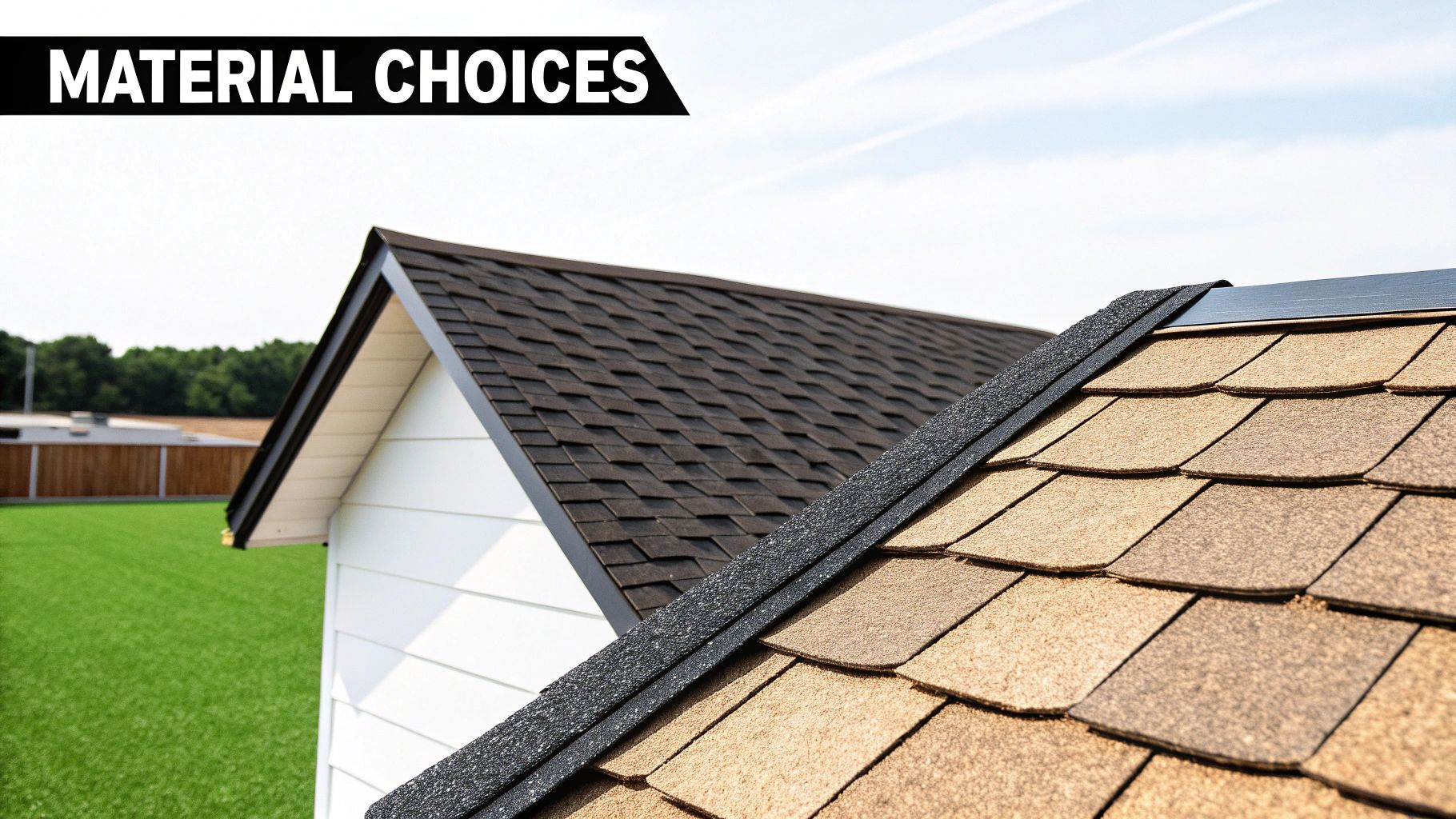
When you’re trying to figure out how long a roof should last, the first place to look is at the material itself. It’s the single biggest factor. Think of it like this: some materials are built for a good, solid run, while others are engineered to go the distance for a lifetime.
It all comes down to how each material stands up to the elements—blazing UV rays, constant moisture, and wild temperature swings. Let’s break down what you can realistically expect from the most common roofing options out there.
The Ever-Popular Asphalt Shingle
There's a reason you see asphalt shingles on nearly every street in America. They hit that sweet spot between affordability, decent performance, and curb appeal. But here’s something crucial to understand: not all asphalt shingles are the same.
You’ve got two main players in this category: 3-tab shingles and architectural shingles. The 3-tab is your basic, entry-level option. It’s a single-layer shingle that gets the job done and will typically last you 15 to 20 years. They're cost-effective, but their flat design makes them more likely to be damaged by high winds.
Architectural shingles are a serious step up. They’re thicker, heavier, and made with multiple laminated layers that give them a more textured, high-end look. That beefier construction means they can handle tougher weather and last much longer—you’re looking at 25 to 30 years of service life. Some premium lines even come with 50-year warranties.
The Resilient World of Metal Roofing
Metal roofing has absolutely taken off in recent years, and it's easy to see why. It’s incredibly tough, looks sharp, and outlasts many other materials by a long shot. While the sun’s UV rays cause asphalt to break down over time, metal simply reflects them, which helps it hold up for decades. The exact lifespan, though, depends on the type of metal.
- Steel Roofing: This is a popular and practical choice, usually coated with zinc (galvanized) or an aluminum-zinc alloy (galvalume) to prevent rust. As long as that protective coating stays intact, a steel roof will easily last 40 to 70 years.
- Aluminum Roofing: Lighter than steel and naturally corrosion-proof, aluminum is perfect for coastal homes where salty air can be brutal. It offers a similar lifespan to steel, typically in the 40 to 70-year range.
- Copper and Zinc: These are the heritage options. They're a significant upfront investment, but they are built to last—often 100 years or more. Over time, they develop a beautiful, sought-after patina that just adds to their character.
The roofing industry is massive. In the U.S., about 7% of single-family homes get a new roof every year, which works out to over 5 million new roofs annually. While asphalt is the go-to for many replacements, a metal roof’s higher initial cost—averaging around $17,750—is often paid back over its incredibly long lifespan.
Timeless Strength: Slate and Tile
If your goal is a roof that will outlive you, then slate and tile are in a league of their own. People have been using these materials for centuries, and for good reason—they’ve proven they can last longer than the houses they’re built on.
Slate is the undisputed champion of roof longevity. A well-installed slate roof isn't measured in years, but in generations. You can expect it to last from 75 to over 200 years. It's natural stone, so it's completely immune to fire and rot. Its only real weak spot is impact—a heavy falling branch can crack a tile.
Clay and concrete tiles offer many of the same bulletproof qualities. They’re incredibly durable, fireproof, and do a fantastic job of keeping homes cool in hot climates.
- Clay Tiles: Famous for their classic terracotta look, clay tiles will last 50 to 100 years. They hold their color beautifully and are a perfect match for sunny, dry regions.
- Concrete Tiles: These are engineered to look like clay, slate, or even wood shakes. They are just as tough, also lasting 50 to 100 years, but they are heavier and may require some extra structural support.
The Natural Charm of Wood Shakes
For a warm, rustic aesthetic, it’s hard to beat the look of natural wood shakes, which are usually made from cedar. They offer good insulation and, when properly cared for, can last a respectable 25 to 35 years.
The catch? Being an organic material, wood requires more upkeep. You have to stay on top of maintenance to keep moss, mold, and rot from taking hold, especially if your home is in a damp or shady location. They also aren't naturally fire-resistant unless treated, a vital point to consider depending on where you live.
As you weigh your options, it's also worth thinking about how sustainable construction materials are influencing roofing. Materials that are recyclable or improve a home's energy efficiency are not just good for the planet; they often contribute to a stronger, more resilient home.
Ultimately, your choice of material sets the foundation for your roof's entire lifespan. While things like professional installation and local climate are critical, it’s the inherent strength of the material that provides the first line of defense.
Factors That Secretly Shorten Your Roof's Life
The material you choose is just the starting point. Think of it like a car's sticker price—it tells you the potential, but the real cost of ownership depends on how you drive it and where. A roof is no different. The brochure might promise 30 years, but a host of hidden factors are constantly working against it, and they often have the final say.
Understanding what really shortens a roof's life is the key to getting the most out of your investment. It's not just about what's on the surface, but also what's happening in the air around it and the structure beneath it.
The Unseen Battle with Mother Nature
Your roof is on the front lines, taking a relentless beating from the weather every single day. The specific climate you live in is probably the biggest factor influencing how long it will hold up. An identical roof installed in a mild, stable climate can easily outlast one in a region known for weather extremes.
Here are the main culprits your roof is up against:
- Relentless Sun and UV Rays: Just like sunlight fades your car's paint, it's constantly breaking down your roofing materials. Those UV rays are brutal, slowly drying out asphalt shingles until they become brittle and start to crack.
- Drastic Temperature Swings: Your roof expands when it's hot and contracts when it's cold. This daily cycle puts constant stress on the entire system, weakening seals, backing out fasteners, and creating tiny cracks over time.
- Moisture, Humidity, and Ice: Water is the ultimate enemy. High humidity encourages algae and moss to grow, which traps moisture against the shingles. In colder areas, the freeze-thaw cycle is even more destructive. Water seeps into small cracks, freezes, expands, and pries the material apart from the inside.
We're also seeing climate change become a huge issue. Shifting weather patterns mean more intense and frequent storms, which can slash a roof's expected lifespan. For instance, asphalt shingles that used to last 20-25 years in Florida are now often failing in just 10 to 12 years due to increased storm activity. You can read more about how climate change is impacting roofing and what it means for homeowners.
How Your Home's Structure Plays a Part
It’s not just about what’s happening outside. The design of your home itself can either support or sabotage your roof's durability. The two big players here are attic ventilation and the slope of your roof.
Poor Attic Ventilation: The Silent Killer
I can't stress this enough: proper attic ventilation is absolutely essential. A good system lets hot, moist air escape, which keeps your attic's temperature and humidity under control.
Without good airflow, your attic turns into a convection oven in the summer. That intense heat literally bakes your shingles from the underside, causing them to age and fail years ahead of schedule.
In the winter, it's a different problem. Poor ventilation traps warm, moist air rising from your living space. This moisture condenses on the cold underside of the roof deck, leading to rot, delamination, and the perfect breeding ground for mold.
The Importance of Roof Slope
The pitch, or steepness, of your roof makes a huge difference. A steep roof sheds water and snow almost instantly, giving moisture very little time to hang around and cause trouble.
Low-slope or flat roofs, on the other hand, are a different story. They are far more susceptible to ponding water. If that water has nowhere to go, it will sit there and patiently find its way through seams and into the roofing materials, causing leaks and rapid deterioration.
The Deciding Factor: Quality Installation
You can pick the most expensive, durable materials on the market, but if they are installed poorly, it’s all for nothing. The quality of the installation is, without a doubt, the single most important factor in how long your roof will actually last.
A professional, by-the-book installation ensures every single component—from the nails to the flashing—works together as an integrated system. This includes:
- Solid Deck Prep: The wood deck underneath has to be clean, dry, and structurally sound before a single shingle goes on.
- Proper Underlayment: This is your roof's critical second layer of defense against water. To really get a handle on it, check out our guide on what roof underlayment is and why it’s so vital.
- Perfect Flashing: The metal flashing around chimneys, vents, and in roof valleys has to be installed flawlessly. These are the most common leak points on a roof.
- Correct Nailing: There's a science to nailing shingles. Using the right number of nails in the exact right spot is what keeps them from blowing off in a storm. This is where most shoddy roofers cut corners.
When a contractor cuts corners, they can easily chop a decade or more off your roof's life. This is precisely why finding an experienced, reputable roofer isn't just a suggestion—it's the most critical step you can take.
Simple Steps to Get the Most Out of Your Roof
You wouldn't expect your car to run for a decade without an oil change, and your roof is no different. Just because it’s rated for 30 years doesn't mean you can set it and forget it. Regular, simple check-ups are what keep it performing at its best and prevent a catastrophic failure down the road.
Think of it this way: a few hours of easy, seasonal maintenance can save you from a five-figure replacement bill. It's not a chore; it's the smartest way to protect your biggest investment. The goal is to spot the small stuff before it has a chance to become a massive, wallet-draining problem.
A Year-Round Maintenance Game Plan
The best approach to roof care is to break it down by season. Each time of year presents its own unique challenges, but staying on top of them is easier than you think. Most of these checks can be done with your feet planted firmly on the ground.
-
Spring Check-Up: Winter weather is brutal. Once the thaw is complete, take a walk around your house. Look for shingles that are missing, cracked, or curled up at the edges. Pay special attention to the flashing around your chimney and vents.
-
Summer Watch: That intense summer sun can really do a number on roofing materials. Keep an eye out for any shingles that look like they're buckling under the heat. It’s also a good time to poke your head in the attic—if it feels like an oven, you might have a ventilation issue that’s cooking your shingles from below.
-
Fall Prep: This is the big one. As leaves and twigs come down, they pile up in your gutters, and that’s where the trouble starts. A clogged gutter is one of the fastest ways to ruin a perfectly good roof.
Clogged gutters are a primary cause of roof damage. When water can't drain properly, it backs up onto the roof, seeping under shingles and potentially leading to rot in the roof deck and fascia boards.
Why Clean Gutters Are a Roof's Best Friend
Clean gutters are non-negotiable for a healthy roof—period. When they’re clogged, rainwater has nowhere to go but back up and over the sides, pooling right along the edge of your roof.
In the winter, that trapped water freezes solid, creating heavy ice dams that can lift shingles and tear gutters right off your house. Cleaning them twice a year, once in late spring and again after the leaves fall, is the single best thing you can do. It ensures water gets channeled away from your home, just like it's supposed to. If you need a refresher, this guide on how to clean downspouts and gutters walks you through the entire process.
Knowing When to Make the Call
While a bit of proactive maintenance is well within most homeowners' abilities, you have to know where to draw the line. Safety always, always comes first.
Good DIY Tasks (From the Ground):
- Binocular Inspection: Grab a pair of binoculars and scan your roof from the yard. It’s amazing what you can spot without ever leaving the ground.
- Low-Level Gutter Cleaning: If you have a single-story home and a solid ladder, cleaning the gutters is a manageable Saturday morning project. Just make sure you have a spotter.
- Clearing Debris: Use a rake with a long extension pole to gently pull down any leaves or small branches you can easily reach.
When to Call a Pro:
- High or Steep Roofs: Don't be a hero. If your roof is high, steep, or wet, stay off it. The risk of a fall is just not worth it.
- Obvious Damage: If you see cracked shingles, loose flashing, or water stains on your ceiling, it's time to call in an expert for a proper assessment.
- The Annual Inspection: It’s smart to have a professional roofer give your roof a full inspection once a year. They have a trained eye and can catch subtle issues you might have missed, giving you true peace of mind.
Warning Signs That Your Roof Is Failing
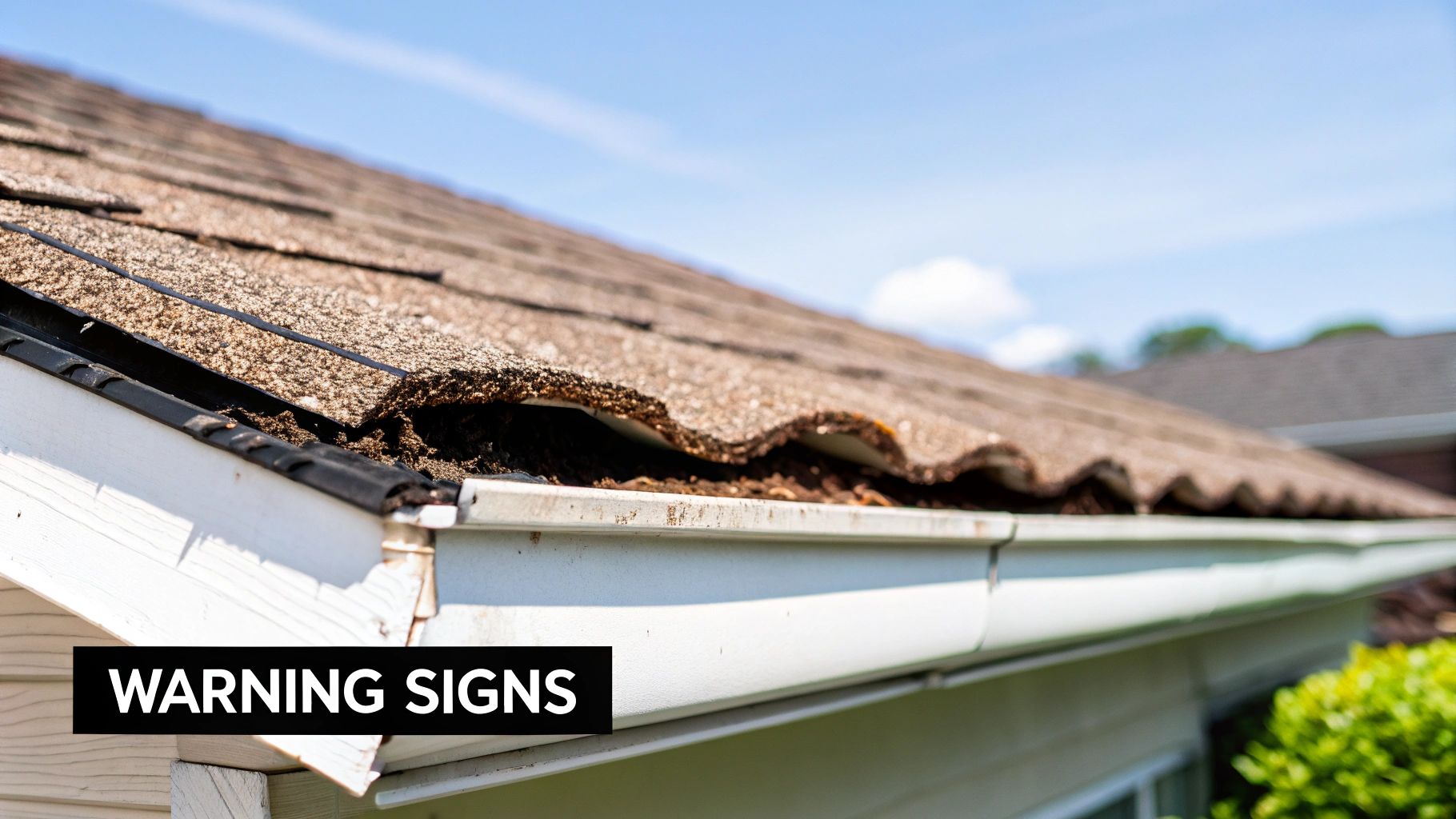
Knowing a roof's typical lifespan is a great start, but how can you tell if your roof is sending out an S.O.S.? A roof doesn't just fail overnight. It usually shows a series of clues—some are glaringly obvious, while others are surprisingly subtle—that tell you its health is starting to decline.
Learning to read these signs is one of the most important things a homeowner can do. It gives you the chance to act before a small, fixable issue blows up into a catastrophic leak that ruins your ceilings, walls, and personal belongings. Think of it as a health check-up for your home’s most important shield.
Exterior Clues You Can See From the Ground
You don't always need to get on a ladder to get a good read on your roof's condition. Many of the most telling signs are visible right from your yard, especially if you grab a pair of binoculars for a closer look.
Keep an eye out for these key indicators:
- Curling or Clawing Shingles: When you see the edges of your asphalt shingles starting to curl up, or the middle begins to bulge, it's a dead giveaway they are past their prime. This happens as the shingle ages, loses its flexibility, and becomes much more vulnerable to wind and rain.
- Cracked or Missing Shingles: Finding a few cracked shingles after a big storm isn't a reason to panic, but you do need to get them fixed fast. If you see widespread cracking all over the roof, however, it’s a sign that the entire system is becoming brittle and reaching the end of its useful life.
- Bald Spots and Granule Loss: Those little sand-like granules on your asphalt shingles are their main line of defense against the sun's harsh UV rays. If you see dark "bald spots" or find piles of granules in your gutters, it means your shingles are losing their sunblock and aging much faster.
A roof's appearance is a direct report card on its health. If you see widespread fading, cracking, and granule loss, you're looking at the first signs that its protective layers are breaking down after years of stress from the elements.
Also, pay attention to any dark streaks or discoloration. While this can sometimes be a purely cosmetic issue from algae, heavy growth can trap moisture against the shingles and speed up their decay.
Interior Signs That Signal Trouble Above
Sometimes, the very first hint of a roof problem shows up inside your house, often in places you wouldn't expect. These are urgent warnings that water has already managed to breach your roof's defenses.
- Water Stains on Ceilings or Walls: That classic faint, brownish ring on a ceiling is the calling card of a leak. Don't ignore it, even if it feels dry. It's proof that water has already found a way inside.
- Peeling Paint Near the Roofline: Moisture seeping into your attic can make the paint on your walls and ceilings bubble, blister, or peel. This is a common sight in rooms on the top floor.
- A Sagging Roof Deck: Head up into your attic and look up at the underside of the roof. If you see any spots that look like they're sagging, bowing, or feel spongy to the touch, that’s a serious red flag. It almost always means trapped moisture has started to rot the wood.
Thankfully, modern inspection methods are making it easier to spot these problems with incredible accuracy. Innovative tools like LiDAR for drone systems are becoming invaluable for detecting even the smallest structural shifts or damage that could point to roof failure. Catching these signs early lets you call in a professional to get ahead of the problem before it turns into major—and expensive—damage.
Your Top Questions About Roof Longevity Answered
After digging into all the different materials, maintenance tips, and warning signs, you probably still have a few practical questions bouncing around. It's one thing to talk about averages, but it's another to apply it to your own home. Let's tackle some of the most common questions homeowners ask so you can feel confident about your next steps.
We'll clear up the confusion around popular installation shortcuts, the surprising impact of color, and what a warranty really means for your roof.
Can I Just Install a New Roof Over My Old One?
This is easily one of the most frequent questions we get. The idea of laying new shingles over your existing ones—often called a "re-roof" or an "overlay"—sounds like an easy way to save time and money. And while it's technically possible in some cases, it's almost never the best move for the long haul.
For starters, most local building codes will only allow a maximum of two layers of shingles on a roof for structural and safety reasons. But the bigger issue is what you can't see. An overlay completely covers up the old roof, making it impossible to inspect the wooden decking underneath for rot, soft spots, or water damage. You could be installing a brand-new roof on a failing foundation.
Plus, stacking shingles traps a huge amount of heat. This extra thermal load can bake your new shingles from below, drastically shortening their lifespan and wiping out any money you initially saved. Tearing off the old roof is the only way to guarantee your new one has a solid, healthy base to live on.
Does the Color of My Roof Really Affect How Long It Lasts?
It absolutely does, especially if you live in an area that gets a lot of intense, direct sunlight. The science is pretty simple: it all comes down to heat.
Dark-colored materials, like black or deep brown shingles, absorb a ton more solar energy. This can cause the surface temperature of your roof to skyrocket. Over years of this daily baking, the asphalt in the shingles can dry out and become brittle, leading to cracks and failure much sooner than you'd expect.
Lighter-colored shingles, often marketed as "cool roofs," are a game-changer here. They are made with special granules that reflect a large portion of the sun's heat instead of absorbing it. This keeps the entire roof system cooler and slows down the aging process.
Not only does this help your roof last longer, but it can also translate into lower air conditioning bills during the summer. It's a smart choice for both durability and energy efficiency.
What's the Difference Between a Roof Warranty and Its Actual Lifespan?
This is a crucial distinction that trips up a lot of homeowners. A roof warranty is not a guarantee of its lifespan. Think of it more as a promise against manufacturing flaws, and you need to read the fine print to understand what that really means.
Most warranties from the material manufacturer will only cover defects that happened at the factory. They almost never cover issues that come up because of:
- Poor or incorrect installation work.
- Damage from storms, hail, or falling branches.
- Neglect or a lack of proper maintenance.
On top of that, many of these warranties are prorated, which means their payout value drops every year. Your roofer should provide a separate workmanship warranty to cover any mistakes made during the actual installation. So, when you see a "30-year shingle warranty," it's reflecting the material's performance in a lab, not a promise of 30 years of trouble-free service on your home. A top-notch installation and a commitment to upkeep will always be more valuable than any warranty document.
If you still have questions or feel like something isn't right with your roof, getting a professional opinion is the smartest next step. The experienced team at Penn Ohio Roofing & Siding Group can give your roof a thorough inspection and provide clear, honest answers to help you protect your home. Schedule your free estimate today.