

The truth about how to clean gutter guards is that even the very best systems still need a little attention. I’ve seen countless homeowners get them installed thinking their days on a ladder are over for good. While guards are fantastic at reducing how often you do a full clean-out, they don’t make maintenance disappear completely. Over time, all the fine gunk they're designed to filter out can build up, slowing down water flow and leading to bigger problems.
Why Cleaning Gutter Guards Is Essential

It’s a common belief that gutter guards are a "set-it-and-forget-it" fix. And they do a great job blocking the big stuff like leaves and twigs. But they’re not magic. The fine particles are what eventually get you.
Season after season, a mixture of shingle grit, dust, pollen, and other tiny bits of organic material can form a thick, pasty layer right on top of your guards. This effectively turns your high-tech guard into a solid dam, forcing rainwater to sheet over the edge of the gutter instead of flowing through it.
The Real Risks of Neglect
When that water spills over, it’s not just an annoying drip. It’s a direct threat to your home, causing a whole host of expensive headaches that go way beyond a few water stains on your siding.
- Foundation Damage: All that water has to go somewhere. When it pools around your home’s foundation, it can saturate the soil, causing cracks in the concrete and leading to a leaky basement.
- Fascia and Soffit Rot: The wooden boards your gutters are mounted on—the fascia—are prime targets for water damage. Constant moisture exposure will cause them to rot, weakening the entire gutter system.
- Roof Leaks: Clogged guards can cause water to back up and push its way underneath your shingles. This can rot the roof decking and create leaks that show up in your attic or on your ceiling.
- Pest Infestations: A gutter clogged with damp, decomposing muck is the perfect breeding ground for mosquitoes, ants, rodents, and other unwanted pests.
At the end of the day, a clogged gutter guard is no different than a clogged gutter. The water still has to find a way out, and it will often take the path of most destruction—right into the structure of your home.
A Crucial Part of Home Maintenance
Think of cleaning your gutter guards as preventative care for your biggest asset. Putting in a little bit of effort a couple of times a year can stop that silent, slow-moving damage that ends up costing thousands to fix. If you want to dive deeper into how all these parts work together, you can learn more about the role of gutters, soffits, and fascia in our detailed guide.
But if you’re up on the ladder and spot signs of wood rot, feel unsafe with the height, or just can't seem to stop the overflow, it's a clear sign to call in a pro. A trusted expert like Penn Ohio Roofing & Siding Group can get up there, diagnose the issue, and fix it safely, making sure your home stays protected.
Gearing Up: The Right Tools and Safety Equipment for the Job
Before you even think about leaning a ladder against your house, let’s talk about preparation. From my years of experience, I can tell you that the difference between a successful, straightforward cleaning and a dangerous, frustrating ordeal is having the right gear ready to go. This is about more than just convenience—it's about keeping yourself safe while working at heights.
A proper setup involves a mix of basic garden tools and some non-negotiable safety equipment. You probably have a few of these items already, but taking a moment to gather everything will make the entire process smoother and, most importantly, safer.
Your Gutter Guard Cleaning Toolkit
Getting your tools and safety gear organized beforehand is the first step to an efficient cleaning day. Here's a quick checklist of everything you'll need to tackle the job effectively.
| Category | Item | Purpose |
|---|---|---|
| Safety Gear | Sturdy Extension Ladder | To safely access your roofline. Ensure it's on solid, level ground. |
| Safety Gear | Ladder Stabilizers | Prevents the ladder from slipping and protects gutters from being crushed. |
| Safety Gear | Heavy-Duty Gloves | Protects hands from sharp metal edges, bacteria, and pests. |
| Safety Gear | Safety Glasses or Goggles | Shields your eyes from falling dirt, grit, and other small debris. |
| Cleaning Tools | Garden Hose with a High-Pressure Nozzle | Your go-to for flushing fine sediment and silt off the guards. |
| Cleaning Tools | Soft-Bristled Brush | For scrubbing caked-on grime without damaging mesh or screen guards. |
| Cleaning Tools | Plastic Gutter Scoop | Easily removes large, wet clumps of leaves and gunk. |
| Cleaning Tools | Bucket with a Hook | Keeps your tools handy and collects debris, minimizing trips up and down. |
Having these items within reach means you can focus on the task at hand without interruption.
Safety First, Always
Look, nobody likes to hear it, but gutter cleaning is one of the riskiest DIY jobs around. The vast majority of accidents are fall-related, which is why your ladder setup is everything.
An extension ladder is usually what you'll need. Make sure its feet are planted on firm, level ground. I also highly recommend ladder stabilizers—those U-shaped arms that rest on the roof itself. They're a game-changer for stability and prevent you from denting or scratching your gutters.
And please, wear heavy-duty gloves and safety glasses. Gutter guards can have surprisingly sharp edges, and you never know what kind of muck or critters you'll find. The last thing you want is a face full of gritty water and decomposed leaves.
Here’s a piece of advice I give every homeowner: always maintain three points of contact on the ladder. That means two feet and one hand, or one foot and two hands, at all times. If you have to stretch to reach a spot, don't do it. Climb down and move the ladder. It takes 30 extra seconds and can save you a trip to the emergency room.
The Right Tools for Cleaning
With safety handled, let's grab the tools for the actual cleaning. The idea is to be thorough without causing any damage.
Your most-used tool will be a garden hose with a good high-pressure nozzle. This is perfect for blasting away the fine sediment and "shingle sand" that blankets most types of guards. For stubborn, caked-on spots, especially on mesh screens, a soft-bristled brush gives you the scrubbing power you need without tearing the material.
A plastic gutter scoop is great for grabbing big, soggy handfuls of leaves that might have piled up in corners or low spots. Hook a bucket to your ladder to toss the debris into, and you'll save yourself a dozen trips up and down.
As you work, keep an eye on the condition of the surrounding wood. If you notice any soft or rotting spots, it could be a sign of a bigger problem with your fascia. This is the board your gutters are mounted to, and its health is critical. To get a better sense of what you're looking at, check out our guide on what fascia is on a roof.
Cleaning Techniques for Different Guard Types
Gutter guards aren’t a one-size-fits-all solution, so your cleaning method can’t be, either. The right approach really depends on what kind of system is sitting on your gutters. If you try to clean them all the same way, you’ll not only waste time but could also end up damaging them.
The trick is to work with the guard's design, not against it. Some guards just need a quick surface brushing, while others have to be partially lifted or flushed out to get rid of the gunk hiding underneath. Let’s break down the best way to handle the most common types you'll find on homes today.
Before you start, make sure you have the basics ready. It's usually pretty simple.
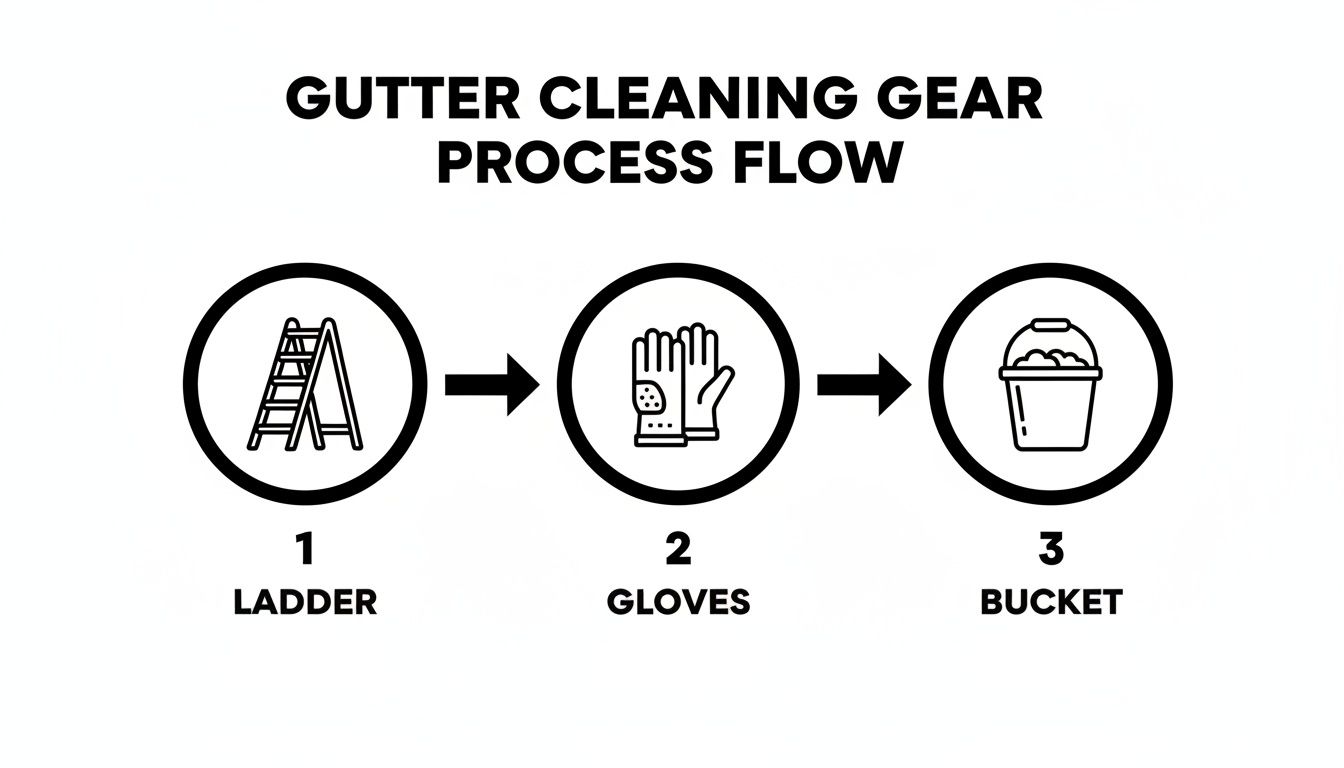
As you can see, it really boils down to having a sturdy ladder, good gloves, and something to collect the debris in.
Tackling Micro-Mesh and Screen Guards
Micro-mesh guards are great at blocking debris, but their Achilles' heel is the fine screen itself. Over time, it can get coated with a stubborn film of shingle grit, pollen, and other fine organic sludge. When this paste builds up, it basically seals the screen, and you'll see water sheeting right over the edge of the gutter.
For this job, your best friends are a soft-bristled brush and a garden hose with a decent spray nozzle.
- Sweep first: Start by using your brush to gently get rid of any loose leaves, twigs, or other dry debris sitting on top.
- Rinse it off: Next, grab the hose and spray down the surface of the mesh. You’re trying to wash the fine sediment off the screen, not push it into the gutter. Moderate pressure is key here—too much force can damage the mesh.
- Scrub the tough spots: If you have caked-on grime that won't rinse away, use your soft brush with the stream of water to gently scrub it loose. Never use a wire brush; it will shred the mesh in a heartbeat.
Think of it like cleaning a window screen. You wouldn't blast it with a pressure washer, but a steady rinse and a gentle scrub do wonders.
Cleaning Reverse-Curve (Helmet) Guards
Reverse-curve guards are designed to let water flow around a curved edge into the gutter while leaves and bigger debris slide right off. The problem is, smaller debris can get sucked in with the water, and a film of gunk often builds up right along the opening, which can stop water from getting in at all.
Your cleaning strategy here focuses on that entry slit and what’s happening inside the gutter channel.
First, wipe away any gunk, seeds, or leaves stuck along that narrow opening. A brush works, but honestly, your gloved hand is often the best tool for this.
Then, stick your garden hose into one end of the gutter, aiming the water stream underneath the guard. You want to create a strong flow that pushes everything hiding inside down the channel. Just keep working your way down the gutter in sections, always flushing the debris toward the nearest downspout.
If you find a ton of debris has gotten inside, it's a sign the whole system might be clogged. You may need to look into how to clean downspouts and gutters to tackle the deeper blockage.
Managing Foam and Brush Inserts
Foam and bottle brush inserts are probably the easiest to clean, but they also tend to trap a lot of debris and need more frequent check-ups. The cleaning process is simple, though it can get a bit messy.
For both foam and brush guards, don’t even bother trying to clean them in place. It’s frustrating and just doesn't work well. The only truly effective way is to pull them out of the gutter first.
Once you’ve got a section out and on the ground, the rest is easy:
- Shake it out: Give the insert a few good, hard shakes. You'll be surprised how much loose debris falls right out.
- Rinse it clean: Use your hose to spray through the foam or bristles from every possible angle. A lot of hidden dirt and sediment will wash out.
- Get the rest out: For foam inserts, squeeze them out like a big sponge. For brush guards, tap them on a driveway or patio to knock out any stubborn, embedded bits.
Before you put them back in, it’s the perfect time to give the now-empty gutter trough a quick flush with the hose. This gets rid of any sediment left at the bottom and gives you a completely fresh start.
Your Year-Round Gutter Maintenance Schedule
If you have gutter guards, you might be thinking your days of climbing a ladder are over. While they certainly make life a lot easier, they aren't a completely "set it and forget it" solution. Think of them as a filter—and just like any filter, they need a little attention to keep working their best.
Sticking to a simple, year-round schedule is the smartest way to keep your guards performing flawlessly. This is especially true for those of us in Pennsylvania and Ohio, where we get hammered with falling leaves and heavy snow. A seasonal approach makes each cleaning session faster and helps you catch small issues before they spiral into costly repairs.
Late Fall: The Essential Deep Clean
This is the big one. Your most important cleaning of the year should happen in late fall, after the very last leaves have finally dropped. Jump the gun, and you’ll just be doing it all over again in a few weeks. Wait until the trees are bare.
For this job, you'll be doing a thorough sweep to get all those leaves, twigs, and other gunk off the surface of the guards. Once the big stuff is gone, you need to flush everything out. A good rinse with a hose clears away all the fine silt and shingle grit that's settled in the channels below. This ensures the entire system is clear and ready for winter.
This late-fall deep clean is your best defense against ice dams. When gutters are clogged with frozen leaves and debris, melting snow has nowhere to go but back up under your shingles, leading to serious roof damage.
Early Spring: The Post-Winter Wake-Up
Winter is surprisingly tough on gutters. Even without leaves, melting snow and ice can deposit a ton of grit and grime. Then, spring arrives with a flurry of maple tree "helicopters," pollen, and flower blossoms that can quickly form a thick, pasty clog on your guards.
Your spring check-up is all about clearing out this specific kind of seasonal debris.
- A quick visual inspection from the ground is often enough to see if pollen is starting to cake up.
- Use a hose with a spray nozzle to wash away the sticky pollen and any sediment left over from winter.
- This is also the perfect time to check for damage. Look for any guards that were bent or knocked loose by the weight of snow and ice.
Getting this done in early spring means your gutters will be ready for those heavy April and May downpours, preventing overflows that can saturate the ground around your home's foundation. To truly master your home's exterior care, understanding how often gutters should be cleaned is key to preventing issues.
Summer: Spot Checks
Summer brings its own unique challenge: powerful thunderstorms. Fierce winds can rip leaves and small branches from trees and dump them right onto your roof, even if the trees aren't directly over your house. It’s a good habit to do a quick visual check after any major storm blows through.
You don’t need to break out the ladder every single time. Grab a pair of binoculars and scan the guards for any large, new debris. A single branch in the wrong spot can create a clog during the next downpour. Getting it down quickly keeps a small nuisance from turning into a big headache and ensures your system is ready for whatever the next storm brings.
How to Troubleshoot Common Gutter Guard Issues
You’ve spent the afternoon cleaning your gutter guards, and everything looks pristine. Then the next rainstorm hits, and you see it: a waterfall pouring right over the edge of your gutter. What gives?
Sometimes, even with perfectly clean guards, you’ll run into problems. Most of the time, these issues have less to do with debris and more to do with the system's installation or a hidden clog. Figuring out what’s really going on can save you a lot of frustration and help you decide if it’s a quick fix or time to call for backup.
Water Pouring Over the Gutters
One of the most common complaints we hear is about water completely overshooting the gutters, especially during a heavy downpour. This "sheeting" effect almost always points back to an installation flaw.
When rainwater rushes down a steep roof, it picks up a lot of speed. If your gutter guards were installed too flat, they act like a ski-jump, launching that water right over the edge instead of directing it down into the gutter. The guards need to be installed with a slight downward pitch that allows the water to slow down and drain through.
Here are a couple of ways to check this yourself:
- Watch It in Action: The next time it rains, take a look. Is the water flowing into the gutter, or is it just cascading over the side?
- Check the Angle: Get on your ladder and take a safe look at the guard’s pitch. It should follow the angle of your roof, creating a smooth path for water. It should never look like a flat shelf sitting on top of your gutters.
If the pitch is the problem, this isn’t a simple DIY adjustment. It often requires reinstalling entire sections, which is a job best left for a professional.
Want a dead giveaway of an improper pitch? Look for "tiger stripes" on the face of your gutters. Those ugly black streaks are from dirt and algae deposited by water that constantly overflows in the same spots. It’s a sure sign water isn't going where it's supposed to.
Stubborn Downspout Clogs
So, the guards are clear and the gutters look clean, but water is still pooling and about to overflow. Your problem is almost certainly a stubborn clog hiding deep inside the downspout. Over time, all the fine stuff—shingle grit, pollen, and decomposed organic matter—can form a dense, cement-like plug.
You can usually spot this from the ground. If the gutter directly above a downspout is full during a storm but no water is coming out the bottom, you've found your blockage.
First, try forcing it out from below. Stick your garden hose up the bottom of the downspout, turn the water on full blast, and see if the upward pressure can dislodge the clog. If that doesn't do the trick, you may need to use a plumber’s snake to break up that compacted mess.
Spotting Early Signs of Pests
Gutters are an ideal home for pests. They’re damp, sheltered, and out of sight, making them perfect for bees, wasps, and birds looking to build a nest.
As you clean, always be on the lookout for early signs of an infestation. You might see stray bits of grass, twigs, or mud crammed into corners or peeking out from under the guards. A sudden increase in bees or wasps buzzing around one section of your roof is another major red flag.
If you find a nest, especially a wasp or hornet nest, back away carefully. Messing with them is a great way to get stung. This is when you put the ladder away and call a pest control expert—it's just not worth the risk.
When to Call a Gutter Professional

There’s a lot of satisfaction in handling home maintenance yourself. But knowing when to step back and call in an expert is just as important, especially when you’re working on a ladder. While you can certainly handle routine clean-ups, some situations just aren’t worth the risk.
Recognizing the signs that a job is bigger than you thought is crucial for protecting yourself and preventing small problems from turning into expensive repairs.
Height and Steep Roofs
This is the big one. If your home is two or more stories high or has a roof with a steep pitch, the danger of a serious fall multiplies. Honestly, it’s just not a gamble worth taking.
A professional crew arrives with the right gear for the job—heavy-duty ladders, stabilization equipment, and safety harnesses. More importantly, they have the training and experience to work at those heights all day, every day. For a homeowner, one slip is all it takes for a trip to the emergency room.
Visible Damage to Fascia and Soffits
As you’re inspecting your gutters, take a hard look at the wood they're attached to. Do you see peeling paint, dark water stains, or wood that feels soft and spongy? Those are serious red flags.
This means water has been getting behind the gutter and causing wood rot. That's not just a cosmetic issue; it’s a structural one. Rotted fascia boards can't support the weight of a gutter, especially when it’s loaded with rainwater or ice. A pro can diagnose the extent of the rot and make the necessary repairs to secure your entire gutter system.
When you hire a professional, you're not just paying for a cleaning; you're paying for a diagnosis. An experienced technician can spot underlying issues—like improper gutter pitch, loose hangers, or early signs of leaks—that a DIY inspection might easily miss.
Complex or Persistent Issues
Sometimes, the problem isn’t just a simple clog. You’ve cleaned the guards, flushed the downspouts, and yet water is still spilling over the sides during a storm. When you've done everything right and the problem persists, it’s time for a professional opinion.
These are often symptoms of a bigger issue that a basic cleaning can't resolve. If you feel overwhelmed, don't have the right tools, or keep running into the same clogs, remember that professional gutter and roof cleaning services are your best bet.
A pro can use specialized equipment, like high-powered water jets or industrial vacuums, to tackle stubborn blockages that a garden hose can't touch. They can find the root cause, ensuring your system works properly for the long haul.
When the job is too big, too high, or reveals problems that go beyond a simple cleaning, trust the experts at Penn Ohio Roofing & Siding Group. With over 25 years of licensed and insured experience, we provide safe, effective gutter and roofing services to keep your home protected. Contact us today for a free estimate and let our team handle the tough jobs for you.