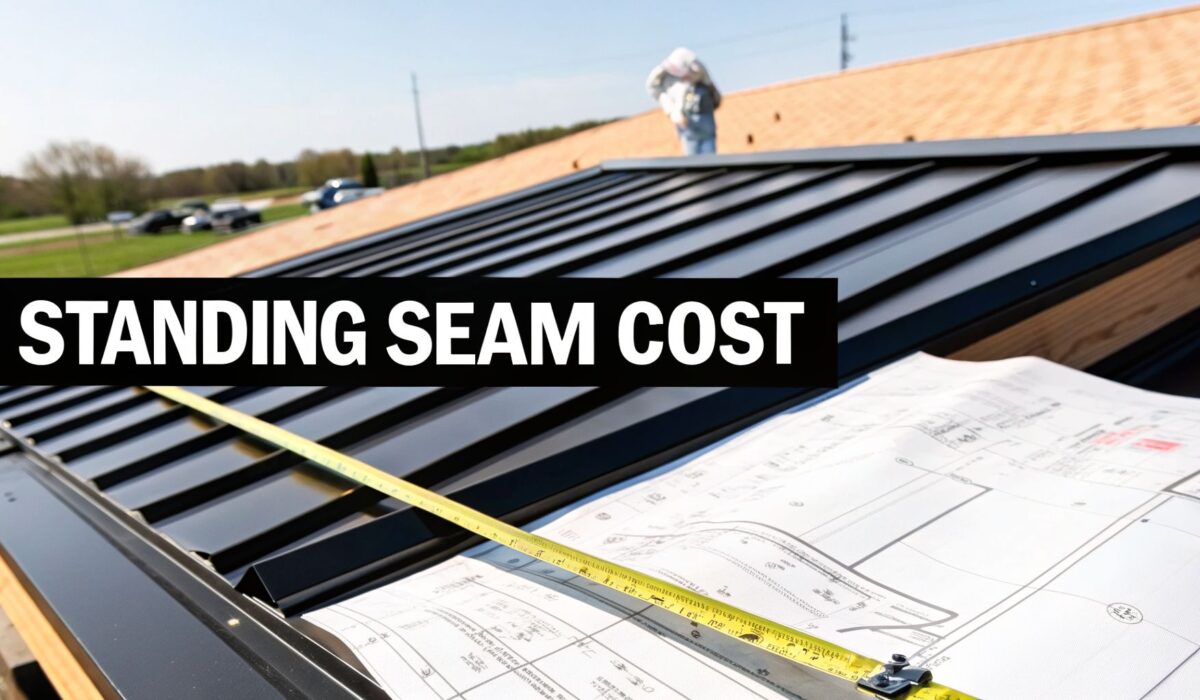
When you're looking at a major home improvement project, let's be honest—the first question is always about the cost. For a standing seam metal roof, you can expect the national average metal roofing price per square foot to fall somewhere between $10 and $18, fully installed.
For a typical home, that translates to a total project cost in the ballpark of $20,000 to $36,000.
Standing Seam Metal Roof Price Per Square Foot Quick Overview (2026)
To give you a clearer picture of how these per-square-foot costs scale up, here's a quick look at what you might expect for different home sizes. These are national averages and can vary based on your specific location and project details.
| Roof Size (Square Feet) | Average Low-End Cost | Average High-End Cost |
|---|---|---|
| 1,500 sq. ft. | $15,000 | $27,000 |
| 2,000 sq. ft. | $20,000 | $36,000 |
| 2,500 sq. ft. | $25,000 | $45,000 |
| 3,000 sq. ft. | $30,000 | $54,000 |
Remember, these figures are a starting point for budgeting. The final price tag will depend on the specific materials, labor, and complexity of your roof.
Your Quick Guide to Standing Seam Metal Roof Prices
It's helpful to think of a standing seam roof not just as a replacement, but as a long-term upgrade for your entire property. It’s more like a kitchen remodel or adding a custom deck than a simple patch job. You're investing in a premium system from day one, and it's engineered to deliver value for many decades to come.
So, why the higher price? It all comes down to the sophisticated design and superior materials. Standing seam panels use an interlocking system with hidden fasteners, which gives them that clean, modern look while creating an incredibly weather-tight barrier. That advanced construction is what separates it from other roofing types and justifies the initial investment.
Understanding the Upfront Investment
That upfront cost can feel like a big number, but it’s a direct reflection of the system's quality and incredible longevity. Even with the premium price, their popularity is growing fast.
Let's put it in perspective. For a typical 2,000-square-foot home, the $20,000 to $36,000 price tag is about two to two-and-a-half times the $8,000 to $16,000 you might pay for high-quality architectural shingles. The real story, however, is told over time.
A standing seam metal roof can last 40 to 70 years. Compare that to the 15 to 30 years you’ll get from shingles, and the math starts to look very different.
You could install a single metal roof that lasts for as long as you own your home. That means completely avoiding the thousands of dollars in replacement costs that homeowners with shingles will face every couple of decades.
A Starting Point for Your Budget
The goal here is to give you a clear financial picture, and these national averages are the foundation for that. While every roof has its own quirks that will influence the final quote, having a solid baseline helps you set realistic expectations.
From here, you can dig deeper into the specific factors that will shape your estimate. Gaining a full picture of the overall metal roof installation cost is the perfect next step. Ultimately, you're not just buying a roof; you're investing in decades of durability, minimal maintenance, and fantastic curb appeal.
What Goes Into the Price? Materials vs. Labor
When you get an estimate for a standing seam roof, it’s more than just a single number. It’s a detailed breakdown of everything required to protect your home for the next half-century. Think of it like a five-star dinner—you're not just paying for the steak, but for the quality of the ingredients, the chef's expertise, and the impeccable service.
A professional roofing quote is the same. It’s primarily split into two big categories: the materials that make up the roof and the specialized labor needed to put it all together. Let's pull back the curtain on your estimate to see where every dollar goes.
The Cost of Premium Materials
This part of your estimate covers every physical piece of the puzzle. It’s a complete system, and the standing seam panels themselves are just the most visible part.
The price of the panels can vary based on a few key choices:
- Metal Type: Galvalume steel is the workhorse of the industry, hitting a sweet spot between long-term durability and cost. For homes in coastal areas or for those wanting maximum corrosion resistance, aluminum is an excellent—though slightly more expensive—upgrade.
- Protective Coatings: The vibrant color on a metal roof isn't just paint. It’s a high-performance finish like Kynar 500® designed to resist fading and chalking for decades. These advanced coatings are a crucial part of the material cost and your roof's long-term beauty.
- Panel Gauge: This is simply the thickness of the metal. A lower number means thicker, more durable steel. Thicker panels cost more, but they offer superior resistance to dents from hail or falling branches.
But a roof is much more than just panels. Your material costs also include the unsung heroes of the system, like the high-performance synthetic underlayment that serves as a critical secondary water barrier. You can learn more about why this layer is so important in our guide on what roof underlayment is. It also covers all the trim, clips, fasteners, and sealants needed to create a fully integrated, weatherproof system.
The Value of Specialized Labor
Installing a standing seam metal roof is a true craft, and the expertise required is a significant factor in the final price. This isn't a weekend DIY project or a job for a general contractor. It demands a crew that specializes in metal.
Here’s a glimpse of the meticulous work your investment in labor covers:
- Custom-cutting and hemming each metal panel on-site to perfectly fit your roof’s unique slopes and angles.
- Methodically interlocking the panels to create the raised, watertight seam that gives the roof its name.
- Installing a hidden clip system that secures the panels while allowing them to expand and contract with temperature changes—a critical detail that prevents warping and stress.
This is precision work. Paying for an experienced crew is your best insurance against common installation mistakes like leaks, "oil canning" (a wavy look in the panels), and fastener problems that can plague a poorly installed roof.
On a typical standing seam metal roof project, materials often account for around 35% of the total cost, with labor making up another 25%. The rest covers overhead, project management, and permits.
So, on a $20,000 roof replacement, you can expect about $7,000 to go toward the high-quality steel and components, and $5,000 to be invested in the skilled technicians doing the work. This translates to a labor rate of roughly $2 to $6 per square foot. It's this expert installation that guarantees your roof will perform flawlessly for its entire 50+ year lifespan.
Key Factors That Drive Your Final Standing Seam Price
So, why does one standing seam roof cost more than another, even on houses that look about the same size? The national averages give you a great ballpark figure, but the final price on your estimate comes down to the unique character of your home. Every roof is different, and contractors price a job based on those specific details.
Getting a handle on these variables is your best tool. It helps you read an estimate with confidence, ask the right questions, and understand exactly what you’re paying for. Let's break down the main things that move the needle on the metal roofing price per square foot for a standing seam system.
The Impact of Metal Gauge and Thickness
Think of metal gauge like the cardboard used for a shipping box. You wouldn't use a flimsy cereal box to ship something heavy and valuable; you'd want thick, sturdy corrugated cardboard. The same idea applies to the metal on your roof.
Gauge is simply a measure of the metal's thickness. The system is a little backward: the lower the gauge number, the thicker and stronger the metal.
- 26-Gauge: This is a very common and reliable choice for homes. It hits a sweet spot between durability and cost, standing up well to daily wear and tear.
- 24-Gauge: This is your premium, heavy-duty option. It costs more upfront, but the extra thickness gives you superior protection against things like heavy hail or falling branches.
- 29-Gauge: As a thinner and more budget-friendly panel, you'll typically see this on barns, sheds, or other agricultural buildings where dent resistance isn't the top priority.
Upgrading from a 26- to a 24-gauge panel will raise your material cost, but for many homeowners, it’s a worthwhile investment in long-term peace of mind, especially if you live where severe weather is common.
How Roof Complexity Shapes Your Cost
Not all roof layouts are created equal. A simple, two-sided gable roof is like a straight, open highway—easy for an installer to work on. But a complex roof with lots of hips, valleys, dormers, and skylights? That's more like a busy downtown intersection. It takes a lot more skill, time, and material to navigate.
In the roofing world, we refer to this as a "cut-up" roof. The more angles and interruptions, the more intricate the job.
Every single valley, dormer, or chimney needs careful, custom-cut flashing and sealing. This precision work takes a lot more time and generates more scrap material, both of which directly increase the project’s final cost.
A straightforward 2,000-square-foot rectangular roof will almost always cost less per square foot than a 2,000-square-foot roof that’s broken up into a dozen different sections. It's the complexity, not just the square footage, that really drives the installation price.
Old Roof Removal and Preparation
Before your beautiful new standing seam roof goes on, the old roof has to come off. While you can sometimes layer new asphalt shingles over old ones, a full tear-off is the non-negotiable standard for a quality metal roof installation. It adds to the initial cost, but it's absolutely vital for a roof that's going to last a lifetime.
A tear-off includes the labor to strip the old materials and the cost of hauling them away for disposal. If the crew discovers several layers of old shingles, the price will tick up to account for the extra work and disposal weight. This step is critical because it lets us inspect the underlying roof deck and create a perfectly clean, flat surface for the new underlayment and metal panels.
Finally, the price of raw materials is a major factor. The cost of steel and aluminum fluctuates on the global market, which means what a contractor pays for a coil of steel today might be different next month. For example, keeping an eye on trends in steel prices in Dubai can give you a peek into the worldwide forces that affect what you see on your estimate. Understanding these bigger economic factors helps explain the "why" behind material costs.
Comparing Material Choices And Their Impact On Cost
When it comes to your new roof, the single biggest decision you'll make is the metal itself. This choice is what really drives the final metal roofing price per square foot for a standing seam system, and it also determines how long your roof will last and what it will look like decades from now.
It’s a bit like choosing the engine for a new truck; your selection has a huge impact on performance, longevity, and of course, the price tag. Let's break down the most common metals so you can see how they really stack up.
As you can see, factors like the metal's thickness (its gauge), the complexity of your roof's shape, and even where you live can all shift the final cost.
Galvalume Steel: The Industry Workhorse
Think of Galvalume steel as the F-150 of the roofing world. It's tough, reliable, and gives you a fantastic bang for your buck, which is why it's the go-to for most residential standing seam projects. At its heart is a strong steel core that's coated with a specialized blend of aluminum and zinc. This coating is what gives it excellent, long-term protection against corrosion and rust.
This smart combination makes Galvalume a practical and durable choice for just about any climate. It delivers the strength and longevity that people expect from a metal roof without getting into the premium price points. For the vast majority of homeowners, it’s the perfect middle ground of performance and value.
Aluminum: The Coastal And Humid Climate Champion
If Galvalume is the all-around workhorse, aluminum is the specialized 4×4 built for the toughest environments. It’s naturally 100% rust-proof, making it the undisputed champion for homes near the coast where salt spray is a constant threat. It's also the best bet for regions with relentless humidity.
While it does cost more than steel, that superior corrosion resistance is absolutely essential in those specific environments. As a bonus, aluminum is incredibly lightweight, which can help reduce the overall structural load on your home. If you're anywhere near saltwater or just want the ultimate defense against moisture, the peace of mind aluminum offers is worth every penny.
Copper And Zinc: The Luxury Lifetime Options
Copper and zinc are in a class of their own—they're the luxury sports cars of roofing. We're talking about architectural statements that are designed to last a lifetime and then some. Both of these metals are famous for their incredible durability, often lasting 100 years or more.
But they're more than just durable; these are "living" metals that get better with age. A new copper roof has a brilliant, penny-like shine that slowly evolves into its iconic blue-green patina. Zinc starts with a dark, metallic sheen and weathers to a beautiful, soft matte gray. They create a distinguished look that changes and deepens over the decades.
This level of beauty and permanence doesn't come cheap. The metal roofing price per square foot for a standing seam roof made from copper or zinc is significantly higher. But for a historic restoration or a high-end custom home where timeless aesthetics are the number one priority, nothing else even comes close.
To give you a clearer picture, let's compare these materials side-by-side.
Standing Seam Metal Material Comparison (2026)
The table below breaks down the most popular metals, showing how their costs, lifespans, and unique benefits compare based on current market data.
| Metal Type | Installed Cost / Sq. Ft. | Average Lifespan | Key Benefit |
|---|---|---|---|
| Galvalume Steel | $8 – $16 | 50+ Years | Best all-around value and durability |
| Aluminum | $10 – $17 | 60+ Years | 100% rust-proof; ideal for coastal areas |
| Zinc | $25 – $35 | 100+ Years | Self-healing and elegant gray patina |
| Copper | $25 – $35+ | 100+ Years | Timeless beauty and iconic green patina |
Ultimately, your choice comes down to balancing your budget with your long-term goals. Steel and aluminum offer incredible performance for the price, while zinc and copper are lifetime investments in architectural beauty.
These figures aren't just for the material, either. They include the highly skilled labor required for a perfect installation, which typically accounts for 25-35% of the total project. For a deeper dive into how these costs are calculated across the country, you can explore the market data on Modernize.com.
Calculating The Long-Term Return On Your Investment
Let's be honest: the initial metal roofing price per square foot for a standing seam system can cause a bit of sticker shock. But looking at that number alone is like judging a book by its first page—you miss the whole story. A standing seam roof isn't just an expense; it's a financial strategy for your home.
When you shift your thinking from "How much does this cost?" to "How much value does this create over time?", the return on investment (ROI) becomes crystal clear. Let's break down the powerful financial benefits you get with this premium roof.
A Roof You Only Buy Once
The biggest piece of the ROI puzzle is simple longevity. A typical asphalt shingle roof has a lifespan of about 15 to 25 years. A standing seam metal roof, on the other hand, is built to last 50 years or more.
This means you install it once and you're likely done with roofing expenses for as long as you own your home. While your neighbors are budgeting for their second or even third asphalt roof replacement, your metal roof will still be performing perfectly. That alone can save you tens of thousands of dollars in future costs.
A standing seam roof is what we call a "one-and-done" investment. You're getting off the endless cycle of tear-offs and replacements that come with traditional roofing, turning a recurring liability into a single, value-adding home improvement.
This incredible durability also means minimal upkeep. Forget about calling a roofer to replace cracked, curling, or missing shingles after every big storm. Standing seam metal requires virtually no regular maintenance, saving you both money and headaches year after year.
Slashing Your Monthly Energy Bills
A standing seam metal roof does more than just keep your home dry—it actively helps lower your energy bills. This is all thanks to what the industry calls "cool-roof" technology. The metal panels, especially in lighter colors, reflect a huge amount of the sun's heat instead of absorbing it like dark, heat-soaking asphalt shingles do.
This has a direct, measurable impact on how comfortable your home is and how much you pay to keep it that way.
- Less Heat In: The roof itself stays cooler, which means far less heat gets transferred down into your attic and living space.
- Easier on Your AC: Your air conditioning system doesn't have to run constantly to fight off the afternoon sun.
- Real Savings: For many homeowners, this translates to a reduction in summer cooling costs by as much as 25%.
These monthly savings on your utility bills add up fast, providing a steady financial return every single year. Over the decades-long life of the roof, the energy savings can become substantial, effectively paying back a good chunk of the initial installation cost.
Boosting Your Home's Value and Protection
A standing seam metal roof is a premium feature that makes your home more valuable and resilient. Its clean, modern lines provide a serious boost to curb appeal that potential buyers notice right away. In fact, studies show that homes with metal roofs can see their resale value jump by 1% to 6% compared to similar homes with asphalt.
Beyond just looking great, the superior protection it offers can lead to direct savings.
- Insurance Discounts: Many insurance providers offer lower premiums for homes with metal roofs. Why? Because metal carries a Class A fire rating—the best you can get—and has unmatched resistance to wind and hail.
- Peace of Mind: That incredible durability means you're far less likely to face catastrophic damage and a full replacement after a major storm, saving you from a massive insurance deductible.
When you add it all up—eliminating replacement costs, saving on energy every year, increasing your home's resale value, and potentially lowering your insurance—the upfront metal roofing price per square foot for a standing seam system starts to look very different. It stops being an expense and becomes one of the smartest long-term investments you can make for your property.
Why A Professional On-Site Estimate Is Essential
We’ve covered the materials, the labor, and the impressive long-term value of a standing seam roof. You can see it’s a top-tier system, and the price tag matches that level of performance. More importantly, you now know that the metal roofing price per square foot for a standing seam roof isn't a one-size-fits-all number—it’s tailored to the unique character of your home.
This is why getting a real, hands-on quote is the single most important step. While online estimators are great for getting a ballpark idea for your budget, they can't see the specific details of your property. They give you a helpful starting point, not the final price.
The Limits of Online Calculators
Think of a roofing calculator like a mapping app for a road trip. It gives you a general idea of the miles and the time, but it has no clue about the sudden traffic jam, the unexpected construction detour, or that beautiful scenic route you decide to explore.
In the same way, an online tool just can’t see the things that have a major impact on the final cost:
- Hidden Damage: A calculator can't know if there's rotten decking hiding under your shingles or multiple old roof layers that need to be torn off first.
- Roof Complexity: It can’t accurately price the extra work needed for steep pitches, multiple dormers, skylights, or chimneys.
- Site Logistics: It doesn’t account for things like a steep-sloped yard or tight access that might make the job more complex for the crew.
These are the exact variables that make a professional, on-site estimate an absolute must.
What a True Professional Assessment Involves
A real inspection is the only way to get a firm, reliable price for your new roof. A good contractor does so much more than just run a tape measure across your eaves. They'll perform a deep dive to build a quote that’s both transparent and completely accurate.
A professional estimate isn’t just about the price; it’s a detailed blueprint for your project. This is what prevents surprise costs and ensures the finished roof is built to last.
During an on-site visit, an expert will actually get on your roof to check its current condition, measure every last ridge, valley, and angle, and spot any potential hurdles before they become problems. This thoroughness allows them to give you a quote that covers everything—from the tear-off and potential deck repairs to custom flashing and final cleanup. It's also the perfect chance to discuss materials face-to-face and see how different color samples look against your home's siding and trim.
Ultimately, this is the only path to a high-quality installation that will truly protect your home for a lifetime. Choosing the right expert for this is key, so we've put together a resource on how to choose a roofing contractor to help you find a partner you can trust.
Frequently Asked Questions About Standing Seam Roof Costs
We’ve covered a lot of ground, but you probably still have a few questions. That's completely normal. Let's go through some of the most common things homeowners ask when they’re weighing the cost of a standing seam metal roof.
Is A Standing Seam Roof Worth The Extra Cost?
This is the big one, isn't it? While the initial investment is higher than for something like asphalt shingles, the long-term math almost always works out in your favor. Think of it as a one-and-done investment in your home's protection that pays you back over its incredible 50+ year lifespan.
Here’s how you get that value back:
- No More Re-Roofing: You buy one roof that is built to last. This helps you completely avoid the major expense of replacing shingles every 15-25 years.
- Real Energy Savings: The "cool-roof" coatings reflect a significant amount of solar heat. Many homeowners see their summer cooling bills drop by as much as 25%.
- Better Curb Appeal & Home Value: There’s no denying the sharp, modern look. That boosted curb appeal and superior durability can make your home more attractive to future buyers.
How Long Does The Installation Take?
A quality standing seam installation is about precision, not speed. For a typical home, the whole process—from tearing off the old roof to the final site cleanup—usually takes between 4 and 7 days.
Of course, some things can affect that timeline. Bad weather can cause delays, and a complex roof with lots of angles, dormers, or valleys will naturally take more time. If we find any damage to the underlying roof deck that needs repair, that can add time, too. A true professional crew will always prioritize getting it done right over getting it done fast.
Can A Metal Roof Go Over Old Shingles?
You might hear that this is possible, but any reputable roofer will tell you it's a very bad idea. Putting a brand-new metal roof over old shingles is a shortcut that will only cause problems and compromise the integrity of your investment. A full tear-off is the only right way to do it.
Why? Laying metal over shingles traps moisture, which can lead to mold and rot in the roof deck you can't see. It also creates an uneven surface that prevents the metal panels from lying flat, eventually causing them to warp or buckle. To get the half-century of performance you’re paying for, your new roof needs to start with a solid, clean foundation.
Ready to see what a standing seam roof would cost for your specific home? A qualified local contractor can provide detailed, no-pressure estimates right at your property. Get your free estimate today and get a clear, reliable quote for your project.