
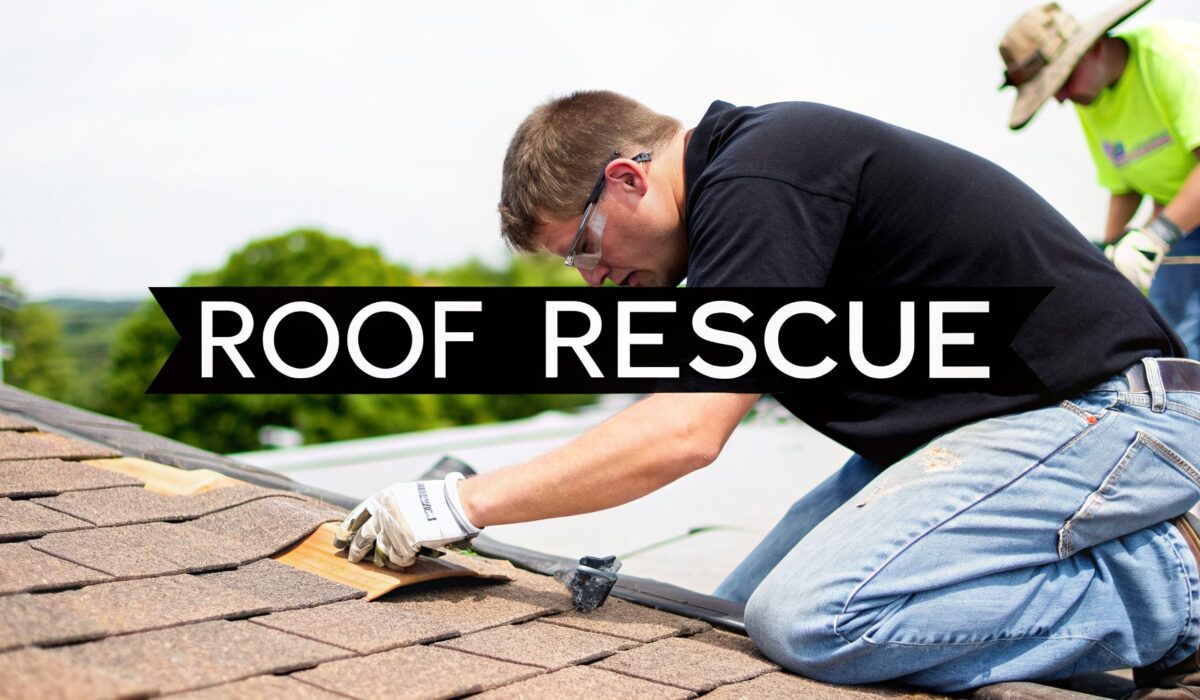
Don't ever underestimate a small hole in your roof. It's so easy to look at a tiny puncture and think, "I'll get to that later." But from years of experience, I can tell you that even the smallest breach is a direct line for water to attack your home's structure. A good patch isn't just about appearances; it's an emergency defense against far more expensive, soul-crushing damage down the road.
Why That Small Hole in Your Roof Is a Big Problem
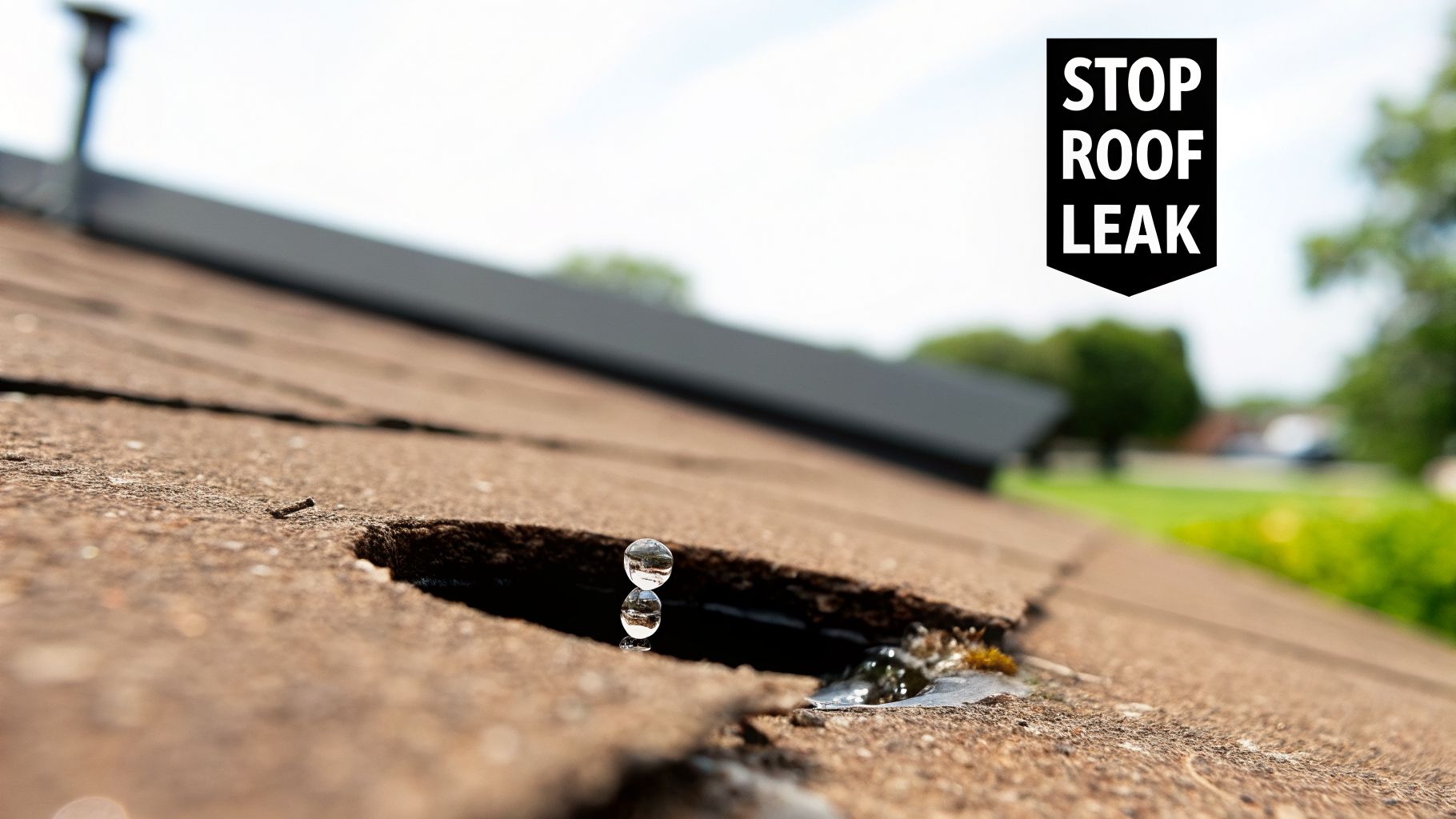
That little hole is an open door for water, and it’s a sneaky intruder. A small, slow leak doesn't announce itself right away. Instead, it quietly starts a chain reaction in the hidden spaces of your home, like your attic. By the time you spot a discolored patch on your ceiling, the problem is already well underway.
Up in the attic, that water is soaking into your insulation, rendering it useless and driving up your energy bills. Worse, this constant dampness creates the perfect dark, stagnant environment for mold and mildew to thrive, which can seriously impact your home's air quality and your family's health.
From Minor Drip to Major Disaster
A tiny drip has a bad habit of growing up. What seems like a few drops during a sprinkle can quickly turn into a steady stream when a real storm rolls through. Once the water gets in, it can cause a world of hurt:
- Saturate Structural Wood: Persistent moisture rots the essential bones of your house—the roof decking, rafters, and ceiling joists. This isn't just a stain; it's a structural failure in the making.
- Create Electrical Hazards: Water and electricity are a deadly combination. If moisture seeps into your walls and makes contact with electrical wiring, it creates a very real risk of short circuits and fires.
- Damage Interior Finishes: Beyond the obvious ceiling stains, water can destroy drywall, warp plaster, peel paint, and ruin irreplaceable personal belongings.
Putting off a roof patch is a gamble you just can’t afford to take. A simple puncture from a wind-blown tree branch or a nail that's worked its way loose can absolutely spiral into a structural repair project costing thousands of dollars.
Proactive repair is always more affordable than reactive restoration. A timely patch prevents a small problem from escalating into a catastrophic failure that compromises your family's safety and your home's value.
An Increasingly Common Problem
If you're dealing with a leak, you're not alone. We're seeing this more and more, especially as homes across the country get older. Many roofs are hitting the end of their expected 20-25 year lifespan, and small holes are often the first tell-tale sign that the whole system is starting to break down. This is a huge reason why the residential roofing industry stays so busy—we’re constantly responding to age-related failures.
Ultimately, jumping on a roof hole the moment you find it is one of the most critical maintenance tasks you can perform as a homeowner. In the next sections, we'll walk you through exactly what to do, from finding the source of the leak to making a repair that will last.
Safely Finding the Source of Your Roof Leak

Before you even think about patching a hole, you have to play detective. The single most important part of any roof repair is finding exactly where the water is getting in, and that takes patience and a serious focus on safety. Guessing or rushing will just lead to a patch that fails and a leak that returns.
That water stain on your ceiling is the smoke, but it's not always the fire. Water can sneak in through a small opening, travel sideways along a rafter or the roof deck, and finally drip down many feet away from the actual hole. A water-damaged ceiling is the classic symptom, and a good first step is learning what you're up against. This guide to water damaged ceiling leak repair is a fantastic resource for understanding the interior damage.
The best and safest place to start your investigation is almost always inside your attic.
Your Pre-Inspection Safety Checklist
Getting up on a roof is no small thing. Trying to find a leak in bad weather isn't just dangerous—it's pointless. Most sealants and patches need a completely clean, dry surface to bond correctly.
- Weather Watch: Plan your inspection for a clear, dry day. A wet roof is like an ice rink, and even moderate wind can make working on a ladder a nightmare.
- Ladder Security: Make sure your ladder is placed on solid, level ground. It needs to extend at least three feet past the edge of the roof. Always keep three points of contact: two feet and a hand, or two hands and a foot.
- Proper Footwear: Wear shoes with a good grip, like soft, rubber-soled work boots. They'll help you stick to the roof and are less likely to damage the shingles.
- Have a Spotter: If you can, always have a second person on the ground. They can hold the ladder steady and be there in case anything goes wrong.
Remember, no DIY repair is worth a trip to the hospital. If you're not comfortable with the height, the steepness of your roof, or the conditions, it's time to call in a pro. Your safety comes first.
Tracing the Leak from the Inside Out
Head up to your attic on a bright day. The easiest way to find a hole is to turn off all the lights and look for any pinpricks of daylight shining through the roof deck. That’s a dead giveaway.
If you don't see any light, look for the signs water leaves behind: dark water stains, clumps of damp or moldy insulation, and discoloration on the wood framing. Water always runs downhill, so if you find a stain, the actual leak will be somewhere above it. Measure from the interior stain to two points you can easily find outside (like a gable end wall and the peak of the roof). This gives you a starting point for your search on top of the roof. For trickier leaks, our guide on finding a roof leak dives into more advanced techniques we use in the field.
Performing the Exterior Roof Inspection
Once you have a general idea of the leak's location, it's time to safely get on the roof. Your prime suspects are always going to be anything that penetrates the roof surface. 90% of leaks happen at these spots.
Common Culprits for Roof Leaks
- Roof Vents: Check the rubber boots and sealant around plumbing vents, attic fans, or kitchen exhausts. The sun bakes these materials, causing them to crack and pull away over time.
- Nail Pops: Sometimes, a roofing nail can back itself out, pushing the shingle up with it. This creates a tiny tent that catches water and funnels it straight into your attic.
- Damaged Shingles: Scan the area for shingles that are cracked, curled, missing, or have lost their granules. High winds and hail are the usual culprits here.
- Flashing: This is a big one. Inspect the metal strips around chimneys, skylights, and in the valleys where two roof sections meet. If the flashing is rusted, bent, or the sealant has failed, you've likely found your source.
When you've zeroed in on a suspicious spot, carefully lift the edges of the shingles around it. Look for wetness, water stains, or rot on the underlayment below. Once you've confirmed the entry point, mark it with chalk. That way, you won't lose track of it when you go down to get your tools and materials for the patch.
Gathering Your Roof Patching Tools and Materials
I’ve seen it a hundred times: a homeowner climbs up on their roof, ready to tackle a leak, only to realize they have the wrong sealant or no way to safely lift the shingles. A successful roof patch starts on the ground, long before you ever set foot on a ladder.
Think of it like a surgeon prepping for an operation. Having every tool and material laid out and ready to go is the difference between a quick, lasting fix and a frustrating, failed attempt that leaks again with the next downpour. Let’s walk through exactly what you’ll need to do the job right.
Safety Gear: Don't Even Think About Skipping This
Before we get into tools and patches, let’s talk safety. Working on a roof is no joke, and falls are the single biggest risk in the construction industry. We pros never cut corners here, and you shouldn't either. Your well-being is more important than any leak.
Here’s your non-negotiable personal protective equipment (PPE):
- Roofing Harness and Rope: If your roof is steep (anything over a 4/12 slope), this is not optional. It’s your lifeline.
- Slip-Resistant Boots: You need soft, rubber-soled boots for maximum grip. Hard-soled work boots can slide easily and will damage the shingles.
- Sturdy Work Gloves: Protects your hands from abrasive shingle granules, sharp flashing, and sticky sealants.
- Safety Glasses: A must-have. When you’re prying up old materials, debris and nail fragments can go flying.
The best repair is one you walk away from safely. If you feel uneasy or the roof seems too high or steep, that's your cue to stop and call a professional. There's no shame in it.
The Essential Tools and Materials
Having the right gear on hand makes the entire process smoother and safer, saving you countless trips up and down the ladder. Before you start, gather your supplies and make sure you have everything you need for your specific roof type.
Here’s a quick checklist of the core items you'll want in your toolkit.
Essential Tools and Materials for Roof Patching
| Category | Essential Items | Recommended For |
|---|---|---|
| Safety | Roofing Harness, Slip-Resistant Boots, Work Gloves, Safety Glasses | All roofing projects, especially on steep slopes. |
| Tools | Pry Bar, Hammer, Utility Knife (w/ hooked blades), Caulking Gun, Trowel, Wire Brush | General roof repair tasks. |
| Asphalt Shingle | Matching Shingles, 1¼-inch Galvanized Roofing Nails, Asphalt Roofing Cement | Repairing standard asphalt shingle roofs. |
| Metal Roof | Metal Flashing Patch, Polyurethane Sealant, Self-tapping Screws (w/ gaskets) | Patching holes in aluminum, steel, or other metal panels. |
| Flat/EPDM Roof | EPDM Patch Kit or EternaBond Tape, Lap Sealant, Primer/Cleaner | Sealing punctures or seams on EPDM, TPO, or other flat membranes. |
With these items ready, you can confidently tackle most small to moderate roof repairs without interruption.
Matching Materials to Your Roof: The Most Common DIY Mistake
This is where so many well-intentioned repairs go wrong. You absolutely cannot grab any old tube of caulk from the hardware store and expect it to work. The material you use for the patch must be chemically compatible with your roofing material.
For example, I've seen homeowners use standard silicone caulk on an asphalt shingle roof. It looks fine for a week, but silicone doesn't bond with the oils in asphalt. It quickly peels away under the sun's UV rays, and the leak comes right back.
Here’s a simple breakdown:
- For asphalt shingles, you need asphalt-based roofing cement. It’s designed to flex and bond with the shingles themselves.
- For metal roofs, a polyurethane-based sealant is your best bet. It sticks to metal and stays flexible as the panels expand and contract with temperature changes.
- For flat roofs (like EPDM or TPO), use a dedicated patch kit or a specialized product like EternaBond tape, finished with a self-leveling lap sealant.
Remember, your patch isn't just covering a hole; it's integrating with a complete roofing system. Underneath your shingles or metal panels is a critical layer of underlayment that acts as a secondary water barrier. A proper patch protects this entire system. If you're not familiar with this layer, it's worth taking a moment to understand what roof underlayment is and the vital role it plays.
Patching Techniques for Different Roof Types
Patching a roof isn't a one-size-fits-all job. The right way to fix a hole in an asphalt shingle roof will get you nowhere—or worse, cause a bigger leak—on a metal or flat roof. This is where the real work begins, and getting it right comes down to using the proper technique for your specific material.
The secret to a patch that actually lasts is knowing how each material expands, contracts, and sheds water. Using the wrong sealant or patch can trap moisture or even create a new weak spot. We'll walk you through the real-world methods for the most common roofs we see every day.
Before you start any repair, the basic workflow is always the same: get your safety in order, gather your tools, and have the right materials on hand.

Think of it this way: safety, tools, and materials are the three legs of the stool. If one is off, the whole repair is unstable. Nail these three things before you even think about climbing the ladder.
How to Patch an Asphalt Shingle Roof
Asphalt shingles are on most homes for a reason—they're pretty straightforward to repair if you have a bit of patience. The whole game is about swapping out the bad shingle without messing up the ones around it.
First, you need to break the seal on the shingle sitting directly above the damaged one. A flat pry bar is your friend here, but be gentle. If it's a cool day, the sealant will be stiff; if it's hot and sunny, it'll be a gummy mess. Go slow to avoid tearing a perfectly good shingle.
Once you’ve freed the shingle above, you can get to the nails holding the damaged one down. You’ll usually find four nails. Slide your pry bar underneath and pop them loose. The old shingle should then slide right out.
Pro Tip: If you're just dealing with a crack and the shingle is otherwise solid, you might be able to get away with a simpler fix. Gently lift the cracked part, squeeze a thick line of asphalt roofing cement underneath, and press it down hard. Smooth a thin layer of cement over the top of the crack, feathering it out with a putty knife. To make it blend in, sprinkle some loose granules from a spare shingle over the wet cement.
With the old shingle out, slide your new one into place, making sure its exposure lines up with its neighbors. Use four 1¼-inch galvanized roofing nails to secure it in the same spots as the original, making sure the nails go through the top edge of the shingle below it.
To finish the job, put a dab of roofing cement over each new nail head to seal out water. Then, add a few quarter-sized dabs of cement under the corners of the shingles you pried up and press them down to re-seal everything. For a more detailed guide, you can check out our guide on how to patch shingles.
Repairing a Hole in a Metal Roof
Metal roofs are tough, but a heavy branch or a spot of rust can definitely cause a puncture. Patching metal is a different beast because the panels move a lot as temperatures change. Your patch has to be able to move right along with them.
First off, the area has to be spotless. Use a cleaner to get rid of every bit of dirt and grime. If you see any rust, it absolutely has to go—use a wire brush to scrub it down to shiny, bare metal.
Next, you need to give the sealant something to grab onto. Take a wire brush or some sandpaper and scuff up the surface around the hole, going about two inches out from the edge of the damage. This rough texture is critical for a strong bond.
Cut a patch from a matching piece of sheet metal that overlaps the hole by at least two inches on all sides. It’s a good idea to round the corners of your patch; sharp corners can get snagged and lift over time.
Now, apply a heavy bead of a quality, color-matched polyurethane sealant to the underside of the patch. Press it down firmly over the hole until you see sealant squeeze out from all sides—that’s how you know you have a complete seal. Use roofing-specific pan-head sheet metal screws to lock it down, and your repair will be flexible and watertight for years.
Fixing a Puncture on a Flat EPDM Roof
Flat roofs, especially those with a black rubber (EPDM) membrane, are magnets for punctures. The entire repair process here is about creating a perfect, welded bond between the patch and the existing roof.
Surface prep is everything. You have to clean the area around the hole with a dedicated EPDM cleaner or simple isopropyl alcohol. If you leave any dust or oily residue behind, the patch will fail. It’s that simple.
- Clean and Prime: Once clean, coat the area with an EPDM primer. This is a chemical step that "activates" the rubber, preparing it to bond permanently with the patch.
- Cut and Place the Patch: You can use a dedicated EPDM patch kit or a roll of self-adhering tape like EternaBond. Cut it to size so it extends at least two inches past the hole in every direction. Just like with metal, rounding the corners is a must to prevent peeling.
- Apply and Roll: Peel the backing off and carefully lay the patch down, pressing from the center outward to work out any air bubbles. Then, take a small steel roller and go over the entire patch with firm, even pressure. This ensures a 100% bond.
The last step is sealing the edges of the patch. Run a bead of self-leveling lap sealant around the entire perimeter. This adds a final layer of protection and keeps the edges from ever lifting.
When a DIY Patch Just Won't Cut It
Every homeowner wants to save a buck, and I get it. Tackling a small roof repair yourself can feel empowering. But there’s a fine line between a smart DIY fix and a costly mistake, and I’ve seen firsthand what happens when that line gets crossed. Knowing when to put the tools down and call in a professional is just as important as knowing how to use them.
The roofing industry is massive for a reason. It's projected to hit $192.82 billion globally by 2032, and in the U.S. alone, contractors handle a $76.4 billion market. Those numbers aren't built on simple patches. They're built on complex storm damage repairs, aging roofs (the average U.S. home is over 40 years old), and problems that go far beyond what a tube of sealant can fix. This tells you that many jobs really do require a pro's touch.
Signs the Damage Is Beyond a DIY Fix
So, how do you know if you’re in over your head? From my experience, there are a few tell-tale signs that a simple patch isn't going to be enough. If you spot any of these, it's time to call for backup.
- The "Dinner Plate" Rule: This is a good rule of thumb I share with homeowners. If the hole or damaged area is bigger than a standard dinner plate, a simple patch is just a temporary band-aid on a much bigger wound. Damage that extensive often signals a deeper issue.
- A Soft or Spongy Roof Deck: This is a major red flag. When you're on the roof, carefully test the area around the leak with your foot. If it feels soft, bouncy, or spongy, get off that spot immediately. This means the structural wood decking underneath has likely rotted from long-term water exposure and is no longer safe to stand on.
- You're Playing "Whack-a-Mole" with Leaks: Finding one leak is annoying. Finding two, three, or more separate leaks across your roof is a clear sign that your entire roofing system is failing. Patching one spot will only buy you a little time before the next one appears.
When the Job Becomes Too Dangerous
Sometimes, it’s not the size of the hole but the location that makes it a job for the pros. Your safety is always the number one priority, and some situations are just too risky for a homeowner to handle without professional training and gear.
A professional roofer has the training, safety equipment, and experience to work on complex or dangerous rooflines. Attempting these jobs without proper gear is a risk that is never worth the potential savings.
Think twice before tackling a repair in these high-risk scenarios:
- Steeply Pitched Roofs: Any roof with a pitch greater than 6/12 (meaning it rises 6 inches for every 12 inches of horizontal run) is incredibly difficult to work on safely. The risk of a serious fall increases dramatically, and pros rely on specialized harnesses and anchors for a reason.
- Complex Rooflines: Is the leak around a chimney, in a roof valley, or next to a skylight? These are the most technically challenging areas to repair. Improper flashing work here is one of the most common causes of major, persistent leaks.
- Working at Height: The danger speaks for itself. Getting materials and tools up to a second or third-story roof is a challenge, and the consequences of a fall are far more severe.
When a DIY patch isn't the right move, it's also a good time to understand your insurance policy. You can explore options for Home Insurance California to see how larger, professionally-handled repairs might be covered. For these complex and dangerous jobs, trusting a certified roofer is the only way to guarantee a safe and permanent solution.
Common Questions About Patching a Roof Hole
When you’re dealing with a roof hole, a lot of questions come to mind. We get calls about this all the time, so we’ve put together some straightforward answers to the things homeowners ask us most. Getting this right can be the difference between a fix that lasts and one that fails in the next big storm.
How Long Will a DIY Roof Patch Last?
This is the big one, and the honest answer is: it depends. The longevity of your patch comes down to the materials you used, how well you installed them, and the kind of weather we get here in the Penn-Ohio region.
A quick fix done in a pinch—say, with a glob of roofing cement and a random piece of flashing—is really just a temporary stopgap. It’s meant to prevent immediate water damage, not to last forever. You might get a season or two out of it if you’re lucky.
Now, if you do a more thorough job, like properly replacing a full asphalt shingle, that repair could hold up for a few years. The problem is that even the best DIY patches often aren't a permanent solution.
A DIY patch is a great short-term solution, but it’s not integrated into the roofing system the same way a professional repair is. It’s always smart to have any DIY work inspected during your next routine roof check-up to ensure it's still holding strong.
A professional repair is built to expand and contract with the rest of your roof, making it a truly seamless part of the system. A DIY patch, on the other hand, can sometimes create new failure points around its edges.
Can I Patch My Roof in the Rain?
Let me be blunt: absolutely not. Getting up on your roof when it’s wet is a terrible idea for a couple of critical reasons.
First, and most importantly, it’s incredibly dangerous. Roofs get slick when they're wet, whether they’re shingle or metal. The risk of slipping and falling is just too high. No leak is worth a trip to the hospital.
Second, the patch itself is guaranteed to fail. Just about every roofing sealant, adhesive, and tape on the market requires a completely clean and dry surface to bond properly. If you try to apply them in the rain, you're trapping moisture underneath. The patch will never cure correctly, and you’ll be right back where you started.
If you find a leak during a downpour, your best and safest move is to manage it from inside. Stick a bucket under the drip to protect your floors and drywall, then call for a repair once the weather clears and the roof is bone dry.
What Is the Average Cost for a Professional Roof Patch?
The price for a professional repair can vary quite a bit, and anyone who gives you a flat price over the phone isn't being honest. The final cost really depends on the specifics of the job.
- Size of the Hole: Fixing a small puncture from a fallen branch is much different than repairing a large section damaged by high winds.
- Location on the Roof: A patch on a low-slope, easily walkable section is more affordable than one on a steep, two-story roof that requires extra safety gear.
- Roofing Material: Standard asphalt shingles are the most common and typically the least expensive to repair. Slate, tile, or metal roofs require specialized skills and materials, which costs more.
- Underlying Damage: The real wild card. If water has been getting in for a while, it may have rotted the plywood decking underneath. That wood has to be cut out and replaced, which will add to the project's scope and cost.
For a straightforward, small-to-moderate asphalt shingle repair, you can generally expect the cost to fall somewhere between $300 and $700. For anything more complex, the price will go up. The only way to know for sure is to have a professional get up there, take a look, and give you a detailed quote.
When a DIY fix just won't cut it, or you simply want the confidence that comes from a guaranteed, professional repair, it's time to call in the experts. The team at Penn Ohio Roofing & Siding Group has the experience and equipment to handle any roof repair, big or small, ensuring a permanent and safe solution for your home. To get a free, no-obligation estimate for your roof repair, visit us online at Penn Ohio Roofing & Siding Group.