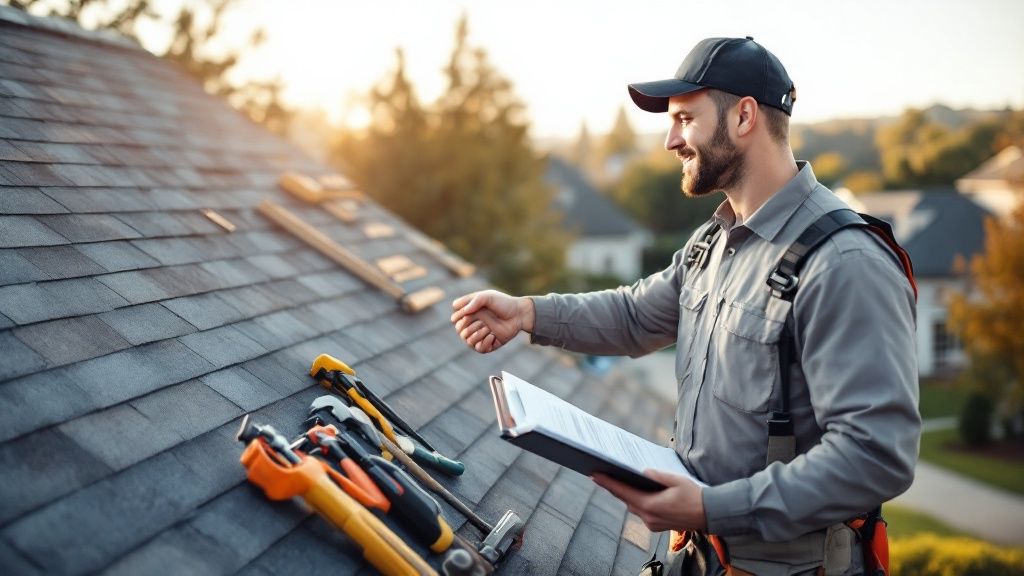
That frantic search for "roofing contractors near me" usually kicks off with a panic-inducing moment—a new water stain on the ceiling or shingles scattered across the lawn after a storm. But hiring the right pro involves more than just clicking the first result. It all starts with building a solid list of local, reputable roofers. This is, without a doubt, the most important first step you'll take.
Starting Your Search Beyond a Simple Google Query
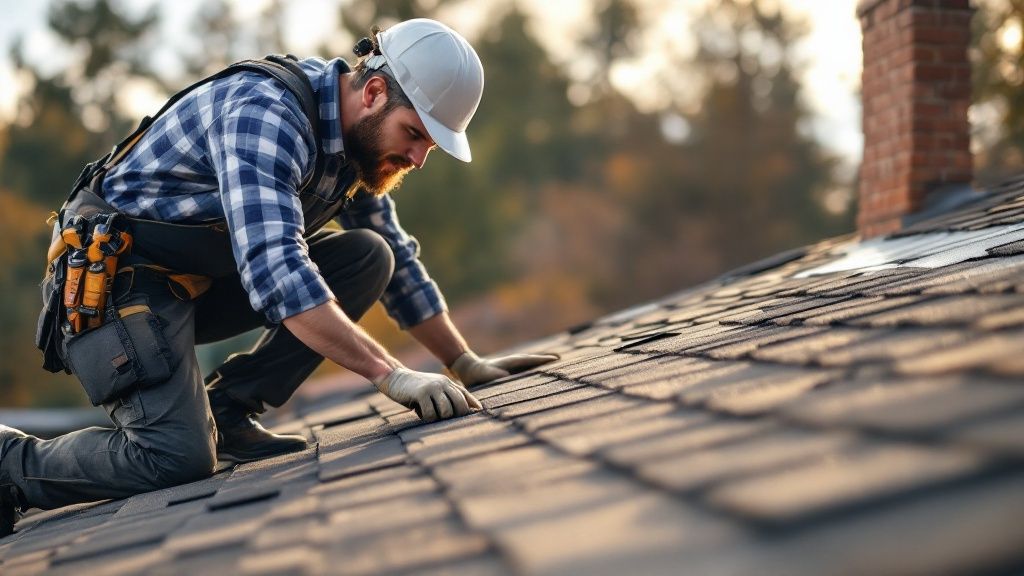
When you see a leak, the instinct is to grab your phone and find the fastest help possible. And while an online search is a great starting point, don't let paid ads be your only guide. The best contractors often build their business on word-of-mouth and a solid local reputation, not just a big marketing budget.
Think of it less like a quick fix and more like vetting a long-term partner for your home's most important shield against the elements. A little extra legwork right now will help you zero in on a truly trustworthy professional.
Building Your Initial List of Candidates
Before you even think about picking up the phone, it’s time to do some old-fashioned reconnaissance. Compiling a list of potential candidates from trusted sources is a simple move that can save you from major headaches down the road.
I always tell homeowners to tap into their local networks first. Here’s where you’ll find the real gems:
- Neighborhood Forums and Social Media: Jump into your local community Facebook group and ask for recommendations. You'll get unfiltered, honest feedback from neighbors who have been in your exact shoes.
- Local Building Suppliers: The folks at the local lumberyard or roofing supply house see it all. They know which crews are busy, who buys quality materials, and who pays their bills on time. Their inside perspective is invaluable.
- Real Estate Agents: Realtors live and die by their network of reliable contractors. They’re a fantastic resource for finding pros they trust to handle repairs for their own clients.
This kind of proactive searching helps you find companies that are truly invested in the community. With roughly 99,000 roofing contractor businesses in the U.S. as of 2024, the market is crowded. That sheer volume of choice makes your initial filtering process absolutely critical. If you want to dive deeper into the industry, Finturf.com has some great statistics. For a closer look at local services, you can learn more about what to expect from a roofing contractor in Sharon, PA.
A strong initial list isn't about finding the most companies; it's about finding the right companies. Focus on contractors with a proven track record right in your own backyard.
A Practical Guide to Vetting Local Roofing Companies
Alright, you've got a shortlist of potential roofers. Now the real homework begins. It's time to move beyond word-of-mouth and start verifying that these companies are as good as they sound. Think of this as your due diligence phase—it's all about checking credentials and digging into their history.
The Non-Negotiables: Licensing and Insurance
First thing's first: you absolutely must verify their licensing and insurance. Don't just ask if they're insured; ask for the paperwork. Any reputable roofer will have zero problem providing you with a copy of their state license and a current certificate of insurance.
When you get that certificate, you're looking for two specific things:
- General Liability: This is what protects your home from any damage their team might accidentally cause. It’s a crucial safety net.
- Worker's Compensation: This one is just as important. It protects you from being on the hook financially if one of their crew members gets hurt on your property.
Bottom line: if a company can't or won't provide proof of both of these policies, that's a deal-breaker. Cross them off your list and move on. The risk is simply not worth it.
Digging Deeper Than Star Ratings
Next up, let's talk about online reviews. It’s tempting to just glance at the star rating, but you need to go deeper. Check out their reviews on Google, Yelp, and especially the Better Business Bureau.
Look for patterns. Are the five-star reviews specific, mentioning things like the crew's professionalism, the quality of the cleanup, or how well the project manager communicated? Vague, one-sentence praise is far less valuable. On the flip side, pay close attention to how they handle negative feedback. A roofer who responds professionally and tries to make things right is showing their character. Defensiveness or complete silence? That’s a huge red flag.
This whole process is about methodically narrowing down your options to find a true professional you can trust.
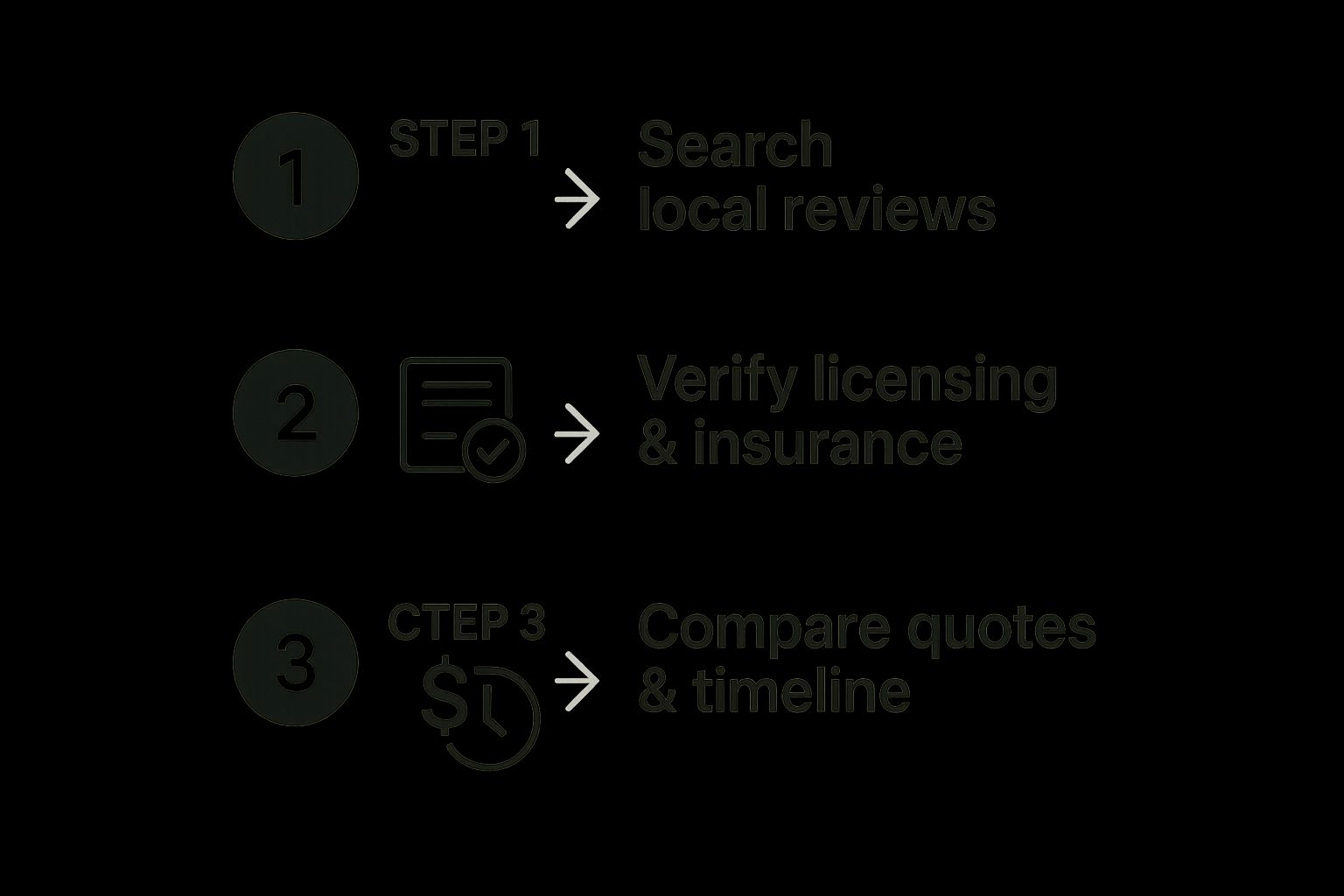
As you can see, verifying credentials is a critical step that comes after you gather names but before you start comparing bids. While we're focused on roofing, these same principles apply to pretty much any home service pro. In fact, you can find some great general advice on choosing the right contractor that echoes this approach.
To make this easier, here’s a quick checklist you can use to stay organized.
Quick Vetting Checklist for Roofing Contractors
This table breaks down the essential documents and details you should confirm for every single contractor on your list.
| Verification Item | What to Look For | Why It Matters |
|---|---|---|
| State License | A current, valid license number for your specific state or municipality. | Confirms they are legally permitted to operate and have met minimum local standards. |
| General Liability Insurance | A certificate showing active coverage and policy limits. | Protects your property from accidental damage caused by the roofing crew during the project. |
| Worker's Comp Insurance | A certificate verifying that all employees on-site are covered. | Protects you from legal and financial liability if a worker is injured on your job. |
| Local Physical Address | A real, verifiable office address in your area—not just a P.O. Box. | A local presence indicates stability and makes it easier to resolve any future warranty issues. |
| Company Longevity | How long they've been in business under their current name (at least 3-5 years). | Demonstrates experience and suggests they'll be around to honor their workmanship warranty. |
Following a structured process like this helps you weed out unqualified companies before you waste time on a sales pitch. It puts you in control and gives you the confidence that you're only meeting with serious, professional contractors.
Navigating Modern Roofing Materials and Options
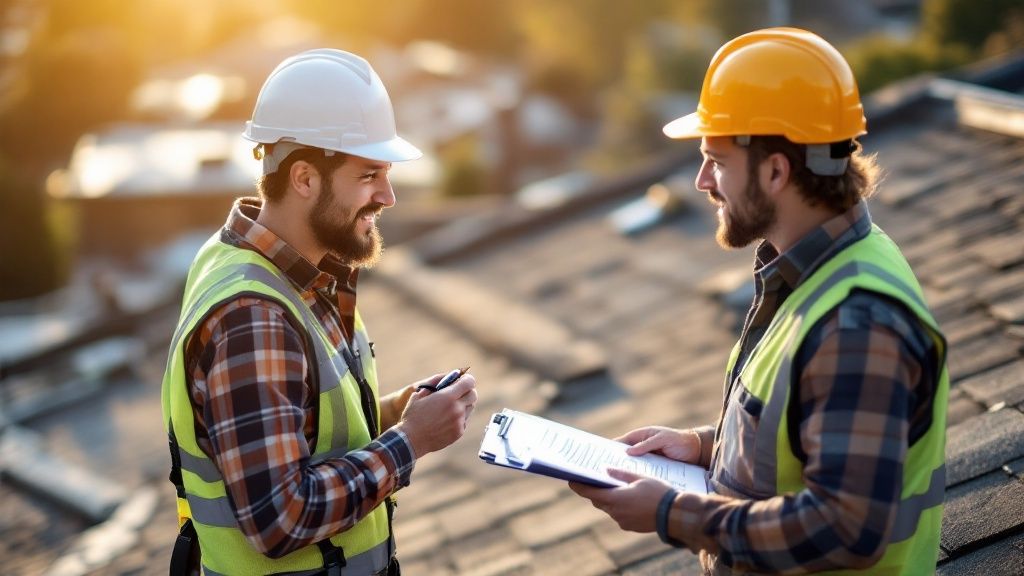
Talking materials with a roofer is a critical conversation. If you walk into it unprepared, you're getting a sales pitch. But if you know your options, it becomes a genuine discussion about your home's future, your budget, and the look you want to achieve. What works for a house in sunny Florida might be a terrible choice for one in snowy Ohio, so it pays to understand the landscape.
For years, asphalt shingles have dominated the market, and for good reason. They're affordable, relatively easy to install, and get the job done for most homeowners. They're the reliable default. But they are far from your only choice, and overlooking the alternatives could be a costly mistake in the long run.
Exploring Durable Alternatives
This is where things get interesting. Materials like metal and slate represent a serious upgrade in both lifespan and toughness.
A well-installed metal roof can easily last 50 years or more, shrugging off heavy snow loads and high winds that would send asphalt shingles flying. Yes, the initial investment is higher, but the long-term value is hard to argue with. Before you commit, it's smart to weigh the pros and cons of metal roofing to see if it’s the right fit for you.
Slate is in a class of its own—it’s stunningly beautiful and can last for a century. But that premium look comes with a premium price tag and requires a true craftsman for installation. Modern composites are a great middle ground, giving you the appearance of natural slate or wood shake without the maintenance headaches or the sticker shock.
Key Takeaway: Your choice of roofing material directly impacts your home's curb appeal, its energy efficiency, and its resale value for decades. Don't rush this decision.
The Rise of Sustainable Roofing
We're also seeing a huge move toward greener, more energy-efficient roofing. This isn't just a niche trend; the market is projected to hit USD 280 billion globally by 2029, largely driven by homeowners wanting eco-friendly solutions. Think solar shingles that generate power or cool roof coatings that reflect the sun's heat.
These technologies do more than just help the environment—they can significantly lower your cooling bills in the summer. When you're talking to contractors about a full exterior refresh, you might also look into complementary products they offer, like advanced Breeze Siding options. Having a well-rounded discussion ensures the final result doesn't just look good, but also works for your wallet and your long-term goals.

Making Sense of Roofing Quotes and Contracts
Getting a few roofing estimates is a great start, but knowing how to read them is what really matters. A quote isn't just a price tag; it's the entire game plan for your project. When you see a truly professional quote, it’s broken down into clear, specific line items. This transparency is your best defense against surprise costs popping up later.
This is actually one of the easiest ways to spot the pros. A vague, one-line description like "install new roof" is a huge red flag. You need to see the details—the exact brand and type of shingles, the specific underlayment they plan to use, and even the kind of ventilation products being installed. Anything less is a gamble.
What a Good Quote Looks Like
A quote you can actually trust is all about the details. It should walk you through every single phase of the job and what each part costs. Pay close attention to any bids that seem way too low. More often than not, a suspiciously cheap price means they're cutting corners somewhere, whether it's with materials or rushed labor.
A solid, professional estimate will always spell out the following:
- Materials Breakdown: A specific list of every single material. Think manufacturer and product line for the shingles, underlayment, and flashing.
- Labor Costs: The exact price for the crew's time and expertise to get the job done right, following all manufacturer guidelines.
- Tear-Off and Disposal: The cost to safely remove your old roof and haul away the debris.
- Permit Fees: Any fees required by your city or county to legally perform the work.
- Decking Replacement: A clear, stated price (usually per sheet) for replacing any rotted or damaged wood decking they find once the old roof is off.
When you're looking at more specialized materials like metal, the quote gets even more granular. For example, a full breakdown of the metal roof installation cost should itemize the panel type, its gauge (thickness), and the specific finish, as all these factors heavily influence the final price.
Turning the Quote Into a Contract
Once you've settled on a quote you're happy with, it gets rolled into the official contract. This is the legally binding agreement that protects you and the roofing company, so don't just skim it. Before you even think about signing, go over it with a fine-tooth comb.
Make sure the contract clearly defines the payment schedule. Payments should be tied to key project milestones (like material delivery or project completion), not just random dates. It also needs a realistic project timeline with clear start and end dates. Most importantly, it must put the material and workmanship warranties in writing. Verbal promises mean nothing here.
A well-drafted contract is your best friend. It gets rid of any grey areas and ensures everyone agrees on the scope of work, the timeline, the cost, and what happens if things don't go as planned. Don't sign anything until you feel 100% confident in every single detail.
Making the Final Hire and Preparing for Project Day

You've done the hard work and have a few solid, transparent quotes in front of you. Now, the final decision often boils down to the little things that don't show up on paper. Sure, price is a huge factor, but you also have to trust your gut.
How did their team make you feel? Did they patiently answer all your questions, or were you left feeling rushed? These intangibles are often the best indicator of what the actual project experience will be like.
This is also your last chance to check recent, local references. Don't just ask if they were "happy" with the job. Go deeper. I always advise homeowners to ask specifics, like how the crew handled daily cleanup, whether the project stayed on schedule, and how they dealt with unexpected problems. That’s where you get the real story.
Getting Your Property Ready for Go-Time
Once you’ve signed on the dotted line, a little prep work on your part can make a world of difference. Taking a few simple steps helps the project run smoothly and protects your home and belongings.
Before the crew shows up, take care of these items:
- Clear the Area: Move any vehicles out of the driveway. You'll also want to move patio furniture, grills, and potted plants away from the house to give the crew a safe, clear workspace.
- Secure Your Interior: The constant hammering can create vibrations throughout the house. Take a few minutes to remove pictures or fragile items from your walls, just in case.
- Give Neighbors a Heads-Up: A simple knock on the door or a quick text to let your neighbors know about the upcoming work is always a nice touch. They'll appreciate the warning about the noise and extra vehicles.
Finally, make sure you have a primary point of contact with the project manager before the first hammer swings. Knowing exactly who to call with a question prevents a ton of potential headaches.
It’s incredibly helpful to understand the daily workflow—when the crew plans to arrive, their target end time, and the overall schedule. Clear communication is what separates a stressful roofing project from a smooth one.
A Few Final Questions Before You Hire a Local Roofer
After you've done your homework and narrowed down your list, a few last-minute questions are bound to pop up. That's a good thing. Hiring a roofer is a huge decision for your home, and asking the right questions now is the final step to ensuring you’ve found a true professional.
Think of this as your last gut check. A pro will have no problem answering these questions directly and will appreciate that you’re an informed homeowner. Let's run through the most common ones I hear.
How Many Roofing Quotes Should I Actually Get?
I always tell homeowners that the magic number is three. Getting three detailed quotes from different, well-vetted roofers gives you the perfect baseline for comparison. You'll get a real sense of the market rate and can compare everything from materials and scope of work to the overall vibe you get from the contractor.
Why not more? Get five or six quotes and you'll just end up with analysis paralysis, making the decision ten times harder. Fewer than three, and you won't have enough data to know if you're getting a fair deal. The key is to make sure each company is bidding on the exact same project so you can make a true apples-to-apples comparison.
What Is the Difference Between a Material and a Workmanship Warranty?
This is one of the most important things to get straight, and it's where a lot of people get confused. They are two completely different types of protection for your new roof.
- Material Warranty: This comes straight from the manufacturer of the shingles, like GAF or Owens Corning. It protects you if the shingles themselves are defective.
- Workmanship Warranty: This is the roofer's promise to you. It covers any errors made during the installation. If a shingle was nailed incorrectly and causes a leak, that’s a workmanship issue.
Make sure you get both of these warranties in writing. You need to know exactly how long they last and, just as importantly, what could void them.
A strong workmanship warranty is a contractor's way of saying, "I stand behind my crew's work." Don't underestimate its value. It's just as crucial as the quality of the shingles you choose.
Is It Normal to Pay for a Roofing Job Upfront?
Absolutely not. A demand for full payment upfront is a giant red flag that should send you running. Never pay for an entire roofing project before the work starts.
A reputable, financially sound contractor will ask for a deposit to get the job on the schedule and order your materials. This is standard practice. Expect this to be somewhere between 10% and 30% of the total cost.
The rest of the payment schedule should be clearly spelled out in the contract, often tied to project milestones (like materials being delivered). The final payment is only made once the job is 100% complete, it's passed inspection, and you've walked the property and are totally satisfied.
What Happens If You Find Rotted Wood After Tearing Off the Old Roof?
This happens all the time, especially on older homes. It's impossible to know the condition of the roof decking until the old shingles are gone. An experienced roofer knows this and will have a plan for it.
Your contract should have a "contingency" clause that clearly states the cost for replacing any rotten or damaged wood decking. The price is usually listed per sheet or per square foot.
A trustworthy contractor won't just start replacing wood and send you a surprise bill. They'll stop, show you the damage, explain the situation, and get your approval in writing before moving forward with the extra work.
When you're ready to work with a team that provides clear answers and stands behind their work, contact Penn Ohio Roofing & Siding Group. For a free, no-obligation estimate and a transparent process from start to finish, visit us at https://pennohiorc.com.