Your roof is the first line of defense for your entire home. It's the shield that stands between your family and the elements, which is why choosing the right shingle roofing in Sharon, PA is such a critical decision for your property's safety and long-term value. For most local homeowners, asphalt shingles hit that perfect sweet spot—they're tough, they look great, and they don't break the bank.
This guide will walk you through everything you need to know to pick the perfect option for your home.
Choosing the Right Shingles for Your Sharon PA Home
It’s helpful to think of your roof as a complete system, not just a bunch of shingles. While the shingles are the armor you see from the street, they only work as well as the materials and installation behind them. Here in Sharon, that means finding shingles that can handle everything our Western Pennsylvania climate throws at them: heavy snow loads, humid summers, and those brutal freeze-thaw cycles.
Before we get into the different types, let's cover the basics that set one shingle apart from another. These are the key factors you'll want to keep in mind:
- Material Composition: Most shingles you'll see are asphalt-based, but how they're made determines their strength and appearance.
- Weather Resistance: Shingles are rated for how well they stand up to high winds, hail, and even fire. A better shingle means better protection when a storm rolls through.
- Expected Lifespan: This is a big one. A shingle's lifespan can be anywhere from 15 years to over 30 years, and it's one of the biggest drivers of cost and long-term value.
Understanding Your Primary Options
When it comes to asphalt shingle roofing, you’re really looking at two main players: the classic 3-tab shingle and the more modern architectural shingle. Each has its own set of pros and cons, and your choice will likely come down to balancing your budget against your goals for durability and curb appeal.
A well-chosen shingle doesn't just protect your home; it can also boost its resale value by up to 10%. Think of it as an investment in both peace of mind and your property's aesthetic.
This chart breaks down the key differences in lifespan and cost you can expect with the most common asphalt shingles for homes in Sharon, PA.
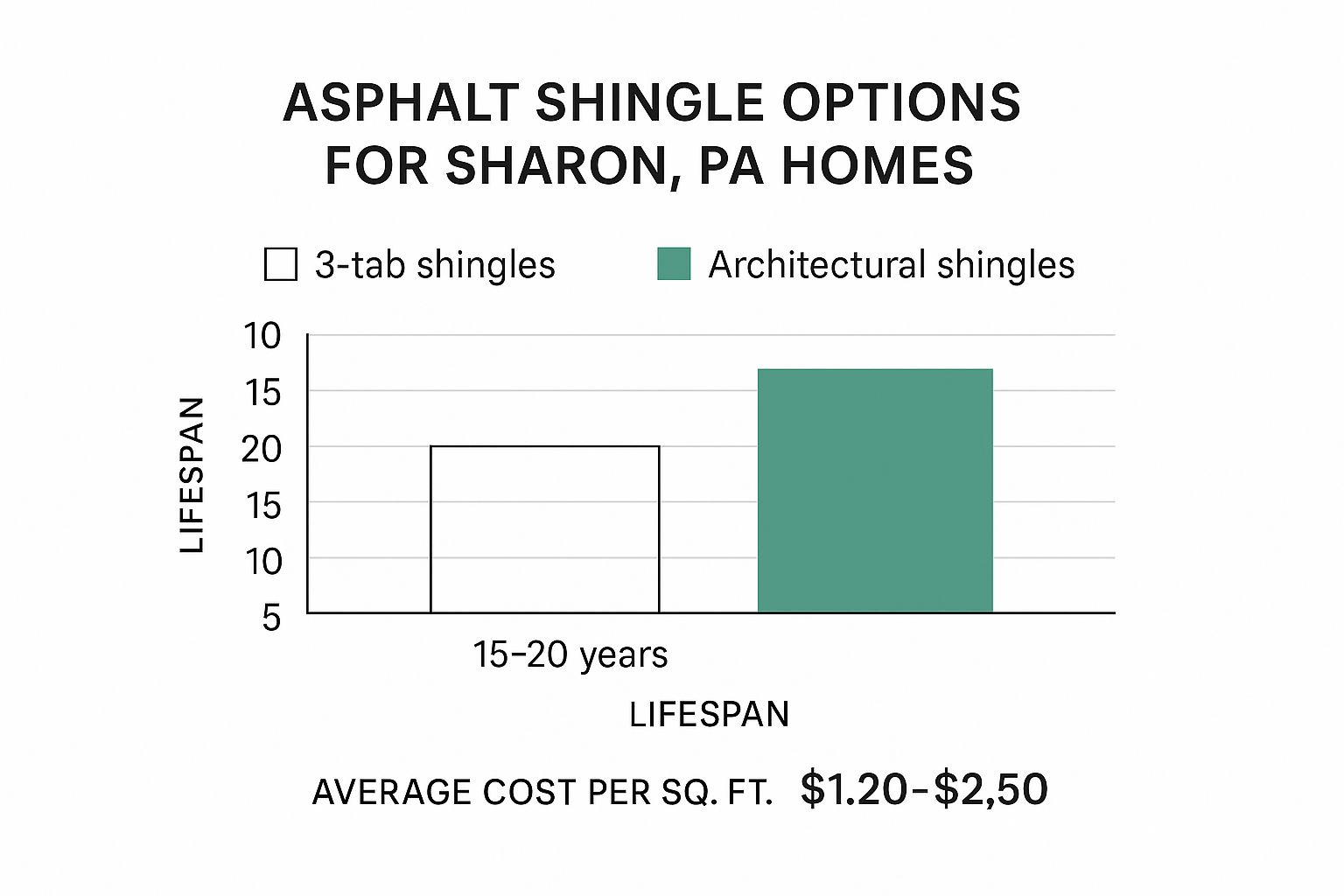
As you can see, architectural shingles might cost a little more upfront, but they deliver a much longer lifespan. That often translates to better value over the long haul. Making the right choice now lays the groundwork for a reliable roof that will protect your home for decades to come.
Picking The Right Shingles For Your Sharon Home
When you're choosing new shingles for your home in Sharon, PA, think of it like picking out a good winter coat. You need something that not only looks great but is also tough enough to handle everything our local weather throws at it. Not all shingles are built the same, and understanding the real-world differences is the first step to making a smart investment in protecting your home.
For most of us here in the Shenango Valley, the conversation about shingle roofing in Sharon, PA, starts and ends with one material: asphalt. There's a good reason for its popularity—it hits that sweet spot of affordability, long-term durability, and design flexibility that homeowners really value.
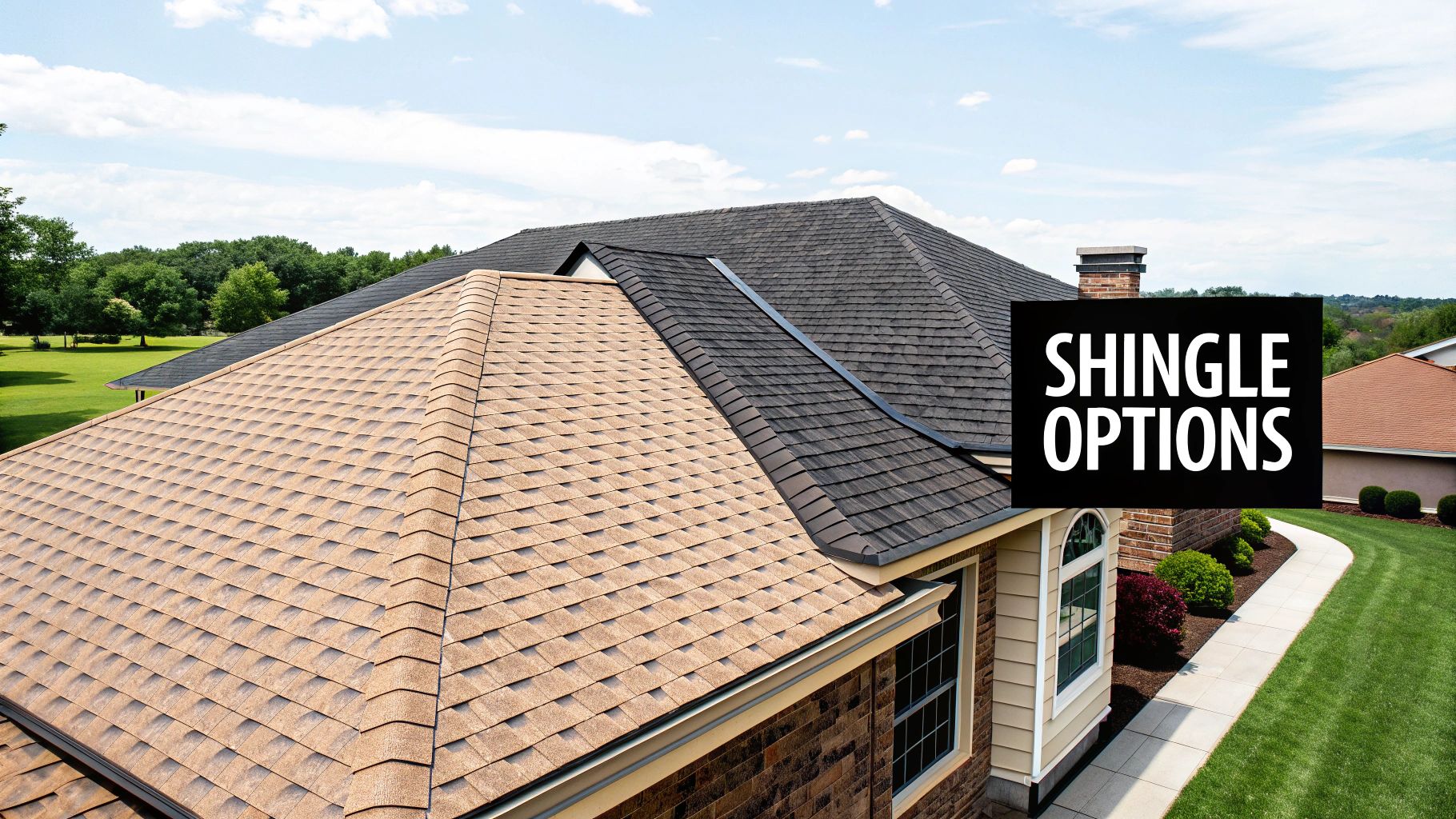
This isn't just a local trend. Asphalt shingles are the go-to choice for roughly 80% of American homes, making them the undisputed king of residential roofing. They’re a trusted, reliable option that just makes sense. The market for them was recently valued at USD 3.66 billion and is still climbing, which tells you people continue to put their faith in this tried-and-true material.
Two Styles of Asphalt Shingles
Once you've settled on asphalt, you'll find you have two main choices: 3-tab shingles and architectural (also called dimensional) shingles. Think of 3-tab shingles as the reliable workhorse. They're practical, budget-friendly, and get the job done without any fuss. They are made from a single layer of asphalt, cut to create a flat, uniform pattern across the roof.
Architectural shingles, on the other hand, are the heavy-duty option. They deliver a big upgrade in performance, style, and lifespan. These are built with multiple layers of asphalt laminated together, giving them a thicker, more substantial look. This construction creates a beautiful, textured appearance that can mimic high-end materials like slate or wood shakes.
It's that layered design that really sets architectural shingles apart. It's not just for looks; it makes them far more resistant to strong winds and impact from things like hail or falling branches. This built-in toughness is why they’ve become the go-to for homeowners who want lasting peace of mind.
The differences between these two are significant and will affect everything from your home's curb appeal to how it weathers a nasty winter storm. If you want to get into the weeds, you can explore the pros and cons of three-tab vs. dimensional shingles in our side-by-side comparison.
Architectural Shingles: The New Standard
While 3-tab shingles are still a great pick for a tight budget, architectural shingles have really become the modern standard, and for good reason. The benefits go way beyond just looking good.
- Tougher Construction: Their multi-layer design makes them heavier and more rigid, allowing them to handle wind speeds up to 130 mph. That's a huge leap from the 60-70 mph rating on most 3-tab shingles.
- Longer Lifespan: You can realistically expect an architectural shingle roof to last 25-30 years or even longer. A 3-tab roof, by comparison, usually lasts about 15-20 years.
- Boosted Curb Appeal: The high-definition, dimensional look adds a ton of character to a home, which can be a real plus for resale value.
- Stronger Warranties: Manufacturers stand behind the superior quality of architectural shingles, almost always offering longer and more comprehensive warranties.
To help you visualize the best fit for your home, here’s a quick breakdown of the most common shingle options we see in the Sharon area.
Shingle Type Comparison for Sharon PA Homes
| Shingle Type | Average Lifespan | Cost (per sq. ft.) | Best For | Key Feature |
|---|---|---|---|---|
| 3-Tab Asphalt | 15-20 years | $$ | Budget-conscious projects, rental properties | Most affordable option, flat/uniform look |
| Architectural Asphalt | 25-30+ years | $$$ | Most homeowners seeking value and durability | High wind resistance, dimensional appearance |
| Wood Shingles/Shakes | 20-40 years | $$$$ | Homes where a natural, rustic look is desired | Unmatched classic, rustic aesthetic |
| Composite Shingles | 40-50+ years | $$$$$ | Homeowners wanting maximum longevity and low maintenance | Mimics slate/wood, highly durable and fire-resistant |
This table gives you a great starting point for weighing your options. For most homeowners, architectural asphalt shingles provide the ideal blend of cost, performance, and long-term value.
A Quick Look at Other Options
While asphalt is king, it's good to know what else is out there. These materials usually come with a higher upfront cost but bring their own unique benefits to the table.
Wood Shingles and Shakes
Nothing beats the timeless, rustic charm of real wood. Cedar is a common choice because it naturally resists insects and rot. The downside? Wood requires more upkeep than asphalt and can be a fire risk if it's not properly treated and maintained.
Composite Shingles
If you love the high-end look of slate or wood but not the price tag or maintenance, composite shingles are a fantastic solution. Made from a blend of recycled materials and polymers, they are incredibly tough, lightweight, and resistant to just about everything. They are the top-tier choice for anyone who wants ultimate performance and durability.
How Local Weather Impacts Your Shingle Roof
A roof in sunny, dry Arizona has a completely different job than one here in Western Pennsylvania. When you’re choosing shingle roofing in Sharon, PA, you’re not just picking a color; you’re selecting a defense system built for our specific four-season climate. Figuring out how our local weather attacks a roof is the secret to installing one that actually lasts.
The weather around here puts a unique and demanding strain on any roofing material. From the biting cold and heavy snow of winter to the humid, stormy summers, your roof is in a constant battle with the elements. Each season brings a new threat, and a truly durable roof has to be ready for all of them.
This reality is driving demand for more robust roofing solutions all across the country. We're seeing a bigger pattern of growth in the U.S. roofing industry, with the market for skilled contractors continuing to expand. This growth is pushed largely by more frequent extreme weather events and homeowners demanding materials that can take a beating and last for decades. Here in Sharon, local contractors are on the front lines, guiding homeowners toward systems that can handle the specific climate challenges we face year after year. For a broader view, you can explore some great insights on roofing industry trends and statistics to understand the bigger picture.
The Winter Assault: Freeze-Thaw Cycles and Ice Dams
Winter in Sharon is, without a doubt, the toughest season for any roof. It’s not just the weight of all that snow, either. The real damage comes from the relentless freeze-thaw cycle.
Think of your shingles like a tiny sponge. During a warmer winter day, snow melts, and that water seeps into microscopic cracks and pores on the shingle's surface. Then, when the temperature plummets overnight, that trapped water expands as it turns to ice, forcing those tiny cracks a little wider. This happens over and over, all winter long, slowly breaking down the shingle from the inside out. Before you know it, you're seeing granule loss, and the shingles become brittle and weak.
This same cycle can also create a much more immediate problem: ice dams.
An ice dam is a thick ridge of ice that forms at the edge of a roof. It acts like a dam, preventing melting snow from draining away properly. The water pools behind it, and with nowhere else to go, it can be forced up and under your shingles, leading to leaks that can destroy ceilings, walls, and insulation.
Your best defense against this destructive winter phenomenon is a two-part strategy: proper attic ventilation and a specialized ice and water shield installed beneath the shingles.
Summer Humidity and High Winds
Summer brings its own set of challenges, mostly in the form of humidity and severe thunderstorms. The warm, moist air we get in a Pennsylvania summer creates the perfect breeding ground for algae, which shows up as those ugly black streaks you see on older roofs. While it’s mostly a cosmetic issue, a heavy algae infestation can trap moisture against the shingles, which can speed up their decay.
The good news is that many modern architectural shingles are now made with algae-resistant granules. These are infused with copper, which naturally stops the algae from growing and keeps your roof looking clean.
High winds are the other major concern. A strong gust from a summer thunderstorm can easily get under the edge of a shingle and lift it. Once a shingle has been lifted, it almost never seals back down correctly, leaving a weak spot on your roof that's vulnerable to leaks. This is where architectural shingles really shine over the older 3-tab style; their heavier, multi-layered design gives them far better wind resistance. Of course, a quality installation is just as critical—properly nailed shingles are much less likely to lift or blow off in a storm.
Breaking Down the Cost of Roof Replacement in Sharon
Let's talk numbers. For any Sharon homeowner, figuring out the budget for a new roof is usually the first, and most important, step. When a contractor hands you an estimate for shingle roofing in Sharon PA, that final number is a lot more than just the price of the shingles. It’s the sum of several crucial parts, and each one plays a role in your total investment.
Think of it like building a car. The shiny paint and body panels are what you see, but you can’t forget the engine, the chassis, and the expert mechanics who put it all together. A roof is no different. The shingles are just one piece of a much bigger, more important puzzle.
The Core Cost Components
A good, professional estimate should be transparent, breaking down the project into a few key categories. Knowing what these are will help you make sense of different quotes and understand exactly where your money is going.
-
Materials: This is the most obvious part. It includes the shingles themselves, but also the underlayment that acts as a vital secondary water barrier, the metal flashing for chimneys and vents, and all the nails and fasteners. The biggest variable here is your shingle choice—premium architectural shingles will naturally cost more upfront than standard 3-tab shingles.
-
Labor: This is what you pay for the skilled crew that shows up to do the work. Labor costs aren't one-size-fits-all; they’re heavily influenced by how complex your roof is. A steep roof with a lot of angles and gables takes more time, more safety gear, and a higher level of expertise than a simple, low-pitched roof.
-
Removal and Disposal: Before the new roof can go on, the old one has to come off. This line item covers the labor for the tear-off and, just as importantly, the fees for hauling away and properly disposing of all that old material.
-
Permits and Inspections: Most local governments, Sharon included, require a building permit for a full roof replacement. This isn't just red tape; it's a fee that ensures the project is done right and meets local safety codes, protecting you and any future owner of your home.
Uncovering Hidden Costs
Sometimes, the real story of your roof is hiding right under the surface. Once the old shingles are torn off, it’s not uncommon to find unexpected problems, with the most frequent culprit being a damaged roof deck—the plywood foundation of your entire roofing system.
If your old roof had a slow, nagging leak, there's a good chance some of that wood sheathing has rotted or gone soft. Replacing damaged sections of the deck isn't optional; it's essential for a secure, long-lasting installation, and it will be an added cost not covered in the initial quote.
A trustworthy contractor will stop work, show you the problem immediately, and provide a clear change order explaining the extra cost before moving forward. To get a better feel for how this stage fits into the bigger picture, you can read more about the typical roof replacement process.
What Drives the Final Price
You can have two houses with the same square footage but wildly different roof replacement costs. Why? Because the final price tag is shaped by a few factors that are unique to your home.
- Roof Size and Pitch: This one's straightforward. A bigger roof needs more materials and more hours of labor. Likewise, a steep pitch (the angle of your roof) is tougher and more dangerous to work on, which bumps up the labor cost.
- Roof Complexity: A simple, straight gable roof is far less complex than one with multiple valleys, dormers, skylights, and a chimney. Every one of those features requires custom flashing and careful, detailed work, adding time and cost to the job.
- Shingle Quality: As we mentioned, going with a high-end architectural or designer shingle will raise your material costs. But the trade-off is often a much longer lifespan and a more robust warranty, which can save you money down the road.
The roofing industry is a massive part of the U.S. economy. In fact, the U.S. roofing shingles market was valued at over USD 7 billion and is still growing, pushed by homeowners looking for durable and attractive solutions. Here in Sharon, PA, our preference for asphalt shingles mirrors this national trend perfectly.
Knowing these variables puts you in the driver's seat. It helps you ask the right questions and make a choice you feel good about. To get a precise idea of what your own project might look like, you can learn more about the specifics of a roof replacement in Sharon, PA, by exploring our detailed guide.
Simple Maintenance to Extend Your Roof’s Lifespan
Putting a new shingle roofing system on your Sharon, PA, home is a major investment. So, how do you protect it? A little proactive maintenance goes a surprisingly long way. Think of it like changing the oil in your car—these small, consistent habits prevent massive, expensive problems later on and can easily add years to your roof's life.
A roof that's looked after is far less likely to fall victim to the common issues we see around here, from winter ice dams to summer storm damage. By setting up a simple, year-round maintenance routine, you can spot the small stuff before it balloons into a major repair bill.
Honestly, this hands-on approach is the single best way to make sure your roof actually lasts as long as the manufacturer says it will. Neglect, on the other hand, is a surefire way to cut that lifespan short by several years.
A Seasonal Maintenance Checklist
Breaking down your roof care by season makes it much easier to remember what to do and when. Here’s a simple checklist that’s tailored for a typical year in the Sharon area.
Spring Cleaning and Inspection (April/May)
Once the last of the winter snow has finally melted away, it's the perfect time to give your roof a thorough check-up.
- Clean Gutters and Downspouts: Get all the leaves, twigs, and gunk out that piled up over the winter. Remember, clogged gutters are one of the biggest culprits behind water damage.
- Visually Inspect Shingles: You can do this from the ground with a pair of binoculars. Look for any shingles that are starting to curl up, are visibly cracked, or have gone missing. Winter is tough on asphalt, and catching this damage early is key.
- Check the Flashing: Pay special attention to the metal flashing around your chimney, vents, and any skylights. Make sure it's still sealed tight against the roof and hasn't been bent or lifted by ice.
Summer Growth Management (July/August)
The classic Pennsylvania summer humidity creates the perfect breeding ground for moss and algae on your roof.
Moss and algae might look harmless, but they act like little sponges, trapping moisture right against your shingles. This constant dampness eats away at the protective granules and causes the shingle to break down way faster than it should.
Your main job in the summer is to keep an eye out for any unwanted growth. If you start seeing those ugly black streaks (algae) or fuzzy green patches (moss), it's time to deal with them before they take over. It’s also a good idea to trim back any tree branches that hang over the roof, as they block the sun and drop debris.
Prepping for the Colder Months
As the air starts to get crisp, a few final checks can get your roof ready for the harsh winter ahead. These steps are all about stopping problems before they can even start.
Fall Final Cleanup (October/November)
Before the first flakes fly, it's crucial to repeat a few of your spring chores.
- Final Gutter Cleaning: Once most of the leaves are down, give your gutters one last, thorough cleaning. This is your absolute best defense against the formation of destructive ice dams.
- Storm Damage Check: Take a quick look for any new damage after the fall thunderstorms roll through. A loose shingle is a much simpler fix now than it will be in the middle of January.
- Attic Inspection: On a bright, sunny day, poke your head up into the attic. Turn off the lights and look for any tiny slivers of daylight shining through the roof deck. That’s a dead giveaway you have a hole that needs immediate attention.
Following this simple seasonal plan puts you in the driver's seat of your roof's health. These small actions really do empower you to get the most life out of your shingles, avoid those dreaded surprise repairs, and keep your home safe and dry all year long.
How to Find a Trusted Sharon PA Roofing Contractor
Picking the perfect shingles for your roof is a great start, but it's only half the job. Finding a skilled, trustworthy professional to install them is just as critical. The best materials in the world won't protect your home if they're installed incorrectly.
Think of it this way: you wouldn't let a rookie mechanic rebuild the engine in your brand-new car. Your roof deserves the same level of expertise. You’re looking for a local pro with a solid reputation for quality work who stands behind every job they do.
Essential Vetting Steps
Before you even think about signing a contract, you have to do your homework. These steps are your best defense against shoddy work and will help you find a true professional who will protect your home for years to come.
- Verify Licensing and Insurance: This is an absolute must. A legitimate contractor will have both general liability insurance and workers' compensation. This is what protects you from any financial responsibility if an accident happens on your property.
- Check for Local Experience: You want a contractor who knows Sharon. They'll understand the local building codes, the permitting process, and exactly what our unique weather patterns can do to a roof.
- Request Local References: A good roofer will be proud of their work and happy to give you a list of recent projects in the area. Take the time to call a few and ask about their experience.
Reading Reviews and Getting Estimates
Online reviews are a great window into a company's performance, but you have to look for patterns. One bad review might just be a fluke, but a recurring theme of missed deadlines or poor communication is a serious red flag.
When you get an estimate, it needs to be detailed. A professional quote will clearly break down all the costs: materials, labor, tear-off of the old roof, and disposal fees. Be wary of vague, one-line estimates—they often mean corners are being cut somewhere.
Ultimately, a stable business is a reliable one. It can be helpful to understand what goes into running a successful contracting company. For instance, resources explaining things like financing for HVAC contractors can offer a glimpse into the operational side of a service business. This insight helps you appreciate the stability and professionalism of a well-managed company.
For a deeper dive, check out our complete guide on how to choose the best roofing contractor in Sharon, PA.
Got Questions About Shingle Roofing? We’ve Got Answers.
Even with all the details covered, it’s natural to have a few lingering questions before you commit to a major project like a new roof. Making the right call for your shingle roofing in Sharon PA comes down to having clear, straightforward answers. Here are some of the most common questions we hear from homeowners just like you.
How Do I Know if My Roof Is in Trouble?
Catching roof problems early can be the difference between a simple repair and a full-blown replacement. The good news is, you can often spot the warning signs right from your yard. After a storm, take a look for any shingles that are obviously missing, cracked, or curled up at the edges.
Another big clue is in your gutters. If you're seeing a lot of what looks like coarse, black sand, those are asphalt granules.
A heavy buildup of granules in your gutters is a tell-tale sign that your shingles are nearing the end of their life. That gritty top layer is their main defense, and once it's gone, they become brittle and weak against rain and sun.
Don't forget to look for signs inside your home, too. Water stains on the ceiling, a musty odor in the attic, or seeing any slivers of daylight peeking through the roof boards are all urgent signs of a leak that needs immediate attention.
How Long Will a New Shingle Roof Actually Last?
This really comes down to two things: the quality of the shingle you pick and how well it was installed.
- 3-Tab Asphalt Shingles: Think of these as the entry-level option. In our region's climate, you can realistically expect them to last 15-20 years.
- Architectural Asphalt Shingles: This is the modern standard for a reason. They're thicker, more durable, and built to withstand the elements for 25-30 years—sometimes even longer if you keep up with maintenance.
Speaking of maintenance, simple things like cleaning your gutters and fixing small issues before they become big ones will go a long way in helping your roof reach its full potential lifespan.
Can't We Just Shingle Over the Old Roof?
In almost every situation, the answer is no—a complete tear-off is the only way to go. It’s the professional standard and for good reason. For one, adding a second layer of shingles puts a massive amount of extra weight on your home’s structure.
More importantly, it completely hides the condition of the wood decking underneath. A roofer can't inspect for rot, soft spots, or other damage if it's covered by old shingles. While a "roof-over" might look tempting as a cost-cutter, it’s a gamble that often ends up hiding serious issues that will cost a lot more to fix down the road. Starting with a clean slate is the only way to guarantee your new shingle roofing is built on a solid, reliable foundation.
Ready to protect your home with a reliable, expertly installed roof? The team at Penn Ohio Roofing & Siding Group has the experience and dedication to get the job done right. For a free, no-obligation estimate on your Sharon, PA roofing project, visit us online.