
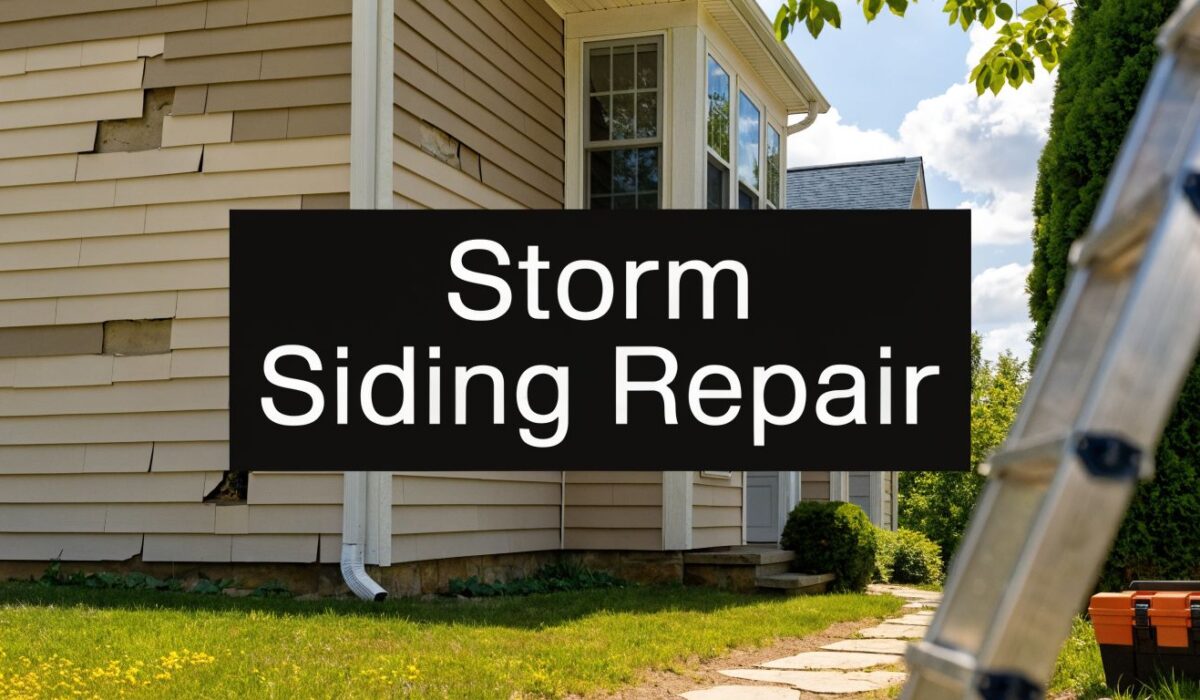
A Western PA storm can leave you standing in the driveway, staring at loose panels, dents, and debris, trying to decide what matters first. Most homeowners aren't worried about siding every day. Then one hailstorm or hard wind event hits, and suddenly every wall of the house feels like a question mark.
That reaction is normal. Storm damaged siding repair Western PA projects usually move more smoothly when you slow the process down, stay safe, and handle the insurance side as carefully as the repair itself. The repair isn't only about replacing cracked pieces. In many cases, the bigger fight is getting the insurer to recognize when a partial fix leaves your home mismatched, exposed, or harder to maintain.
Your First Steps After a Western PA Storm
The first job isn't repair. It's safety.
In Western Pennsylvania, storms regularly leave behind siding damage from hail, wind, flying debris, and age-related failure. About 35% of homes in the region experience some form of siding damage annually, and the National Weather Service issued over 50 severe thunderstorm warnings in Western PA counties like Mercer, Beaver, and Lawrence in 2024 alone according to regional siding damage data for Western PA. That means the house you're looking at after a storm probably isn't dealing with a rare problem.
Start from the ground
Don't grab a ladder right away. Stay back far enough to see each elevation of the house and look for immediate hazards first.
Check for:
- Downed utility lines: If a line is near the house, fence, or wet ground, keep your distance and call the utility company.
- Hanging or flapping siding: A panel that's partly detached can tear loose in the next gust and become dangerous.
- Fallen branches against walls: These can hide punctures, cracks, or broken trim.
- Signs of structural movement: Leaning porch posts, separated trim, or visibly shifted corners mean you need a professional inspection before anyone starts cleanup near that area.
If the storm was intense, walk the perimeter slowly with your phone in hand. Take a quick first set of photos, but don't worry yet about perfect documentation. Right now you're trying to answer two basic questions: Is the site safe, and is the house exposed to water?
Practical rule: If you have to climb, reach, lean, or step onto wet ground near wiring, stop and wait for a contractor or utility crew.
What to notice right away
Some siding damage is obvious. Some isn't.
A fast ground-level scan should focus on the details that suggest the wall system has opened up:
- Missing panels or corners
- Cracks around panel locks
- Holes from debris impact
- Bulging or warped runs
- Trim pulled loose around windows, doors, and rooflines
Vinyl often shows failure at seams, corners, and lower edges first. If the wind got under it, the panel may look mostly intact from one angle and fully disengaged from another. Fiber cement may show chips, cracks, or broken edges instead of bending.
A homeowner who keeps a seasonal record of the house is usually in a stronger position after a storm. If you don't already have one, a practical resource like this annual home maintenance checklist can help you build that habit going forward.
The first call to make
Once you've ruled out immediate hazards, call for a professional evaluation.
A good contractor will tell you the same thing any careful field crew knows. The visible damage is only part of the story. Water can get behind loosened siding fast, and the trim details around windows, doors, and transitions are often where secondary damage starts. You want somebody who can inspect the walls methodically, explain what they see in plain language, and tell you whether the issue is a small repair, a broader section replacement, or a claim-level loss.
Documenting Siding Damage for a Strong Insurance Claim
A weak claim usually starts with weak documentation. Homeowners often take a few photos of the worst-looking wall and assume the damage speaks for itself. It doesn't.
Claims adjusters look for a pattern, not just a dramatic close-up. The more clearly you show the storm's effect across the property, the harder it is for anyone to reduce the scope to a cosmetic one-off.
Right after your initial safety check, build a simple evidence set before anything gets moved, cleaned, or covered if conditions allow.
What to photograph and why
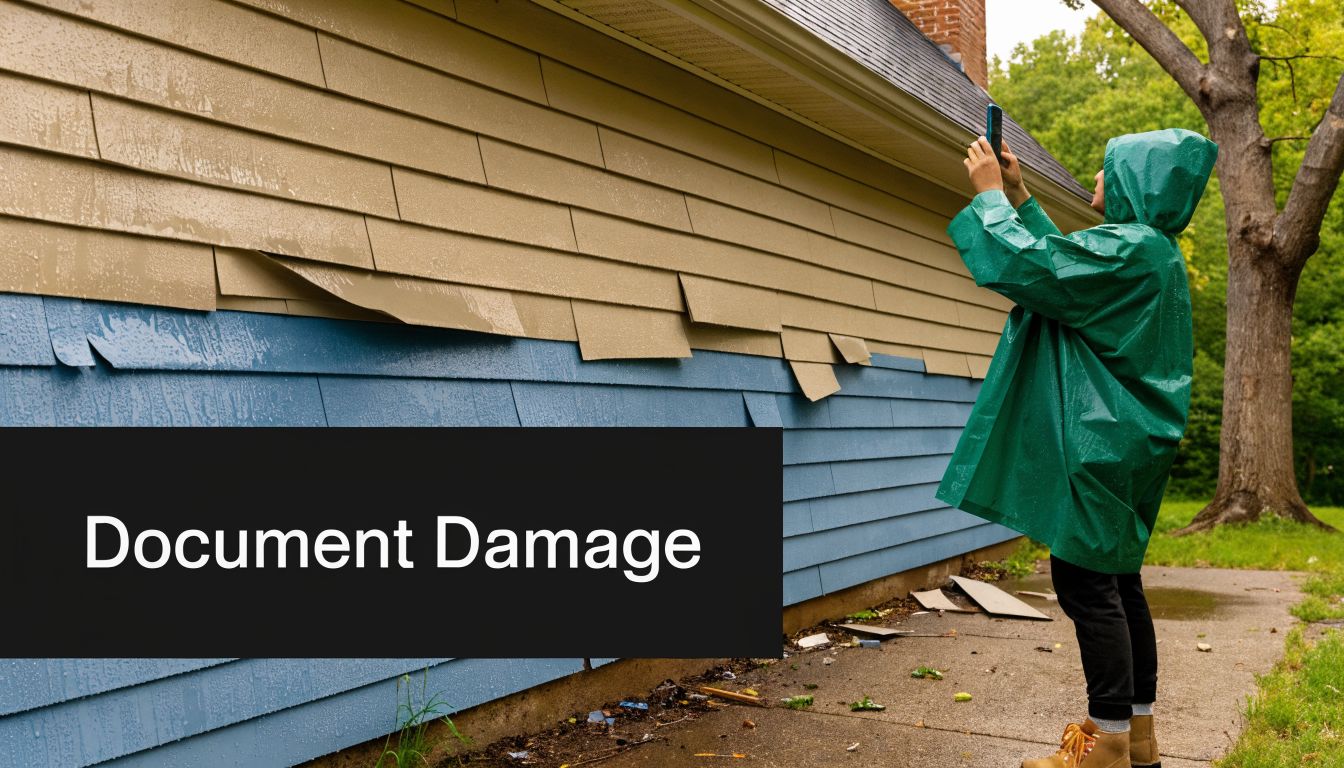
For hail and wind damage, a proper assessment includes dents or dimples, cracking from wind shear above 90 mph, and soft spots found through probing. Gutters, AC units, and windows matter too because 85% of hail events cause collateral impacts, and a drone or ladder survey reaches 95% accuracy compared with 70% for ground-only inspection according to hail and wind damage assessment guidance.
That gives you a useful roadmap for your own documentation from safe areas:
- Start wide: Take photos of each side of the house from corner to corner.
- Move closer: Capture every crack, hole, dent, lifted seam, and broken corner.
- Add scale: Place a coin, ruler, or tape measure next to impact marks when you can do it safely.
- Include related damage: Photograph downspouts, gutters, window screens, shutters, mailbox posts, and outdoor equipment.
- Record debris fields: If branches or airborne objects hit the wall, document where they landed before cleanup.
Use video like an adjuster walkthrough
A short video can be more useful than another dozen random photos.
Walk slowly around the house and narrate what you're seeing. Say the date, the side of the house, and what changed after the storm. Mention things like "this panel was intact before the hail" only if you know that from your own observation. Keep the camera steady and pause at each damaged area long enough for the image to register.
A practical next step is getting a professional report format ready for the insurance side. If you haven't dealt with a property claim before, this guide to a roof inspection report for insurance shows the kind of organized documentation carriers expect. The same disciplined approach helps with siding claims.
The strongest file is the one that shows the whole story. House elevation, close-up damage, collateral impact, and date-stamped context.
Keep a written log
Photos matter. Notes matter too.
Use a notebook or your phone and write down:
- Date and time of the storm
- What you heard or saw
- Rooms where you noticed leaks, drafts, or moisture smell
- Any emergency steps you took
- Who you called and when
That record helps when the insurance conversation starts to drift toward what was old, what was storm-related, and what changed afterward.
Making Safe Temporary Repairs to Prevent Further Damage
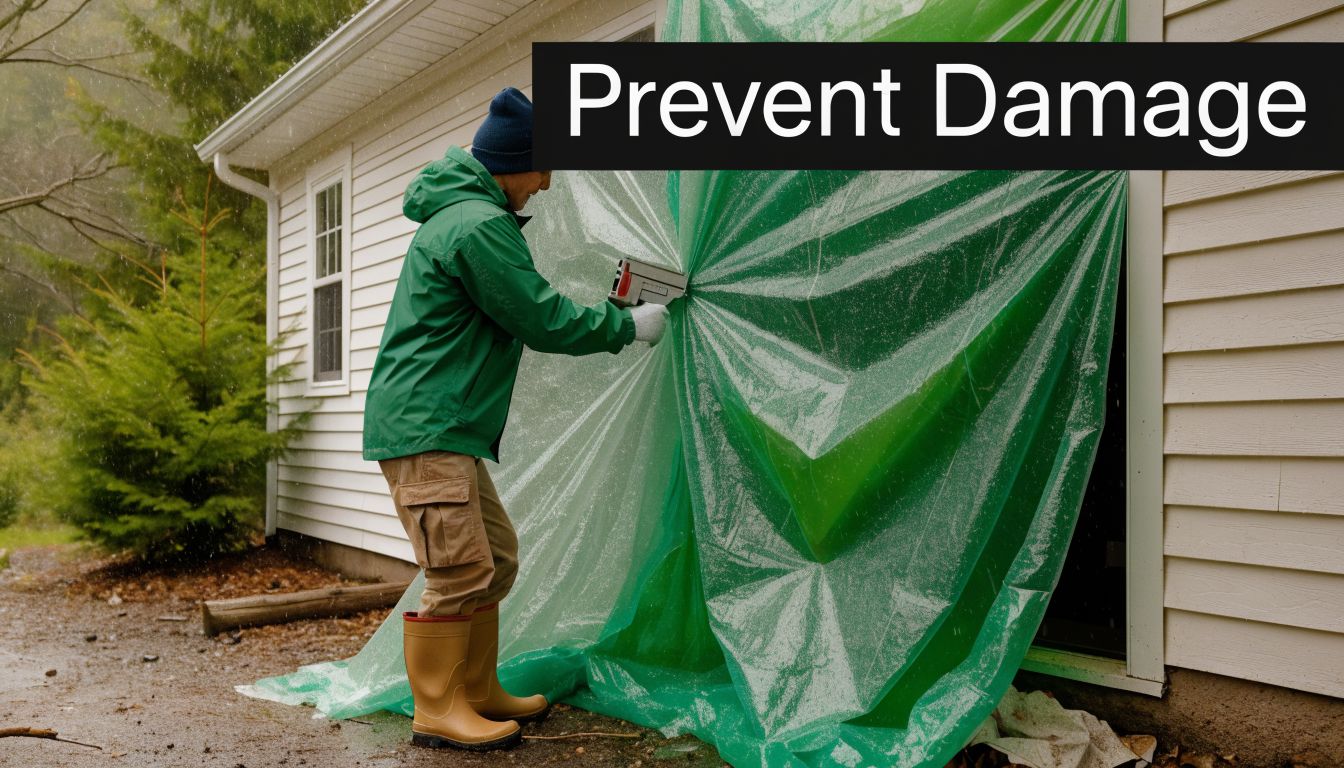
Once the damage is documented, the priority shifts to water control. Temporary repairs are about mitigation, not finish work.
Homeowners can help themselves here, but only inside a narrow lane. A smart temporary fix keeps rain out without putting you at risk or altering the damaged area so much that the claim gets harder to explain.
What you can do safely
From the ground or a stable, low-risk position, these are usually reasonable steps:
- Clear loose debris: Remove branches or objects that are pressing against the wall, as long as no power hazard is involved.
- Tape small cracks: Heavy-duty exterior tape can help slow water entry on minor splits until a contractor arrives.
- Protect exposed openings: If a panel is missing near grade level, temporary sheeting can shield the area from direct rain.
- Move valuables inside: If the wall sits behind a finished basement or furnished room, pull belongings away from that area.
If water is already entering the house, place towels or buckets inside and increase airflow if conditions are safe. You're trying to reduce interior damage while preserving the evidence of where the breach occurred.
What homeowners should not do
A lot of well-meant cleanup turns into a bigger problem.
Don't:
- Climb a high ladder on wet or uneven ground
- Nail replacement material over damaged siding
- Rip off loose sections just because they look bad
- Caulk every visible gap before the inspection
- Assume one damaged panel means only one panel needs repair
A panel that's flapping may be the visible symptom of a broader lock failure, damaged sheathing edge, or broken fastening pattern. Pulling on it can widen the claim dispute later.
If your temporary fix changes the original damage pattern, the adjuster may focus more on what happened after the storm than what the storm actually did.
Keep your mitigation simple
The best temporary work is easy to explain. "We covered the exposed area to stop rain" is clean and reasonable. "We removed part of the wall and tried to reattach the rest" is much harder to defend.
If the exposed area is above a safe reach zone, stop there and wait for a professional crew. Temporary work should lower risk, not create it.
Navigating Your Insurance Claim for Siding in Pennsylvania
This is the part that frustrates homeowners most. The storm is over, the damage is real, but the claim conversation starts shrinking the problem.
The most common dispute isn't whether some siding was damaged. It's whether the carrier will pay for enough work to restore a uniform exterior. In Western PA, that matters more than many adjusters admit because older siding often fades, specific product lines get discontinued, and weathered panels don't match new material in color, profile, or brittleness.
Why partial replacement becomes a fight
Local adjusters report that up to 40% of homeowners in the Pittsburgh area face denials for uniform siding replacement after windstorms, even when visible mismatches remain, according to guidance on partial siding replacement disputes.
That denial usually sounds reasonable on paper. The carrier may agree to replace the broken panels on one elevation and stop there. But in practice, that can leave you with one wall that looks new and adjacent walls that are faded, brittle, or no longer manufacturable in the same style.
This isn't only about appearance. Mismatched siding can create practical problems:
- Different lock profiles may not seat together correctly
- Aged panels can crack during tie-in work
- Uneven expansion behavior can stress repairs over time
- Visible patching can affect resale conversations and buyer confidence
The language that helps
When you talk to the insurer, stay specific and avoid emotional shorthand. "It looks bad" is true, but it isn't enough. Better language focuses on uniform repair, material availability, integration, and function.
Use phrasing like:
- The existing siding profile is discontinued or not available in a matching finish.
- Partial replacement won't restore a reasonably uniform exterior.
- Tying new panels into aged material creates a risk of cracking and improper fit.
- The proposed scope doesn't fully return the property to its pre-loss condition.
That last phrase matters. Claims often turn on whether the repair fully restores the property, not whether it hides the most obvious break.
A practical reference for homeowners who want to understand how the broader claim process tends to unfold is this guide to the roof insurance claim process. While it's roof-focused, the same habits apply to siding. Document the loss carefully, review the scope line by line, and challenge incomplete settlements with specifics.
What works better than arguing
A contractor's field notes, product identification, and written scope usually carry more weight than a homeowner's frustration alone. That doesn't mean you need a speech. You need evidence.
Helpful support often includes:
- A material match report
- Photos showing fade and profile differences
- A written explanation of why spot repair won't integrate properly
- A revised scope requesting full elevation or full replacement where justified
This is also where a local contractor can be useful as part of the process. For example, Penn Ohio Roofing & Siding Group handles siding and storm-related exterior work in Mercer, Beaver, and Lawrence counties, which means they can inspect local homes and document damage conditions tied to Western PA weather patterns.
A partial approval isn't always the final answer. It's often the opening offer.
Review the scope, not just the check
Many homeowners look at the payment amount first. Look at the scope first.
If the carrier approved only isolated panels but ignored wrap damage, corner posts, flashing disturbance, housewrap exposure, or matching issues, the claim may still be incomplete. Read every line. If something is missing, ask for a written explanation and submit supporting documentation before repairs close the file.
Choosing a Qualified Local Siding Repair Contractor
After a major storm, phones ring fast and trucks appear even faster. Some crews are skilled. Some are temporary operators chasing weather events from town to town.
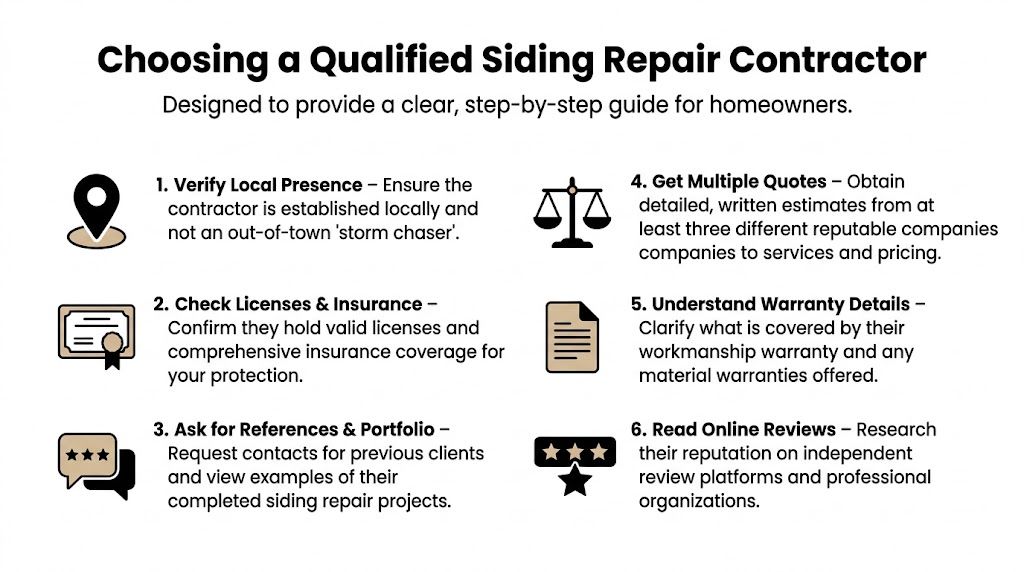
Choosing the right contractor isn't just a price decision. You're hiring someone to inspect hidden damage, protect the insurance record, match materials where possible, and install the repair so it holds through another Western PA winter.
What matters most in a storm market
Most homeowners insurance policies cover wind and hail damage to siding, and Pennsylvania ranks among the top 10 states for storm-related insurance claims, with over $1.2 billion in residential property damage payouts in 2023 alone according to Pennsylvania storm damage insurance data. When that much claim activity is moving through the market, unreliable contractors show up too.
Start with local proof, not sales talk.
Non-negotiables
- Established local presence: You want a company with a real service area, local references, and a track record in Mercer, Beaver, Lawrence, or nearby counties.
- Current insurance coverage: Ask for proof of liability coverage and workers' compensation coverage.
- Written scope of work: A verbal promise is not enough after storm damage.
- Experience with claims documentation: They don't need to be your insurer, but they should know how to support a claim with clear field evidence.
If you want a simple way to think through vendor screening, this article on how to tell if a contractor is reliable before hiring offers practical questions that carry over well to exterior repair work.
Questions worth asking in person
Don't just ask, "Are you licensed and insured?" Ask questions that force detail.
| Question | Why it matters |
|---|---|
| Will your own crew perform the siding work, or will you subcontract it? | You need to know who is actually touching the house. |
| How will you document hidden damage if you find it? | Hidden moisture or sheathing damage often changes scope. |
| What happens if matching material isn't available? | Their answer reveals whether they understand the partial replacement issue. |
| How do you handle punch-list items after completion? | Post-job response tells you a lot about accountability. |
A contractor who works in this market regularly should answer those without hesitation.
Red flags that deserve a hard no
Some warning signs are easy to miss because they sound convenient.
Watch for:
- Pressure to sign immediately
- A promise to absorb or waive your deductible
- No written address or unclear local footprint
- A vague estimate that doesn't separate materials, labor, and repair areas
- Dismissive answers about matching, flashing, or moisture checks
One practical place to review what a local siding service should look like is this page about a siding contractor in Mercer PA. Even if you're still comparing options, it helps to see the kind of location-specific service information a serious contractor provides.
A good contractor doesn't rush you past the details. They make the details easier to understand.
Understanding Siding Repair Costs and Timelines
By the time you have an estimate in hand, most of the stress shifts into two questions. How much is this really going to cost, and how long is this going to take?
Those answers depend less on the storm headline and more on the repair scope. A small, clean vinyl repair near grade can move very differently than a multi-elevation claim with discontinued material, wet sheathing, and trim disturbance around windows.

What the estimate is really paying for
In Western PA, a free on-site evaluation is typically the first step. Labor-intensive siding repairs can run $8 to $15 per square foot, insurance often offsets 80% to 100% for qualifying storm events, and full replacement is often more cost-effective if more than 20% of the siding is affected, according to Western PA siding repair cost and methodology guidance.
That estimate usually includes more than the visible panel swap. It may cover:
- Removal of damaged sections
- Material matching or nearest available equivalent
- Installation with 1/8-inch gaps for thermal expansion
- Sealant and transition work
- Trim reset around openings
- Disposal and site cleanup
If the contractor suspects hidden damage behind the siding, the estimate may also include an allowance or note for additional repairs after opening the wall.
Why timelines move around
Homeowners often assume siding timelines are predictable once the claim is approved. In practice, a few things slow projects down.
Common causes include:
- Material lead times: Matching older siding can take time, and sometimes it can't be matched at all.
- Weather windows: Wet walls and repeated rain can delay safe removal and installation.
- Supplement approval: If hidden damage appears, the contractor may need insurer approval before continuing.
- Crew scheduling after a regional storm: Local demand spikes fast after a major event.
A simple repair might move quickly once materials are in hand. A broader replacement with claim revisions and product availability issues will take longer. That's normal.
How to read the schedule realistically
Instead of asking for a single finish date, ask for milestone dates.
A better conversation sounds like this:
- Inspection completed
- Scope approved
- Materials ordered
- Start window confirmed
- Repairs completed
- Final walkthrough and punch list
That framework gives you a clearer picture of where delays are happening. It also helps separate insurance delays from contractor delays and material delays from weather interruptions.
When more than one wall is involved, the schedule usually depends on paperwork and product availability as much as crew labor.
Restoring Your Home and Your Peace of Mind
Storm damage feels disruptive because it hits all at once. The best response is steady, not rushed. Stay safe first, document the house carefully, make only simple temporary protections, and push for a repair scope that restores the exterior instead of patching over the problem.
For many Western PA homeowners, the hardest part isn't finding broken siding. It's getting a fair result when matching issues and partial approvals get in the way. With good documentation, clear language, and the right local contractor, you can move the job from confusion to closure.
If you need help with storm-related siding or roofing damage in Mercer, Beaver, or Lawrence County, Penn Ohio Roofing & Siding Group provides inspections, repair planning, and insurance documentation support for Western PA properties.