
So, you're considering a tile roof and want to understand the bottom line. Let's be upfront: a tile roof is a significant investment in your home. The average tile roof installation cost typically lands somewhere between $11 and $22 per square foot.
For a standard 2,000-square-foot home, that means you're looking at a total project cost ranging from $22,000 to $44,000. While that number might seem high at first glance, it's a reflection of the incredible longevity and undeniable curb appeal that only tile can offer.
Breaking Down Your Tile Roof Installation Cost
Getting a handle on the numbers is the first step toward making a smart decision for your home. Unlike slapping on a new set of asphalt shingles, the final price for a tile roof is a blend of several key factors: the premium materials, the specialized labor required, and all the critical prep work that happens behind the scenes.
It's a common mistake to think the cost is just about the tiles. A huge chunk of your budget, often around 39.5%, goes to the skilled craftspeople who install it. Tile roofing isn't a job for a general handyman; it demands precision and experience. You'll also need to account for costs like tearing off your old roof and potentially reinforcing your home's structure to handle the extra weight.
A Quick Financial Snapshot
To put it all into perspective, let's break down the major cost categories you’ll see on any professional roofer's estimate. Each line item is crucial for ensuring your new roof is not just stunning but also structurally sound for decades.
Across the board, the cost to install a new tile roof is between $11 and $22 per square foot. In roofing lingo, that's $1,100 to $2,200 per "square" (a 10×10 foot area). This price range is swayed by things like the complexity of your roof and labor rates in your specific area.
As a general rule, you can expect the final bill to be split roughly 60.5% for materials and 39.5% for labor. This highlights how you're paying for both top-tier materials and the expertise to install them correctly. For more detailed figures, you can find a great cost breakdown over at Modernize.com.
Think of a tile roof as a long-term investment in your home's value, protection, and beauty. The upfront cost is higher, but with a lifespan of 50 to 100+ years, it often proves to be the most cost-effective choice in the long run.
To make this even clearer, the table below gives a quick summary of what you might expect to pay for a standard-sized home. Use it as a starting point to set a realistic budget for your project.
Estimated Tile Roof Installation Cost at a Glance
This table provides a summary of typical cost ranges for a standard 2,000 sq. ft. tile roof, broken down by key expense categories.
| Cost Component | Average Cost Range Per Sq. Ft. | Estimated Total for a 2,000 Sq. Ft. Roof |
|---|---|---|
| Materials | $6.65 – $13.30 | $13,300 – $26,600 |
| Labor | $4.35 – $8.70 | $8,700 – $17,400 |
| Old Roof Removal | $1.00 – $2.00 | $2,000 – $4,000 |
| Permits & Fees | $0.25 – $0.50 | $500 – $1,000 |
| Total Project | $12.25 – $24.50 | $24,500 – $49,000 |
Keep in mind, these are ballpark figures. The final price can vary based on the specific tile you choose, your location, and any unique challenges your roof presents. The best way to get a firm number is to have a few reputable local roofers provide a detailed estimate.
What Really Drives the Cost of a New Tile Roof?
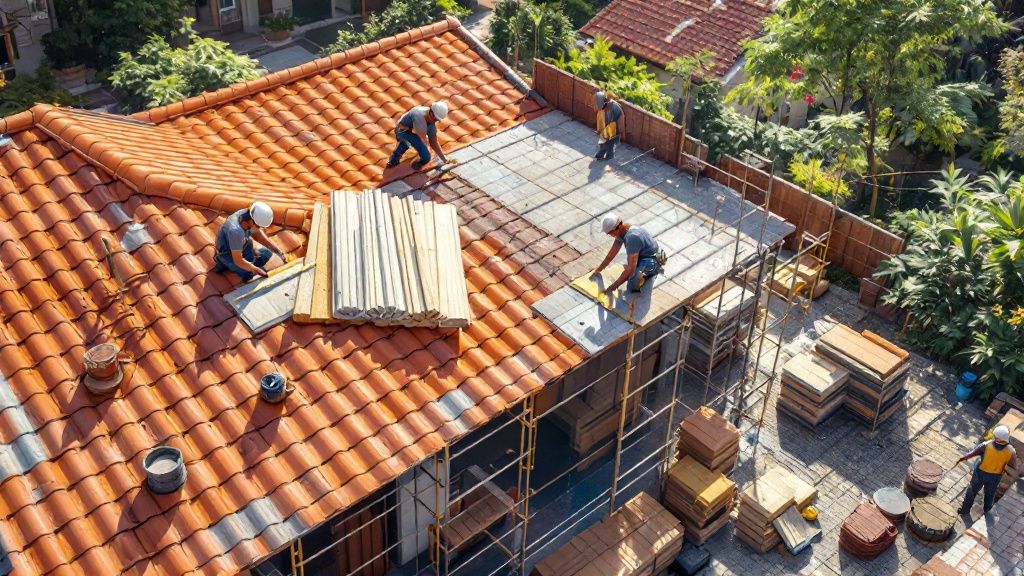
So, why can't you get a simple, flat-rate price for a new tile roof? It's because every roof has its own unique personality and challenges. Think of it like buying a custom suit versus one off the rack. The off-the-rack price is a starting point, but the final cost comes down to the specific fabric, the precise tailoring, and all the little details that make it fit you perfectly. Your roof is no different.
The final number on any contractor's estimate is a blend of several key factors. Getting a handle on what these are is your first step toward understanding any quote you get. It helps you see past the price tag and appreciate the skill, materials, and hard work that go into building a roof that's meant to last a lifetime.
Roof Size: The Starting Point
The most obvious factor is, of course, the size of your roof. A bigger roof means more materials and more time on the job. Simple as that.
In the roofing world, we talk in terms of "squares," where one square equals 100 square feet of roof area. But don't just look at your home's floor plan. A sprawling single-story ranch can easily have a larger roof than a compact two-story home, even if the interior living space is the same. Every quote you get will start with a careful measurement to get this baseline number right.
It's easy to assume roof size is everything, but it's not. I've seen two roofs of the exact same size have wildly different installation costs. The real game-changers are pitch and complexity.
Pitch: How Steepness Changes Everything
The pitch, or steepness, of your roof is a massive factor in the final cost. A low-slope roof that's easy to walk on is a roofer's dream. The crew can move quickly and efficiently, which keeps labor costs down.
But once you get into a steeply pitched roof, it's a whole new ballgame. The job immediately becomes more challenging and time-consuming.
- Extra Safety Gear: Crews have to use harnesses and special staging equipment just to stay on the roof safely. This slows everything down.
- Tricky Tile Placement: Every single tile has to be painstakingly secured. Just getting materials up to the work area becomes a major task.
- More Labor Hours: A job that takes three days on a flat roof might take a week on a steep one. That extra time adds up quickly on the final bill.
This is why you'll often see a "pitch charge" on estimates for any roof steeper than a 6/12 pitch (a roof that rises 6 inches for every 12 inches it runs horizontally).
Roof Complexity: It’s All in the Details
Beyond just size and pitch, the architectural complexity of your roof can really drive up the cost. A simple, two-sided gable roof is the most straightforward and affordable design to work on. Most homes, however, have features that add character but also require a lot more time and skill from the installation crew.
Every little nook and cranny requires extra attention. We're talking about things like:
- Valleys: Where two roof planes meet in a 'V' shape. These spots need precise cutting and careful sealing to prevent future leaks.
- Hips: The external angles where roof slopes join.
- Dormers: The window structures that jut out from the roof.
- Skylights & Chimneys: Any obstacle that pokes through the roof needs to be meticulously flashed to create a perfect, watertight seal.
Each of these features interrupts the clean, straight lines of tile installation. They demand custom cuts, extra materials, and a higher level of craftsmanship. This is precisely why a good contractor will insist on an on-site inspection before giving you a final price. For a deeper dive into all the financial moving parts of a project like this, it's helpful to review an understanding a full construction cost breakdown.
Choosing Your Tile Material: Concrete, Clay, Or Slate
When you start planning for a new tile roof, the very first—and most important—decision you'll face is the material. It's the single biggest factor that will drive your total tile roof installation cost. The choice between concrete, clay, or slate isn't just about looks; it deeply affects your budget, your home's curb appeal, and how the roof will perform for decades to come.
Think of it like picking an engine for a car. Each one offers a different blend of power, longevity, and upfront cost. We're going to break down what you're really getting for your money, looking at everything from durability and weight to the maintenance you can expect down the line.
Concrete Tiles: The Durable Workhorse
There’s a good reason concrete is the most popular tile on the market today: it delivers that classic, high-end tile look without the sticker shock of clay or slate. It’s the go-to for homeowners who want serious durability and style on a practical budget.
These tiles are made from a mix of sand, cement, and water, which results in an incredibly resilient product. Better yet, they can be molded and colored to mimic just about any look, whether you’re aiming for a rustic Spanish villa or a clean, modern aesthetic.
Of course, there are a couple of trade-offs. Concrete is porous, so it can absorb moisture over time, making it a bit more prone to algae or moss if you live in a damp climate. The color is also typically a surface coat, which means it can fade slightly over many years of sun exposure.
Concrete tiles offer a fantastic balance of aesthetics, longevity, and affordability. They provide about 80% of the benefits of premium tile at a fraction of the cost, making them a smart and practical investment for most homeowners.
This visual gives a quick snapshot of how the costs stack up.
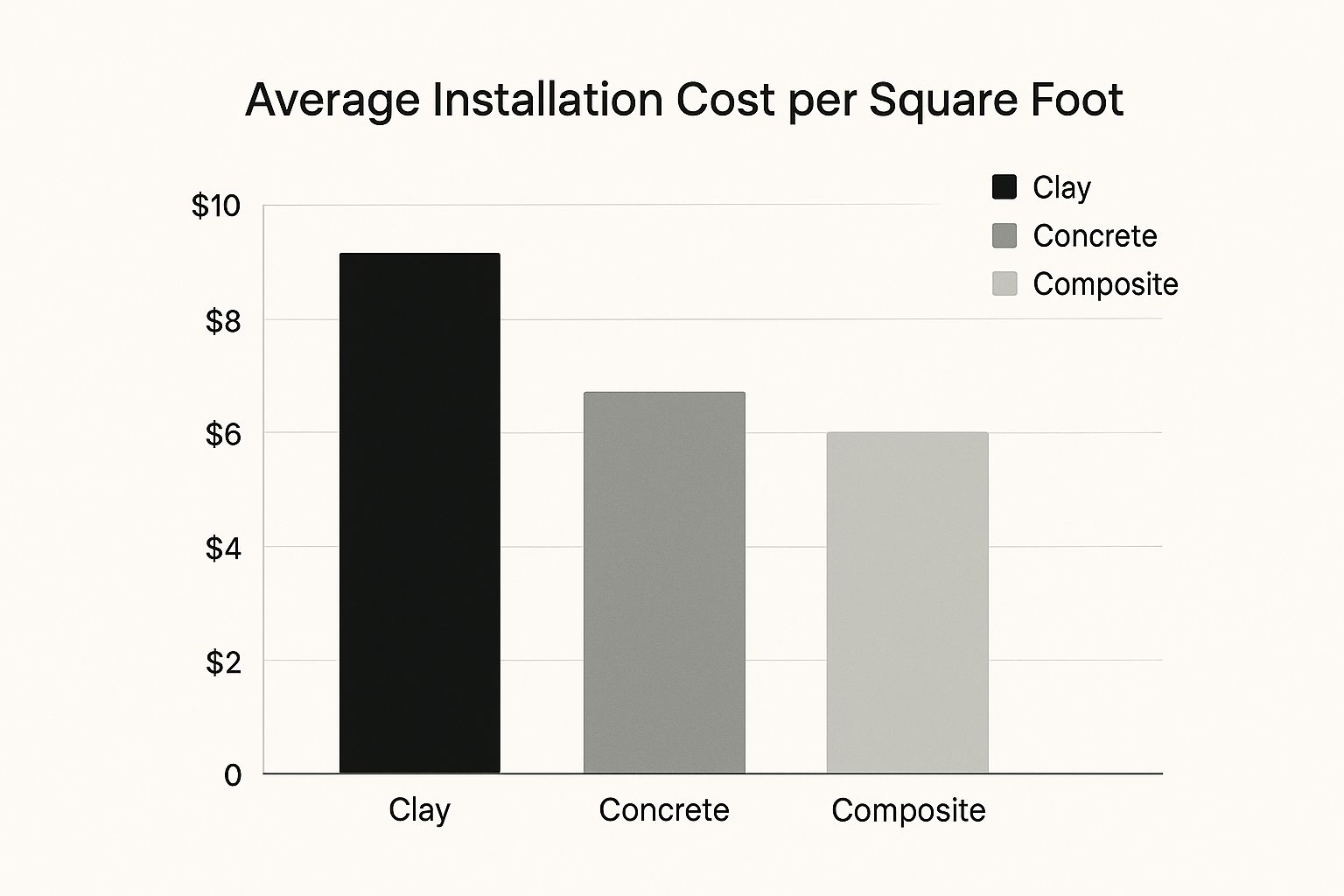
As you can see, concrete clearly comes in as the most cost-effective choice, which is why it’s the workhorse of the tile roofing world.
Before we dive into the specifics of clay and slate, let's take a side-by-side look at how these three materials compare across the board.
Comparison of Popular Roofing Tile Materials
| Tile Material | Material Cost (per sq. ft.) | Installed Cost (per sq. ft.) | Average Lifespan | Key Pros | Key Cons |
|---|---|---|---|---|---|
| Concrete | $2 – $4 | $9 – $18 | 50+ years | Affordable, versatile styles, durable, fire-resistant | Heavy, porous (can grow moss), color may fade over time |
| Clay | $3 – $7 | $10 – $25 | 100+ years | Extremely long-lasting, color-fast (won't fade), classic aesthetic | More expensive, brittle (can crack if walked on), heavy |
| Slate | $5 – $15 | $15 – $35+ | 150+ years | "Lifetime" roof, natural stone beauty, fireproof, low maintenance | Highest cost, extremely heavy (requires reinforced structure), needs experts |
This table should help clarify the major trade-offs you'll be considering. Now, let's get into the details of the more traditional options.
Clay Tiles: The Timeless Classic
When you picture a quintessential tile roof, you’re probably thinking of clay. With their warm, earthy tones and iconic curved shapes, clay tiles bring to mind the timeless beauty of Mediterranean and Spanish architecture.
These tiles are crafted from natural clay fired in a kiln, a process that bakes the color straight through the material. That means the rich terracotta hue you see on day one is the same one you’ll see a century later—it will never fade. Clay is also incredibly tough, easily resisting fire, rot, and insects, making it a true set-it-and-forget-it option.
The main drawbacks are cost and fragility. Clay costs a fair bit more than concrete, and the tiles can be brittle. You can’t just have anyone walking on them during an inspection, or they risk cracking. Their weight is also substantial, so your home’s structure needs to be up to the task. Globally, tile roof installation costs can run anywhere from $7 to $25 per square foot, but for clay specifically, material costs alone are often $3 to $7 per square foot, with the final installed price landing between $8 and $25.
Slate Tiles: The Lifetime Investment
If concrete is the workhorse and clay is the classic, then slate is pure luxury. This isn't a manufactured product; it's natural stone quarried directly from the earth. Each tile is unique, giving a home an unmatched level of elegance and character.
A slate roof is what we in the industry call a "forever roof." Its lifespan can easily push past 150 years.
Because it's dense, non-porous stone, slate is practically immune to anything nature throws at it—fire, water, pests, you name it. It holds its color permanently and requires next to no maintenance.
The biggest hurdle here is the significant investment. Slate is the heaviest and most expensive roofing material you can buy, period. It demands both a healthy budget and a roof structure that has been engineered to handle the immense load. Installation is also a specialized craft. You need a crew with proven experience in slate, as working with natural stone is an art form. To get a better sense of what this premier choice entails, it's worth learning more about the unique benefits and requirements of a slate roof.
Uncovering the Hidden Costs in Your Estimate
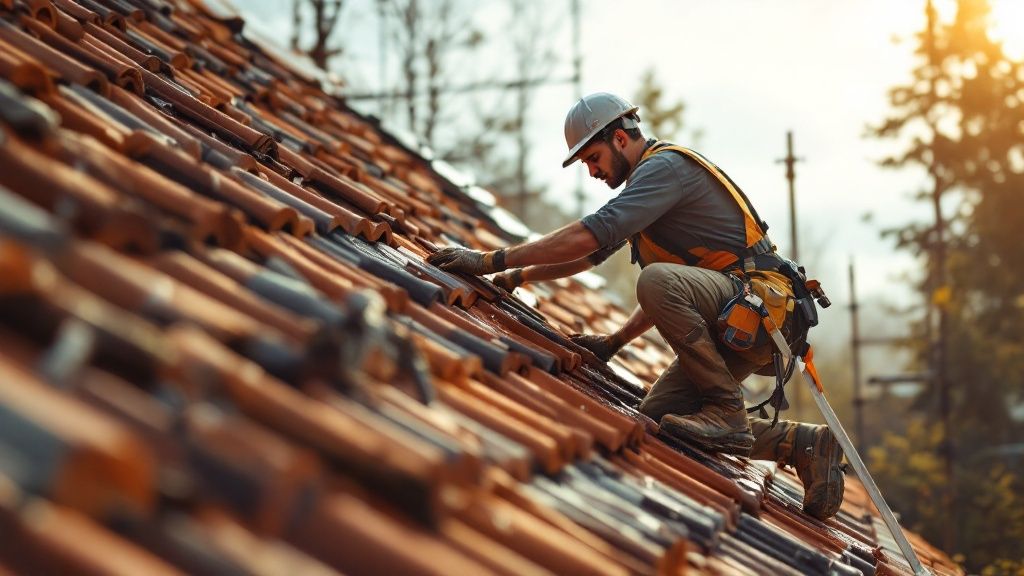
Looking at an estimate for your tile roof installation cost can feel a bit like getting the bill at a nice restaurant. You see the price for the main course, but the final number includes all the extras—drinks, appetizers, and dessert. It's the same with a roofing quote; the cost is much more than just the tiles themselves and the labor to put them on.
Several other critical expenses are part of any professional job. These aren't sneaky add-ons designed to pad the bill. They are non-negotiable parts of a safe, durable, and code-compliant roof that will last for decades. Understanding what these are helps you read any roofer’s estimate with confidence.
Old Roof Removal and Disposal
Before any beautiful new tiles go up, the old roof has to come down. This "tear-off" is a major job in itself, requiring a skilled crew to strip everything down to the roof deck. It’s more than just labor, too.
This process, which typically adds $1.00 to $2.00 per square foot to your total, covers the dumpster rental and the fees for legally disposing of all that construction debris. It’s the essential first step to creating a clean slate for your new roof.
A professional roofing contractor will never install a heavy tile roof over an existing layer of shingles. This practice, known as a "layover," is unsafe, often against building codes, and can void material warranties. A complete tear-off is always required.
Underlayment: The Unsung Hero
Tucked away beneath the tiles is one of the most important parts of your entire roofing system: the underlayment. Think of it as your roof's last line of defense. This waterproof barrier protects the wooden roof deck from any moisture that manages to sneak past the tiles during a heavy, wind-driven rainstorm.
For a heavy, lifetime material like tile, you absolutely need a high-performance underlayment. The type you and your contractor choose directly impacts the cost:
- Felt Underlayment: This is the old-school, budget-friendly option, usually costing around $0.05 to $0.55 per square foot.
- Synthetic Underlayment: A far more popular choice today. It’s known for superior durability and tear resistance, priced between $0.10 and $0.65 per square foot.
- Rubberized Underlayment: This is the premium, self-sealing waterproof choice, running from $0.20 to $0.90 per square foot.
Since the underlayment is what truly keeps your home dry, this is not the place to cut corners. Investing in a quality synthetic or rubberized product gives you peace of mind for decades. To see why it’s so critical, you can learn more about what roof underlayment is and why it matters in our detailed guide.
Potential Structural Reinforcement
Let's be clear: tile is heavy. A single clay tile can weigh around 6 pounds, which adds up quickly—we’re talking 600 pounds or more per roofing square (a 10×10 foot area). For comparison, a square of asphalt shingles is closer to 250 pounds. This massive weight difference means your home’s structure has to be up to the task.
Before any work begins, a professional will need to assess your roof's framing. If your home wasn't originally built to support a tile roof, adding reinforcement is a necessary and common expense. It's a critical safety step you can't afford to skip.
Flashing, Vents, and Other Essentials
Finally, a truly weatherproof roof is all about the details. A complete estimate will always include line items for new flashing and proper ventilation, which are absolutely crucial for preventing leaks and protecting your attic.
- Flashing: These are the custom-fit metal pieces that go around chimneys, skylights, and vents, and inside roof valleys. Their job is to channel water away from the most vulnerable spots on your roof.
- Vents: Ridge vents, soffit vents, and other components create an airflow system in your attic. This circulation is vital for regulating temperature and preventing moisture buildup that can lead to mold and rot.
These components are essential to the long-term health of your roofing system. They ensure your beautiful new tile roof performs as well as it looks, protecting your home for a lifetime.
How Labor and Expertise Impact Your Total Price
You can buy the best clay or concrete tiles on the market, but they're only as good as the crew that installs them. While materials are a big slice of the budget, it’s the skill of your roofers that turns a pallet of tiles into a watertight, long-lasting shield for your home. This is precisely why labor is such a substantial—and frankly, the most critical—part of your total tile roof installation cost.
Think of it this way: you could hire a general tailor or a master suit maker. Both can sew, but only the master has the specialized skill to craft a bespoke suit that fits perfectly and lasts a lifetime. A tile roof isn't just another construction project; it’s a craft that demands precision and a deep understanding of how these heavy, interlocking systems are supposed to work.
Why Specialized Labor Costs More
Putting on a tile roof is a completely different ballgame than nailing down asphalt shingles. It requires a unique skill set and a methodical process to make sure every single tile is aligned, secured, and flashed just right. An inexperienced crew can easily make tiny mistakes that snowball into massive problems—think persistent leaks, cracked tiles, and a roof that doesn't insulate properly.
When you invest in a team with proven tile experience, you're paying for:
- Specialized Knowledge: They know the correct overlap, the right fastening techniques, and how water is meant to channel off different tile profiles.
- Proper Handling: They understand how to cut, fit, and even walk on brittle materials like clay without snapping them.
- Structural Awareness: They have the expertise to assess and manage the heavy load that a tile roof puts on your home’s frame.
This level of skill is why labor is a significant investment. On average, labor makes up about 40% of the total project cost, with prices typically ranging from $200 to $300 per square (a 100 sq ft area). Of course, these rates can swing quite a bit depending on your location and the local demand for qualified installers.
The Difference Between a Roofer and a Tile Specialist
Not all roofing contractors are the same, especially when you're talking about tile. A general roofer might be a pro with shingles but lack the specific expertise needed for a flawless tile installation. A true tile specialist brings a whole other level of mastery to the job.
Choosing a contractor is the most important decision you'll make after selecting your tile material. An expert installer ensures your roof's longevity, while a poor installation can undermine even the most expensive tiles, leading to costly repairs and headaches.
The quality of your installation really comes down to the pros you hire. Learning how to find a good contractor is the best way to safeguard your investment. A specialist will have a portfolio full of successful tile projects and can talk you through the specific challenges of working with concrete, clay, or slate. For more tips on vetting your options, take a look at our guide on how to choose a roofing contractor for your project.
At the end of the day, the labor line on your estimate isn't just a cost—it's an investment in your peace of mind. Paying for true expertise is what ensures your beautiful new roof will do its job for the next 50 to 100 years.
It’s Not an Expense, It’s an Investment
So, we’ve broken down everything that goes into the cost of a new tile roof. With this knowledge, you can approach your project with confidence, not just seeing the final price tag but understanding the value behind it. Think of a quality tile roof less as a purchase and more as a long-term investment in your home—one that pays dividends for decades in superior protection, a significant boost in property value, and undeniable curb appeal.
This is more than just a new covering. It's a permanent upgrade to your home's structure and aesthetic. That’s why prioritizing quality materials and, just as importantly, expert installation is non-negotiable. It’s the only way to ensure your investment performs as it should, giving you peace of mind that will last a lifetime.
Vetting Your Contractor: The Tile Specialist Checklist
Here's a critical piece of advice: don't just hire a "roofer." You need a tile specialist. Installing tile is a different ballgame than laying asphalt shingles, and the skills aren't always interchangeable. A generalist might not have the nuanced expertise for a flawless, long-lasting installation.
Use this checklist to separate the true pros from the rest.
- Ask for a Tile-Specific Portfolio: Start with this: "Can I see photos and addresses of at least three tile roofs you've installed locally?" This cuts right to the chase. It proves they have recent, relevant experience, not just a line on their website.
- Verify Insurance and Licensing: The next question is simple but crucial: "Are you fully licensed, bonded, and insured specifically for tile roofing work?" Don't just take their word for it; ask to see the documents. This protects you from any liability.
- Discuss the Weight Factor: "How do you make sure my home's structure can handle the weight of concrete or clay tiles?" A true expert will have a clear, immediate answer involving a structural assessment. If they hesitate, it's a red flag.
- Clarify the Warranty: Ask, "What kind of warranties do you offer on the tiles themselves and, separately, on your workmanship?" A confident contractor is proud to stand behind their work with a solid guarantee.
Remember, the lowest bid can easily become the most expensive mistake. When you're making an investment of this size, a contractor's proven expertise, detailed quote, and comprehensive warranties are far more valuable than a rock-bottom price.
Final Steps to a Flawless Project
Your last move is to get multiple, detailed quotes. And I mean detailed. Don't just glance at the final number at the bottom of the page. A professional, transparent quote will break everything down line by line—from the specific type of underlayment and flashing they'll use to the costs for tear-off and debris disposal. This level of detail is the sign of a trustworthy partner.
Ultimately, the roofer you choose is just as important as the tiles you pick. By focusing on proven specialists and demanding a clear, itemized plan, you’re not just buying a roof; you’re securing a lasting asset that will protect and beautify your home for generations.
Answering Your Questions About Tile Roof Costs
It's only natural to have a few questions before diving into a big project like a new roof. When you're looking at something as significant as tile, getting straight answers is key to budgeting right and feeling good about your choice. Let's tackle a few of the most common questions homeowners ask when they're considering this beautiful, long-lasting roofing option.
Getting these details sorted out will give you a complete picture, so you can move forward without any surprises.
Is a Tile Roof Really Worth the Higher Price Tag?
In a word, yes. There's no getting around the fact that the initial investment for a tile roof is steeper than for, say, asphalt shingles. But the real story is in the lifespan—a properly installed tile roof can last 50 to 100 years, and sometimes even longer.
Think about that for a second. It means you'll probably never have to think about replacing your roof again. That kind of long-term value is tough to beat.
On top of their incredible longevity, tile roofs offer fantastic protection against fire and severe weather. Plus, their natural insulating properties can actually help trim your cooling costs over the years. It's a smart investment that pays for itself over the long haul.
A tile roof is a true long-term investment in your home's safety, resale value, and curb appeal. That higher upfront cost is balanced by decades of reliable performance, minimal maintenance, and energy savings, often making it the most sensible financial choice over the life of your home.
Will My House Need Extra Support for a Tile Roof?
There’s a very good chance it will. Concrete and clay tiles are heavyweights in the roofing world, with some styles tipping the scales at 600 pounds or more per square (which is just a 10×10 foot area). Because of this, you absolutely need a professional to inspect your home's structure to make sure it can handle that kind of load.
If your home wasn't originally designed for a tile roof, adding some reinforcement is a standard part of the process. This isn't just a suggestion; it's a critical safety step to protect your home's structural integrity. A good contractor will factor this into your overall project cost from the start. Whatever you do, don't skip this evaluation.
How Do I Get a Real, Accurate Quote for My Roof?
The only way to nail down an accurate price is to have experienced roofing contractors—ones who specialize in tile—come out to your home for an inspection. A legitimate quote can't be done over the phone. It requires someone to get up on a ladder, take precise measurements, check the condition of your current roof, and factor in your specific material choices and the local cost of labor.
My best advice? Get at least three detailed, itemized quotes in writing from licensed and insured pros. This lets you compare more than just the bottom-line number; you can see the full scope of work, the quality of the materials they plan to use, and the warranties they offer on both the tiles and their craftsmanship.
Ready to invest in a roof that will protect your home for a lifetime? A team of local experts can deliver a flawless tile roof installation. For a detailed, no-obligation estimate, contact us today.