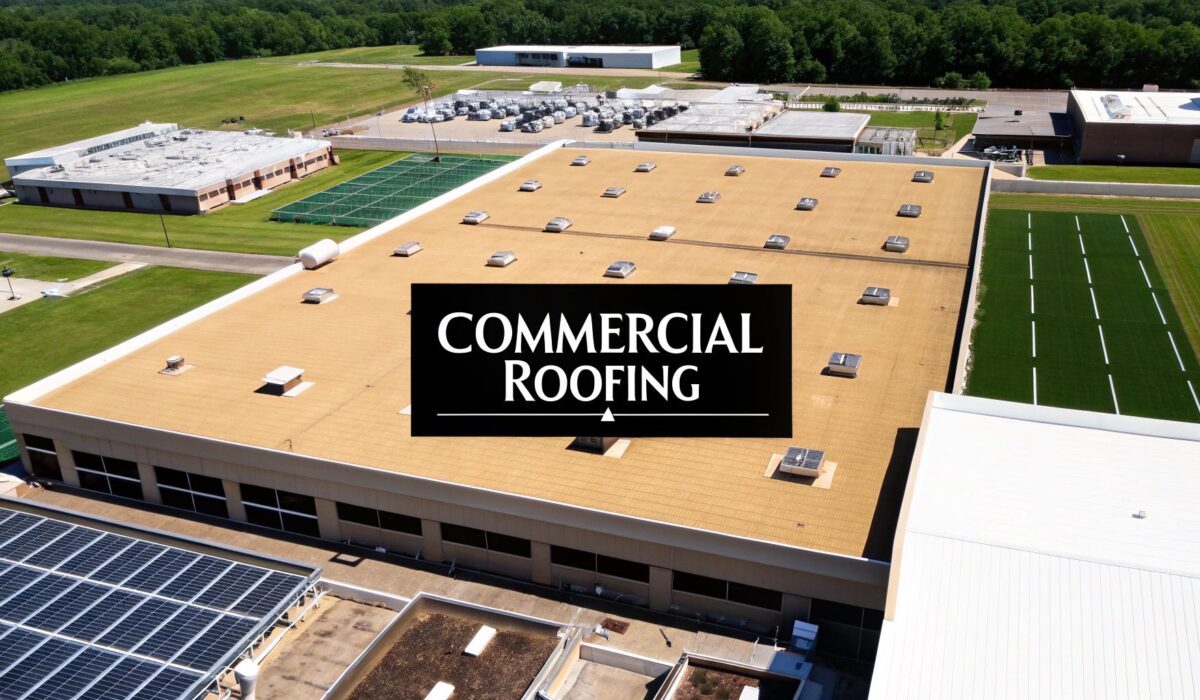
Choosing the right roof for a commercial property is a critical decision that impacts your building's structural integrity, energy efficiency, and long-term value. It's far more than a simple shield against the elements; it's a significant investment in your asset's future performance and operational costs. With a wide array of materials and installation technologies available, navigating the different types of commercial roofing systems can feel overwhelming for even seasoned property managers and business owners.
This comprehensive guide is designed to eliminate that confusion. We will break down the top 10 most common and innovative systems, providing the clear, practical insights you need to make an informed choice. From durable single-ply membranes like EPDM and TPO to traditional built-up systems and modern metal solutions, we'll explore the distinct advantages, potential drawbacks, and ideal applications for each.
Our goal is to empower you to compare these options effectively, ensuring you select a system that aligns perfectly with your specific climate, building use, and financial plan. By understanding the core differences, you can confidently protect your investment for decades to come.
1. EPDM (Ethylene Propylene Diene Monomer) Roofing
A long-standing staple in the commercial roofing industry, EPDM is a durable synthetic rubber single-ply roofing membrane. First introduced in the 1960s, it has a proven track record for longevity and resilience. EPDM is one of the most common types of commercial roofing systems due to its cost-effectiveness and straightforward installation process.
Typically sold in large black sheets, EPDM can also be found in white, which helps reflect sunlight and reduce cooling costs. The material is either fully adhered with a specialized adhesive, mechanically fastened with screws and plates, or ballasted with stone or pavers. This flexibility makes it suitable for a wide range of building structures and climate zones.
Best Use Cases and Advantages
EPDM is an excellent choice for large, low-slope roofs where budget and durability are primary concerns. It is often specified for:
- Warehouses and Distribution Centers: Its ability to cover vast, uninterrupted surfaces efficiently makes it ideal for these structures.
- Office Buildings and Retail Centers: The system's long lifespan, often exceeding 30 years with proper maintenance, provides a reliable return on investment.
- Municipal and School Buildings: EPDM's resistance to hail, UV radiation, and extreme temperature fluctuations makes it a resilient choice, especially in harsh northern climates.
Pro Tip: For buildings in areas prone to hail or heavy foot traffic, upgrading from a standard 45-mil membrane to a 60-mil or 90-mil thickness significantly enhances puncture resistance and extends the roof's service life.
Properly installed, EPDM provides exceptional waterproofing. As a versatile single-ply roofing option, it offers a dependable solution for many property owners. To understand the specifics of installation and repair for this material, you can explore more about single-ply roof systems.
2. TPO (Thermoplastic Polyolefin) Roofing
A relative newcomer compared to EPDM, TPO has quickly become one of the most popular types of commercial roofing systems in North America. Introduced in the 1980s, this single-ply thermoplastic membrane is made from a blend of polypropylene and ethylene-propylene rubber. Its seams are hot-air welded, which fuses them together to create a monolithic, waterproof surface.
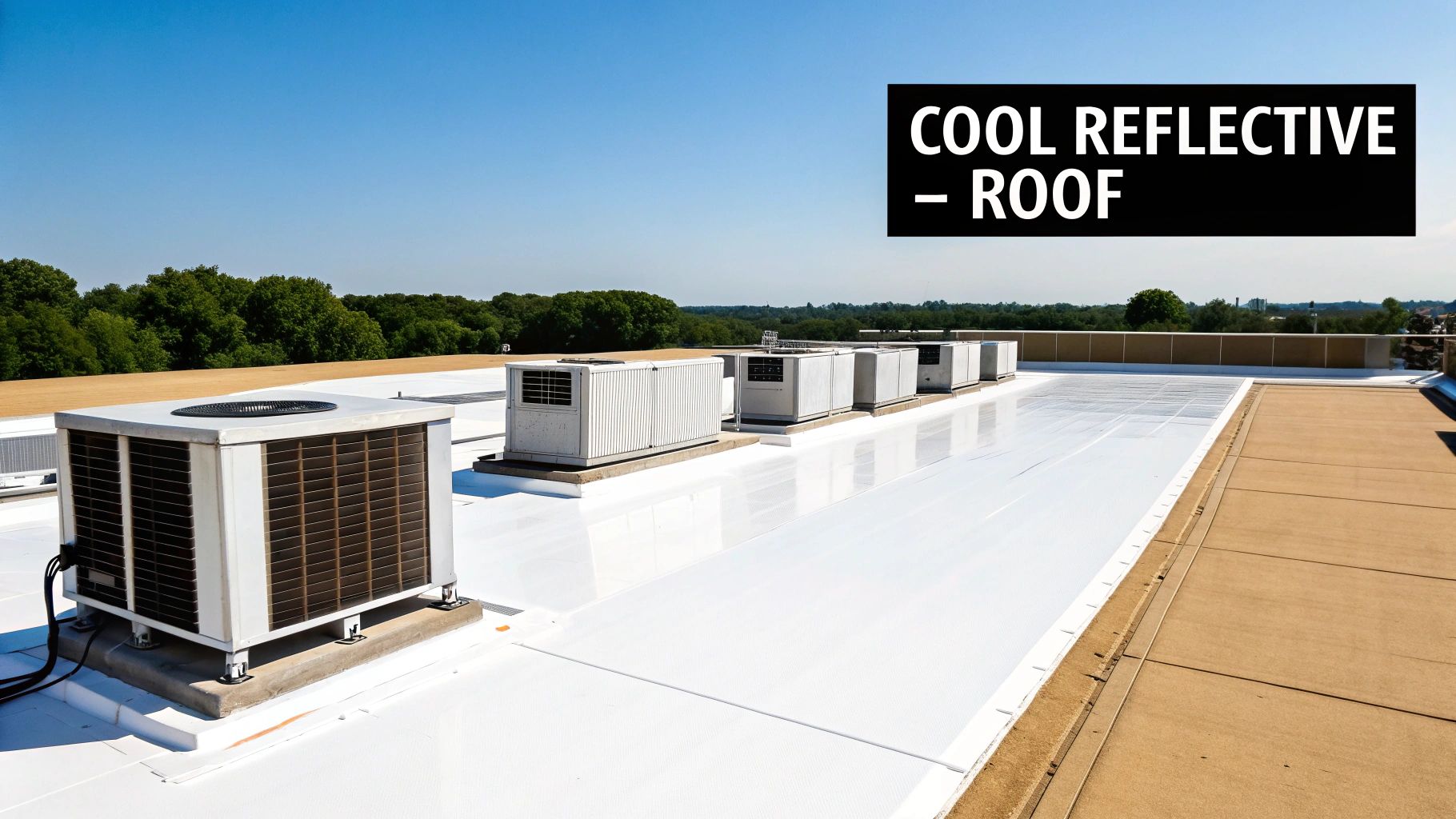
TPO's standout feature is its inherent energy efficiency, as it is most commonly produced in a brilliant white that reflects UV rays and reduces heat absorption. This "cool roof" technology can significantly lower a building's cooling costs, particularly in sunny climates. The membrane is also highly resistant to punctures, tears, and chemical exposure, offering a durable and cost-effective solution for modern buildings.
Best Use Cases and Advantages
TPO is an excellent choice for commercial properties where energy efficiency and seam strength are top priorities. It is frequently installed on:
- Hospitals and Healthcare Facilities: The heat-welded seams provide superior protection against leaks, a critical requirement for sensitive environments.
- Retail and Commercial Buildings: The reflective surface helps keep interiors cool, reducing HVAC strain and utility expenses for large commercial spaces.
- Schools and Educational Institutions: Its durability and resistance to mold, dirt, and bacteria make it a low-maintenance, long-lasting option for public buildings.
Pro Tip: Always verify that your installation crew is certified directly by the TPO manufacturer. Proper hot-air welding of the seams is a technical skill crucial for the roof's long-term performance and waterproofing integrity.
With a strong balance of performance, cost, and energy savings, TPO has cemented its place as a leading choice for new construction and roof replacement projects alike. For those interested in this modern material, learning more about the specifics of single-ply roof systems is a great next step.
3. PVC (Polyvinyl Chloride) Roofing
A durable and long-lasting thermoplastic single-ply membrane, PVC has been a trusted choice for commercial properties since the 1970s. Renowned for its strength and resilience, it is engineered to withstand fire, chemicals, and punctures. Among the various types of commercial roofing systems, PVC stands out for its heat-welded seams, which create a permanent, watertight bond stronger than the membrane itself.
These systems are highly reflective, typically white or light-colored, which helps to reduce building energy consumption and lower utility bills by deflecting solar heat. The membrane's composition gives it exceptional resistance to grease, oils, and other chemical contaminants, making it a specialized solution for certain industries. Installation is performed by either mechanically attaching the membrane or fully adhering it to the roof deck.
Best Use Cases and Advantages
PVC is the ideal roofing material for buildings with unique environmental exposures, particularly those related to chemicals or grease. It is frequently specified for:
- Restaurants and Food Service Establishments: Its superior resistance to animal fats and oils commonly exhausted through rooftop ventilation systems prevents membrane degradation.
- Chemical Processing and Manufacturing Plants: PVC provides a reliable barrier against a wide range of chemical compounds, protecting the building's structural integrity.
- Hospitals and Pharmaceutical Buildings: The membrane's clean, non-porous surface and strong seams help maintain sterile environments.
Pro Tip: When specifying a PVC roof, always hire installers certified by the manufacturer. Proper heat-welding of seams requires specialized training and equipment, and is critical for ensuring the system's long-term performance and watertight integrity.
With its robust, monolithic surface, PVC offers a premium, low-maintenance roofing solution that excels in challenging environments where other materials might fail.
4. Built-Up Roofing (BUR)
Often called "tar and gravel" roofs, Built-Up Roofing (BUR) is a classic multi-ply system that has been a workhorse in the commercial sector for over a century. This traditional method involves layering bitumen (asphalt) with reinforcing fabric felts, creating a thick, durable, and monolithic waterproof barrier. The final surface is typically covered with a layer of gravel, mineral slag, or a reflective coating to protect the underlying layers from UV radiation and weather damage.
The multiple redundant layers are the key to BUR's reputation for toughness and longevity. Each successive ply of bitumen and reinforcing fabric adds to its puncture resistance and overall strength. While modern materials have gained popularity, BUR remains a viable option among the different types of commercial roofing systems, especially for buildings requiring exceptional durability and a proven track record.
Best Use Cases and Advantages
BUR systems are an excellent choice for flat or low-slope roofs where maximum durability and resistance to foot traffic are critical. They are commonly specified for:
- Industrial and Manufacturing Facilities: The robust, multi-layer design can withstand the harsh conditions, foot traffic from HVAC maintenance, and potential impacts common in these environments.
- Older Commercial Buildings: Many buildings constructed before 2000 still have original or replacement BUR systems, making it a familiar choice for reroofing projects.
- Government and Institutional Buildings: The system's long-established reliability and high durability make it a trusted option for critical public infrastructure.
Pro Tip: Proper drainage is absolutely critical for a BUR system. Ensure that drains and scuppers are clear and that there is no ponding water, as prolonged moisture can accelerate the degradation of the asphalt layers.
While incredibly durable, BUR systems are heavy and require specialized installation expertise. When issues arise, it's important to understand the factors involved in remediation; you can get a clearer picture of the associated expenses by researching flat roof repair costs.
5. Modified Bitumen Roofing
A modern evolution of traditional built-up roofing (BUR), modified bitumen is an asphalt-based system reinforced with plastic or rubber polymers. First developed in Europe in the 1960s and introduced to the U.S. in the 1970s, it offers a middle ground between BUR and single-ply membranes. This material is one of the most resilient types of commercial roofing systems, known for its superior tear resistance and durability.
Modified bitumen comes in rolls that are typically installed in a two-ply system, consisting of a base sheet and a cap sheet. The cap sheet often has a granulated surface to provide UV protection and add to its longevity. Installation methods include heat-welding (torch-applied), cold-process adhesives, or self-adhering sheets, offering versatility for different building requirements and safety protocols.
Best Use Cases and Advantages
Modified bitumen is an excellent choice for low-slope or flat roofs that experience heavy foot traffic or require high puncture resistance. It is often specified for:
- Apartment Complexes and Multifamily Residential: Its durability and waterproofing capabilities make it ideal for protecting residential structures.
- Retail Buildings and Commercial Centers: The system provides a robust, multi-layer defense against the elements, which is critical for high-value commercial properties.
- Industrial Facilities: Its strength and resistance to mechanical damage are well-suited for industrial environments where equipment may be stored on the roof.
Pro Tip: When choosing a modified bitumen system, consider the polymer type. SBS (styrene-butadiene-styrene) offers greater flexibility and is ideal for colder climates, while APP (atactic polypropylene) provides enhanced UV resistance and a higher melt point, making it better for warmer regions.
With its multi-layer configuration and proven track record, modified bitumen roofing delivers exceptional performance and a long service life, often lasting 20 years or more with proper maintenance.
6. Metal Roofing Systems
A premier choice for durability and aesthetics, commercial metal roofing systems are engineered from materials like steel, aluminum, or copper. These systems are available in various profiles, including standing seam, corrugated, and architectural panels, offering exceptional longevity and design versatility. As one of the most resilient types of commercial roofing systems, metal provides superior protection against fire, wind, and impact.
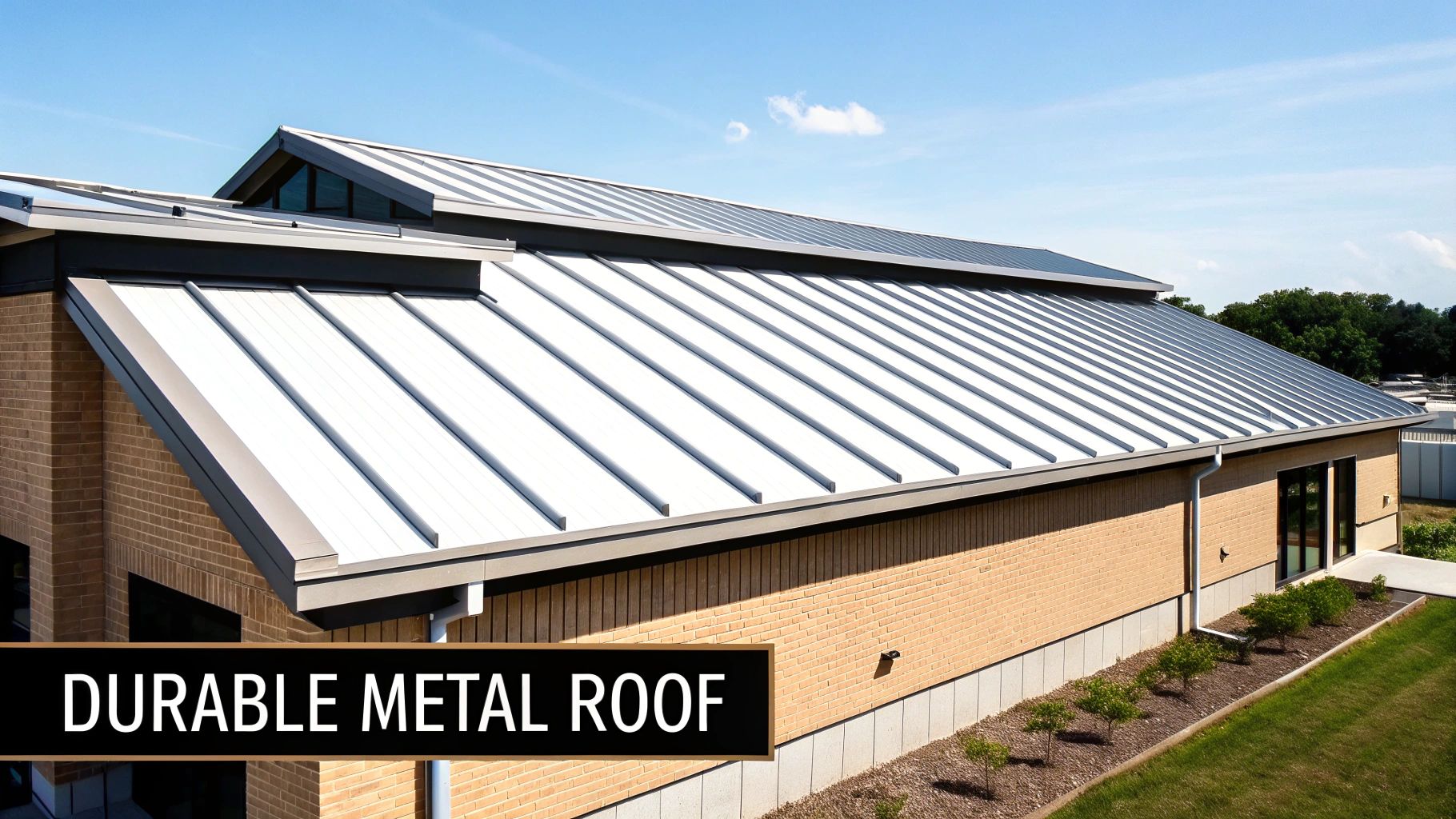
Often finished with high-performance reflective coatings, metal roofs can significantly reduce a building's cooling load, leading to lower energy costs. Their components are pre-fabricated for precision and installed by fastening panels to the roof deck or a sub-framing system. This construction method creates a robust, weather-tight barrier capable of lasting 50 years or more with minimal maintenance.
Best Use Cases and Advantages
Metal roofing is highly adaptable and specified for buildings where long-term performance and architectural appeal are key. Its best applications include:
- Manufacturing and Industrial Facilities: Its strength and fire resistance make it a safe and durable option for demanding environments.
- Modern Commercial and Office Buildings: Architectural panels offer sleek, contemporary aesthetics that enhance a building’s design.
- Agricultural Buildings and Warehouses: The system's longevity and low maintenance needs provide an excellent return on investment for large-scale structures.
- Retail and Hospitality Buildings: Metal's wide range of colors and finishes allows for brand customization and enhanced curb appeal.
Pro Tip: For maximum weather resistance and a clean, modern look, choose a standing seam profile. The concealed fasteners minimize the risk of leaks and protect against thermal expansion and contraction, which is critical for long-term performance.
The structural integrity and visual appeal of metal make it a top-tier investment for nearly any commercial property. For a deeper understanding of proper installation techniques, you can find helpful information in this metal roofing installation guide.
7. Spray Polyurethane Foam (SPF) Roofing
A unique fluid-applied system, Spray Polyurethane Foam (SPF) roofing is a seamless barrier that insulates and waterproofs a commercial building in a single application. Created by mixing two liquid components on-site, the resulting foam expands roughly 30 times its original volume, hardening into a rigid, closed-cell monolithic layer. This system conforms perfectly to any shape, making it one of the most versatile types of commercial roofing systems available.
After application, the foam is protected with a durable, elastomeric top coat that shields it from UV radiation, weather, and physical damage. This top coat is typically white or a light color to reflect sunlight and improve energy efficiency. The combination of high-grade insulation and a seamless, waterproof membrane makes SPF a popular choice for retrofitting older, complex roofs without requiring a complete tear-off.
Best Use Cases and Advantages
SPF is an outstanding solution for roofs with complex geometries, numerous penetrations, or where adding insulation is a primary goal. It is frequently specified for:
- Manufacturing Facilities and Industrial Plants: Its ability to seamlessly seal around pipes, vents, and HVAC units makes it perfect for roofs with irregular layouts.
- Hospitality and Government Buildings: The superior insulation (high R-value per inch) significantly reduces energy costs for heating and cooling these large structures.
- Retrofit Projects: Applying SPF directly over an existing, prepared roof surface saves on labor costs and landfill waste associated with tear-offs, minimizing disruption to building operations.
Pro Tip: The success of an SPF roof is highly dependent on the installer. Always choose a certified contractor with specialized equipment and extensive experience in SPF application to ensure proper material density (typically 2-4 lb/ft³) and a uniform, effective membrane.
Properly maintained with periodic recoating every 5-15 years, an SPF roof can last for decades, providing exceptional long-term value and performance.
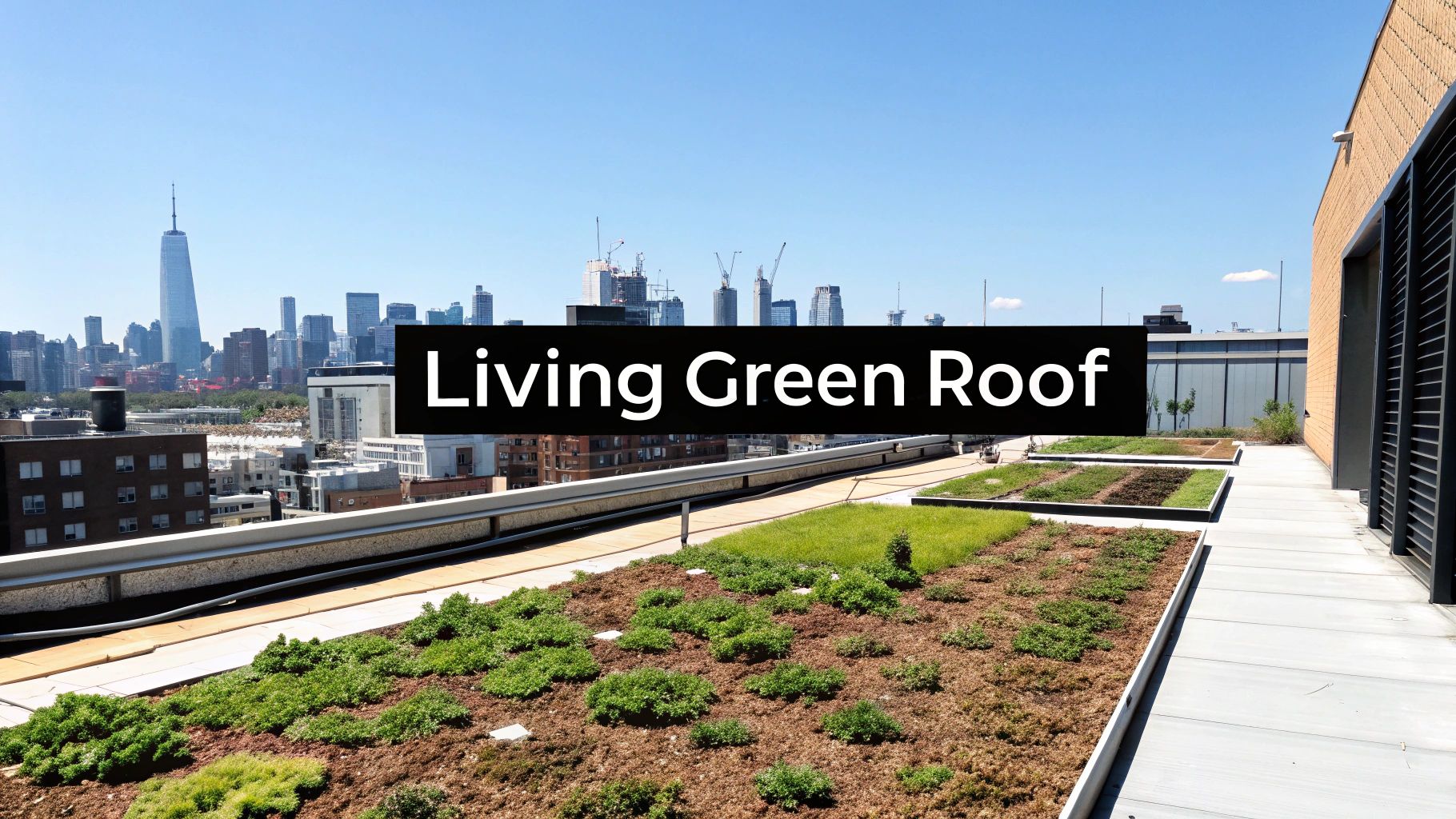
8. Green/Living Roof Systems
A green or living roof is a system that supports living vegetation on top of a specially prepared waterproofed roof structure. Far more than just an aesthetic feature, this innovative approach transforms a standard roof into a functioning ecological space. These systems are part of a growing trend in sustainable construction and are considered one of the most environmentally friendly types of commercial roofing systems available.
A green roof consists of multiple layers, including a high-performance waterproofing membrane, a root barrier, a drainage system, a filter fabric, a growing medium (soil), and the plants themselves. Systems range from shallow "extensive" roofs with lightweight, drought-tolerant plants like sedums, to deeper "intensive" roofs that can support shrubs, trees, and even small gardens.
Best Use Cases and Advantages
Green roofs are an exceptional choice for urban buildings where property owners want to mitigate environmental impact, improve energy efficiency, and create usable outdoor space. They are increasingly specified for:
- Corporate Headquarters and Office Buildings: The system provides significant insulation, reduces stormwater runoff, and can serve as an attractive amenity space for employees.
- Municipal and Educational Facilities: Buildings like Chicago City Hall showcase how green roofs can reduce the urban heat island effect and serve as public educational tools.
- Healthcare and Hospitality Venues: They offer therapeutic, quiet green spaces for patients and guests while protecting the underlying roof membrane from UV degradation, extending its life.
Pro Tip: Before considering a green roof, a structural engineer must verify that the building can support the additional saturated weight, which can range from 15 to 50+ pounds per square foot depending on the system's depth.
Properly designed and installed, a living roof system provides unparalleled ecological and financial benefits, including reduced energy bills and enhanced property value. Verifying the waterproofing integrity before installing the overburden is the most critical step to ensure long-term success.
9. Liquid Applied Membrane (LAM) Roofing
Liquid Applied Membrane (LAM) roofing, also known as fluid-applied roofing, involves applying a specialized liquid coating that cures to form a seamless, monolithic, and fully adhered waterproof layer. This system is a popular choice among the different types of commercial roofing systems because it conforms perfectly to any shape, making it ideal for roofs with complex geometries or numerous penetrations like vents, pipes, and HVAC units.
These coatings, which can be polyurethane, acrylic, or silicone-based, are typically spray- or roller-applied directly over a new or existing roof substrate. By creating a single, continuous membrane without seams or joints, LAM systems eliminate the most common points of failure found in traditional roofing materials. This makes them an excellent solution for both new construction and roof restoration projects.
Best Use Cases and Advantages
LAM roofing is exceptionally versatile and is often the best solution for complex or hard-to-access roofing scenarios. It is frequently specified for:
- Roof Restoration and Repairs: Its ability to be applied directly over existing roof systems (like built-up, modified bitumen, or single-ply) makes it a cost-effective way to extend a roof's life without a full tear-off.
- Historic Buildings: The system provides a modern waterproofing solution with minimal structural intrusion, preserving the building's original character.
- Complex Roof Geometries: Ideal for domes, curved surfaces, and roofs with many protrusions, where traditional sheet membranes would require extensive cutting and sealing.
Pro Tip: Proper surface preparation is non-negotiable for a successful LAM application. The substrate must be thoroughly cleaned, dried, and properly primed according to the manufacturer's specifications to ensure a strong, lasting bond and prevent premature failure.
A properly installed LAM system offers excellent durability, UV resistance, and energy efficiency, particularly with reflective white coatings. As a flexible and reliable waterproofing solution, it provides a seamless protective layer for a wide range of commercial properties.
10. Photovoltaic (Solar) & Hybrid/Multi-Layer Roof Systems
Representing the future of high-performance buildings, photovoltaic (PV) and hybrid roof systems integrate energy generation directly into the building envelope. These advanced solutions combine traditional roofing materials, like single-ply membranes or metal panels, with solar technology. This creates a multi-functional system that not only protects the building from the elements but also produces clean energy, offsetting operational costs.
These systems are custom-engineered, often layering materials such as spray foam for insulation, a durable membrane for waterproofing, and a top-mounted or integrated solar array. The goal is to create a cohesive unit where each component works in synergy. As one of the most innovative types of commercial roofing systems, they are becoming increasingly popular for businesses focused on sustainability and long-term energy savings.
Best Use Cases and Advantages
Hybrid and solar roof systems are ideal for new construction or major retrofits where energy performance is a key objective. They are particularly well-suited for:
- Net-Zero Energy Buildings: Combining superior insulation with on-site energy production is fundamental to achieving net-zero status.
- Corporate Campuses and Data Centers: These facilities have high energy demands, and a PV roof can significantly reduce their large electricity bills.
- Large Warehouses and Retail Centers: Their expansive, unobstructed roof surfaces are perfect for large-scale solar arrays, turning unused space into a power-generating asset.
Pro Tip: Before committing to a solar roof, conduct a thorough structural analysis to ensure the building can support the added weight of the panels and racking. Also, calculate the payback period using local electricity rates, tax credits, and available incentives.
Proper planning is crucial for integrating these complex systems. Businesses looking to leverage renewable energy can explore the benefits of a commercial solar panel installation to maximize their roof's potential.
10-Way Comparison of Commercial Roofing Systems
| Roofing Type | Implementation Complexity 🔄 | Resource & Cost Requirements ⚡ | Expected Outcomes / Lifespan ⭐📊 | Ideal Use Cases 💡 | Key Advantages ⭐ |
|---|---|---|---|---|---|
| EPDM (Ethylene Propylene Diene Monomer) Roofing | Low–Moderate 🔄 — large sheets, simple attachment; routine seam checks | Low cost; moderate labor; adhesive or mechanical fasteners ⚡ | Durable waterproof membrane; 30–50 years ⭐ | Warehouses, cold-climate commercial, budget-conscious projects | Affordable, flexible in cold, easy repairs |
| TPO (Thermoplastic Polyolefin) Roofing | Moderate 🔄 — heat-welded seams; requires certified installers | Moderate cost; specialized welding equipment; faster install ⚡ | Reflective, energy-saving; 20–30 years 📊⭐ | Retail, hospitals, schools, cool-roof applications | Reflective (lower cooling load), strong welded seams |
| PVC (Polyvinyl Chloride) Roofing | Moderate–High 🔄 — specialized heat welding and testing | Higher material & labor costs; certified crews required | Excellent chemical & puncture resistance; 25–40 years ⭐ | Chemical plants, food processing, high-traffic roofs | Best chemical resistance, strongest welded seams |
| Built‑Up Roofing (BUR) | High 🔄 — multi-ply hot or cold-applied, labor‑intensive | High labor and material weight; longer install time | Proven waterproofing; 20–30 years 📊 | Older commercial buildings, irregular roofs, heavy foot traffic | Time-tested durability, good for complex roof shapes |
| Modified Bitumen Roofing | Moderate 🔄 — multiple application methods (torch, adhesive, mechanical) | Moderate cost; installation method affects labor and schedule ⚡ | Improved flexibility vs BUR; 25–35 years | Retrofits, multifamily, retail, moderate climates | Flexible, faster than BUR, multiple application options |
| Metal Roofing Systems | High 🔄 — panel fabrication, precise fastening, thermal design | High upfront cost; specialized installers; lightweight materials | Long service life; 40–70 years ⭐📊 | New construction, severe weather zones, aesthetic projects | Exceptional longevity, recyclable, reflective coatings |
| Spray Polyurethane Foam (SPF) Roofing | High 🔄 — spray application sensitive to conditions & skill | High initial cost; requires certified applicators and coatings | Seamless, high R‑value (≈6–7/in); 25–30+ years when maintained 📊⭐ | Retrofits, complex geometries, insulation upgrades | Seamless membrane, excellent insulation, conforms to shapes |
| Green / Living Roof Systems | Very High 🔄 — structural, drainage, root barriers, complex detailing | Very high upfront cost; structural reinforcement; ongoing maintenance | Stormwater retention, extended membrane protection; waterproofing 40–50+ yrs 📊 | Urban sustainability projects, public buildings, amenity roofs | Environmental benefits, insulation, aesthetic and market value |
| Liquid Applied Membrane (LAM) Roofing | Moderate 🔄 — weather‑dependent application; skilled applicators | Moderate–High cost per area; quick spray/brush application ⚡ | Seamless waterproofing; 20–30+ years (chemistry-dependent) 📊 | Repairs, complex details, small roofs, restorations | Seamless, fast, adaptable to details and substrates |
| Photovoltaic (Solar) & Hybrid / Multi‑Layer Systems | Very High 🔄 — integrated electrical, structural and roofing design | Very high capital and coordination; permits, structural upgrades | Dual function: roofing + power; PV life 25–30+ years; energy offsets ⭐📊 | Net-zero buildings, large rooftops seeking energy generation | Generates electricity, customizable high-performance solutions |
Making the Right Choice for Your Commercial Property
Selecting the ideal roof for your commercial property is one of the most critical decisions you will make as an owner or manager. As we've explored, the diverse landscape of types of commercial roofing systems offers a specialized solution for nearly every building scenario, from the steadfast durability of Built-Up Roofing (BUR) to the innovative, energy-producing capabilities of Photovoltaic panels. Your final choice is not merely about covering your building; it's a strategic investment in its long-term value, operational efficiency, and structural integrity.
Synthesizing Your Options for Optimal Performance
The key takeaway is that there is no single "best" commercial roof. The optimal choice is always contextual, balancing material performance with your specific needs. A restaurant, for instance, might prioritize a PVC roof for its superior resistance to grease and chemical exhaust, while a large, climate-controlled warehouse in a sunny region could realize significant energy savings with a highly reflective TPO or SPF system.
Consider these core factors as you narrow down your options:
- Climate & Environment: Is your building located in an area with extreme temperature fluctuations, high precipitation, or intense UV exposure? Materials like EPDM and metal excel in harsh weather conditions.
- Building Use & Occupancy: Will the roof need to support heavy HVAC equipment or regular foot traffic for maintenance? A robust system like Modified Bitumen or a designated walkway path on a single-ply membrane is crucial.
- Budget & Long-Term ROI: While some systems like EPDM have a lower initial installation cost, others like metal roofing offer a superior return on investment through exceptional longevity and minimal maintenance requirements.
- Energy Efficiency Goals: To reduce cooling costs and your building’s environmental footprint, TPO, PVC, and SPF roofing systems are excellent choices due to their high solar reflectivity.
From Installation to Longevity: The Path Forward
Making an informed decision is the first step, but a successful roofing project hinges on two equally important elements: expert installation and diligent maintenance. A flawless installation by a certified, experienced contractor is non-negotiable, as it ensures the system performs to its engineered specifications and validates manufacturer warranties.
Once installed, the roof's lifespan depends on proactive care. Beyond initial installation, the long-term performance and lifespan of any commercial roof system are heavily influenced by proper upkeep, as detailed in this essential commercial building maintenance checklist. Regular inspections and prompt repairs prevent minor issues from escalating into catastrophic failures, ultimately protecting your investment and the assets within your building. By aligning the right material with professional installation and a consistent maintenance plan, you create a comprehensive asset protection strategy that starts at the very top of your property.