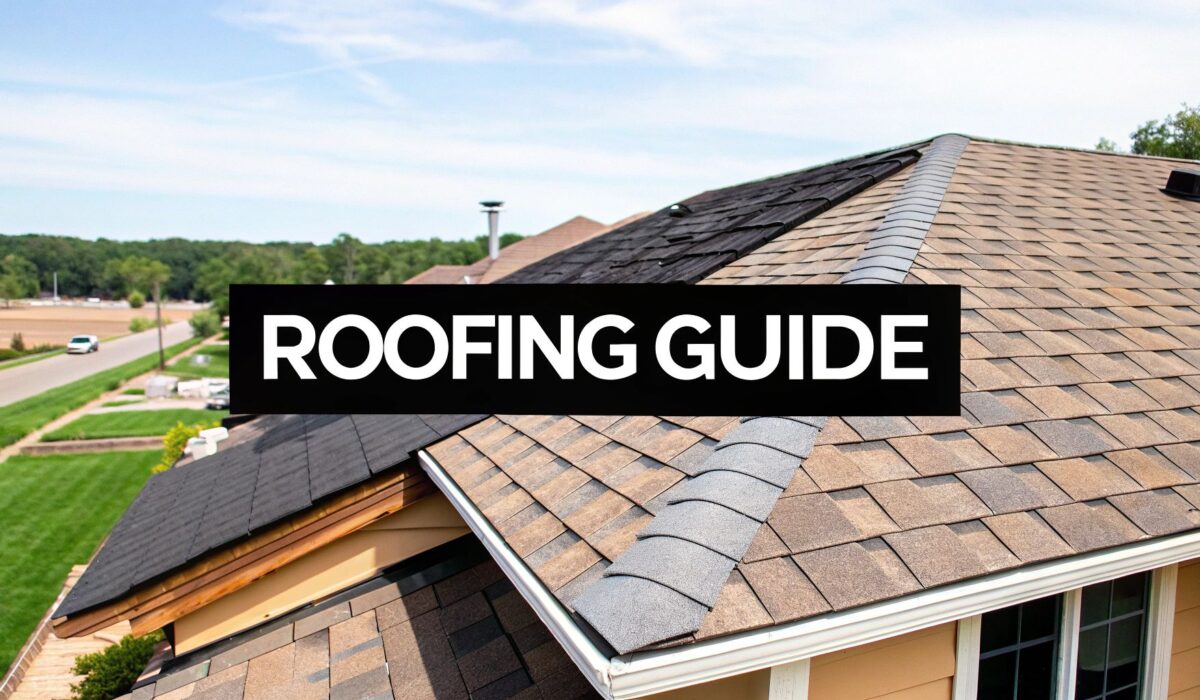
Your roof does a lot more than just keep the rain out—it's your home's first line of defense. When it's time for a replacement, you'll find a ton of options out there, from the ever-popular asphalt shingles to tough-as-nails metal roofing and classic materials like tile or slate. Each one has its own story when it comes to lifespan, cost, and the look it gives your home.
Choosing the Right Roof for Your Home
Picking a new roof is a major decision, and it’s about more than just finding a color you like. It's a real investment in your home's safety, curb appeal, and even its resale value.
Think of it this way: you wouldn't buy a convertible for a place that gets 10 feet of snow every winter. The same logic applies here. The perfect roof for a sun-drenched Florida bungalow is probably the wrong choice for a cabin in the mountains of Colorado. This guide will walk you through what really matters so you can see how each material performs in the real world.
Key Factors in Your Decision
To land on the right material, you have to weigh a few key things. Getting this balance right is what separates a good roof from a great one.
- Your Local Climate: Is your area known for brutal sun, high winds, heavy rain, or piles of snow? Your roof needs to be built to handle whatever Mother Nature throws at it year after year.
- Your Home's Style: The roofing material should feel like a natural fit for your home's architecture. Rustic wood shakes can look out of place on a sleek, modern house, just as metal panels might clash with a historic Victorian.
- Your Budget: Let's be honest, cost is a huge factor. Prices range from affordable asphalt to premium slate, so you need to find that sweet spot between what you can spend now and what will deliver the best long-term performance.
- Long-Term Value: Don't just look at the initial price tag. A cheaper roof that needs replacing in 15 years might end up costing more than a pricier option that lasts for 50. Think about lifespan, maintenance, and potential energy savings down the road.
This decision tree gives you a great visual for how budget, climate, and style all point toward the best material for your specific situation.
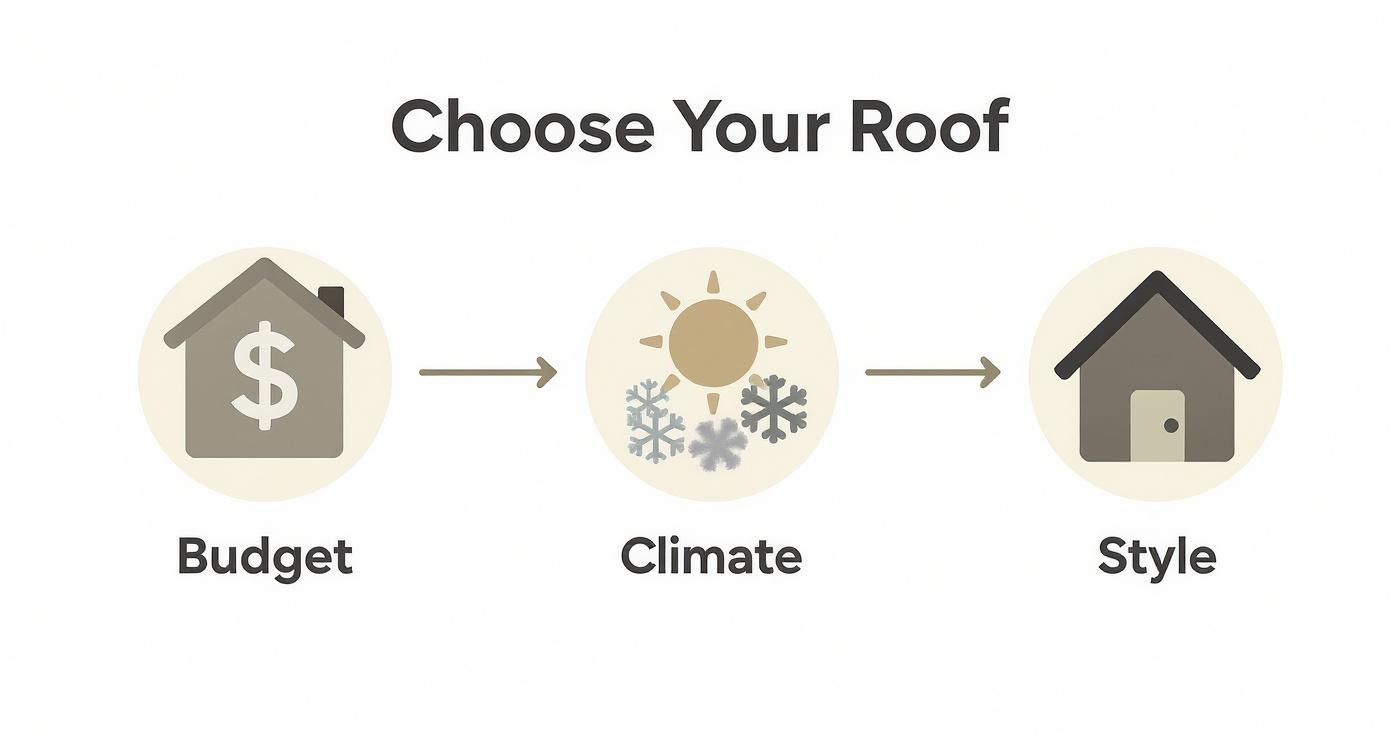
As you can see, starting with your budget quickly narrows the field. From there, factoring in your local weather and home design helps you zero in on the perfect match.
Your roof is one of the most significant components of your home's structure. It protects your investment, contributes to energy efficiency, and defines the overall look of your property. Making an informed choice is paramount.
To make things even easier, let's break down the most popular types of roofing side-by-side.
Roofing Materials At a Glance Comparison
This table gives you a quick snapshot of the most common residential roofing materials. It’s a great way to compare the trade-offs between cost, longevity, and what each one brings to the table.
| Material Type | Estimated Cost per Square Foot | Average Lifespan (Years) | Primary Benefits |
|---|---|---|---|
| Asphalt Shingles | $4 – $7 | 15 – 30 | Most affordable, wide variety of colors, easy to install and repair. |
| Metal Roofing | $8 – $20 | 50 – 70+ | Extremely durable, energy-efficient, fire-resistant, and low maintenance. |
| Clay/Concrete Tile | $10 – $25 | 50 – 100+ | Excellent longevity, non-combustible, and ideal for hot climates. |
| Natural Slate | $15 – $30+ | 100+ | Unmatched lifespan, beautiful natural appearance, fireproof, eco-friendly. |
| Wood Shakes/Shingles | $7 – $15 | 25 – 40 | Natural, rustic aesthetic; provides good insulation from the elements. |
| Synthetic Materials | $8 – $14 | 40 – 50+ | Mimics premium looks, lightweight, durable, often impact-resistant. |
Having these numbers in one place helps you see exactly what you're getting for your money, making it simpler to find the best material to protect your home and boost its curb appeal for years to come.
Asphalt Shingles: The Go-To for Most Homes
Drive down almost any residential street in America, and you'll see one roofing material more than any other: asphalt shingles. There's a simple reason they're everywhere. They hit that perfect sweet spot of being affordable, looking good, and being relatively easy for a pro to install, making them the default for millions of homeowners.
This isn't just a local trend. The global roofing market is massive—projected to hit around USD 132.5 billion by 2025—and good old asphalt shingles are leading the pack. Their cost-effectiveness makes them a top pick for both homes and commercial buildings worldwide.
Not All Asphalt Shingles Are the Same
Thinking all asphalt shingles are identical is like saying all cars are the same. You've got your basic models, your popular mid-range options, and your high-end luxury versions. Each one offers a different trade-off between price, durability, and curb appeal.
-
3-Tab Shingles: These are your entry-level, economy-class shingles. They get the job done on a tight budget and are defined by their flat, single-layer design that creates a very uniform, brick-like pattern. Their main drawback is a shorter lifespan, typically around 15-20 years, and they're the most susceptible to getting lifted by strong winds.
-
Architectural (or Dimensional) Shingles: This is the option most people choose, and for good reason. Architectural shingles are thicker because they have multiple layers fused together. This creates a really nice, textured look that can even mimic the appearance of wood shakes. They last longer (25-30 years or more) and stand up to wind much better than 3-tab shingles.
-
Luxury (or Premium) Shingles: If you want the best of the best in the asphalt world, this is it. These are the heaviest, toughest shingles available, crafted to imitate the beautiful, high-end look of natural slate or cedar shakes without the massive price tag. They offer top-tier performance, superior impact resistance, and the longest warranties you can get for an asphalt roof.
If you're stuck between the two most common types, digging into the details of three-tab vs dimensional shingles can really help clear things up.
The Good and The Bad
Every roofing material has its trade-offs, and asphalt is no exception. It’s important to see both sides of the coin before making a decision.
The Pros:
- Affordability: You just can't beat the low upfront cost. It's their biggest selling point, hands down.
- Endless Variety: They come in a huge spectrum of colors and styles, so you can always find something to match your home's look.
- Simple Installation: Most roofers know them like the back of their hand, which helps keep labor costs from getting out of control.
The Cons:
- Shorter Lifespan: When you compare them to materials like metal, slate, or tile, asphalt shingles will need to be replaced much sooner.
- Weather Vulnerability: They can take a beating from severe weather. High winds can tear them off, hail can damage them, and big temperature swings can cause cracking over time.
- Environmental Impact: As a petroleum-based product, old shingles often end up in landfills, which is a growing environmental concern.
For the average homeowner, the combination of a reasonable price and a wide variety of styles makes asphalt shingles a very practical, common-sense choice. They provide dependable protection without the sticker shock of more premium materials.
When you choose asphalt shingles, you're getting a tried-and-true roofing solution that’s accessible, looks great, and delivers solid performance for what you pay.
Metal Roofing for Durability and Style
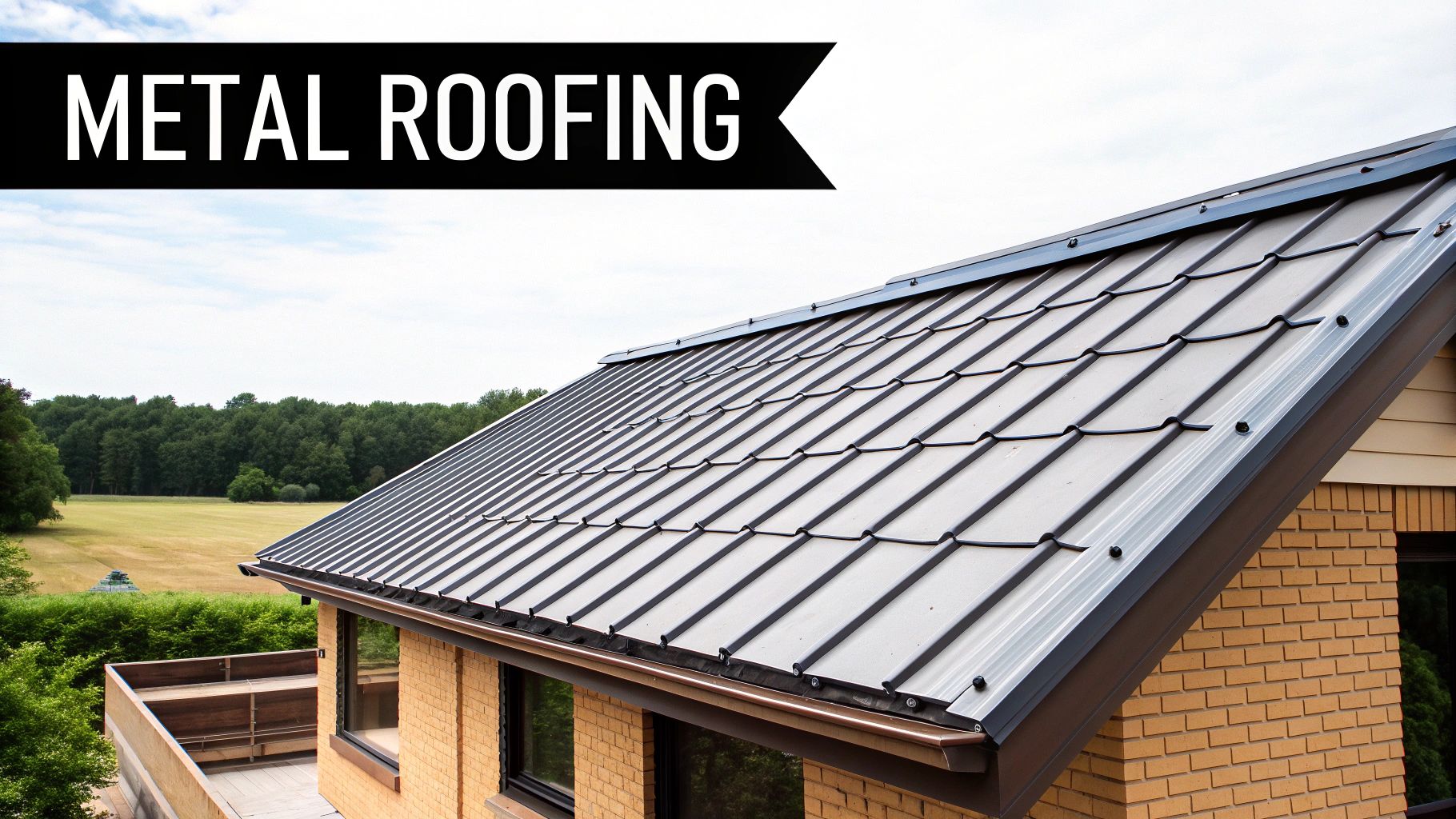
Not too long ago, you'd only see metal roofs on barns or commercial buildings. That's all changed. Today, metal has become a top-tier choice for homeowners wanting a roof that’s as tough as it is stylish. It's one of the fastest-growing materials on the market, and for good reason—it blends incredible durability with a clean, modern aesthetic.
Think of a metal roof less as a temporary covering and more as a long-term upgrade for your home. Yes, the upfront cost is higher than asphalt shingles, but its lifespan is in a completely different class. A professionally installed metal roof can easily last 50 to 70 years, and sometimes much longer. That’s often two or three times what you’d get from a standard shingle roof.
Exploring Common Metal Roofing Materials
"Metal roof" is a broad term that covers a few different materials, each with its own look, feel, and price point. Your choice will likely come down to your climate, budget, and the architectural style of your home.
- Steel (Galvanized or Galvalume): This is the workhorse of the metal roofing world—strong, popular, and relatively budget-friendly. Galvanized steel is coated in zinc, while Galvalume uses a zinc-aluminum alloy. Both finishes are fantastic at preventing rust and come in a huge variety of colors.
- Aluminum: If you live anywhere near the coast, aluminum is your best friend. It’s lighter than steel and naturally immune to rust and salt corrosion, making it perfect for humid, salty air. It's also highly recyclable, which is a nice bonus for the environmentally conscious homeowner.
- Copper and Zinc: These are the luxury options. Copper is famous for the beautiful, classic blue-green patina it develops with age, while zinc offers a sophisticated, modern finish that lasts a lifetime. Both are incredibly durable—often lasting over 100 years—but they come with a premium price tag to match.
Metal roofing delivers a powerful combination of longevity, resilience, and energy efficiency. It's a system built to handle extreme weather and perform for decades, making the higher initial cost a true investment in your property's value and safety.
Benefits That Justify the Investment
The premium you pay for a metal roof is backed by real-world benefits that you'll appreciate year after year. It simply outperforms other materials, especially when the weather gets ugly.
For starters, its resistance to the elements is second to none. Metal roofs are engineered to withstand wind gusts of 120 miles per hour or more without a single panel lifting. They also boast the highest fire safety rating (Class A), meaning they're non-combustible and won’t catch fire from a stray ember.
On top of that, metal roofs are surprisingly energy-efficient. Their surface reflects the sun's radiant heat away from your house, which can slash your cooling costs by as much as 40% in the summer.
Debunking Common Metal Roof Myths
Despite their popularity, a few old myths about metal roofs just won't go away. Let's set the record straight.
- Myth 1: They are loud in the rain. This is probably the biggest misconception. Modern installation methods use solid decking and a proper underlayment, which deadens the sound. A metal roof is no louder during a downpour than any other type of roof.
- Myth 2: They dent easily. While a freak hailstorm with massive stones can dent almost anything, today's metal roofing is built tough. You can opt for thicker-gauge metals or textured finishes that are highly resistant to impacts from hail or falling branches. For a complete rundown, you can get an in-depth look at the pros and cons of metal roofing.
- Myth 3: They attract lightning. A metal roof will not increase the odds of your home being struck by lightning. In fact, since metal is non-combustible, it's actually a safer option than something like wood shakes if a strike does occur.
With its sharp, clean lines, incredible durability, and long-term financial payoff, metal is a smart choice for any homeowner looking for a roof that's truly built to last.
Tile and Slate: Roofing for the Ages
When you think of a roof that’s meant to last not just decades, but for generations, you’re probably picturing something like tile or slate. These aren't just shingles; they're architectural features that offer incredible longevity and a classic, high-end look that few other materials can match.
While they come with a higher price tag upfront, there's a reason people call them "forever roofs." They stand in a class all their own, bringing a sense of permanence and elegance that can truly define a home's character. For homeowners who value long-term performance over initial cost, these are often the go-to options.
The Classic Beauty of a Tile Roof
Tile roofing is instantly recognizable, whether it's traditional clay or modern concrete. It’s the signature look you see on Mediterranean, Spanish Mission, and Southwestern-style homes, famous for its beautiful, sculpted curves and rich, earthy colors.
Clay tiles give you that authentic, old-world charm that gets even better with age. Concrete tiles, on the other hand, are a more budget-friendly option that comes in a huge range of colors and styles, sometimes even designed to look like wood shakes or slate. Either way, you get the same core benefits.
But it’s not just about looks. Tile roofs are tough. They are completely non-combustible, earning them a Class A fire rating—the best you can get. They're also fantastic insulators, creating an air pocket under the tiles that helps keep your home cooler in hot climates by reducing heat transfer from the sun.
The Unmatched Legacy of Natural Slate
If tile is the classic choice, slate is the absolute pinnacle of roofing. Quarried straight from the earth, every single piece of slate is a unique sliver of stone. It has a natural, subtle beauty that synthetic materials just can't replicate. A slate roof isn't just an investment; it's a legacy, often lasting 100 years or more. Sometimes, it will even outlast the house it’s protecting.
Slate’s performance is just as impressive. It's completely fireproof, waterproof, and immune to rot and insects. As a dense natural stone, it shrugs off the worst Mother Nature can throw at it, from torrential rain and high winds to heavy snow.
A slate or tile roof isn't just a temporary cover; it's a permanent part of your home's architecture. Choosing one of these materials is a commitment to enduring quality and timeless style, which almost always adds significant value to your property.
Premium Roofing Materials Detailed Breakdown
To really see how these high-end materials stack up, it helps to compare their key features side-by-side. This table gives a quick overview of what makes each of these premium options stand out.
| Material | Lifespan (Years) | Weight (lbs/sq ft) | Fire Rating | Key Strengths |
|---|---|---|---|---|
| Metal | 50 – 70+ | 1 – 3 | Class A | Lightweight, energy-efficient, great in snow/ice |
| Tile | 50 – 100+ | 9 – 12 | Class A | Excellent insulation, iconic style, resists rot/insects |
| Slate | 100 – 200+ | 15+ | Class A | Unmatched longevity, natural beauty, waterproof |
As you can see, while all offer top-tier fire protection and a long life, their weight and specific advantages vary quite a bit, making them suited for different homes and priorities.
Key Things to Know Before You Commit
Choosing tile or slate isn't just about admiring their beauty and long lifespan. These materials have very specific needs that you absolutely have to consider before making a decision. The biggest one? Their weight.
Both materials are incredibly heavy. Your average asphalt shingle roof weighs about 2-3 pounds per square foot. Concrete tiles can weigh 9-12 pounds per square foot, and slate can easily top 15 pounds. This means your home's structure has to be strong enough to support that massive load, and not every house is built for it. You’ll need a professional to assess your home's framing first.
The other major factor is, of course, the cost. The materials are expensive, and installation is a specialized craft that demands experienced professionals, which adds to the labor cost. To get a clearer picture of the investment, it's worth looking at a full tile roof installation cost breakdown. While the initial price is steep, the payoff comes from decades of near-zero maintenance and incredible durability.
Wood and Synthetic Roofing: Natural Beauty vs. Modern Performance
When you move past the usual suspects like asphalt and metal, you run into two fascinating categories of roofing: the classic, natural beauty of wood and the engineered precision of modern synthetics.
On one hand, you have the timeless appeal of a real wood roof. On the other, you have advanced materials designed to perfectly imitate those classic looks without the inherent headaches. The choice really boils down to what you value more—authentic aesthetics or long-term, low-maintenance performance.
The Rustic Charm of a Wood Roof
For a certain kind of home, nothing beats the warm, organic look of real wood. It gives off a rustic, textured character that feels right at home on Craftsman, cottage, or Tudor-style houses. The natural variations in the grain and color create a unique look that helps the home blend into its surroundings.
But that incredible curb appeal comes with a lot of responsibility.
First, it's good to know the difference between the two main types:
- Wood Shingles: These are sawn smooth on both sides, giving them a clean, uniform profile. They lie flat and create a tidy, orderly pattern on the roof.
- Wood Shakes: These are split by hand, which results in a much rougher, more irregular surface. This creates deep shadow lines and a more rugged, dimensional appearance.
The biggest hurdle with a wood roof is its vulnerability. It's an organic material, after all. Without regular cleaning and treatments, it's a prime target for rot, mold, and bugs. Fire resistance is also a major concern, though you can get pressure-treated, fire-retardant versions to improve safety.
A wood roof is absolutely beautiful, but it's a serious commitment. It requires diligent upkeep to stay healthy and look good, making it a choice for homeowners who are truly passionate about its unique aesthetic.
The Rise of Synthetic Roofing Materials
What if you love the look of slate or cedar shakes but cringe at the thought of the cost and constant maintenance? That's where synthetic roofing comes in. Made from advanced polymers, rubber, and other composite blends, these products are engineered to mimic natural materials with stunning accuracy.
Today's synthetic tiles can replicate the chiseled edges of slate or the convincing grain patterns of cedar. The technology has gotten so good that, from the street, you’d be hard-pressed to tell the difference. It's a fantastic way to get a high-end look without the high-end hassle.
This trend is a big part of why the residential roofing market keeps growing. Homeowners want options that are tough, look great, and can stand up to harsh weather. In fact, projections show the residential roofing sector is expected to grow by USD 27.6 million between 2025 and 2029, largely driven by this demand for better-performing materials. You can dig deeper into these trends in this detailed residential roofing analysis.
Key Advantages of Going Synthetic
Synthetic roofing delivers a powerful combination of good looks, resilience, and practicality, making it one of the most well-rounded types of roofing for homes today.
The biggest win is getting incredible durability with almost no maintenance. These materials are engineered to shrug off the problems that plague wood and slate. They won't rot, curl, or crack, and insects want nothing to do with them. Most synthetic products also carry a Class A fire rating—the highest available—and offer excellent impact resistance, which is a lifesaver in hail-prone regions.
Another huge plus is how lightweight they are. This is a game-changer compared to natural slate or clay tiles, which are so heavy they often require expensive structural reinforcement to the roof deck. Synthetics are light enough to be installed on virtually any home without beefing up the structure, saving you a bundle on time and installation costs. You truly get the best of both worlds: a premium look without the premium problems.
Your Roof, Reimagined: Smart and Sustainable Innovations
The world of roofing has moved far beyond just keeping the rain out. Today, a new generation of smart, sustainable options can transform your roof into a high-performance system that actively improves your home’s efficiency, shrinks your carbon footprint, and even generates its own power.
This isn't just a niche trend; it's a fundamental shift in how we think about the top of our homes. Green roofs and integrated solar technology are at the forefront of this movement. In fact, by 2025, solar roofing alone is projected to grow at a staggering annual rate of 15%, driven by homeowners who want clean energy and government incentives that make it more affordable. To get a better sense of what's coming, take a look at these future roofing trends from Sunbasedata.com.
Green Roofs: Living, Breathing Protection
A green roof is exactly what it sounds like: a rooftop covered with a layer of living vegetation planted over a waterproofing system. But it's so much more than a simple garden in the sky. It's a dynamic, living system.
The soil and plants act as a powerful natural insulator, keeping your house cooler in the summer and warmer in the winter—which translates directly to lower energy bills. They’re also fantastic for managing stormwater, absorbing huge amounts of rainwater that would otherwise flood storm drains.
Solar Roofs: Powering Your Home From Above
Forget the clunky, bolted-on solar panels of the past. Modern solar roofing is sleek, integrated, and designed to blend right in with your home’s architecture. The technology has evolved into two main styles:
- Solar Shingles: These are compact photovoltaic units designed to look and install just like traditional asphalt shingles, giving your roof a clean, uniform appearance.
- Solar Tiles: For homeowners who love the look of slate or tile, these options mimic those premium materials perfectly, delivering renewable energy without a single aesthetic compromise.
Yes, the upfront cost is higher. But think of a solar roof as a direct investment in your home's energy future. It produces clean electricity, can slash or even eliminate your power bills, and often qualifies for tax credits that make the initial investment much easier to handle.
Cool Roofs: A Simple Way to Beat the Heat
If you live in a hot climate, you know how your roof can feel like an oven, baking your home and forcing your AC to work overtime. A cool roof is designed to fight back.
By using highly reflective paints, special coatings, or light-colored shingles, a cool roof reflects sunlight instead of absorbing it. This simple change can drop your roof’s surface temperature by more than 50°F. That means less heat gets transferred into your home, giving your air conditioner a much-needed break and saving you real money on cooling costs.
For homeowners truly committed to making an eco-conscious choice, looking into top sustainable building certifications can help you select materials that meet rigorous standards for both performance and environmental impact.
Common Questions About Roofing Materials
Let's face it, choosing a new roof can feel like a huge decision with a lot of moving parts. To cut through the noise, here are some straightforward answers to the questions I hear most often from homeowners.
Which Type Of Roof Lasts The Longest?
If you're looking for a "one and done" roof that will likely outlast you, natural slate and high-quality metal are the undisputed champions. With proper care, these materials can easily last 70 to 100 years—sometimes even longer. They truly are in a class of their own.
Not far behind are clay and concrete tiles. These are also incredible performers, often lasting well over 50 years. While the initial investment is higher, the incredible durability means you're probably buying the last roof your home will ever need.
What Is The Most Cost-Effective Roofing Material?
For most people, standard 3-tab asphalt shingles offer the best bang for your buck. They strike a great balance between a low upfront cost and respectable durability, giving you 15 to 25 years of solid performance.
No, they don't have the staying power of premium options like slate or metal. But their affordability and widespread availability make them a smart, practical choice for countless homeowners who need reliable protection without the sticker shock.
Your local climate is one of the most critical factors in selecting a roof. A material that excels in one environment might fail prematurely in another, making a region-specific choice essential for performance and longevity.
How Does My Local Climate Affect My Roofing Choice?
Your climate isn't just a suggestion—it’s a major factor in how your roof will perform. You need a material that works with your environment, not against it.
- Hot, Sunny Regions: Light-colored metal or tile roofs are fantastic. Many now come with "cool roof" coatings that reflect sunlight, which can make a real difference in your home's energy efficiency and lower those summer cooling bills.
- Areas with Hail or Heavy Snow: Here, it’s all about toughness. Impact-resistant asphalt shingles or a sturdy metal roof are built to handle hail and can bear the weight of heavy snow without caving.
- Coastal Environments: Salt spray is brutal and will eat away at the wrong materials. You’ll want something that can stand up to corrosion, like aluminum, copper, or specially coated steel.
As you plan your roof replacement, don't forget about the tear-off. You'll need a plan for getting rid of all the old material, which includes determining the right dumpster size for roof debris.
Ready to find the perfect roof for your home? The experts at Penn Ohio Roofing & Siding Group have over 25 years of experience helping homeowners make the right choice. Contact us today for a free, no-obligation estimate and let our award-winning team provide the quality and peace of mind you deserve. https://pennohiorc.com