

When it comes to cleaning your vinyl siding, you've got plenty of options. The best vinyl siding cleaning products can be as simple as a homemade 70/30 water-and-vinegar mix, or you can grab a specialized commercial cleaner designed to knock out stubborn algae and mildew.
The main thing to remember is to pick a non-abrasive or pH-neutral cleaner. Your goal is to lift away the dirt and grime without stripping the siding's protective finish or causing any discoloration down the road.
Choosing the Right Vinyl Siding Cleaners
Keeping your home's vinyl siding looking sharp is about more than just curb appeal—it’s about protecting your investment. It’s no surprise that vinyl is one of the most popular siding materials out there. In fact, its popularity is a major reason the global vinyl siding market hit USD 7.45 billion in 2024.
That figure is projected to climb to USD 11.80 billion by 2034, and you can see more details on these market trends at Zion Market Research. This just goes to show how many homeowners like yourself rely on this durable, low-maintenance material.
But "low-maintenance" doesn't mean "no-maintenance." If you let it go, you could see a 30% drop in your home's aesthetic value in just two years as dirt, green algae, and pollen take over. A little bit of regular cleaning can actually extend your siding’s lifespan by an extra 10-15 years.
What to Look For in a Cleaner
Staring at the cleaning aisle can be a bit much. The sheer number of bottles all promising the same thing is overwhelming. Let’s cut through the noise. Here’s a quick rundown of the main cleaner types you’ll find, and a table to help you decide.
To make things even simpler, here's a quick comparison of the most common cleaner types you'll encounter.
Quick Guide to Vinyl Siding Cleaner Types
| Cleaner Type | Best For | Key Consideration |
|---|---|---|
| All-Purpose Cleaners | Light, routine cleaning (dust, pollen) | Ensure it's marked safe for vinyl; avoid harsh chemicals. |
| Oxygen Bleach-Based | Mold, mildew, and algae | Much safer for plants and siding than chlorine bleach. |
| Commercial Siding Washes | Tough, set-in stains and heavy grime | Formulated specifically for siding's protective coating. |
| DIY Vinegar & Water | General cleaning and light mildew | Very cost-effective, but may not be strong enough for algae. |
This table should give you a good starting point for matching a product to the specific job you're tackling.
Pro Tip: I can't stress this enough—always test a new cleaner on a small, hidden spot first. Pick a place behind a bush or a downspout. This quick check will save you the heartache of discovering you've accidentally discolored your entire house.
Finally, stay far away from anything abrasive. That means no powdered cleansers with grit and no harsh solvents like acetone or paint thinner. These will permanently scratch, dull, or even melt the surface of your vinyl. The cleaning methods for different siding materials can vary quite a bit, so it's good to know what your specific material needs. For instance, if you're curious about other types, our guide on how to clean aluminum siding offers a different perspective.
Building Your Siding Cleaning Toolkit
You can have the best cleaner in the world, but without the right gear, you're just making the job harder—and potentially riskier—for yourself. Getting your home’s siding to look brand new is as much about the tools you use as the solution in your bucket.
Your best friend for this job is going to be a soft-bristle brush with a long handle. I can't stress the "soft" part enough. Anything stiffer is a surefire way to leave fine scratches all over your vinyl, which you'll only see when the sun hits it just right. A long or extendable handle is a must-have for reaching the top of your walls without spending the whole day on a ladder, and frankly, your back will thank you.
Garden Hose or Pressure Washer?
Next, you need to think about how you'll rinse everything off. This is where a lot of homeowners make a critical mistake.
A Garden Hose with a Spray Nozzle: This is the safest bet, hands down. It’s what I recommend for 90% of homeowners. A good nozzle gives you more than enough force to wash away grime and soap, but there’s virtually zero risk of you accidentally blasting water up behind the siding panels. It's simple and effective.
A Pressure Washer: This is tempting, I get it. It’s fast. But that speed comes with a real risk of causing expensive damage. Too much pressure can force a ton of water behind the vinyl, leading to hidden mold and rot inside your walls. You can even crack or punch a hole right through a panel if you aren't careful.
My Two Cents on Pressure Washers: If you're set on using one, you have to be disciplined. Set it to 1,500 PSI or less—never more for vinyl. Always use a wide-angle 40-degree (white) nozzle to distribute the pressure. Keep the wand moving and always spray down at an angle, mimicking how rain falls. Never spray directly or upward into the seams.
Don't Skip the Safety Gear
It’s easy to forget that you're working with chemicals and a lot of water. The ground will get slick, and you don’t want cleaning solution splashing into your eyes. It’s the last step in prep, but it’s the most important.
Before you mix your first bucket of cleaner, make sure you have these on hand:
- Safety Goggles: Protects your eyes from chemical splashes and grit falling from the siding.
- Waterproof Gloves: Keeps chemicals off your skin.
- Non-Slip Shoes: You'll be on wet, soapy ground. Good traction is non-negotiable.
- Old Clothes: Long sleeves and pants will guard your skin against overspray and the sun.
Taking a few minutes to gather these items means you can focus on the job without any mishaps. With your tools and safety gear ready, you're all set to get that siding looking its best.
Soft Washing vs. Pressure Washing Siding
When you’re ready to clean your vinyl siding, you'll face a big decision: should you use a pressure washer or try soft washing? They might sound like two sides of the same coin, but they are completely different methods. Honestly, picking the wrong one can do more harm than good to your home.
Pressure washing is all about brute force. It uses a high-powered jet of water to blast grime, dirt, and stains right off the surface. While that power is great for tough stuff like concrete driveways, it's often way too aggressive for vinyl siding.
The Risks of High Pressure
I've seen it happen too many times—a well-intentioned homeowner takes a pressure washer to their siding and ends up with costly damage. A high-pressure stream can easily dent or even crack vinyl panels. It can also strip paint from your trim and, worst of all, force a ton of water behind the siding.
Once water gets trapped back there, it creates a perfect environment for mold, mildew, and rot to grow inside your walls. These are the kinds of hidden problems you won’t notice until they've become a serious headache.
Vinyl siding is incredibly popular, holding a 38-41% share of the US market, mainly because it's so low-maintenance. But that promise only holds up if you care for it properly. While a power washer set between 1500-2000 PSI can make your siding look about 95% new again, it’s a risky game. In fact, experts estimate that using the wrong technique is a factor in 20% of all siding failures.
This flowchart breaks down the kind of tools you'll need, whether you're dealing with light grime or tougher stains.
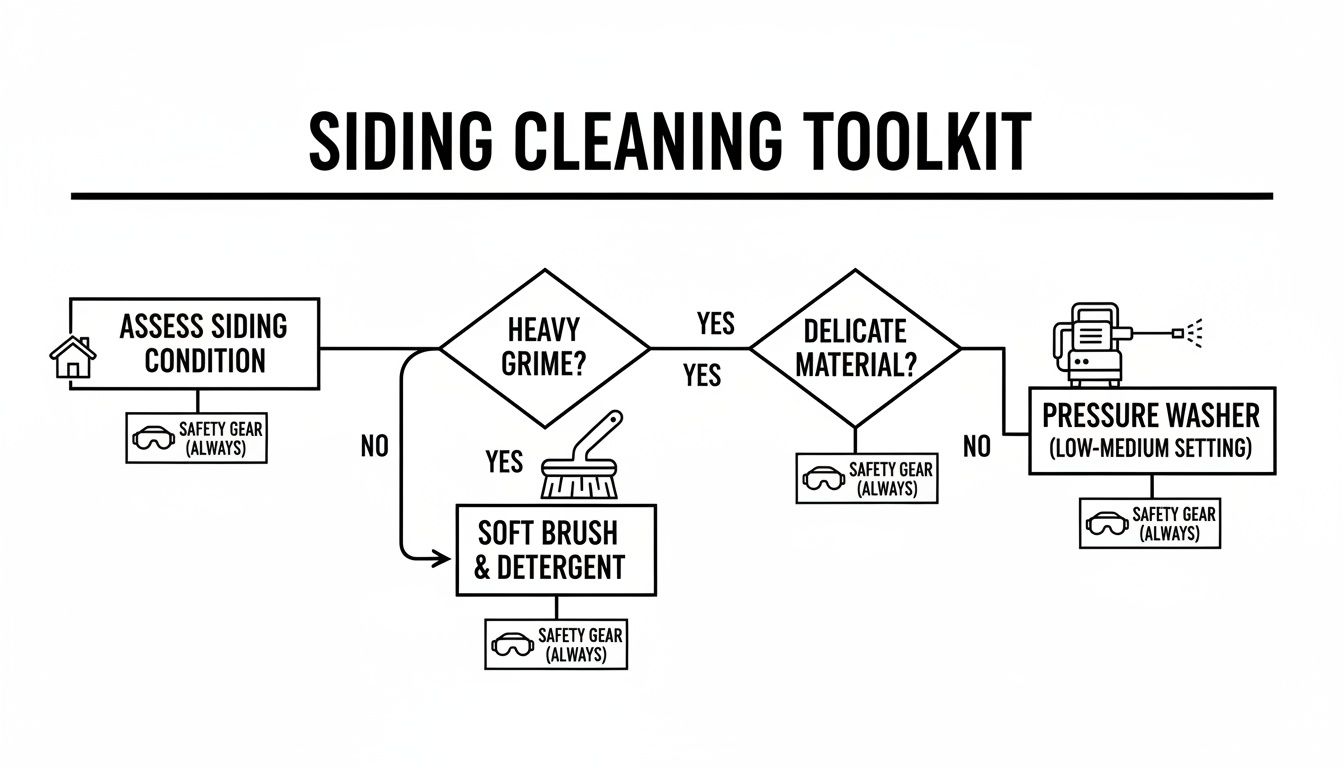
As you can see, a pressure washer might be part of the toolkit, but it's meant to be used with a light touch and alongside the right safety gear and cleaning solutions.
Why Soft Washing Is the Safer Choice
This brings us to soft washing, a method that relies on smart chemistry instead of raw power. This technique uses very low pressure—sometimes just a bit more than your garden hose—to apply specialized vinyl siding cleaning products.
These cleaners do all the hard work. They're formulated to dissolve dirt, break down grime, and kill organic growth like mold and algae right down to the root. You just let the solution sit for a few minutes to work its magic, then gently rinse it all away with a low-pressure stream of water.
My Pro Tip: Soft washing is the way to go. It lets the cleaning solution do the heavy lifting, which means there’s no risk of blasting water behind your siding or damaging the panels. It's the method recommended by nearly every siding manufacturer and professional cleaning contractor for a reason.
If you’re leaning toward this gentler, more effective method, it’s worth learning more about the specifics of soft wash house cleaning. This approach doesn’t just clean the surface; it sanitizes it, which helps keep that pesky mildew and algae from coming back so quickly. Understanding this difference is a huge part of protecting your investment for years to come.
DIY Cleaning Recipes and Product Recommendations
Before you head to the big-box store, take a look under your kitchen sink. You might be surprised to find that some of the best and safest cleaners for your vinyl siding are made from simple household ingredients. I’ve found that for most routine jobs, a homemade solution is not only cheaper but gives you complete control over what you’re spraying on your home and lawn.
Of course, sometimes a tough stain calls for a specially formulated product, and we'll cover what to look for there, too.
Your Go-To All-Purpose Siding Wash
For the annual clean-up of dust, pollen, and general grime, my go-to recipe is as simple as it gets. This is the one I use most often for basic maintenance.
It’s just a mix of 70% water and 30% white vinegar. The mild acidity in the vinegar does a fantastic job of cutting through that grimy film without being harsh on the vinyl itself. Just mix it up in a bucket or, even better, a garden sprayer for easy application.
If you run into some stubborn spots, a little bit of mild dish soap can give your vinegar solution a boost. Just add a few squirts to your bucket. A word of caution, though: if you add soap, you have to be extra diligent about rinsing. Any leftover soap residue can become a sticky magnet for more dirt down the road.
Dealing with Mold, Mildew, and Algae
Here’s a critical piece of advice: never use straight chlorine bleach on your vinyl siding. I’ve seen it happen, and it’s a mistake you don’t want to make. It can strip the color right out of your siding, damage the vinyl’s finish, and kill any plants it touches. It’s simply too corrosive for this job.
A much better—and safer—way to handle organic growth like mildew and algae is with oxygen bleach.
Oxygen bleach is a game-changer for homeowners. It’s typically sold as a powder (common brands include OxiClean) and activates with water to lift stains and kill mildew without the harsh chemicals. It’s my top recommendation for safely tackling those stubborn green or black patches.
Just mix one cup of powdered oxygen bleach into a gallon of warm water, let it dissolve completely, and you’re ready to go. Apply it to the siding, let it work its magic for 10-15 minutes (don't let it dry!), and then gently scrub and rinse it clean.
For quick reference, here are a few simple and effective DIY recipes you can mix up yourself.
DIY Vinyl Siding Cleaner Recipes
These homemade solutions are perfect for most cleaning situations, from light touch-ups to tackling stubborn organic growth. Always test any cleaner on a small, inconspicuous spot first.
| Mixture Name | Ingredients and Ratios | Best For |
|---|---|---|
| All-Purpose Vinegar Wash | 70% Water and 30% White Vinegar | General annual cleaning of dust, pollen, and light dirt. |
| Soapy Power-Up | Standard Vinegar Wash + 1-2 tbsp Mild Dish Soap per Gallon | Cutting through slightly heavier grime or oily spots. |
| Oxygen Bleach Solution | 1 cup Powdered Oxygen Bleach per 1 gallon Warm Water | Safely removing mold, mildew, and algae stains. |
Remember to mix these solutions right before you plan to use them for the best results. The oxygen bleach mixture, in particular, loses its effectiveness over time after being mixed with water.
What to Look for in Commercial Cleaners
Sometimes, a pre-made commercial cleaner is the most convenient option, especially for widespread or severe stains. The market is huge—the global cleaning products sector was valued at USD 163.45 billion in 2025, with liquid cleaners making up a 48.11% share.
Picking the right product is more than just grabbing a bottle; it’s an investment in your home's longevity. Good cleaning habits can prevent up to 25% of warranty claims tied to contaminant buildup and help siding retain its color 40% longer. You can see more on the vinyl siding market at Custom Market Insights.
When you're browsing the aisle, keep an eye out for these key terms on the label:
- "Biodegradable": This is a big one. It means the runoff won't harm your lawn, garden, or local waterways.
- "Safe for Vinyl Siding": It sounds obvious, but always check. This confirms the product lacks harsh solvents that can warp or discolor your siding.
- "Oxygen Bleach-Based": As we've discussed, these formulas are tough on organic stains but gentle on your siding and landscaping.
Whether you mix it yourself or buy it from a store, using the right cleaner is the key to not just a cleaner house, but a well-protected one.
Tackling Algae, Mildew, and Other Stubborn Siding Stains
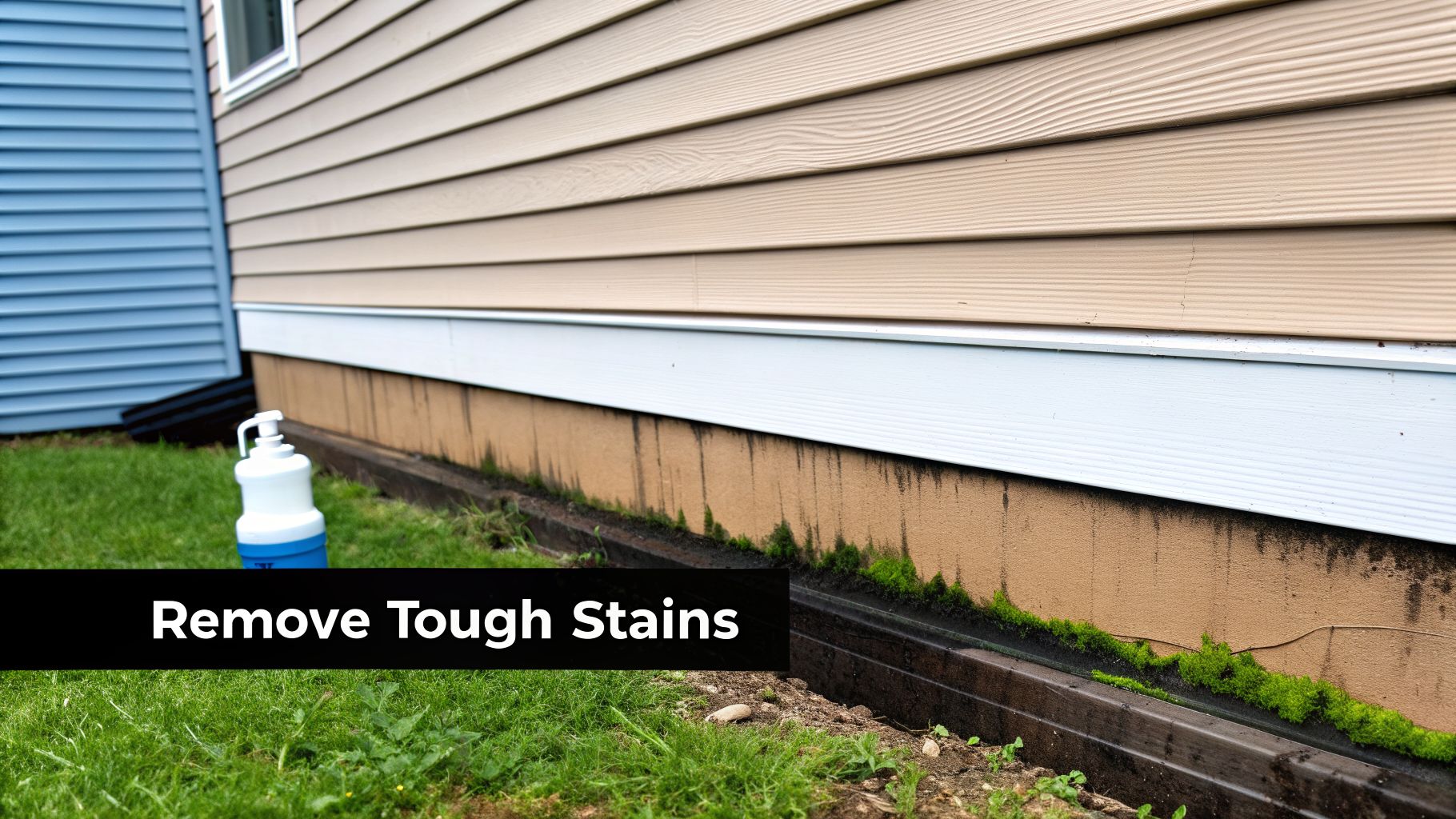
While your all-purpose cleaner is great for general grime, you’ll eventually run into stains that just won't budge. I'm talking about those stubborn green algae streaks, blotchy black mildew, and ugly rust marks. These aren’t just dirt—they require a specific game plan.
Successfully removing these tough opponents is about using the right tool for the job. You need to neutralize the stain at its source without damaging your siding, and that often means using specialized vinyl siding cleaning products or a specific DIY mix.
Eradicating Algae and Mildew for Good
If you've noticed green or black stains creeping up the shady side of your house, you're looking at living organisms. Algae and mildew love damp, low-light environments. To get rid of them permanently, you have to kill them, not just scrub them off the surface.
A surprisingly effective DIY solution is a simple mix of one part white vinegar to two parts water. The acidity in the vinegar does a great job of killing the growth. For tougher cases, I often recommend an oxygen bleach solution. It’s highly effective but much gentler on your siding and landscaping than chlorine bleach.
For a deeper look at dealing with mildew and mold, our complete guide on how you can clean mold off vinyl siding has everything you need to know.
Persistent green streaks can be a real headache. A dedicated guide on how to remove algae from siding can offer invaluable tips for winning that battle. It’s a fantastic resource for figuring out how to stop it from coming back year after year.
How to Handle Rust, Paint, and Other Odd Stains
Stains that aren’t organic, like rust or paint, require a completely different approach. Here, the goal is to dissolve the stain itself without melting or discoloring the vinyl.
Rust Stains: You'll usually find these near sprinkler heads, metal railings, or outdoor spigots. Your best bet is a commercial rust remover specifically labeled as safe for vinyl. Just apply it directly to the stain as instructed on the bottle and rinse it away completely.
Paint Splatters: If you’re dealing with dried latex paint from a recent project, you can often gently lift it off with a plastic putty knife. For a stubborn spot, try dabbing it with rubbing alcohol on a clean cloth to loosen its grip. Never use paint thinner, as it will damage the vinyl.
Artillery Fungus: See those tiny, hard black specks that look like tar? That's artillery fungus, usually shot from damp mulch beds. They are notoriously hard to get off. Try soaking the spots with a mild soap solution to soften them, then follow up with a soft-bristle brush and some elbow grease.
No matter the stain, patience is your best friend. Always give the cleaning product time to do its job, and remember to test any new solution on a small, hidden spot first. It's a quick step that ensures you'll get your siding back to looking great without any unwanted surprises.
When to Call in the Pros (And Why It's Often the Smartest Move)
Look, I'm a huge fan of rolling up your sleeves and tackling home projects yourself. There's a real satisfaction in it. But I've also seen enough well-intentioned DIY efforts go wrong to know that sometimes, the smartest and safest choice is to call a professional.
When it comes to cleaning siding, the biggest red flag is height. If you have a two-story home (or more), you're not just cleaning; you're performing a balancing act on a tall ladder while wrestling with a hose or a pressure washer wand. It's a recipe for a serious accident. Professional crews have the right scaffolding, safety harnesses, and training to work at those heights safely and efficiently. It’s just not worth the risk.
Then there's the problem of a major infestation. If you're seeing widespread green or black streaks covering entire walls, you're likely dealing with more than just surface grime. A pro can correctly identify what's growing on your house and use commercial-grade treatments to kill it at the source, which is crucial for preventing it from coming right back next season.
Knowing When to Make the Call
Even if you've got a single-story home and feel confident, sometimes the sheer scale of the job is the deciding factor. A thorough siding cleaning can easily eat up an entire weekend.
It's probably time to hire a professional siding contractor if:
- Your home is two or more stories tall, and the job requires serious ladder work.
- You're facing a massive mold, mildew, or algae problem that seems to be getting worse.
- You've tried to scrub out stubborn stains—like rust or those pesky artillery fungus spots—with no luck.
- You don't own the right gear, especially a pressure washer with the proper low-pressure, fan-tip nozzles.
- Honestly, you just don't have the time or energy to dedicate a full 8-10 hours to the project.
Remember, a good professional brings more than just a power washer; they bring a trained eye. They'll spot things you might miss, like a loose panel, cracked trim, or the early signs of water getting in behind the siding.
Hiring an expert isn't throwing in the towel; it's making a smart investment in your home's longevity. When you're ready to find one, look for a local, reputable company with a solid track record. Before you sign anything, make sure they are fully insured and take a few minutes to check their online reviews. It’s the best way to protect your investment and get the job done right.
Your Siding Questions, Answered
When it comes to taking care of vinyl siding, a few questions pop up time and time again. Let's clear the air so you can get your home looking its best with confidence.
How Often Should I Really Be Cleaning My Siding?
For most homes, a good, thorough cleaning once a year is the sweet spot. This annual wash is usually enough to keep the seasonal grime, pollen, and general dirt from building up.
That said, if your home is tucked away in a damp, shady, or heavily wooded area, you might notice that green haze of algae creeping back sooner. In that case, you may want to do a lighter wash every six months to keep it under control.
Can I Just Use Bleach to Get Rid of Mildew?
Please don't! While standard household bleach will kill mildew, it's far too harsh for your siding. It can strip the protective coating, lead to discoloration, and is brutal on the plants and grass below.
A much better choice is an oxygen bleach-based cleaner. It's designed to tackle organic stains like mildew and algae without damaging your siding's finish or your landscaping. It’s just as effective and a whole lot safer.
What Are These Stubborn Black Dots on My Siding?
If you're seeing tiny, hard black specks that feel like they’ve been cemented on, you're almost certainly dealing with artillery fungus. This pesky fungus loves damp mulch beds and literally shoots its spores onto nearby surfaces, especially light-colored siding.
Getting them off requires some patience. Start by soaking the area with a mild soap solution to soften them up, then follow with some gentle scrubbing using a soft-bristled brush. It’s tedious, but it’s the best way to deal with them without damaging the vinyl.
If the job feels too big, the stains are too stubborn, or you're just not comfortable on a ladder, it's always best to call in the pros. For a team you can trust with all your siding and exterior home needs, we're here to help. Contact us today for a free estimate and let us handle the hard work for you.