
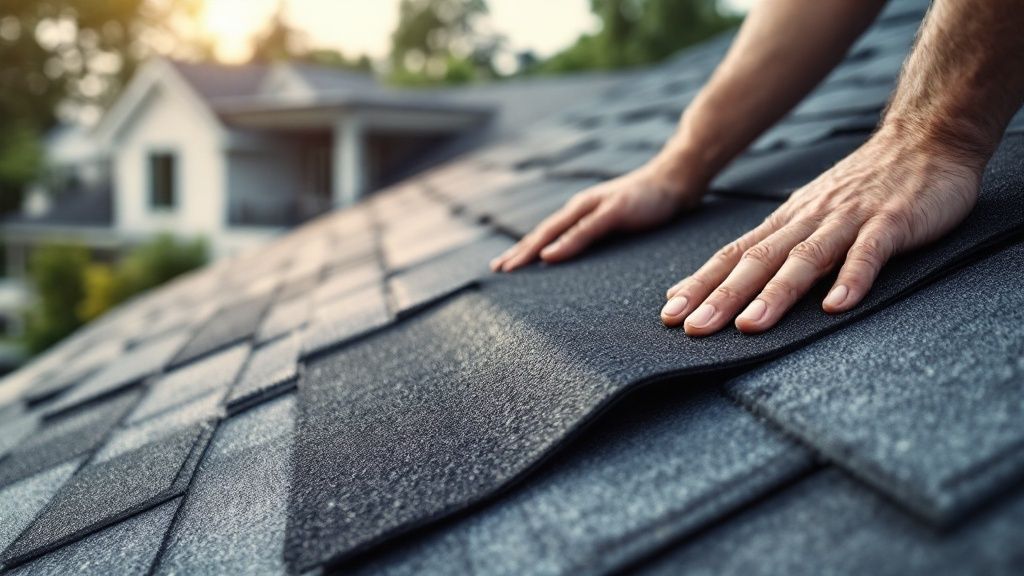
When most people think of a roof, they picture the shingles, tiles, or metal panels. That’s the part you see, the home’s first line of defense against the elements. But hidden just beneath that surface is another layer that’s just as crucial, if not more so: the roof underlayment.
Think of underlayment as your roof’s unsung hero. It's a water-resistant or waterproof barrier that gets installed directly on top of the wooden roof deck, creating a protective shield before the shingles even go on.
Your Roof's Unsung Hero Under the Shingles
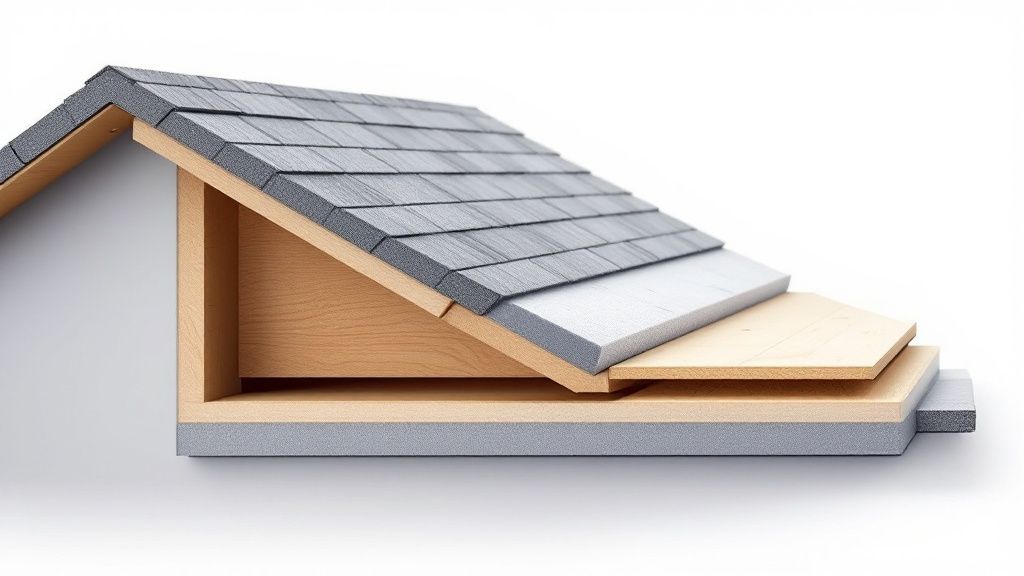
The shingles are the armor, built to handle the daily assault of sun, rain, and snow. But what if a shingle cracks in the summer heat? Or what happens when a fierce gust of wind rips one loose? That's precisely when the underlayment springs into action.
Without this critical layer, any water that sneaks past the shingles would soak directly into your roof's wooden structure. That's a recipe for disaster, leading to wood rot, dangerous mold growth, and eventually, very expensive structural repairs. Simply put, a modern, properly installed roof cannot exist without it.
The Purpose of Underlayment
So, what exactly does this hidden layer do? At its core, roof underlayment acts as a secondary shield against water, wind, and whatever else the weather throws at your home. This role is vital for extending your roof's lifespan and preventing structural headaches down the road. The growing awareness of its importance is even reflected in industry market research.
It serves a few key purposes that safeguard your entire home:
- A Moisture Barrier: This is its number-one job. If water gets past your shingles, the underlayment is the backstop that keeps it from reaching the roof sheathing.
- Temporary Weather Protection: Ever see a roof being built? The underlayment goes on first, protecting the exposed wood deck from rain and sun before the final roofing material is installed.
- A Smooth Surface for Shingles: It creates a clean, uniform surface, which helps the roofer install the shingles properly and can even improve the finished look of your roof.
Think of it like this: your shingles are a high-tech raincoat, but the underlayment is the waterproof layer you wear underneath. If that raincoat gets a tear, you’re still going to stay dry because of that essential second layer of protection.
To break it down even further, here's a quick look at the main jobs underlayment performs to keep your home safe and sound.
Key Functions of Roof Underlayment at a Glance
| Function | Why It Matters for Your Home |
|---|---|
| Secondary Water Barrier | Prevents leaks from reaching your attic and home if shingles are damaged or blown off during a storm. |
| Protection During Construction | Shields the exposed wood deck from rain and sun while the roof is being installed. |
| Prevents Chemical Degradation | Separates the shingles from the wood decking, preventing resins from the wood from damaging the shingles over time. |
| Meets Building Codes | It's a required component for most roofing systems to ensure safety and compliance with local regulations. |
In short, while your shingles are doing the heavy lifting out in the open, the underlayment is working quietly behind the scenes, providing the ultimate backup protection your home needs.
Exploring the Three Main Types of Roof Underlayment
Think of roof underlayment like the different types of tires you can put on a car. You wouldn't use standard street tires for off-roading, right? The same logic applies here. Not all underlayments are created equal, and understanding the three main types is the first step to choosing the right protection for your home.
Each type serves a specific purpose, ranging from old-school, budget-friendly options to modern, high-performance barriers. Picking the right one means balancing your budget, climate, and how long you expect your roof to last. It’s a decision that genuinely affects the health of your entire roofing system for years to come.
This image gives a great at-a-glance look at the different materials you'll find on the market today.
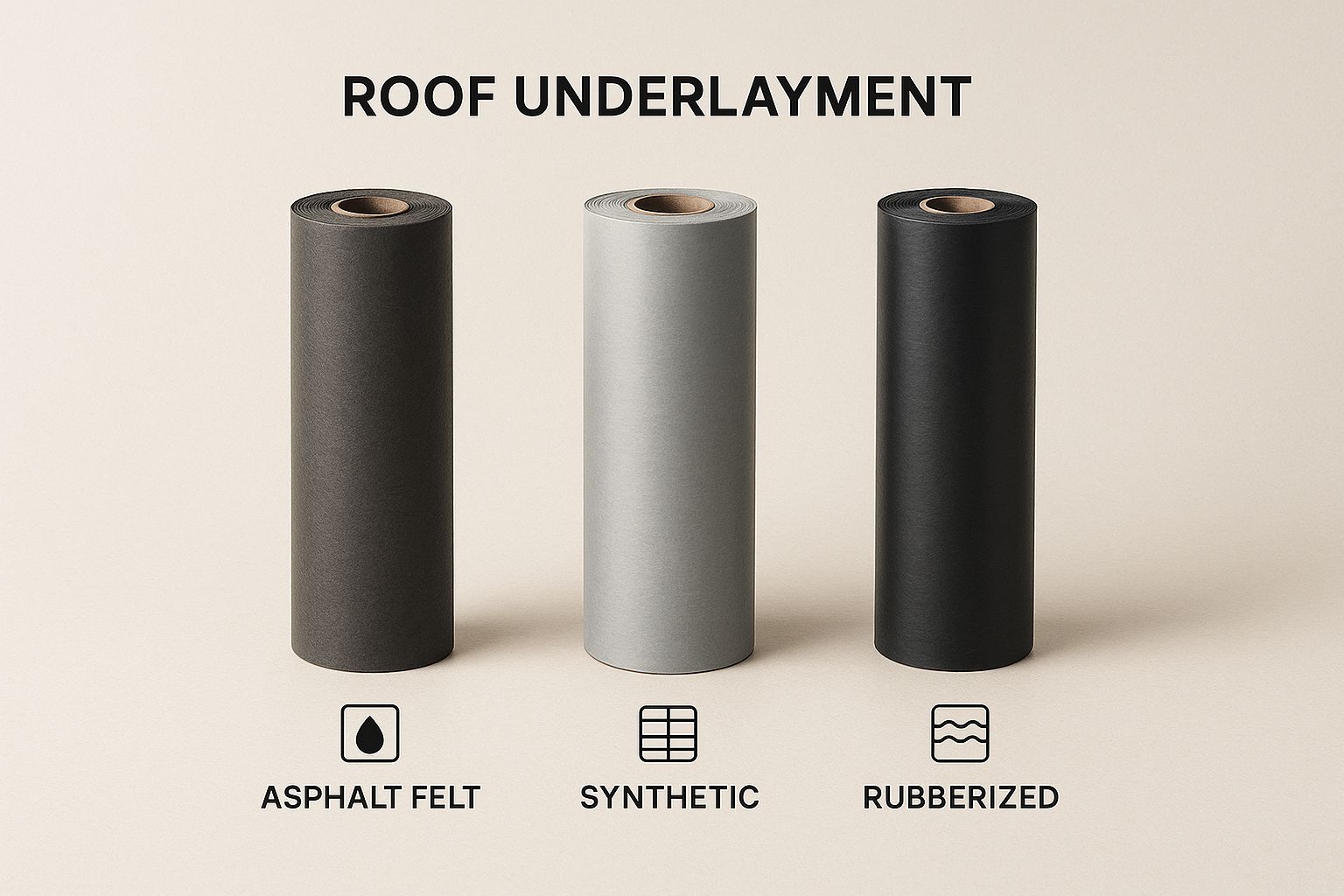
You can really see the evolution in roofing technology here, moving from simple felt paper to highly engineered protective layers.
Asphalt-Saturated Felt: The Traditional Choice
For a very long time, asphalt-saturated felt was the go-to underlayment for roofers everywhere. You’ve probably heard it called "tar paper." It’s a simple product made by infusing a flexible base mat with asphalt to give it basic water resistance. Its biggest selling point has always been its low cost, making it a popular pick for anyone working with a tight budget.
But that low price tag comes with some serious trade-offs. Felt paper is surprisingly heavy, tears easily if you’re not careful during installation, and can actually absorb moisture over time. When it gets damp, it can wrinkle, and those wrinkles can sometimes show through the final layer of shingles, affecting the finished look. It also tends to get brittle and crack as it ages, especially in climates with big temperature swings.
Real-World Scenario: Imagine someone building a simple backyard shed or a detached garage. Longevity isn't the top priority, but some basic water resistance is needed. In this case, traditional felt paper gets the job done without breaking the bank.
Synthetic Underlayment: The Modern Standard
These days, synthetic underlayment has become the new industry standard, and for good reason. Made from woven polypropylene, it’s a modern marvel—incredibly lightweight yet far stronger and more tear-resistant than old-school felt. For roofing crews, this is a huge win. It makes the installation process safer, faster, and much more efficient.
The real magic of synthetics is their superior water resistance. Unlike felt, which can absorb water, synthetic materials are hydrophobic, meaning they are designed to repel water completely. They also have excellent UV resistance, so if construction is delayed, the underlayment can be left exposed to the sun for weeks (sometimes months) without breaking down.
The widespread shift to synthetic underlayment isn't just a fleeting trend. It’s a direct response from the industry for roofing systems that are simply built to last longer and perform better.
Rubberized Asphalt: The Premium Sealant
When you need the absolute best in leak protection, you turn to rubberized asphalt underlayment. This is the heavy-hitter, often sold under brand names that call it an "ice and water shield." It’s a thick, rubbery material with a sticky adhesive back that bonds directly to the roof deck, creating a truly watertight seal.
Its most impressive trick is its ability to self-seal. When a roofer drives a nail through it to attach shingles, the pliable, sticky asphalt material forms a tight, waterproof gasket right around the fastener. This is critical because it stops water from sneaking in through the thousands of nail holes on your roof—one of the most common places for leaks to start.
Because it's the most expensive option, it’s rarely used to cover an entire roof. Instead, roofers apply it strategically to the most vulnerable spots:
- Eaves and Rakes: A must-have in cold climates to fight against ice dams.
- Roof Valleys: Where rain and snowmelt channel in large volumes.
- Around Penetrations: For a perfect seal around chimneys, skylights, and vents.
Real-World Scenario: For any home in a region that gets heavy snow and freezing winters, laying down a course of rubberized asphalt along the roof's edge is non-negotiable. It’s the best defense against ice dams, where melting snow refreezes at the gutter line and forces water back up under your shingles, leading to devastating leaks.
Comparing Roof Underlayment Materials
Choosing between these three materials can feel overwhelming, but a direct comparison makes it much clearer. This table breaks down the key differences to help you see which option aligns best with your home's needs and your budget.
| Material Type | Key Feature | Best For | Average Lifespan | Relative Cost |
|---|---|---|---|---|
| Asphalt-Saturated Felt | Low-cost and widely available | Budget-focused projects, simple structures like sheds | 15-20 years | $ |
| Synthetic Underlayment | High tear resistance and water repellency | Most residential roofing projects, new construction | 25-40 years | $$ |
| Rubberized Asphalt | Self-sealing around fasteners for a watertight bond | Critical areas like eaves, valleys, and penetrations | 30-50+ years | $$$ |
Ultimately, the right underlayment is the one that provides the best protection for your specific situation. While felt is a viable low-cost solution, the superior durability and water resistance of synthetic and rubberized asphalt materials often make them a smarter long-term investment for most homeowners.
Why Underlayment Is a Critical Part of Your Roof
So, we've covered what underlayment is. But let's get into the why—why this hidden layer is one of the most important defenders of your entire home. Your shingles are the frontline soldiers, taking the direct hits from sun, rain, and hail. Think of the underlayment as the last line of defense, a waterproof shield protecting the very bones of your house.
Trying to save a few bucks by skimping on underlayment is a huge gamble. Imagine a bad storm rips one shingle loose. Without a solid underlayment, water has a direct path to the wooden roof deck. That small leak quickly turns into a nightmare of rotted wood, soaked insulation, and a breeding ground for toxic attic mold.
The Five Core Functions of Roof Underlayment
To really get it, picture your underlayment working five jobs at once. Each one is critical to keeping your roof strong, resilient, and long-lasting. They all work in concert to create a complete system.
Here's the breakdown of what it's doing up there:
-
A Secondary Moisture Barrier: This is its number one job. If high winds drive rain sideways under your shingles, the underlayment is the backup that stops that water from ever touching the wood sheathing.
-
Temporary Weather Shield: During a re-roofing project, your roof deck might be exposed to the elements for a few days. Underlayment acts as a temporary roof, protecting the raw wood from sun and pop-up showers before the shingles go on.
-
A Contributor to Fire Ratings: Some underlayments are engineered to be fire-resistant. When they're part of a properly installed roofing system, they can help your entire roof earn a higher fire rating—a crucial safety feature for any home.
-
A Uniform Surface for Shingles: A bare wood deck can be a little uneven. Laying shingles directly on it can make them look bumpy and unprofessional. Underlayment provides a smooth, flat surface so the shingles lie perfectly, giving you that clean, finished look.
An underlayment isn’t just another material; it’s an insurance policy for your roof's future. The cost of fixing hidden leaks and structural rot from a failed underlayment is exponentially higher than the initial savings from a cheap product.
Meeting and Exceeding Modern Standards
The need for high-quality underlayment isn't just a local thing; it's a global standard. Take China, for example, where recent updates to waterproofing regulations have pushed demand for advanced synthetic underlayments with top-tier durability and moisture protection. You can actually explore the full details about these market trends to see how material innovation is being driven by higher standards worldwide.
At the end of the day, underlayment is mandatory for a reason. Building codes almost universally require it because every pro in the industry knows you simply can't build a durable, weather-tight roof without it. It’s the foundational layer that lets every other part of your roof do its job right for years to come.
How to Choose the Right Underlayment for Your Home
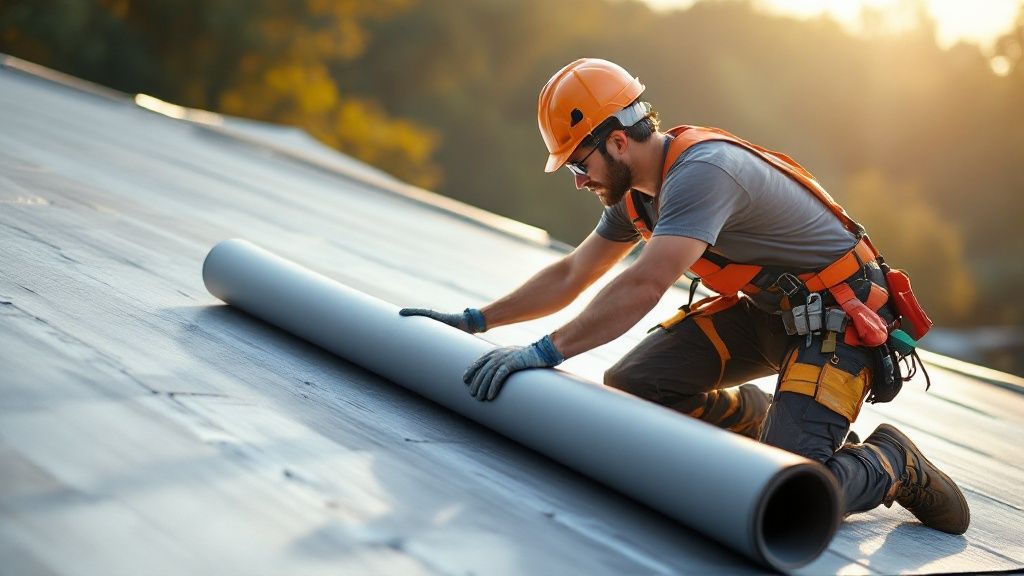
Picking the right underlayment for your roof isn't as simple as grabbing the first roll you see. It’s a tailored decision that has to account for your home's specific situation. Think of it like picking the right tires for your car—what works for a city street won't cut it for off-roading in the mountains.
Making a smart choice here is a real investment in your home’s long-term health. The best product for you will depend on your local climate, the type of roof you have, and the shingles or tiles you plan to install on top.
Matching Underlayment to Your Climate and Roof Pitch
Your local weather patterns are probably the biggest piece of the puzzle. If you're in a hot, sunny climate like Arizona, you'll need a high-temperature synthetic underlayment. It's built to handle extreme heat without breaking down, especially under materials like metal or tile that can get scorching hot.
On the other hand, if you live up north where heavy snow is a given, a self-sealing ice and water shield is essential. This sticky, rubberized asphalt membrane goes along the eaves and valleys of your roof. It’s your best defense against ice dams, which can force melting snow up and under your shingles, causing major leaks.
The pitch (or steepness) of your roof is another critical factor.
- Low-Slope Roofs: Water drains slowly from these nearly-flat roofs, so the risk of leaks is much higher. They need a heavy-duty, completely waterproof barrier, often a fully adhered sheet of rubberized asphalt, to stay dry.
- Steep-Slope Roofs: These roofs shed water very quickly. For most steep designs, a high-quality synthetic underlayment provides all the protection you'll ever need.
Aligning Underlayment with Your Roofing Material
The final layer of your roof—the part you actually see—also determines what needs to go underneath. A standard asphalt shingle roof is fairly light, so a good synthetic underlayment usually does the trick.
But if you're installing heavier materials like slate, clay tile, or concrete, you need an underlayment that’s just as tough.
These premium roofing options can last 50 to 100 years, and the underlayment needs to be up to the same challenge. Putting a standard, short-lived underlayment under a 100-year slate roof is a recipe for disaster. It would fail decades before the slate, forcing you to tear off a perfectly good roof just to replace the cheap layer underneath.
When making your selection, it's about looking at the whole system and choosing durable materials that work together for the long haul.
Budget, Warranties, and Making the Final Call
It's always tempting to cut costs, but underlayment is the wrong place to do it. Skimping here is a classic case of being "penny wise and pound foolish." Many shingle manufacturers will actually void their warranties if the underlayment doesn’t meet their specific requirements.
Investing in the right product not only keeps your warranty valid but also prevents your entire roof system from failing prematurely. Remember that a professional's guidance is invaluable here. A good roofer will analyze all these factors and recommend the perfect combination for your home, protecting your investment for years to come.
Knowing what goes into the decision will help you have a more productive conversation with your roofer and feel confident in your choice. If you need help finding the right person for the job, check out our guide on how to choose a roofing contractor.
What a Professional Installation Should Look Like
While you should always leave roof underlayment installation to the pros, knowing what a quality job looks like is incredibly empowering as a homeowner. It helps you ask the right questions and gives you peace of mind that your investment is being protected, starting from the roof deck up.
Any professional installation kicks off with getting the roof deck ready. This means the surface has to be clean, dry, and totally smooth. Any nails sticking up need to be hammered down or pulled, and all debris must be cleared away so it doesn't puncture the new underlayment.
The Art of Overlapping Layers
With the deck prepped, the crew will begin rolling out the underlayment. They always start at the lowest point of the roof—the eaves—and work their way up to the peak, or ridge. There's a really good reason for this, and it's not just a matter of preference.
Think of the underlayment like shingles on a house or even scales on a fish. Each new row has to overlap the one below it. This creates a cascading effect, forcing any water that might slip past your shingles to flow down and off the roof, instead of finding a seam and getting trapped underneath.
This overlapping method is absolutely critical for creating a surface that sheds water effectively. The standard overlap is usually between two and six inches, though this can change based on the specific material and the steepness of your roof. Proper overlapping is a true sign of quality work. To ensure your underlayment is installed to the highest standard, it's always best to work with experienced roofing contractors who know their craft inside and out.
Securing and Sealing for Maximum Protection
Just laying the underlayment down correctly isn't enough; it has to be fastened properly, too. A pro will use specific fasteners, like cap nails or staples, and space them out exactly as the manufacturer recommends. This holds the material securely in place so it won't tear or get ripped off by the wind before your final roofing goes on. Seeing how this step fits into the bigger picture of a new roof installation can help you understand its importance.
Finally, the real mark of a great job is how well all the tricky spots are sealed. I'm talking about the areas around chimneys, vents, and skylights. These are prime locations for leaks, so a skilled roofer will use specialized flashing and often add an extra layer of self-adhering underlayment to create a completely watertight seal. This careful attention to detail shows how far roofing technology has come, with new materials making roofs more resilient than ever.
Common Questions About Roof Underlayment
Even with a good grasp of the basics, most homeowners still have a few lingering questions about roof underlayment. It's that hidden layer, so it’s natural to wonder about the practical details.
Let’s tackle some of the most common questions we hear from property owners. Getting these answers straight will help you feel much more confident when discussing your roofing project.
Can Roof Underlayment Be Left Exposed to the Sun?
The short answer is no, not for long. Think of underlayment like sunscreen—it's meant to protect, but it has its limits. Most underlayments are not designed to stand up to direct, long-term UV exposure.
While many modern synthetic products are rated for exposure during construction—typically anywhere from 30 to 180 days—they absolutely must be covered by your final shingles or metal panels. The sun's rays will eventually break down the material, weakening its water resistance and turning your new investment into a liability. Always stick to the manufacturer’s specified exposure time.
Do I Need an Ice and Water Shield?
This really comes down to your local climate and building codes. If you live anywhere that gets snow and ice, an ice and water shield is almost certainly required along the eaves of your roof. It's your number one defense against ice dams, which can force melting snow up and under your shingles, causing serious leaks.
Even in warmer climates, it's a smart move for protecting the most vulnerable spots on your roof.
An ice and water shield is like extra insurance for roof valleys, chimneys, and skylights. These are the areas most prone to leaks, and this specialized underlayment provides a waterproof seal right where you need it most, no matter the weather.
What’s the Difference Between Breathable and Non-Breathable Underlayment?
It all comes down to how the material handles moisture vapor. A breathable underlayment is designed to let water vapor from inside your home—think steamy showers and cooking—escape out through the roof. This is a huge deal for preventing condensation in your attic, which can lead to mold, mildew, and rot.
On the other hand, a non-breathable underlayment creates a complete vapor barrier, stopping moisture from passing through in either direction. The right choice is completely dependent on your home's attic ventilation system. You want your underlayment to work with your ventilation, not fight against it.
How Long Does Roof Underlayment Last?
Here’s a crucial rule of thumb: your underlayment’s lifespan should match the lifespan of your shingles. It’s a package deal. If your underlayment gives out while your shingles are still in good shape, your roof is compromised.
Here’s what you can generally expect:
- Asphalt-Saturated Felt: The classic choice. It typically lasts about 15-20 years, making it a decent match for standard 3-tab shingles.
- Synthetic Underlayment: These advanced materials are built to last 30-50 years or more, making them the perfect partner for long-lasting architectural shingles, metal, or tile.
Investing in an underlayment that can go the distance with your primary roofing material is one of the smartest decisions you can make. It ensures the whole system works as intended for its full service life. If you have more questions, feel free to check out our comprehensive FAQ page.
At Penn Ohio Roofing & Siding Group, we believe an informed homeowner is an empowered one. If you have questions about your roof's underlayment or need a professional assessment, contact us for a free estimate at https://pennohiorc.com.