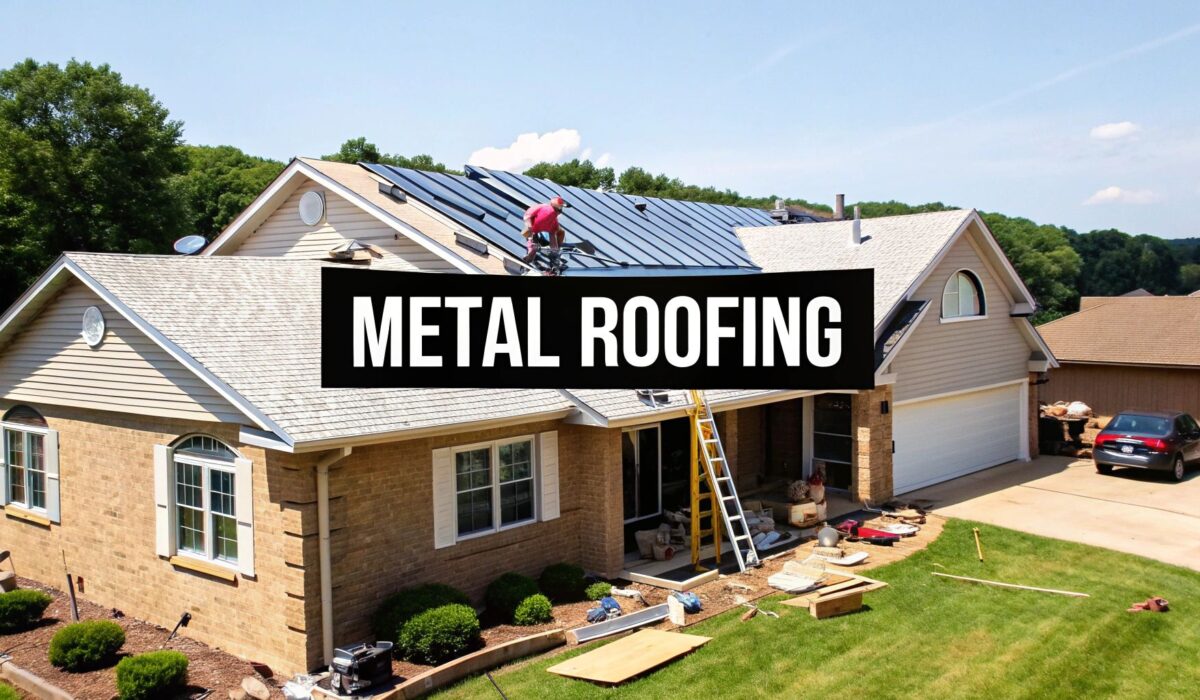
When you’re thinking about metal roofing in Sharon PA, it's more than just a repair—it's a permanent upgrade to your home's protection and value. This is a strategic investment built to handle our tough local weather for decades, giving you a level of durability and peace of mind that other materials simply can't match.
Why Metal Roofing Is a Smart Choice for Sharon PA Homes
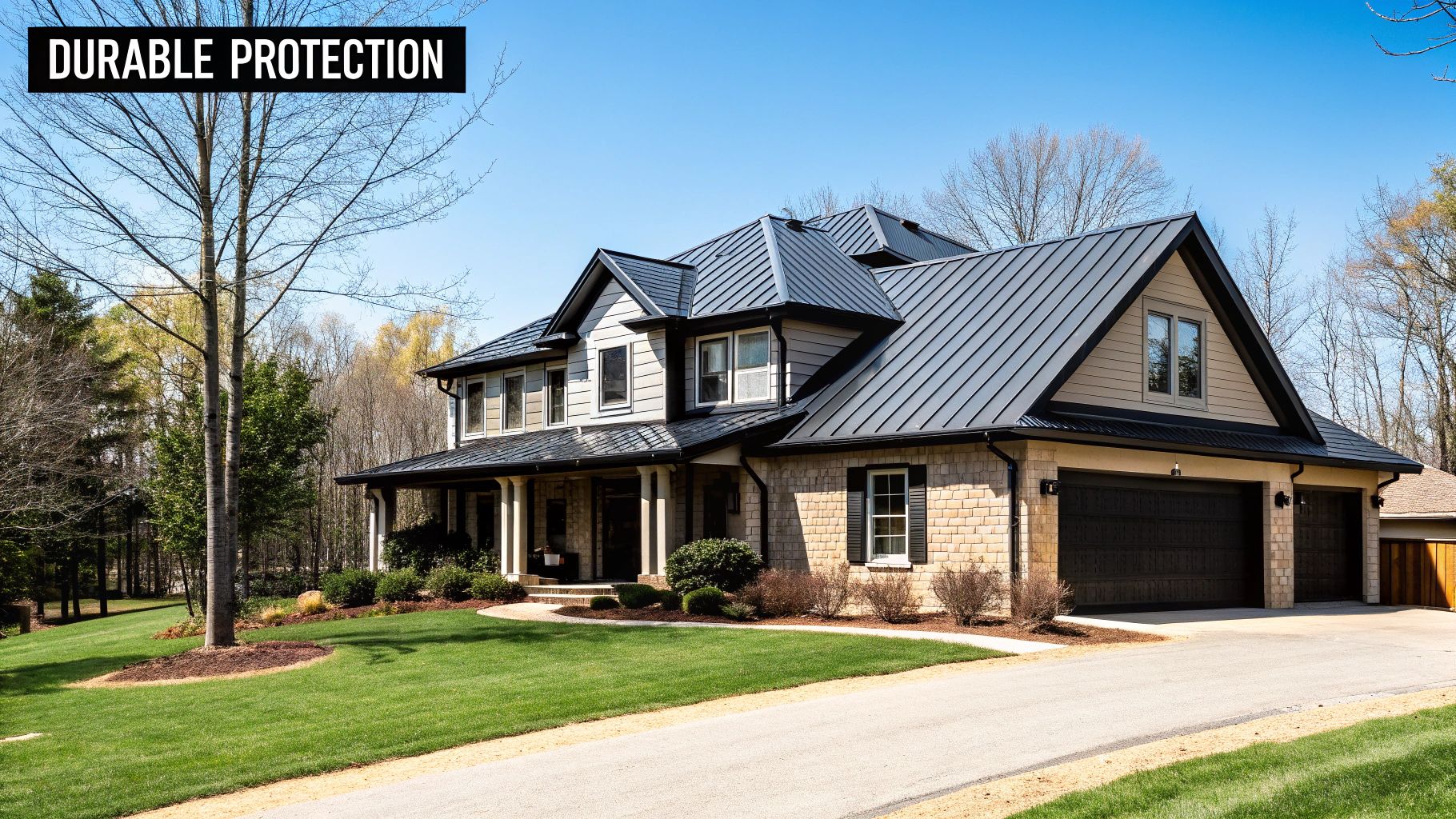
Choosing a roof in Western Pennsylvania means you have to be ready for anything. We get it all: heavy lake-effect snow piling up in winter, humid summers, and thunderstorms that bring high winds. This climate puts constant stress on your home’s most important shield.
Too many homeowners in Sharon are stuck in a frustrating cycle, replacing their asphalt shingles every 15-20 years. A metal roof breaks that cycle for good.
Think of it this way: you could buy a cheap raincoat every couple of years, or you could invest in a premium, all-weather jacket that lasts a lifetime. A metal roof is that lifetime jacket for your home. It’s about securing total value, not just settling for the lowest upfront price.
Built for Pennsylvania Weather
The real magic of a metal roof in the Sharon area is its sheer resilience. While asphalt shingles curl, crack, and get ripped off by strong winds, metal panels are interlocked and fastened down tight. They create an almost impenetrable barrier against whatever Mother Nature throws at them.
This tough-as-nails construction is a direct answer to our local weather problems.
- Heavy Snow Loads: Metal has a naturally slick surface. Snow tends to slide right off instead of piling up and putting dangerous weight on your home’s structure.
- High Winds and Rain: The interlocking panel design is incredibly wind-resistant, holding its own against the powerful gusts we often get during storms.
- Ice Dam Prevention: A properly installed and ventilated metal roof stays colder, which disrupts the freeze-thaw cycle that creates those destructive ice dams along your gutters.
By choosing metal, you're not just getting a new roof; you're upgrading your home's entire defense system against the specific weather patterns we see year after year in Mercer County.
Let's break down exactly how these features tackle our region's climate.
How Metal Roofing Stands Up to the Sharon PA Climate
Here’s a quick look at how metal roofing's key features directly solve the weather challenges we face in this part of Pennsylvania.
| Feature | Sharon PA Climate Challenge | How Metal Roofing Solves It |
|---|---|---|
| Shedding Surface | Heavy lake-effect snow accumulation | The smooth, non-porous surface allows snow and ice to slide off easily, preventing dangerous weight buildup. |
| Interlocking Panels | High winds from summer thunderstorms | Panels are securely fastened and interlocked, creating a single, unified shell that resists uplift and damage from gusts. |
| Waterproof Seams | Heavy rain and freeze-thaw cycles | Seams are designed to channel water away effectively, preventing leaks and moisture penetration that can lead to rot. |
| "Cool Roof" Technology | Hot, humid summers | Reflective coatings bounce solar radiation away, keeping the attic cooler and reducing the strain on your AC system. |
Essentially, every aspect of a metal roof is engineered to perform better and last longer right here in our climate.
An Investment That Pays Back
Beyond its toughness, a metal roof is a genuinely smart financial move that adds real, measurable value to your home. With a lifespan often hitting 50 years or more, you can say goodbye to the recurring cost of re-roofing every couple of decades.
This isn’t just a local trend. The global metal roofing market, valued at USD 22.55 billion, is expected to climb to USD 32.83 billion by 2032. This boom is fueled by homeowners demanding materials that are not only durable but also energy-efficient—a metal roof can cut cooling costs by up to 40%.
While a metal roof protects your home from above, remember to think about the ground level, too. Pairing your new roof with effective home drainage solutions creates a complete defense system for your entire property.
To explore even more of these advantages, check out our guide on the benefits of metal roofing.
Choosing the Right Metal Roofing Material
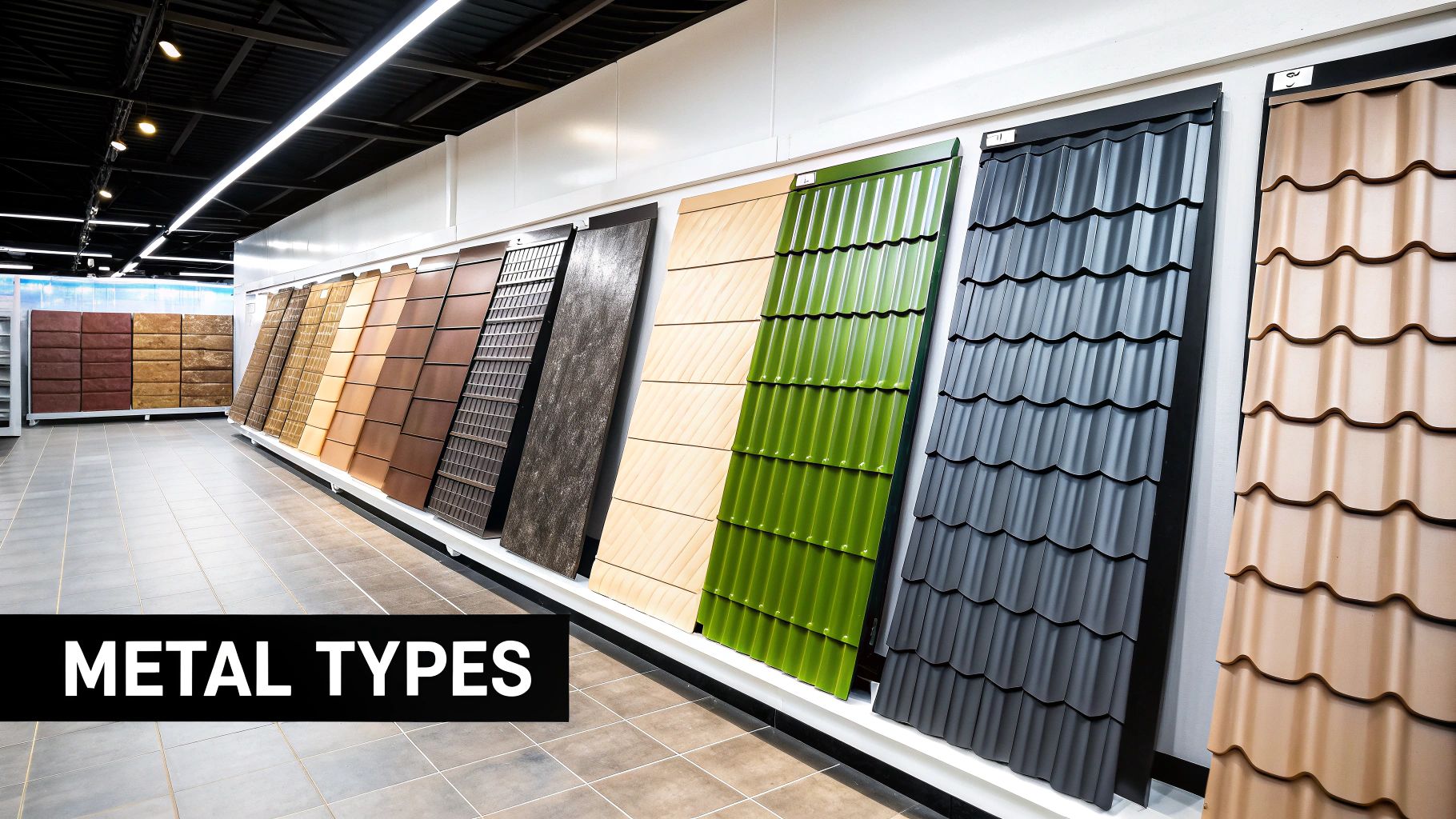
When you decide on a metal roof in Sharon, PA, you’re doing more than just picking a color. You're selecting a specific material, and each one comes with its own unique personality and list of pros and cons. We need to look at the blend of looks, performance, and long-term value to find the perfect fit for your home.
Think of it like this: you're choosing a guardian for your home. You want one that's tough, looks great, and is going to stick around for the long haul.
The Durable Workhorse: Steel
There's a reason steel is the most common choice for residential metal roofing, hands down. It's the dependable workhorse of the industry, hitting that sweet spot between incredible strength, a long life, and a price that makes sense. When you drive around Sharon and see a sharp-looking standing seam roof, you're almost certainly looking at steel.
But here's the thing—not all steel is the same. Its real strength comes from the protective coating it's given.
- Galvanized Steel: This is the classic. A solid layer of zinc is applied to the steel, protecting it from rust and corrosion. It’s a proven, reliable option that’s been shielding homes for decades.
- Galvalume® Steel: This is the more modern take. Galvalume® uses a special blend of aluminum and zinc for its coating. This mix provides even better, longer-lasting protection from the elements, especially the kind of rain and snow we get here.
Steel is also a chameleon. It comes in a huge range of colors and styles, so it can look right at home on anything from a traditional colonial to a brand-new contemporary house.
The Rust-Proof Champion: Aluminum
If steel is the workhorse, then aluminum is the lightweight, rust-proof champion of the group. Its biggest selling point is that it's naturally resistant to corrosion. While steel needs a special coating to keep from rusting, aluminum just… doesn't rust. This makes it a fantastic choice for any home that sees a lot of moisture.
This is a big deal in our area, especially for homes that get hit with road salt spray during those tough Pennsylvania winters. The fact that aluminum is so light also means less stress on your home's structure, which can be a real plus for older houses.
For homeowners who want maximum protection against corrosion and the least amount of upkeep, aluminum is the clear winner. Its lifespan is incredible, and it will keep its clean look for decades without you ever having to worry about rust.
Yes, it usually costs a bit more than steel upfront, but for many, the peace of mind and extreme durability make it a worthwhile investment.
The Timeless Artisans: Copper and Zinc
Now we're getting into the premium stuff. Copper and zinc are the timeless artisans of the roofing world. You don't just choose these for protection; you choose them for the unique, evolving beauty they add to a home. They make a statement about quality and permanence.
These are often called "living metals" because they don't stay the same—they get better with age.
- Copper: It starts out with that brilliant, shiny penny look but slowly develops a gorgeous blue-green patina over the years. This natural aging process creates a classic, distinguished character that you see on historic buildings and high-end custom homes. A copper roof can easily last for over 100 years.
- Zinc: Zinc starts as a dark, charcoal gray and weathers into a beautiful, soft matte gray patina. Just like copper, it's incredibly long-lasting and even has "self-healing" properties, which means minor scratches and scuffs will actually fix themselves over time.
Choosing copper or zinc is less about simple roofing and more about commissioning a piece of architectural art. They provide an unmatched character that literally gets better with every passing year, making them the ultimate choice for a property you want to be a landmark for generations. This is what a true "lifetime" roof really is.
Breaking Down Metal Roof Costs in the Sharon Area

Figuring out the price of a new metal roof in Sharon, PA, can feel a bit overwhelming, but it really boils down to a few key things. The final quote you get isn't just one number pulled out of a hat; it’s a careful calculation based on several moving parts. It’s a lot like ordering a new truck—you have the base model, and then the price changes as you add different engine options, premium finishes, and off-road packages.
An experienced local roofer can help you look at an estimate with confidence. Instead of seeing a big, scary number, you'll see a detailed breakdown of a serious investment into your home's future. When you understand what drives the price, you can make a smart choice that fits both your budget and your expectations.
The Primary Cost Driver: Your Choice of Material
The single biggest piece of the pricing puzzle is the type of metal you pick. Each material comes with its own unique blend of durability, looks, and, of course, price. This choice sets the entire cost foundation for your project.
- Steel Roofing: This is the most common choice for a reason. Steel offers a fantastic combination of strength and value, making it an excellent, budget-friendly starting point for many homeowners.
- Aluminum Roofing: Incredibly lightweight and completely rust-proof, aluminum is a step up from steel. It costs a bit more, but its longevity, especially in our damp climate, is a huge plus.
- Copper and Zinc Roofing: Think of these as the artisan metals. They are the absolute top of the line, offering a stunning, timeless beauty and a lifespan that can easily stretch beyond a century.
How Your Home's Architecture Affects the Price
After you’ve chosen a material, the next big factor is the unique shape of your roof. A simple, low-slope gable roof is much faster and easier to install than a complex roof with lots of angles, dormers, and valleys.
A roofer's quote is heavily influenced by time and complexity. The more cuts, angles, and custom fittings required, the more skilled labor is needed to ensure a perfect, watertight seal.
Here are a few common architectural features that will add to the installation time and, therefore, the cost:
- Steep Pitch: A steeply sloped roof isn't just harder to walk on; it demands extra safety gear and a slower, more methodical installation.
- Dormers and Skylights: Every single dormer or skylight has to be expertly flashed and sealed to keep water out. That takes time and skill.
- Valleys and Hips: These are the spots where different roof planes meet. They require precise, custom cutting and fitting of the metal panels to create a seamless joint.
- Chimneys and Vents: Just like skylights, any pipe or chimney coming through the roof is a potential leak spot that requires meticulous attention to detail.
Sizing Up the Project and Labor
Finally, the cost is rounded out by two very straightforward factors: the size of your roof and local labor rates. The total square footage directly impacts how much material is needed—from the metal panels to the underlayment, clips, and screws. A bigger roof simply requires more stuff.
Local labor rates in the Sharon area reflect the cost of hiring a team of skilled, insured professionals who know what they're doing. This isn't just about banging panels on a roof; it's about the craftsmanship needed to make sure that roof will protect your home for decades to come.
This push for quality materials is happening everywhere. The global roofing market is currently valued at around USD 132,514.5 million and is expected to keep growing as more people seek out durable, energy-efficient solutions for their homes.
For a deeper dive into the numbers, check out our complete guide to metal roof installation costs.
Your Guide to the Metal Roof Installation Process
Watching a professional crew install a metal roof in Sharon, PA, can look like a complex operation. In reality, it's a methodical process, with each step carefully planned for safety, precision, and a roof that lasts. Let's break down the journey from start to finish so you know exactly what to expect. Think of it less like chaotic construction and more like a skilled assembly, where every stage builds on the one before it to create a perfect, weatherproof shield for your home.
It all kicks off with an in-depth, on-site consultation. This is where a professional team gets to know your home's unique architecture, takes exact measurements, and walks you through all the material and color options. This planning stage is critical to making sure the final product is a perfect match for your vision and your home's needs.
Preparing the Foundation for a Lifetime Roof
Before any new metal goes on, the old roof has to come off. A professional crew makes sure this is done safely and cleanly, tearing off the old materials and handling the disposal. But this step is about more than just clearing the way—it’s about seeing what’s been hiding underneath.
With the old roof gone, the underlying roof deck is completely exposed. This is the wooden sheathing that serves as the true base of your roof, and it's time for a thorough inspection. Installers will meticulously check for any rot, water damage, or weak spots that could compromise the new installation.
Think of the roof deck as the foundation for your entire roofing system. You wouldn't build a beautiful new house on shaky ground, and the same logic applies here. Putting a new, 50-year metal roof on a compromised deck is a recipe for disaster.
Any damaged sections of sheathing are repaired or replaced right then and there. This guarantees the new roof has a solid, stable surface to anchor to, which is absolutely essential for both long-term performance and a clean, sharp look.
Installing the Weatherproofing Layers
Once the deck is solid, the next layer of defense goes down: the underlayment. This isn't just a simple sheet of tar paper. Modern metal roofing systems use a high-performance synthetic underlayment that acts as a powerful secondary weather barrier.
It's engineered to be completely waterproof, protecting your roof deck from wind-driven rain or any rogue moisture that might find its way under the panels. This layer provides an incredible amount of extra security, giving you peace of mind that your home will stay dry, even during the harshest Pennsylvania storms.
The infographic below gives a great visual of the core phases of the installation, from that initial inspection to the final fastening.
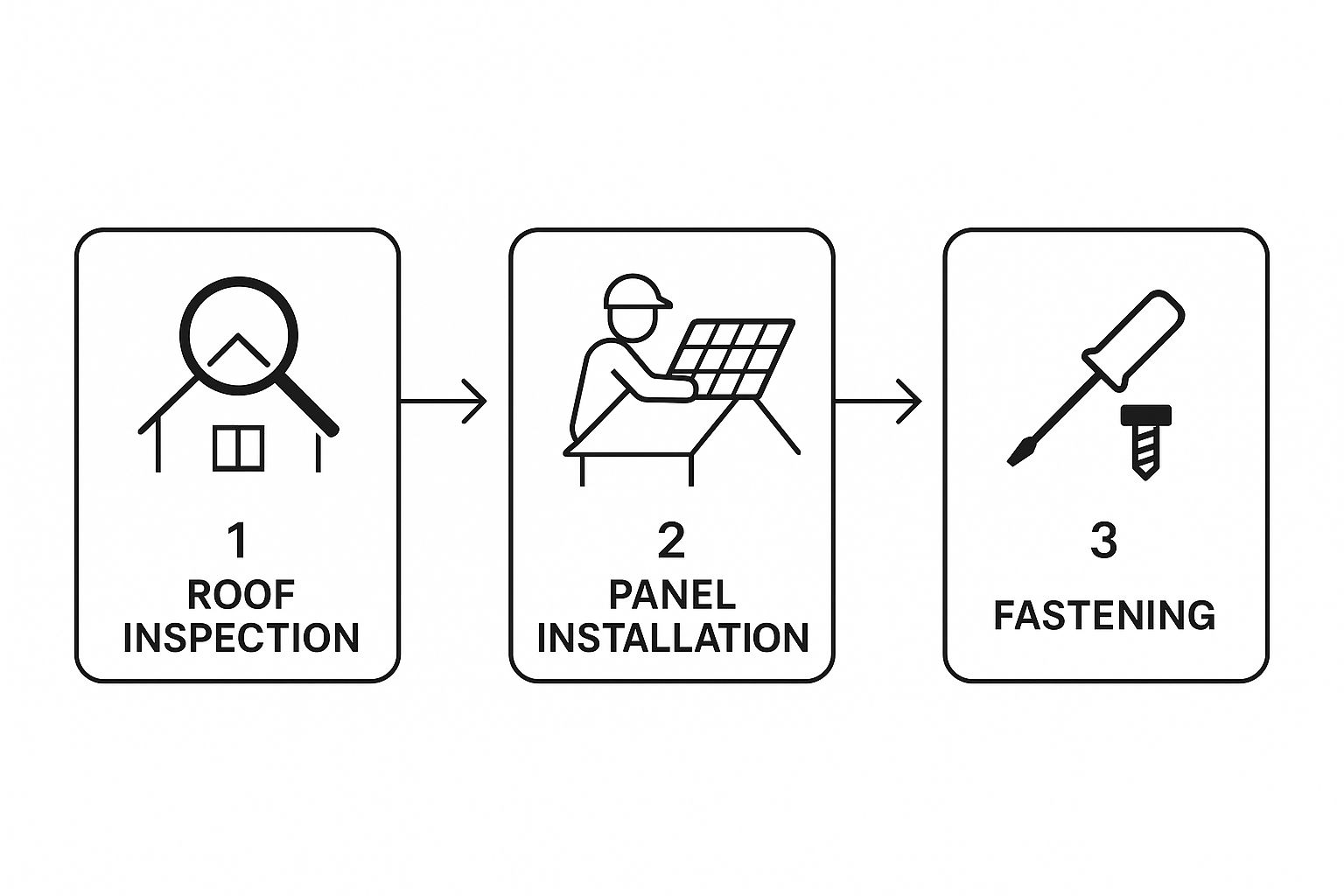
This process really shows how smart preparation and precise work come together to create a roof that's built to last.
The Art of Panel and Trim Installation
Now for the main event—the metal panels. Each panel is measured, cut, and fitted with painstaking precision. They're laid out in a specific sequence and fastened securely to the roof deck, with every piece interlocking to form a single, unified shell over your home. For a deeper dive into the structural side of things, this guide to metal building installation covers many of the same core principles.
But the job isn't done just because the main panels are in place. The final, and arguably most skillful, step is installing the trim and flashing. This is where true craftsmanship really comes into play.
These custom-formed metal pieces are fitted around all the vulnerable areas of your roof:
- Valleys: Where two roof planes come together.
- Hips and Ridges: The peaks and angles along the top.
- Eaves and Rakes: The finished edges of the roofline.
- Penetrations: Around chimneys, vents, and skylights.
This meticulous detail work is what creates a truly watertight seal. In fact, improperly installed flashing is the number one reason roofs leak. That’s why hiring a pro is so important for a metal roof you expect to last a lifetime. Our detailed metal roofing installation guide dives even deeper into these crucial finishing steps.
How to Keep Your Metal Roof in Top Shape for Decades
One of the biggest selling points for a metal roof in Sharon, PA, is just how little you have to fuss with it. But while they are incredibly low-maintenance, they aren't zero-maintenance. A few simple checks throughout the year are all it takes to help your roof easily reach that incredible 50+ year lifespan.
This isn't about adding a new list of chores to your weekend. It's more like a quick health check for your home's most important shield. A little proactive care goes a long, long way in protecting your investment and making sure it performs perfectly year after year.
Your Simple Seasonal Inspection Checklist
The good news is that most of this can be done safely from the ground. Getting into the habit of doing a quick walk-around a couple of times a year—especially after a big storm rolls through—is one of the smartest things a Sharon homeowner can do.
Here’s what to keep an eye out for:
- Debris on the Roof: Windy days can leave behind fallen branches, leaves, and other junk. Get them off with a soft brush or leaf blower. This prevents moisture from getting trapped, which can stain the finish over time.
- Clear Gutters and Downspouts: This is a big one. Clogged gutters are a leading cause of ice dams in our winters. Keep them clear so water and snowmelt have a clean escape route, protecting your roof, siding, and foundation.
- Scuffs and Scratches: Look for any dings or scratches from falling limbs. Most modern finishes are unbelievably tough, but if you spot a deep gouge, it's worth addressing to prevent any future issues.
Think of this routine less as looking for trouble and more as confirming everything is working as it should. A five-minute walk around your house is usually all it takes to keep your roof in peak condition.
Why a Professional Check-Up Is a Smart Move
While your own eyes can catch the obvious stuff, it’s a wise move to have a professional roofer take a look every few years. They have the training and safety gear to get up close and inspect the details you simply can’t see from the ground.
A pro will check the things that truly keep your roof watertight. They'll examine the fasteners, the seals, and the flashing around chimneys, vents, and skylights. These are the spots where tiny issues can begin, and catching them early is the key to avoiding a much bigger headache down the road. It’s the best way to ensure your roofing system continues to provide the unbeatable protection you paid for.
This push for durable, long-lasting materials isn't just happening here in Sharon; it's a massive trend. The roofing market in the U.S. alone is valued at around $56.7 billion and is expected to keep growing. Why? Because homeowners and builders are demanding better energy efficiency and storm resilience, which puts high-performance materials like metal front and center. You can explore more about these industry trends to see how this shift is shaping the future of construction.
Common Questions About Metal Roofing in Sharon
When you're thinking about a big home improvement project like a new roof, you're going to have questions. And when it comes to metal roofing in Sharon, we've heard just about all of them over the years. Some concerns come from old, outdated ideas about metal, while others are just plain myths that won't seem to go away.
Let's tackle these head-on and clear up the confusion so you can make a decision you feel great about.
Are Metal Roofs Loud When It Rains?
This is probably the biggest myth out there. People immediately picture an old barn roof in a thunderstorm, with every drop of rain sounding like a drumbeat. The truth is, a modern, professionally installed metal roof is a world away from that.
Think about it this way: an old-timey metal roof might have been installed directly over open rafters. That setup absolutely would be noisy. But today’s installations are sophisticated, multi-layered systems.
The metal panels aren't just slapped on your house. They go over your home's solid roof deck (the wood sheathing) and a layer of high-quality underlayment. Then you have all the insulation in your attic below that, which acts as another powerful sound barrier.
When you combine the solid decking, specialized underlayment, and your attic insulation, the result is a roof that is often quieter than an asphalt shingle roof during a rainstorm. The sound gets so muffled you'd hardly notice it.
This whole system works together to deaden the sound, turning a potential racket into a gentle, soothing hum.
Do Metal Roofs Make a House Hotter in the Summer?
This is another classic misunderstanding, and the reality is the exact opposite. A metal roof is one of the most energy-efficient choices you can make, especially for dealing with those hot, sticky Sharon summers.
Traditional dark asphalt shingles are like a heat magnet. They soak up the sun's rays all day long, slowly baking your attic and forcing your air conditioner to work overtime just to keep up.
Modern metal roofs are engineered to be "cool roofs" thanks to their impressive reflective abilities. Here’s how it works:
- Solar Reflectivity: The coatings on today's metal panels are designed to bounce a huge portion of the sun's UV and infrared rays right back into the sky, away from your home.
- Thermal Emittance: Any heat the roof does absorb is released back into the air quickly, instead of being funneled down into your house.
All this means your attic stays cooler, your AC gets a break, and you'll likely see a real difference in your summer energy bills.
Will a Metal Roof Attract Lightning?
The idea that a metal roof turns your home into a lightning rod is a common worry, but it's not based on science. A metal roof does not increase the chances of your home being struck by lightning.
Lightning is simply looking for the highest point in an area to discharge its energy—it doesn't care what that object is made of. The presence of metal doesn't "attract" the strike.
But here’s the interesting part: if your home were to be struck by lightning, a metal roof is actually safer.
Metal is an excellent conductor. So, in the unlikely event of a strike, the electrical charge is safely dispersed across the entire roof surface and grounded. This prevents the energy from concentrating in one spot, which is what can cause fires with materials like wood or asphalt. Plus, a metal roof is non-combustible, giving you an added layer of fire protection.
Ready to move past the myths and see how a durable, quiet, and energy-efficient metal roof can benefit your home? A local expert has the expertise to guide you through the process and deliver a perfect installation. Contact us today for a free, no-obligation estimate.