Choosing a roofing contractor is one of the most significant decisions you'll make for your property. The right choice protects your home for decades, while the wrong one can lead to costly repairs and endless headaches. The difference often comes down to asking the right questions to ask roofers before you sign any contracts. This guide provides a strategic framework for interviewing potential contractors, moving beyond surface-level inquiries to uncover true expertise and professionalism.
We'll delve into the critical details that matter most, providing you with the context, red flags, and actionable insights needed to confidently vet your options. By using this curated list, you can cut through sales pitches, verify credentials, and hire a professional who will protect your home and your investment. To ensure a truly vetted project, ask your prospective roofer about their comprehensive Construction Site Safety Management Plan, which outlines their commitment to a safe and organized work environment.
A trustworthy contractor will welcome these detailed questions, seeing them as an opportunity to demonstrate their expertise. Let's equip you with the knowledge to make a truly informed decision, ensuring your new roof is the last one you'll need to worry about for years to come.
1. Are you fully licensed, insured, and bonded?
This is arguably the most critical of all the questions to ask roofers before hiring one. It's a non-negotiable starting point that verifies a contractor's legitimacy and protects you from significant financial and legal risk. An affirmative answer indicates the roofer meets state or local competency standards, carries essential liability protection, and provides a financial safety net for the project.
Why This Question is Essential
Hiring an unlicensed or uninsured roofer can lead to disastrous consequences. If a worker is injured on your property, you could be held personally liable for their medical bills. If the contractor damages your home or a neighbor's property, their lack of insurance leaves you to cover the costs. Bonding offers another layer of security, ensuring that if the contractor fails to complete the job, you have financial recourse to hire someone else to finish it. This question filters out unqualified or unprofessional operators immediately.
What to Look For
A professional roofer will readily provide documentation. Don't just take their word for it; ask to see the physical or digital copies of their credentials.
- Licensing: Requirements vary by location. For example, roofers in California must hold a C-39 specialty license, while other states may have different local or state-level registrations. Always verify their license number independently through your state's contractor licensing board website.
- Insurance: Request a certificate of insurance (COI). This document should list both general liability (to cover property damage) and workers' compensation (to cover employee injuries). Confirm the policy is active and covers residential roofing specifically.
- Bonding: Ask about their surety bond. This protects you if the contractor defaults on the contract, ensuring the project can be completed without financial loss to you.
Key Insight: A legitimate contractor expects you to ask for these documents and will have them ready. Any hesitation or refusal to provide proof is a major red flag, signaling you should walk away immediately. Making the right choice is crucial, as choosing a roofing contractor is a significant decision for any homeowner.
2. What is your experience with my specific roof type and material?
Not all roofs are created equal, and neither are all roofers. This is one of the most important questions to ask roofers because different materials and designs demand specialized skills, tools, and installation techniques. An affirmative answer ensures the contractor isn't learning on the job but is instead applying proven expertise specific to your home's unique needs, protecting your investment and the manufacturer's warranty.

Why This Question is Essential
Hiring a roofer without direct experience with your roof type is a significant gamble. For instance, a specialist in asphalt shingles may not understand the unique fastening and sealing methods required for a standing-seam metal roof, leading to leaks and corrosion. Similarly, slate and tile roofs require careful handling to avoid breakage and knowledge of proper weight distribution. A flat roof specialist knows how to prevent ponding water and ensure proper drainage, a common failure point when handled by inexperienced crews. This question helps you find a true expert, not just a generalist.
What to Look For
A qualified roofer will be proud to showcase their specialized experience. Dig deeper than a simple "yes" and ask for concrete proof of their expertise.
- Portfolio and References: Ask to see photos of completed projects that feature the same roofing material and style as yours. Better yet, request references from homeowners with similar roofs so you can inquire about their experience.
- Manufacturer Certifications: Top-tier contractors often hold certifications from major material manufacturers. These programs provide specialized training and signal a high level of proficiency with that specific product.
- Specific Challenges: Discuss any unique features your roof has, such as skylights, steep pitches, valleys, or complex chimney flashing. Ask how they would approach these areas to ensure a watertight seal and proper integration with your specific roofing material.
Key Insight: A contractor's specialization directly impacts the quality and longevity of your roof. Never assume experience with one material translates to all others. Verifying their specific expertise is a crucial step in ensuring your roof is installed correctly and performs as expected for decades to come.
3. Can you provide references and proof of completed projects?
While licenses and insurance verify a contractor's legitimacy, references and a project portfolio confirm their quality and reliability. Asking for this proof is one of the most important questions to ask roofers because it provides verifiable evidence of their workmanship, professionalism, and track record. It’s your chance to hear directly from past customers and see the finished product with your own eyes, offering a real-world look at what you can expect.

Why This Question is Essential
A contractor's promises mean little without a history of satisfied clients to back them up. References allow you to move beyond the sales pitch and investigate their actual performance. You can uncover crucial details about their process, such as whether they stick to timelines, maintain a clean job site, and communicate effectively. A strong portfolio, especially with projects similar to yours, demonstrates technical skill and experience with the specific materials and challenges your roof presents, acting as your primary defense against shoddy work.
What to Look For
A confident, high-quality roofer will be proud to share their work and connect you with happy customers. Be wary of any contractor who is reluctant to provide this information.
- References: Request a list of at least 3-5 recent references. Focus on projects completed in the last one to two years to ensure they reflect the company's current crew and standards. Ask these homeowners specific questions about timeliness, cleanup, communication, and if any issues arose after completion.
- Project Portfolio: Ask to see a gallery of completed work, including before-and-after photos. Look for high-resolution images that show detail work around flashing, vents, and gutters. For example, if you want a metal roof, ask to see examples of their recent metal roof installations.
- Local Projects: Inquire about recently completed jobs in your neighborhood. This is a great sign of a roofer's local reputation, and it may give you the opportunity to drive by and see their workmanship for yourself.
Key Insight: Don't just rely on the hand-picked references a roofer provides. Supplement your research by checking independent online reviews on platforms like Google and the Better Business Bureau. A consistent pattern of positive feedback across multiple sources is a strong indicator of a trustworthy contractor.
4. What is included in your written estimate and warranty?
This two-part question is vital for establishing clear expectations and safeguarding your investment long-term. A detailed written estimate prevents misunderstandings and surprise costs by outlining every aspect of the project, while a comprehensive warranty provides crucial protection against material defects and workmanship errors. Asking this ensures complete transparency before any work begins.
Why This Question is Essential
An ambiguous estimate or a weak warranty can lead to major disputes and unexpected expenses down the road. A vague proposal like "roof replacement" leaves you vulnerable to corner-cutting on materials or surprise charges for things you assumed were included, such as tear-off and debris removal. Similarly, understanding the warranty protects you from paying for repairs that should be covered. It separates reputable contractors who stand behind their work from those who disappear once the final check is cashed.
What to Look For
A professional roofer will provide a clear, itemized quote and be able to explain their warranty terms in detail. Scrutinize both documents carefully before signing a contract.
- The Written Estimate: Insist on a line-item breakdown. It should specify the exact brand and type of shingles, underlayment, flashing materials, and ventilation products. It must also detail the scope of work, including tear-off of old roofing layers, decking inspection and potential replacement costs, and cleanup procedures.
- The Warranty: Ask for separate documents for the manufacturer's material warranty and the contractor's labor or workmanship warranty. Clarify the duration of each. For example, a manufacturer might offer a 30-year shingle warranty, but the contractor may only guarantee their labor for 5 years.
- Warranty Conditions: Inquire about what could void the warranty. Common exclusions include unaddressed storm damage, improper attic ventilation, or installing satellite dishes on the roof. Also, ask if the warranty is transferable to a new owner if you sell your home, as this can be a valuable selling point.
Key Insight: Never accept a verbal agreement or a one-page quote with a single price. A detailed, multi-page estimate is a sign of a thorough professional. Comparing warranties is just as important as comparing prices; a slightly more expensive bid with a superior, transferable labor warranty often provides better long-term value and peace of mind.
5. How will you handle debris removal and protect my home during the project?
A roof replacement is a major construction project that generates a significant amount of debris, from old shingles and underlayment to thousands of nails. Beyond the roof itself, this question addresses the contractor's professionalism and respect for your property. A detailed plan for protecting your home and cleaning the job site separates top-tier professionals from less careful crews and prevents costly secondary damage.
Why This Question is Essential
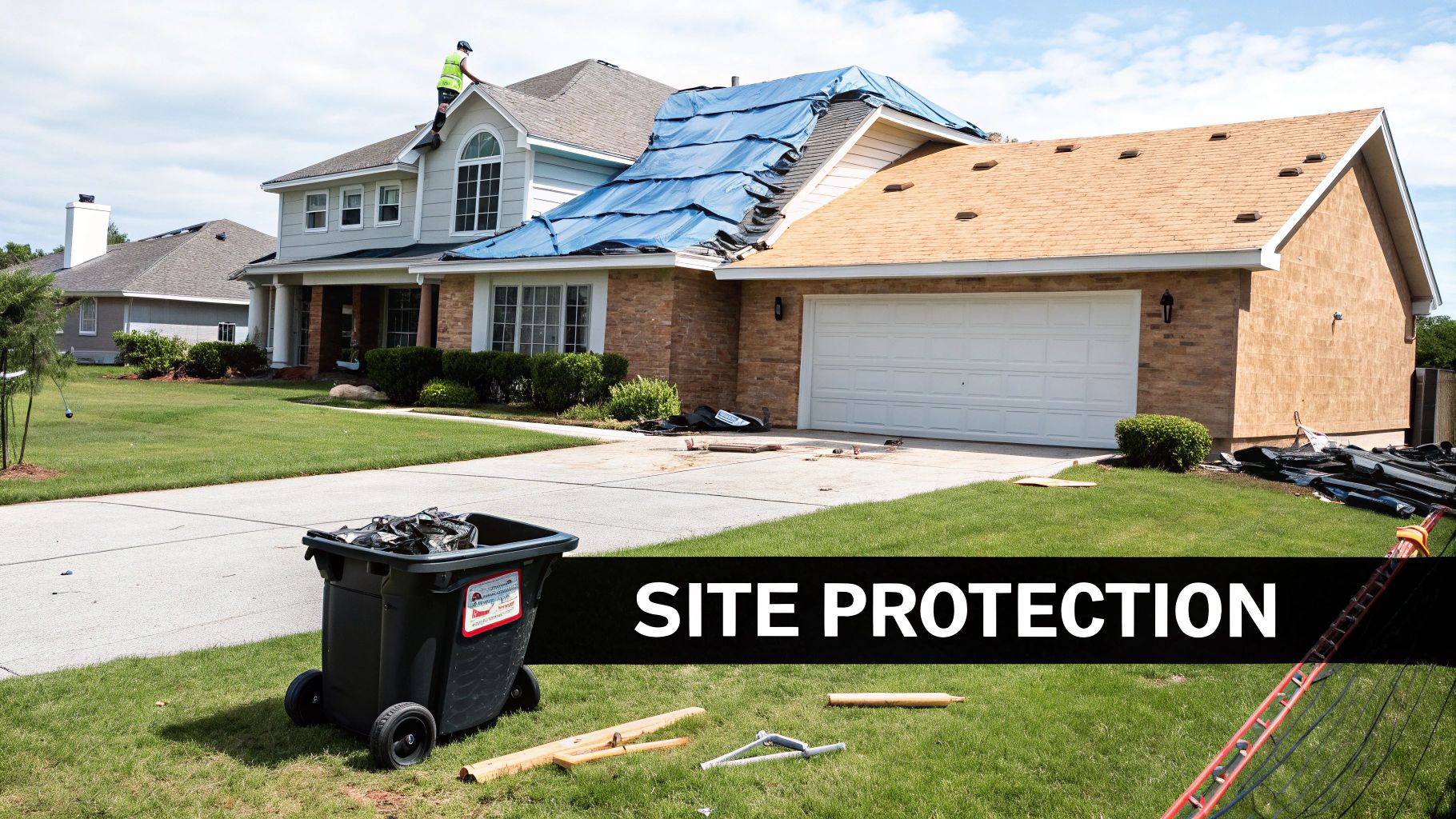
Without a clear protection and cleanup plan, you could be left with a damaged yard, broken windows, or flat tires from scattered nails. Debris can ruin expensive landscaping, dent siding, and clog gutters. Clarifying these logistics upfront ensures the contractor assumes responsibility for maintaining a safe and clean work environment. It protects your investment not just in the new roof but in your entire property, preventing unexpected repair bills after the roofing crew has left.
What to Look For
A reputable roofer will have a standard operating procedure for site protection and cleanup. Ask for specifics on their methods and ensure they are included in the written contract.
- Property Protection: Inquire about their methods for safeguarding your property. They should use heavy-duty tarps to protect landscaping, siding, and air conditioning units. Plywood is often used to shield windows and doors from falling debris.
- Debris Management: Ask where they will place the dumpster and how they will get debris from the roof to the container. A good contractor will have a plan to minimize impact on your lawn and driveway.
- Cleanup Protocol: A professional crew cleans up daily, not just at the end of the job. They should also perform a final, meticulous sweep of the entire area with magnetic rollers to find stray nails. When discussing their work methods, inquire about the specialized equipment they use, such as specialized roof hook ladder extensions, which are crucial for safe roof access and ensuring the integrity of your property.
Key Insight: The contractor's answer reveals their level of organization and attention to detail. A vague response like "we'll clean up when we're done" is a red flag. A detailed explanation of their process for protection and debris removal indicates a commitment to professionalism and customer satisfaction.
6. What is your process for handling unforeseen issues or roof damage discovered during the project?
Even the most thorough initial inspection cannot reveal everything hidden beneath old shingles. This is one of the most important questions to ask roofers because it addresses how they manage the unexpected. Tearing off an old roof often uncovers problems like rotted decking, structural damage, or poor ventilation that were impossible to see beforehand. A professional contractor has a clear, transparent process for handling these discoveries to protect you from surprise costs and project delays.
Why This Question is Essential
Without a pre-established plan for unforeseen issues, you could face significant, unexpected bills and disputes. An unscrupulous roofer might exploit the situation by inflating costs for "extra" work, while an inexperienced one may not know how to properly address the underlying problems, compromising your new roof's integrity. Discussing this process upfront ensures that any necessary changes are handled professionally, with your full knowledge and approval, turning a potential crisis into a manageable step in the reroofing process.
What to Look For
A reputable roofer will have a defined protocol for change orders and will discuss potential issues before the project even begins. Your goal is to understand their communication and approval workflow.
- Communication Protocol: The contractor should commit to immediately pausing work in the affected area, documenting the issue with clear photographs, and contacting you to explain the problem and proposed solution.
- Itemized Pricing: Ask for a price list for common "add-on" services. For example, what is their cost per sheet to replace rotted plywood decking, or their price per linear foot for new flashing? This prevents price gouging mid-project.
- Approval Process: Establish how changes are approved. The best practice is a written change order that you sign before any additional work proceeds. This document should detail the new work, materials, and associated costs, creating a clear paper trail.
Key Insight: A contractor's plan for the unexpected is a strong indicator of their professionalism and transparency. A roofer who can clearly outline their process for handling discovered damage is more likely to manage your project honestly and effectively, especially when navigating a complex roof insurance claim process.
7. What is your timeline, and will weather or other factors affect the schedule?
This is one of the most practical questions to ask roofers, as it sets clear expectations for the entire project lifecycle. A roofer's answer reveals their project management skills, transparency, and ability to plan for common setbacks. Understanding the proposed timeline, daily work hours, and potential for delays helps you manage your household schedule and avoid the frustration of a project that drags on indefinitely.
Why This Question is Essential
A new roof is a significant disruption. Knowing the start date, expected duration, and daily work hours allows you to plan accordingly, whether that means arranging for pets, notifying neighbors, or scheduling time off work. More importantly, this question prompts a discussion about how the contractor handles variables outside their control, such as sudden rainstorms, high winds, or unexpected material shortages. A roofer without a contingency plan can leave your home exposed and the project in limbo.
What to Look For
A professional contractor should provide a clear, realistic schedule and be upfront about factors that could alter it. Vague answers like "it should take about a week" are not sufficient.
- Detailed Timeline: Ask for a project schedule with specific start and end dates. For a standard residential roof replacement, this is typically 2-3 days. More complex jobs involving structural repairs could take 5-7 days or longer.
- Contingency Plans: Inquire about their protocol for weather delays. How do they secure the site if a storm hits mid-project? How is the schedule adjusted to make up for lost time?
- Communication: Clarify how they will notify you of any schedule changes. Will you receive a call, text, or email? Consistent communication is key to a smooth process.
- Work Hours: Confirm their daily start and end times. Early morning noise can be a major issue for you and your neighbors, so it's best to align on expectations beforehand.
Key Insight: A well-defined timeline that includes contingency planning demonstrates a contractor's experience and professionalism. A roofer who can clearly articulate their process for handling delays is more likely to keep your project on track and your home protected, regardless of what challenges arise.
8. How will you ensure my roof meets local building codes and inspection requirements?
This is one of the more technical, yet vital, questions to ask roofers, as it directly impacts your home's safety, insurance eligibility, and future resale value. Building codes are not mere suggestions; they are legally enforceable standards designed to protect you. An affirmative and detailed answer shows the contractor is knowledgeable, professional, and committed to doing the job correctly, not just quickly.
Why This Question is Essential
Ignoring local building codes can have severe consequences. A non-compliant roof may fail prematurely, void your homeowner's insurance policy, or create significant hurdles when you try to sell your home. If an inspector finds violations, you could be forced to pay for costly rework. This question helps you determine if a contractor prioritizes regulatory compliance and has the necessary expertise to navigate the specific requirements of your municipality, which can vary widely.
What to Look For
A competent roofer will be well-versed in local regulations and the permitting process. They should be able to clearly explain how they ensure compliance from start to finish.
- Permitting Process: Ask who is responsible for obtaining the necessary permits. A professional contractor almost always handles this process as part of their service. Clarify who covers the permit and inspection fees.
- Code Specifics: A knowledgeable roofer should be able to discuss specific local requirements. This could include mandatory ice and water shield installation in valleys, specific nailing patterns for high-wind zones, or required ventilation ratios to prevent attic moisture.
- Inspection Coordination: Inquire about their experience with your local building department and how they coordinate required inspections, such as a mid-roof or final inspection. They should manage this scheduling seamlessly.
- Violation Guarantee: Get written confirmation that the contractor will be responsible for correcting any code violations identified during an inspection at their own expense.
Key Insight: A contractor's deep understanding of local building codes is a strong indicator of their professionalism and experience in your area. They should view the inspection process not as a hurdle, but as a final validation of their quality workmanship. A thorough inspection process is key to a long-lasting roof, whether for residential or commercial properties. You can see the level of detail required by exploring a comprehensive roof inspection checklist.
8-Question Roofer Comparison Guide
| Question | 🔄 Implementation complexity | ⚡ Resource requirements | ⭐ Expected outcomes | 💡 Ideal use cases | 📊 Key advantages |
|---|---|---|---|---|---|
| Are you fully licensed, insured, and bonded? | Low — document verification and board lookup | Low time cost; request certificates and contact insurers | High protection against liability and fraud (⭐⭐⭐) | All hires, especially large or high-value projects | Legal recourse; worker coverage; project completion guarantee |
| What is your experience with my specific roof type and material? | Medium — review portfolio and certifications | Moderate — check manufacturer certs and past projects; may cost more | Better material-specific performance and warranty preservation (⭐⭐⭐) | Specialty materials (metal, slate, tile, flat roofs) | Proper installation; reduced material failures; warranty compliance |
| Can you provide references and proof of completed projects? | Medium — contact refs, review photos, site visits | Moderate homeowner effort to verify multiple refs | Direct insight into workmanship and reliability (⭐⭐) | New contractors or large local projects | Verify claims; identify red flags in workmanship or timeliness |
| What is included in your written estimate and warranty? | Medium — compare itemized bids and warranty terms | Low–moderate — obtain 3+ estimates; review documents | Clear scope, cost control, and post-job protection (⭐⭐⭐) | Any replacement/major repair; resale preparation | Prevents scope creep; fair contractor comparison; dispute protection |
| How will you handle debris removal and protect my home during the project? | Low–Medium — discuss containment methods and daily cleanup | Moderate — may add cost for tarps, dumpsters, nail magnets | Reduced property damage and cleaner site (⭐⭐) | Homes with landscaping, vehicles, or neighbors nearby | Protects landscaping/vehicles; reduces post-project cleanup issues |
| What is your process for handling unforeseen issues or discovered damage? | Medium–High — requires change-order and documentation process | Moderate — contingency budget (10–15% typical) and approval steps | Fewer surprise bills; proper structural repairs (⭐⭐⭐) | Older roofs or when tear-off may reveal hidden damage | Transparency; prevents improper shortcuts; protects structure |
| What is your timeline, and will weather or other factors affect the schedule? | Low — schedule planning but subject to variability | Low — coordinate deliveries, crew availability; allow contingencies | Realistic expectations and fewer scheduling disputes (⭐⭐) | Time-sensitive projects; occupant scheduling needs | Clear start/completion windows; contingency planning for delays |
| How will you ensure my roof meets local building codes and inspection requirements? | Medium — permit handling and up-to-date code knowledge | Moderate — permits, inspections, potential corrective work | Code-compliant roof that preserves insurance and resale value (⭐⭐⭐) | New installations, major repairs, and sale-related work | Pass inspections; maintain warranties; avoid costly corrections |
Making Your Final Decision with Confidence
You are now equipped with a powerful toolkit of the most critical questions to ask roofers. By diligently working through this list, you've transformed your role from a passive recipient of quotes into an active, informed partner in your home’s most important structural project. The journey from initial contact to a signed contract is a vetting process, and these questions are your most effective tool for navigating it successfully.
The quality of the answers you receive will illuminate the path forward, clearly separating the seasoned professionals from those who may cut corners. Pay close attention not just to what they say, but how they say it. A truly professional contractor will welcome your detailed inquiries, providing direct, transparent, and verifiable answers without hesitation. They understand that an educated client is their best client.
Key Takeaways for Smart Hiring
As you review the bids and your notes, distill your findings by focusing on these core principles:
- Documentation Over Dialogue: A verbal promise is not a guarantee. The best contractors substantiate their claims with written proof, including licenses, insurance certificates, detailed estimates, and comprehensive warranties.
- Experience Isn't Just Years, It's Relevance: A contractor with decades of experience is great, but one with specific, proven experience on roofs like yours is invaluable. Prioritize the roofer who can show you a portfolio of work that mirrors your own project's needs.
- Proactive Planning is Paramount: Look for a contractor who anticipates potential issues. Their plans for protecting your property, managing debris, and handling unforeseen damage are direct indicators of their professionalism and respect for your home.
Your final choice should feel like a partnership built on a foundation of trust and clear communication. The right roofer will not just be a service provider; they will be a custodian of your home's safety and your long-term peace of mind. A new roof is a significant investment in your property's value, security, and curb appeal. By using this knowledge, you empower yourself to hire a contractor who not only delivers a superior product but also provides an exceptional, stress-free experience from start to finish. You're not just buying shingles and labor; you're investing in decades of protection.