
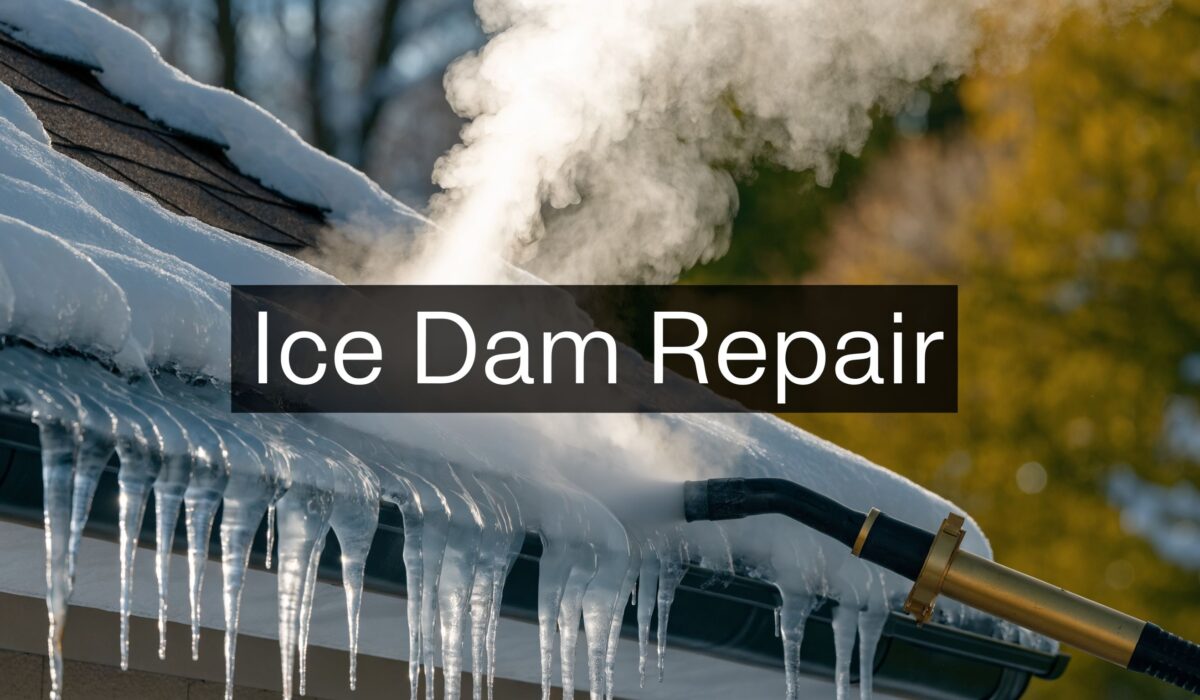
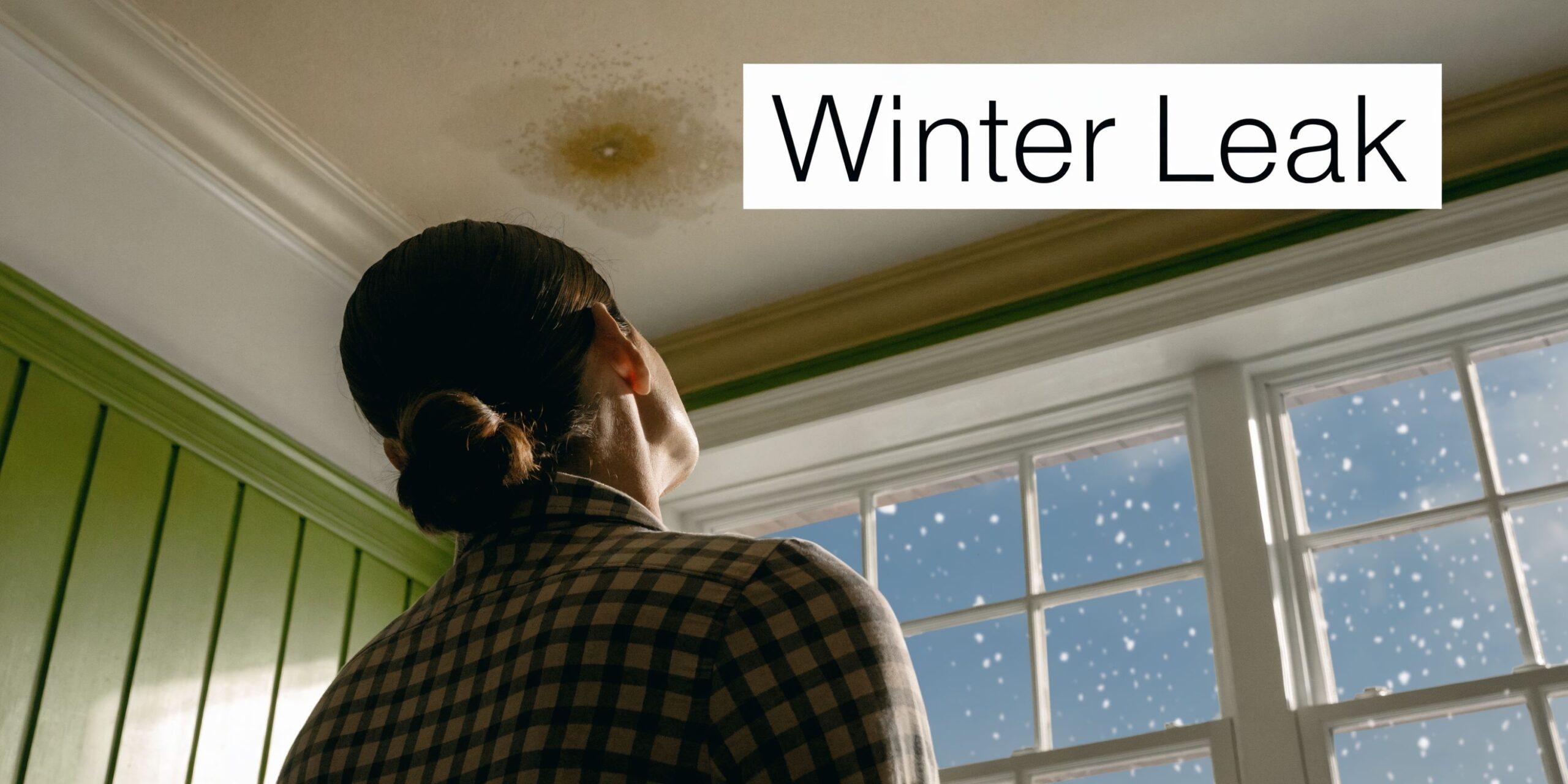
A lot of Mercer County homeowners find out they have an ice dam the same way. Not by looking up at the roof, but by looking down at the living room floor and seeing a drip pan, a wet windowsill, or a brown stain spreading across the ceiling during a thaw.
That’s what makes ice dam problems so frustrating. The roof can look “mostly fine” from the driveway while water is already backing up under shingles, soaking insulation, and working its way into drywall and trim. By the time the leak shows up inside, the problem has typically been building for days.
Ice dam roof repair Mercer County PA isn’t just about knocking ice off a roof. The primary job is figuring out why that section froze, where the water got in, what materials were compromised, and how to keep it from happening again the next time the temperature swings.
The Winter Threat to Your Mercer County Home Identifying Ice Dams
A Mercer County ice dam often announces itself on a thaw day. Snow is still sitting on the roof, the gutters look locked up, and water starts showing up where it has no business being. Along the eaves, around a window head, or as a stain near an outside wall. By then, the roof edge has usually been cycling through melt and refreeze for a while.
The mechanics are straightforward. Heat escapes into the attic or warms the roof deck unevenly. Snow melts higher up on the roof, runs down to the colder overhang, then freezes at the edge. That ice ridge blocks drainage, and the next meltwater has only one place to go. Back under the shingles and into the roof system.
That is why a house can have a leak even when the shingles still look decent from the yard.
What an ice dam usually looks like
Homeowners can catch a lot from the ground if they know what to look for. Walk the perimeter and check for these signs:
- Heavy icicles concentrated at the eaves: A few small icicles after a storm are normal. Large clusters that often point to repeated melting above the roof edge.
- A thick band of ice above or behind the gutter: That ridge is often the dam itself.
- One roof section behaving differently than the rest: If one valley, dormer, garage tie-in, or north-facing eave keeps icing first, that area likely has an insulation, ventilation, or air-leak problem.
- Frost or ice around soffits and fascia: That can mean meltwater is getting trapped and refreezing where it should be draining away.
- Interior staining near exterior walls or ceiling corners: Ice dam leaks tend to show up close to the roof edge before they appear deeper in the room.
If you want a quick visual reference before deciding whether what you’re seeing is minor snow buildup or a true dam, Penn Ohio’s guide on how to remove ice dams on roof shows the common patterns clearly.
Why Mercer County homes see this problem so often
Mercer County gets the exact weather mix that feeds ice dams. Snowfall, a short daytime warm-up, then a hard overnight freeze. That cycle is rough on roof edges, especially on older homes with patchy attic insulation, blocked soffit vents, recessed lights leaking heat into the attic, or additions where the roof system was never balanced properly.
I see the same trouble spots over and over. Cape-style houses with knee walls. Older colonials with underinsulated attic floors. Garages and porches where the main house dumps heat into one section of roof but not another. The ice forms where the temperature change is most uneven, not necessarily where the gutter looks worst.
Why this is bigger than a gutter issue
Gutters can make the symptom more obvious, but they are not always the root cause. The underlying problem is the roof assembly. Warmth is escaping from inside the house, snow is melting in the wrong place, and the cold overhang is turning that runoff into a barrier.
That distinction matters because the repair path changes. If the job only removes ice and clears the gutter, the leak may stop for the moment, then come right back on the next storm. A lasting fix typically means addressing both sides of the problem: the immediate roof damage outside and the insulation, air sealing, or ventilation issue inside the attic.
Left alone, ice dams can lead to:
- Lifted or damaged shingle edges
- Wet, compressed attic insulation
- Roof deck rot near the eaves
- Stained drywall, peeling paint, and trim damage
- Persistent moisture that leads to odor and mold concerns
The earlier the pattern is recognized, the more repair options stay on the table. That is the difference between a controlled winter service call and a larger job that reaches from the roof covering down into the attic and ceiling finishes.
What to Do Right Now Safe Temporary Ice Dam Fixes
If water is already getting in, your job is to reduce damage and stay off the roof. Most bad outcomes happen when homeowners panic, grab a ladder, and try to hack at the ice.
Do this first
Start with the inside of the house.
- Catch active leaks: Put down buckets, towels, or plastic sheeting where water is dripping.
- Move valuables out of the area: Furniture, electronics, rugs, and anything paper should be relocated fast.
- Relieve ceiling bulges carefully: If water is trapped above drywall, that ceiling may let go on its own. A controlled release can limit a wider collapse, but only if you can do it safely from below.
- Photograph everything: Take wide shots and close-ups of stains, drips, peeling paint, wet insulation, and any visible ice outside.
- Write down timing: Note when the leak started, what the weather was doing, and what rooms were affected.
What you can do from the ground
A roof rake can help if there’s fresh, light snow feeding the problem. The key is to work from the ground and pull down the loose snow near the eaves without scraping the shingles.
For homeowners who want a clearer overview of safe ground-based options before a crew arrives, Penn Ohio’s guide on how to remove ice dams on roof gives a solid basic framework.
Use a roof rake only when:
- The snow is reachable from the ground
- The roof edge is visible enough to work carefully
- You’re removing snow, not chopping at solid ice
Never do these things
Some methods sound practical and create bigger repairs.
- Don’t climb onto the roof: Ice, hidden slick spots, and falling chunks make this dangerous fast.
- Don’t chip with hammers, axes, or pry bars: That’s how shingles crack and roof surfaces get gouged.
- Don’t throw rock salt on the roof: It can damage roofing materials, metal components, and landscaping below.
- Don’t pressure wash the ice: Water and winter roofing don’t mix well in amateur hands.
Stay on the ground. A temporary response should lower risk, not add a fall hazard and a roof repair bill.
Think ahead to the insurance side
Before anyone touches the roof, save the evidence.
Document:
- Interior damage: ceilings, walls, trim, floors
- Exterior conditions: ice ridges, icicles, backed-up gutters
- Personal property impact: if water reached stored items or finishes
- Any emergency steps taken: buckets, snow raking, temporary containment
That record matters later. A lot of claim problems start because the homeowner cleaned up before creating a paper trail.
The Professional Approach to Ice Dam Removal and Repair
Professional ice dam work has two parts. First, stop the active backup safely. Second, inspect for hidden damage that doesn’t show from the ground.
Too many people think the job ends once the visible ice is gone. It doesn’t. The water path underneath is what decides whether the home needs minor repair or a deeper roof and attic correction.
Why professionals stopped using brute force
Years ago, crews often attacked ice with hammers and chisels. That removed ice, but it also broke shingle tabs, scarred roof surfaces, and created damage that didn’t exist before the service call.
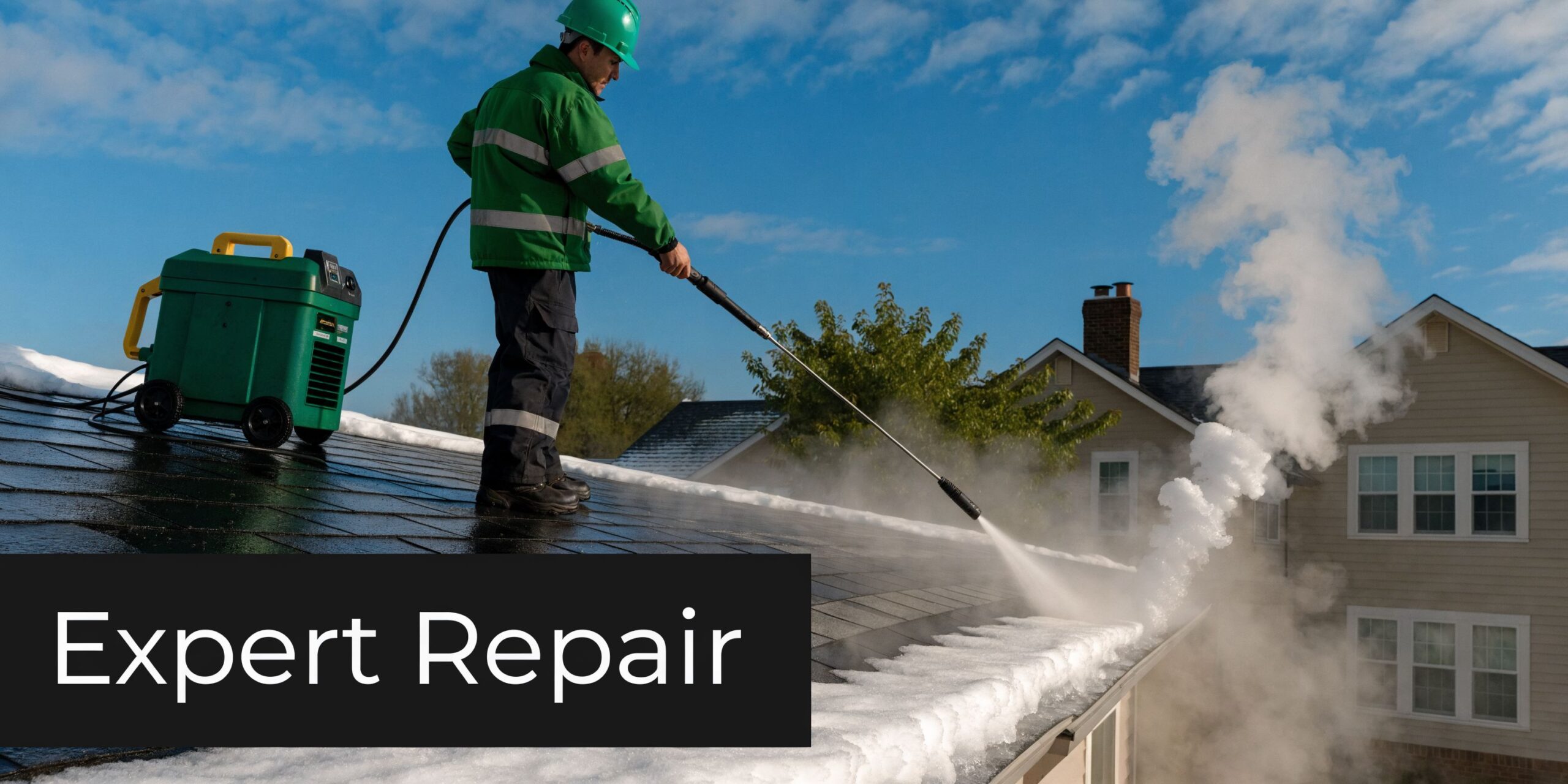
After the 2010 Snowmageddon period, roofers shifted toward 290-degree hot water blasting machines that channel water away safely and reduce the risk of property damage and voided shingle warranties tied to improper removal methods (modern 290-degree hot water ice dam removal methods).
That’s a major change in the trade. Good removal today is controlled, targeted, and slow enough to protect the roofing.
What the removal process should look like
A proper crew doesn’t just show up and start spraying.
Site safety comes first
Before any removal starts, the work area should be controlled. That means checking the slope, identifying power lines, watching for falling ice zones, and protecting walkways, shrubs, and entrances below.
If the roof edge is loaded with ice, chunks can come down hard and unpredictably.
The ice gets opened, not smashed
With steam or controlled hot water equipment, the goal is to create drainage channels through the dam so trapped meltwater can escape. Work typically starts at the lower edge and moves methodically.
That approach matters because a random hole in the wrong spot won’t solve the backup. Water needs a path all the way out.
The roof gets checked once the ice is gone
This is the part homeowners don’t see from the ground. Once access is possible, the roof should be inspected for:
- Lifted or broken shingles
- Underlayment damage
- Exposed fasteners or failed seal strips
- Soft decking from saturation
- Gutter strain at the fascia
- Water entry points around valleys, penetrations, and transitions
Ice dam removal without inspection is half a job. The backup may stop today, but the next thaw can expose the same weak spot again.
What repair often includes
The repair scope depends on how long the water sat and how far it traveled. On some homes, the visible damage is limited to a small roof edge section. On others, the underlayment and decking have taken a hit.
A practical repair plan may involve:
- Replacing damaged shingles in the affected area
- Swapping out compromised underlayment
- Repairing or replacing wet roof decking
- Resetting or replacing bent gutter sections
- Checking attic insulation where water entered
- Documenting all findings for the owner and insurer
Penn Ohio Roofing & Siding Group handles this kind of emergency roof assessment and repair work in the Mercer County area, including the documentation side that often follows an ice dam event.
What doesn’t work well long term
A lot of quick fixes fail because they address the symptom only.
| Approach | What happens |
|---|---|
| Chipping ice with hand tools | Often damages shingles and flashing |
| Removing ice but skipping inspection | Hidden moisture stays in the assembly |
| Treating only the gutter line | Misses attic heat loss and roof imbalance |
| Waiting for a full warm-up | Water keeps migrating while you wait |
If the roof leaked once, assume the system needs more than cosmetic attention. The smart move is to remove the dam safely, then trace the cause back through the roof edge, attic, and ventilation path.
Solving Ice Dams for Good Proactive Prevention Strategies
A recurring ice dam is frequently a house problem, not just a weather problem. The roof is reacting to heat escaping from inside. If that heat keeps reaching the roof deck, the same eaves will keep freezing first and leaking first.
The lasting fix is to treat the home as a system. Roof surface, attic floor, insulation depth, vent layout, and air leaks all work together.
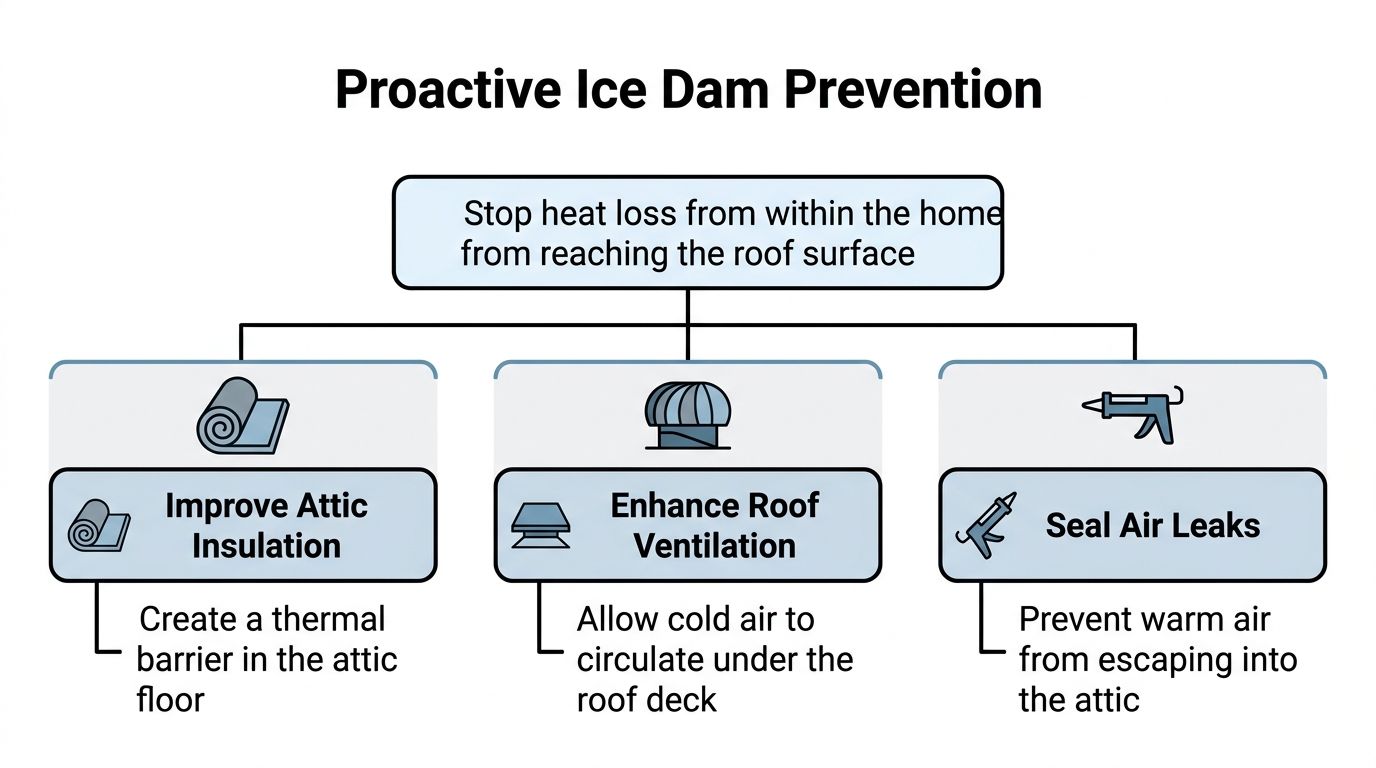
Poor attic ventilation and insulation drive 70-80% of recurrent ice dams, and a proper prevention setup includes a 1:150 vent-to-attic-space ratio and insulation upgraded to R-49, which can reduce heat loss by 50-70% in Mercer County’s Zone 5 climate (attic ventilation and insulation standards for ice dam prevention).
Insulation keeps the roof from warming unevenly
If attic insulation is thin, patchy, or compressed, house heat moves upward and warms sections of the roof deck. That’s where the snow starts melting from below.
A proper insulation retrofit aims for coverage that is:
- Continuous: not high in one bay and thin in the next
- Dry: wet insulation loses performance
- Protected from air bypasses: gaps around fixtures can undermine the whole layer
The target matters because “some insulation” isn’t the same as enough insulation.
Ventilation keeps the roof deck colder
Ventilation works with insulation, not instead of it. A well-balanced attic pulls cold air in low and exhausts it high, helping the underside of the roof stay closer to outdoor temperature.
What balanced ventilation means
The 1:150 ratio is the benchmark that keeps intake and exhaust from being an afterthought. In practice, this means soffit vents need to be open and ridge or other exhaust paths need to be functioning as a system.
A common field problem is adding more exhaust without fixing blocked intake. That can leave dead zones where warm air still pools.
Air sealing is the part many people miss
Many repeat problems originate here. Recessed lights, pipe penetrations, attic hatches, bath fan housings, wiring holes, and top plates all leak warm indoor air into the attic.
You can have decent insulation and still get ice dams if warm air is sneaking around it.
The roof doesn’t care why it got warm. Missing insulation and hidden air leaks both create the same melt pattern at the eaves.
Heat cables have a place, but they’re not the whole answer
On stubborn rooflines, valleys, or north-facing sections, professionally installed self-regulating heat cables can help maintain a drainage path. They’re useful on homes with architectural trouble spots that still need extra protection even after attic improvements.
That said, cables should support the system, not replace the system.
For homeowners comparing prevention options in more detail, Penn Ohio’s page on how to prevent ice dams is a useful follow-up.
A practical prevention sequence
Instead of chasing winter emergencies year after year, handle prevention in this order:
Start with an attic audit
Look for thin insulation, darkened sheathing, blocked soffits, and obvious air leakage points.Seal the bypasses
Warm air leaking around penetrations will defeat a lot of otherwise decent insulation work.Upgrade insulation to the correct level
That’s what slows heat movement through the attic floor.Correct intake and exhaust ventilation
The vent layout should be balanced, not pieced together.Add targeted cable protection only where needed
This is most useful where roof geometry creates recurring trouble.
What works versus what only feels proactive
| Strategy | Real value |
|---|---|
| Attic air sealing | Addresses a frequent root cause |
| Insulation retrofit to proper depth | Reduces heat movement into the attic |
| Balanced soffit and ridge ventilation | Helps maintain more even roof temperatures |
| Heat cables on problem areas | Useful secondary protection |
| Repeated winter ice removal only | Reactive, not preventive |
When homeowners solve the attic side, the roof tends to get a lot quieter in winter. Fewer icicles. Fewer surprise leaks. Less guesswork every time the forecast swings above and below freezing.
Budgeting for Ice Dam Repair and Prevention in Mercer County
A lot of Mercer County homeowners call after the first ceiling stain shows up and ask the same question. “What is this going to cost me?” The honest answer is that ice dam work typically comes in stages, and the total depends on how far the water got before anyone caught it.
The invoice rarely stops at ice removal. An effective budget may include emergency service, shingle or flashing repair, wet sheathing replacement, interior drying, insulation replacement, and attic corrections so the same roof edge does not freeze up again in the next hard swing from snow to thaw.
Where the money usually goes
The first number people ask for is the emergency visit, but that is only one piece of the job. HomeAdvisor’s Pennsylvania pricing overview for ice dam removal costs gives a useful baseline for what homeowners in this state can expect for professional service. Interior drying, mold cleanup, and reconstruction can push the total much higher once water gets behind walls or soaks insulation.
That is why I tell homeowners to budget in three buckets, not one. Immediate containment. Roof repair. Prevention work in the attic.
Estimated Ice Dam Service Costs in Mercer County
| Service | Estimated Cost Range |
|---|---|
| Professional ice dam removal | Varies by roof height, access, ice thickness, and urgency |
| Water damage restoration | Rises quickly if insulation, drywall, and trim are wet |
| Mold remediation | Often a separate line item if moisture sat long enough to support growth |
| Energy audit | Typically modest compared with repair costs |
| Attic upgrades for prevention | Depends on air sealing, insulation depth, and ventilation corrections |
Those ranges are broad for a reason. A ranch with easy access and one problem eave is different from a two-story house with a steep roof, finished ceilings, and repeated leakage along several valleys.
How to build a realistic budget
Start with the water problem in front of you. Stop active leaking, protect finishes, and get the roof inspected. After that, the primary decision is whether you want a short-term patch or a full correction plan.
A short-term budget may cover removal and limited roof repair. That can make sense if the damage is isolated and the attic already performs well.
A long-term budget includes attic air sealing, insulation improvements, and ventilation corrections where needed. That costs more up front, but it is typically the cheaper path if the house has a history of heavy icicles, repeat edge freezing, or leaks in the same areas. In practice, spending on prevention often saves the second emergency call, the second drywall repair, and the second insurance headache.
Paying for removal without addressing attic heat loss is paying for the same winter problem twice.
If you want a contractor to price both the repair side and the attic side together, ask for a written scope from a Mercer County roofing contractor with ice dam repair experience. That makes it easier to compare bids line by line instead of guessing what was left out.
The insurance side in Pennsylvania
Insurance can help with resulting water damage, but adjusters want documentation. They need to see what happened, when it happened, and what steps were taken to limit further loss. The Insurance Information Institute explains that homeowners policies often cover sudden and accidental water damage, while maintenance issues and deferred upkeep can create coverage disputes (homeowners insurance and winter storm damage guidance).
Good documentation matters more than people expect.
Best steps for a cleaner claim
- Photograph the problem before cleanup. Get the ice buildup, ceiling stains, drips, and any damaged finishes.
- Request a written inspection. Roof notes, moisture observations, and photos help support the file.
- Keep mitigation receipts. Save invoices for tarping, drying, dehumidifiers, and emergency service.
- Separate repair from improvement. Insurers may pay for damage repair but not for better insulation or ventilation upgrades.
- Ask about depreciation and deductibles early. That changes the out-of-pocket number fast.
One more practical point. Contractors who invest in clear communication and lead tracking often run more organized service departments, which matters during winter emergencies. The same discipline behind effective Google Ads for roofing campaigns often shows up in faster call handling, tighter scheduling, and better follow-through once a leak is active.
Choosing Your Mercer County Roofing Partner
When an ice dam has already leaked, the contractor you hire matters as much as the repair method. Winter roof work leaves no room for vague estimates, uninsured labor, or crews that disappear once the ice is gone.
A good Mercer County roofer should be able to explain three things clearly. How they’ll remove the dam safely. What they’ll inspect after removal. How they’ll document damage for the homeowner.
What to verify before you hire anyone
Use a simple checklist.
- Local experience: Ice dam work in western Pennsylvania isn’t the same as routine shingle repair in mild weather. You want someone who understands freeze-thaw roof behavior in this region.
- Licensing and insurance: Ask directly. Don’t assume.
- Emergency availability: Winter leaks don’t wait for normal office hours.
- Manufacturer familiarity: If the roof system has warranty implications, the contractor should know how to inspect and document accordingly.
- Written scope: You should know whether the estimate includes removal only, temporary repair, permanent repair, or attic-related recommendations.
Penn Ohio’s Mercer PA roofing contractor page is one example of the kind of local service profile homeowners should compare against when vetting contractors.
What a solid consultation looks like
The inspection shouldn’t feel rushed. A capable roofer will look at the roof edge, ask where the leak showed up inside, and connect the interior symptoms to exterior conditions and attic causes.
They should also tell you what they can confirm now and what may only become visible after the ice is removed. That kind of honesty is a good sign.
Be careful with contractors who only sell the phone call
Some roofers look polished online and still underdeliver in the field. Visibility isn’t proof of skill, but it does explain why certain companies dominate the calls after a storm. If you’re curious how reputable contractors build that visibility, this overview of effective Google Ads for roofing campaigns gives useful context on why some names keep showing up when homeowners search in a hurry.
The contractor still needs to earn trust on the roof, not just in the ad.
The standard to look for
Penn Ohio Roofing & Siding Group sets a useful benchmark on paper because it’s family-owned, has decades of experience serving Mercer, Beaver, and Lawrence Counties, offers around-the-clock emergency service, and operates with licensed, bonded, and insured crews along with GAF recognition, including Triple Excellence credentials. Those are the kinds of qualifications homeowners should expect when comparing winter roof repair companies.
Frequently Asked Questions About Ice Dam Roof Repair
Can I just throw salt socks or de-icer on the roof and call it good
No. That’s not a full repair plan.
Chemical melting may open a small path in some situations, but it won’t fix damaged shingles, wet decking, or the attic conditions that caused the dam. It can also create material and runoff concerns if used carelessly.
My roof is new, so I can’t get ice dams, right
Wrong. A newer roof can still ice up if the attic is leaking heat or the ventilation isn’t balanced.
Ice dams are often a symptom of the whole roof assembly and attic system, not just roof age.
Will fixing insulation and air leaks help enough to matter
Yes. Data from energy audits shows attic air sealing and insulation upgrades prevent 70% of repeat ice dams and can cut home energy bills by 10-20% (energy-audit findings on ice dam prevention and lower energy bills).
That’s why long-term prevention has to be part of the conversation. The money spent there doesn’t just protect the roof. It can also improve winter efficiency.
How long does professional removal and repair take
It depends on what’s found.
A straightforward removal may be handled relatively quickly compared with a leak that has already soaked insulation, damaged decking, or affected interior finishes. The visible ice can be the shortest part of the whole job.
Is the leak always directly above the ceiling stain
No. Water travels.
It can enter at one roof section, move along underlayment or framing, and show up several feet away indoors. That’s why stain location and entry location often don’t match.
Why do some roofers talk so much about attic conditions
Because that’s where repeat problems are often born. If the attic keeps warming the roof from below, the same eaves will keep producing the same call.
For contractors trying to understand why some local companies educate homeowners better than others, this article on A Roofer's Guide to Dominating Local Search with SEO for Roofing is a useful look at how strong educational content gets found. For homeowners, the takeaway is simpler. Choose the roofer who explains causes, not just symptoms.
Should I wait until spring to deal with it
Not if water is already entering the home.
Waiting may turn a roof-edge problem into an insulation, drywall, trim, and mold problem. Once interior damage starts, time matters.
If you’re dealing with an active leak or want a practical plan before the next freeze, Penn Ohio Roofing & Siding Group can inspect the damage, document what’s happening, and help you address both the immediate roof repair and the attic-related causes behind recurring ice dams.