Synthetic slate roof cost usually falls between $8 and $15 per square foot installed, with many current benchmarks clustering around $9 to $12 per square foot. For a typical 2,000-square-foot roof, that puts many projects in the $16,000 to $30,000 range, with some tighter estimates landing around $18,000 to $24,000.
That's the short version most homeowners want first. The longer answer is that synthetic slate sits in a very specific place in the roofing market: it's not bargain roofing, and it's not priced like natural slate either. It's the option people start looking at when they want a roof that looks high-end from the street, don't want the weight and cost of real stone, and care about how the roof will hold up over time.
In the Penn Ohio area, that matters. A synthetic slate quote can look expensive if you compare it to standard shingles alone. It can look reasonable fast when you compare it to the cost of natural slate, the look it delivers, and the fact that premium roofing systems tend to involve more than just the visible tile. Tear-off, underlayment, flashing details, roof access, and layout complexity all shape the final number.
If you're trying to figure out whether synthetic slate is worth it for your home in Mercer, Beaver, or Lawrence County, the smartest way to look at it is total cost of ownership, not just the sticker price on day one.
Table of Contents
- The Look of Slate Without the Sticker Shock
- The Numbers Behind Synthetic Slate Roof Cost
- What Key Factors Influence Your Final Price
- How Synthetic Slate Compares to Other Roofing Materials
- Estimating Costs in the Penn Ohio Area
- Answering Your Top Questions About Synthetic Slate
- Is a Synthetic Slate Roof Worth the Investment
The Look of Slate Without the Sticker Shock
A lot of homeowners arrive at synthetic slate the same way. They see a house with a slate roof, love the depth and shadow lines, then find out what real slate can cost and immediately start looking for another path.
That reaction makes sense. Natural slate has a reputation for a reason. It looks sharp, established, and expensive because it is expensive. But most homeowners aren't trying to prove they can buy the heaviest and costliest roof available. They want the finished look, the curb appeal, and the sense that the house is protected by something substantial.
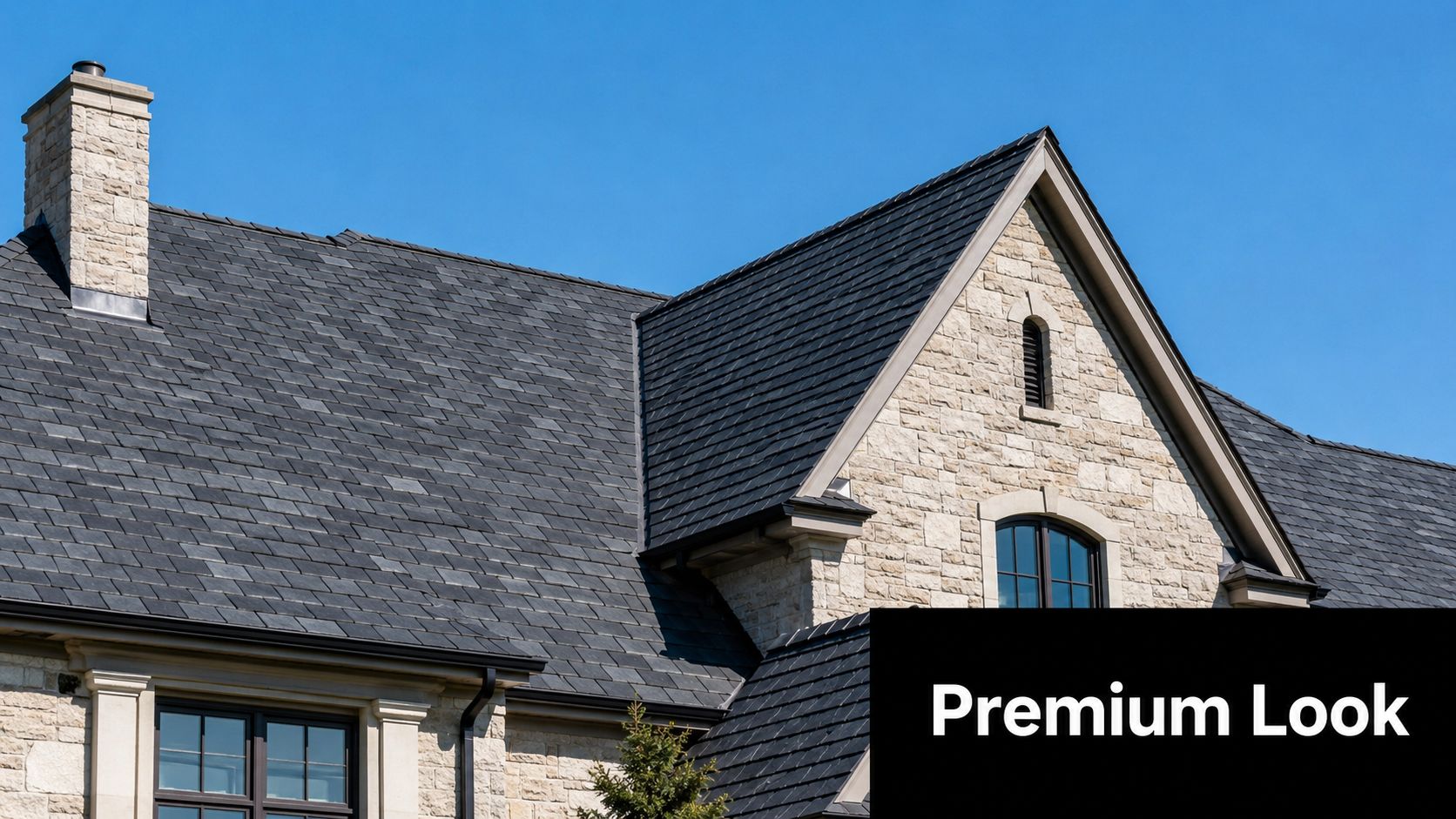
Synthetic slate is the compromise that often doesn't feel like a compromise from the ground. The better products are molded to mimic the texture, thickness, and profile changes that give real slate its character. On the right house, especially one with strong trim details, dormers, or a steep front elevation, that visual upgrade is obvious.
Why homeowners look at it in the first place
Some roofs are purely functional. Synthetic slate usually isn't chosen that way.
Homeowners tend to consider it when they want:
- A premium appearance that doesn't look flat or builder-grade
- Less structural concern than natural stone
- A more realistic slate look than standard architectural shingles can deliver
- A long-view purchase instead of the cheapest immediate replacement
Practical rule: If the roof is one of the first things people notice about your home, material choice matters more than it does on a simple ranch with a low-visibility roofline.
What doesn't work is shopping for synthetic slate like it's just another shingle color. It's a design-driven roofing system, and the homes that benefit most are the ones where roof lines, siding, masonry, and trim all contribute to the finished look. If the product is selected well but the details are rushed, the house won't get the full value of the investment.
That's why homeowners asking about synthetic slate roof cost are usually asking two questions at once. First, what will it cost? Second, will it look worth it when the job is done?
The Numbers Behind Synthetic Slate Roof Cost
A Penn Ohio homeowner usually starts with one question: what will the check look like? A better question is what the roof will cost over 20 to 30 years, because synthetic slate is rarely the lowest bid on day one.
Synthetic slate typically falls into the mid-to-high premium range for residential roofing. In practical terms, installed pricing often lands around $9 to $12 per square foot, with broader market ranges stretching from $8 to $15 per square foot depending on product line, roof shape, labor demands, and region.
Roofers also price by the square. One roofing square equals 100 square feet of roof area. A 2,000-square-foot roof is a 20-square roof on paper, though the actual installed area can climb once pitch, waste, valleys, and cuts are factored in. That is one reason two homes with similar footprints can get very different proposals.
Why the price sits above asphalt
Synthetic slate is a manufactured specialty product, not a commodity shingle. The material package usually includes the field tiles plus starter pieces, hip and ridge components, trim accessories, and the fastening pattern required by that manufacturer.
Labor is a real part of the price too. Crews have to keep courses straight, exposures consistent, and transitions clean around valleys, walls, chimneys, and penetrations. If those details are off, the roof can look forced instead of natural.
The system under the tile matters as much as the tile itself. A proper roof underlayment system adds cost up front, but it also protects the deck and helps the full assembly perform the way it should.
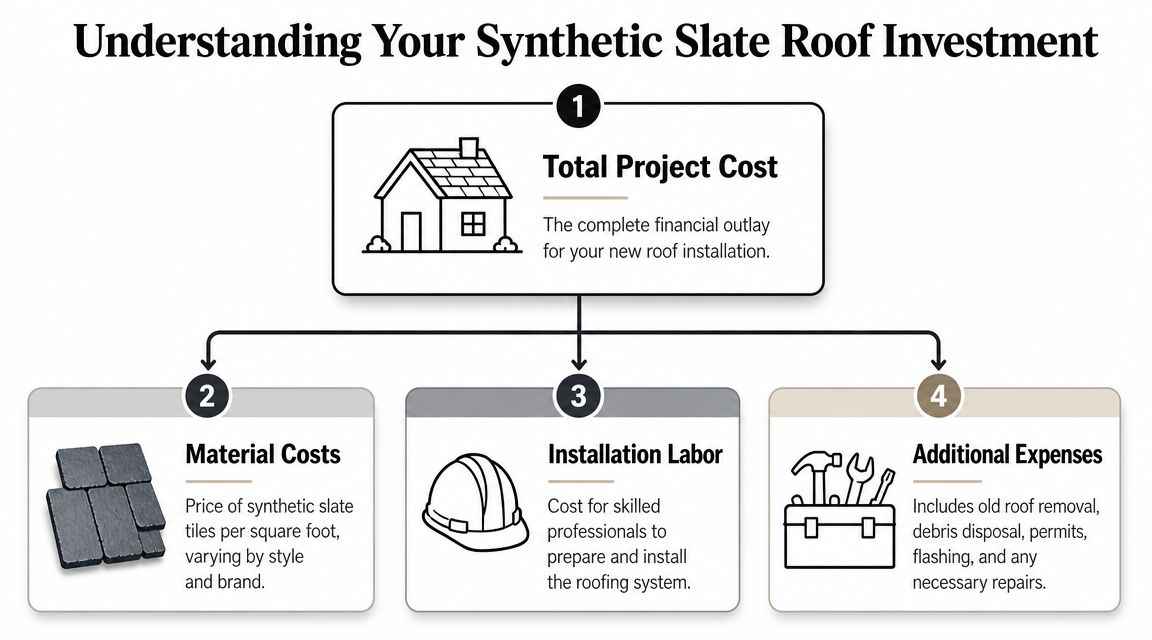
Here is where the money usually goes:
- Material package: Field tiles, starter pieces, ridge and hip accessories, and manufacturer-specific components
- Installation labor: Slower, more detail-driven work than a basic architectural shingle install
- Jobsite and tear-off costs: Removal, disposal, staging, flashing updates, and deck repairs if the old roof hid damage
What those numbers look like on a real house
On a 2,000-square-foot roof, a working range of $9 to $12 per square foot puts the project around $18,000 to $24,000. Using the broader $8 to $15 per square foot range, the same roof could land closer to $16,000 to $30,000.
That spread is not padding. It reflects real differences in the house and the job.
In the Penn Ohio area, access can be tight on older in-town lots, tear-offs often reveal decking repairs, and steep roofs on two-story homes slow production. A simple walkable gable near the road prices very differently than a cut-up roof with dormers, masonry details, and limited driveway staging. Homeowners who understand that usually make better apples-to-apples comparisons.
A solid estimate should show what is included, what is assumed, and what could change if the deck or flashing needs work. If a quote skips those details, the low number may only be low on paper.
What Key Factors Influence Your Final Price
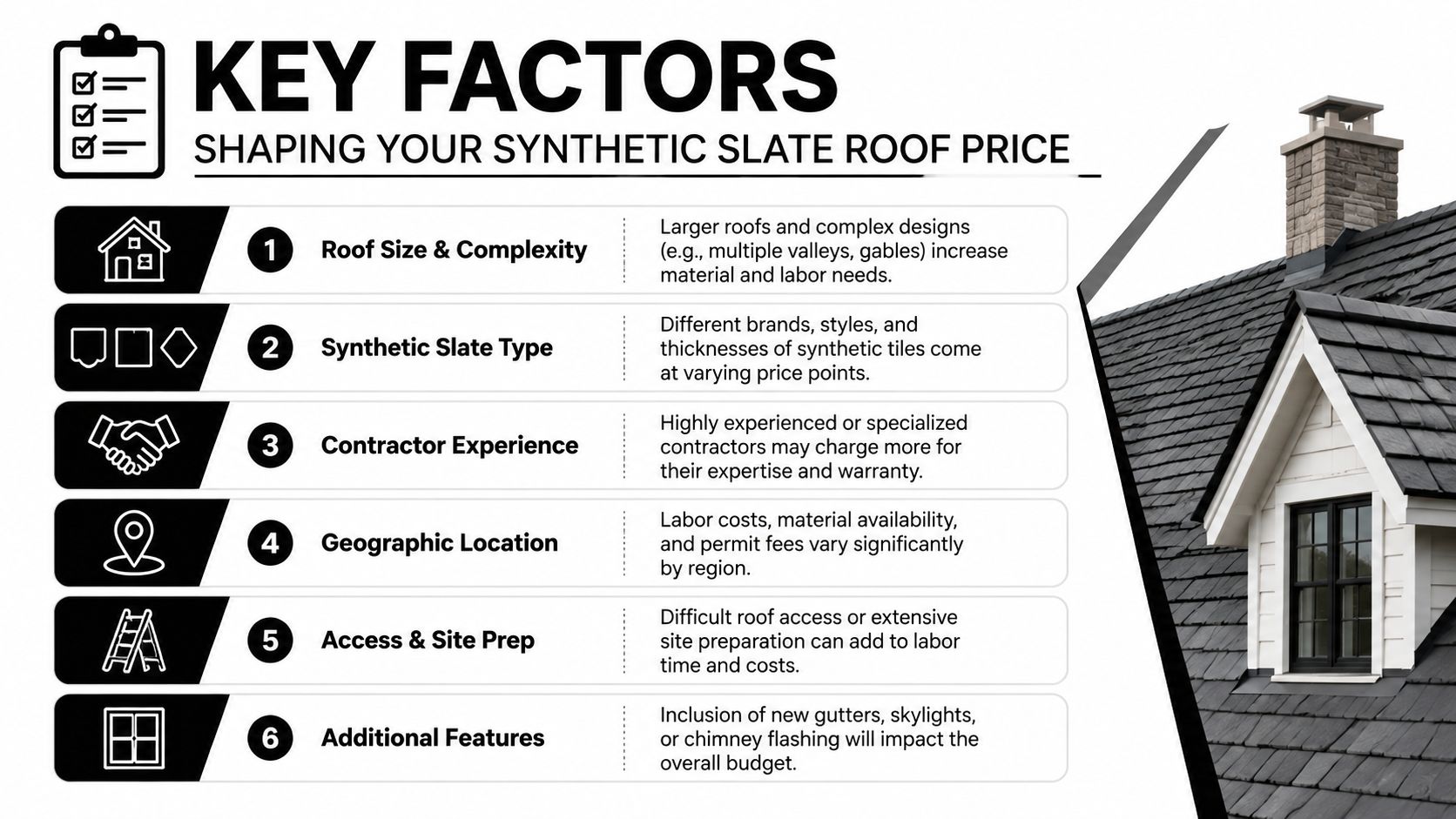
Two synthetic slate roofs can use similar products and still price out very differently. That's because roofing estimates work a lot like options on a new vehicle. The base model gives you a starting point, but the actual configuration determines the final number.
Roof shape changes labor fast
Size matters, but shape and complexity often matter just as much.
A simple gable roof is faster to dry in, easier to lay out, and cleaner to install than a roof with hips, valleys, dormers, dead valleys, and multiple elevation changes. Synthetic slate is a finish material people notice, so crooked courses and sloppy transitions stand out more than they do on many lower-cost systems.
Steep pitch also changes the labor equation. A crew working a steep roof moves slower, uses more safety equipment, and spends more time staging materials. That doesn't make the roof overpriced. It means the work takes more effort to do correctly.
The hidden parts of the roof matter
The visible tile gets the attention, but the layers under it affect both price and long-term performance.
If the old roof has to be removed, the crew has to tear it off, load debris, protect landscaping, and inspect the deck before new materials go down. Once the deck is exposed, any soft spots, damaged sheathing, or problem transitions need to be addressed before the synthetic slate goes on.
Underlayment choice matters too. If you want a clearer picture of what that layer does, this guide on roof underlayment is worth reading. It helps explain why two bids that look similar at the surface can be very different in what provides the house's protection.
Common cost drivers in this category include:
- Tear-off work: More labor, more cleanup, and more disposal than an overlay scenario
- Deck condition: Repairs discovered after removal can affect both timing and price
- Flashing details: Chimneys, walls, vents, and skylights need proper metalwork
- Accessory components: Ridge and hip details often require system-matched pieces
The cheapest roof is often the one with the least attention paid to what sits underneath it. That's also the roof more likely to give homeowners trouble later.
Access and jobsite conditions also count
Some houses are harder to work on. Limited driveway space, tight lot lines, mature landscaping, fencing, and detached structures can all make staging and debris handling more difficult.
Then there's product selection itself. Different synthetic slate lines have different profiles, thicknesses, fastening requirements, and accessory packages. Some are built to emphasize realism. Others are chosen because they simplify installation on a particular roof shape.
The contractor's experience matters here too. Not because every higher bid is automatically better, but because premium roofing systems punish shortcuts. A crew that mostly installs standard shingles may price synthetic slate aggressively, then struggle with layout and detailing once the job starts.
If you want the cleanest estimate review, look at these questions:
- How complex is my roof layout?
- Is this a full tear-off?
- What underlayment and flashing work is included?
- Are accessories matched to the system?
- How difficult is access to the house and roofline?
Those answers tell you much more than the final number alone.
How Synthetic Slate Compares to Other Roofing Materials
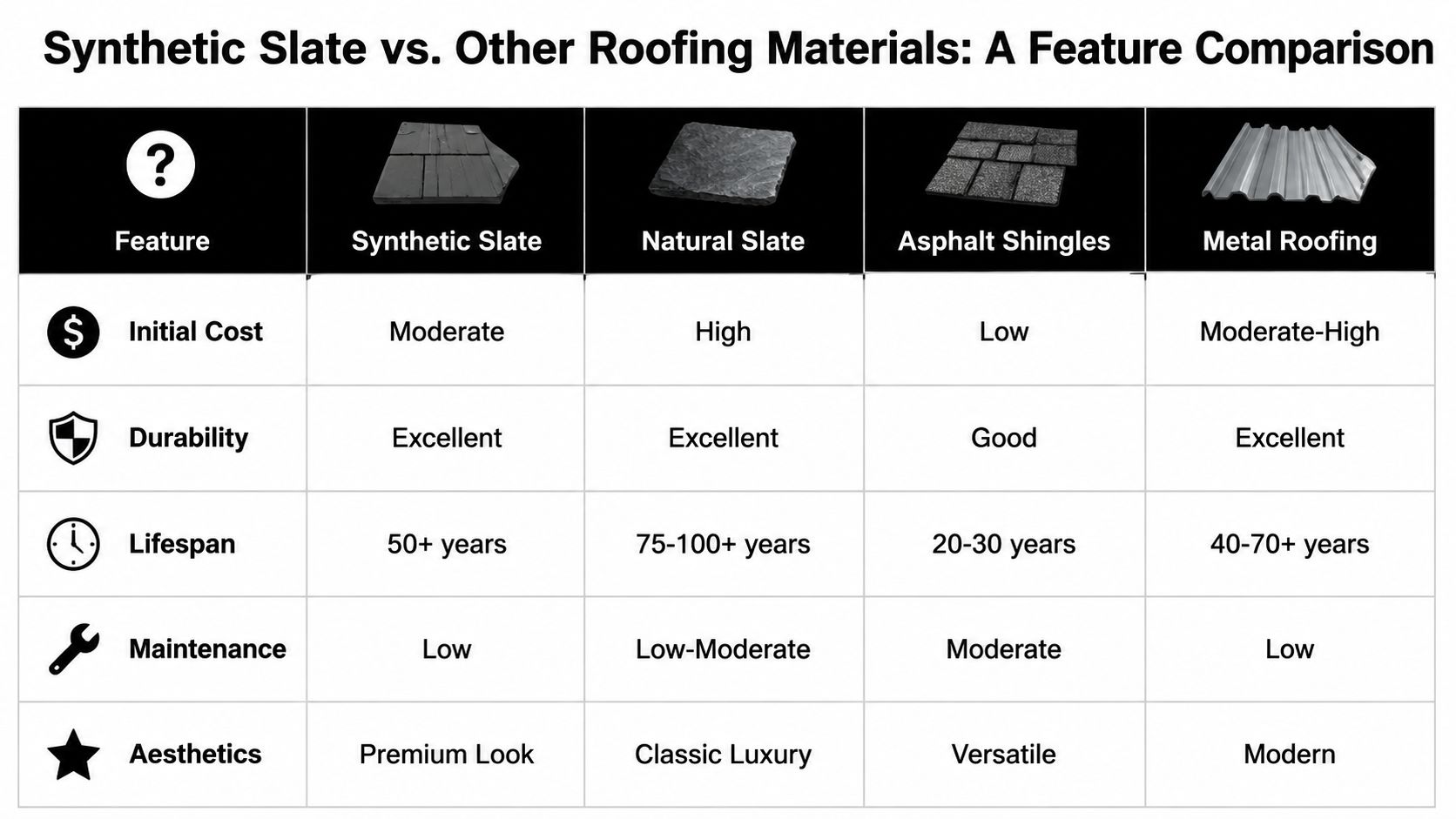
A lot of Penn Ohio homeowners narrow the decision to four real options. Keep asphalt because it is the lowest-cost path. Move to metal for longevity and a different look. Spend for natural slate. Or choose synthetic slate because it lands between those extremes in a way that makes sense for many houses.
Where synthetic slate fits in the market
Synthetic slate is usually a mid- to high-end roofing system. Its appeal is straightforward. You get much closer to the appearance of real slate than asphalt can offer, without taking on the weight, structural demands, and price that often come with natural stone.
Earlier in this article, the cost ranges cited from outside pricing guides showed the general pecking order clearly. Asphalt is usually the least expensive at install. Synthetic slate sits above asphalt. Natural slate is usually the highest-cost choice, especially once labor and roof complexity enter the picture. Metal can overlap synthetic slate in some projects, but it is a different visual category and solves a different design goal.
That distinction matters. Homeowners do not buy roofing materials by spreadsheet alone. They buy a roof that has to look right on the house, hold up in the local climate, and make financial sense over time.
If you want a broader side-by-side view of types of roofing for homes, that guide helps clarify where each system fits. Homeowners who are also weighing heat performance and material efficiency should review these energy-efficient roofing choices.
Roofing material cost and lifespan comparison
Read the table below as a total-cost-of-ownership check, not just an install-price chart. The synthetic slate and natural slate cost ranges shown here come from the Peak & Valley Roofing guide cited earlier in this section. The asphalt and metal rows stay qualitative here because pricing shifts widely by product, profile, and local labor.
| Material | Installed Cost (per sq. ft.) | Lifespan (Years) | Key Considerations |
|---|---|---|---|
| Synthetic Slate | $8 to $12 in one market estimate, with some regional estimates around $10 to $20 | 50+ years | Cost and lifespan range referenced from the Peak & Valley Roofing guide cited above. Delivers a premium slate-style appearance, lighter weight than natural slate, and a higher upfront cost than asphalt |
| Natural Slate | $15 to $25+, with some estimates as high as $9 to $30 depending on type and labor | 75 to 100+ years | Cost and lifespan range referenced from the same Peak & Valley Roofing guide cited above. True slate appearance, very long service life, heavy material, expensive installation, and possible structural review |
| Asphalt Shingles | Varies by product and market | Usually shorter than slate-based systems | Lowest entry cost for many homes, easy to source, broad style range, but a less distinctive look and a shorter replacement cycle |
| Metal Roofing | Varies by panel type and profile | Often long-lasting when properly installed | Strong durability and low routine maintenance, but the appearance is different from slate and can be a better fit on some homes than others |
Synthetic slate earns its place because it balances appearance, service life, and structural practicality better than many homeowners expect.
Natural slate still wins on authenticity and long-term prestige. It also asks for a much larger budget and, on some houses, added structural consideration. Asphalt keeps the entry price down, but replacement timing is usually more frequent, which changes the math if you expect to stay in the home a long time. Metal can be an excellent roof, but it should be chosen because you want metal, not because it is a substitute for slate.
That is the key comparison. Synthetic slate is rarely the cheapest roof to buy. It is often one of the more sensible premium roofs to own.
Estimating Costs in the Penn Ohio Area
National averages are useful for setting expectations. They're not enough to budget a real project in western Pennsylvania and eastern Ohio.
Why local quotes differ from internet averages
In the Penn Ohio area, installed cost depends on the same broad factors discussed earlier, but local conditions add another layer. Supplier availability can shift what product lines are practical. Hauling, disposal logistics, permit requirements, and municipal expectations vary by area. A roof in a dense neighborhood can be a very different project from a roof on a property with easy truck access and open staging space.
Labor conditions also change from market to market. That's one reason online estimates should be treated as a range, not a promise. A synthetic slate roof cost that looks simple on a national chart may move when the home has difficult access, detailed flashing conditions, or architectural features that require slower layout and finishing work.
Homeowners also tend to compare roofing choices through more than one lens. Some want the slate look first. Others are balancing appearance with ventilation, attic heat, or broader home-efficiency goals. If that's part of your decision, this guide to energy-efficient roofing choices gives helpful context on how roofing materials fit into overall home performance.
How to get a more useful estimate before you sign
A better local estimate starts with better project details. Homeowners get more useful numbers when the contractor evaluates the actual roofline, not just the home's footprint from a satellite view.
Bring these questions to the appointment:
- What is included in tear-off and cleanup?
- Are flashing replacements part of the quote or an allowance item?
- What underlayment system is specified?
- How are valleys, hips, and ridge details being finished?
- What happens if deck repairs are needed after removal?
If you want a broader baseline before scheduling site visits, Penn Ohio Roofing & Siding Group also has a local guide on roof replacement cost that helps homeowners think through pricing in this market by roof type and project scope.
The key is simple. Use internet ranges to narrow your options. Use a local inspection to decide what your house will cost.
Answering Your Top Questions About Synthetic Slate
Once homeowners get comfortable with the price range, the next questions are usually about risk. Not style. Not color. Risk.
How warranties usually work
Most premium roofing systems involve two separate warranty conversations. One is the manufacturer warranty, which covers the roofing product itself under its stated terms. The other is the workmanship warranty, which covers installation-related issues handled by the contractor.
Those aren't interchangeable. A strong product warranty won't correct sloppy flashing details or bad installation practices. And a workmanship warranty doesn't replace the manufacturer's coverage on the material itself.
Ask for both in writing. Read what triggers a claim, what exclusions apply, and whether accessory components must be installed as part of a complete system.
Get clear on who stands behind the product and who stands behind the installation. If that answer sounds fuzzy during the estimate, it won't get clearer after the job starts.
Insurance and storm claims
Homeowners often ask whether a synthetic slate roof would be covered after storm damage. The answer depends on the policy, the cause of loss, and the condition of the roof at the time of the event.
A contractor can document storm-related damage, explain the scope of repair or replacement, and communicate with the adjuster about roofing components. The carrier decides claim coverage based on the policy language. If you're considering synthetic slate as part of an insurance-funded replacement, verify material options with your carrier before assuming they'll approve a specific upgrade.
Financing for a premium roof
Synthetic slate is a larger purchase than standard shingles, so financing often becomes part of the conversation. What matters most is matching the roof choice to how long you expect to stay in the home and how much value you place on appearance, reduced maintenance, and long-term ownership.
A financed premium roof makes more sense when the homeowner plans to stay put, cares about curb appeal, and doesn't want to revisit the same decision again soon. It makes less sense when the goal is only to spend the least possible amount today.
Good financing discussions are straightforward. Monthly payment matters, but so do scope, material quality, warranty coverage, and whether the estimate includes the details that keep a premium roof performing like one.
Is a Synthetic Slate Roof Worth the Investment
A lot of Penn Ohio homeowners reach this point after pricing three roofs. Asphalt feels too temporary. Natural slate feels too expensive. They still want the slate look, and they want to make the decision once.
That is where synthetic slate makes sense.
The investment is worth it for homeowners who plan to stay in the house, care about appearance, and want better long-term value than a low-cost roof usually delivers. The upfront price is higher than asphalt, but the decision should be based on total ownership cost, not just the contract total. A roof that lasts longer, needs less upkeep, and fits the home properly can be the less expensive choice over time, especially if it helps you avoid another full replacement sooner than expected.
In the Penn Ohio area, that matters. Roofs here deal with snow loads, wind-driven rain, freeze-thaw cycles, and the maintenance issues that show up when lower-grade materials start aging. A synthetic slate system costs more because it is a premium product and it takes careful installation. If it is matched to the house and installed well, the owner gets curb appeal, weather performance, and a longer planning horizon.
It is not the right answer for every budget.
If the only goal is the lowest price today, asphalt usually wins. If the goal is to get close to the look of natural slate without taking on the full weight, cost, and structural demands of real stone, synthetic slate is often the better fit. That is the trade-off in plain terms.
A good estimate should help you judge that value clearly. It should show what is included, where the money is going, and whether the roof you are buying makes sense for how long you expect to own the home.
If you want a real number for your house, the next step is an on-site evaluation. Penn Ohio Roofing & Siding Group can inspect the roof, look at complexity, access, tear-off needs, and detail work, then give you a project-specific estimate with no obligation.