
You hear it in the middle of the night. A steady drip in the hallway bucket. Or maybe you don't hear anything at all. You just notice a brown ceiling stain after a hard Pennsylvania rain and realize water has been getting in for a while.
That's usually how roof leaks start for homeowners in Sharon, Pittsburgh, and Erie. Not with a dramatic collapse. With a small sign that makes you wonder how bad it really is.
After working around Pennsylvanias changing weather for more than 25 years, one thing is clear. A roof leak is rarely random. Water gets in because something aged out, shifted, cracked, backed up, or was never sealed correctly in the first place. Roofs don't just fail in the middle of a big storm. Storms expose the weak points that were already there.
Table of Contents
- That Drip Drip Drip… What Is Really Happening Up There
- The Usual Suspects Common Roof Leak Causes
- Beyond the Shingles Leaks at Roof Penetrations and Transitions
- Weather Age and Hidden Dangers
- Playing Detective How to Locate the Source of a Roof Leak
- Prevention and Emergency Actions for Your Pennsylvania Home
- Frequently Asked Roof Leak Questions
That Drip Drip Drip… What Is Really Happening Up There
A roof leak feels urgent because it is urgent. Water almost never stays where it first enters. It can run down a rafter, soak roof decking, wet insulation, and finally show up on a ceiling several feet away from the actual opening. That's why the stain you see indoors is often only the last stop in the path.
For homeowners, the first instinct is usually to blame shingles. Sometimes that's right. Sometimes it isn't. A roof is a full system made up of covering, underlayment, flashing, penetrations, ventilation, drainage, and structure. If one part fails, water looks for the easiest route in.
A good starting point is age. According to guidance on common roof leak causes and roof lifespan, the average roof lasts about 20 to 50 years, depending on the material, and asphalt shingles typically degrade faster than slate or metal roofs. The same source notes that aging shingles can crack or break, and that common weak points include flashings, chimney areas, vent pipes, skylights, attics, and ice dams.
What age looks like on a real roof
An older roof doesn't always look terrible from the street. That's what makes leaks frustrating. A roof can appear mostly intact while the seal around a vent pipe has dried out, flashing has loosened, or a brittle shingle has cracked during a freeze and thaw cycle.
In western Pennsylvania, that pattern shows up all the time. A home in Sharon may get long winter stretches with snow sitting on the roof. A home in Pittsburgh may take repeated heavy rain and wind. A home in Erie may deal with lake-effect weather that keeps moisture in play longer than homeowners expect.
Practical rule: If your ceiling stain showed up after a storm, don't assume the storm created the whole problem. It may have only exposed the weak point.
What works and what doesn't
What works is treating the leak like a system problem until proven otherwise. What doesn't work is throwing roofing cement at the first damp spot you see inside. Interior patching may hide damage for a while, but it won't stop exterior water entry.
If you're trying to understand what causes roof leaks, start with this mindset. The question isn't just “where is the drip.” It's “which part of the roof system stopped moving water where it belongs.”
The Usual Suspects Common Roof Leak Causes
The simplest way to think about a roof is like a suit of armor. Each piece overlaps the next, and the whole setup only works when every layer stays in place. One missing section, one open joint, or one clogged drainage path can give water an opening.
Some causes are visible from the ground. Those are the first things a homeowner should look for after wind, heavy rain, or winter weather.
What homeowners can often spot from the ground
Start with the field of the roof. Missing, lifted, curled, or cracked shingles are the obvious culprits. When the surface covering is broken, rain can reach layers below that were never meant to stay exposed.
Then look at the edges. Overflowing gutters, sagging sections, or dark streaks beneath the eaves often point to drainage trouble. Water that can't exit cleanly will back up, spill over fascia, and in winter it can contribute to ice buildup near the roof edge.
Finally, scan the roof features. Chimneys, plumbing vents, skylights, and wall intersections deserve extra suspicion because each one interrupts the roof surface.
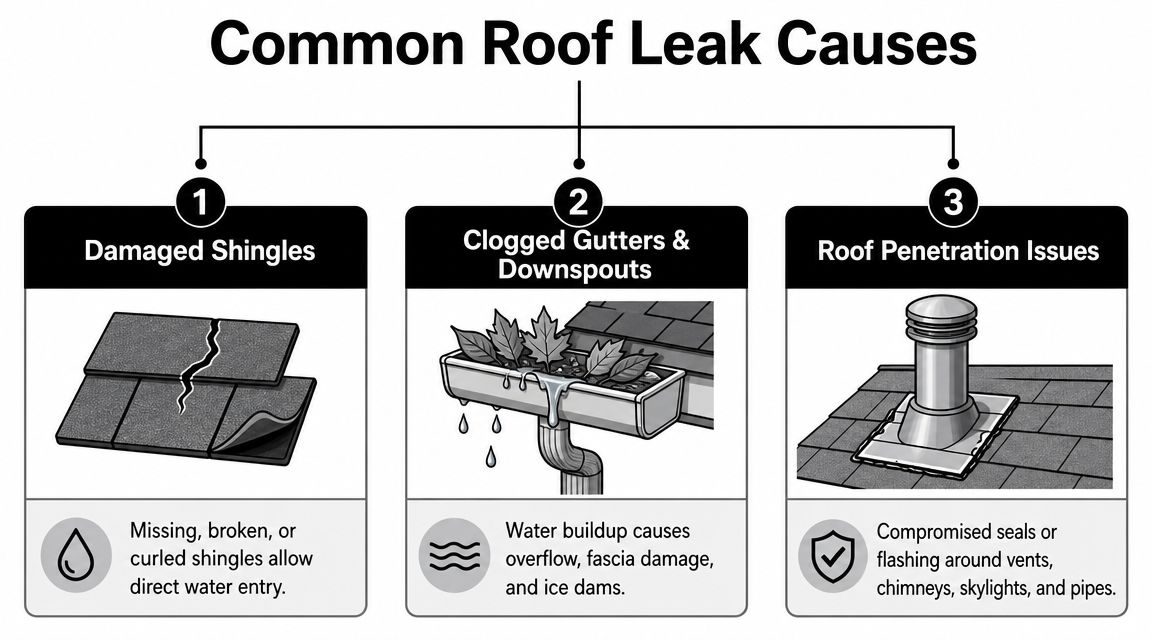
A quick visual check can help you sort what may be a simple maintenance issue from a likely repair call. Homeowners who also want broader guidance on interior consequences can review this resource on preventing water damage for property owners, especially when a roof leak has already started affecting ceilings, walls, or flooring.
Common roof leak sources at a glance
| Cause | Common Symptom | DIY or Pro? |
|---|---|---|
| Damaged shingles | Missing tabs, visible cracking, exposed roof area | Pro if you need to get on the roof. Ground-level observation only for most homeowners |
| Clogged gutters and downspouts | Overflow during rain, staining at eaves, icicles building at edge | DIY if cleaning can be done safely from a stable ladder. Pro if high, icy, or damaged |
| Loose sealant at small roof details | Minor gaps around exterior trim or exposed fastener points you can clearly identify | DIY only for accessible, low-risk areas not requiring roof walking |
| Chimney or vent-related leak signs | Drip or stain near fireplace chase, bathroom vent, or pipe location | Pro |
| Valley or low-slope water hold | Repeated leak after heavy rain or snowmelt in same area | Pro |
DIY versus call a pro for the everyday culprits
A homeowner can safely do a few things.
- Check from the ground: Use binoculars after a storm to look for missing shingles, crooked gutters, or debris buildup.
- Manage drainage: Clear leaves from accessible gutters if conditions are dry and safe.
- Watch for repeat patterns: If the same area leaks only during wind-driven rain, note the wind direction and where the stain appears.
What usually doesn't go well is climbing onto a steep roof with a tube of sealant and guessing. That kind of patch may redirect water for a short time, but it often traps it, spreads it, or misses the entry point.
If the roof is steep, wet, icy, high, or older, that isn't a DIY roof. That's a diagnostic and safety problem.
Beyond the Shingles Leaks at Roof Penetrations and Transitions
Most chronic leaks don't begin out in the middle of an open roof field. They start where materials meet, where the roof changes direction, or where something passes through it.
That includes vent pipes, chimneys, skylights, valleys, wall intersections, pitch changes, and low-slope tie-ins over porches or additions. These areas don't just shed water. They manage concentrated water flow. That's why they fail more often and why they fool homeowners.
Why these areas leak first
Roofing guidance consistently identifies transitions and penetrations as common leak locations, including valleys, flashing, vents, skylights, and low-slope areas. RoofMaxx also highlights pitch transitions and low-slope sections as leak-prone zones in its overview of common roof leak causes. That matters on homes in Sharon, Pittsburgh, and Erie where additions, dormers, and mixed rooflines are common.
The key component here is flashing. Flashing is the water-control layer that directs rain away from joints and penetrations. According to this roofing explanation of flashing failure, flashing leaks happen when sealant erodes, metal corrodes, or the flashing was installed incorrectly, allowing rainwater to move under the roofing layer instead of away from it. The same source notes that thermal expansion and contraction make the problem worse over time.
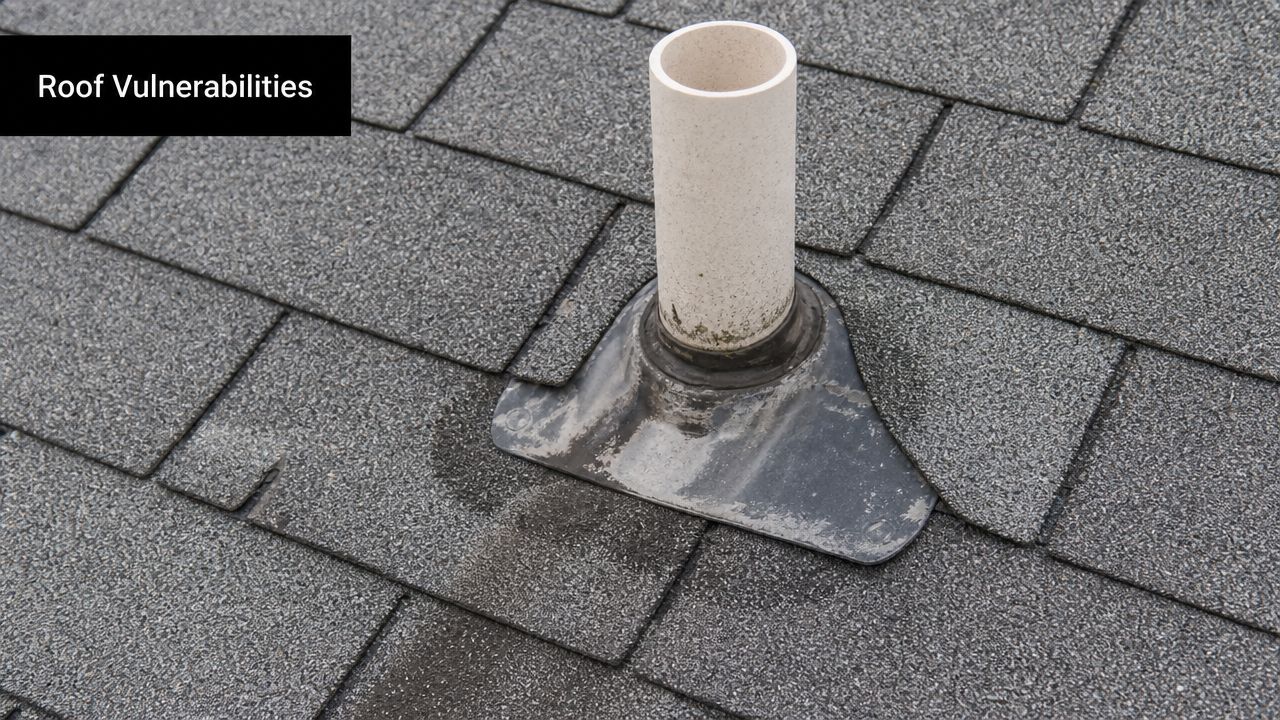
If you want a closer look at the part itself, this guide explains what roof flashing is and why it matters so much around roof details.
DIY or call a pro at penetrations
Homeowners get into trouble by underestimating the issue. A pipe boot might look like “just a rubber ring.” A chimney corner might look like “just a little caulk gap.” But once water gets under shingles or behind step flashing, the visible defect is only part of the story.
Here's the practical breakdown:
- DIY observation is fine: Look for cracked rubber boots, rusted metal, separated sealant, or staining near a chimney chase inside the attic.
- DIY repair is rarely the right move: Smearing more sealant over old flashing doesn't rebuild the water path. It often creates a temporary skin over a failing assembly.
- Call a pro when the leak involves any transition: Valleys, chimneys, skylights, walls, and low-slope tie-ins need proper disassembly and re-layering, not surface guessing.
Water at a penetration is a routing problem, not just a hole problem.
That's why two roofs can look similar from the lawn, but one leaks every hard rain and the other stays dry. The difference is often hidden in the laps, terminations, and flashing details homeowners can't fully inspect from below.
Weather Age and Hidden Dangers
Pennsylvania doesn't give roofs an easy life. Snow sits. Rain drives sideways. Temperatures jump up and down. Then the sun bakes everything dry again. Roof leaks often come from that long cycle of stress, not one single dramatic event.
What Pennsylvania weather does to a roof
Winter is the big one. Ice dams can form when heat loss and roof-edge cold spots work against each other. Melted snow runs down the roof, refreezes at the colder edge, and starts blocking drainage. Once that happens, water can push back under roofing materials even when the outer surface still looks decent from the yard.
Heavy rain creates a different test. It finds weak laps, aging details, and any area where runoff concentrates. Wind makes that worse by driving water uphill and sideways into joints that may stay dry in a lighter storm.
Attic moisture can also fool homeowners. Not every “roof leak” begins with rain coming through the roof covering. Condensation in a poorly balanced attic can wet wood and insulation from the inside, especially during cold weather.
For the part of the roof you don't see, it helps to understand what roof underlayment is. That hidden layer matters when shingles age, water backs up, or weather pushes moisture past the outer covering.
When the problem is bigger than a patch
Some warning signs point to structural trouble, not just a repairable surface defect. An industry analysis cited by Roofing Contractor reports that missing roofing materials affect 3.5 million households in the U.S., while sagging roofs affect 1.9 million households in the U.S. in its report on leaks, holes, and sagging roofs. The same discussion notes that these conditions often align with deeper roof-system failure, long-term moisture intrusion, deck weakening, and wind-related damage.
That lines up with what roofers see in the field. A sag isn't cosmetic. It suggests something below the shingles may have stayed wet too long, lost strength, or shifted under load.
Use this as a simple decision guide:
- DIY only: Monitoring interior stains, documenting when they appear, and checking attic conditions from a safe walkway.
- Call a pro soon: Repeated winter leaks, recurring ice buildup at eaves, or leaks that only show up during freeze-thaw swings.
- Call a pro immediately: Visible sagging, soft decking, ceiling bowing, or a roofline that no longer looks straight.
Playing Detective How to Locate the Source of a Roof Leak
Finding the source is part observation and part patience. The biggest mistake is assuming the drip point is the entry point. Water often travels along framing, nails, or the underside of roof decking before it finally drops where you can see it.
Start inside and work backward
Begin with the ceiling stain or active drip. Mark the location with painter's tape so you can compare it later if the stain spreads. Then head into the attic during daylight if you can do it safely.
Look for these clues:
- Dark trails on wood: Water often leaves a track on rafters or decking.
- Wet or matted insulation: Damp insulation can show where water has been collecting.
- Shiny nail tips or damp fasteners: Moisture condenses and collects on metal.
- Pinpoints of daylight: Small openings may show up around penetrations or damaged areas.
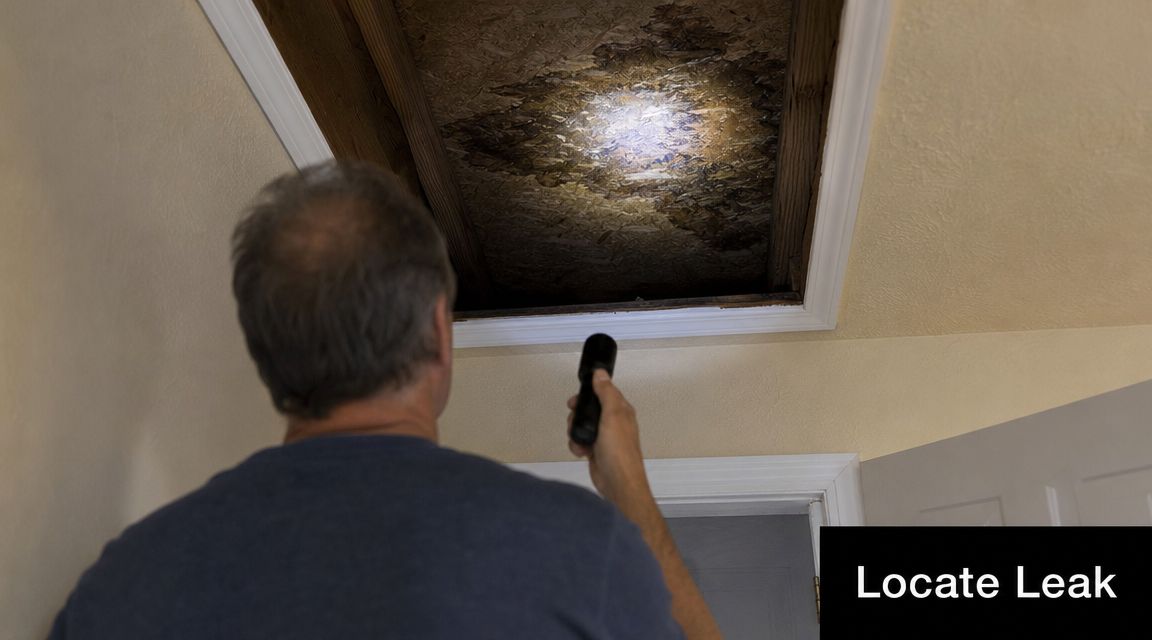
If the interior damage has spread beyond a simple stain, this guide for homeowners on ceiling damage can help you recognize when moisture is affecting drywall, paint, or structural finishes.
A more detailed local walkthrough on tracing leak paths is here: how to find roof leaks.
What to do and what not to do
A careful inspection is useful. A risky one isn't.
- Do use a bright flashlight: Side lighting helps reveal water trails on wood.
- Do step only on secure framing or attic walk boards: Drywall between joists won't support body weight.
- Don't start tearing out wet material immediately: You may erase clues before the source is confirmed.
- Don't run a hose on the roof by yourself: Controlled water testing works best with one person outside and another inside watching carefully.
The leak you can see is often the end of the path, not the beginning.
If you can't trace the route within a reasonable time, that's normal. Leak diagnostics are often about ruling out one area at a time. Experienced roofers look at roof geometry, storm direction, penetrations, and interior evidence together, because one clue alone rarely tells the whole story.
Prevention and Emergency Actions for Your Pennsylvania Home
It is 2 a.m., rain is pounding the roof, and water starts hitting the floor in the spare bedroom. In Pennsylvania, that call often comes during a hard spring storm, a winter thaw after ice buildup, or a wind-driven rain that finds one weak detail on the roof. The first job is to limit interior damage. The second is to make sure the leak gets fixed at the roof, not just managed inside the house.
What to do during an active leak
Start with the living space below the leak. Move furniture, electronics, rugs, and storage items out of the drip path. Set buckets or plastic bins under active water. If the ceiling is sagging or bubbling, collect the water before the drywall lets go on its own.
Take clear photos while the leak is active. Get the ceiling stain, dripping water, damaged belongings, and any visible exterior issue you can see from the ground. That record helps with insurance questions and gives the roofer a better timeline of what happened.
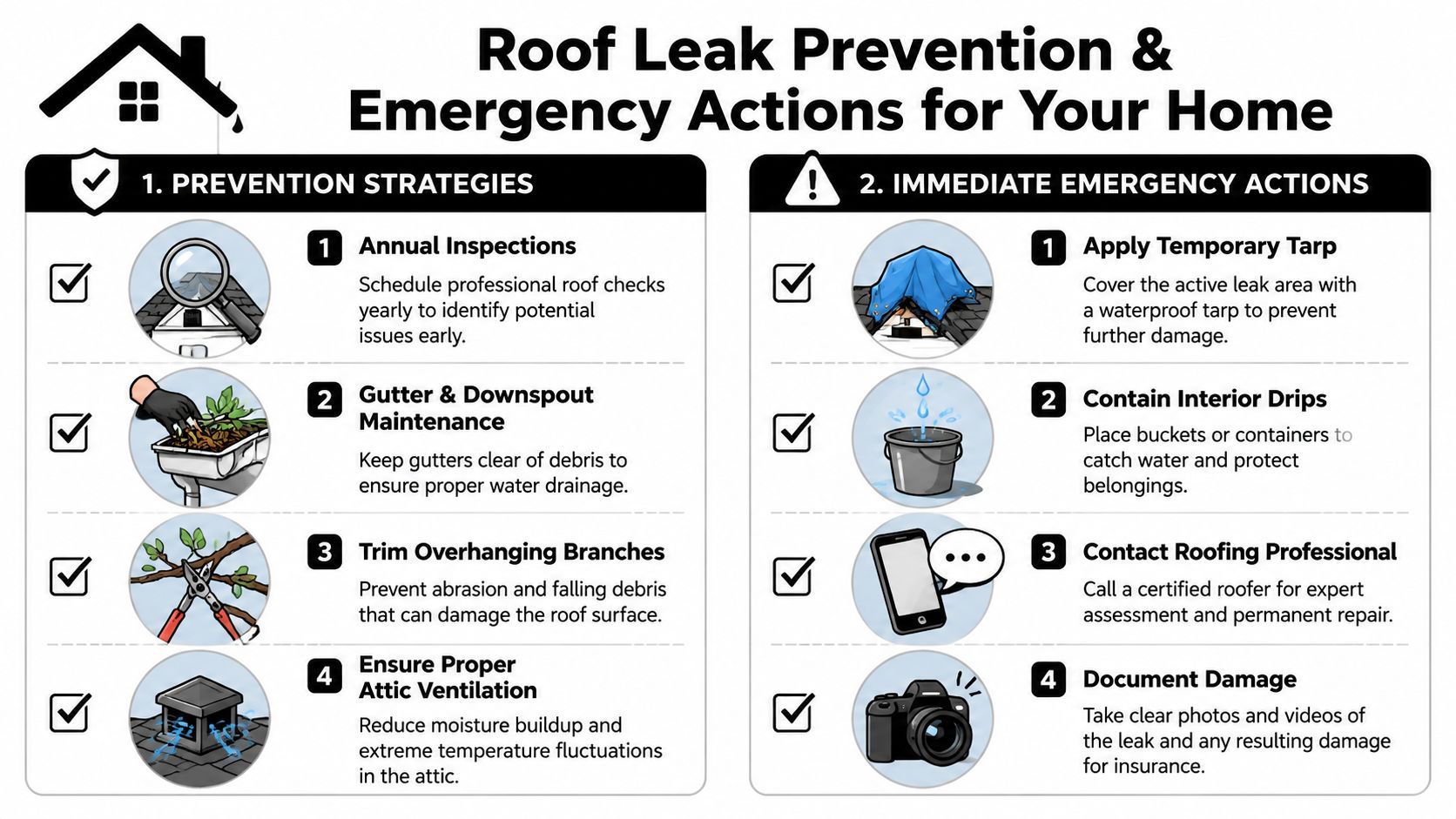
Some temporary interior steps are reasonable. Full roof repairs during a storm usually are not.
If you want to understand the limits of temporary interior work, this guide on repairing a leaky roof from within explains what may buy you time and what will not solve the actual problem.
Use this Pennsylvania-specific rule of thumb:
- DIY is reasonable: catching water, moving belongings, taking photos, placing a tarp over items in the attic, and clearing a simple gutter blockage from a stable ladder in dry conditions.
- Call a pro: water near electrical fixtures, ceiling bulges, steep or wet roof surfaces, suspected ice dams, repeated leaks around chimneys or vents, or any leak during snow, ice, or high wind.
For homeowners who need an inspection or emergency roof repair in this area, Penn Ohio Roofing & Siding Group handles service calls for homes across western Pennsylvania and nearby communities.
The maintenance that prevents most headaches
Most roof leaks I see in Sharon, Pittsburgh, and surrounding towns did not start the day water showed up on the ceiling. The warning signs were there earlier. Overflowing gutters during heavy rain, attic frost during a cold snap, loose flashing after wind, or a small trouble spot where two roof lines meet.
That is why routine prevention matters more in Pennsylvania than in milder climates.
Keep the plan practical:
- Clean gutters and downspouts before heavy rain and before winter: backed-up drainage is one of the fastest ways to force water under shingles and feed ice dam problems.
- Watch for ice dam conditions: uneven attic temperatures, poor ventilation, and snow sitting above warm eaves are a bad combination. Homeowners can safely rake lower roof edges from the ground. Ice removal on the roof itself is a professional job.
- Trim limbs away from the roof: branches scrape shingles, drop debris into valleys, and hold moisture where roofs need to dry.
- Check the attic after hard rain, snow melt, or freeze-thaw swings: look for damp insulation, dark staining on wood, or moisture around vents and chimneys.
- Schedule a professional inspection after major storms or as the roof ages: a roofer can catch failing pipe boots, lifted flashing, and small penetration leaks before they soak decking and insulation.
- Pay close attention to transitions: porch roofs, dormers, attached garages, and valley areas often leak before the main roof field does.
The trade-off is simple. DIY maintenance works well for cleaning, observation, and early catch items you can reach safely. Diagnosis and repair belong to a roofer once the issue involves height, flashing, hidden water paths, storm damage, or winter ice. That is especially true in western Pennsylvania, where heavy rain can expose a weak flashing detail fast, and freeze-thaw cycles can turn a small drainage problem into a serious leak.
Frequently Asked Roof Leak Questions
Is a roof leak always an emergency
Not every leak is pouring water into the room, but every leak deserves quick attention. A slow leak still wets decking, insulation, and framing. If water is actively dripping, reaching light fixtures, or causing ceiling bulging, treat it as urgent.
Should I repair the roof or replace it
That depends on the roof's age, the condition of surrounding materials, and whether the issue is isolated or widespread. A single failed detail can often be repaired. A roof with multiple weak points, aging materials, or structural warning signs may be a better candidate for replacement.
Will homeowners insurance cover a roof leak
Coverage usually depends on the cause. Sudden storm-related damage is often treated differently from wear, deferred maintenance, or long-term deterioration. The best first step is documentation and a professional inspection so the cause is clear.
Can I patch a roof leak myself
Sometimes you can slow interior damage temporarily. That's different from solving the leak. DIY work makes the most sense for safe interior containment or simple gutter cleaning. Once the problem involves steep slopes, penetrations, flashing, sagging, or winter ice, professional repair is the safer move.
What affects roof leak repair cost in Pennsylvania
The main factors are access, roof height, material type, how easy the source is to locate, and whether water damaged decking or interior finishes. A leak at a basic shingle area is a different job than a leak at a chimney, valley, skylight, or low-slope transition.
If you're dealing with a ceiling stain, active drip, or a roof that just doesn't look right after a Pennsylvania storm, Penn Ohio Roofing & Siding Group can help you figure out the cause and the right next step. A careful inspection can separate a manageable repair from a larger structural issue, and it gives you a clearer path forward without guessing.