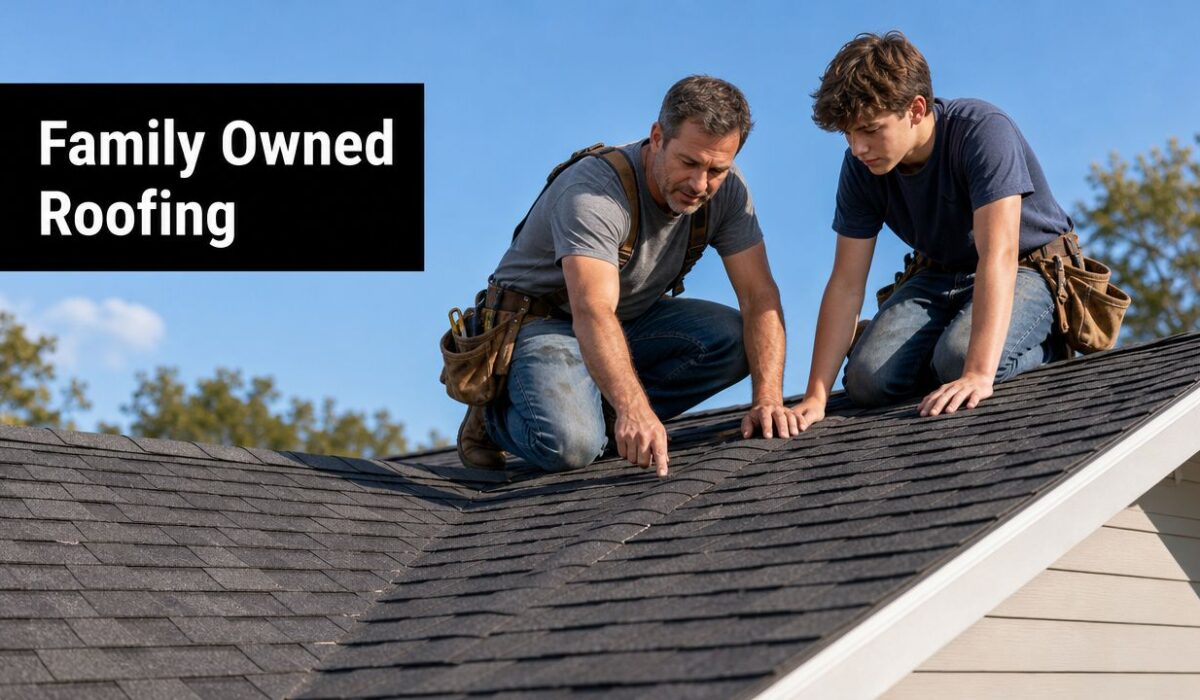
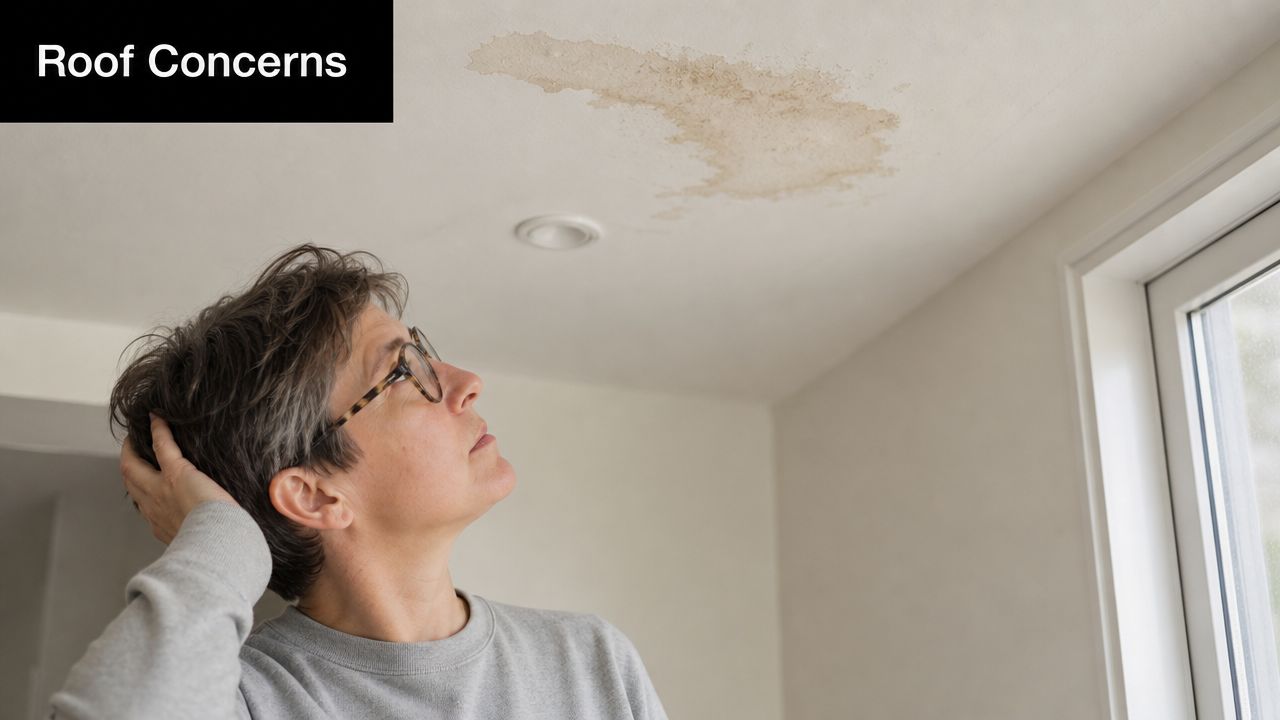
You're probably reading this because something forced the issue. A stain showed up on the ceiling. Shingles landed in the yard after a storm. A real estate deal is moving fast. Or you got three estimates and every contractor says they're “family-owned,” “fully insured,” and “the one to trust.”
That's where most homeowners in Sharon, Pittsburgh, Erie, and the rest of Western Pennsylvania get stuck. The roof problem feels urgent, but the bigger risk is hiring the wrong company under pressure. The label sounds comforting. The deposit gets paid. Then the communication slows down, the schedule slips, or the company turns out to be a lot less stable than its sales pitch.
A family owned roofing company can absolutely be the right choice. In many cases, it is. But the smart move is to verify the promises, not buy the slogan.
Table of Contents
- The Challenge of Choosing Your Roofer
- The Real Meaning of a Family Owned Business
- Your Vetting Checklist Before You Hire
- Comprehensive Services and Roofing Expertise
- Navigating Emergencies and Insurance Claims
- Identifying Authentic Local Trust Signals
- Partnering With a Roofer You Can Trust
The Challenge of Choosing Your Roofer
A roof problem hits differently than most home repairs. If your water heater fails, it's a headache. If your roof fails, water gets into insulation, drywall, framing, flooring, and sometimes electrical fixtures. Homeowners feel that pressure immediately.
I've seen the same pattern over and over. A homeowner in Pittsburgh notices a leak after wind-driven rain. Someone in Erie worries about damage after a rough winter. A family in Sharon gets a knock on the door from a roofer right after a storm. Everybody wants the same thing: a company that will answer the phone, tell the truth, and finish the work without turning the job into a second disaster.
Why trust matters first
The first decision usually isn't shingles versus metal. It's whether the company standing in your driveway is credible. Roofing is a high-dollar project tied directly to your home's protection, resale value, and insurance record. If the contractor is sloppy, underinsured, or unstable, the material brand won't save you.
That's why the company type matters. A real family business often feels less transactional. You're more likely to deal with people whose last name is tied to the work, whose office is nearby, and whose reputation lives in the same communities where they sell.
A roofing proposal is not just a price. It's a test of whether the contractor is organized, accountable, and built to stay in business long enough to stand behind the job.
What homeowners should focus on
Before you get pulled into sales talk, focus on a few plain questions:
- Who am I hiring: The salesperson, the owner, or a subcontracting chain you'll never meet?
- Who answers after the check clears: A service department, or voicemail?
- Who's around later: The same crew and office, or a company that disappears after storm season?
Those questions matter just as much in a small town near Hermitage as they do in larger markets like Pittsburgh and Erie. If you start there, you'll make a calmer, better decision.
The Real Meaning of a Family Owned Business
“Family-owned” should mean something concrete. If it doesn't change how the company communicates, documents work, handles problems, and protects its reputation, then it's just branding.
The roofing market is crowded. IBISWorld projects about 109,000 roofing contractor businesses in the United States in 2026, with industry revenue projected to reach $92.5 billion and growth at a 3.4% compound annual rate from 2021 to 2026. In a market that large, smaller and family-run firms rarely win on size alone. They win on accountability, repeat business, and local reputation.
What the label should actually signal
A legitimate family owned roofing company usually operates with a longer memory. Bad work doesn't disappear into a corporate structure. It comes back to the same office, the same phone line, and often the same family name.
That tends to show up in practical ways:
- Direct communication: You can often reach the decision-maker without going through layers of staff.
- Reputation discipline: Companies built on local referrals usually care a lot about loose ends, callbacks, and unfinished punch lists.
- Long-view workmanship: A family business that expects to keep serving the same towns has a reason to avoid shortcuts that create warranty claims later.
What it should not mean
It should not mean “trust us because we seem nice.”
That's not enough. Plenty of companies use family photos, hometown language, and community messaging while still running weak systems behind the scenes. If they can't produce clear paperwork, insurance proof, a detailed scope, and a realistic schedule, the family-owned label has no value.
Practical rule: Treat “family-owned” as a starting point for questions, not the answer to them.
Legacy is only useful when it shapes behavior
The good version of family ownership is simple. The owners think in years, not quick sales cycles. They expect service calls. They know customers talk. They understand that one bad roofing job can echo through a community for a long time.
That mindset is part of why stories from working owners matter more than polished ads. If you want a grounded look at how responsibility, parenthood, and business ownership can intersect in the trades, these insights from a single dad business owner offer useful perspective on what long-term accountability can look like in roofing.
My opinion on this
A real family company is often easier to trust. But only if the business behaves like a disciplined contractor. I'd rather hire a well-run non-family company than a disorganized family one. The right standard is not sentiment. It's proof.
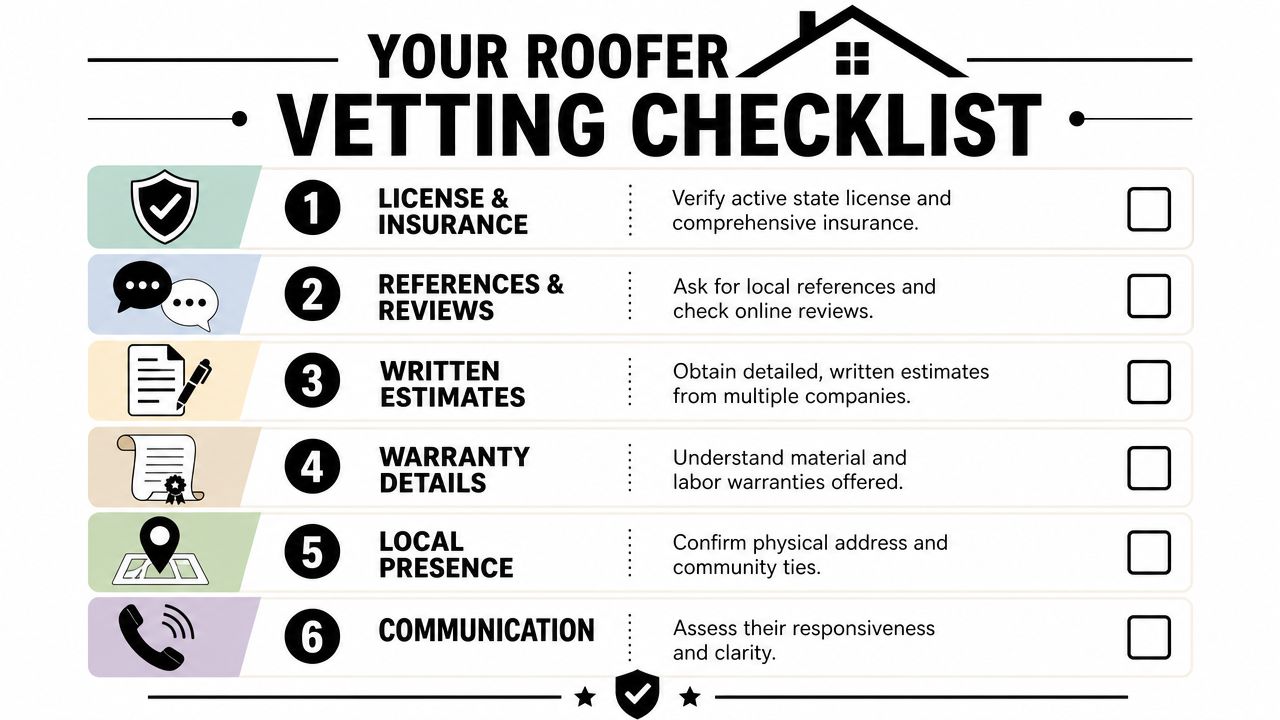
Your Vetting Checklist Before You Hire
This is the part most homeowners skip, and it's the part that protects them.
A recent Florida example showed why. A roofing firm filed for Chapter 7 bankruptcy after customers had already paid deposits, leaving $1.7 million in liabilities tied to suppliers and customers with unfinished jobs, which is exactly why licensing, bonding, insurance, written scope, and payment schedule matter more than the family-owned label itself, as covered in this reported contractor failure example.
The non negotiables
If a contractor resists any item below, move on.
Ask for proof of insurance, not a verbal promise
“Fully insured” means nothing until you see documents. You want proof of liability coverage and proof of workers' compensation coverage. Those are different protections. If you want a plain-English overview of why that distinction matters, PIA's roofer liability insights are worth reviewing before you sign anything.Demand a written scope of work
The estimate should spell out tear-off, underlayment, flashings, ventilation details, cleanup, disposal, and how decking issues are handled if they're found. If the scope is vague, the bill later won't be.Review the payment schedule carefully
A deposit by itself isn't the issue. An unsafe deposit structure is the issue. Don't accept a schedule that loads too much money upfront before materials are on site and work is underway.
Stability checks most people miss
Homeowners often spend more time comparing shingle colors than they do checking business stability. That's backward.
Use this short table when you talk to any contractor:
| Check | What to ask | Why it matters |
|---|---|---|
| Physical presence | Do you have a real local office? | A real location is easier to verify and harder to fake |
| Supplier standing | Who supplies your materials? | Ongoing supplier relationships often reflect operating stability |
| Timeline discipline | When can you start, and what causes delay? | Clear scheduling usually signals real operational control |
| Change order policy | How are unforeseen repairs approved? | Prevents surprise billing and verbal disputes |
Warranty questions that separate pros from salespeople
A lot of homeowners hear “warranty” and think they're covered. Maybe. Maybe not.
Ask these questions plainly:
- Material warranty: Who backs it, the manufacturer or the roofer?
- Workmanship warranty: What exactly is covered if installation causes a problem?
- Transferability: If you sell the home, does any coverage transfer?
- Claim path: Who do you call first if there's a leak?
If the salesperson answers with general reassurance instead of specifics, that's your answer.
If a contractor can't explain the warranty without fumbling, they probably didn't build their process around honoring it.
Local references matter more than polished marketing
Ask for recent local jobs in places like Sharon, Pittsburgh, or Erie. Then ask a better follow-up question: were these replacement jobs, repair jobs, or insurance jobs? A contractor who only shines on clean replacement sales may be weak on diagnostics, follow-up, or service work.
Homeowners who want another practical screening framework can compare their notes against this guide on how to choose a roofing contractor.
One local example of the kind of documentation homeowners should expect is Penn Ohio Roofing & Siding Group, which states that it offers licensed, bonded, and insured roofing services, free estimates, and emergency availability. That doesn't replace your own vetting. It shows the level of transparency you should expect from any contractor you consider.
Comprehensive Services and Roofing Expertise
A roof isn't one product. It's a system. That's why broad service capability matters.
Some companies are fine when the job is simple. Basic ranch home, basic shingle replacement, no tricky flashing, no ventilation issues, no insurance paperwork. But roofs in Pennsylvania aren't always simple. Homes and commercial buildings from Sharon to Pittsburgh often carry a mix of age, additions, valleys, low-slope transitions, chimneys, and weather exposure that punish weak installers.
Material choice matters less than process quality
The biggest mistake homeowners make is assuming the brand name on the bundle determines the outcome. It doesn't. Freedonia's roofing industry analysis notes that asphalt shingles remain the dominant system in major markets, but real performance depends on following manufacturer installation details such as underlayment coverage, fastener schedule, and ventilation, and that roofing defects are often installation-related rather than material-related.
That matches what experienced contractors already know. A decent product installed poorly fails early. A properly matched system installed with discipline performs the way it should.
What a capable roofer should handle
A serious roofing contractor should be comfortable with more than one lane.
- Residential steep-slope roofing: asphalt shingles, metal roofing, flashing replacement, ventilation corrections
- Low-slope and flat systems: assemblies used on additions, porches, garages, and commercial properties
- Repair work: leak tracing, storm damage repair, flashing failure correction
- New construction and replacement: full-system planning instead of patchwork thinking
Matching the roof to the building
The right assembly depends on the structure and exposure. A steep residential roof in Erie won't always call for the same approach as a low-slope section on a building in Pittsburgh. Chimneys, valleys, penetrations, attic airflow, and even how snow or driven rain hits one side of the property all affect the recommendation.
A good contractor should be able to explain why they're recommending one system instead of another in plain language. Not with buzzwords. With reasons.
The best roofing explanation is boring. It covers details, transitions, ventilation, and flashing. That's what keeps water out.
My advice on expertise
Don't hire a company just because it sells the material you already had in mind. Hire the one that can diagnose the whole assembly and explain the install sequence clearly. If they can't talk through underlayment, fasteners, flashing, and ventilation, they're not ready for your roof.
Navigating Emergencies and Insurance Claims
Roof emergencies are where weak contractors get exposed fast. Anybody can promise service during a sales appointment. The true test is who answers when water is actively getting in.
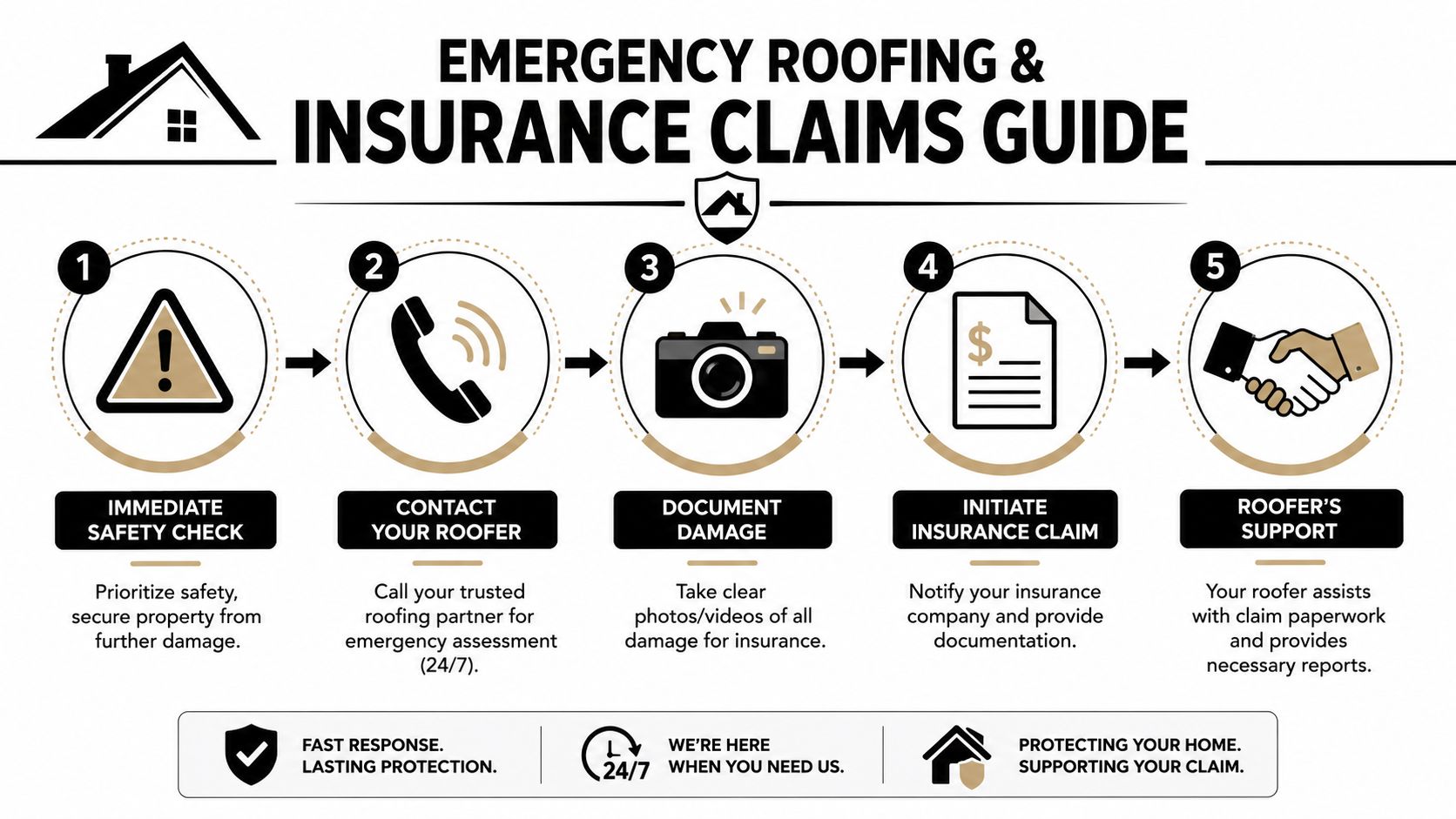
When a storm hits, your roofer's first job isn't selling replacement. It's stopping the damage from spreading. That usually means safe assessment, temporary protection, and careful documentation. If a contractor jumps straight to “sign here for a full roof” without dealing with immediate mitigation, be careful.
What emergency response should include
A dependable roofing partner should have a repeatable crisis process, not improvisation.
- Immediate site safety: checking for active hazards before anyone climbs or enters affected areas
- Temporary dry-in measures: tarping or other protective steps to limit further water intrusion
- Damage documentation: photos, notes, and roof-condition observations taken in an organized way
- Clear next steps: whether the issue calls for repair, insurer review, or full replacement planning
Why documentation matters so much
Insurance stress usually comes from confusion. Homeowners think they need “an estimate,” but the stronger position is a documented scope tied to observed damage.
The diagnostic side of roofing is more specialized than many people realize. The NRCIA explains that roofing professionals in expert-witness and loss-assessment contexts are expected to distinguish between manufacturing defect, weather damage, and installation error, and notes that standardized inspection criteria, moisture tracing, and photo documentation improve claim defensibility and reduce rework.
That tells you something important. Good emergency roofing isn't only about labor. It's about disciplined observation.
How homeowners should handle the claim side
Do these things in order:
Protect people first
Stay clear of dangerous areas, especially where ceilings sag or electrical fixtures are involved.Call your insurer promptly
Start the claim, get the claim number, and document every conversation.Bring in a roofer who documents well
Sloppy photos and vague notes create headaches later.Keep everything in writing
Scope changes, temporary repairs, and follow-up recommendations should all be documented.
If you want a clearer picture of how a contractor should support that process, this roof insurance claim process overview is a useful reference point.
My recommendation during storm season
Don't wait until you're in panic mode to decide who you trust. If you own property in Sharon, Erie, Pittsburgh, or nearby communities, identify your roofer before the next storm warning. Emergency decisions made under pressure are usually the expensive ones.
Identifying Authentic Local Trust Signals
“Local” gets abused in roofing. A truck with a temporary magnet sign and a local-looking phone number doesn't make a company rooted in your community.
That matters because roofing is specialized work. The U.S. Bureau of Labor Statistics tracks roofers as a distinct occupation in its May 2023 Occupational Employment and Wage Statistics, covering installation and repair across multiple roofing materials. That official classification reinforces something homeowners should already assume: this is not casual handyman work. You want trained crews, safety discipline, and people who know the conditions and building patterns in your region.
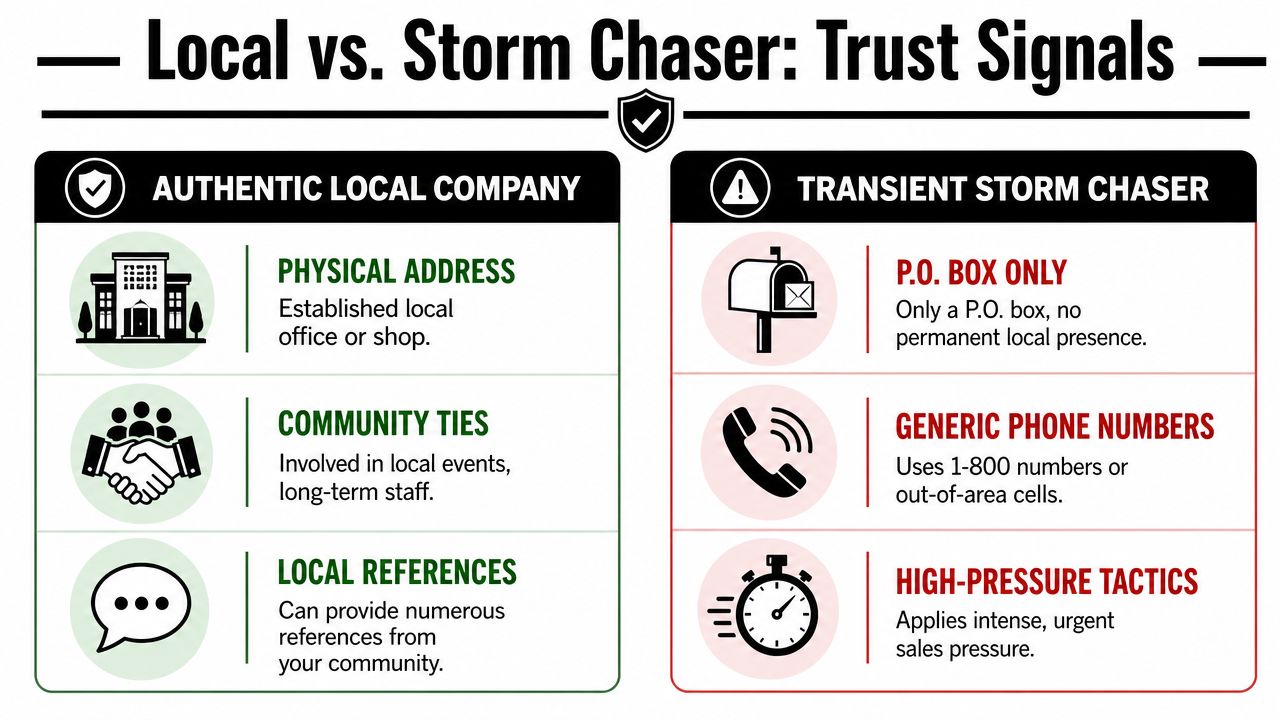
Local company versus storm chaser
Use this comparison when someone shows up at your door after severe weather:
| Authentic local company | Transient storm chaser |
|---|---|
| Has a verifiable office or shop nearby | Uses vague addresses or temporary locations |
| Can point to jobs in your area | Talks broadly but avoids specifics |
| Explains process without pressure | Pushes same-day signatures |
| Plans for service after install | Focuses on the immediate sale |
Positive signals worth verifying
Not every good roofer will look the same, but solid local signals tend to repeat.
- Real address: You should be able to verify a physical location, not just a mail drop.
- Area-specific references: Ask for jobs in Sharon, Pittsburgh, Erie, or towns near you.
- Consistent staff presence: Long-term estimators, office staff, or crew leaders are a good sign.
- Review depth: Look for detailed reviews that mention communication, cleanup, follow-up, and warranty handling.
A contractor's public reputation should also line up with what you hear in person. If you're sorting through that side of the decision, these roofing company reviews factors can help you judge whether the feedback sounds real and useful.
Red flags that should end the conversation
Some warning signs aren't subtle.
- Cash-heavy upfront demands: That's a business risk pushed onto you.
- High-pressure storm sales: Urgency is often a substitute for trust.
- No service mindset: If they only want replacement work, who handles the leak later?
- Evasive answers about crews: You should know who will be on your roof.
A true local contractor wants to be checked out. A storm chaser wants you to feel rushed.
My rule for Pennsylvania homeowners
If the company can't prove it belongs in your market, don't hand it your roof. Western Pennsylvania weather is hard enough. You don't need to add contractor uncertainty on top of it.
Partnering With a Roofer You Can Trust
The right takeaway is simple. A family owned roofing company can be a strong choice, but only when the company earns your trust with documents, process, and local accountability.
That means you verify insurance. You read the scope. You question the payment schedule. You ask who handles emergencies, repairs, and warranty callbacks. You look for evidence of real roots in communities like Sharon, Pittsburgh, and Erie. And you stop treating “family-owned” as automatic proof of quality.
What confidence should look like
By the time you hire a roofer, you should feel clear on three things:
- The company is stable enough to finish the job
- The installation process is detailed enough to protect the roof system
- The business is local enough to answer later when you need service
Those are the standards that reduce anxiety. Not slogans. Not polished brochures.
If you want to see how homeowners often talk about roofing companies when they feel supported through the process, browsing a third-party collection like this Testimonial page for A1 Roofing Kangaroof can help you notice what real customers tend to value most: communication, follow-through, cleanup, and responsiveness after the sale.
For homeowners and property owners in Mercer, Beaver, and Lawrence counties, the practical move is to call a roofer that can show its paperwork, explain its process, and stay available after installation. That's the standard worth hiring.
If you want that kind of straightforward review for your own roof, contact Penn Ohio Roofing & Siding Group. They're a family-owned and operated contractor serving Hermitage and surrounding areas with residential and commercial roofing, repairs, replacements, and emergency service. If you need a free, no-obligation estimate, ask for the scope in writing, ask your hard questions, and expect clear answers.