

So, you're trying to figure out what a flat roof repair is going to set you back. The short answer? It can be anything from a $400 patch-up job to a more involved project costing over $3,000. The final number on the invoice really depends on what you're dealing with—the type of roof you have, how bad the damage is, and even where you live.
Understanding Your Potential Repair Bill
When you spot a problem with your flat roof, that nagging question of "how much?" is usually the first thing that comes to mind. It's a lot like taking your car to the mechanic. Fixing a simple flat tire is one thing, but a full engine overhaul is a different financial story altogether. Your roof works the same way. A small puncture you catch right away is often a quick and relatively cheap fix, but if water has been seeping in for a while, the resulting damage could mean a much bigger bill.
Most homeowners find that minor to moderate repairs land somewhere in the $400 to $3,000 range. Simple jobs, like sealing a small crack or re-attaching some loose flashing, will keep you on the lower end of that spectrum. On the other hand, if you're dealing with multiple leak sources or need to replace rotted sections of the roof deck underneath, you'll be looking at the higher end.
To get a clearer picture of what you might be paying for common issues, here's a quick breakdown.
Average Cost for Common Flat Roof Repairs
This table gives you a ballpark idea of the costs for some of the most frequent flat roof problems.
| Type of Repair | Average Cost Range |
|---|---|
| Puncture or Crack Sealing | $350 – $600 |
| Flashing Repair/Replacement | $450 – $900 |
| Fixing Blisters or Bubbles | $400 – $850 |
| Resealing Seams | $500 – $1,200 |
| Ponding Water Correction | $600 – $2,500+ |
| Section Replacement (10'x10') | $700 – $3,000+ |
Remember, these are just estimates to help you budget. The actual cost will always depend on the specifics of your roof and the scope of the work.
Putting Costs into Perspective
It's often helpful to frame these repair costs against other home improvement projects you might be familiar with. For example, a major roof repair can be in the same ballpark as other significant updates. When you're trying to budget for a flat roof repair, think about how it compares to other expenses, like the overall house painting costs.
The key takeaway is that these numbers are a starting point. Your final bill will be unique to your situation, influenced by the specific materials on your roof, the true extent of the damage, and regional labor rates.
Don't worry, we're about to dive into all those details. In the sections ahead, we’ll break down everything from different roofing materials to figuring out if you just need a repair or if it's time to consider a full replacement.
What's Behind Your Final Repair Bill?

Ever wondered why your neighbor got a flat roof repair quote for a few hundred dollars, while yours came back in the thousands? It’s a lot like taking your car to the mechanic—the final bill isn't just about the one obvious problem. It's a mix of parts, the mechanic's time, and just how tricky the job is.
When a roofing pro puts together an estimate, they’re looking at the big picture. They have to think about the type of roof they're working on, how far the damage has spread, and what it’s going to take just to get up there and work safely.
The Scope and Severity of the Damage
By far, the biggest driver of your final cost is the extent of the damage. A small puncture from a fallen tree branch is usually a quick and simple fix—often just a patch. These are the kinds of repairs that won't break the bank.
But if a problem has been brewing for months, it’s a whole different story. A slow, chronic leak can soak the insulation underneath, rot the wooden deck, and even start to weaken the building's core structure. What might have started as a tiny drip can turn into a massive project that involves tearing off old material, replacing the deck, and installing new insulation. As you can imagine, that sends the cost soaring.
This is why flat roof repair costs vary so widely. General upkeep and minor fixes might run you between $750 and $2,500. Tackling specific leaks usually lands in the $400 to $1,300 range, while repairing blisters can cost anywhere from $250 to $1,000. It all comes down to the severity of the issue.
A proper evaluation is absolutely crucial. A good roofer doesn't just patch the surface leak; they investigate for hidden moisture and structural weakness. This is where a detailed commercial roof inspection checklist becomes an indispensable tool for catching everything.
Your Specific Roofing Material
Not all flat roofs are created equal, and the material covering your building has a direct impact on repair costs. Each type demands different tools, techniques, and expertise.
-
EPDM (Rubber): This is a very common material. Repairs typically involve special primers, adhesives, and patching tapes. The materials themselves aren't exotic, but getting the surface perfectly prepped is key to a patch that will actually last.
-
TPO & PVC: These are thermoplastic roofs, which means patches are heat-welded onto the existing surface using special hot-air tools. It creates a seamless, permanent bond, but it takes a skilled hand and the right equipment, which can affect the labor cost.
-
Modified Bitumen & BUR: These "built-up" roofs are made of multiple layers of asphalt and fabric. Finding the true source of a leak can be like detective work, and repairs often mean applying new layers with a torch or cold adhesives—a much more labor-intensive process.
Labor, Location, and Accessibility
Finally, the "who" and "where" of the job play a huge role. Labor rates can change dramatically depending on where you live. You'll almost always pay more for a crew in a major city than you would in a more rural area.
And then there's the practical matter of just getting to the roof. Working on a single-story building with a clear, flat surface is straightforward. A multi-story building that requires cranes, lifts, or complex safety scaffolding? That’s a different beast entirely. The more time and equipment it takes just to get people and materials into position, the higher your final bill will be.
How Different Types of Damage Impact Your Budget
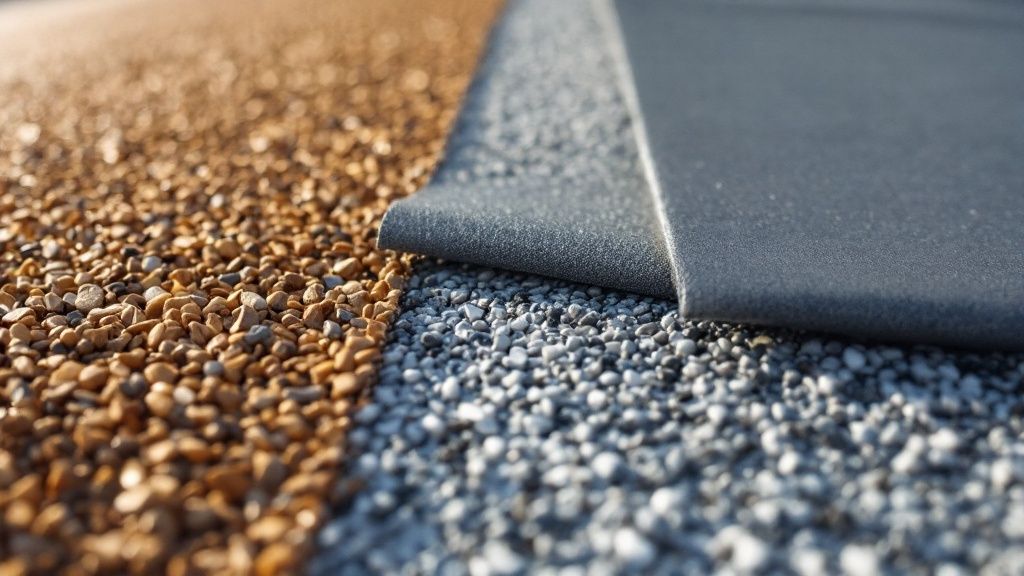
Not all flat roof damage is created equal, and the specific problem you're dealing with will have a huge say in your final repair bill. It's a lot like taking your car to the mechanic—a flat tire is one thing, but a blown engine is another beast entirely. The flat roof repair costs for a tiny puncture are worlds apart from what you'd pay to fix widespread structural rot.
Knowing the difference is key to setting a realistic budget. A small issue caught early is usually a quick, affordable fix. But let that same problem fester, and you could be looking at a cascade of expensive complications down the road.
Minor and Moderate Surface Repairs
Thankfully, a lot of common flat roof issues are only skin-deep, affecting just the surface membrane. These repairs are relatively straightforward and land on the lower end of the cost spectrum because they don't touch the roof's underlying structure.
-
Punctures and Blisters: A stray tree branch or a bubble in the membrane can create a small opening. Patching these up usually runs between $300 to $750. The fix involves cleaning the area, applying a sealant, and covering it with a durable patch. Catching these early stops water before it ever gets a chance to soak the insulation below.
-
Failed Flashing and Separated Seams: The seams where roofing sheets meet and the metal flashing around vents, pipes, and edges are classic weak spots. Getting these areas resealed or replaced typically costs between $450 and $1,200, depending on how much material needs attention and how tricky it is to access.
These smaller fixes are your first line of defense. Taking care of them quickly is one of the smartest ways to keep a minor headache from turning into a major financial migraine.
Addressing More Complex Issues
When the damage goes beyond the surface, both the complexity and the cost of the repair jump up. These problems demand more time and materials because the roofer has to start digging into the layers hidden beneath the membrane.
One of the most deceptive issues is ponding water. It might just look like a harmless puddle, but that standing water is heavy. Over time, it can degrade the roofing material and even cause the structure to sag. Fixing the root drainage problem can cost anywhere from $600 to over $2,500.
When the Damage Runs Deep
The single biggest factor that sends flat roof repair costs soaring is damage to the underlying structure. At this point, it's not just a roofing problem anymore; it's a structural one.
A sagging roof is the ultimate red flag. If you see a noticeable dip, it's a sure sign that water has already breached the membrane, saturated the insulation, and started to rot the wooden roof deck. This is a massive job, often running $3,000 or more, because it's a multi-step overhaul:
- First, the old, damaged membrane has to be stripped away.
- Next, the soggy, useless insulation is torn out.
- Then, the rotted sections of the wooden deck are cut out and replaced.
- Finally, the roof is rebuilt layer by layer with new, dry materials.
This kind of work is far more invasive and labor-intensive than a simple patch. It's the perfect example of why staying on top of maintenance and acting fast on small leaks is so critical for keeping your long-term costs in check.
Comparing Repair Costs by Roofing Material
The type of material on your flat roof plays a huge role in what your repair bill will look like. Think of it like a car mechanic; you wouldn't use the same tools and techniques on a classic car as you would on a modern electric vehicle. Roofers have to adapt their approach for each specific roofing type, and that directly affects the time, skill, and ultimately, the flat roof repair costs you’ll see on an estimate.
Some materials are pretty simple to patch up, but others demand specialized equipment and a much finer touch. Knowing what's up on your roof is the first real step to understanding what a professional repair quote will involve.
The image below breaks down the typical costs you can expect, whether you're thinking of tackling it yourself or hiring a pro.
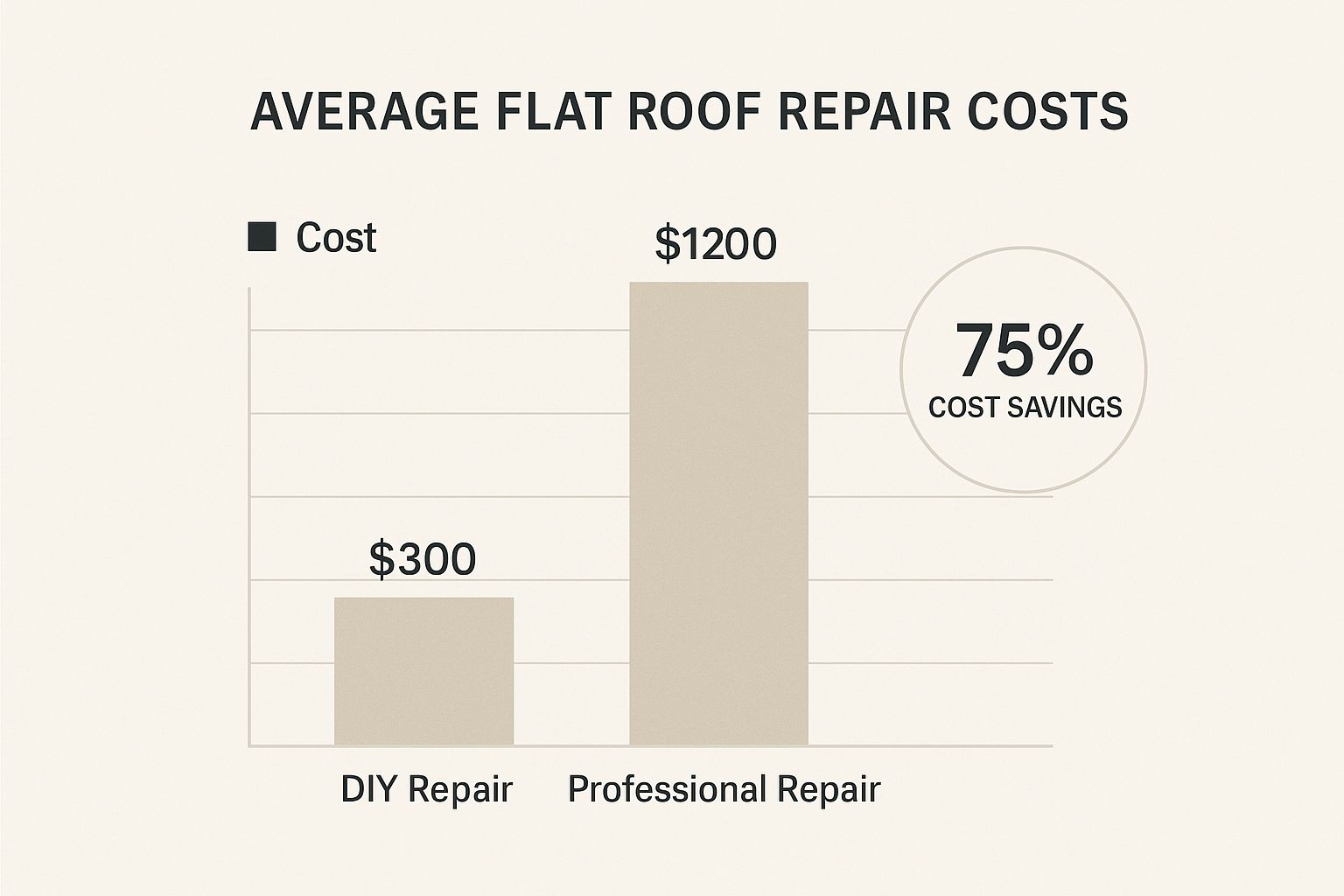
As you can see, hiring a professional costs more upfront. But that expertise often heads off much bigger, more expensive problems down the road.
When you get a quote, the numbers will be heavily influenced by the material. Let's look at the most common types and what you can generally expect.
| Roofing Material | Average Repair Cost Per Sq. Ft. | Common Repair Method |
|---|---|---|
| EPDM (Rubber) | $4.00 – $10.00 | Cleaning, priming, and applying an adhesive patch. |
| TPO/PVC | $5.00 – $12.00 | Heat-welding a new piece of membrane over the damaged area. |
| Modified Bitumen | $6.00 – $13.00 | Applying new layers with a torch or cold-process adhesives. |
| Built-Up Roof (BUR) | $7.00 – $15.00 | Patching with layers of asphalt and reinforcing fabric. |
It's clear that single-ply membranes like EPDM are often the most budget-friendly to fix, while older, multi-layered systems like BUR can be more complex and costly.
EPDM Rubber Roofing
EPDM, which most people just call a "rubber roof," is a go-to for its durability and relatively straightforward repair process. Most fixes involve cleaning the damaged spot, applying a special primer, and then sealing it with a patch. While the materials themselves aren't exotic, getting the prep work right is everything.
If you skimp on the cleaning and priming, an EPDM patch can easily fail, letting moisture creep right back in. The success of these repairs also relies on the hidden layers beneath the membrane. You can get a better sense of how it all works together by understanding what is roof underlayment and the crucial support it provides.
TPO and PVC Membranes
Thermoplastic materials like TPO and PVC are a different beast. Instead of glues and adhesives, pros use a specialized hot-air welder to literally melt a new patch onto the existing membrane.
When done right, this technique creates a seamless, incredibly strong bond that's just as tough as the original roof. The catch? It requires a skilled technician and some pricey equipment, which can bump up the labor costs on your bill.
The precision needed for heat welding is non-negotiable. An improper weld can create a weak point, leading to leaks right at the edge of the so-called "fix."
Modified Bitumen and Built-Up Roofing (BUR)
Older, multi-layered systems like Modified Bitumen and Built-Up Roofing (BUR) can be a real headache. These roofs are made of alternating layers of asphalt (bitumen) and reinforcing fabrics.
Pinpointing a leak is tricky because water can travel between the layers for a good distance before it ever shows up on your ceiling. Repairs usually mean applying new layers with a torch or using cold-process adhesives. This is far more labor-intensive than patching a single-ply roof, and the final cost reflects that.
Deciding Between Repairing and Replacing Your Flat Roof
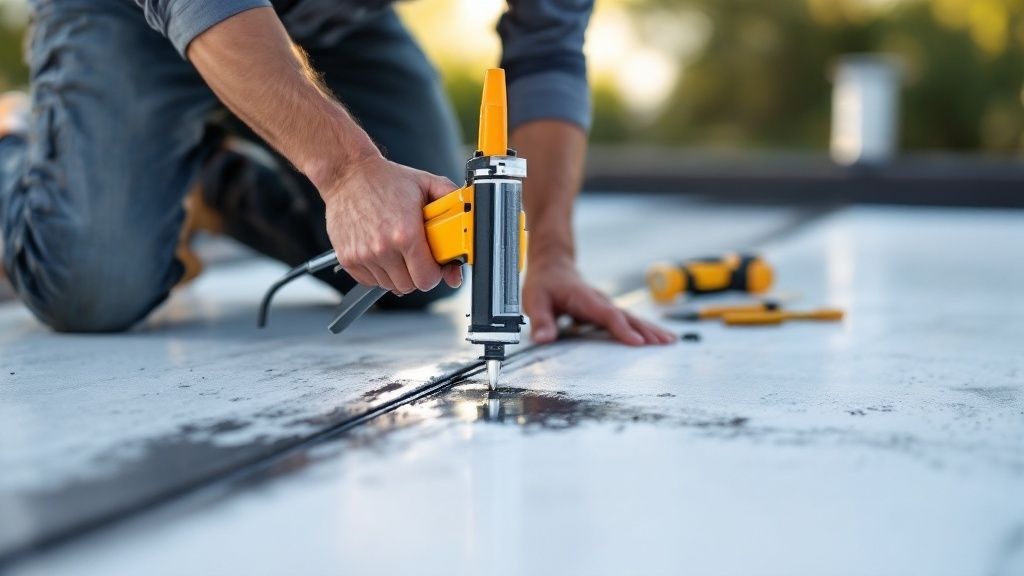
It’s the big question every property owner with a leaky roof faces: do you spring for a repair, or is it time to bite the bullet and go for a full replacement? This isn't just about the immediate flat roof repair costs staring back at you from an estimate. It's a long-term strategic decision.
Getting this call right can save you a ton of money and headaches down the road. The last thing you want is to get stuck in a frustrating cycle of patching one leak just to see another one pop up a few months later.
Key Indicators for a Roof Replacement
So, when is a patch job just not going to cut it anymore? Age is the most obvious starting point. Flat roofs generally have a lifespan of 15 to 20 years, which is quite a bit shorter than their sloped counterparts. If your roof is getting up there in years, replacement is likely on the horizon.
Beyond just age, you'll want to keep an eye out for a few other tell-tale signs:
- Widespread Material Failure: Look for extensive blistering, deep cracks, or large areas where the protective membrane has worn away completely.
- Persistent Leaks: If you're playing whack-a-mole with leaks appearing in different spots, that’s a clear signal the entire system is compromised.
- Skyrocketing Energy Bills: A sudden, unexplained jump in your heating or cooling costs often points to waterlogged insulation that’s no longer doing its job.
There's a handy rule of thumb in the industry called the "50% Rule." If the cost to repair the existing damage is more than half the price of a brand-new roof, replacement is almost always the smarter financial move.
Making the Final Call
Ultimately, the choice between repair and replacement is a major one. It's a similar dilemma people face when deciding whether to repair or replace an appliance—you have to weigh the cost of a temporary fix against the value of a long-term solution.
A new roof is a significant investment, no doubt. But it also buys you peace of mind, better energy efficiency, and a clean slate for your building's most critical shield against the elements. A detailed inspection is the only way to know for sure. That's why knowing how to choose a roofing contractor you can trust is so important. A good pro will give you an honest, thorough assessment to help you figure out which path offers the best return on your investment.
Smart Ways to Budget and Save on Repair Costs
Staring down a big roof repair bill can be intimidating, but a little smart planning goes a long way in managing your flat roof repair costs and reducing the stress. The best tool you have is foresight. It's always better to plan for a future expense than get blindsided by a costly emergency.
This is where proactive budgeting really shines. A huge part of preparing for major expenses like roof work involves understanding reserve funds and how they work. By putting a small amount of money aside regularly, you build a financial safety net, ensuring you're ready when the repair day finally comes.
Prevention Is Your Best Financial Strategy
Honestly, the best way to save a ton of money on flat roof repairs is to stop major problems from happening in the first place. Think of regular, proactive maintenance as an investment, not an expense. It turns massive potential repair bills into small, predictable upkeep costs.
A few simple, consistent habits can make a world of difference:
- Routine Inspections: Get a pro to look at your roof twice a year, ideally in the spring and fall. They can spot little things like a cracking sealant or a tiny puncture before it turns into a catastrophe.
- Keep It Clean: Make sure your drains and scuppers are clear of leaves, twigs, and other gunk. This simple step prevents ponding water, which is one of the biggest and most destructive enemies of a flat roof.
Think of your roof like your car. You wouldn't skip oil changes and wait for the engine to seize, right? Small, regular tune-ups are always cheaper and less of a headache than a complete engine replacement.
Smart Shopping for Professional Repairs
When a repair is inevitable, how you hire a contractor can make a big impact on your final cost. Never, ever just take the first quote that comes your way.
Always get at least three detailed, itemized quotes from reputable, insured roofers. This lets you compare not just the bottom-line price, but also the quality of materials and the exact work they plan to do.
Think about timing, too. If it's not an emergency, scheduling repairs during a roofer's slow season (like late fall or winter) can sometimes get you a better deal on labor. And before you do anything, dig out your roof's warranty paperwork—you might be surprised to find some of the work is already covered.
Answering Your Top Questions About Flat Roof Repair Costs
Even after breaking down the numbers, you probably still have a few questions floating around. That’s completely normal. Let's tackle some of the most common ones we hear from property owners just like you.
How Often Should I Get My Flat Roof Checked?
Think of it like a dental check-up for your building. You’ll want to have a professional look at your flat roof twice a year—once in the spring and again in the fall.
This rhythm helps a roofer catch the small stuff, like a clogged drain or a tiny puncture, before it turns into a catastrophic leak that damages the structure itself. A little bit of prevention goes a long way in keeping those long-term costs down.
Can I Just Fix My Flat Roof Myself?
It's tempting, I get it. While tasks like sweeping off leaves and debris are perfectly fine for a weekend, actual repair work is a different beast entirely. It's best left to the pros.
Slapping on the wrong type of sealant or using an incompatible patch material can actually trap moisture underneath, making the original problem a whole lot worse. Plus, you could accidentally void your roof's warranty.
The reality is, trying to save a few bucks on a DIY fix often backfires. A small mistake can quickly escalate a simple patch job into a major, and much more expensive, ordeal.
Will My Homeowners Insurance Cover the Repairs?
This is a classic "it depends" situation. Coverage really hinges on your specific policy and what caused the damage in the first place.
Typically, insurance is there for sudden, accidental events—think a heavy storm or a tree branch crashing down. It's not designed to cover issues stemming from old age, general wear and tear, or neglecting routine maintenance. Before you do anything, pull out your policy and document the damage with plenty of photos. This will give you a clear picture of what you’re covered for when you file a claim.
When you need an expert assessment you can trust, turn to our experienced team. For a free, no-obligation estimate on your flat roof repair, visit us at https://pennohiorc.com.