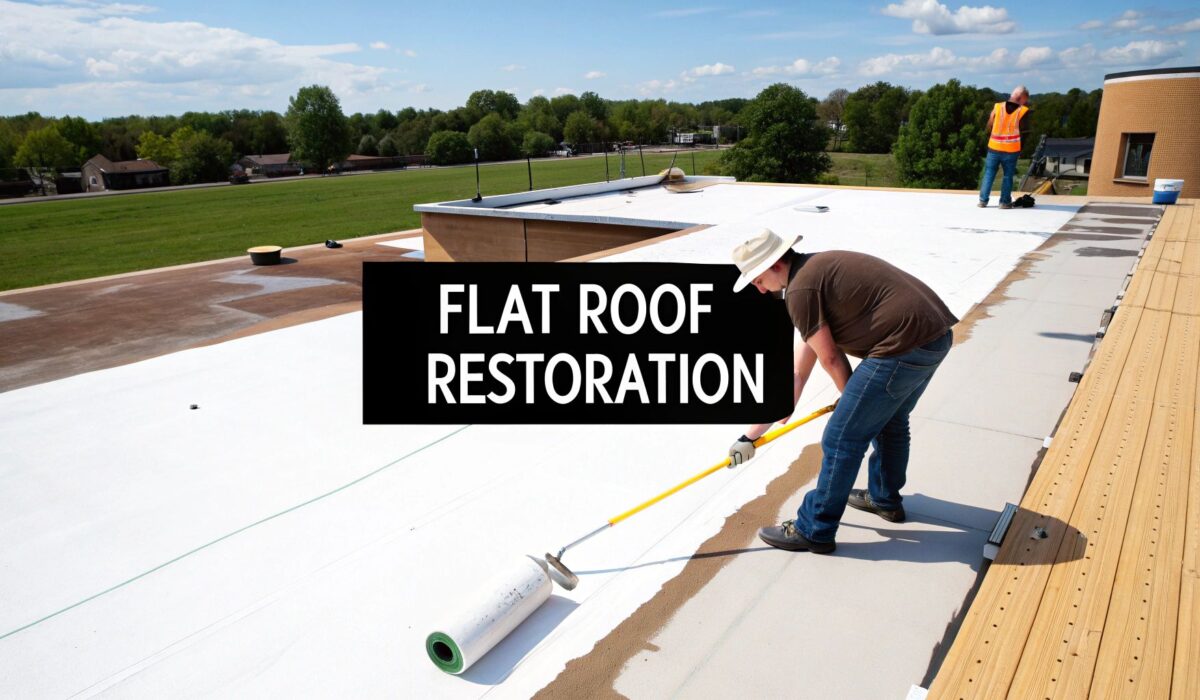
So, what exactly is flat roof restoration?
Think of it less like a patch-up job and more like giving your existing roof a complete, second life. It’s a comprehensive process where we clean, repair, and then apply a new, seamless, and waterproof layer right over the top of your current roof. The goal is to fix issues like small leaks and surface damage and extend the roof's lifespan without the massive disruption and cost of a full tear-off and replacement.
What is Flat Roof Restoration?
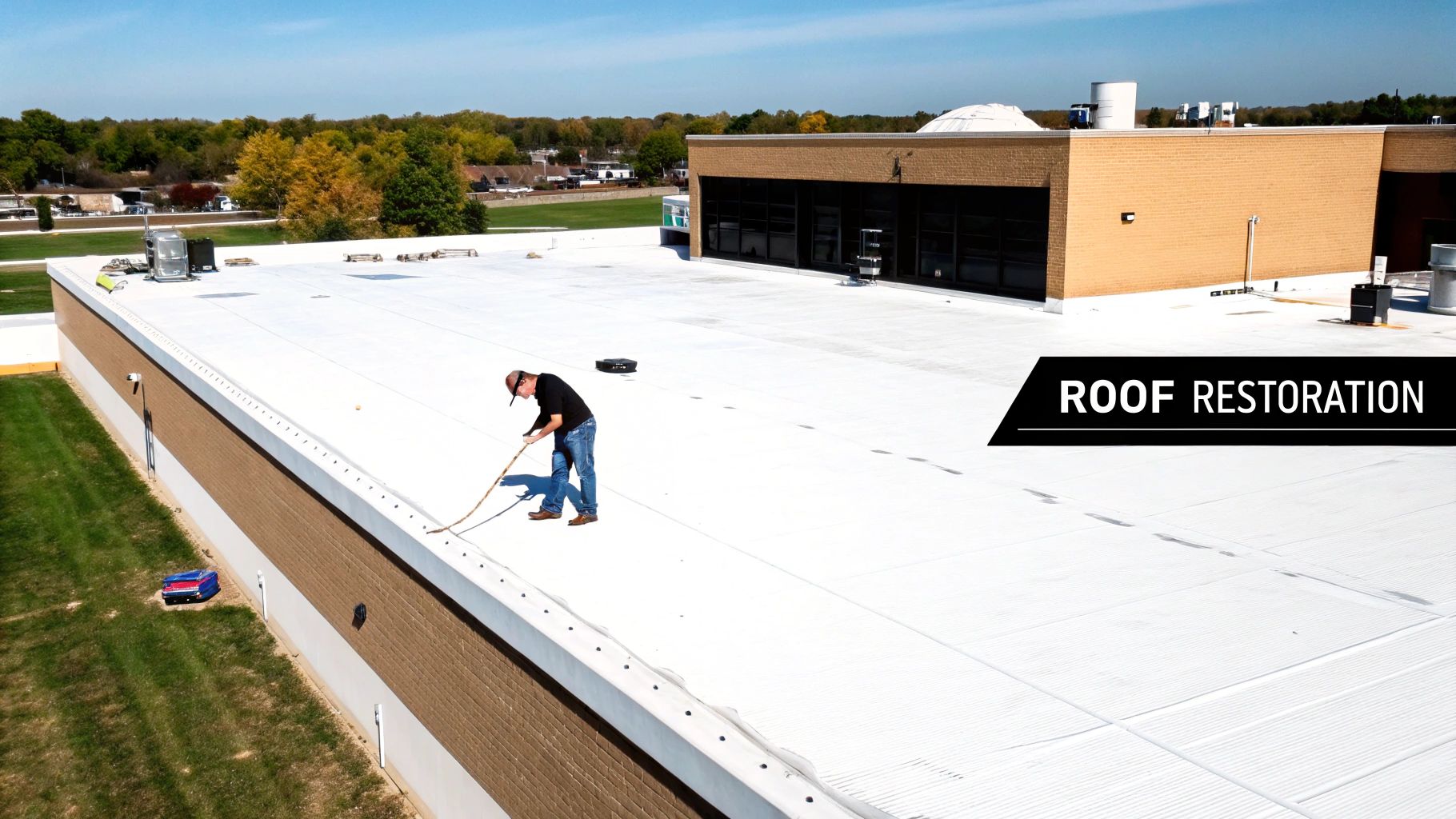
When leaks start or you see visible wear and tear, it's easy to jump to the conclusion that you need a brand-new roof. But if the underlying structure is still in decent shape, a full replacement is often overkill.
A better analogy is refinishing a hardwood floor instead of ripping it all out. The solid foundation is still there; we're just restoring its protective surface to make it look and perform like new again. Instead of just plugging a crack, a restoration creates a single, continuous membrane that seals the entire roof, from edge to edge.
This smart approach is becoming increasingly popular. The global market for roof services, valued at $48.6 billion recently, is projected to hit $75 billion by 2035. That's a powerful signal that property owners are recognizing the value of restoring assets instead of just replacing them.
The Core Goals of Restoration
The main objective is simple: get your roof back into a watertight, durable condition without the headache of a full tear-off. It’s a strategic move to get the most out of the roof you already have.
The key goals are:
- Stop Leaks for Good: By creating a seamless, monolithic layer, we eliminate the weakest links in most roofing systems—the seams, gaps, and flashing—where leaks almost always begin.
- Extend Your Roof's Lifespan: A professional restoration can add another 10 to 20 years of reliable service to your roof's life, pushing that huge replacement expense way down the road.
- Boost Energy Efficiency: Many modern restoration coatings are bright white or light-colored. This "cool roof" technology reflects the sun's harsh UV rays, dramatically lowering the roof's surface temperature and cutting your building's cooling costs in the summer.
A successful restoration always starts with a deep-dive inspection. A professional must first confirm that the roof's core structure and insulation are sound. If they are, you're a perfect candidate for this cost-effective solution.
When to Consider Restoration
The trick is knowing the right time to act. Restoration is the perfect solution for a roof that's getting older and showing its age but hasn't failed completely.
It’s time to call in a professional if you're seeing persistent minor leaks, surface cracks that look like alligator skin, seams that are starting to pull apart, or areas where water ponds after it rains. An expert assessment is the only way to know for sure if your roof is a good candidate. You can get a head start by looking over a commercial roof inspection checklist to see what we look for.
Choosing restoration at the right moment doesn't just fix today's problems—it prevents tomorrow's, making it one of the smartest financial decisions a building owner can make.
Common Flat Roof Systems and What Goes Wrong
Before we can even talk about restoration, we have to know what we're working with. Every flat roof has its own personality, which means it also has its own unique ways of failing. Figuring out what kind of roof is over your head is always the first step.
The world of commercial roofing is bigger than most people realize. The market for flat roofing systems is valued at around $59.19 billion and climbing, which tells you there are a lot of different materials out there. Each one has a different lifespan and a different set of problems you need to watch out for. You can get a better sense of these trends from recent industry analysis.
When you can spot the specific warning signs for your roof, you can have a much smarter conversation with a contractor. It's the difference between a generic patch job and a targeted solution that actually lasts.
Single-Ply Membrane Roofs
These are the modern workhorses of the flat roofing world. They're essentially large, flexible sheets of a synthetic material that are rolled out and sealed together. They've become popular because they're efficient to install and relatively affordable.
-
EPDM (The "Rubber Roof"): Properly known as Ethylene Propylene Diene Monomer, this is a durable synthetic rubber, usually black. Its Achilles' heel is almost always the seams. They're glued together, and after years of baking in the sun and cycling through hot and cold, that adhesive gives up. The seams pull apart, and water finds an easy way in. You can dive deeper into the details of a rubber EPDM flat roof and its common issues.
-
TPO (Thermoplastic Olefin): TPO is the bright white, energy-efficient membrane you see on many buildings. The seams on a TPO roof are heat-welded, which creates a very strong, unified surface. The problem is, if that weld wasn't done perfectly during installation—maybe the temperature was off or the speed was wrong—it creates a weak point that can crack or separate down the road.
-
PVC (Polyvinyl Chloride): Another heat-welded membrane, PVC is known for being incredibly tough against things like chemicals, grease, and even fire. Its weak spots tend to be punctures from heavy foot traffic or flying debris during a storm. It can also shrink over time, which puts a ton of stress on the flashings around pipes, vents, and walls, eventually pulling them loose.
When it comes to single-ply roofs, it's all about the seams. Glued or welded, they are the first line of defense, and nine times out of ten, they're the first place you'll find a leak.
Multi-Ply and Traditional Systems
Older roofs were built differently, using layers of material applied right on the roof deck. They're known for being absolute tanks, but time catches up with them in very specific ways.
Built-Up Roofing (BUR)
This is the classic "tar and gravel" roof. It’s made by layering asphalt and reinforcing fabrics (plies), then finishing it with a top layer of gravel or a mineral sheet. They are incredibly tough.
But their biggest enemy is the sun, which leads to a problem called "alligatoring."
- What is Alligatoring? Think about what happens to old leather left out in the sun. The asphalt on a BUR roof does the same thing. UV rays cook the oils out of it, making the surface brittle. It shrinks and cracks into a pattern that looks just like an alligator's hide.
- Why is it a Problem? Those cracks are tiny little invitations for water. Moisture seeps into the underlying layers, causing them to delaminate and form blisters—big, trapped bubbles of water and air. Eventually, the whole system rots from the inside out.
Knowing how to spot these issues—whether it’s a peeling seam on an EPDM roof or the tell-tale cracks of alligatoring on a BUR system—is crucial. It lets a restoration expert go beyond just patching the current leak. They can address the roof's fundamental weakness and add years of reliable life to it.
Restoration vs. Replacement: What's the Right Call for Your Roof?
When your flat roof is showing its age, you’re at a fork in the road. It’s a major decision that goes well beyond just fixing a leak—it’s about choosing a strategy for the next decade or two. The choice is between a complete, tear-off-and-replace project or a modern flat roof restoration. A lot of property owners jump to the conclusion that replacement is their only option, but that's a costly assumption that can lead to unnecessary expense and disruption.
The best decision isn't just about the initial quote. It's about weighing everything from the long-term value and the impact on your daily operations to the sheer amount of waste each option produces. Making the smart call means looking at the entire picture.
The Right Conditions for Restoration
So, when is restoration the best move? Think of it this way: your roof's structure is like a car's chassis and engine. If those core components are solid, but the paint is faded and chipping, you wouldn't junk the car—you'd repaint it. A roof restoration works on the very same principle.
A roof is the perfect candidate for restoration when its underlying structure and insulation are still in good shape—dry and structurally sound—but the top membrane is failing. If a professional inspection gives the core of your roof a clean bill of health, restoration is almost always the more intelligent and efficient choice.
When Replacement Is Unavoidable
But let's be clear, restoration isn't a magic wand. If problems have been ignored for too long, allowing water to seep deep into the system, replacement becomes the only safe option. Once the insulation gets soaked, it’s like a giant sponge that can't be wrung out. It loses all its insulating R-value and just sits there, promoting rot and decay from the inside out.
A full tear-off and replacement is non-negotiable when:
- The insulation is significantly saturated (more than 25% is a common industry benchmark).
- The underlying roof deck itself has widespread damage or rot.
- The building already has two or more roofing layers. Building codes typically forbid adding a third layer, forcing a tear-off.
Head-to-Head Comparison
To make the choice clearer, let’s put these two approaches side-by-side. Seeing the facts laid out helps move the conversation beyond just the initial price. If you want to dig deeper into the numbers, you can explore how various issues affect flat roof repair costs and overall budgets.
The single biggest advantage of restoration is that you avoid a complete tear-off. This one difference creates a domino effect of savings in time, money, and hassle, allowing your business to continue operating without a major interruption.
Here’s a practical look at how restoration and replacement stack up against each other.
Comparing Flat Roof Restoration and Full Replacement
This table breaks down the key differences between restoring and replacing a flat roof across several important factors for property owners.
| Factor | Flat Roof Restoration | Full Roof Replacement |
|---|---|---|
| Project Cost | Typically 50-70% less than a full replacement. | High upfront cost due to labor, materials, and disposal fees. |
| Timeline | Significantly faster, often completed in days with minimal crew. | A lengthy process involving tear-off, installation, and cleanup. |
| Business Disruption | Minimal. The process is quiet, with no loud equipment or falling debris. | Major disruption from noise, heavy equipment, and potential operational shutdowns. |
| Environmental Impact | Sustainable. Prevents tons of old roofing material from ending up in landfills. | Generates massive amounts of landfill waste, often several tons per project. |
| Lifespan Extension | Adds 10-20 years of life to the existing roof system. | Starts the clock over with a brand new roof and a long lifespan. |
| Warranties | Comes with long-term, manufacturer-backed material and labor warranties. | Includes comprehensive warranties for the new system. |
In the end, choosing flat roof restoration isn't about finding a cheap, temporary fix. It’s about making a smart, strategic investment in the asset you already have, squeezing every bit of value out of it while minimizing the financial and operational pain.
A Closer Look at the Professional Restoration Process
Thinking about flat roof restoration? It’s a lot more than just slapping on a coat of paint. A true professional restoration is a detailed, step-by-step process that tackles every potential vulnerability, creating a single, unbroken waterproof shield over your entire roof. Knowing how it works helps you understand exactly what you're paying for and why each step is so vital for a lasting fix.
A good comparison is a high-quality auto body repair. You'd never just spray new paint over rust and dents, right? A real pro grinds down the old finish, meticulously fills every imperfection, and primes the surface before laying down that perfect topcoat. A disciplined approach to your roof ensures the new system bonds perfectly and performs for years.
Step 1: Inspection and Moisture Detection
Everything starts with a thorough diagnosis. Before anything else, a professional team performs a deep-dive inspection to make sure your roof is a solid candidate for restoration. This isn't just a quick glance from the ground; they get up there and assess every inch of the membrane, all the seams, the flashings around pipes and units, and the drainage system.
The most critical part of this phase is hunting for hidden moisture. Professionals use tools like infrared scanners that let us see what the naked eye can't—pockets of water trapped deep inside the insulation. If the insulation is still dry and structurally sound, we're good to go. This step is non-negotiable; it ensures we’re building on a solid foundation, not just trapping a bigger problem underneath.
Step 2: Meticulous Surface Preparation
Once it's been confirmed the roof is ready, the real work begins with surface prep. This is where the magic happens. You could have the best coating system in the world, but if you apply it to a dirty, compromised surface, it’s guaranteed to fail.
Getting the surface ready is an intensive process:
- Power Washing: High-pressure washers, often with specialized cleaning agents, blast away years of caked-on dirt, algae, chalk, and other gunk.
- Debris Removal: Every bit of loose gravel, leaves, and other debris is swept away to leave a perfectly clean slate.
- Drying Time: The roof has to be bone-dry before moving on. This is crucial for getting the new system to adhere properly.
Step 3: Addressing Every Weakness
With a spotlessly clean roof, the crew turns its attention to repairs. A targeted approach reinforces every potential failure point and essentially turns back the clock on years of wear and tear.
Technicians will painstakingly address:
- Seams and Fasteners: Every seam gets reinforced with specialized fabric and sealant. Every exposed fastener is also tightened and encapsulated to lock water out for good.
- Blisters and Cracks: Any blisters are carefully cut open, dried out, and patched. All cracks in the membrane are filled and sealed.
- Flashings: Flashings are the metal or membrane pieces that seal around vents, pipes, HVAC units, and skylights. They're notorious leak spots, so every single one must be inspected and resealed.
This detailed repair work ensures the final coating is applied to a stable, uniform surface that's ready to perform.
The restoration process transforms a roof with hundreds of potential failure points (seams, screws, cracks) into a single, seamless, monolithic membrane. It's this transition from a collection of parts to a unified whole that makes the system so incredibly effective at preventing leaks.
This infographic really highlights the difference between the modern, sustainable approach of restoration and the disruptive, wasteful process of a full tear-off.
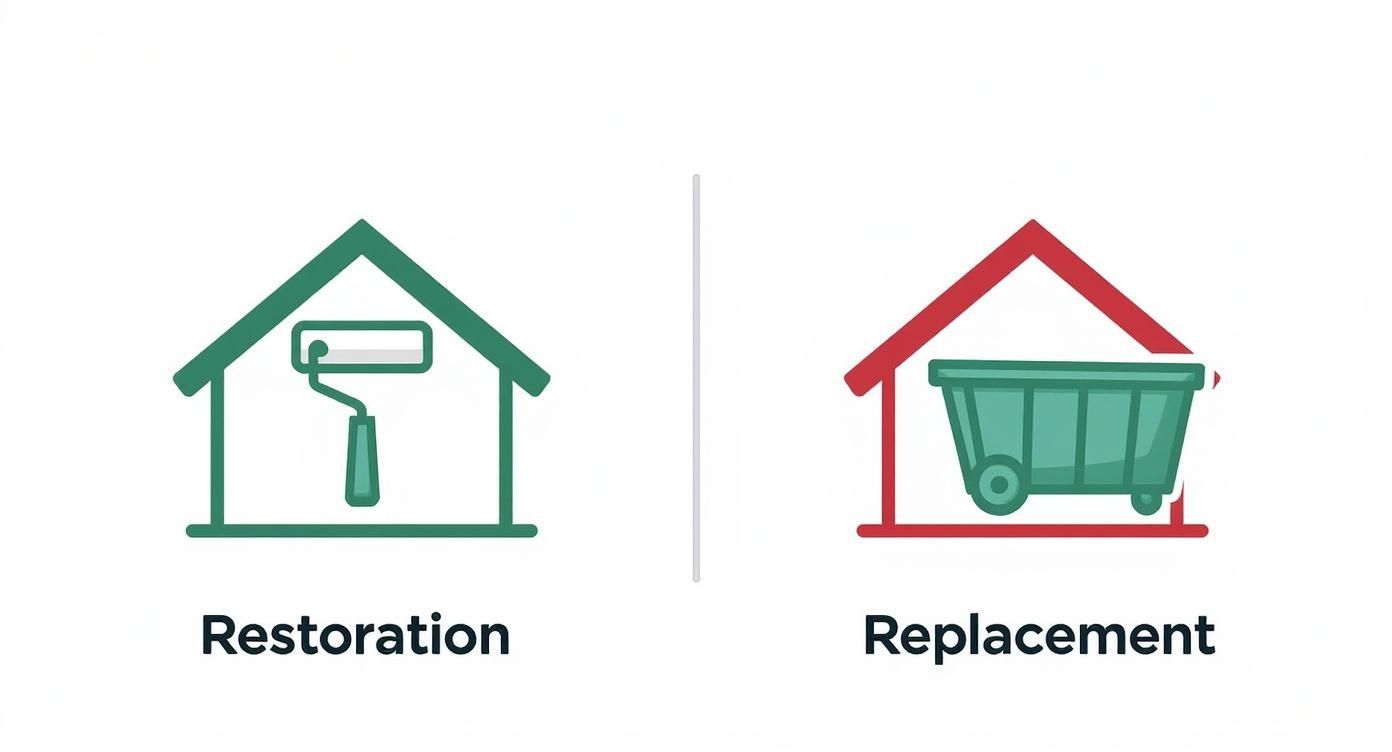
As you can see, restoration is all about enhancing the asset you already have, while replacement means a trip to the landfill and a much bigger bill.
Step 4: Application of the New Coating System
Finally, the moment we've been working toward. With the roof clean, dry, and fully repaired, it's time to apply the new protective membrane. These are typically fluid-applied systems, which means they are sprayed or rolled on as a liquid. The liquid then cures into a tough, seamless, rubber-like shield.
The system is applied in multiple coats to build up the precise thickness required by the manufacturer. Hitting that specification is crucial for triggering the warranty and ensuring decades of performance. The result is a seamless surface that completely wraps the entire roof. No gaps, no seams, no weak points. The market for these flat roof waterproofing systems is booming—it's expected to be worth around $15 billion in 2025 as more building owners demand durable, energy-efficient solutions. You can discover more insights about this expanding market and what's driving the trend.
Picking the Right Restoration Materials
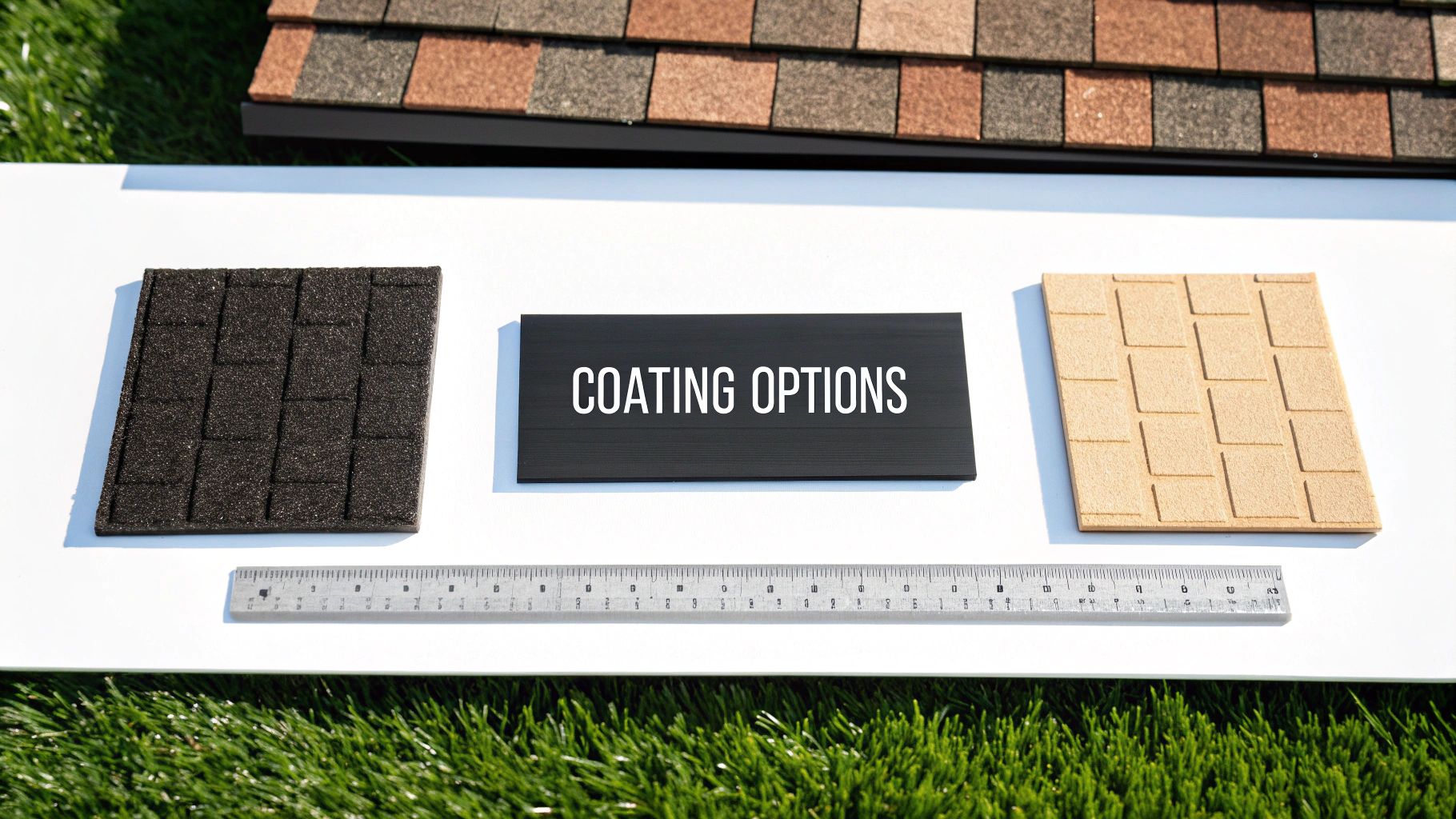
A successful flat roof restoration hinges on more than just expert labor; it's just as much about the materials used. You wouldn't use the same paint for a busy hallway as you would for a quiet bedroom, and the same logic applies here. The right coating system is everything for long-term performance. Modern fluid-applied coatings aren't just paint—they're advanced solutions engineered to tackle specific problems, from relentless sun exposure to frustrating ponding water.
Think of these coatings as a liquid shield for your roof. They go on as a fluid but cure into a tough, seamless, and flexible membrane that becomes the new top surface. The three big players in this space are acrylic, silicone, and polyurethane. Each has its own strengths, making them a perfect fit for different climates and roof challenges. Knowing the difference is the first step to making a smart investment.
Acrylic Coatings: The Energy Saver
Acrylic coatings are water-based elastomeric systems famous for one thing: incredible reflectivity. Their bright white finish acts like a mirror to the sun, reflecting most of its UV rays instead of soaking up the heat. This "cool roof" effect can drop a roof's surface temperature by a staggering 50-80 degrees Fahrenheit.
What does that mean for you? Lower energy bills. Your HVAC system simply doesn't have to fight as hard to keep the building cool. For any property baking in the sun, acrylics are an obvious economic win. The main catch, however, is that they're water-based. This means they aren't the best choice for roofs with chronic puddles, as being underwater for too long can cause the coating to break down.
Silicone Coatings: The Waterproofing Champion
When a flat roof has low spots where water collects and just sits for more than 48 hours—a headache we call ponding water—silicone is the undisputed champ. Unlike their acrylic cousins, silicone coatings are moisture-cured and completely unfazed by standing water. They won't soften, peel, or degrade, even if they're submerged for weeks on end.
This makes silicone the go-to fix for roofs with minor drainage flaws. It also stands up incredibly well to UV rays, keeping its color and reflective properties for years.
The real superpower of silicone is its ability to create a permanent, watertight seal against ponding water. This quality alone makes it the definitive solution for many flat roofs that would otherwise suffer from recurring leaks.
One thing to keep in mind is that silicone can get slippery when wet and tends to hold onto dirt more than other coatings. Also, when it's time for a recoat down the line, you pretty much have to stick with silicone, as other materials have a tough time adhering to it.
Polyurethane Coatings: The Heavy-Duty Protector
If you need pure toughness, you want polyurethane coatings, often just called urethanes. These are the heavyweights, offering the best resistance to impacts, scuffs, and foot traffic. They’re the ideal choice for roofs that have a lot of equipment requiring regular maintenance visits or are located in hail-prone areas.
Polyurethane systems are typically a two-step process:
- An aromatic base coat: This layer is all about strength and adhesion, but it doesn't handle UV light well.
- An aliphatic top coat: This goes over the base, providing fantastic UV protection, color stability, and a clean, reflective finish.
This one-two punch delivers a powerful combination of durability and weather resistance, creating a truly robust shield for your roof that can handle much more than just the elements.
Selecting a Qualified Restoration Contractor
Even if you choose the most advanced materials on the market, the success of your flat roof restoration hinges on one critical factor: the skill of the team doing the work. The best coating system in the world will fail if it isn't applied with precision and deep expertise. That’s why choosing the right contractor isn't just a final step—it’s the most important decision you'll make to protect your investment for the next 10 to 20 years.
When you're vetting potential contractors, you have to look beyond a simple price tag. You need a true partner, someone with a proven track record, the right credentials, and a genuine understanding of the unique challenges your building's roof faces. This due diligence is the difference between a quick fix and a lasting solution.
Must-Have Contractor Qualifications
Not all roofing companies are the same, especially when you get into the specialized world of roof restoration. You’re not looking for a generalist who dabbles in coatings; you need a team that lives and breathes this kind of work.
Here’s what to demand from any contractor you consider:
- Proven Specialization: Don't just take their word for it. Ask to see a portfolio of completed flat roof restoration projects, specifically ones that are similar to yours. A contractor who’s confident in their experience will be eager to show you their past work and even provide references.
- Manufacturer Certifications: The best coating and membrane manufacturers are protective of their reputation. They don’t let just anyone install their products, requiring contractors to go through rigorous training and certification programs. A certified installer is a clear sign of quality and is often required to validate the manufacturer's warranty.
- Comprehensive Insurance: This is non-negotiable. Always verify that the contractor carries both substantial liability insurance and workers' compensation. This protects you, your property, and their crew from any potential accidents, giving you complete peace of mind.
What a Strong Warranty Really Means
A warranty is much more than a piece of paper. It’s a direct reflection of a contractor's confidence in their materials and their own craftsmanship. If you’re seeing vague promises or short-term guarantees, consider it a major red flag.
A robust, long-term, manufacturer-backed warranty is one of the clearest indicators of a quality installation. It signifies that the materials meet high standards and that the contractor has been trained to install them correctly, ensuring the system will perform as promised.
Look for warranties that cover both materials and labor. This two-part coverage ensures that if an issue pops up—whether it's a product defect or an installation error—you are fully protected. A professional who truly stands behind their work will be upfront and transparent about their warranty terms, so you know exactly what you're getting. Making the right choice here is what ensures your flat roof restoration delivers real, lasting value.
Your Flat Roof Restoration Questions, Answered
Making a big decision about your commercial property always comes with questions. That’s a good thing—it means you’re doing your homework. Here are some of the most common questions about flat roof restoration.
Here are some of the most common ones we get, with straight-to-the-point answers to give you the confidence you need.
How Long Does a Flat Roof Restoration System Last?
Think of a professionally installed restoration system as giving your roof a second life, not just a temporary fix. A high-quality silicone or acrylic coating can add another 10 to 20 years to your roof’s lifespan.
Of course, that number can shift based on the quality of the materials, the skill of the crew putting it down, and the local climate. But any reputable system will come backed by a solid manufacturer's warranty, so you know the materials are built to last.
Can Any Flat Roof Be Restored?
Honestly, no. Restoration is a fantastic option, but it’s not a magic bullet for every roof. It works best when the roof's core structure and insulation are still solid, but the surface membrane is starting to wear out, crack, or fail.
If an inspection reveals the insulation is soaked through, the structure is compromised, or the roof deck itself has major damage, a full replacement is the only responsible path forward. Slapping a coating over a deeply flawed roof is a recipe for disaster—it just traps moisture and makes things worse, leading to even bigger, more expensive headaches later on.
The success of any restoration project is built on an honest and accurate initial assessment. A contractor's first job is to determine if your roof is a viable candidate, ensuring your investment delivers real, lasting value.
Will a Roof Restoration Stop All Leaks?
Yes, that’s the whole point! A primary goal of flat roof restoration is to create a seamless, single-piece waterproof shield that stops every existing leak and prevents new ones from ever starting.
It's a very thorough process. Before any coating goes down, a professional team meticulously repairs and reinforces every single seam, flashing, crack, and pipe penetration. This detailed prep work is critical. Once the final fluid-applied membrane is applied and cures, it forms a tough, unbroken barrier that water simply can't get through.
How Much Does Flat Roof Restoration Cost?
Every project is different, but there’s one thing you can count on: restoration is always significantly easier on the budget than a full replacement. As a general rule, property owners save anywhere from 50% to 70% by choosing restoration over a complete tear-off.
Where do the savings come from? You're avoiding the huge costs of labor, demolition, and disposal fees that come with tearing off an entire roof. It’s a smarter, more cost-effective way to protect and extend the life of your building.
Ready to see if your property is a candidate for a cost-effective, long-lasting restoration? A qualified local professional can provide a free, no-obligation estimate and answer all your questions. Learn more and schedule your consultation at https://pennohiorc.com.