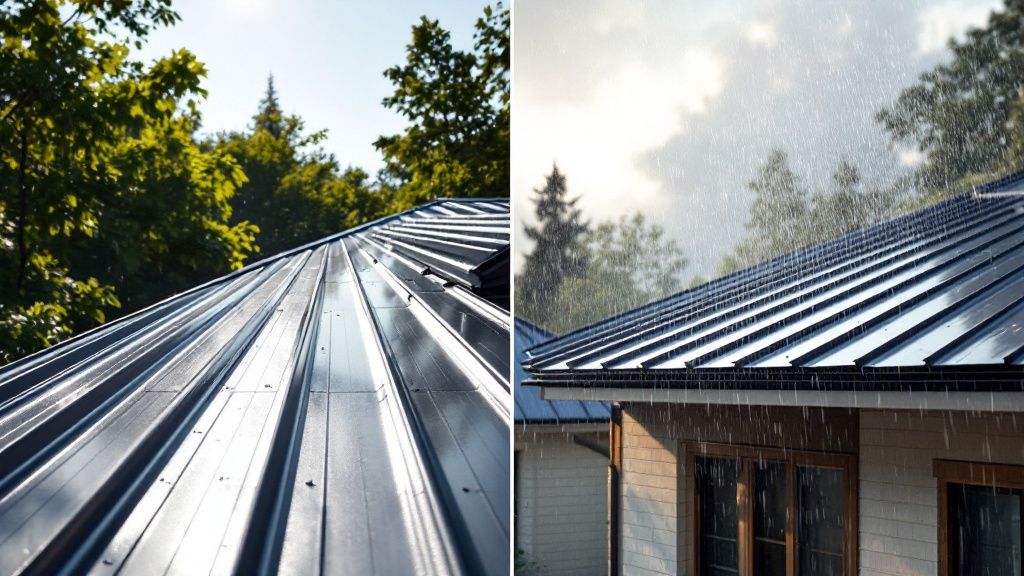
When you start looking into the pros and cons of metal roofing, you quickly realize the main trade-off: a higher price tag upfront for a roof that delivers incredible longevity and requires very little maintenance over its lifetime. It’s a classic investment scenario. While standard asphalt shingles are definitely cheaper to install, a quality metal roof can last anywhere from 40 to 70 years—often for the entire time you own your home.
Weighing the Value of a Metal Roof
Choosing a new roof isn't a small decision; it's one of the biggest investments you'll make in your property. As more and more homeowners prioritize long-term value and sheer durability, metal roofing has stepped into the spotlight as a serious contender against old standbys like asphalt. But is it the right move for your home? To figure that out, you need the full story—from its standout performance benefits to its potential drawbacks.
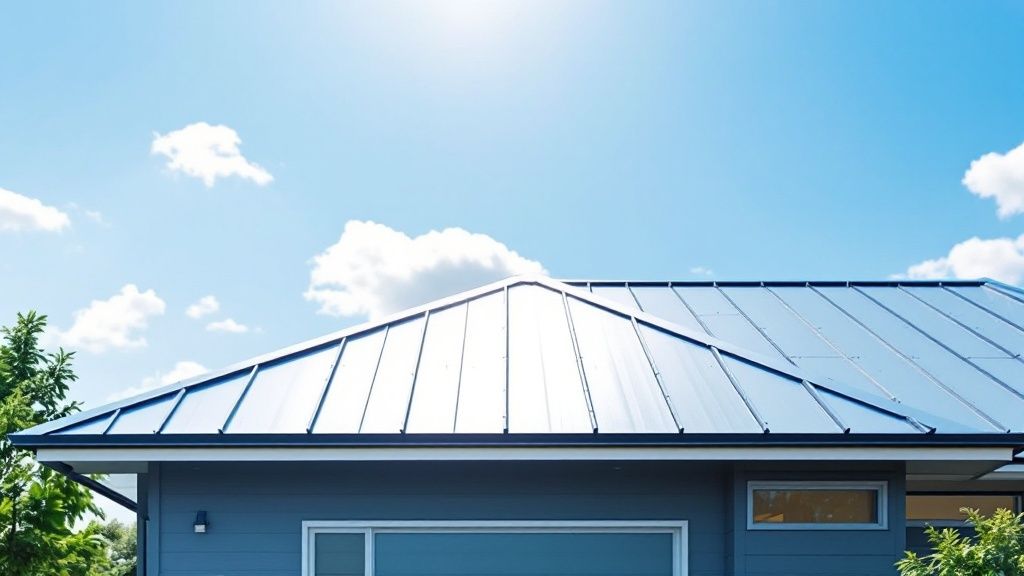
A huge part of making the right call is looking beyond that initial installation bill. Yes, a metal roof typically demands a larger financial commitment at the start. But that cost is counterbalanced by a truly impressive lifespan, minimal upkeep, and real energy savings that add up year after year.
Key Comparison Points at a Glance
To make a smart decision, it helps to break down the core differences between metal and traditional roofing materials. We'll get into the nitty-gritty of each of these points, but here's a quick overview to get you started.
| Feature | Metal Roofing | Traditional Asphalt Shingles |
|---|---|---|
| Initial Cost | Higher | Lower |
| Expected Lifespan | 40-70+ years | 15-30 years |
| Energy Efficiency | Excellent (Reflects heat) | Fair to Good |
| Maintenance Needs | Very low | Periodic repairs needed |
| Weather Resistance | Superior (Wind, hail, fire) | Moderate |
| Aesthetic Options | Versatile and modern | Traditional and varied |
This table sets the stage for a much deeper dive. As we go through this guide, we'll unpack each of these points in detail, giving you the information you need to decide if the long-term rewards of a metal roof make sense for your home, your budget, and your future.
The Enduring Advantages of Metal Roofing
When you start looking into the pros of metal roofing, the first thing everyone talks about is longevity—and for good reason. Think about it: a typical asphalt shingle roof might get you 15-20 years before it needs replacing. A professionally installed metal roof, on the other hand, can last 40 to 70 years, sometimes even longer. That means the roof you put on today could very well be the last one your home ever needs.
But this durability isn’t just about a long lifespan; it's about how it performs every single day. Metal roofs are engineered to handle the kind of extreme weather that would send other materials packing.
Unmatched Resilience and Performance
One of the biggest selling points for metal is its raw resilience. For homeowners living anywhere that gets serious weather, this kind of security is priceless.
- High Wind Resistance: Many metal roofing systems are rated to hold tight against wind gusts of 140 miles per hour or more. During a major storm, that’s the difference between a secure roof and devastating uplift damage.
- Fire Safety: Metal is a non-combustible material, earning it a Class A fire rating, which is the best you can get. This is a huge plus, especially for homes in areas prone to wildfires.
- Impact Resistance: While a massive hailstone can dent anything, metal roofs stand up remarkably well to smaller hail and falling branches that would easily crack or tear asphalt shingles.
This kind of tough performance is exactly why the U.S. metal roofing market continues to grow. We're seeing more and more homeowners asking for premium styles like standing seam and metal shingles because they want that top-tier weather resilience. In storm-prone regions, that Class-A fire rating and proven cool-roof performance are becoming must-haves.
Tangible Energy Savings
Strength is one thing, but one of the most compelling reasons to choose metal is its energy efficiency. Many of today's metal roofs are considered "cool roofs," thanks to special coatings that reflect a huge portion of the sun's infrared and UV rays.
This reflective power can drop your roof's surface temperature by as much as 100°F. That dramatically reduces how much heat gets into your home, which means your air conditioner doesn't have to work nearly as hard. Homeowners often see their cooling costs shrink by 10–25%.
That efficiency doesn't just save you money on your utility bills. By easing the strain on your HVAC system, you might even extend its lifespan, all while enjoying a more comfortable home during those hot summer months.
Aesthetic Versatility and Low Maintenance
If you still picture a metal roof as something you'd only see on a barn, it's time to look again. The design options available today are stunningly versatile and can complement any architectural style you can imagine.
You could go for the clean, modern lines of standing seam panels or choose metal shingles that expertly replicate the classic look of slate, tile, or even wood shake. It's a rare combination of beauty and brawn. To get a sense of how valued these durable and attractive metallic elements are in modern building, you can read about the advantages of aluminium windows in home design.
Maybe the best part is that all these benefits come with very little work on your end. Metal roofs aren't susceptible to mold, rot, or insect damage. That means you get decades of worry-free protection without the constant upkeep and repair that other roofs demand.
Considering the Potential Downsides of Metal Roofs
To get a complete picture, a balanced look at the metal roofing pros and cons must include the potential drawbacks. It's easy to get excited about the benefits, but no material is perfect for every home. Understanding the potential negatives ensures you're making a fully informed decision, with your eyes wide open.
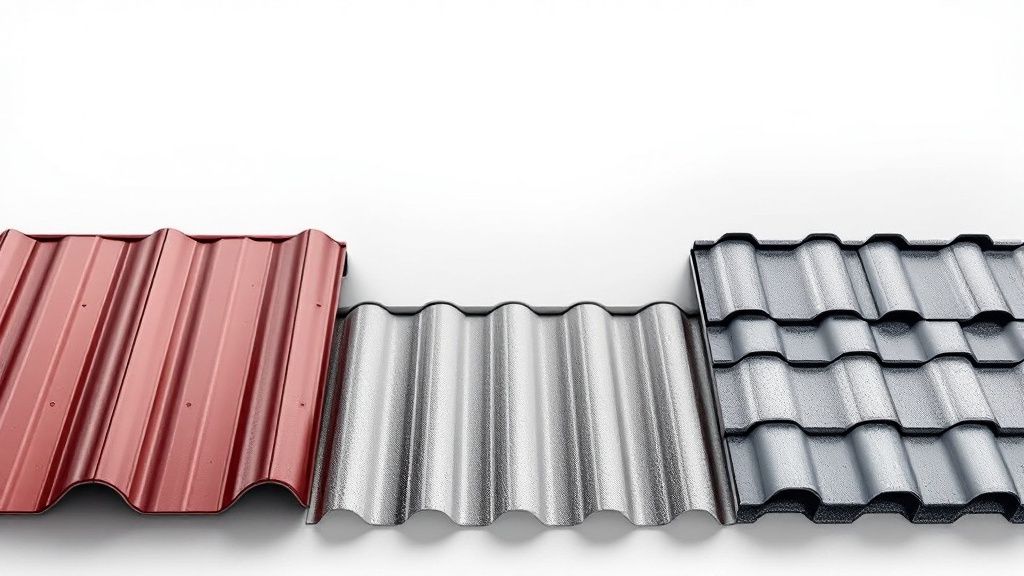
The biggest hurdle for most homeowners is the initial financial commitment. A metal roof is absolutely an investment in your home's future, but that investment comes with a higher upfront price tag than common materials like asphalt shingles.
The Higher Upfront Cost
There’s no sugarcoating it: metal roofing costs more at the outset. This isn't just an arbitrary price hike; it's rooted in the quality and complexity of the system.
- Premium Material Costs: The metals themselves—high-quality steel, aluminum, copper—are simply more expensive to source and manufacture than the asphalt and fiberglass in shingles.
- Specialized Labor: Installing a metal roof is a true craft. It demands specific tools, extensive training, and a deep understanding of how the material behaves. Getting the installation right is critical, and that skilled labor comes at a premium.
While that initial number can be daunting, it's crucial to frame it within the roof's entire lifespan. The investment often pays for itself over the long haul through incredible durability and lower energy bills.
Debunking the Noise Myth
One of the oldest stereotypes about metal roofs is the noise, especially during a rainstorm. People picture a constant, deafening ping-ping-ping that would make it impossible to relax. In reality, this is largely a myth with modern installations.
A professionally installed metal roof should be no louder than any other roofing material. Modern systems are installed over a solid substrate, like plywood sheathing, and include high-quality underlayment and proper attic insulation. These layers work in concert to deaden sound effectively.
With a proper installation, the sound of rain on your roof becomes a gentle, soothing ambiance, not a disruptive racket.
Potential for Denting and Repairs
Metal roofs are tough, but they aren't indestructible. While they stand up to most weather with ease, they can be damaged. A severe hailstorm with golf-ball-sized hail or a heavy falling tree branch can certainly cause dents. The type of metal matters here; aluminum, for example, is softer and more susceptible to denting than steel.
Repairing a metal roof is also a different beast than patching a few shingles.
- Panel Replacement: If a panel gets seriously damaged, the whole section usually needs to be replaced. This is a technical job that requires a professional to carefully remove the compromised panel and seamlessly integrate a new one without affecting the surrounding interlocking system.
- Color Matching: After years of sun and weather, a roof's color can fade slightly. This can make finding a perfect match for a new replacement panel a bit of a challenge, though experienced contractors have techniques to help blend new sections for a consistent look.
Thinking through these potential cons is a critical step. It allows you to weigh them honestly against the powerful, long-term advantages we've already covered.
Comparing Long-Term Value: Metal vs. Asphalt
When you start weighing the metal roofing pros and cons, the discussion almost always moves beyond the initial price tag to its long-term value. It’s easy to see the appeal of an asphalt shingle roof with its lower upfront cost, but a metal roof is truly a long-term investment in your property. To get the real picture of what you're spending, you have to look at the total cost of ownership over decades.
Think about it this way: you might have to completely replace an asphalt roof two, or even three, times over the lifespan of a single metal roof. Each one of those replacements brings a fresh round of costs for materials, labor, and getting rid of the old roof. When you start adding all that up, the higher initial price of metal suddenly makes a lot more sense.
This graphic really puts the key long-term metrics into perspective, showing how installation cost, lifespan, and energy savings stack up between metal and asphalt.
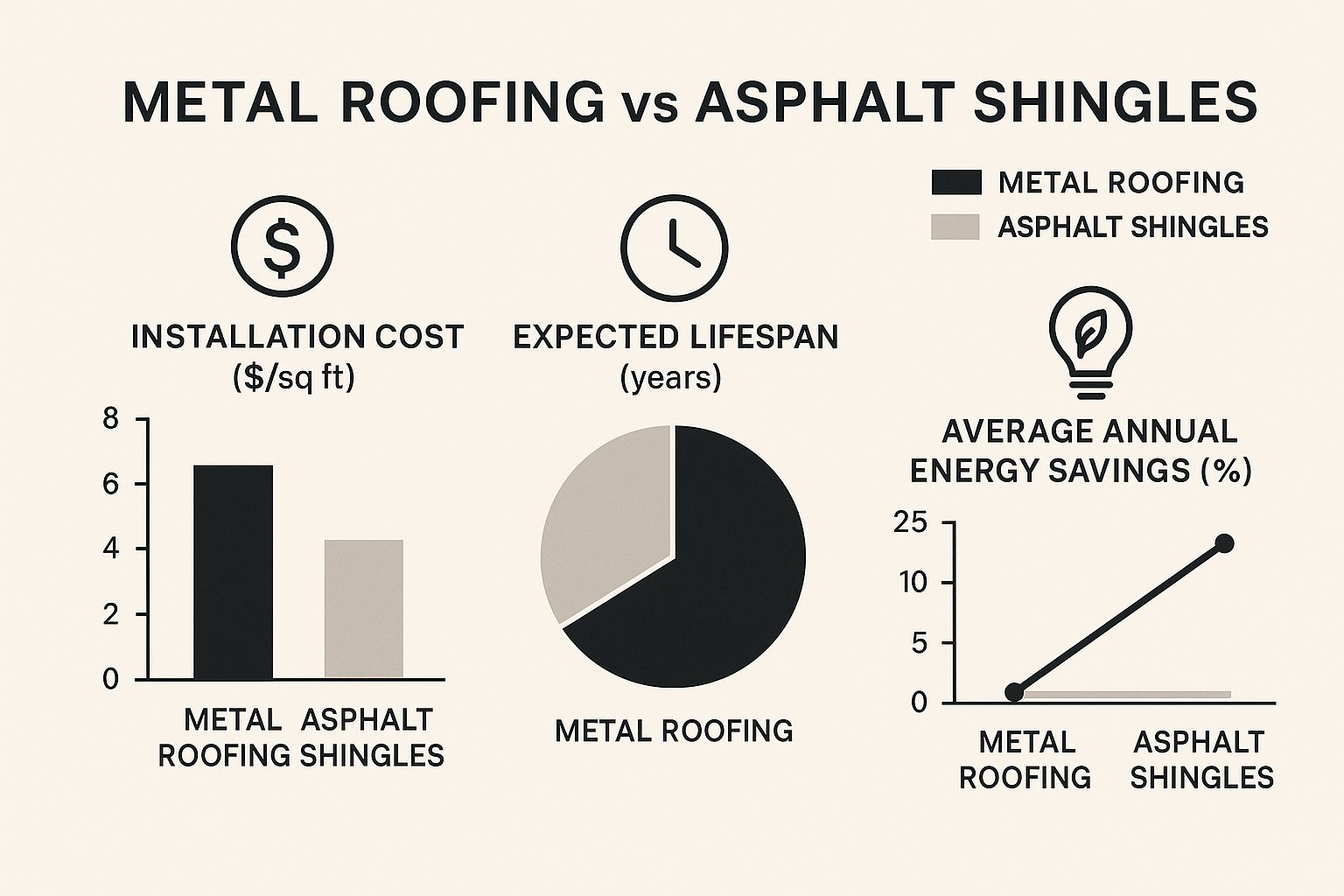
As you can see, the incredible lifespan and energy efficiency of metal roofing build a powerful argument for its long-term return on investment.
Calculating the Total Cost of Ownership
To make a smart comparison, we have to look past the installation quote. A complete financial picture includes everything from maintenance and energy savings to what it does for your home's resale value.
Let's put these two roofing types head-to-head over a typical 50-year timeframe to see how the numbers really shake out.
Long-Term Value: Metal Roofing vs. Asphalt Shingles
This table breaks down the key financial and performance metrics over a 50-year period, illustrating the true cost of owning each type of roof.
| Feature | Metal Roofing | Asphalt Shingles |
|---|---|---|
| Initial Installation Cost | Higher upfront investment | Lower upfront investment |
| Replacements (in 50 yrs) | Zero. Built to last the entire period. | One to two full replacements likely needed. |
| Annual Maintenance | Minimal; occasional inspections are all it needs. | Regular checks for curled, cracked, or missing shingles. |
| Energy Savings | Can cut cooling costs by 10-25% each year. | Offers very little energy savings without special coatings. |
| Home Resale Value | Can increase home resale value by 1-6%. | Adds little to no significant resale value. |
The takeaway here is pretty clear. While you'll pay more to install a metal roof, you more than make up for it over the years by avoiding costly replacements and enjoying lower energy bills.
Market Trends and Future Value
Looking at the bigger picture, the entire roofing industry is shifting toward more durable, resilient materials. Homeowners are increasingly looking for roofs that can handle whatever Mother Nature throws at them. This isn't just a local trend; it's a fundamental change in what people expect from their homes.
Investing in a tough material like metal isn't just about buying a roof. It's about acquiring a long-term asset that reduces future headaches and expenses. For any homeowner thinking about the future, it's a financially sound decision that aligns perfectly with where the market is headed.
Why Expert Installation Is Not Negotiable
A metal roof's incredible lifespan is only as good as its installation. We've seen it time and again: when a metal roof fails, whether it's a persistent leak or a panel that's started to lift, the culprit is almost never the material itself. It’s the installation.
This is one area where trying to save a few bucks can cost you dearly in the long run. Unlike laying asphalt shingles, which is a fairly repetitive process, installing metal roofing is a specialized craft. It demands a real understanding of how metal behaves, especially how it expands and contracts with the daily swings in temperature.
The Craftsmanship Behind a Lasting Roof
If an installer doesn't account for this thermal movement, you’re setting the stage for major headaches down the road. Panels can start to buckle, and the fasteners that hold everything together can work their way loose, creating tiny openings for water to seep in.
Putting a metal roof on correctly requires a specific set of skills and tools that most general-purpose roofers just don't have. It's a game of inches and precision, from the first measurement to the very last screw.
Here are a few areas where true expertise makes all the difference:
- Proper Fastener Placement: It’s a delicate balance. If you overtighten the fasteners, you bind up the panels and they can't move freely, which leads to warping. If you leave them too loose, you’ve got a leak waiting to happen. Every single screw has to be just right.
- Meticulous Flashing Work: The spots around chimneys, skylights, and where roof planes meet in a valley are the most vulnerable points. An expert doesn’t just use off-the-shelf parts; they custom-fabricate flashing to create a seamless, watertight seal.
- Correct Underlayment Selection: A high-temperature, self-adhering underlayment is the critical second line of defense against things like ice dams and condensation that can build up under the metal panels.
These are the details that separate a roof that just looks good from one that’s going to perform for 50 years or more.
An improperly installed metal roof isn't just an eyesore; it's a structural liability. Installer error is behind the vast majority of premature failures, turning a top-tier product into a very expensive problem.
Because the process is so technical, you absolutely have to work with professionals who have documented experience with the specific metal system you’re choosing. To get a better sense of what goes into a professional job, take a look at this detailed metal roofing installation guide that walks through the critical steps. When you hire the right team, you're not just buying a roof—you're protecting your investment from day one.
Making Your Final Roofing Decision
So, how do you decide? Weighing the pros and cons of a metal roof really boils down to what you value most. Are you looking to keep the initial project cost as low as possible, or is your eye on the bigger picture—the best long-term value for your home? A metal roof certainly asks for a bigger investment upfront, but that cost is paid back over the decades in sheer longevity, next-to-zero maintenance, and real energy savings.
For homeowners who see their house as a long-term home, the math almost always points to metal. Think about it: a roof that can take a beating from harsh weather, shrug off fire risks, and still look great years down the road is more than just a roof; it's a solid asset. This kind of reliability is exactly why the global metal roofing market, valued at USD 22.55 billion, is expected to climb to USD 32.83 billion by 2032. Homeowners are catching on to the advancements in durability and efficiency. You can read more about these metal roofing market trends to see the data for yourself.
Ultimately, the right choice has to balance your budget, your home's architectural style, and what you want for the future. If durability and a low total cost of ownership are at the top of your list, a metal roof is an outstanding investment.
Aligning Your Choice with Your Home
Picking the right material is a huge step, but it's only half the battle. As we've covered, the performance of any roof—especially a more technical system like metal—hinges completely on the quality of the installation. A perfect install is what guarantees your investment performs as it should for its full 40- to 70-year lifespan.
This is exactly why choosing the right partner for the job is so critical. An experienced crew understands that every single detail, from the underlayment to the flashing, has to be handled with precision. When you’re ready to move forward, our guide on how to choose a roofing contractor is packed with insights to help you find a professional you can trust with your home.
Got Questions About Metal Roofing? We've Got Answers.
Even after you've weighed all the pros and cons, a few practical questions almost always come up. Getting straight answers to these is key to feeling confident about your choice. Let's tackle some of the most common things we hear from homeowners.
Can You Actually Walk on a Metal Roof?
The short answer is yes, but you have to know what you’re doing. It’s not like walking on a shingle roof. You need to step on the flat sections of the panels, right above the structural supports, and always wear soft-soled shoes to avoid dents and scratches.
Honestly, though, it's strongly advised against it. For your own safety and to protect your investment, it's always best to have a trained and insured professional go up there. They know exactly how to move around without causing any issues.
Will a Metal Roof Kill My Cell Phone Signal?
This is probably one of the biggest myths out there, but it's really not an issue for most people. In almost every modern home, a metal roof has virtually no noticeable impact on cell phone reception or Wi-Fi.
Think about it: your signal primarily comes into your house through the windows and walls, not the attic. Unless you already live in a dead zone with terrible reception, you're highly unlikely to notice any change after a new roof is installed.
What if a Panel Gets Dented or Damaged?
Fixing a metal roof isn't like slapping a new shingle over an old one, but it’s often more straightforward than you’d think. For small surface scratches, professionals can typically use a special paint kit designed to match your roof's color and seal the metal, preventing any chance of corrosion down the line.
If the damage is more serious—say, a heavy branch leaves a big dent—one of the great things about modern metal systems is their modularity. A qualified pro can simply remove the one damaged panel and slide a new one into place without disrupting the rest of the roof. The key is to address any damage quickly to keep your roof performing at its best for decades.
If you're ready to see if a durable, energy-efficient metal roof is the right long-term investment for your home, the experts at Penn Ohio Roofing & Siding Group are here to help. Contact us today for a free, no-obligation estimate.