You notice it from the driveway first. A dark patch near a valley. A few shingles that no longer sit flat. Maybe a strip of granules in the gutter after a hard Western Pennsylvania storm.
That is usually when homeowners start searching for New roof installation Grove City PA and trying to answer two hard questions at once. Is this still a repair, or is it time to replace the whole roof? And if it is time, how do you make a smart decision that holds up in Grove City weather without overspending?
A roof in this part of Pennsylvania has to deal with snow load, wind, rain, humidity, freeze-thaw cycles, and the kind of storm damage that does not always show itself right away. The financial side matters just as much as the construction side. A new roof is not a cosmetic upgrade. It is a major home investment, and the wrong material or the wrong installer can cost you twice.
Your Guide to Roof Assessment and Project Planning
Most roof problems start small. A lifted shingle near the eave turns into a leak path. Granule loss exposes more of the shingle to sun and weather. Flashing around a vent starts to separate, and water finds the gap long before you see a stain inside.
The first rule is simple. Inspect from the ground. Do not climb the roof. You can learn a lot safely with a walk around the house, a pair of binoculars, and your phone.

What to look for from the yard
Start with the roof planes you can see clearly. Then move to gutters, siding lines, and attic clues inside the home.
- Shingle condition: Look for curling edges, missing tabs, cracked shingles, exposed dark patches, or areas that look uneven after wind.
- Gutter evidence: Check for heavy granule buildup, shingle fragments, or repeated overflow areas that may point to drainage problems.
- Flashing trouble spots: Watch the areas around chimneys, plumbing vents, wall intersections, and valleys. These spots often fail before the field shingles do.
- Sagging lines: Step back and look at the ridge and eaves. If anything dips or waves, that can point to decking or framing issues.
- Interior signs: In the attic or upper floor, look for staining, damp insulation, musty smells, or daylight where it should not be visible.
Take photos from several angles. If you have storm damage, photograph dented metal trim, downed branches, and any debris patterns on the property. Those details help when you speak with a contractor or an insurance adjuster.
Repair or replacement
A lot of homeowners want a quick yes or no. Real roofs do not work that way.
A repair often makes sense when the issue is isolated. One section of shingles blew off. A vent boot failed. Flashing around one penetration needs to be redone. If the surrounding system is still sound, targeted work can buy useful time.
Replacement moves to the front of the line when problems show up in multiple areas, when leaks repeat, or when the roof has visible wear across large sections. If one patch leads to another and another, you are not saving money anymore. You are financing the same roof in installments.
Practical rule: If you cannot explain where the water is getting in, do not assume the visible stain marks the true source. Roof leaks often travel before they show themselves indoors.
Plan the conversation before the estimate
When a roofer comes out, ask direct questions. What did they find at the flashing? Do they see signs of decking trouble? Are ventilation problems part of the issue? What would they repair, and what would still remain a risk after that repair?
If you want a better sense of scope before that meeting, a roof size guide like this overview on how to calculate roof area with pitch helps homeowners understand why two houses with similar footprints can have very different roofing needs.
Start with the right credentials
Before you get deep into products or pricing, verify the company is operating properly. In Grove City, contractors handling over $5,000 in annual home improvements must register with the Attorney General's Office and provide proof of insurance, according to Today’s Homeowner’s Grove City roofing overview. That matters because roofing mistakes usually do not show up on day one. They show up later, when accountability matters.
A roof project starts long before tear-off day. It starts with a careful assessment, clear documentation, and a contractor who can explain the roof system in plain language.
Choosing the Right Roofing Materials for Grove City Weather
Material choice decides more than appearance. It affects snow shedding, wind performance, maintenance, attic temperatures, repairability, and how the roof ages in a damp Western Pennsylvania climate.
Homeowners usually narrow it down to asphalt shingles, metal roofing, or a flat roofing system for low-slope sections. Each can work well. Each can also disappoint if it is used in the wrong setting or installed without attention to detail.
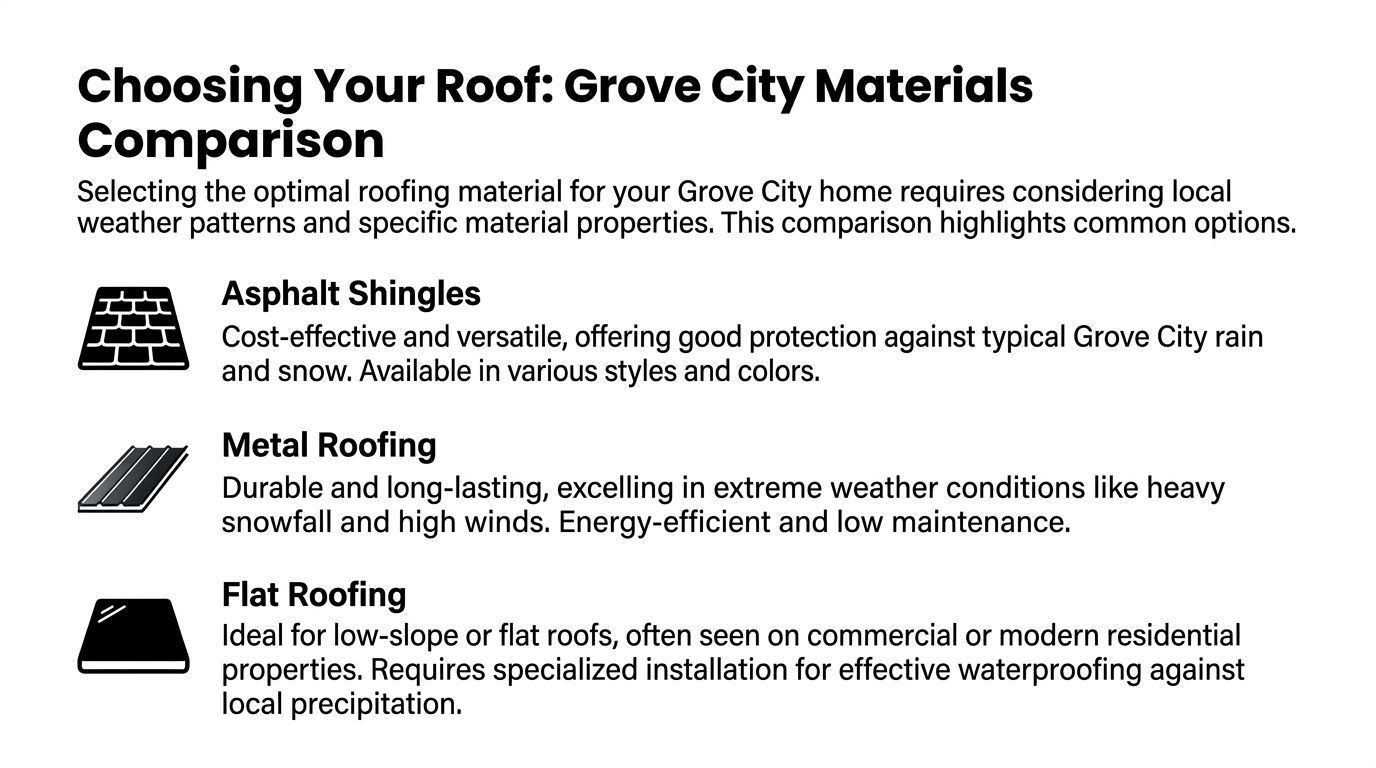
Grove City Roofing Material Comparison
| Material | Typical Lifespan | Estimated Cost | Pros for PA Climate | Cons for PA Climate |
|---|---|---|---|---|
| Asphalt shingles | Shorter than metal in practical use | Lower upfront cost relative to premium materials | Widely used, easier to match on many homes, good value for standard slopes | Shorter lifespan than metal, can be vulnerable to wind installation errors and long-term wear |
| Metal roofing | Longer-lasting option | Higher upfront cost | Handles snow and harsh weather well, low maintenance, strong long-term value case | Higher initial investment, appearance is not for every home |
| Flat roofing | Depends heavily on system and installation quality | Varies by system and complexity | Best for low-slope areas where shingles are not appropriate | Requires specialized waterproofing details and close attention at seams and drains |
The cost column stays qualitative here for a reason. Material cost changes with roof complexity, slope, trim details, tear-off conditions, and access.
Asphalt shingles for most residential homes
Asphalt shingles remain the standard choice for many Grove City homes because they balance appearance, repairability, and upfront affordability. They fit most neighborhood styles and work on the majority of pitched residential roofs.
That said, shingles do not forgive sloppy work. Nail placement matters. Starter courses matter. Valley details matter. Ventilation matters. In this climate, a decent shingle installed poorly will underperform faster than most homeowners expect.
Shingles are usually the right answer when the budget is tight but the homeowner still wants a complete system replacement done correctly. They also make sense when matching the character of the home matters.
Metal roofing for long-term ownership
Metal roofing tends to make the most sense for homeowners who plan to stay put and want durability over the long haul. Snow generally sheds more easily. Routine maintenance is lighter. Weather resistance is a major reason many owners move this direction.
The trade-off is upfront cost. Metal asks for a bigger check early, and not every house looks right with it. But if you are thinking in decades rather than the next few years, the long-term case often becomes stronger.
Some homeowners focus only on installation price and miss the bigger financial picture. The roof that costs less today is not always the roof that costs less over the life of the home.
Flat roofing for low-slope sections
Flat and low-slope roofs need a different mindset. They are not just “a regular roof with less pitch.” Water moves more slowly. Drainage details become more important. Seam work and membrane choice carry more weight.
If your home includes a porch roof, addition, garage connector, or modern low-slope section, the system needs to match that geometry. Products such as TPO roofing membranes are relevant in that conversation because they show the type of membrane-based solutions used on low-slope assemblies where waterproofing depends on proper detailing at seams and penetrations.
Material rule: Steep-slope and low-slope sections should be treated as different roofing environments, even when they sit on the same house.
The energy question homeowners should ask more often
Many roofing conversations fall short here. Contractors talk about durability and appearance, but homeowners also care about monthly operating costs and long-term value. That is a real concern. As noted by RTG Solutions on new construction roofing content gaps, many contractors mention energy-efficient systems, but there is little data on quantifiable savings, even though a new roof’s effect on heating and cooling costs is a major part of lifetime value.
That does not mean energy should be ignored. It means you should discuss it openly. Ask how color, attic ventilation, insulation conditions, and material type work together. A roof does not save energy by magic. It does so as part of a complete building system.
Which material fits your house
The best material depends on the house, not the brochure.
Choose asphalt shingles when:
- You want balanced value: Good fit for many homes where budget and appearance both matter.
- Your roof has standard pitched sections: Shingles remain practical on conventional residential geometry.
- You want simpler future spot repairs: Matching and localized service are often easier than with specialty systems.
Choose metal when:
- You expect to stay long term: Long service life can make the higher upfront spend easier to justify.
- Your site takes weather seriously: Open exposures, drifting snow, and repeated storm events push durability higher on the priority list.
- You want lower routine upkeep: Many homeowners like the reduced maintenance profile.
Choose a flat-roof membrane when:
- The roof is low-slope by design: Shingles are not the right answer on these sections.
- Drainage details can be built correctly: Scuppers, drains, edges, and penetrations need specialized handling.
- You want the system matched to the structure: This is especially important on additions and transitions.
If you are comparing styles and assemblies, this guide to all types of roofing for homes is a useful starting point. It helps homeowners sort through roof categories before they sit down to compare estimates.
Budgeting Your Project Navigating Costs and Financing
The number homeowners usually want first is the installed price. In Grove City, the average cost for a new roof installation ranges from $6,585 to $8,446 for standard residential properties, according to Homeyou’s Grove City roof replacement cost guide. That is a useful local benchmark, not a universal price.
A real estimate moves up or down based on the roof itself. Two homes can have the same square footage and very different roofing costs because roofs are priced by complexity, not just by footprint.
What changes the final number
Some cost drivers are obvious. Others are not.
- Roof size and layout: More surface area means more material, labor, and tear-off volume.
- Pitch and access: Steeper roofs take more time and more safety setup. Tight access affects labor and debris handling.
- Material selection: Asphalt, metal, and low-slope systems each price differently.
- Tear-off conditions: Hidden damage under old roofing can add deck repair work.
- Flashing and detail work: Chimneys, valleys, skylights, wall intersections, and multiple penetrations all add labor.
The surprise item for many homeowners is the deck. The finished roof is only as sound as the wood under it. If the deck has soft spots, rot, or fastening problems, that has to be corrected before the new system goes on.
Think in terms of cost now versus cost later
A cheaper roof is not always the less expensive decision.
Asphalt usually lowers the upfront bill. Metal often raises it. But if a homeowner plans to stay in the house for a long time, the better question is not just “What does it cost?” It is “What am I buying over the life of the roof?”
That includes maintenance, likelihood of repairs, resilience in storms, and how confident you feel about the roof after a bad winter. A lot of regret comes from buying the lowest estimate instead of buying the right system.
Budget tip: Set aside room in the project budget for conditions that are only visible after tear-off. If your estimate explains how deck repairs are handled, that is a good sign.
Financing and cash-flow planning
Financing gets ignored too often in roofing conversations, even though roof replacement is a major household expense. Homeowners should ask about payment timing, deposit structure, and whether the estimate separates base scope from possible additional wood repair.
If storm damage is involved, insurance may offset part of the cost. That process can get confusing fast. A plain-English guide on how to read a roofing insurance estimate can help homeowners understand line items, depreciation, and what the carrier is paying for before they sign a contract.
Do not let financing pressure force a rushed decision. Compare scope, not just payment options. Low monthly payments can still hide a weak scope of work.
Permits and paperwork
Homeowners should also ask the contractor who handles permits and what local approvals may apply. Municipal requirements can vary, and good contractors address that early instead of treating it like an afterthought.
Written estimates should spell out:
- Removal scope: Full tear-off versus partial work.
- Installation layers: Underlayment, flashing, edge metal, ventilation components, and finish materials.
- Change-order process: How additional deck repairs are documented and approved.
- Cleanup expectations: Dumpster placement, protection of surrounding areas, and magnetic nail sweep.
- Warranty language: Workmanship and manufacturer terms should be stated clearly.
If you want a broader look at pricing variables before collecting estimates, this page on how much roof replacement costs is a practical reference.
One more budgeting point matters in Grove City. Timing can affect stress as much as price. If you wait until active leaking starts, you may end up making a financing decision under pressure. It is easier to compare materials, scope, and payment options when the ceiling is still dry.
The Installation Process From Tear-Off to Clean-Up
Homeowners usually see trucks, ladders, and stacks of shingles. What matters more is the order of work and whether the crew respects the roof as a system.
A professional installation starts with property protection. Tarps, plywood, and debris control should go down before tear-off starts. Dump zones should be planned so landscaping, driveways, and parked vehicles are protected.
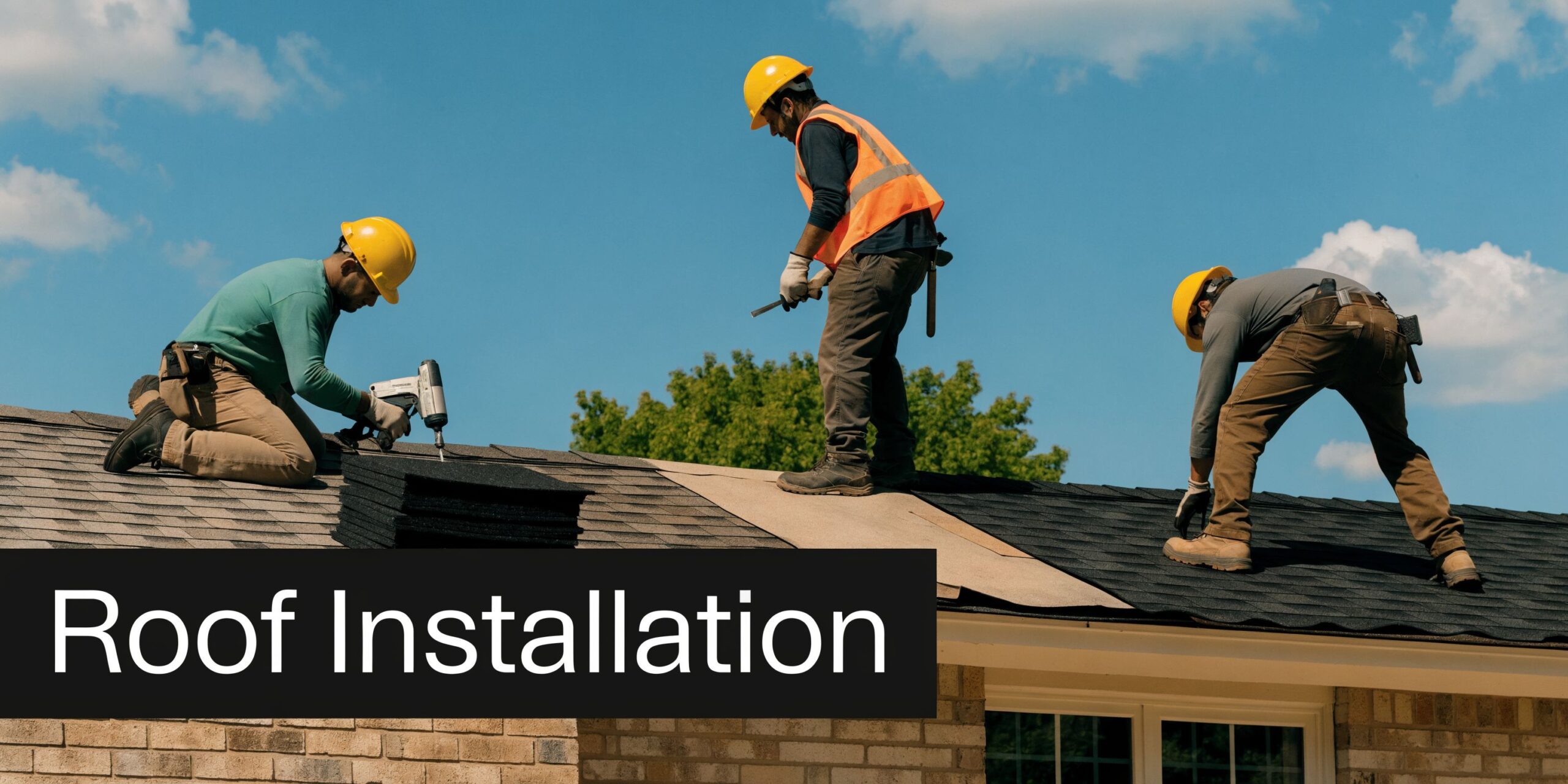
Day one looks noisy for a reason
The old roof has to come off. That means shingles, underlayment, flashing, and fasteners are removed so the crew can inspect what is really there.
That full tear-off matters. According to Mountain View Roofing’s installation process overview, the process begins with a full tear-off and then a detailed deck inspection to repair rot or weak spots. The same source notes that undetected deck damage contributes to 30 to 40% of premature roof failures. That is why overlays often create problems instead of solving them.
If you hear the crew stop after tear-off and before new roofing goes on, that is usually not wasted time. That is the inspection stage, and it is one of the most important parts of the whole project.
The deck tells the truth
Once the old material is off, the wood deck is exposed. Hidden trouble often shows up here. Soft plywood, water staining, delamination near penetrations, and weak fastening patterns become visible.
A good crew will replace compromised sections before moving on. They should not roof over damaged wood just to keep the schedule moving. If they do, the new roof may look fine at first and fail where you cannot see it.
Building the waterproof layers
After deck repairs, the roof goes back together in layers.
First comes edge metal. Drip edge directs water into gutters instead of letting it curl under the roofing edge. Then underlayment goes down to provide a secondary moisture barrier. Flashing is installed or replaced at chimneys, vents, skylights, valleys, and wall intersections. Only after that should the visible roofing material go on.
The source above specifically notes the sequence of drip edge, underlayment, and flashing before shingles. That order matters because shingles are the outer shell, not the only defense.
What proper shingle installation looks like
From the ground, homeowners will not see every nail line. They can still watch for signs of organized work.
Look for:
- Straight courses: Shingles should track cleanly across the roof without wandering lines.
- Clean valley work: Valleys should look intentional, not patched together.
- Consistent overhangs: Edge lines should be crisp and even.
- Accessory replacement: Old pipe boots and beat-up flashing should not be reused just to save a few dollars.
Ventilation also deserves attention. A roof that cannot move heat and moisture out of the attic is more likely to have trouble over time. Ridge vents and intake ventilation should be addressed as part of the roofing system, not treated as optional trim.
What good crews do daily: They leave the property secure, keep materials organized, and make it clear what is complete and what remains for the next work period.
The final cleanup is part of the job
A roof is not done when the last cap shingle is nailed on. Cleanup shows whether the company works like professionals.
Expect debris removal, gutter clearing, and a magnetic nail sweep around the house, driveway, and work zones. Walk the property with the project lead if possible. Ask them to point out flashing, ventilation changes, and any deck repairs that were made after tear-off.
Most standard jobs in Grove City are completed in 1 to 5 days, with weather, size, and access affecting that timeline, as noted in the local cost and market summary from the earlier cited Grove City roofing data. If rain or wind pushes the schedule, the key issue is whether the roof is dried in properly, not whether the crew rushes to finish.
Your Checklist for Selecting a Trusted Grove City Roofer
Homeowners spend a lot of time comparing shingle colors and not enough time comparing contractors. That is backwards.
The installer decides whether the roof system performs. Materials matter, but execution matters more. A strong-looking estimate from the wrong contractor can leave you with poor nailing, bad flashing, weak ventilation, and a warranty argument later.

Essential Requirements
Use this checklist before you sign anything.
- State registration and insurance: Ask for proof. If a contractor hesitates, move on.
- Detailed written scope: You want line-by-line clarity on tear-off, underlayment, flashing, ventilation, cleanup, and warranty terms.
- Local experience: Grove City roofs deal with snow, wind, wet seasons, and storm response. Local experience helps contractors spot region-specific trouble.
- Crew accountability: Ask who is supervising the job and how change orders are documented if deck damage is found.
- Manufacturer familiarity: The contractor should be able to explain exactly which system components are being installed and why.
Ask how they prevent the common failures
This question separates script readers from real roofers.
According to Blue and Blue Roofing’s roof replacement process overview, deck inspection and repair reveals structural issues in 20 to 35% of projects, and improper nailing causes 15% of wind damage claims. The same source notes that expert contractors avoid these problems by following strict quality checks and IRC standards.
That means you should ask:
- How do they inspect the deck after tear-off?
- How do they handle ventilation planning?
- How do they verify fastening and flashing details?
- What does their final quality-control process include?
If the answer is vague, the work may be vague too.
Red flags in an estimate
Some warning signs are easy to spot once you know what to look for.
A weak estimate often has broad language like “replace roof” with little detail. It may skip underlayment type, flashing replacement, or cleanup standards. It may promise “if needed” work without explaining how that is approved or priced.
A solid estimate reads like a plan, not a guess.
Contractor test: If you cannot tell what is included before work begins, you will not have much influence once the roof is open.
Certifications and why they matter
Manufacturer certifications are not everything, but they are useful when they are backed by good local practice. They usually show the contractor has met training and installation requirements tied to specific product systems.
Penn Ohio Roofing & Siding Group is one local option homeowners may evaluate. The company is family-owned, serves Mercer County, and is identified in the publisher background as licensed, bonded, insured, and recognized with the GAF Triple Excellence Award. Those are the kinds of credentials homeowners should compare across any contractor they consider.
Pick the roofer the same way you would pick a surgeon or a foundation contractor. Verify credentials. Read the scope. Ask hard questions. Then hire the one who answers clearly and works transparently.
Post-Installation Care and Protecting Your Investment
A new roof does not ask for much if it was installed right. It does ask for attention.
Start with your paperwork. Keep the contract, warranty documents, product information, and final invoice in one folder. If workmanship and material warranties have registration requirements, handle that promptly and keep confirmation records.
Simple maintenance that helps
You do not need to climb the roof. In fact, most homeowners should not.
Use a seasonal routine from the ground:
- Check gutters and downspouts: Keep water moving away from the roof edge and foundation.
- Look after storms: Scan for lifted shingles, displaced metal, or debris impact.
- Watch the attic: Musty smells, damp insulation, or new stains deserve a call.
- Trim back branches: Roofs last longer when limbs are not scraping or dropping debris into valleys.
Protect the warranty by avoiding shortcuts
Do not let other trades cut into the roof without coordination. Satellite mounts, vent additions, solar work, and patch jobs by unqualified crews can create leaks and warranty disputes.
If something looks off, call the original installer or another qualified roofer quickly. Small issues stay small when someone addresses them early.
A roof is one of the few parts of the house that protects everything underneath it. Treat it like an asset, not a background feature.
If you need a straight answer on whether your Grove City roof should be repaired or replaced, Penn Ohio Roofing & Siding Group offers residential and commercial roofing services, free estimates, and emergency availability for homeowners who want a clear scope before making a major investment.