

The storm usually hits fast in Sharon. Wind rattles the siding, rain starts driving sideways, and then the sound that gets everyone moving comes next. A drip in the attic. A stain spreading on the ceiling. Water running down a wall where it has never shown up before.
That moment puts people into a rush. Some head for the ladder. Some grab a towel and hope the leak slows down. Most are trying to make decisions while the weather is still bad, the house is dark, and nobody is sure whether the problem is a few missing shingles or a branch-driven puncture.
In Mercer County, that uncertainty is normal. Roof leaks here do not always start with dramatic damage. Lake-effect snow can sit, melt, refreeze, and back water into places it should never reach. Windstorms can peel up shingles without dropping them into the yard. Heavy precipitation can expose flashing issues that looked harmless the week before. If you are dealing with that tonight, the right move is not panic. It is a sequence.
This guide is built around the steps that matter most in a real emergency roof repair Sharon PA call. Start inside. Make the room safe. Control the water. Document what you can. Then decide whether temporary exterior protection is realistic or whether the roof is unsafe to approach. If you are still trying to pinpoint the source, this guide on finding a roof leak helps explain why the visible drip is not always directly below the entry point.
A roof emergency feels chaotic. The response should not be.
A Sudden Storm Over Sharon and a Drip from the Ceiling
A common call starts like this. The power flickers, the wind picks up over the Shenango Valley, and a homeowner notices a brown ring on the bedroom ceiling turn into a steady drip. Then a second drip starts near the wall. Ten minutes later, there is a bucket on the floor, a wet comforter on the chair, and somebody asking whether they should go up on the roof in the rain.
That is the wrong first move.
Sharon roofs take a beating from changing conditions. One storm can loosen shingles. The next round of rain finds the opening. In winter, snow buildup and freeze-thaw cycles can force water under materials that looked fine from the ground. By the time water shows inside, the roof system has already been tested.
What homeowners usually get wrong
Homeowners often focus on the visible leak and ignore the area around it.
They stand directly under a sagging ceiling to catch water. They leave electronics plugged in. They wait too long to move furniture because the leak “doesn’t look that bad.” Then a small problem becomes wet insulation, damaged drywall, and a much bigger cleanup.
What works better in the first hour
A calm response saves money and reduces risk.
Start with the room, not the roof. Protect people first. Protect the structure second. Protect the claim record third. Repair decisions come after that. In emergency roof repair Sharon PA situations, the homeowners who do best are usually the ones who slow down enough to follow that order.
Tip: If the ceiling is bulging, the safest assumption is that water is pooled above it. Keep people and pets out from underneath until the area is assessed.
That approach matters whether the cause is a wind-torn shingle section, failed flashing, or impact damage from debris. The leak itself is only part of the emergency. The rest is preventing the next layer of damage while the weather is still active.
Your First Actions When a Roof Emergency Strikes
Do not climb onto the roof while the storm is active. OSHA statistics show that climbing an unstable roof during or after a storm contributes to 25% of all roofing-related injuries according to guidance summarized at roof leak emergency steps.

Make the room safe first
Handle the interior in a simple order.
Move people out of the immediate area. If water is near light fixtures, ceiling fans, or outlets, keep everyone clear until you know the area is electrically safe.
Shut off power to the affected area if you can do it safely. If the panel is accessible and the leak is close to wiring, cut power to that room. If you are unsure which breaker controls it, leave the wet area alone and call for help.
Relocate what you can. Move furniture, rugs, electronics, and anything absorbent. If something is too heavy, slide plastic sheeting, a shower curtain, or trash bags over it.
Catch active water. Buckets work. So do storage bins, roasting pans, and deep pots. Put a towel under the container so it does not skate across hardwood or tile.
Relieve water from a bulging ceiling only if the situation is stable and you know what you are doing. In some cases, controlled draining prevents a wider collapse. In others, touching the area creates a bigger failure. If the ceiling is badly sagging, keep clear and wait for a professional assessment.
Contain spread, not just drips
A leak rarely damages only the spot where it lands.
Water can run along rafters, soak insulation, and wick into trim, drywall, and flooring. That is why drying matters right away. Open the room if the weather allows. Run fans if the electrical area is safe. Pull wet curtains or bedding out of the room.
If the leak has soaked walls or flooring, early water damage mitigation guidance can help you think through drying priorities and what should be removed before mold and material breakdown set in.
What to watch for indoors
Some warning signs mean the emergency is larger than it first looked.
- Ceiling swelling: Water may be pooling overhead.
- Cracking drywall seams: Movement can indicate saturation or structural stress.
- Wet insulation smell: The leak may have been active longer than you realized.
- Water near a panel, fixture, or wiring run: Treat this as an electrical hazard.
- Multiple leak points: The roof opening may be higher or wider than the visible interior damage suggests.
Key takeaway: The first 30 minutes are about controlling risk inside the home. A rushed trip up a ladder during wind or rain can turn a roof leak into an injury emergency.
Safely Tarping Your Roof for Temporary Protection
Once the inside is under control, the next question is whether a tarp makes sense. Sometimes it does. Sometimes it is exactly how homeowners get hurt or make the roof harder to repair.
A properly applied temporary patch or tarp can significantly reduce further water intrusion during a storm, based on industry benchmarks summarized in earlier guidance on emergency leak response. The problem is that DIY work often fails because edges are not sealed well or the underlayment gets torn during the attempt.

When not to attempt it
This is the first decision to get right.
Do not try to tarp the roof if:
- Wind is still active. A tarp turns into a sail fast.
- Rain, sleet, or snow is still falling. Wet shingles are slippery even on roofs that look walkable.
- The pitch is steep. What feels manageable from the ground often does not feel manageable halfway up.
- Tree limbs, power concerns, or structural damage are involved. Those are professional conditions.
- You cannot access the damaged area from a stable ladder position. Reaching sideways from a ladder causes a lot of trouble.
In Sharon, winter creates another trade-off. Snow cover can hide punctures, soft decking, and slick transitions around valleys and eaves. A tarp over snow or ice is rarely a good homeowner project.
If conditions are safe enough
For a low-slope, easily reached area in calm conditions, temporary protection can work if it is done cleanly.
Typical materials include:
- A heavy-duty tarp
- 2×4 boards
- Exterior screws
- Roofing cement or compatible sealant
- Work gloves and eye protection
The tarp needs to extend well beyond the damaged section. Pros usually think in terms of coverage, not exact visual matching. If the opening is small but water is traveling, the protected area may need to be much larger than the obvious hole.
Roll the tarp flat. Avoid wrinkles. Secure the perimeter to boards so the wind does not catch loose edges. Fastening directly through random parts of the field without a plan often creates more entry points.
If you are dealing with an actual opening rather than lifted shingles, this guide on fixing hole in roof gives a useful overview of why the visible puncture is only part of the repair.
What works and what does not
A few practical truths matter here.
What works
- Covering from the ridge side downward when possible, so water sheds over the tarp instead of under it
- Using enough overlap
- Anchoring edges firmly
- Treating the tarp as temporary weather control, not a finished repair
What does not
- Stapling a tarp loosely and hoping weight holds it
- Fastening only near the damaged spot
- Walking damaged decking
- Trying to “just replace a shingle” during active bad weather
Tip: A temporary roof cover is doing one job. Buy time. It is not restoring the roof system, sealing every seam, or solving hidden moisture below the surface.
The smartest call in many emergency roof repair Sharon PA situations is to leave the exterior alone until conditions improve or a roofer can handle the temporary protection safely.
Documenting Damage for Your Insurance Claim
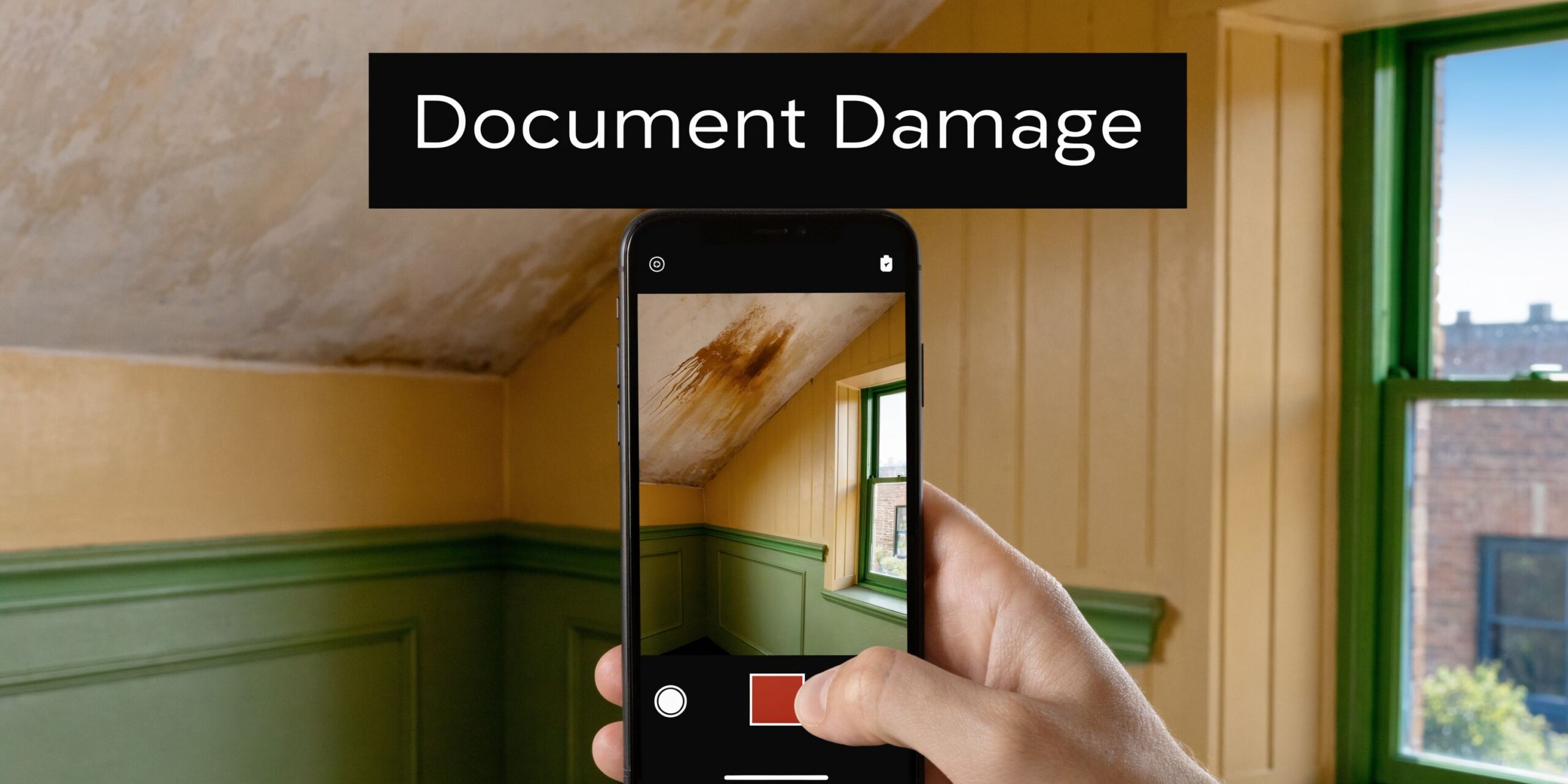
The repair starts on the roof. The claim starts with your phone.
Insurance carriers want a clear timeline and visible proof. The more organized your record is, the easier it is to show what happened, when it happened, and what damage followed. Poor documentation creates doubt. Good documentation creates a clean story.
What to photograph
Start wide, then move close.
Take photos of the room from the doorway first. Then photograph the ceiling stain, the active drip, the wet floor, damaged furniture, swollen trim, and anything else the water touched. If the attic is safely accessible, capture wet decking, damp insulation, or visible daylight.
If the exterior can be photographed from the ground without risk, get the missing shingles, fallen branches, or debris field. Do not climb for photos.
Video helps too. A short walk-through with spoken date, time, and weather conditions adds context that still photos sometimes miss.
What to write down
A claim file gets stronger when your notes match your images.
Keep a simple record with:
- Date and time you noticed the leak
- Weather conditions at the time
- Rooms affected
- Items damaged
- Steps you took to reduce further damage
- Any emergency service calls made
Save receipts for buckets, tarps, fans, and cleanup materials if you had to buy them because of the loss.
Why inspection paperwork matters
A homeowner photo record is valuable. Professional documentation is often more useful because it ties visible damage to roofing components and repair scope.
An insurance-focused roof inspection report for insurance can help translate what you are seeing into the kind of detail adjusters and carriers usually need. That matters when damage is not limited to one obvious leak point.
Tip: Take photos before moving soaked items if it is safe to do so. Then take another set after moving them. That shows both the original loss condition and your mitigation efforts.
Keep everything in one folder on your phone and back it up. In a stressful week, scattered images and missing receipts are common. Organization helps almost as much as the documentation itself.
Calling a Sharon Pro What to Expect from Penn Ohio Roofing
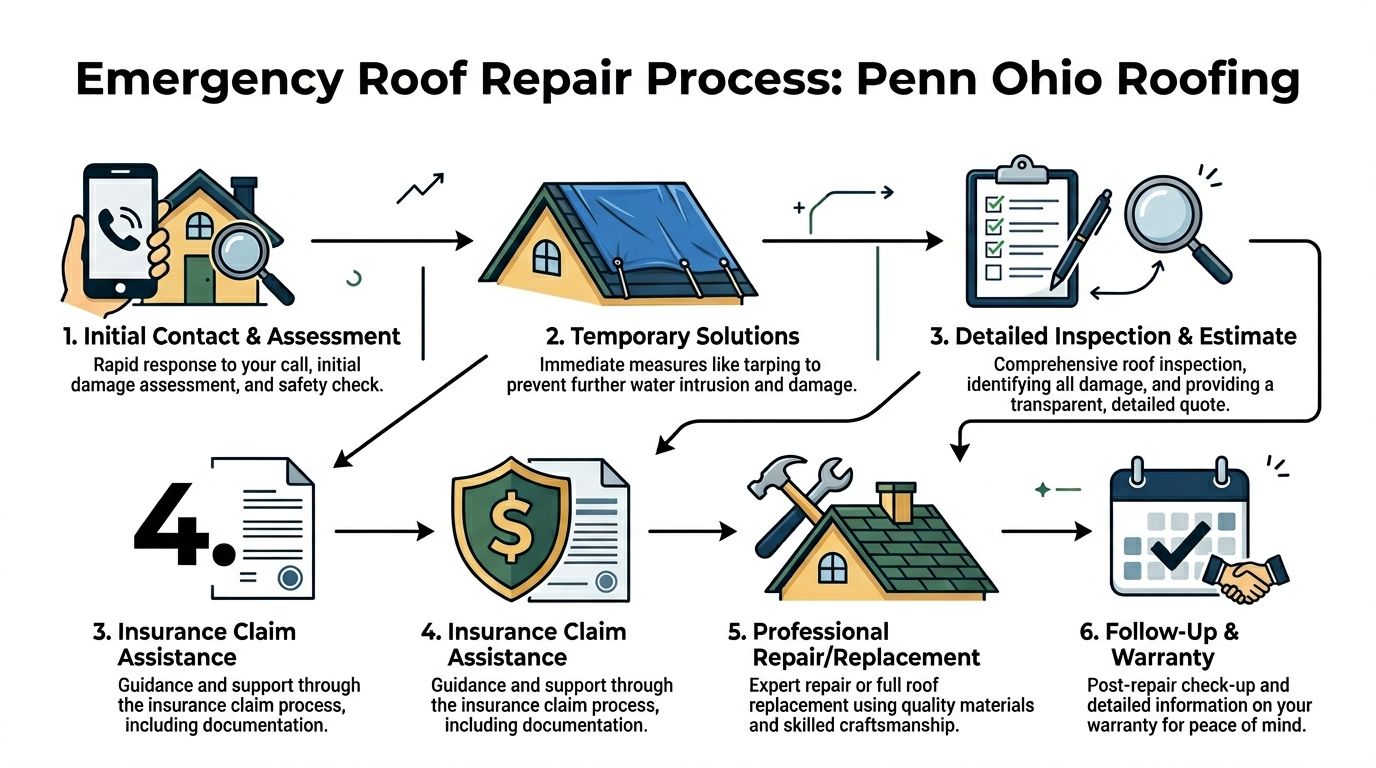
When the leak is active, the ceiling is compromised, or the roof is not safe to access, the job changes from homeowner mitigation to emergency service. At that point, the value of a local roofer is not just repair labor. It is decision-making under pressure, accurate damage mapping, and getting temporary protection in place without creating a bigger problem.
In Sharon, typical emergency roof repair costs range from $300–$750 for minor patching and can run $2,500–$10,000 or more for major damage from fallen trees, according to Penn Ohio Roofing’s Sharon emergency roof repair page. The same source notes 24/7 service and states that Penn Ohio Roofing & Siding Group has over 25 years of experience.
What the call usually starts with
A good emergency roofing call is short and specific.
Be ready to answer:
- Is water actively entering now?
- What room is affected?
- Do you see ceiling bulging or collapse risk?
- Is there a tree limb, puncture, or missing shingle area visible from the ground?
- Has power been shut off to the affected space?
- Can the roof be accessed safely from outside?
Those answers help the roofer decide whether the first visit is mainly containment, full diagnosis, or both.
What happens on site
A professional emergency visit is usually a sequence, not a single act.
First comes a safety check. That means looking at the interior impact, the ceiling condition, attic access, and exterior hazards.
Then comes damage tracing. On a real leak, the entry point and the visible interior drip often do not line up. Experienced crews look at shingle loss, flashing lines, penetrations, valleys, decking condition, and signs of water travel.
After that, temporary protection may be installed if conditions call for it. On some jobs, that means tarping. On others, it means sealing a localized opening or stabilizing a vulnerable area until a permanent repair window is available.
The final step is defining the actual scope. That is where homeowners usually benefit most from a clear estimate. It separates cosmetic worry from structural need.
A practical cost table
Costs vary with access, materials, slope, and damage spread. Still, broad local ranges help set expectations.
| Emergency Scenario | Estimated Cost Range |
|---|---|
| Minor patching such as a small leak or limited shingle repair | $300–$750 |
| Major damage from fallen tree impact | $2,500–$10,000+ |
Those ranges are local to Sharon based on the emergency repair source above. If the problem turns out to be broader than an emergency patch can solve, the total project can move into a much larger repair or replacement conversation.
The trade-offs homeowners should understand
Emergency roofing decisions are rarely about one simple question.
Fast temporary work vs. complete repair
Sometimes the right move is just to stop water tonight. That does not mean the underlying roof problem is fully resolved.
Targeted repair vs. larger scope
A few missing shingles can be straightforward. Hidden decking damage, repeated leakage, or a tree strike can shift the job well beyond a patch.
Out-of-pocket speed vs. insurance timing
Some homeowners want immediate permanent work. Others need documentation and claim coordination first. Both approaches can make sense depending on the loss.
If the damage involves impact from a tree, homeowners often want to understand where roof responsibility ends and tree-related claim questions begin. This overview of tree falling on house insurance is useful background before talking with your carrier.
What a solid emergency process looks like
The best emergency roof repair Sharon PA jobs follow a disciplined chain:
- Immediate stabilization indoors
- Exterior hazard review
- Temporary weather protection
- Damage documentation
- Detailed repair scope
- Permanent repair with final inspection
That process matters in Sharon because local weather creates layered roof failures. Wind can start the damage. Rain can expose it. Snow and refreeze can worsen it. A rushed patch that ignores the full assembly often leads to repeat leaks in the next storm.
One more thing homeowners should expect is plain talk. If the roof is too dangerous to walk, a responsible roofer should say so. If a tarp is enough for tonight, that should be said clearly too. Emergency work is not about selling the biggest job. It is about making the right call for the actual condition of the roof.
Sharon Homeowner FAQs About Roof Emergencies
Can my roof be repaired in rain or snow
Sometimes a roofer can perform temporary protective work in poor weather. Permanent repairs are more limited because surfaces need to be dry enough for materials to seal and crews need safe footing.
In Sharon winters, lake-effect snow and freeze-thaw conditions make that decision even more job-specific. A safe temporary measure now is often better than a rushed permanent repair on slick surfaces.
How long will a temporary repair last
That depends on the damage, the weather, and how well the temporary protection was installed.
A properly secured tarp or patch is meant to hold the situation until permanent repair can be completed. It is not something to forget about for the season. Wind, pooled water, ice, and sun exposure all shorten its useful life.
What hidden signs of water damage should I check after the leak stops
Look beyond the obvious stain.
Check for:
- Soft drywall or bubbling paint
- Musty odors in the attic or upper rooms
- Wet insulation
- Trim or baseboard swelling
- Flooring that cups, lifts, or discolors
- New cracks around ceiling seams
These signs often show up after the active dripping has ended.
Will homeowners insurance cover every kind of roof damage
No. Coverage often depends on the cause of loss and the condition of the roof before the event.
Storm damage is handled differently from wear, age, or neglected maintenance. That is why documentation and prompt mitigation matter. A carrier is more likely to challenge a claim when damage looks old, poorly documented, or allowed to spread.
Should I go into the attic during a leak
Only if it is safe.
Use a stable light source, watch your footing, and step only where the framing supports you. Wet insulation, dark conditions, and hidden electrical issues make attics riskier than people expect. If the ceiling below is sagging badly or you smell electrical burning, stay out.
How do I know if the roof needs repair or replacement
An isolated storm hit can often be repaired. Widespread wear, repeated leakage, or structural involvement may push the conversation toward replacement.
The key is not guessing from the living room. It is getting the roof assembly checked as a system, not just treating the drip spot as the whole problem.
If you need calm, local help with an active leak or storm damage, Penn Ohio Roofing & Siding Group handles residential and commercial roofing work in the Sharon area, including emergency response, inspections, temporary protection, and repair planning.