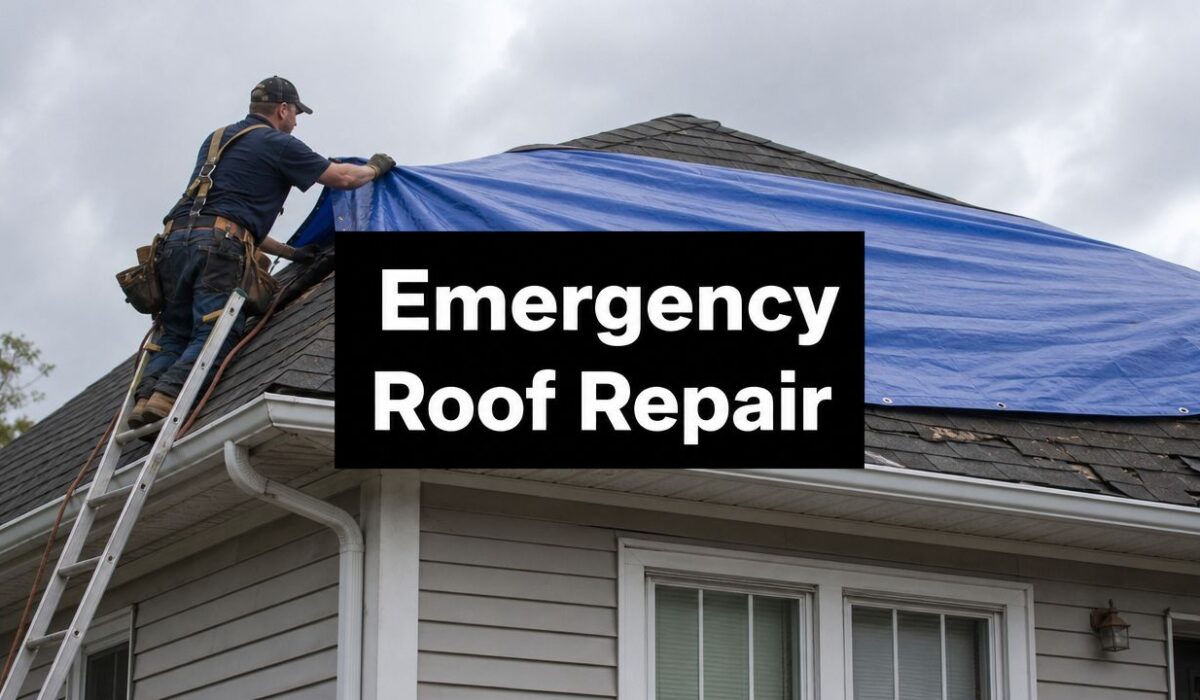
Rain is hitting the house, a stain just turned into a steady drip, and now there's water coming through the ceiling faster than a towel can handle. That's when the roof becomes a primary concern. The first move is inside the house.
A roof emergency in Sharon doesn't stay a roof problem for long. Water reaches insulation, drywall, flooring, furniture, wiring, and anything stored in the attic. Whether you're in Sharon, Pittsburgh, or Erie, the smartest response is the same. Get the interior under control, stop the spread where you safely can, and document everything in a way that helps your insurance claim instead of hurting it.
This guide walks through what works in a real emergency roof repair Sharon PA situation, what usually goes wrong, and one detail too many homeowners miss: how to document temporary tarping so your insurer sees it as necessary emergency mitigation, not an optional expense.
Table of Contents
- Your First 30 Minutes Safety Actions Inside the Home
- Temporary Tarping to Prevent Further Water Damage
- How to Find and Vet an Emergency Roofer in Sharon
- Documenting Damage to Secure Your Insurance Claim
- Understanding Emergency Roof Repair Costs in Pennsylvania
- Frequently Asked Questions About Roof Emergencies
- Should I ever attempt a permanent DIY roof repair
- How does Western Pennsylvania weather change emergency repair decisions
- What if a neighbor's tree or property caused the damage
- How fast should I expect emergency help in Sharon
- Is temporary tarping worth doing if the permanent repair can't happen right away
Your First 30 Minutes Safety Actions Inside the Home
Panic is normal when water starts coming through the ceiling. What matters is getting organized fast and avoiding the mistake that causes the most injuries in roof emergencies. Going outside too soon.
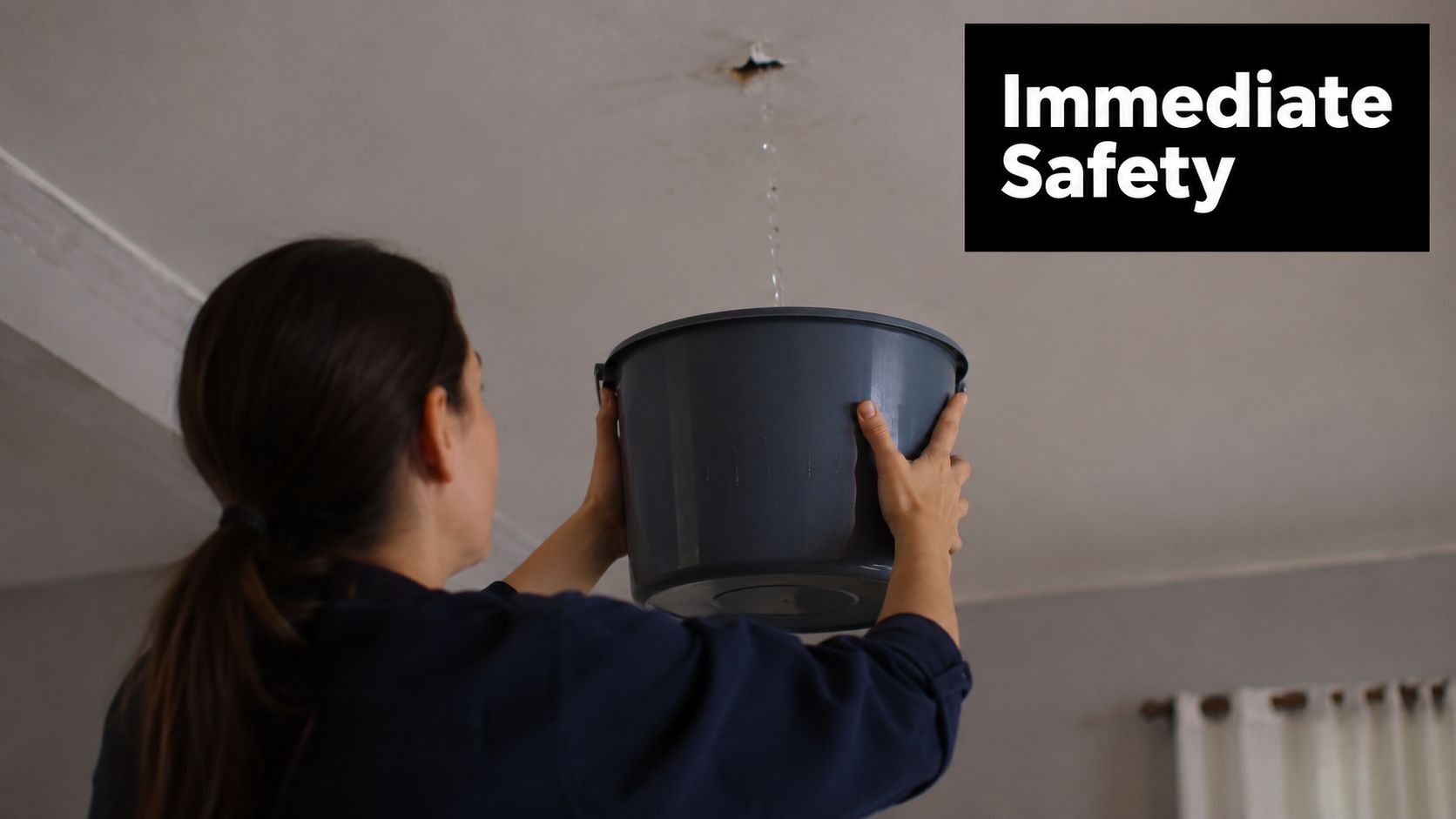
Start with immediate household safety
Use this order:
- Keep people out of the affected room. If the ceiling is sagging, keep everyone back. Wet drywall can fail without much warning.
- Cut power to the affected area if water is near lights, outlets, or switches. If you can do that safely from the panel, do it. If you can't reach the panel safely, leave the area alone and call for help.
- Catch the water. Use buckets, deep storage bins, or trash cans. Put towels under them so they don't slide on hardwood or tile.
- Move what you can. Electronics, rugs, paperwork, upholstered furniture, and anything sentimental should come out first.
- Relieve a bulging ceiling carefully. If water is trapped above drywall and the ceiling is ballooning, some homeowners carefully puncture the lowest point with a small tool while standing clear and using a bucket underneath. That controls where the water falls instead of letting the whole section collapse unpredictably.
Practical rule: Your first job is to protect people and possessions. The roof itself can wait a few minutes. Electrical risk and ceiling collapse can't.
Limit interior damage without making it worse
A common mistake is spreading fans everywhere before checking where the water is traveling. Water rarely drops straight down from the roof opening. It can run along rafters, soak insulation, and show up several feet away from the exterior damage.
Do a quick check in these spots:
- Attic access: Look for wet insulation, active drips, and daylight.
- Ceiling seams: Staining around taped joints often shows the path water took.
- Wall tops and window headers: Water sometimes tracks down framing before showing itself.
- Floor surfaces: Hardwood, laminate, and carpet can absorb water fast.
If you need a clearer picture of how leaks spread indoors, this guide on water damage from a roof leak helps homeowners connect the ceiling stain they see with the hidden moisture they usually don't.
What not to do in the first half hour
- Don't climb onto a wet roof in the dark
- Don't assume one drip means one small hole
- Don't leave valuables in the room because the leak seems minor
- Don't ignore attic moisture because the ceiling below looks dry
The best early response is calm, boring, and methodical. That saves more damage than a rushed ladder trip ever will.
Temporary Tarping to Prevent Further Water Damage
Once the inside is stable, the next question is whether the roof can be temporarily covered. Sometimes the answer is yes. Sometimes the safe answer is absolutely not.
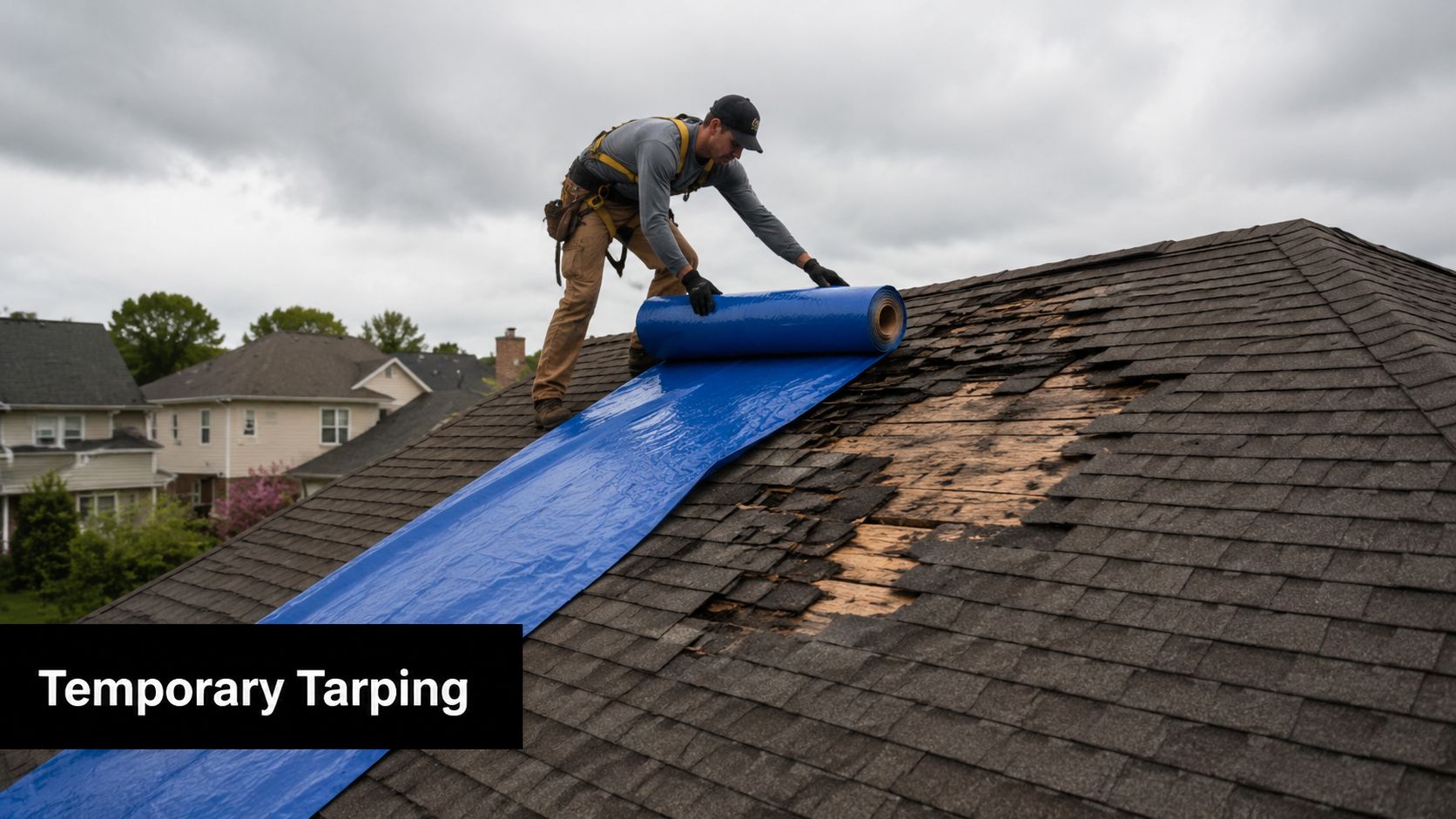
When tarping makes sense
Temporary tarping is about buying time. It doesn't fix flashing failure, broken decking, punctures, or lifted shingles. It reduces water entry until a proper repair crew can inspect and repair the damaged area.
The material matters. Pennsylvania storm damage guidance notes that industry standards for temporary roof protection require using heavy-duty polyethylene tarps of at least 6 mil thickness, with 10 mil preferred, and the tarp should extend a minimum of 4 feet beyond the damaged area on all sides to prevent wind from lifting it.
That standard exists for a reason. Thin tarps shred. Short tarps catch wind. Loose edges flap and fail.
When a homeowner should not attempt it
Don't get on the roof if any of these are true:
- The roof is wet, icy, or snow-covered
- Wind is still active enough to move the tarp
- The pitch is steep
- A tree limb hit the structure
- The decking feels soft or spongy
- The damage is near power lines
- It's dark and visibility is poor
In those conditions, a tarp job becomes a fall hazard quickly. Emergency roof repair Sharon PA work often starts with tarping, but the safe version of that work is frequently done by trained crews, not homeowners.
Wet shingles don't forgive mistakes. If you're unsure whether the roof surface is stable, stay off it.
If conditions are safe enough for a limited temporary cover
A cautious temporary approach looks like this:
- Use the right tarp size: It needs to cover the damaged section and extend past it generously.
- Cover the ridge when possible: If the damage is near the upper slope, taking the tarp over the ridge helps keep water from running under it.
- Anchor it firmly: The goal is tension and coverage, not just laying plastic over shingles.
- Check the edges from the ground afterward: A tarp that looks flat from close up may still have wind-catching corners.
For a visual walkthrough on the general process of protecting your roof in Marion County, this guide gives homeowners useful context on what a proper temporary cover is supposed to accomplish.
What temporary tarping does and does not do
| Temporary tarping helps with | Temporary tarping does not solve |
|---|---|
| Slowing active water entry | Structural repair |
| Protecting exposed decking | Rotten wood replacement |
| Buying time for inspection | Permanent shingle or flashing repair |
| Reducing interior damage | Insurance paperwork by itself |
That last point matters. A tarp can protect the house, but poor documentation can still create claim trouble later. That's where many homeowners get blindsided.
How to Find and Vet an Emergency Roofer in Sharon
Roof emergencies attract legitimate contractors and opportunists at the same time. When your ceiling is leaking, it's easy to say yes to the first person who answers the phone. Slow down just enough to verify who you're hiring.
The non-negotiable check in Pennsylvania
In Pennsylvania, a legitimate roofer must be registered with the Attorney General's office and hold a Home Improvement Contractor number. The same Sharon-area roofing guidance also notes that many professional contractors in the area guarantee response times within 2 hours for immediate storm damage in true emergencies, which helps set a realistic expectation when you start calling based on this Pennsylvania roofing registration and response information.
That HIC number is the first thing I'd ask for on the phone. Not later. Not after the estimate. Right away.
Questions worth asking before anyone shows up
Ask short, direct questions:
- What is your PA HIC number? If they hesitate, move on.
- Are you handling emergency tarping, temporary dry-in, or permanent repair today? Those are different services.
- Can you inspect from the attic and exterior? Good emergency assessment often requires both.
- Will you provide written scope and photos? You'll need both.
- Will the emergency work be invoiced separately? This matters for insurance, and it should be discussed before work starts.
- What can your crew do today if materials for permanent repair aren't available yet? Their answer tells you whether they understand real emergency workflow.
Signs the contractor is organized
You're looking for clarity, not salesmanship.
A roofer who handles emergencies well can usually explain:
- what they can stabilize immediately,
- what has to wait for dry conditions,
- what safety issues they see first,
- and what documentation you'll receive before they leave.
If you're reviewing local options, this page for a roofing company in Sharon PA gives one example of the kind of service detail homeowners should compare when checking emergency availability and repair scope.
A real emergency roofer sounds calm on the phone. They ask where the leak is showing, what the weather is doing, and whether the ceiling is sagging. They don't rush straight to price before they understand the hazard.
What doesn't work in a roof emergency
It doesn't work to hire someone only because they're first at your door after a storm. It doesn't work to accept vague promises like “we'll bill insurance later” without written details. It doesn't work to skip the HIC check because the problem feels urgent.
In Sharon, Pittsburgh, and Erie, weather creates enough roofing trouble on its own. You don't need contractor trouble on top of it.
Documenting Damage to Secure Your Insurance Claim
Most homeowners think documentation means taking a few roof photos. That's only part of it. The document that often decides whether temporary tarping gets treated as necessary emergency work or as a questionable extra charge is the invoice wording.
The invoice detail homeowners miss
Pennsylvania insurance claim guidance on emergency roof situations points out a critical issue. Insurance adjusters in Pennsylvania often require a specific “emergency mitigation” line item, separate from the final repair cost, to validate a claim. Homeowners must request a written, itemized “emergency repair” invoice explicitly stating the tarping was a temporary measure to prevent further damage.
That sentence changes the whole process.
If the roofer sends one combined invoice later that mixes emergency tarping, cleanup, and final repair together, your insurer may have a harder time seeing what was urgent mitigation versus permanent restoration. Homeowners then end up arguing over paperwork instead of focusing on the repair.
Build a clean damage file
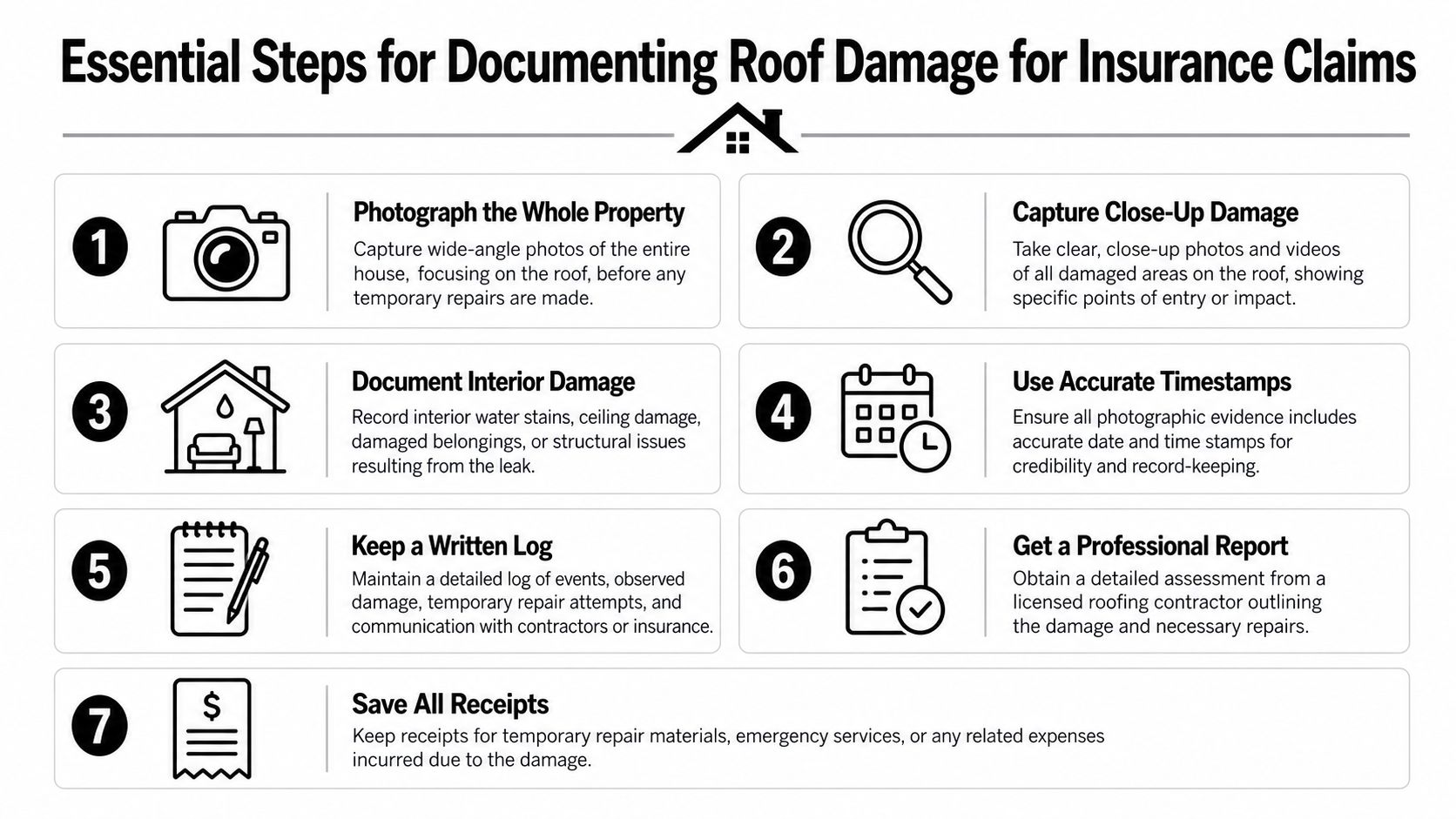
Keep one folder, physical or digital, with these items:
- Wide photos first: Capture the entire house exterior before temporary work starts, if it's safe to do so from the ground.
- Close-ups next: Get the damaged shingles, puncture area, flashing failure, or debris impact.
- Interior proof: Photograph ceiling staining, wet insulation, damaged flooring, and affected belongings.
- Date trail: Save screenshots of weather alerts, call logs, and voicemail timestamps.
- Written notes: Record when you first saw the leak, where it appeared, and what got worse over time.
- Receipts: Keep every purchase related to buckets, plastic sheeting, drying supplies, and emergency service.
Insurance reality: The carrier wants to see that you acted promptly to prevent further damage and that the emergency work was temporary, necessary, and documented separately.
Ask your roofer for these specific documents
Don't ask vaguely for “paperwork.” Ask for:
| Document | Why it matters |
|---|---|
| Itemized emergency mitigation invoice | Separates tarping or temporary dry-in from final repair |
| Photo set from the contractor | Supports field observations and damage scope |
| Written assessment | Helps explain cause and affected roof areas |
| Final estimate for permanent repair | Shows what remains after emergency stabilization |
For homeowners dealing with storm-driven damage, this page on emergency storm damage repair reflects the kind of emergency service context where that paperwork should be part of the process, not an afterthought.
The claim mistake that costs people money
The mistake isn't failing to take enough photos. It's failing to label the emergency action correctly.
If the tarp was installed to stop additional water intrusion, the invoice should say so plainly. If interior protection was part of emergency mitigation, that should be itemized too. Clean documentation gives the adjuster a simple story to follow. Messy documentation invites questions, delays, and avoidable pushback.
Understanding Emergency Roof Repair Costs in Pennsylvania
The first cost question is usually blunt. How bad is this going to get? The honest answer is that emergency pricing depends on what failed, how exposed the structure is, and whether the damage is cosmetic, weatherproofing-related, or structural.
For Sharon homeowners, local emergency roof repair pricing information shows that emergency roof repairs can range from $300 for minor leaks to over $10,000 for major structural damage. The same source notes the City of Sharon Roof Repair Program provides up to $15,000 per project for eligible homeowners, with support structured through low-interest loans of $1,000 to $5,000 at 0% to 4% and grants for amounts above $5,000.
Estimated Emergency Roof Repair Costs in Sharon, PA
| Damage Scenario | Typical Cost Range |
|---|---|
| Minor leak repair | $300 to $750 |
| Large section of blown-off shingles | $500 to $2,500 |
| Puncture repair from falling debris | $700 to $3,000+ |
| Major structural damage from a fallen tree | $2,500 to $10,000+ |
What changes the bill
A small leak can stay relatively contained if someone catches it early. A delayed response can turn that same leak into wet insulation, damaged decking, stained ceilings, and interior repairs that weren't part of the original roof issue.
Emergency service also involves trade-offs. Temporary stabilization may be the right financial move even when permanent repair can't happen immediately. Paying for a fast tarp or dry-in can protect framing, insulation, and finished spaces from much bigger losses.
Local help that many homeowners overlook
The City of Sharon's Roof Repair Program matters because roof emergencies often hit at the wrong time financially. If you qualify, that program can make a serious difference in how quickly you can move from temporary protection to proper repair.
That's worth checking before you assume the only option is delaying work. Waiting is often what pushes a manageable bill into a much harder one.
Frequently Asked Questions About Roof Emergencies
Should I ever attempt a permanent DIY roof repair
For most homeowners, no. A temporary interior response is one thing. A permanent roof repair is different.
Permanent repair means identifying the true failure point, removing damaged materials cleanly, checking the decking, restoring underlayment and flashing correctly, and matching the roof system well enough that you don't create a second leak beside the first one. A rushed patch with roof cement or a bundle of mismatched shingles rarely solves the underlying problem.
DIY permanent work can also complicate warranty questions and insurance discussions. If the repair changes the damaged area before proper inspection and documentation, it may become harder to show what happened originally. Temporary protection is reasonable when done safely. Permanent repair usually belongs to a qualified roofer.
How does Western Pennsylvania weather change emergency repair decisions
It changes everything about timing and material handling.
Sharon sits in the same broader weather reality that affects Pittsburgh and Erie. Western Pennsylvania deals with wind-driven rain, freeze-thaw cycles, heavy moisture, and winter conditions that can hide or widen roof damage. Erie's lake-influenced weather adds another layer of stress for homes in the region because repeated snow and melt cycles can expose weak flashing, aging shingles, and vulnerable roof penetrations.
That's why a roof that looks “mostly fine” from the yard may still need close inspection after a storm. Water often enters at flashing lines, ridge transitions, pipe boots, valleys, or edges where ice and wind work the hardest. Local experience matters because the repair has to hold up under the conditions that caused the failure in the first place.
A repair that survives one dry afternoon isn't the standard. The standard is whether it stays watertight through the next round of Western Pennsylvania weather.
What if a neighbor's tree or property caused the damage
Start by treating it as a roof emergency first and a liability discussion second. Protect the house, document the condition thoroughly, and notify your insurer promptly.
Then gather clear facts:
- Photograph the source of damage from multiple angles
- Record the time and date you discovered it
- Save any messages with the neighbor
- Keep every emergency service invoice and assessment
Don't make assumptions about who pays before the facts are reviewed. Responsibility can depend on maintenance history, storm conditions, visible warning signs before the incident, and what your policy says. The most useful first step is a clean record of cause, damage, and emergency mitigation.
How fast should I expect emergency help in Sharon
Response depends on weather, crew load, road conditions, and how severe the damage is. In a true active-leak or storm-damage situation, homeowners should ask contractors directly whether they offer emergency response and what they can do that day.
Some calls result in immediate tarping and temporary dry-in. Others may only allow inspection and interior guidance until conditions are safe enough for roof access. The key is getting a realistic answer about today's stabilization, not just a vague promise about eventual repair.
Is temporary tarping worth doing if the permanent repair can't happen right away
Yes, if it's done safely and documented properly. Temporary protection can stop ongoing interior loss, preserve insulation and decking, and give you time to schedule the correct permanent repair. It's a holding action, not a shortcut.
For homeowners dealing with emergency roof repair Sharon PA issues, that distinction matters. The tarp protects the structure. The paperwork protects the claim.
If you need help evaluating active roof damage, scheduling emergency stabilization, or understanding what kind of documentation to request, Penn Ohio Roofing & Siding Group handles roofing services in the Sharon area and can be contacted for emergency roof repair guidance and next-step planning.