
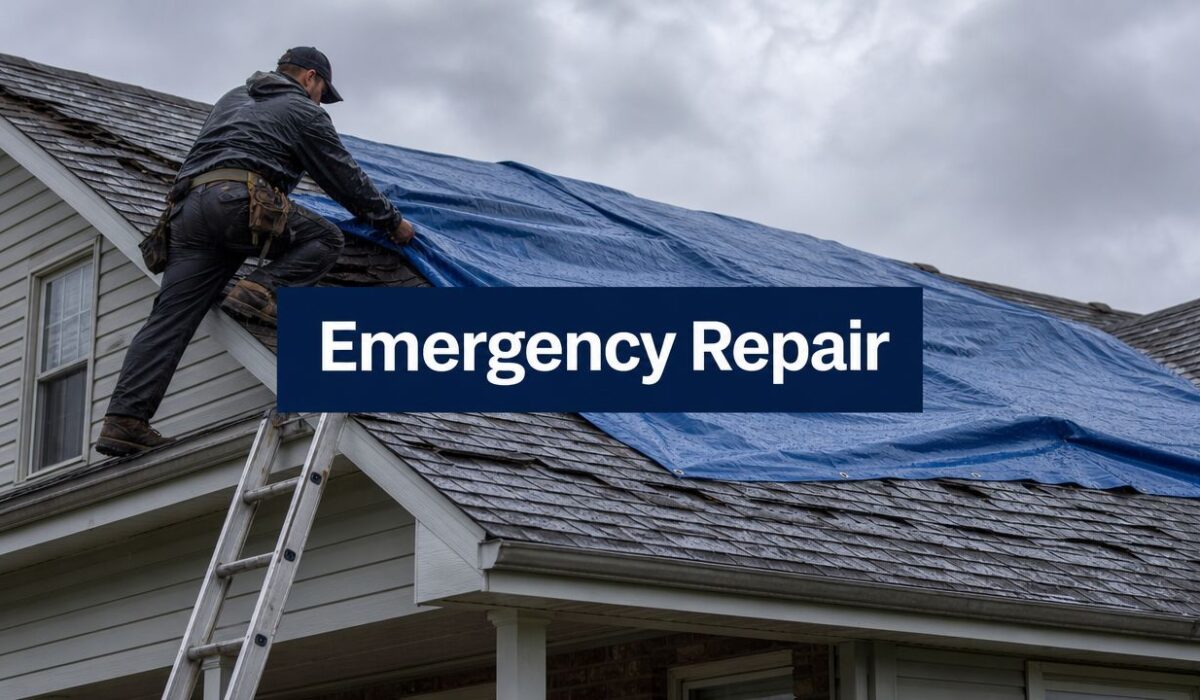
The storm has passed, but your house still feels like it's under attack. Water is dripping into a hallway bucket. A section of shingles is missing. Siding is scattered across the yard. You're tired, stressed, and one bad decision away from turning a repair into an insurance fight.
Homeowners in Sharon, Pittsburgh, Erie, and across Pennsylvania need a calm plan. Emergency storm damage repair isn't just about stopping leaks. It's about protecting your family, preserving evidence, and avoiding the expensive mistake of making a repair your insurer can call “permanent” before they inspect the loss.
Rushing the wrong step often involves cleaning up too fast, patching too much, or hiring the first truck that shows up. Slow down just enough to do this in the right order. That's how you protect both your home and your claim.
Table of Contents
- After the Storm Your Homeowner Action Plan
- Immediate Safety Checks Before You Do Anything Else
- Documenting Storm Damage for Your Insurance Claim
- Urgent Mitigation to Prevent Further Damage
- Choosing an Emergency Contractor You Can Trust
- Navigating the Repair and Insurance Claim Process
After the Storm Your Homeowner Action Plan
You hear dripping in the hallway, see shingles in the yard, and your phone is already buzzing with contractors. Slow down. The first decisions you make after a storm can protect your house or hand your insurer a reason to fight the claim.
The line homeowners miss is simple. Temporary mitigation is usually necessary and expected. Permanent repair before the damage is documented can create a serious coverage problem. If you authorize full shingle replacement, siding replacement, or interior rebuild work too early, you can erase evidence the adjuster needed to see.
Cost is part of the pressure. Angi's storm damage cost guide notes that storm damage repairs can get expensive fast, especially when after-hours labor and emergency protective work are involved. That is why panic buying is a bad strategy.
Here is the order I recommend:
- Stabilize the situation. Protect people, pets, and anything inside the home that can still be moved out of harm's way.
- Preserve evidence. Leave damaged materials in place unless they are creating an immediate hazard or allowing active water entry.
- Approve temporary mitigation only. Tarping, board-up work, and water extraction are usually the right first calls. Full replacement work is not.
- Contact a contractor who understands insurance documentation. You need someone who knows the difference between protecting the property and altering the loss scene.
That distinction matters. Insurers expect you to prevent further damage. They do not want you rebuilding the house before they inspect it.
Interior damage often spreads farther than people expect. Water can reach insulation, framing, carpet pad, subfloor, and lower levels long after the roof leak first shows up. If storm water got inside, J.G. Carpet Cleaning's flood damage tips can help you handle the cleanup side while the exterior is being temporarily secured.
Storm damage also travels across systems. A roof hit often comes with creased siding, loosened trim, broken soffit, or impact marks on other exterior surfaces. If you are seeing wall cladding issues, review these signs of wind-damaged siding so you do not miss part of the claim.
Penn Ohio Roofing & Siding Group offers 24/7 emergency service. That kind of response is useful when active leaks start at night and the priority is stopping further damage without crossing the line into unapproved permanent repairs.
Immediate Safety Checks Before You Do Anything Else
Don't grab a ladder. Don't walk the roof. Don't step into standing water near outlets. The first job is making sure the house is safe enough to occupy and safe enough to inspect from the ground.

What to check from a safe distance
Start outside. Stand well back and scan the roofline, eaves, chimney, siding, windows, gutters, and nearby trees. You're looking for obvious failures, not trying to diagnose every detail.
Use this quick hazard screen:
- Power danger: If a line is down, sagging, sparking, or touching your house, stay away and keep everyone else away.
- Gas warning signs: If you smell gas or hear hissing, leave immediately and contact the utility from outside the area.
- Structural red flags: Leaning walls, a sagging ridge, a visibly bowed ceiling, or a porch pulling away from the house mean you shouldn't go inside casually.
- Water near electric: If water is moving through ceilings, around light fixtures, or near panel locations, treat that area like it could energize.
What homeowners should never do
The biggest injury mistakes happen when people try to “just take a quick look.” Wet shingles are slippery. Torn decking can fail under your weight. Metal edges and exposed fasteners can cut you badly even if you keep your footing.
Don't do these things:
- Don't climb onto the roof: Ground inspection with binoculars is safer and usually enough for the first pass.
- Don't move large debris overhead: A branch through the roof may be holding other material in place.
- Don't enter a room with a bulging ceiling: That pocket may be holding a lot of water.
- Don't start pulling soaked drywall down near wiring: That can turn a property problem into an emergency room visit.
If the home might be unsafe, your best decision is often to wait for the fire department, utility company, or a qualified contractor rather than forcing an inspection.
A lot of storm losses involve water where it shouldn't be, and plumbing failures can create a similar urgency indoors. For homeowners trying to think through immediate water-control steps while waiting on help, MG Drain Services burst pipe help offers useful practical guidance on stabilizing a water event without making things worse.
When to leave the house
Leave if you see active electrical hazards, smell gas, hear shifting structure, or have major ceiling sag with water pouring through. Leave if a tree impact has distorted framing. Leave if emergency responders or utility crews tell you to.
If the home is safe to remain in, limit movement to dry, stable areas and wear real shoes. Not socks. Not sandals. You need traction and protection from glass, nails, and splintered debris.
Documenting Storm Damage for Your Insurance Claim
A storm hits at night. By morning, water is staining the ceiling, shingles are in the yard, and a contractor is offering to “take care of everything” before the adjuster sees it. That is how homeowners lose money on valid claims.
Your insurer expects two things from you right away. First, document the damage as it exists. Second, stop additional damage with temporary mitigation only. If someone jumps straight to permanent repairs before the carrier approves them, you can end up arguing about scope, cause, and reimbursement instead of getting paid.
What Pennsylvania homeowners need to photograph
Do not settle for a few random phone pictures. Build a claim file that shows location, severity, and sequence. An adjuster should be able to understand what happened without guessing.
Capture three levels of evidence:
| Photo type | What to capture | Why it matters |
|---|---|---|
| Wide shots | Each side of the house, each roof slope you can safely see from the ground, the yard, detached structures | Shows where the storm hit and how broad the damage is |
| Close-ups | Missing shingles, lifted flashing, cracked siding, dented gutters, broken trim, exposed wood, torn screens | Shows the actual failed materials |
| Context photos | Damage next to windows, corners, valleys, roof lines, skylights, decks, fences, vehicles | Shows scale and helps tie each close-up to a specific location |
Include interior damage too. Photograph ceiling stains, wet insulation, bubbling paint, warped floors, soaked trim, and any water dripping from fixtures or vents. If the leak has already spread indoors, this guide to water damage from roof leak problems explains the kinds of secondary damage that can show up while you wait for approved repair work.
Build the file in a way an adjuster can follow
Start outside and move in one direction around the house. Then repeat the same room-by-room pattern indoors. Keep the sequence consistent so your photos tell a clean story.
Use this checklist:
- Take wide shots first. Get the whole area before you zoom in.
- Photograph damage before anything is moved. That includes branches, siding pieces, shingles, and insulation.
- Save detached materials if practical. Bag smaller pieces and label where they came from.
- Record active conditions. Drips, puddles, ceiling staining, and wet contents matter because they help show timing.
- Create a written log. Note the date, approximate time of loss, what you saw first, and what changed over the next day or two.
- Save every receipt. Buckets, tarps, plastic, tape, fans, and emergency service invoices all belong in the claim file.
One more point matters more than homeowners realize. Keep temporary work clearly temporary in your documentation. If a roof is tarped, photograph the damage before the tarp goes on, then photograph the tarp after installation. If a window is boarded, document the broken glass first, then the board-up. That protects you from the claim dispute that starts when an insurer cannot see what was damaged before repairs began.
The strongest claim files show the original storm damage, then the temporary steps taken to keep it from getting worse.
Why documentation has to come before cleanup and before real repairs
Insurance companies do not pay just because damage exists. They look at cause, timing, and whether the evidence still supports the loss you reported. Once materials are replaced, that original proof is gone.
That is the line homeowners and some contractors get wrong. Temporary mitigation is usually acceptable because it prevents more loss. Permanent repairs done too early can create a different problem. They can make parts of the claim harder to verify, and they can give the carrier room to question what was storm-related versus what was changed afterward.
If tree impact is part of the loss, debris removal and structural damage can complicate the paperwork fast. This guide to handling tree damage claims is a useful outside reference if branches, trunks, or root damage are part of the file.
Keep the evidence organized
Create one folder on your phone and one backup in cloud storage. Sort everything into exterior, interior, debris, mitigation, and receipts. Name files plainly, such as “north-slope-missing-shingles” or “living-room-ceiling-stain-day-1.”
Do this well and you look credible. Do it poorly and you hand the insurer openings you did not need to give them.
Urgent Mitigation to Prevent Further Damage
It's 2 a.m. Rain is still blowing sideways, and water is now dripping into a room that was dry an hour ago. Your job is simple. Stop new damage without changing the evidence your insurance company still needs to see.
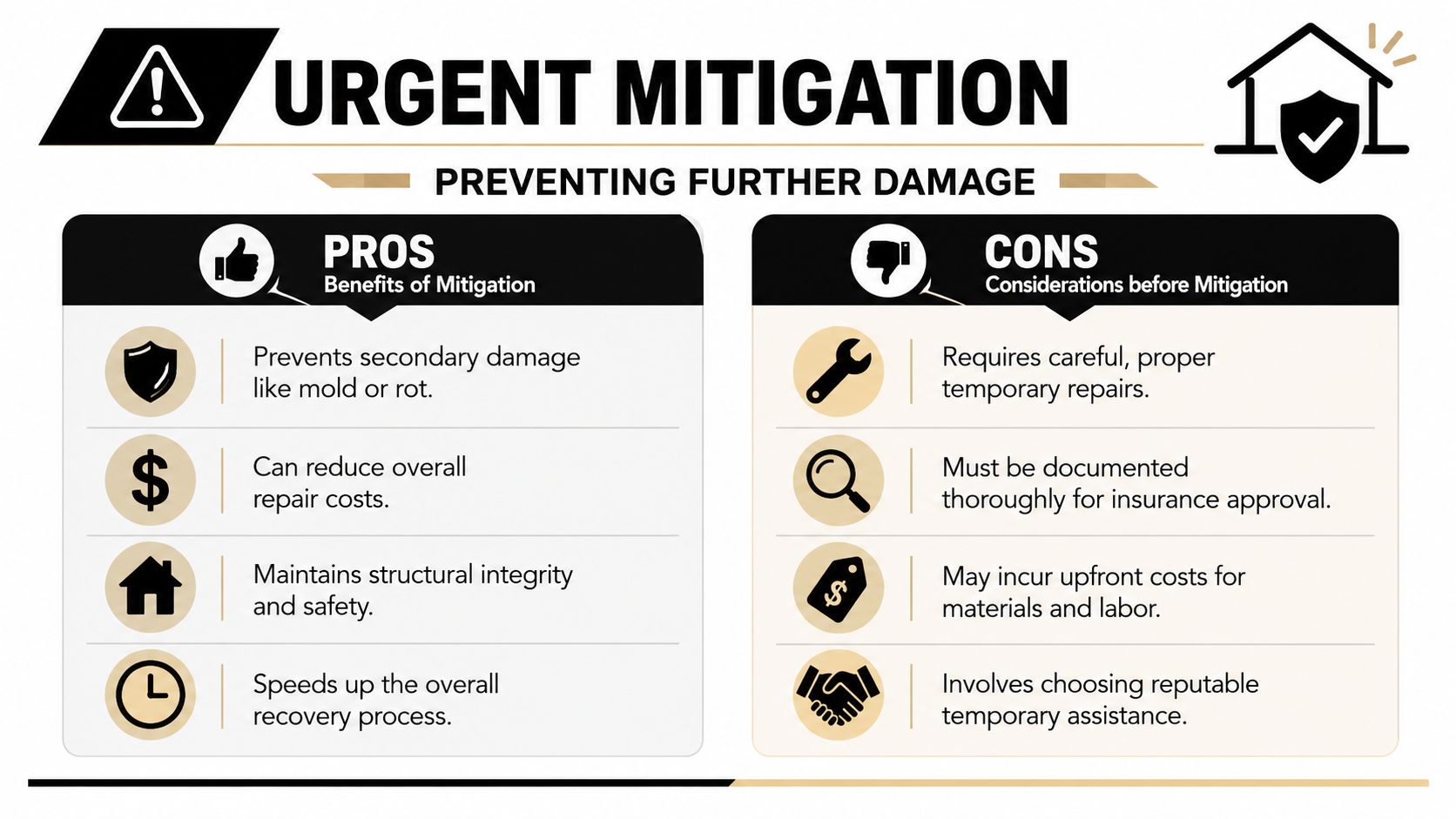
That distinction decides a lot of claims. Temporary mitigation usually helps protect coverage because it shows you acted to prevent further loss. Permanent repairs started too soon can muddy the cause, change the damaged condition, and give the insurer a reason to argue over what they can no longer inspect.
What proper mitigation looks like
Good mitigation stops active water entry, limits interior spread, and leaves the original storm damage visible enough to verify later. That usually means roof tarping, board-up work, water extraction, contents protection, and controlled drying.
A proper tarp is installed tight, anchored correctly, and positioned to shed water off the roof. In a windy area like Erie, sloppy tarping fails fast. Once that covering lifts or channels water under the edges, the house keeps taking on damage and the claim gets harder to sort out.
If the roof damage is widespread or hard to see from the ground, get a professional roof inspection after storm damage before anyone starts replacing materials.
What needs approval before it happens
Homeowners get burned when a contractor treats emergency work like a green light for full repairs.
Use this line: authorize temporary mitigation only until the insurer or adjuster documents the loss.
That means no shingle replacement across damaged slopes, no flashing swaps, no decking tear-off, no siding replacement, and no interior rebuilds unless the carrier has approved it or the damage creates an immediate safety issue that cannot wait. If a contractor says, “We'll fix it now and sort insurance out later,” stop the conversation there.
Temporary mitigation versus claim-damaging work
- Usually appropriate right away: tarp exposed roof areas, board broken windows, remove standing water, protect belongings, set up drying equipment, and clear dangerous debris without stripping away evidence.
- Usually a problem before inspection: replacing roofing sections, removing large areas of damaged material, repainting water stains, swapping broken components, or rebuilding finishes that hide the original loss.
- Always worth documenting: every tarp, board-up, moisture reading, invoice, and photo showing the condition before and after the temporary work.
A good emergency crew slows the damage. They do not erase the scene.
Where homeowners make expensive mistakes
The first mistake is approving work that goes beyond stabilization because the house looks rough and everyone wants normal back. I get that. But storm claims are won or lost on what can still be verified.
The second mistake is assuming any quick patch counts as mitigation. It doesn't. Loose plastic, a few exposed fasteners, or a tarp laid the wrong direction can funnel water under the covering and make the next rain worse.
Use this standard:
| Situation | Smart mitigation | Claim-damaging mistake |
|---|---|---|
| Roof opening | Professionally secured tarp that sheds water | Loose plastic or partial patch that still leaks |
| Broken glass or wall opening | Board-up with weather seal | Temporary tape or uncovered opening |
| Interior water | Remove standing water, protect contents, start controlled drying | Let wet materials sit and spread damage |
| Repair decisions | Wait for insurer review before permanent replacement | Rebuild first and explain it later |
Mitigation is a holding action. Treat it that way. Protect the house, keep the damage visible, save every receipt, and do not let anyone turn an emergency call into permanent repair work before the claim is properly documented.
Choosing an Emergency Contractor You Can Trust
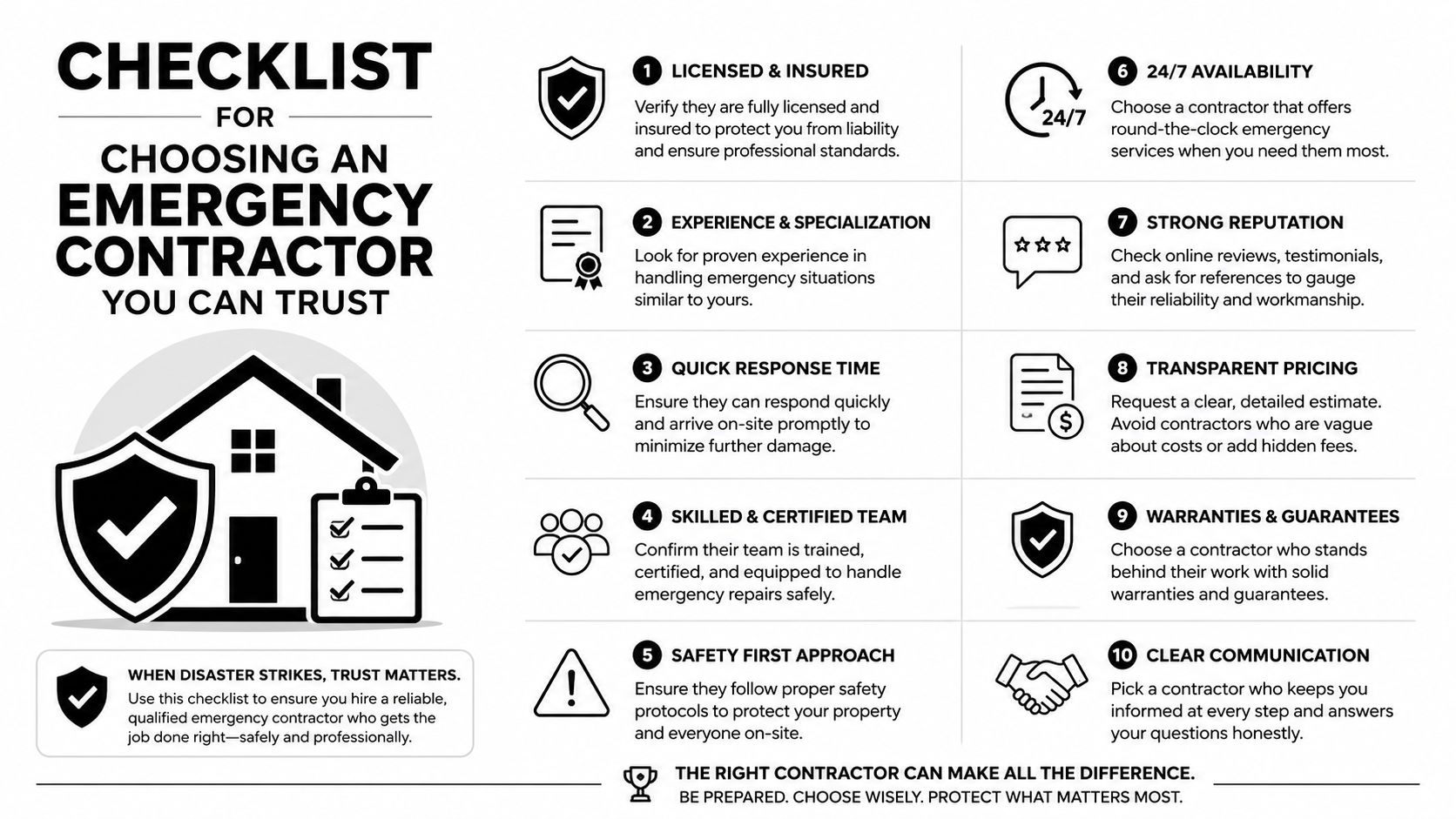
Storms bring out two kinds of contractors. Local professionals who know the area, and opportunists who know panic sells. You need to tell the difference quickly.
In Pennsylvania, including Erie County, roof storm damage must be reported to insurance providers within 30 to 60 days of the event, and delay can jeopardize approval because secondary damage keeps developing, according to Tri State Home Consulting's Pennsylvania storm claim guidance. So yes, you need to move. But fast doesn't mean careless.
The contractor test I'd use at my own house
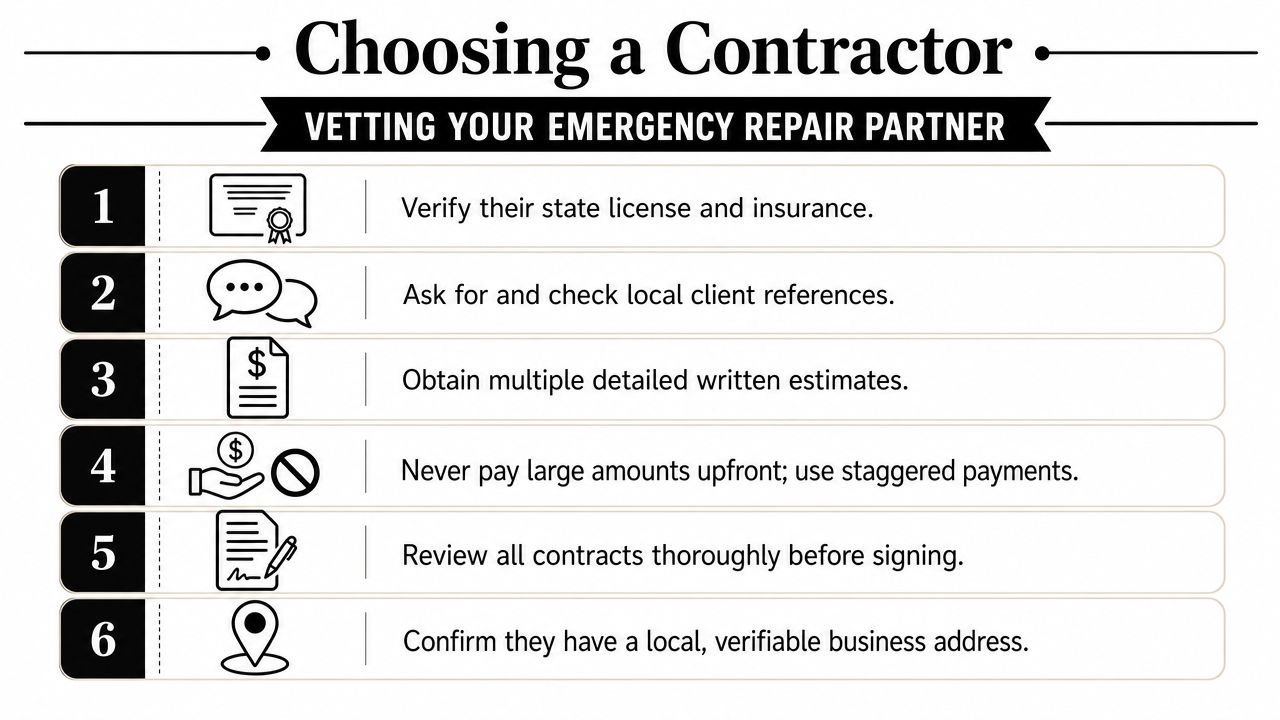
Ask direct questions and expect direct answers. If someone dances around basics, move on.
- Where is your local office? You want a verifiable Pennsylvania presence, not a truck with an out-of-state plate and a temporary magnet sign.
- Are you licensed, bonded, and insured? Ask for proof, not a promise.
- Will you provide a written scope? If the estimate is vague, the dispute later will be specific.
- How will you separate temporary mitigation from permanent repairs? If they can't explain that clearly, they shouldn't be touching a claim-driven loss.
- Who communicates with the adjuster? You want a contractor who can document damage cleanly and explain the scope without drama.
Red flags that should end the conversation
A bad contractor usually tells on himself early.
| Red flag | What it usually means |
|---|---|
| Large upfront payment demand | Cash-flow problem or scam risk |
| Pressure to sign immediately | They don't want you comparing options |
| No local references | They won't be around for callbacks |
| Promise to “cover your deductible” | Potential insurance trouble |
| Push to start full replacement before inspection | They don't respect claim procedure |
Homeowner check: A good emergency contractor lowers confusion. A bad one creates urgency that only benefits him.
Local matters more than people think
A contractor familiar with Sharon, Pittsburgh, Erie, and nearby Pennsylvania communities understands regional wind exposure, ice issues, drainage problems, and the documentation adjusters commonly expect. That local knowledge often matters more than a flashy sales pitch.
Penn Ohio Roofing & Siding Group is one example of a local contractor profile homeowners should look for when comparing options. The company is family-owned, has over 25 years of experience, offers 24/7 emergency service, and has earned the GAF Triple Excellence Award. Those aren't reasons to stop shopping. They're examples of the kind of credentials that should be on your checklist for any contractor you consider.
If you want to understand what a professional assessment looks like before major work is approved, review this page on a professional roof inspection. It's a useful benchmark for what a documented inspection should include.
My recommendation
Get a detailed written estimate. Get proof of insurance. Confirm the business address. Ask exactly what temporary work they'll do first and what they will not touch until the adjuster sees it.
If they don't like those questions, they're the wrong contractor.
Navigating the Repair and Insurance Claim Process
At 7 a.m., water is still dripping into the hallway, a contractor is saying he can start right now, and your insurer has not even assigned an adjuster yet. It is then that homeowners make the mistake that costs them money. They approve real repairs before the damage is documented.
The claim process turns on one question. Did you protect the home from further damage, or did you restore damaged parts before the insurer had a fair chance to inspect them?
That distinction matters more than speed.
Temporary mitigation is work done to stabilize the property and limit additional loss. Permanent repair is work that replaces, rebuilds, or finishes damaged components. Insurers generally expect the first right away and want documentation in place before the second begins.
Here is the rule I give homeowners: stop the leak, stop the exposure, stop the spread. Do not rebuild yet.
A tarp over torn shingles is mitigation. Boarding a broken window is mitigation. Drying out wet areas and removing standing water can be mitigation. Installing new shingles, replacing siding panels, swapping out finished drywall, or rebuilding a roof section is permanent repair in most claim situations.
Gray areas are where people get burned. A contractor may call something "temporary" even though it changes the damaged condition in a way the adjuster cannot verify later. If the work makes it harder to see what the storm did, slow down and call your carrier before you sign.
Use this order:
- Open the claim immediately.
- Ask when the adjuster or inspector can document the loss.
- Approve only the work needed to prevent additional damage.
- Make sure the contractor's invoice clearly labels that work as temporary or emergency mitigation.
- Take new photos before, during, and after any mitigation.
- Do not approve permanent restoration until the insurer inspects the damage or gives written direction to proceed.
That paperwork matters. A clean file helps your claim stay on track: date of loss, photos, contractor notes, mitigation invoices, receipts, emails, and the name of every person you spoke with at the insurance company.
One more hard truth. Some contractors push full replacement before inspection because it gets the bigger job started faster. That may help their schedule. It does not help your claim.
If someone says, "Insurance will figure it out later," treat that as a warning sign. Insurance works from evidence. Once damaged materials are removed and new materials are installed, part of that evidence is gone.
The best repair process is boring. The house gets protected. The damage gets documented. The adjuster sees the same conditions your contractor saw. Then permanent repairs begin with a clear scope.
If your home in Sharon, Pittsburgh, Erie, or anywhere nearby has taken storm damage, get help that starts with safety, documentation, and temporary mitigation done in the right order. Penn Ohio Roofing & Siding Group provides roofing services for residential and commercial properties, including emergency response, inspections, repairs, and storm damage work.