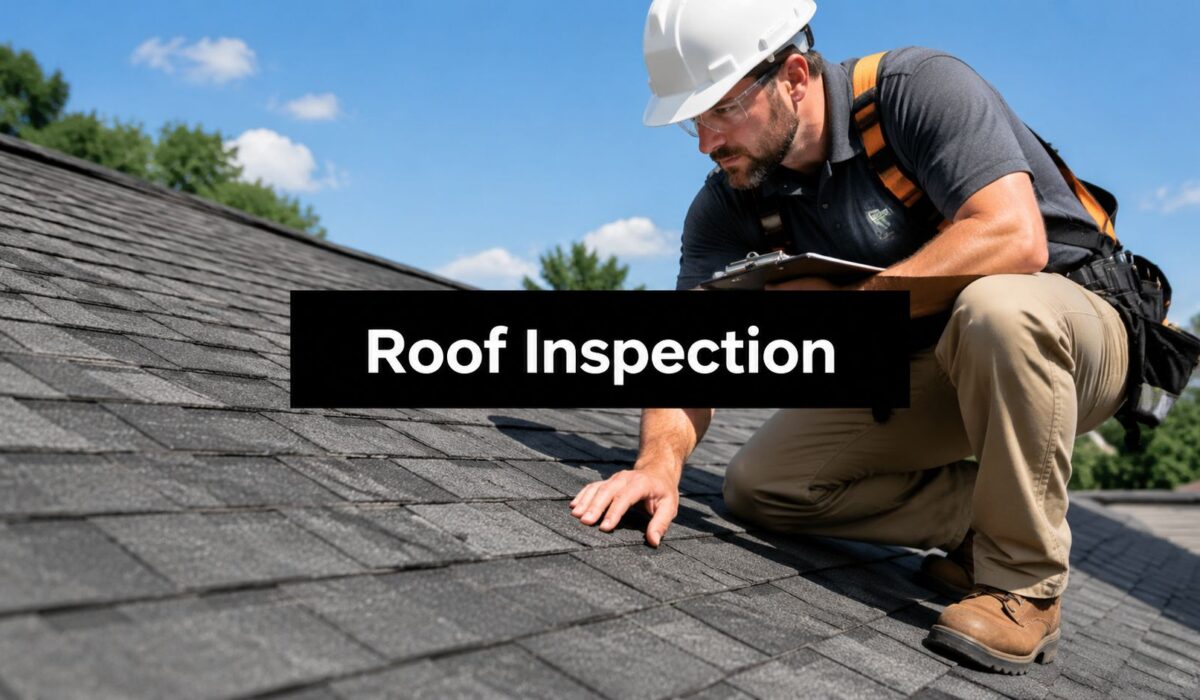
A lot of homeowners wait for a roof problem to announce itself. It usually does. You hear a drip after a hard rain, notice a brown ceiling spot in the hallway, or watch a neighbor in Sharon, Pittsburgh, or Erie replace a roof sooner than expected and start wondering about your own.
The better moment to act is earlier, when the roof is still doing its job and the fixes are still manageable. A professional roof inspection works the same way a yearly physical does. You're not paying for bad news. You're paying for clarity, documentation, and a chance to fix small defects before they turn into interior damage, insurance headaches, or a full replacement decision made under pressure.
Table of Contents
- Why Your Roof Needs a Regular Health Check
- Types of Professional Roof Inspections Explained
- The Ultimate Roof Inspection Checklist
- The Long-Term Benefits of Annual Inspections
- Understanding Inspection Costs and Reports
- How to Choose a Qualified Inspector in Pennsylvania
- Your Local Partner for Roof Inspections in PA and OH
Why Your Roof Needs a Regular Health Check
One homeowner I've seen this happen to had what looked like a minor issue. After a windy rain, a small stain showed up near an exterior wall. The roof wasn't collapsing, there weren't shingles scattered across the yard, and from the driveway everything looked fine. A professional roof inspection found the source of the problem at a flashing transition, where water had been getting in just enough to stain drywall before it spread farther into the roof assembly.
That's the value of checking a roof before the house forces the issue. Roof systems rarely fail all at once. More often, they age in quiet ways. Sealants dry out. Flashing loosens. Drainage slows down. In Pennsylvania, where roofs handle rain, snow, wind, freeze-thaw swings, and long damp stretches, those small failures tend to multiply if nobody catches them.
Practical rule: The cheapest roof repair is the one found before interior water damage starts.
A regular inspection gives you something most homeowners don't have, which is a current baseline. You know what's wearing normally, what needs watching, and what deserves attention now. That makes budgeting easier and helps you avoid panic decisions after a storm or during a home sale.
If you're trying to build better maintenance habits overall, practical property roof care resources can help you keep an eye on the warning signs between professional visits. That kind of routine attention won't replace an inspection, but it does make you a more informed homeowner.
Types of Professional Roof Inspections Explained
A professional roof inspection should match the problem you are trying to solve, the roof material, and what can be accessed safely. For a Pennsylvania homeowner, that choice affects more than the inspection day. It affects how accurately you budget for repairs, whether you avoid unnecessary work, and how well you protect the years of service left in the roof.
Some inspections are meant to establish condition. Others are meant to answer a narrower question, such as whether hidden moisture is present or whether a steep section can be reviewed without foot traffic.
Comparison of Roof Inspection Methods
| Inspection Type | Best For | Key Technology | Relative Cost |
|---|---|---|---|
| Visual or physical inspection | Routine maintenance, accessible roofs, visible wear | Hands-on assessment and close visual review | Lower |
| Drone inspection | Steep roofs, fragile materials, difficult access | Drone imaging | Moderate |
| Infrared inspection | Hidden moisture, membrane issues, hard-to-trace leaks | Infrared thermal imaging | Higher |
Standard visual and physical inspections
A standard visual inspection is the starting point for most homes. The inspector checks shingles or other roof coverings, flashing, penetrations, valleys, drainage paths, and signs of wear around problem areas such as chimneys, skylights, and vent boots. From a homeowner's standpoint, this is often the best value because it answers the main maintenance questions without adding testing that may not be needed.
It also gives you a usable baseline for future decisions. If a roof is aging normally, you can plan for repairs and eventual replacement on your schedule instead of guessing. If gutter performance is part of the problem, drainage should be reviewed alongside the roof, especially on homes with heavy tree cover or overflow near the foundation. Homeowners comparing that side of the system can also review gutter replacement cost factors in Pennsylvania and Ohio.
Drone inspections
Drone inspections make sense when walking the roof would create unnecessary risk or could damage the material. That comes up on steep roofs, brittle shingles, slate, tile, and complex rooflines where safe access is limited. Good drone images can show missing tabs, lifted flashing, exposed fasteners, and wear patterns that deserve closer review.
There is a trade-off. A drone gives a strong visual record, but it does not replace hands-on checking where physical contact is needed to confirm soft decking, loose materials, or subtle movement around penetrations. In practice, the best use is often targeted. Use the drone to inspect difficult areas and combine it with a ground-level and attic review when needed.
That approach can also help before a listing or pre-sale inspection. Sellers who are preparing the whole exterior can use Prime Gutterworks' home readiness checklist to think through related items that buyers and inspectors often notice.
Infrared inspections
Infrared inspection is a problem-solving tool, not a default add-on. It is used when moisture may be trapped below the roof surface or when a leak is showing up inside but the entry point is still uncertain. Thermal imaging can help identify temperature differences that suggest wet insulation or hidden moisture spread.
This method tends to be more useful on low-slope systems and certain leak investigations than on every residential appointment. That matters because homeowners do not need the most advanced inspection every time. They need the method that answers the question clearly enough to make a sound financial decision.
A good inspector chooses the inspection type the same way a good contractor recommends repairs. Based on the roof in front of them, the risks involved, and the value of getting the diagnosis right the first time.
The Ultimate Roof Inspection Checklist
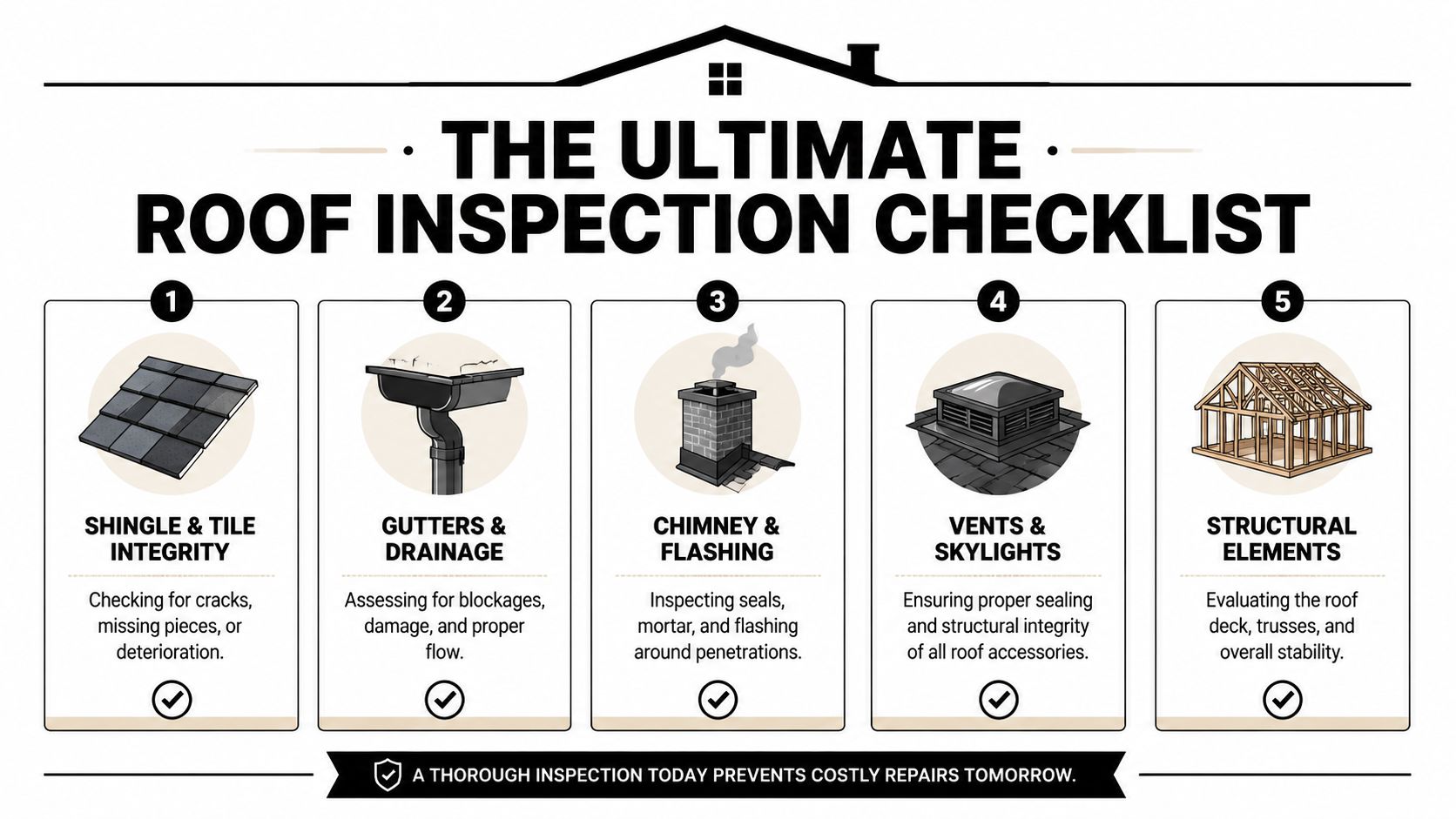
A real inspection should feel systematic, not rushed. The homeowner may only see a truck in the driveway for a while, but a qualified inspector is working through a sequence. On houses in northern Pennsylvania and western Pennsylvania, that sequence matters because roofs here don't just age from sun exposure. They move, expand, contract, shed water, hold snow, and deal with repeated thermal shifts.
Structural Integrity
The first question is simple. Is the roof system still sound?
That means checking for sagging lines, uneven roof planes, soft decking, movement around penetrations, and signs that the framing below may be under stress. On commercial or low-slope systems in northern climates, inspectors also pay critical attention to expansion joints and roof dividers because those components are meant to manage movement during temperature swings, as described in this overview of what to expect from a professional roof inspection.
On homes in Erie or Pittsburgh, seasonal loading and freeze-thaw stress can expose weak points that stay hidden in milder weather. A pre-winter inspection checks readiness. A post-winter inspection checks what the season left behind.
Material Condition
Next comes the roofing material itself. On an asphalt shingle roof, that means looking at granule loss, cracking, lifting, missing tabs, aging seal strips, and exposed fasteners. On metal, it means checking panel condition, fasteners, seams, and flashing transitions. On flat roofing, it means membrane seams, punctures, blisters, drainage patterns, and signs of trapped moisture.
A useful inspection doesn't stop at “roof looks old.” It identifies where the wear is normal and where the wear is concentrated enough to suggest repair or replacement planning.
Here's what a strong material review usually includes:
- Field condition: Surface wear across the main roof areas, not just at the obvious trouble spots.
- Transition points: Valleys, wall intersections, dormers, and roof-to-wall details where water gets redirected.
- Drainage paths: Gutters, downspouts, scuppers, drains, and low spots that can hold water.
- Accessory components: Pipe boots, vents, skylights, satellite mounts, and other penetrations.
If you're comparing roof readiness with the rest of the exterior before a sale or major maintenance cycle, Prime Gutterworks' home readiness checklist is a useful companion resource because drainage and roof condition often tell the same story.
Interior Assessment
Many leaks show themselves indoors before anyone sees the roof defect outside. That's why good inspectors often work from the inside out. They look for ceiling stains, wall marks, attic moisture, damp insulation, mold-like growth, and daylight where it shouldn't be.
If you have gutters that overflow or pull away from the fascia, that can muddy the diagnosis. Water intrusion near roof edges sometimes starts as a drainage problem, not a field-shingle problem. Homeowners sorting through that part of the budget can compare expectations with this guide to seamless gutter cost.
Interior clues matter. A stain doesn't always sit directly under the roof defect, so the inspector has to trace water paths, not guess.
Workmanship Quality
Some roofs fail early because of age. Others fail because the installation missed the basics.
This part of the checklist looks at flashing around chimneys and walls, fastener placement, seam integrity, underlayment transitions where visible, vent details, and previous repair patches. An inspector should also notice when another trade caused a roof issue, such as poorly sealed penetrations from equipment installation or masonry problems at walls and chimneys.
Ask direct questions after the inspection. Was the problem caused by wear, storm exposure, drainage, or workmanship? Can it be repaired cleanly, or is it part of a larger pattern? A homeowner who gets those answers can make calm, informed decisions instead of reacting to the first stain that appears.
The Long-Term Benefits of Annual Inspections
The strongest argument for a professional roof inspection is financial. Most homeowners don't need another item on the maintenance list unless it clearly protects the house and reduces future spending. Roof inspections do that when they're done consistently and acted on in time.
According to a 2023 industry analysis cited in this review of common misconceptions about roof inspections, regular annual professional roof inspections can extend a roof's lifespan by up to 5 years and reduce repair costs by 70% over a 10-year period compared to homeowners who skip inspections. The same source states that approximately 73% of homeowners failed to check their roofs for issues between February 2023 and 2024.
That gap matters. Roof systems don't usually become expensive because one dramatic event happened. They become expensive because small defects sat long enough to affect decking, insulation, drywall, trim, or interior finishes.
Where the value shows up
- Repair timing: Small flashing corrections and localized repairs are easier to schedule and manage than emergency interior leak calls.
- Replacement planning: If the roof is aging, an inspection helps you prepare instead of replacing it under deadline pressure.
- Property transactions: Buyers, sellers, and agents all benefit when the roof condition is documented before negotiations get tense.
- Insurance and documentation: In some markets, roof condition has become part of underwriting and eligibility conversations.
A lot of homeowners only compare the inspection fee to zero. That's the wrong comparison. The better comparison is inspection cost versus the cost of delayed action, damaged insulation, stained ceilings, rotten sheathing, or a rushed replacement. If you're weighing what makes sense after defects are found, this guide on roof replacement vs repair helps frame the decision.
Annual inspections aren't about finding reasons to spend money. They're about choosing when and how to spend it, before the house chooses for you.
Understanding Inspection Costs and Reports
A roof inspection makes more sense when you look at it the way homeowners look at any other house expense. The question is not just what it costs today. The question is whether that fee helps you avoid a larger, less predictable bill later.
The price can vary quite a bit because roofs vary quite a bit. A simple ranch with easy ladder access takes less time to inspect than a steep Pennsylvania roof with multiple dormers, plumbing vents, skylights, and signs of moisture around interior ceilings. If an inspector needs to trace an active leak or use specialty tools to check for hidden moisture, the scope changes and the fee usually follows.
What affects the price
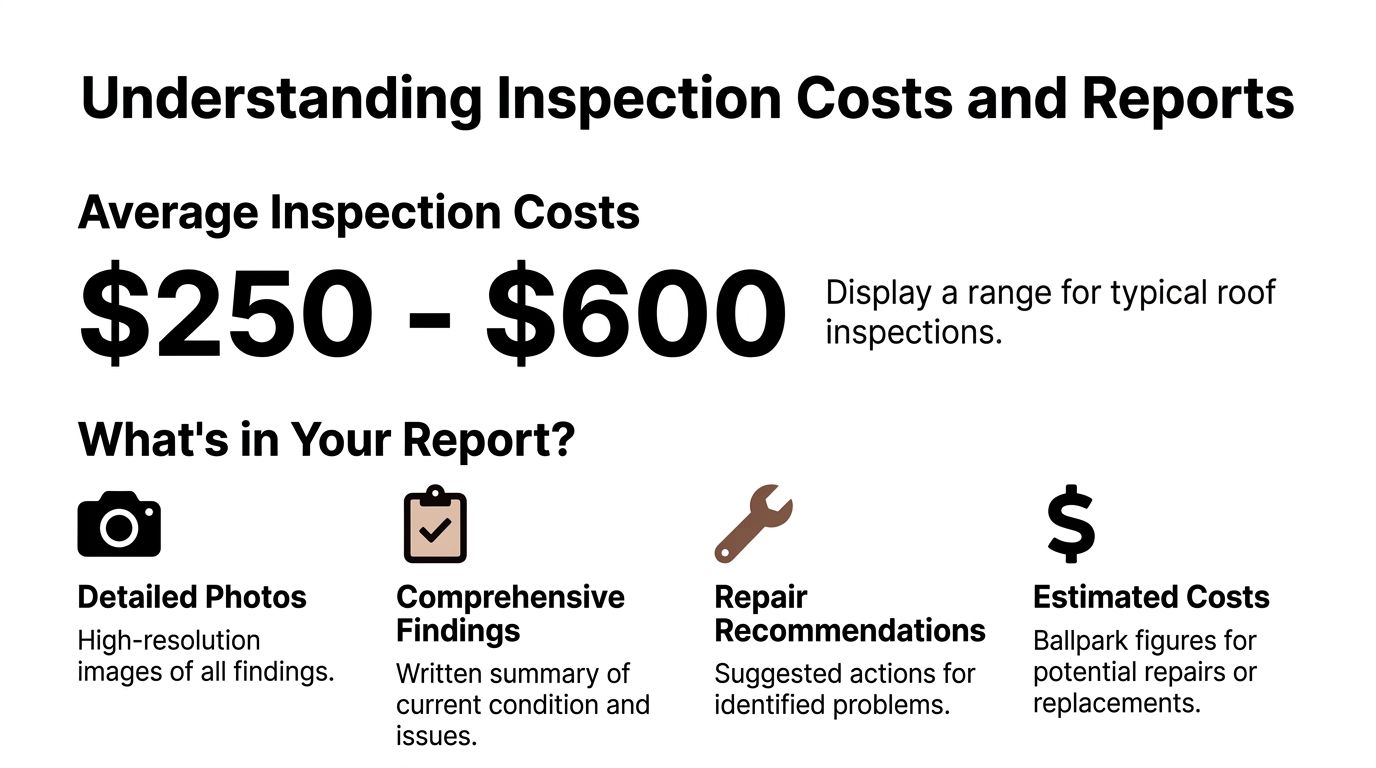
As noted earlier, national pricing guidance shows that roof inspections can range from a relatively modest visual check to a higher-cost diagnostic inspection that uses drones or infrared tools. For homeowners, the practical takeaway is simple. Price should match the difficulty of the roof and the depth of the inspection.
A few factors usually drive the number:
- Roof complexity: Valleys, intersecting rooflines, chimneys, and penetrations create more areas to inspect and document.
- Material type: Asphalt shingles, metal, slate, tile, and low-slope systems each require a different inspection approach.
- Access and safety conditions: Steep pitch, fragile surfaces, landscaping limitations, and height can add time and change how the inspection is performed.
- Diagnostic scope: Leak tracing, moisture detection, and storm-related documentation usually require more than a quick visual review.
In Pennsylvania, weather adds another layer. Freeze-thaw cycles, wind-driven rain, snow load, and ice movement can create damage patterns that are easy to miss from the ground but expensive to ignore over time. Paying for a careful inspection can be a smart use of money if it helps you catch a flashing issue, isolated shingle failure, or drainage problem before it turns into interior repair work.
What a good report should include
The report is where the inspection earns its value.
A useful report should tell you what was found, where it was found, how serious it is, and what should happen next. Homeowners should not have to decode vague notes or sort through photos with no explanation. If the roof has several issues, the report should separate active problems from normal aging and from items that only need monitoring.
A strong report usually includes:
- Photos tied to findings: Clear images of shingles, flashing, penetrations, drainage points, and any damaged areas.
- Written observations in plain language: Notes that explain the condition and the likely reason it matters.
- Priority levels: A clear distinction between repairs that should be scheduled soon and conditions that can be watched over time.
- Practical recommendations: Repair, maintenance, monitoring, or budgeting guidance based on the roof's current condition.
Turnaround time matters too, especially during a home sale, insurance question, or active leak situation. A good report should arrive soon enough to help you make a decision while the information is still useful.
If the inspection is tied to a sale or purchase, a real estate roof inspection for buyers and sellers should also document condition in a way that supports negotiations, repair requests, and timeline planning.
Good reporting protects your budget as much as your roof. It gives you a record of condition, helps you prioritize spending, and makes it easier to plan repairs on your schedule instead of paying for emergency work after water gets inside.
How to Choose a Qualified Inspector in Pennsylvania
Hiring the wrong inspector creates two problems at once. You either get a shallow report that misses the underlying issue, or you get a high-pressure sales pitch dressed up as an inspection. Homeowners in Sharon, Pittsburgh, and Erie should screen inspectors the same way they'd screen anyone working on structure, water management, and safety.

Green flags to look for
Start with qualifications and process. The inspector should be willing to explain how the inspection is performed, what areas are included, and what kind of report you'll receive.
This overview of inside a professional roof inspection notes that certified inspectors must verify credentials from recognized organizations like InterNACHI or NRCIA and conduct structural assessments, material evaluations, and damage identification. It also states that safety protocols mandating fall protection systems are paramount, and that inspectors are generally not required to walk on tile or shake roofs to prevent accidental damage, often using drones instead.
Use that as your baseline checklist:
- Recognized credentials: Ask whether they hold certifications such as InterNACHI or NRCIA.
- Proof of insurance: A legitimate inspector won't hesitate to provide it.
- Regional experience: Pennsylvania weather exposes roofs differently than warm-weather markets do.
- Clear reporting process: You should know what the final document includes before the visit happens.
Red flags to avoid
Be careful with inspectors who arrive with a replacement contract practically filled out before they've documented anything. That usually means the inspection was never the primary point.
Watch for these warning signs:
- Pressure first, evidence later: If they push replacement before showing photos or written findings, slow down.
- No safety discussion: Anyone treating roof access casually is telling you something about how they work.
- Vague language: “Looks bad” isn't a finding. A real inspector points to components, locations, and likely causes.
- Unwillingness to document: If there's no meaningful report, there's no real inspection record.
The best inspectors make the roof condition easier to understand. The worst ones make the conversation harder so you'll agree quickly.
Your Local Partner for Roof Inspections in PA and OH
For homeowners and property owners in western Pennsylvania and nearby Ohio, local knowledge matters. Roofs in this region deal with snow load, wind-driven rain, seasonal expansion and contraction, and a mix of older housing stock and newer additions. An inspector who works here regularly will notice patterns that out-of-area contractors often miss.
Penn Ohio Roofing & Siding Group is a family-owned and operated contractor serving Hermitage and the surrounding areas of Mercer, Beaver, and Lawrence counties, with over 25 years of experience, full licensing and insurance, and recognition that includes the GAF Triple Excellence Award. For homeowners trying to turn an inspection into a practical next step, that local background matters because the roof advice needs to fit Pennsylvania conditions, not generic national talking points.
State rules also affect inspection decisions. In Pennsylvania, the Uniform Construction Code requires that asphalt shingle roofs can't exceed two layers, and if a home already has two layers, the next roofing project must include a complete tear-off to the deck, according to this Pennsylvania roofing permit guide. The same source notes that commercial roofs in Pennsylvania are commonly recommended for professional inspection at least twice a year. Those aren't small details. They affect budgeting, planning, and how repair versus replacement decisions get made.
If you own a home or commercial property in this region, you want an inspector who understands local weather, local code realities, and how to document roof condition clearly enough for maintenance, insurance, or sale decisions.
If you need a clear, documented assessment of your roof in western Pennsylvania or nearby Ohio, Penn Ohio Roofing & Siding Group offers roof inspections along with repair and replacement services for residential and commercial properties. Reach out for a free, no-obligation estimate and get a practical evaluation of what your roof needs now, what can wait, and what to plan for next.