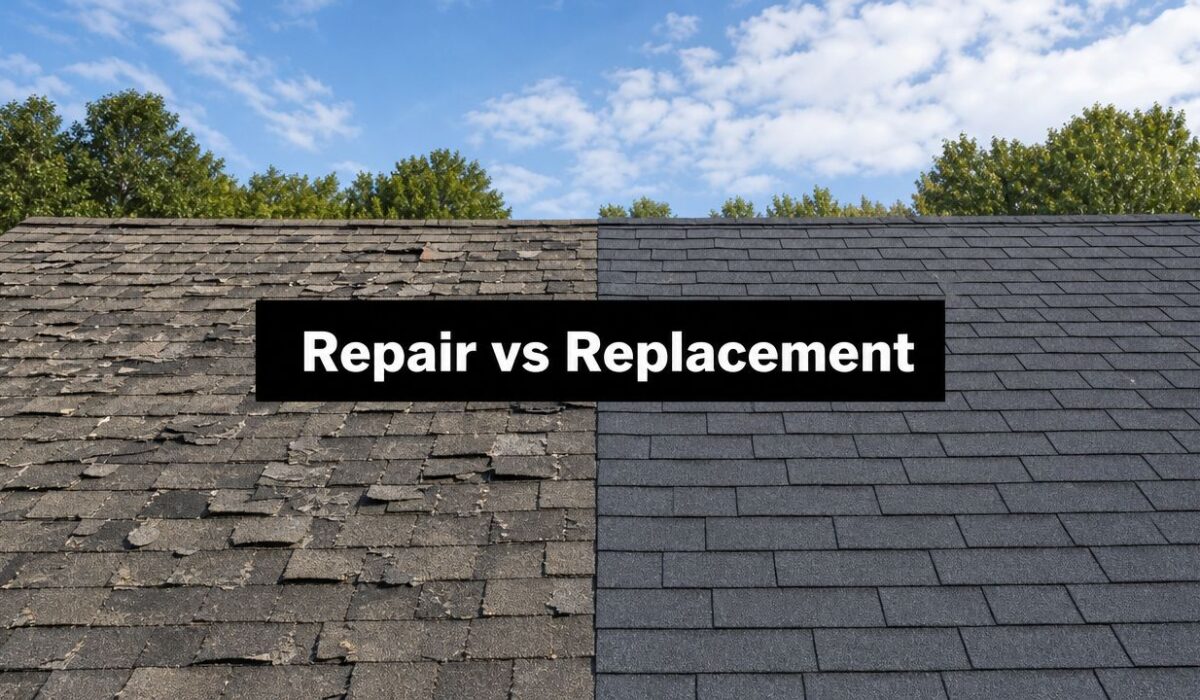
You're probably here because something changed fast. Maybe you spotted a water stain on the ceiling after a hard rain in Sharon. Maybe you found shingle pieces in the yard in Erie after wind came through. Maybe you climbed into the attic in Pittsburgh and caught that damp, musty smell that tells you water got where it shouldn't.
That's the moment most homeowners get stuck. One roofer says repair it. Another says replace it. You don't want to overspend, but you also don't want to throw money at a roof that's already on its way out.
My view is simple. A good repair makes sense when the problem is isolated and the rest of the roof is still sound. A replacement makes sense when the damage is widespread, the roof is aging out, or safety is starting to come into question. In Western Pennsylvania, that decision matters even more because snow load, ice, freeze-thaw cycles, wind, and old housing stock punish roofs harder than generic national advice admits.
Here's a quick side-by-side look before we dig in:
| Decision factor | Repair usually makes sense | Replacement usually makes sense |
|---|---|---|
| Damage pattern | Limited to one area | Spread across multiple areas |
| Leak history | One clear source | Repeat leaks or hard-to-track moisture |
| Shingle condition | Mostly intact | Curling, cracking, bare spots, widespread wear |
| Roof age | Relatively younger roof | Older roof nearing the end of service life |
| Deck condition | Solid and even | Soft spots, sagging, structural concern |
| Budget logic | Short-term fix with real value | Better long-term investment |
| Peace of mind | Good for targeted problems | Best for resetting the whole system |
Table of Contents
- The Critical Decision Roof Replacement vs Repair
- Reading the Signs Repair or Replace Your Roof
- Cost Analysis Repairing vs Replacing in Pennsylvania
- Lifespan and Materials The Long-Term View
- Navigating Insurance Claims and Warranties
- Your Step-by-Step Roof Decision Checklist
- Your Next Step Get a Professional Roof Assessment
- Frequently Asked Questions About Roofing in PA
The Critical Decision Roof Replacement vs Repair
A homeowner notices a brown ring spreading across the bedroom ceiling. At first, it looks minor. They put a bucket down, wait for the storm to pass, and hope it's just one loose shingle. That's normal. People want the least invasive fix.
Sometimes that instinct is right. If a branch lifted a small section of shingles and the rest of the roof is in good shape, a repair is the smart call. You solve the problem without tearing into a system that still has useful life left.
But I've seen plenty of homes in Hermitage and Sharon where that ceiling stain was only the first visible clue. Water had already traveled along decking, worked around flashing, and soaked insulation before the homeowner ever saw a drip. In older Pittsburgh neighborhoods and lakeside Erie areas, roofs often fail in layers. The visible problem is the one that finally got your attention. It's not always the only one.
Practical rule: Don't decide based on the leak you can see. Decide based on the condition of the whole roof system.
That's the heart of roof replacement vs repair. You're not choosing between cheap and expensive. You're choosing between targeted correction and full reset.
A targeted correction works when the roof still deserves it. A full reset is the right move when patching one spot only delays the next call, the next leak, and the next interior repair bill.
Homeowners usually want certainty. Fair enough. The best way to get there is to look at signs in the right order: visible wear, roof age, leak pattern, structural condition, and long-term cost. Once you do that, the answer usually gets clearer than people expect.
Reading the Signs Repair or Replace Your Roof
Start from the ground. Then check the attic. Then look at the pattern, not just the first damaged spot. That's how you avoid a bad decision.
Signs Pointing to Repair
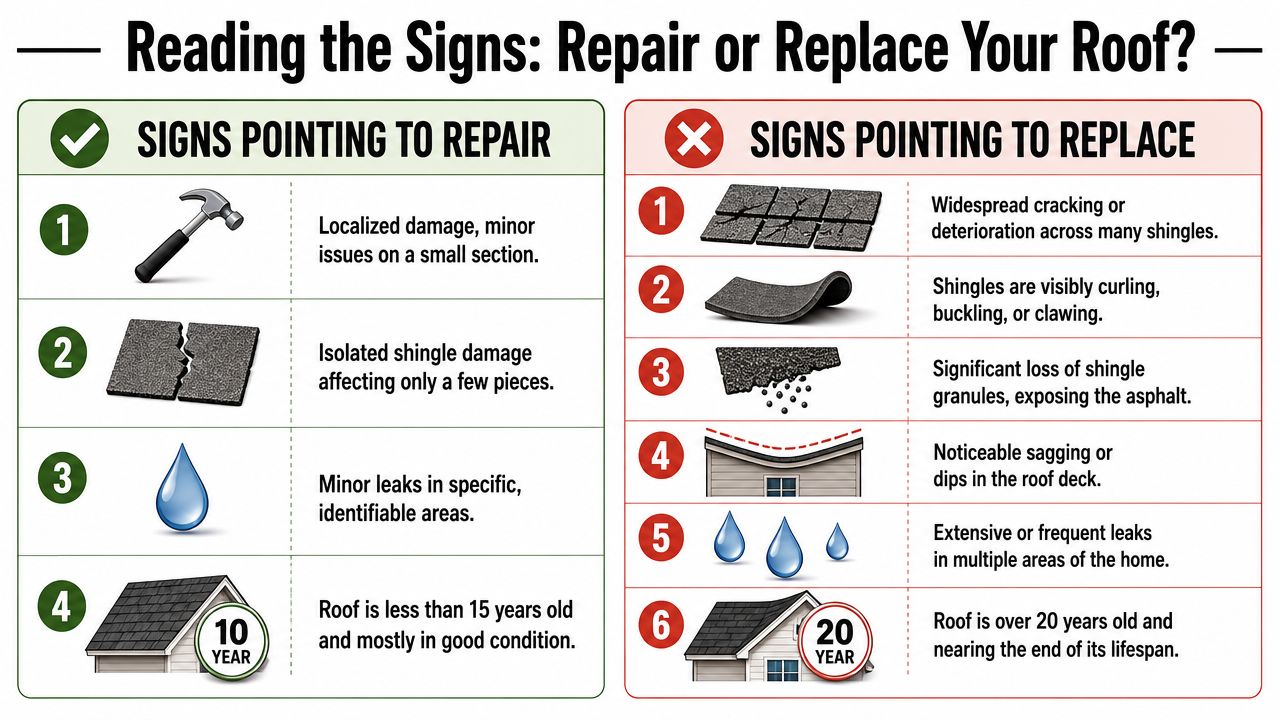
A repair is usually the right call when the issue is contained, identifiable, and limited.
- A few missing shingles: Wind can pull off a small section without ruining the whole roof.
- One leak with a clear source: If water is entering around one vent boot, one flashing joint, or one isolated penetration, repair is often enough.
- Damage from a recent event: A fallen limb or a small impact area doesn't automatically justify a full replacement.
- The rest of the roof still looks consistent: If shingle color, texture, and adhesion are mostly even, the system may still be sound.
If your roof is on the newer side and the problem is local, repairing it is usually the disciplined choice. You protect the investment you already made instead of replacing material that still has life left.
A proper diagnosis matters here. A leak stain doesn't always sit directly below the entry point, so you want someone to trace the path of water, inspect flashing, and check surrounding components. A detailed professional roof inspection is what separates a lasting repair from a patch that fails in the next storm.
Signs Pointing to Replacement
Replacement becomes the better answer when the damage stops being local and starts telling a bigger story.
Look for these red flags:
- Widespread shingle wear: Cracking, bald spots, heavy granule loss, and uneven aging across large sections.
- Curling or buckling shingles: That usually means the material is no longer sealing and shedding water the way it should.
- Multiple leaks: One leak can be a repair. Several leaks usually mean the system is breaking down.
- Sagging roof lines or dips: That can signal trouble in the decking or framing. At that point, patching shingles is not the fix.
- Repeated repair history: If the same roof keeps needing service, the roof is telling you it's done.
If the roof has become unpredictable, replacement is usually cheaper than living with uncertainty.
One more sign homeowners miss is mismatch. If one side of the roof looks heavily worn and another side looks only slightly better, the weaker slope still controls the decision. Water only needs one vulnerable path.
What Western Pennsylvania Homes Tend to Hide
Homes in Western Pennsylvania have their own patterns. Freeze-thaw cycles can open tiny gaps that become real leaks later. Snow and ice can stress eaves and flashing. Older homes around Pittsburgh and Sharon often have multiple additions, valleys, dormers, chimneys, and transitions. Every one of those details is a potential failure point.
Check these areas closely:
| Area to inspect | What to look for | Why it matters |
|---|---|---|
| Valleys | Debris buildup, worn shingles | Valleys move a lot of water |
| Chimneys | Loose flashing, separation | Masonry areas often leak first |
| Eaves | Ice-related wear, staining | Freeze-thaw stress shows up here |
| Attic | Damp insulation, mold smell, daylight | Interior clues often show hidden roof failure |
| Roof line | Sags, waves, dips | Structural issues change the decision fast |
Don't climb onto the roof unless you know what you're doing. A ground-level look, binoculars, attic check, and ceiling review are enough to spot the warning signs that matter.
Cost Analysis Repairing vs Replacing in Pennsylvania
Most homeowners ask the money question first. That's understandable. But the underlying issue isn't just price. It's whether the money solves the problem once or keeps you trapped in a cycle of spending.
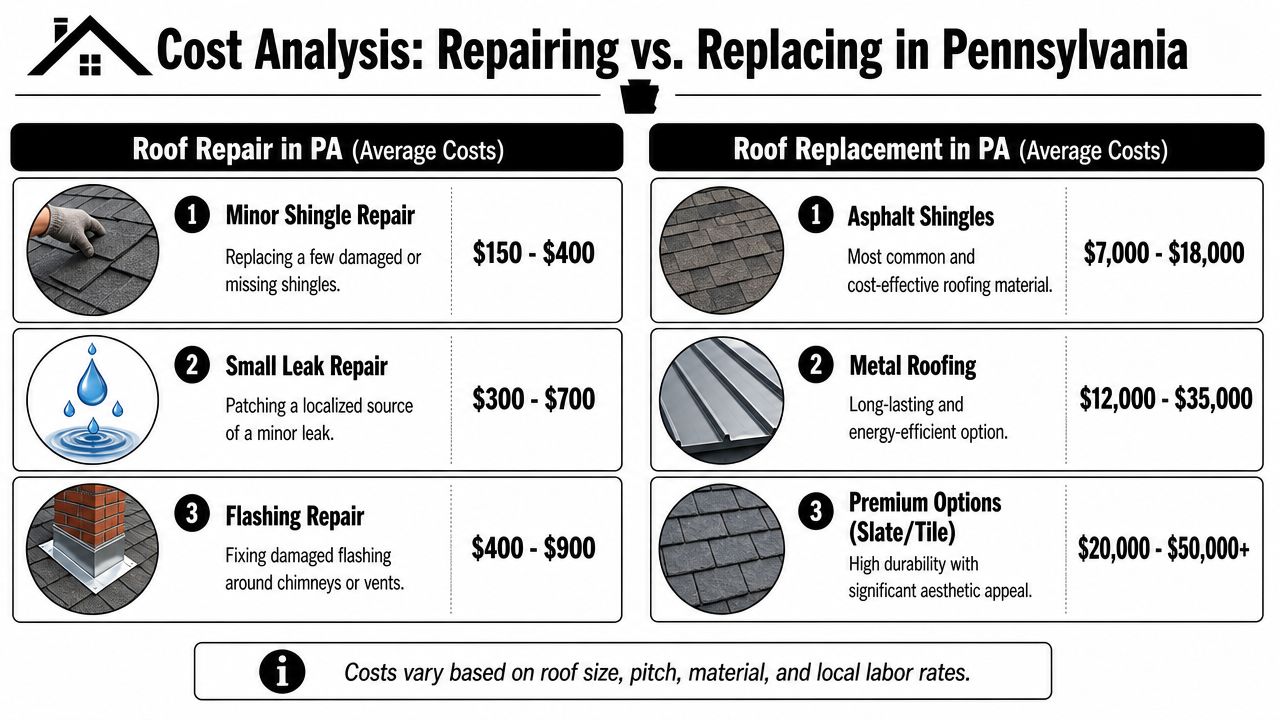
Here's the visual breakdown:
What Drives Repair Costs
Repair pricing moves on complexity more than homeowners expect. A simple shingle fix is one thing. Tracking a leak through flashing, underlayment, decking, and interior staining is another.
In Western Pennsylvania, these factors usually push repair costs up or down:
- Access to the damaged area: Steep roofs, high peaks, and tight lot lines make the work slower and more technical.
- Type of failure: Replacing a few shingles is simpler than rebuilding flashing around a chimney or vent stack.
- Water intrusion below the surface: Once decking or trim is involved, the repair becomes more than a patch.
- Material matching: Older roofs can be harder to blend, especially if existing shingles are faded or discontinued.
Homes with gutter issues also tend to show roof-edge deterioration. If runoff control is failing, it's worth understanding the wider drainage picture, including what affects seamless gutter cost and replacement planning, because roof and gutter problems often feed each other.
When Replacement Wins Financially
Here's the rule I stand by: If a repair starts approaching half the value of a full replacement, replacement usually makes more sense. That's the practical version of the 50% rule, and it keeps homeowners from sinking serious money into a roof that still won't be dependable.
Use this framework:
- Ask what the repair restores. Does it fix one issue, or does it restore confidence in the whole roof?
- Look at repair frequency. One meaningful repair is fine. Several repairs in a short span usually mean you're financing the inevitable.
- Consider interior risk. A cheaper roof decision can become an expensive drywall, insulation, paint, or mold decision.
- Think in seasons, not weeks. A patch that gets you through one storm but not the winter isn't a bargain.
Bottom line: The cheapest invoice and the smartest investment are often two different things.
Replacement also gives you one coordinated system. New shingles matter, but so do the underlayment, flashing, ventilation details, and edge components working together. That's hard to put a neat price on, but homeowners feel the difference when storms roll through Erie, lake winds hit exposed sections, or heavy weather moves across Pittsburgh.
Lifespan and Materials The Long-Term View
The right roofing material depends on how long you plan to stay in the house, how much maintenance you're willing to tolerate, and how your home handles Western Pennsylvania weather. Snow, ice, wet springs, leaf buildup, and wind don't treat all materials the same.
Asphalt Shingles for Most Homes
Asphalt shingles are still the default choice for a reason. They're practical, widely available, and fit most homes in Hermitage, Sharon, and Pittsburgh without forcing structural changes or a dramatic jump in budget.
Their strength is balance. You can get solid curb appeal, dependable water shedding, and straightforward repairability. If a section gets damaged, a roofer can often address that area without rebuilding the entire roof.
Their weakness is wear over time. Once shingles start curling, losing granules, or drying out across broad sections, repairs become less valuable. At that point, you're fixing symptoms, not the aging system underneath.
Metal Roofing for Homeowners Playing the Long Game
Metal roofing makes sense for homeowners who are tired of repeat maintenance and want stronger performance in snow and ice conditions. It sheds weather well, resists many of the failure patterns that hit aging shingles, and gives you a cleaner long-term ownership experience.
That doesn't mean it's right for every house. Metal costs more upfront, requires installers who understand trim details and penetrations, and looks better on some homes than others. But if you plan to stay put and want fewer recurring headaches, it deserves serious consideration.
A metal roof also changes the decision in repair conversations. If the panel system is structurally sound and the issue is isolated to fasteners, flashing, or one area of damage, repair can remain a strong option longer than it does with worn-out shingles.
Slate Tile and Specialty Roofs
Older Western Pennsylvania homes sometimes carry slate, tile, or mixed roofing from additions built in different eras. These roofs need a different mindset. You don't want a general patch job on a specialty roof if the house requires material-specific handling.
Here's the simple comparison:
| Material | Best fit | Repair outlook | Long-term value |
|---|---|---|---|
| Asphalt shingles | Most residential homes | Good when damage is isolated | Strong value if installed well |
| Metal roofing | Long-term owners, exposed sites | Good for localized issues if system is sound | Excellent durability and lower maintenance burden |
| Slate or tile | Historic or premium homes | Needs specialized work | Strong if maintained correctly |
If you're deciding between roof replacement vs repair on an older material, match the solution to the system. A cheap patch on a premium roof is usually a mistake.
One more point matters. A full replacement gives you a fresh warranty path and lets the installer rebuild the vulnerable details that usually fail first. If you're using modern components and quality products like GAF roofing systems, you're not just buying shingles. You're buying a rebuilt weather barrier.
Navigating Insurance Claims and Warranties
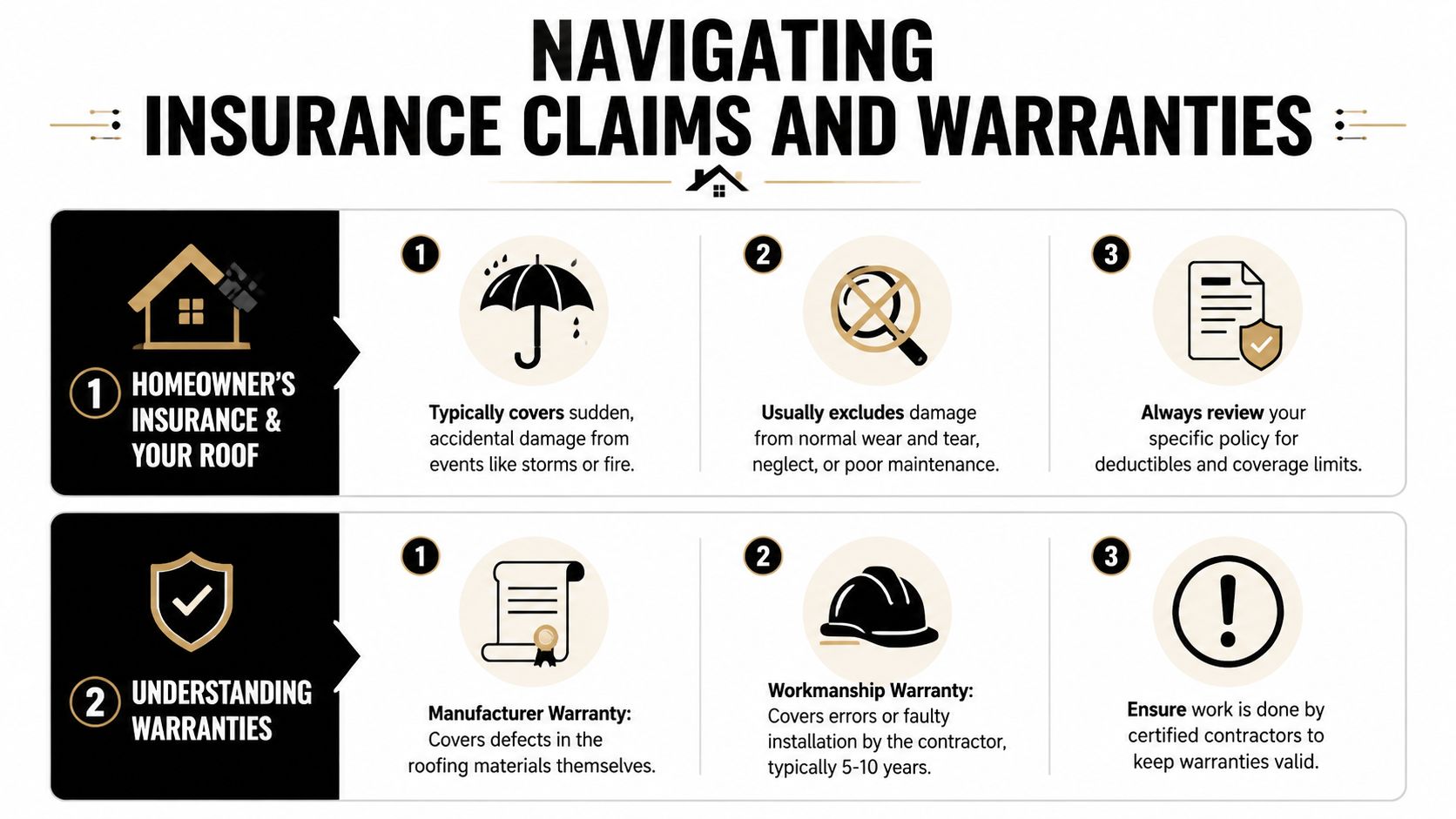
Roofing paperwork frustrates people because two separate issues get mixed together. Insurance deals with covered damage. Warranties deal with product defects or installation quality. If you confuse those, you'll make bad decisions fast.
What Insurance Usually Cares About
Homeowner's insurance often looks for sudden, accidental damage. Storm impact, wind damage, or a fallen branch may fit. Normal wear, neglected maintenance, and old age usually don't.
That distinction matters in Mercer, Beaver, and Lawrence County homes because weather events can trigger legitimate claims, but long-term deterioration often shows up alongside them. If a storm damages an already failing roof, the insurer will look closely at what happened suddenly and what was already worn out.
Take these steps if you suspect an insurance-related roof problem:
- Document visible damage early. Save photos of shingles, flashing, gutters, ceilings, and attic signs.
- Prevent further interior damage. Use tarps or containment if it's safe to do so.
- Read your own policy language. Don't rely on assumptions about what “should” be covered.
- Get a professional assessment before major decisions. A clear scope of damage helps you speak accurately with the adjuster.
Insurance may help pay for storm damage. It usually won't pay for a roof that simply reached the end of its useful life.
The Warranty Mistakes Homeowners Make
Manufacturer warranties and workmanship warranties are not the same thing.
- Manufacturer warranty: This applies to defects in roofing materials.
- Workmanship warranty: This applies to installation errors made by the contractor.
A homeowner can have excellent shingles and still have leaks if flashing, ventilation, nailing, or underlayment work was poor. That's why contractor quality matters just as much as material brand.
If you're also considering solar, check how panel installation interacts with coverage. This guide on solar impact on roof warranties is worth reading before anyone drills into a roof that still carries warranty protection.
In older Pennsylvania neighborhoods, permit requirements and code expectations can also affect replacement decisions, especially when decking, ventilation, or structural corrections come into play. That's another reason quick patching can become false economy. Once the roof system needs broader correction, handling it properly protects both coverage and resale confidence.
Your Step-by-Step Roof Decision Checklist
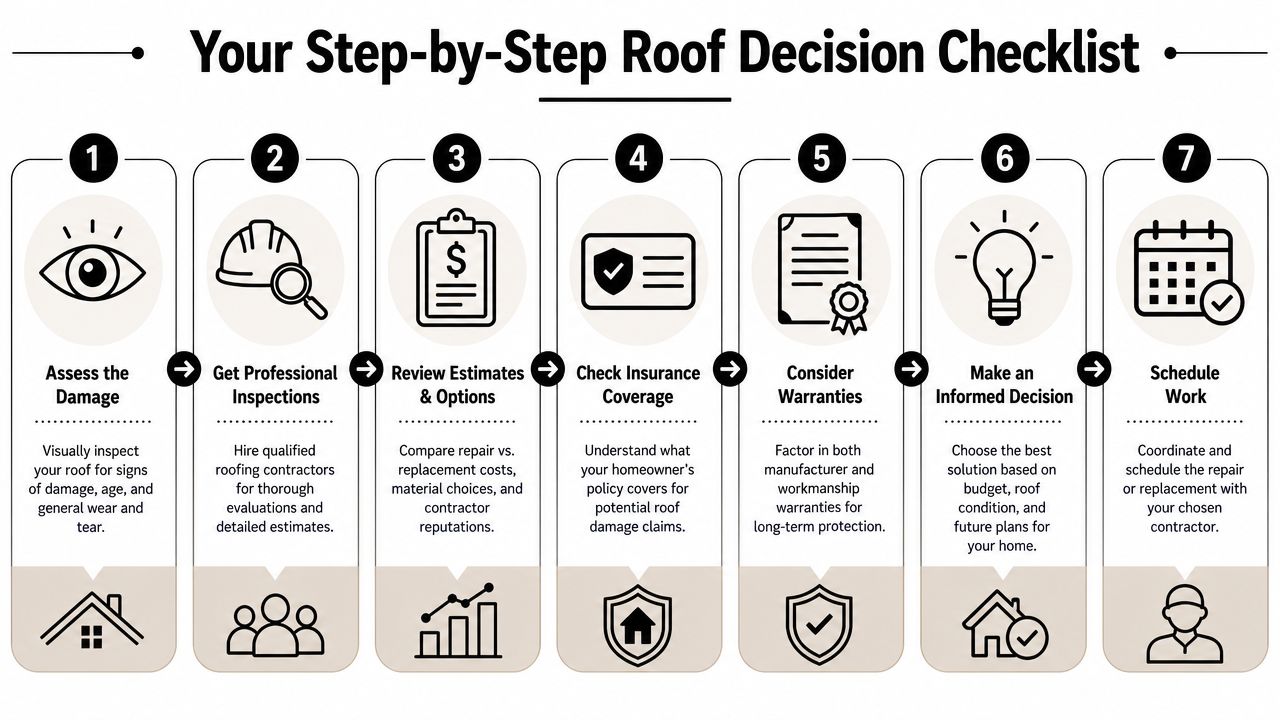
Most bad roof decisions happen because homeowners jump from panic to price. Slow down and use an order that makes sense.
A Practical Order That Keeps You From Wasting Money
Start with a visual scan. Walk the property. Check for missing shingles, sagging lines, debris impact, granule washout near downspouts, and stains inside the attic or on ceilings.
Consider age objectively. If the roof is older and showing multiple wear signals, don't judge it like a newer roof with one isolated problem.
Separate local damage from system failure. One vent leak isn't the same as broad shingle fatigue. One lifted section isn't the same as recurring moisture in different rooms.
Compare short-term spend to long-term value. A smaller invoice feels good until you pay for another repair, then drywall work, then insulation replacement.
Review insurance and warranty status before authorizing big work. You don't want to make a move that complicates a valid claim or disrupts warranty protection.
Get more than a glance from a contractor. A real roof evaluation should include exterior condition, flashing details, decking concerns if visible, attic clues, and a clear explanation of whether repair or replacement solves the problem.
Decide based on confidence, not hope. If the recommended repair leaves you wondering what fails next, it probably isn't the right answer.
Here's the checklist in compact form:
| Step | Question to answer |
|---|---|
| Assess damage | Is the problem isolated or widespread? |
| Consider roof age | Is the roof still worth repairing? |
| Review leak history | Is this the first issue or part of a pattern? |
| Compare costs | Does repair still make financial sense? |
| Check paperwork | Could insurance or warranty affect the choice? |
| Get expert input | Did someone inspect the whole system? |
| Make the call | Will this fix hold up through PA weather? |
Your Next Step Get a Professional Roof Assessment
Once you've narrowed the issue down, guessing needs to stop. Roofs fail in ways homeowners can't fully see from the driveway, and that's especially true on older homes with layered repairs, multiple penetrations, or hidden decking trouble.
What a Useful Assessment Should Include
A useful roof assessment isn't a sales speech. It's a field diagnosis.
It should include:
- Exterior review: shingles, flashing, valleys, penetrations, ridge areas, edges, and visible sagging
- Interior clues: attic moisture, insulation condition, staining, ventilation warning signs
- Repair viability: whether a targeted fix will hold or only buy a little time
- Replacement triggers: whether the system has enough wear or structural concern to justify starting over
- Written scope: a clear explanation of what needs to happen and why
For buyers, sellers, and agents, a real estate roof inspection can also help separate cosmetic concerns from issues that may affect negotiations, timing, or safety.
When to Stop Reading and Call Right Away
Some situations don't need more research.
Call for immediate professional help if you have:
- Active water coming into the home
- A sagging ceiling or roof line
- Storm damage from fallen limbs or flying debris
- Visible daylight through the attic
- Water near electrical fixtures or panels
If that's happening, your job is to protect people, contain water if you safely can, and stay off the roof. Don't climb up with a tarp in bad weather. That turns a roof problem into a medical problem.
Homeowners in Hermitage, Sharon, Pittsburgh, and Erie deal with weather swings that can turn a manageable issue into interior damage fast. The smartest next move is a professional assessment that tells you, plainly, whether this roof deserves a repair or needs a full replacement.
Frequently Asked Questions About Roofing in PA
Will a New Roof Help Resale Value
Usually, yes. Buyers notice roofs because they know replacement is expensive and disruptive. A newer roof can reduce buyer hesitation, smooth negotiations, and make the home feel better maintained. It may not be the only factor in a sale, but a visibly worn roof can definitely become a problem.
Can You Replace Only One Section of a Roof
Sometimes. If the damage is confined to one area and the surrounding system is still in solid condition, a sectional repair or partial replacement can work. The catch is material matching, slope transitions, and whether the remaining roof is healthy enough to justify stopping there. If the rest is close behind, partial work often delays the bigger bill without avoiding it.
What Should I Do During a Roofing Emergency
Protect the inside first. Move furniture, put down containers, and keep water away from outlets or fixtures. If water is moving through light fixtures or near electrical equipment, shut power to the affected area if you can do it safely and call for help.
Don't go on the roof during wind, rain, snow, or icy conditions. From inside, take photos, note where water appears, and check the attic only if it's safe and stable. Fast documentation helps later, but personal safety matters more than proving the damage perfectly.
If you're stuck between patching a problem and investing in a full replacement, get an answer based on the roof's real condition, not a guess from the ground. Penn Ohio Roofing & Siding Group has served homeowners across Hermitage and surrounding Western Pennsylvania communities for over 25 years, offers free estimates, and provides 24/7 emergency service when the situation can't wait.