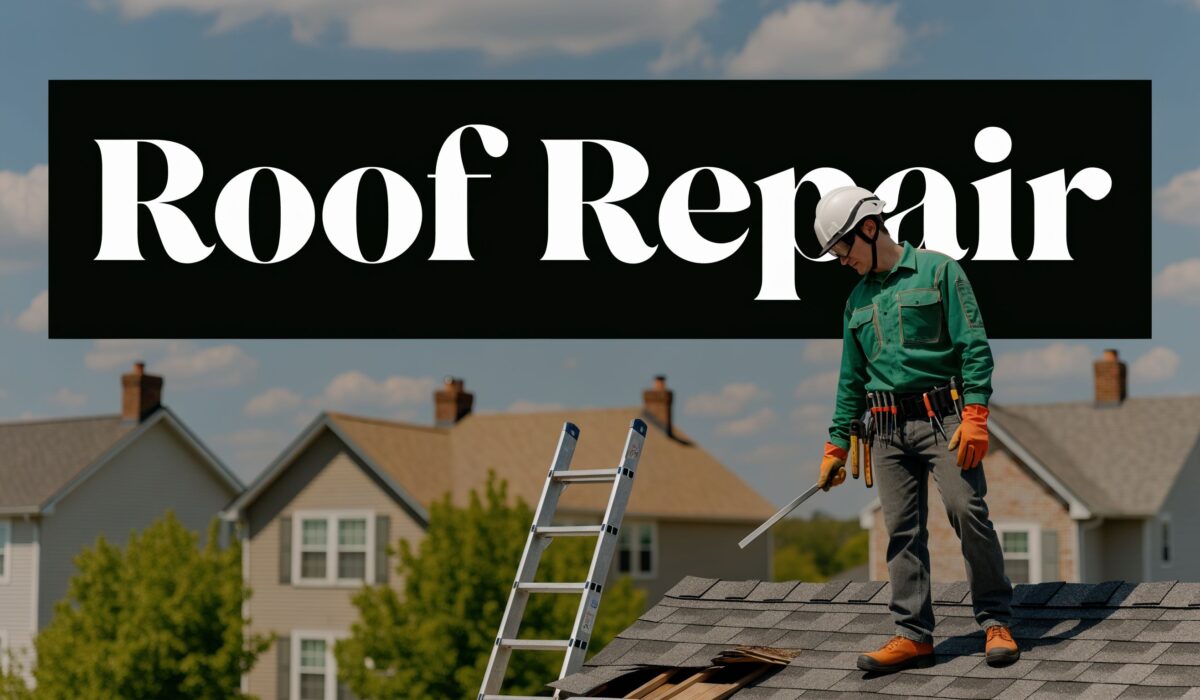
A roof problem usually announces itself at the worst time. You notice a yellow stain spreading across the ceiling after an overnight storm. You hear a drip in the attic. Or you walk into the yard and spot shingles where they definitely were not yesterday.
That moment rattles people for a reason. A roof leak is not just a roof leak. It can turn into damaged insulation, stained drywall, rotted decking, mold concerns, and a much bigger bill if it sits.
In Hermitage, that stress gets amplified by snow, wind, freeze-thaw swings, and the simple fact that many leaks do not start where the water shows up inside. Roof repair Hermitage PA decisions often have to be made quickly, but they should not be rushed blindly. The right move depends on what failed, how widespread the damage is, whether insurance is involved, and whether the repair crosses into permit territory in Mercer County.
That Drip Drip Drip… A Homeowner's First Response
The first response should be calm and practical.
If water is actively coming in, protect the inside of the house first. Move furniture, put down towels, place a bucket under the drip, and if the ceiling is bulging, do not ignore it. Water can pool above drywall and bring part of the ceiling down.

What not to do
A lot of homeowners make the same early mistakes.
- Do not climb onto a wet roof. Slippery shingles, frost, loose granules, and hidden soft spots make that dangerous fast.
- Do not assume the stain marks the entry point. Water often travels along rafters or decking before it appears indoors.
- Do not smear roofing cement on everything you see. Random patching can trap water, hide the underlying failure, and make a proper repair harder later.
What helps right away
Start documenting what you see. Take clear photos of the ceiling stain, any wet insulation in the attic, shingles on the ground, bent flashing, and gutter overflow if you notice it. If a storm just came through, note the date.
Then look for clues from the ground. Check for missing shingles, lifted ridge cap, debris impact, or metal flashing that looks peeled back around a chimney or wall line.
Tip: If the leak starts during a storm and stops when the weather clears, that often points to a direct water-entry issue. If it shows up after snow sits and then melts, drainage, ice, flashing, or ventilation problems may be involved.
The goal in the first few hours is not to diagnose every detail yourself. It is to limit interior damage, gather evidence, and avoid making the roof harder to inspect or repair.
Identifying Roof Damage Before It Becomes a Disaster
Most roof failures give warning signs before they turn into major structural damage. The problem is that people often do not know what they are seeing, or they dismiss it because the roof is not actively leaking every day.
Start inside the house
Interior signs often show up before anyone notices obvious exterior damage.
Watch for:
- Ceiling stains: Brown, yellow, or greenish marks usually mean water has already moved through roofing layers and into the home.
- Peeling paint or bubbling drywall: Moisture behind finished surfaces can cause paint to lift and seams to swell.
- Attic warning signs: Damp insulation, musty odors, dark wood staining, or visible daylight around roof penetrations deserve attention.
- Leaks around chimneys or vents: These often point to flashing failure rather than a broad shingle problem.
Then check outside from the ground
A ground-level inspection can reveal a lot without taking unnecessary risks.
Look for these conditions:
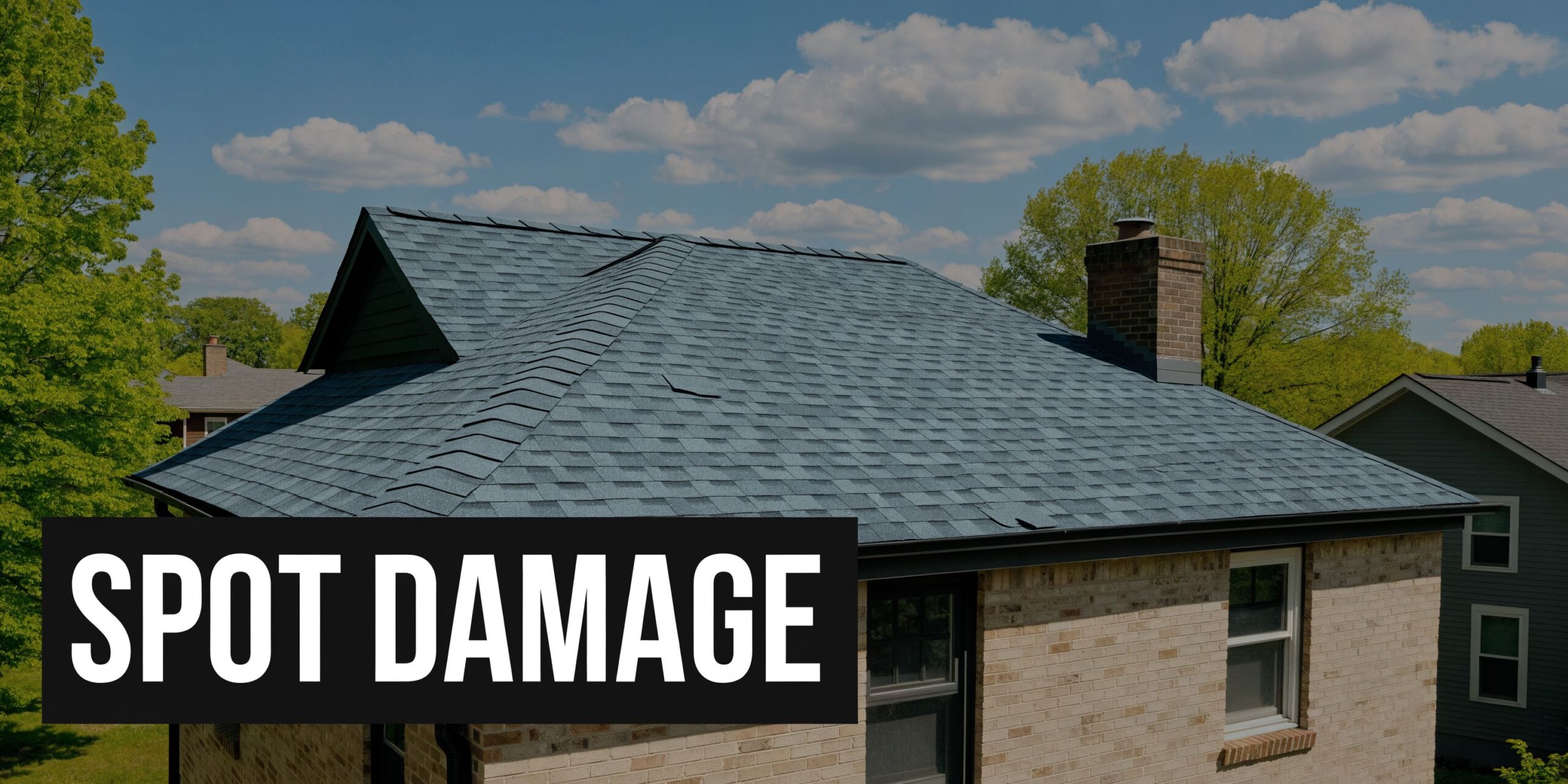
- Missing shingles: Wind can tear shingles off completely, exposing the underlayment and sometimes the deck.
- Curled or cracked tabs: Older asphalt shingles lose flexibility and stop sealing well.
- Granules in gutters or at downspouts: Granule shedding matters in this region because asphalt shingle roofs in Hermitage experience granule loss rates that increase 15% to 25% faster than national averages due to thermal cycling, which can reduce lifespan from 20 to 25 years down to 15 to 18 years without proper maintenance (Shell Built roofing in Hermitage).
- Bent flashing or lifted metal edges: These weak points let water in around transitions.
- Sagging lines: A dip in the roof plane can signal trapped moisture, deck failure, or framing stress.
For a more detailed homeowner checklist, this guide on signs of roof damage is useful before you schedule an inspection.
Why Hermitage roofs wear the way they do
Roofs in this area take a beating from winter and shoulder-season weather.
Snow sits. Ice forms at edges. Temperatures swing above and below freezing. Water expands when it freezes, and that movement works on shingles, flashing joints, fasteners, and sealants over time. If attic ventilation is poor, heat loss from the house can worsen melt-and-refreeze patterns near the eaves.
The result is a roof that may look mostly fine from the driveway but still have vulnerable spots at:
- Pipe boots
- Chimney step flashing
- Valleys
- Skylight curbs
- Low-slope transitions
- Gutter lines where water backs up
Key takeaway: A roof does not have to be old to fail. In Hermitage, weather stress often attacks the details first. Flashing, sealant lines, exposed fasteners, and drainage paths deserve as much attention as the shingles themselves.
A simple rule for urgency
Treat the issue as urgent if you see active leaking, missing sections of roofing, sagging, or repeated stains in the same area. Those signs rarely stay minor.
If you are seeing only light cosmetic clues, do not ignore them. Small roof problems are cheapest and simplest when caught early.
A Guide to Common Roof Repair Solutions in Hermitage
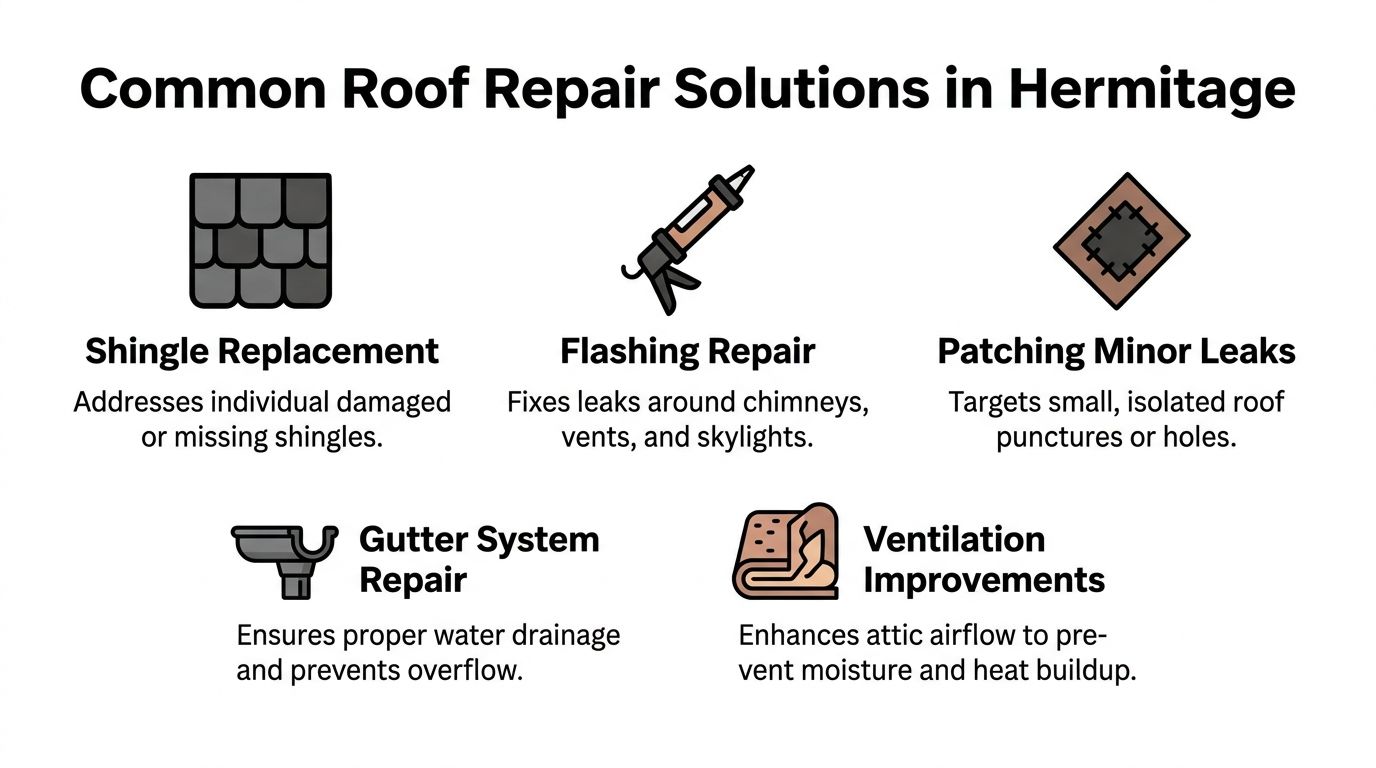
Once the problem is identified correctly, the repair itself usually falls into a handful of categories. Good roof repair is not about throwing sealant at a leak. It is about matching the repair method to the failure point.
Shingle replacement and slope repairs
This is the repair most homeowners picture first.
If wind has removed a few shingles, or if a localized area is cracked or torn, a roofer can remove the damaged pieces, check the underlayment and deck below, and install matching replacements. This works well when the surrounding roof field is still in serviceable condition.
What works:
- Replacing isolated storm-damaged shingles
- Re-securing loose tabs where the rest of the roof remains sound
- Repairing a limited section after a branch strike
What does not:
- Swapping a few shingles while ignoring rotten decking underneath
- Treating widespread age-related wear like a small patch job
- Forcing brittle old shingles apart in cold weather without accounting for breakage risk
Flashing repair around penetrations
A surprising number of “roof leaks” are really flashing leaks.
Flashing is the metal system that seals transitions around chimneys, walls, valleys, skylights, and roof penetrations. When it rusts, lifts, separates, or was installed poorly in the first place, water gets in at the seams.
If you want a plain-language breakdown of the part many homeowners overlook, this explanation of what roof flashing is clears it up.
A proper flashing repair may involve removing nearby shingles, replacing step flashing or counterflashing, sealing exposed points correctly, and reinstalling the roof covering so water sheds the way it should. The fix needs overlap, drainage path, and material compatibility to be right. Surface caulk alone rarely lasts.
Patching smaller leak areas
Patching has a place, but only in the right situations.
A puncture from debris, a small opening at a transition, or a localized membrane defect can often be repaired without rebuilding a whole roof section. The key is confirming that the leak is isolated.
A careful patch includes:
- Finding the true entry point
- Removing compromised materials
- Drying and inspecting the substrate
- Installing compatible repair material
- Confirming surrounding areas are still sound
This is one area where Penn Ohio Roofing & Siding Group can be one practical option for homeowners who want a local inspection, repair scope, and written estimate from a licensed, bonded, and insured crew.
Tip: If a leak has returned after someone “fixed it” once already, assume the first repair treated the symptom and not the cause.
Gutters and ventilation are often part of the repair
Some roof problems start at the roof edge or in the attic, not in the field shingles.
Overflowing gutters can push water back toward fascia and under lower shingle courses. Poor attic ventilation can trap heat and moisture, shorten shingle life, and contribute to recurring ice issues. In those cases, a durable repair may include gutter correction, intake or exhaust ventilation work, or both.
Flat and low-slope commercial roof repairs
Commercial buildings and some residential additions in Hermitage use low-slope systems that behave very differently from shingle roofs.
Bitumen roofs need a more technical approach. Cracks, seam separation, punctures, and ponding-related deterioration should be addressed early. On flat roofs, delay is expensive. For commercial properties, untreated minor bitumen degradation can cause small 1 to 2 inch cracks to expand 10% to 15% annually under thermal stress, turning manageable repairs into complete re-roofing projects that cost 300% to 500% more within 3 to 5 years (bitumen roof repair details).
That is why a flat roof inspection should focus on seams, drainage, flashing terminations, penetrations, and moisture spread under the membrane, not just the visible split.
What to Expect for Roof Repair Costs and Timelines
Homeowners asking about Roof repair Hermitage PA want two straight answers. What will it cost, and how long will it take?
The transparent answer is that the final number depends on the roof system, the size of the affected area, accessibility, the condition of the decking below, and whether the repair stays a repair or expands once materials are opened up. Still, local ranges help set expectations.
Local cost ranges
In Hermitage, the average cost of roof repair ranges from $1,207 to $1,406, with variation based on damage extent and roof size. Nationally, most homeowners spend around $1,100 per project (Homeyou Hermitage roof repair costs).
Those averages are useful, but they do not tell the whole story. A small gutter-related fix sits in a different category than a leak that has damaged decking around a chimney. Labor matters too. Roofing work is skilled work, and access, pitch, staging, and material handling all affect effort on site.
Why one estimate is higher than another
Three quotes can describe the same roof and still reflect different scopes.
One contractor may be pricing only the visible shingle issue. Another may include removal around the leak area, flashing replacement, decking inspection, disposal, and matching materials. That is why line items matter.
A higher estimate is not automatically inflated. A lower estimate is not automatically efficient. The key question is whether the scope solves the problem.
Key takeaway: The cheapest repair often becomes the most expensive if it skips the cause of the leak.
Hermitage Roof Repair Cost & Timeline Estimates
| Repair Type | Typical Cost Range (Hermitage, PA) | Estimated Timeline |
|---|---|---|
| Minor gutter-related repair | $180 to $560 | Often completed in a short service visit |
| Average roof repair | $1,207 to $1,406 | Commonly completed within one day, depending on scope |
| Moderate repair with decking or flashing involvement | Often falls above the local average range | May take from part of a day to more than one day |
| Sagging roof repair | $1,500 to $7,000 | Often longer due to structural investigation and rebuild needs |
| Full roof replacement | $5,890 to $12,800, with some large high-end roofs reaching $46,000 | Typically longer than repair work and depends on size and material |
Timelines depend on diagnosis, not just labor
A straightforward shingle repair may move quickly once materials and weather line up. A leak around a chimney can take longer because the crew may need to remove surrounding shingles, rebuild flashing, and inspect the decking. Structural repairs take longer because no responsible roofer should cover damaged framing or soft deck and call it fixed.
Weather can also interrupt scheduling and completion. In this area, timing matters. A repair may be staged in two parts if emergency drying and waterproofing are needed first and permanent restoration follows in a safe weather window.
A practical way to budget
When reviewing estimates, ask these questions:
- What is included in tear-off and disposal
- Will the contractor inspect decking under the damaged area
- Is flashing replacement included or only sealant work
- What matching limitations exist if the roof is older
- What happens if hidden damage is found after opening the roof
Those questions matter more than chasing a round number. A good estimate should reduce uncertainty, not create it.
Navigating Insurance Claims and Hermitage Permitting
Storm damage creates two separate jobs. One is fixing the roof. The other is managing the paperwork correctly.
Homeowners often focus on the first one because it feels more urgent. In practice, poor documentation and permit confusion can delay or complicate the whole project.
Handling the insurance side without losing track of evidence
After wind or hail, document everything before temporary conditions change.
Take photos of:
- shingles on the ground
- dented metal components
- interior stains
- wet attic insulation
- damaged gutters, downspouts, or flashing
- fallen branches or debris impact
Keep a simple written timeline with the storm date, when the leak appeared, and every conversation with the insurer. That record helps if the adjuster visit happens later than you expect or if questions come up about when the damage occurred.
This step matters because detailed damage documentation and supplemental claims for underpaid initial assessments resolved 40% of disputes in Pennsylvania according to 2025 industry data (Cover Pro Roofing on Hermitage roofing and claims).
If you run into a low estimate or denial, this guide on how to dispute a denied or underpaid roof insurance claim gives homeowners a useful outside reference on the process.
For a local walkthrough of the paperwork flow from first call to final scope, this page on the roof insurance claim process is a practical starting point.
When permits enter the picture in Mercer County
Not every roof repair requires the same level of permitting. Small repairs can be very different from extensive repairs or work that affects structure.
In Pennsylvania guidance tied to Hermitage-area roofing, repairs that exceed 25% of the roof surface area or involve structural modifications typically trigger inspections or additional permitting requirements. That means a job that starts as “just a repair” can cross into a different category once the full condition is exposed.
What homeowners should expect:
- The contractor should determine whether the planned scope requires permitting.
- If the repair expands during tear-off, the permit path may need to be updated.
- Inspection timing can affect scheduling, especially in busy weather periods.
What a professional contractor should manage for you
A good roofing contractor does more than swing a hammer.
They should help by:
- documenting visible storm damage clearly
- separating emergency mitigation from permanent repair
- writing a scope that matches what the roof needs
- flagging permit requirements before work begins when possible
- keeping records if hidden damage changes the project
Tip: If a contractor shrugs off permits or tells you “nobody checks,” treat that as a warning sign. Administrative shortcuts tend to show up later in resale questions, insurance disputes, and failed inspections.
Why Hermitage Chooses Penn Ohio for Reliable Roofing
Roofing in Pennsylvania is a crowded field. That is exactly why credentials and track record matter.
Pennsylvania’s roofing industry includes 3,759 businesses as of 2026, and GAF certifications such as the Triple Excellence Award are given to contractors who demonstrate installation quality, continuous training, and consumer protection (IBISWorld roofing contractors industry data).

What those qualifications mean to a homeowner
A lot of roofing terms sound interchangeable until something goes wrong.
Licensed, bonded, and insured means the homeowner has clearer protection when work is underway. Award-level manufacturer recognition points to training and process standards, not just a truck and a ladder. Local experience matters because Hermitage roofs fail in local ways. Snow load, flashing stress, freeze-thaw movement, and storm documentation are not abstract issues here.
What separates dependable service from a risky bid
A reliable roofing company should do a few things consistently:
- Inspect beyond the surface: They should not stop at the visible shingle damage if there are signs of moisture spread underneath.
- Explain repair versus replacement transparently: Some roofs can be repaired responsibly. Others are at the point where repeated patching wastes money.
- Provide a clear written estimate: Homeowners should know whether flashing, underlayment, decking inspection, and disposal are included.
- Show up for urgent leaks: Roof failures do not wait for office hours.
- Understand both residential and commercial systems: The repair approach for asphalt shingles is not the same as the approach for metal, tile, or low-slope membranes.
Why local history matters
A family-owned company with more than 25 years serving Hermitage and nearby counties brings something online-only lead generation outfits do not. They know the housing stock, the common storm patterns, the permitting headaches, and the expectations of local property owners.
That also matters for real estate agents and insurance-related inspections. The report needs to be clear, defensible, and grounded in what the roof is doing, not padded with vague language.
Key takeaway: Hiring a roofer is partly about workmanship and partly about judgment. The right contractor knows when a focused repair will hold, when a leak points to a bigger assembly problem, and when paperwork needs as much attention as the shingles.
Take the Next Step to a Secure and Healthy Roof
Roof issues rarely improve with time. They either stay contained because someone addressed them early, or they spread into more materials and more cost.
If you have a leak, missing shingles, damaged flashing, or signs that a storm hit harder than you first thought, act while the scope is still manageable. A careful inspection can tell you whether you need a straightforward repair, a broader restoration, help with insurance documentation, or guidance on permits before work begins.
For homeowners and property managers in Hermitage, the smartest next step is a direct conversation with a local roofer who can inspect the roof, explain the true condition clearly, and put the precise scope in writing. If the damage is urgent, do not wait for the next storm to confirm what your ceiling is already telling you.
Frequently Asked Questions About Hermitage Roof Repairs
How long should a roof repair last
That depends on what failed and how completely it was repaired.
A targeted repair can last well when the surrounding roof system is still in good condition and the contractor fixed the true entry point. A patch over worn-out materials usually does not last nearly as well. Flashing repairs, deck repairs, and drainage corrections often matter more to longevity than the visible shingle replacement alone.
What if the crew finds more damage after opening the roof
That happens more often than homeowners expect.
A leak may have damaged the decking beneath the shingles, or a chimney area may reveal hidden rot once flashing is removed. The right response is not to cover it and move on. The contractor should document what was found, explain how it changes the scope, and update the estimate before proceeding with additional work whenever possible.
Can roof repairs be done during winter in Hermitage
Yes, but winter repairs require judgment.
Emergency leak control can often be done in cold conditions if the roof can be accessed safely. Permanent repairs may depend on temperature, ice, brittleness of existing shingles, and whether materials can be installed correctly in that weather window. Safety and installation quality both matter. Fast and sloppy is not a win.
Should I repair or replace my roof
That depends on condition, not just age.
A localized storm hit on an otherwise healthy roof often makes repair the right move. Widespread granule loss, recurring leaks in different areas, soft decking, or repeated patch history can push the decision toward replacement. The important thing is getting a diagnosis based on the whole roof assembly, not just the stain in one room.
Will my homeowners insurance cover roof repair
Sometimes, but coverage depends on the cause of damage and the terms of the policy.
Storm-related damage is often handled differently from wear, neglected maintenance, or long-term deterioration. That is why documentation, timing, and a clear inspection report matter so much. If there is visible storm damage, start the paper trail immediately and keep records organized.
Do I need to be home during the repair
Not always, but communication should be clear before work starts.
You should know where crews will access the property, whether power is needed, how materials and debris will be handled, and who will contact you if hidden damage is found. If insurance is involved, you also want to know who is providing photos and documentation as the work progresses.
What is the biggest mistake homeowners make
Waiting too long is the big one.
The second biggest mistake is choosing a contractor based only on the lowest price without comparing scope. Roof repairs succeed when diagnosis, materials, drainage, and flashing details all line up. The paperwork matters too if insurance or permitting becomes part of the job.
If you need clear answers about Roof repair Hermitage PA, contact Penn Ohio Roofing & Siding Group for a free, no-obligation estimate. Whether you are dealing with an active leak, storm damage, insurance questions, or a repair that may require permit guidance, their team can inspect the roof, explain the true scope, and help you take the next step with confidence.