A lot of Sharon homeowners call about the roof only after the house says something first. A brown ring shows up on the ceiling after a hard rain. You clean the gutters and find a pile of shingle granules. You hear a drip in the attic and hope it’s old damage, not new.
That uncertainty is the hard part. Roof problems rarely stay neatly on the roof. Water moves. It gets into decking, insulation, trim, and drywall. A small issue can stay small if someone catches it early. If nobody does, the repair list gets longer.
If you’re searching for a Residential roofing contractor Sharon PA homeowners can learn from before they sign anything, start with the process. Know what the warning signs mean. Know what materials make sense here. Know how to judge a contractor. And if a storm caused the damage, know how to handle the insurance claim without making mistakes that cost you coverage.
Your Guide to a Secure Roof in Sharon PA
A common local scenario goes like this. A thunderstorm rolls through at night, and the next morning there’s a faint dark spot near a bedroom ceiling corner. At first it looks harmless. By the next rain, the spot is larger, and now you’re wondering if the shingles blew off, if flashing opened up, or if water has been getting in for a while.
That’s where most homeowners get stuck. They don’t just need a repair. They need a straight answer.
A roof is a system, not just a layer of shingles. The shingles shed water, but the underlayment, flashing, ventilation, decking, and edge details all matter. If one part fails, another part ends up carrying stress it wasn’t meant to handle.
A roof usually gives warnings before it gives out. The trouble is that most of those warnings don’t look dramatic from the ground.
That’s why it helps to look at your roof the same way a seasoned roofer does. Not with panic. With a checklist.
You want to know whether the issue is cosmetic, repairable, or a sign that the roof is near the end of its service life. You also want to know whether the damage is likely to be covered by insurance, and what paperwork or photos you’ll need before anyone starts major work.
For homeowners around Sharon, the smart move isn’t guessing. It’s understanding what you’re seeing, what tends to fail in this climate, and what a proper roofing process looks like from inspection to final cleanup.
Decoding Your Roof's Distress Signals
The roof almost always tells on itself. You just have to know what to look for.
In Pennsylvania, roofing is serious business. The state’s roofing contractors industry is projected to reach $4.5 billion in 2026, growing at an average annual rate of 4.4% from 2021 to 2026, and typical residential roofing repairs average $1,100 while full replacements range from $5,890 to $12,800. That’s one reason early detection matters for Sharon homeowners trying to control costs and avoid larger repairs later (Pennsylvania roofing contractors industry data).
What you can spot from the ground
You don’t need to climb a ladder to notice many of the first signs.
- Curling shingles mean the edges or tabs are no longer lying flat. When shingles curl, wind can get under them more easily, and water can reach places it shouldn’t.
- Missing shingles are obvious, but they’re also urgent. Once the protective surface is broken, the exposed area starts taking direct weather.
- Cracked shingles often show up after temperature swings and storm stress. One crack may not sink the house, but it creates an entry point.
- Granules in gutters usually mean the shingle surface is wearing down. Those granules help shield the roof from weather and sun.
- Dark streaks can be algae staining rather than active leakage. That’s not the same as structural failure, but it still deserves a closer look if the roof is older or showing other symptoms.
A lot of homeowners see one of these signs and wait because the leak hasn’t shown up inside yet. That’s a gamble. Water can travel along decking and framing before it ever stains a ceiling.
What your house may be telling you inside
Interior clues matter just as much as exterior ones.
Look for these:
- Ceiling stains that grow after rain or thaw cycles.
- Peeling paint near upper walls or around trim.
- Attic dampness on decking or insulation.
- Musty odors after storms or snow melt.
- Light showing through where the roof assembly should be sealed.
Those signs don’t always mean the field shingles are the problem. Sometimes the culprit is flashing around a chimney, a vent boot that cracked, or a valley detail that’s started to fail.
Practical rule: If you can see water damage indoors, the roofing issue is usually older than it looks.
Problems that show up after winter
Sharon roofs take a beating in freeze-thaw conditions. Snow sits, melts, refreezes, and pushes water into weak spots.
Ice dams are one of the biggest winter troublemakers. If you’ve dealt with icicles at the eaves, water marks near exterior walls, or repeated winter leaks, it’s worth reading a practical breakdown of how to stop ice damming on your roof. The short version is this. Ice problems usually point to a system issue involving heat loss, ventilation, and water protection at the eaves.
When a warning sign means act now
Not every roof issue is an emergency. Some are maintenance items. Some are repair items. Some mean the roof needs a serious conversation.
Call for an inspection quickly if you notice:
- Active dripping during rain or snow melt
- Shingles in the yard after wind
- Sagging areas in the roofline
- Repeated leaks in the same spot
- Visible flashing separation around chimneys, walls, or penetrations
The goal isn’t to scare yourself. It’s to stop treating symptoms and identify the actual failure point before moisture spreads further into the house.
Choosing Your Shield Against Pennsylvania Weather
Picking a roof in Sharon is a lot like picking tires for a vehicle. The cheapest option may get you down the road. It may not be the option you want when the weather turns ugly.
The right choice depends on budget, home style, slope, long-term plans, and how much maintenance you’re willing to live with. What works well on one house may be the wrong fit for the next one.
Asphalt shingles versus metal roofing
For most homes here, the first real decision is between architectural asphalt shingles and metal roofing.
Architectural asphalt shingles are the reliable everyday choice. They fit most neighborhoods well, they offer good value, and they make sense for many homeowners who want solid protection without stretching the budget too far. If asphalt were a vehicle, it would be the dependable family sedan.
Metal roofing is a different category. It costs more upfront, but it appeals to homeowners who want a tougher shell, a distinct appearance, and long-term durability. If metal were a vehicle, it would be the four-wheel-drive truck you buy because you know rough weather is part of the deal.
Neither material is automatically right. The house has to drive the decision.
Roofing Material Comparison for Sharon PA Homes
| Material | Average Lifespan | Cost ($-$$$$) | Best For |
|---|---|---|---|
| Architectural asphalt shingles | Moderate to long | $$ | Homeowners who want balanced cost, appearance, and broad design flexibility |
| Metal roofing | Long | $$$$ | Homeowners prioritizing durability, snow shedding, and long-term performance |
| Flat roof membrane | Varies by system | $$$ | Low-slope sections, additions, porches, and areas where shingles are not appropriate |
| Tile-style specialty systems | Long | $$$$ | Homes where appearance is a major factor and structure can support the system |
If you want a plain-language overview of common residential options, this guide to types of roofing for homes is useful because it frames materials by where and how they perform, not just how they look in a brochure.
The detail that matters most in winter
Material matters. Installation details matter more.
In Sharon’s climate, annual snowfall averages 50 to 60 inches, and proper installation of a 36 to 72 inch wide ice and water shield membrane is critical. That protection can extend a roof’s life by 15 to 20 years by preventing ice dams, which are responsible for up to 70% of winter leaks in homes without that protection (new roof installation guidance for Sharon PA).
That’s not a decorative add-on. It’s one of the most important parts of a roof assembly here.
A well-built system typically includes:
- Ice and water shield at vulnerable areas such as eaves, valleys, and penetrations
- Synthetic underlayment over the deck for broader moisture protection
- Proper flashing work at walls, chimneys, vents, and transitions
- Ventilation planning so warm attic air doesn’t create avoidable winter trouble
A homeowner rarely sees these layers after the job is done. That’s exactly why they matter. The roof should protect without drawing attention.
A pretty roof can still be a weak roof if the hidden layers were rushed or skipped.
Matching the roof to the house
A steep roofline, a simple ranch, and a low-slope back addition don’t all want the same system. That’s where good roofers earn their keep.
For example:
- A standard pitched home often does well with architectural shingles and strong eave protection.
- A house with heavy snow exposure may push a homeowner toward metal in selected areas.
- A low-slope section needs a membrane system designed for that pitch, not a shingle product forced into the wrong application.
That’s why material conversations should never start and end with color choice. A roof is a weather system first and a design feature second.
One local option homeowners often consider for asphalt, metal, and specialty residential systems is Penn Ohio Roofing & Siding Group. The practical value is straightforward. They handle installations, repairs, and emergency service in the Sharon area with licensed, bonded, and insured crews.
Vetting a Top-Rated Sharon Roofing Contractor
A roof replacement can look straightforward on paper. Then the crew shows up, the tear-off starts, damaged wood turns up, and the homeowner realizes the essential job was choosing the right contractor before the first shingle bundle hit the driveway.
That decision carries even more weight in Sharon because the roofer you hire may also end up documenting storm damage, meeting an adjuster, and explaining what the policy should cover. If a contractor cannot communicate clearly before the contract is signed, that problem usually gets worse once weather, scheduling, or insurance questions enter the picture.

Required checks before you hire
A roofing proposal is more than a number. It tells you how the company plans to protect your house, your yard, and your wallet if the job hits a problem.
Start with these:
- Licensing and insurance. Ask for proof, not a verbal yes. A reputable contractor should be able to show current coverage without getting defensive.
- Bonded status. Homeowners hear "insured" all the time and assume that answers everything. It does not. If you want a plain-English explanation, this guide will help you understand bonded vs insured contractors.
- Manufacturer certifications. These do not guarantee perfection, but they do show the installer has met training standards for specific roofing systems.
- A written scope of work. It should spell out tear-off, deck inspection, flashing replacement, underlayment, ventilation work, cleanup, and disposal.
- A workmanship warranty. Manufacturer warranties cover product defects. Installation mistakes are a separate issue.
- Local experience. Sharon roofs deal with freeze-thaw cycles, snow load, hard rain, and older housing details that out-of-town storm chasers often miss.
Low bids deserve extra scrutiny. Sometimes they are efficient. Other times they are missing labor, protection details, permit handling, or cleanup that will show up later as change orders.
Look for signs the contractor can handle insurance-related work
Homeowners usually think about insurance only after a storm, but the vetting should happen before that. A contractor who knows how to photograph damage, document slope-by-slope conditions, and explain the difference between repairable wear and storm-created damage will be far more useful if a claim enters the picture.
Ask direct questions. Will they provide photos? Will they note collateral damage to gutters, flashing, vents, or siding? Will they meet with an adjuster if needed? Will they explain what they found in writing?
Those answers matter. In Sharon, a lot of roofing calls start as a leak or missing shingles and turn into an insurance conversation within a day or two.
Third-party credentials are useful, but scope matters more
Certifications and awards can help you sort through options, especially if you are comparing two companies that both sound good during the sales call. They show the contractor has cleared standards set by a manufacturer or industry group.
Still, paperwork alone does not install a roof.
The better test is whether the estimate explains the job in enough detail that another roofer could read it and understand what is being built. If one proposal is much cheaper than the rest, ask what was left out. Ask whether flashing is being replaced or reused. Ask how rotten decking is billed. Ask who is responsible for tarping if weather interrupts the project.
That is where weak bids usually start to show themselves.
Questions that expose the quality of the company
Price matters, but it should not be the only question on the table. A few minutes of direct conversation can tell you more than a polished brochure.
Ask these before signing:
- Who will supervise the job on site each day?
- How will you document any hidden damage found during tear-off?
- What parts of the roof system are replaced as standard, and what counts as an extra?
- How do you handle communication if weather delays the project?
- What support do you provide if storm damage leads to an insurance claim later?
- Can you explain your warranty and exclusions in plain language?
If you want a second checklist to compare against your own notes, this guide on how to choose a roofing contractor is worth reading.
A good contractor reduces uncertainty
The right roofer should make the process clearer at every stage. You should know who is in charge, what is being installed, what happens if the deck is damaged, how the property will be protected, and what kind of documentation you will receive when the job is done.
That matters on ordinary replacements. It matters even more after a wind or hail event, when the roofing work and the insurance process start overlapping. A contractor who can explain both sides calmly and clearly is often the one who protects the home best.
Navigating Roof Insurance Claims After a Storm
Storm damage creates two problems at once. First, your roof may be exposed. Second, the insurance process starts moving before most homeowners feel ready.
That’s where people make avoidable mistakes. They wait too long to document damage. They let emergency conditions worsen. Or they assume the adjuster will catch every issue without anyone on the roofing side explaining what’s damaged.
Nationally, up to 30% of homeowner insurance claims are denied, and working with a GAF-certified contractor can boost approval rates by an estimated 25%. In storm-prone situations around Sharon, that matters because many local contractors don’t provide much help beyond the repair itself (roofing contractor listings and claim context near Sharon).
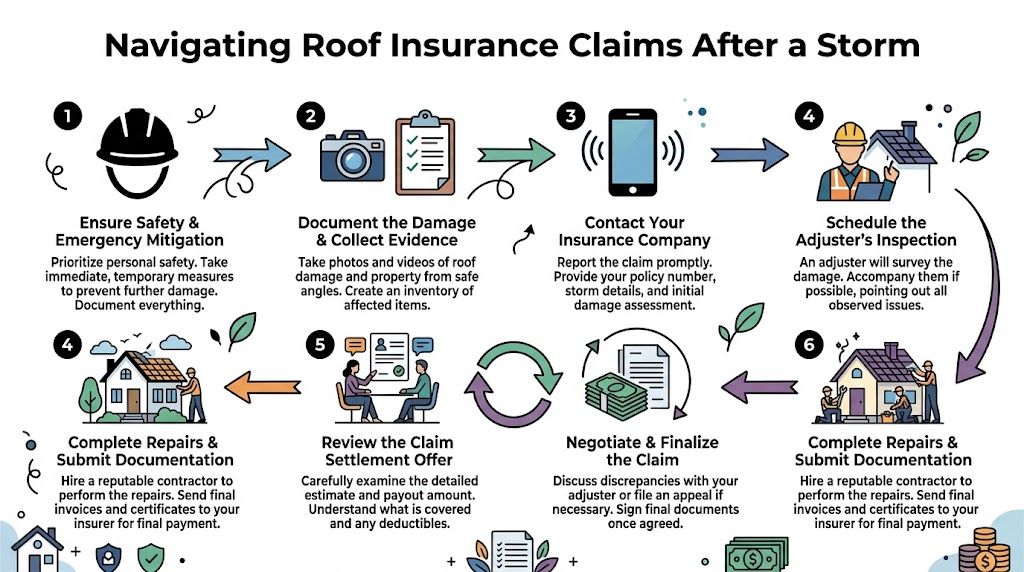
Step one is safety and temporary protection
If a storm just passed through, start with the house and the people in it.
If water is actively entering, move valuables, contain interior water if you can, and stay off the roof. A wet or storm-damaged roof is not a DIY inspection surface for most homeowners.
Temporary mitigation may include tarping or other short-term measures to prevent further interior damage. That’s not the final repair. It’s damage control.
Document before the story changes
Before major work begins, gather evidence.
Take photos of:
- Missing or displaced shingles
- Dented metal components
- Fallen branches or impact points
- Interior stains and wet drywall
- Attic moisture or visible decking damage
Also write down the date of the storm and what you noticed first. Small details matter. If the ceiling stain appeared the morning after high wind and driving rain, note that. Insurance claims often depend on showing a clear timeline and storm-related cause.
The best claim file is boring, organized, and hard to argue with.
File the claim early and stick to facts
When you contact the carrier, don’t guess at technical roofing language. Report what happened and what you observed.
Say what you know. A storm occurred. Water entered. Shingles appear damaged. The roof needs inspection. That’s enough to open the process without overreaching.
Keep a simple record of claim numbers, names, dates, and conversations. If paperwork comes by email, save it in one folder. Insurance claims get confusing when information gets scattered between texts, voicemails, and kitchen-counter notes.
Have your roofer present for the adjuster inspection
This step gets overlooked and it shouldn’t.
An adjuster evaluates damage from the insurance side. A roofer evaluates it from the installation and failure side. Those are not always the same lens.
When a qualified roofer is present, they can point out:
- damaged shingles that may be missed from a quick visual pass
- flashing failures tied to storm movement
- collateral issues at vents, ridges, or valleys
- signs that repairability is limited because damage is spread across multiple sections
That doesn’t guarantee a result. It does improve the odds that all visible storm-related damage is properly identified at the inspection stage.
A useful homeowner reference for this process is the roof insurance claim process, especially if you want a clearer picture of what happens after the first call.
Read the paperwork before repair decisions are final
Once the insurance report arrives, compare it against what was observed at the property.
Look closely at:
- What damage was approved
- What line items were omitted
- Whether repair was approved where replacement may be the actual issue
- Whether code-related or accessory items were addressed
If the scope seems incomplete, ask questions before authorizing a final path. Homeowners sometimes assume the first document is final and cannot be altered. It may not be.
Don’t confuse urgency with haste
Storm damage needs prompt action. It doesn’t need sloppy action.
The right sequence is simple. Protect the house. Document the damage. File the claim. Coordinate inspection. Review the scope. Then complete the work based on a clear understanding of what’s covered and what still needs to be addressed.
That approach gives you the best shot at protecting both the home and the claim.
Understanding Roofing Costs and the Estimate Process
You call for an estimate after a storm, and within five minutes one contractor gives you a price from the driveway while another wants to measure the roof, inspect the attic, and talk through the insurance scope. Those are not the same estimate.
A roof number only means something if the work behind it is clearly defined. In Sharon, I’ve seen homeowners get into trouble when they compare the bottom-line price without checking what was included, what was skipped, and what the insurance carrier is paying for.
What really drives the cost
Roofing prices change for plain, jobsite reasons.
Roof size matters, of course. So do pitch, roof height, valleys, dormers, chimney flashing, skylights, and how easy it is to get material and dumpsters in and out without tearing up the property. A simple ranch and a steep two-story with cut-up sections may use similar shingles, but they are not the same labor job.
Material choice also changes the number. Architectural shingles cost more than basic three-tab. Better underlayment, upgraded ice and water protection, new ventilation parts, and replacing old flashing instead of reusing it all affect the total. Then there is the wildcard every honest roofer has to explain up front: deck repairs. You do not know the condition of the wood for sure until the old roof comes off.
If the roof damage involves an insurance claim, cost gets more confusing because homeowners are often looking at two numbers at once. One is the contractor’s estimate for the work the house needs. The other is the carrier’s scope of loss. Those numbers may match. They may not.
What a serious estimate should include
A good estimate is specific enough that you can compare it line by line.
Look for details on:
- tear-off and disposal
- type of underlayment
- where ice and water membrane will be installed
- starter shingles, ridge cap, and ventilation components
- flashing replacement at walls, chimneys, pipes, and valleys
- permit responsibility if one is required
- jobsite protection and cleanup
- how damaged roof decking is handled and billed if found during tear-off
That paperwork matters. If one quote says “new roof” and another breaks out every component, those proposals are not equal, even if the totals are close.
How to compare an estimate to an insurance scope
This is the part many articles skip, and it is where Sharon homeowners lose money or approve the wrong repair.
Set the contractor estimate beside the insurance paperwork and compare the actual line items. Check whether the carrier included starter, ridge cap, drip edge, flashing, ventilation, steep-charge labor, high charges, and disposal. Check whether the measurement matches the roof. Check whether code-related items were omitted. If the house needs full replacement but the scope is written around isolated repair work, that needs to be addressed before the job starts.
Do not assume the first insurance figure is the final word. Supplements are common when the original scope missed items that are visible only after a closer inspection or tear-off. The goal is not to inflate the claim. The goal is to get the scope aligned with the actual work required to put the roof back in proper condition.
Why the on-site inspection matters
No careful roofer prices a replacement roof by guesswork.
An on-site visit helps identify roof access issues, visible sagging, ventilation problems, flashing failures, layered roofing, and signs that water may have reached the decking. It also gives the contractor a chance to explain where allowances may change after tear-off so you are not blindsided later.
A low number can be honest. It can also leave out half the system.
The estimate process should leave you with a clear scope, a realistic price, and a better sense of where your insurance claim stands. That is how you protect the house and avoid paying for confusion.
Protect Your Home with a Trusted Local Partner
You come home after a hard Sharon storm, see a new water stain on the ceiling, and suddenly every choice feels expensive. That is when a steady local contractor matters most. You need somebody who can inspect the roof, explain what is damaged, and help you work through the insurance side without turning the job into a guessing contest.
A good roofing partner does more than install shingles. The contractor should document storm damage clearly, point out what belongs in the claim file, and explain where the insurance scope may fall short of the actual repair. That matters in Sharon, where older homes, mixed rooflines, winter ice, and wind-driven rain can turn a small oversight into interior damage and repeat leaks.
Local experience shows up in the details. It shows up in how flashing is handled around chimneys and walls, how attic ventilation is checked before a replacement, and how crews prepare for steep sections, detached garages, and aging decking that may not reveal itself until tear-off. Homeowners do not need sales pressure. They need a plan that protects the house and holds up through Pennsylvania weather.
Penn Ohio Roofing & Siding Group is a family-owned company serving homeowners in the Sharon area with licensed, bonded, and insured crews, free estimates, and emergency service. The company also holds the GAF Triple Excellence Award, which speaks to training, installation standards, and customer service.
If your roof may have storm damage, do not wait for the stain to grow or for the insurer to define the whole problem for you. Get the roof inspected, get the damage documented, and get a clear scope of work before repairs or replacement begin.
Frequently Asked Questions About Residential Roofing
How long does a typical residential roofing project take
That depends on roof size, complexity, weather, and whether hidden deck repairs show up after tear-off. Straightforward homes move faster than steep, cut-up roofs with multiple valleys or specialty materials.
Do I need to be home during the roofing work
Usually, no. Many homeowners leave for part or all of the day. It does help to be reachable by phone in case the crew uncovers decking damage or needs a quick decision about a detail that wasn’t visible before tear-off.
Can a roof be repaired instead of replaced
Sometimes yes, sometimes no. A localized issue such as a flashing failure or a small damaged section may be repairable. Widespread wear, repeated leaks, or broad storm damage often point toward replacement being the more sensible long-term move.
What should I do right after storm damage
Start with safety. Protect interior belongings, document what you can from the ground and inside the house, and don’t climb onto a wet or damaged roof. Then contact a qualified roofer and your insurance carrier.
Will a roofer help with permits
A professional contractor usually handles permitting or explains clearly what the municipality requires. That should be discussed before the job starts, not discovered halfway through it.
How do I compare two estimates fairly
Compare scope, not just price. Check whether both estimates include the same tear-off work, waterproofing, flashing details, cleanup, ventilation items, and warranty terms. Two totals can look similar while covering very different work.
If you need a clear answer about a leak, storm damage, roof replacement, or the insurance claim process, contact Penn Ohio Roofing & Siding Group for a free estimate. A local inspection can tell you what’s wrong, what can be repaired, and what it will take to protect your home the right way.