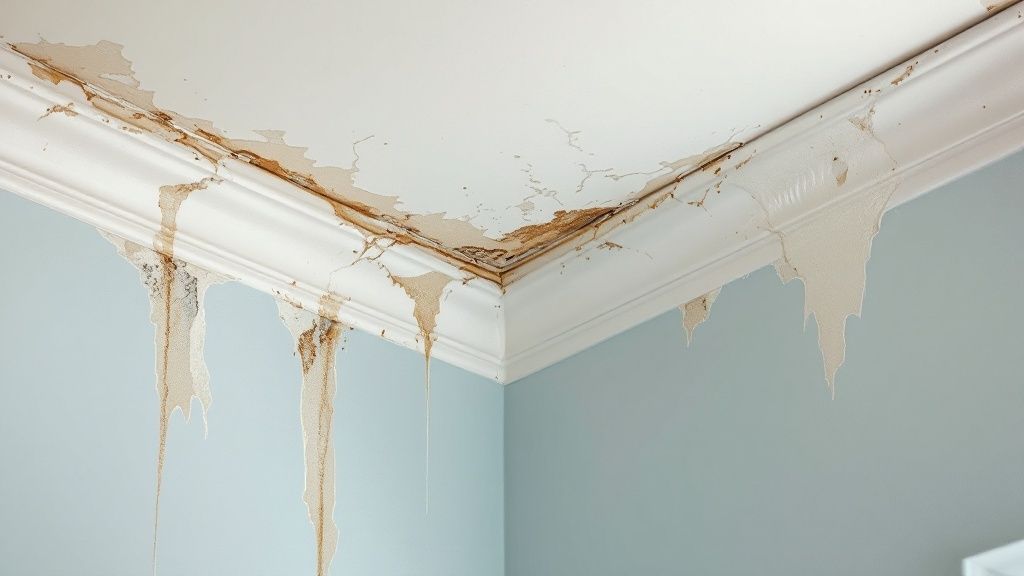
That first dark spot blooming on your ceiling or the faint but persistent sound of a drip—it's your home's way of sending up a flare. For any homeowner needing roof leak repair in Sharon, PA, responding with urgency is the single most important thing you can do. It's what stops a small annoyance from spiraling into a massive, expensive headache.
Let's walk through what you need to do right now.
That Drip Is a Warning Sign: What Sharon Homeowners Need to Know
The moment you find evidence of a leak, the clock starts ticking. Here in Western Pennsylvania, our roofs take a beating year-round. We see it all, from heavy snow and destructive ice dams in the winter to the torrential downpours of a summer thunderstorm. More often than not, this is what finally pushes a roofing system to its breaking point.
Ignoring that little stain is a gamble you don’t want to take. What starts as a simple shingle problem can quickly escalate, leading to significant water damage that affects much more than just your ceiling.
Why Acting Fast Is So Important
Jumping on a leak right away is your best defense. The longer water finds its way into your home's structure, the more havoc it wreaks. This isn't just about a cosmetic fix; it's about protecting the very bones of your house.
Here’s a look at what you’re really up against:
- Structural Damage: Persistent moisture rots and weakens the essential framework of your home—the wooden beams, rafters, and ceiling joists.
- Mold and Mildew Growth: The dark, damp spaces in an attic are a perfect incubator for mold, creating a serious health hazard for you and your family.
- Insulation Damage: Once your insulation gets wet, it’s basically useless. It loses its R-value, your energy bills climb, and it almost always has to be completely torn out and replaced.
- Electrical Hazards: Water and wiring are a dangerous mix. Any leak near electrical systems creates a serious risk of fire or shock.
The growing need for these services is clear when you look at the numbers. The global Roof Repair Service Market was valued at roughly USD 12.5 billion in 2024 and is expected to grow substantially.
A roof leak is never just a roof problem; it's a whole-house problem waiting to happen. Protecting your home's value starts with addressing that first drip immediately.
The steps you take in the first few hours can dramatically reduce the final repair bill and the overall damage.
When you first discover a leak, the goal is damage control. The table below outlines the crucial first steps to take while you wait for professional help to arrive. These actions can save you a lot of trouble down the road.
Immediate Actions for a New Roof Leak
| Action Step | Why It's Important | What You'll Need |
|---|---|---|
| Contain the Drip | Prevents water from spreading and causing further damage to floors, drywall, and furniture. | Buckets, towels, trash cans, plastic sheeting. |
| Relieve Water Pressure | If the ceiling is bulging, carefully poking a small hole can release trapped water and prevent a major collapse. | A screwdriver or nail, and a large bucket placed directly underneath. |
| Move Valuables | Protect furniture, electronics, and personal items from water damage by moving them to a dry area. | A clear space, maybe some plastic tarps for larger items. |
| Document Everything | Take photos and videos of the leak and any damage. This is crucial for insurance claims. | Your smartphone or a camera. |
Taking these initial steps puts you in a much better position to handle the situation. Once you've contained the immediate threat, the next move is to get a professional assessment.
Finding the True Source of Your Roof Leak
Tracking down the real source of a roof leak can feel like a bit of a detective story. Water is incredibly tricky—it can find a way in at one point, then travel along a rafter or behind your drywall before it ever shows up as a ceiling stain.
It’s a classic problem we see all the time in Sharon homes. That drip in your living room? It could easily be starting from a failing vent pipe ten feet away on the roof. Understanding how water travels helps you give us the best information when you call for a roof leak repair in Sharon, PA.
Start Your Investigation in the Attic
Before you even think about getting a ladder out, your safest and most effective starting point is the attic. Arm yourself with a powerful flashlight and head up there to look for the breadcrumbs the leak has left behind. Of course, safety is paramount, so only go into the attic if you have solid joists or flooring to walk on.
Once you’re safely inside, scan the underside of your roof for these classic clues:
- Dark Water Stains: Check the wooden roof deck, rafters, and support beams for any discoloration. These stains are a literal roadmap showing you where water has been.
- Wet or Matted Insulation: Soaked insulation is a dead giveaway. You'll often see it looking compressed and flat, or it might just feel damp to the touch.
- Specks of Daylight: On a sunny day, try turning your flashlight off for a moment. If you can see tiny pinholes of light poking through, you’ve found a direct entry point for rain.
Think of yourself as an investigator gathering evidence. The more clues you can find on the inside, the faster a professional roofer can pinpoint the exact problem on the outside.
Finding this internal evidence is a huge first step. It dramatically narrows down the search area on the roof itself. If you want to dive deeper, you can learn more about finding a roof leak in our detailed guide.
Common Trouble Spots on the Outside
With a general location scouted from the attic, you can start to zero in on the usual suspects on the roof's exterior. Water almost always gets in at a point of penetration—where something pokes through the roof—or at a seam where two materials meet. These are the spots that bear the brunt of the weather.
The most common culprits we find are:
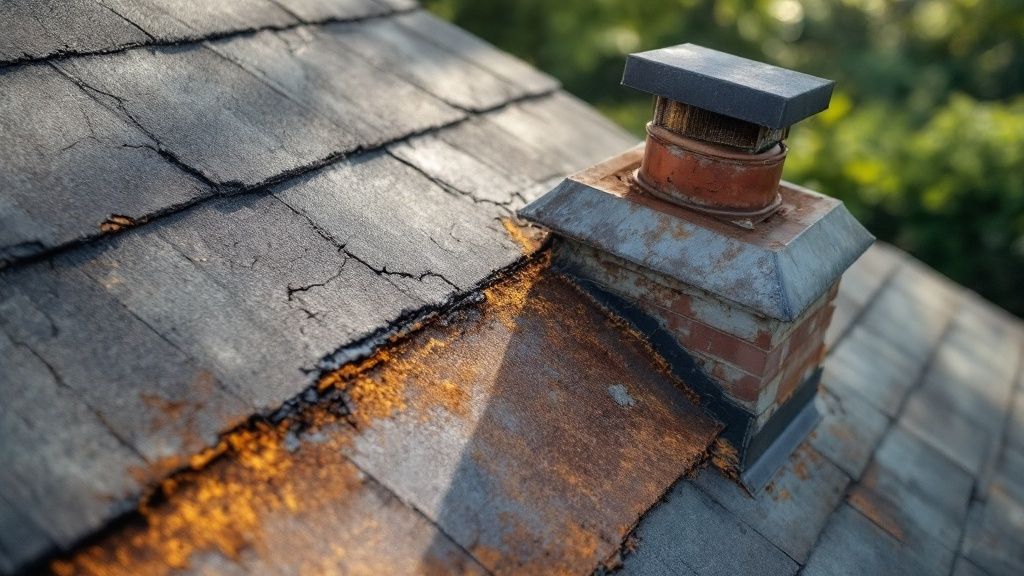
- Flashing: This is the thin metal designed to seal joints around chimneys, skylights, and vents. If it’s rusted through, cracked, or pulled away, it’s basically an open door for water.
- Vent Boots: The flexible rubber boots that seal around your plumbing vent pipes can get brittle and crack from years of sun exposure, leaving a gap.
- Damaged Shingles: Keep an eye out for shingles that are visibly cracked, curled up at the edges, or just plain missing. It only takes one bad shingle to let the elements get to your roof's underlayment.
- Clogged Gutters: When gutters get packed with leaves, water can't drain. It pools and backs up under the roof's edge, leading to rot in the underlying wood sheathing and fascia.
You can often spot these issues from the ground using a good pair of binoculars. However, a safe, hands-on inspection and proper repair should always be left to an experienced professional who has the right safety gear and know-how.
Safe Emergency Fixes While You Wait for Help
When a storm rolls through Sharon and you hear that dreaded drip… drip… drip…, the wait for a professional roofer can feel like an eternity. Taking immediate action isn't about attempting a permanent roof leak repair in Sharon, PA yourself; it's about damage control. A few smart, safe measures can be the difference between a small puddle and thousands of dollars in water damage to your ceilings, walls, and belongings.
Think of these as stop-gap solutions—ways to staunch the bleeding until an expert can get there. Your safety is always the top priority. Never, ever try a fix that puts you in danger, especially during a storm or on a wet, slippery roof.
Simple Interior Fixes from the Attic
If you've managed to trace the leak to a specific spot in your attic and you can get there safely, a small interior patch can act as a surprisingly effective temporary dam. This approach works best for those small, obvious drips—the kind you see coming straight through a nail hole or a tiny crack in the roof sheathing.
For a quick fix like this, a small tube of roofing cement or a high-quality waterproof caulk is your best friend. Just apply a generous dab directly over the spot where the water is getting in to plug the hole. It won’t hold forever, but it can absolutely slow or stop a minor leak during a storm, buying you critical time.
A temporary interior patch is first aid for your roof. It’s meant to stop the immediate damage, not to solve the underlying problem. You'll still need a professional to diagnose the issue and perform a permanent repair.
The infographic below shows how a pro applies sealant, which is a key part of many long-term repairs.
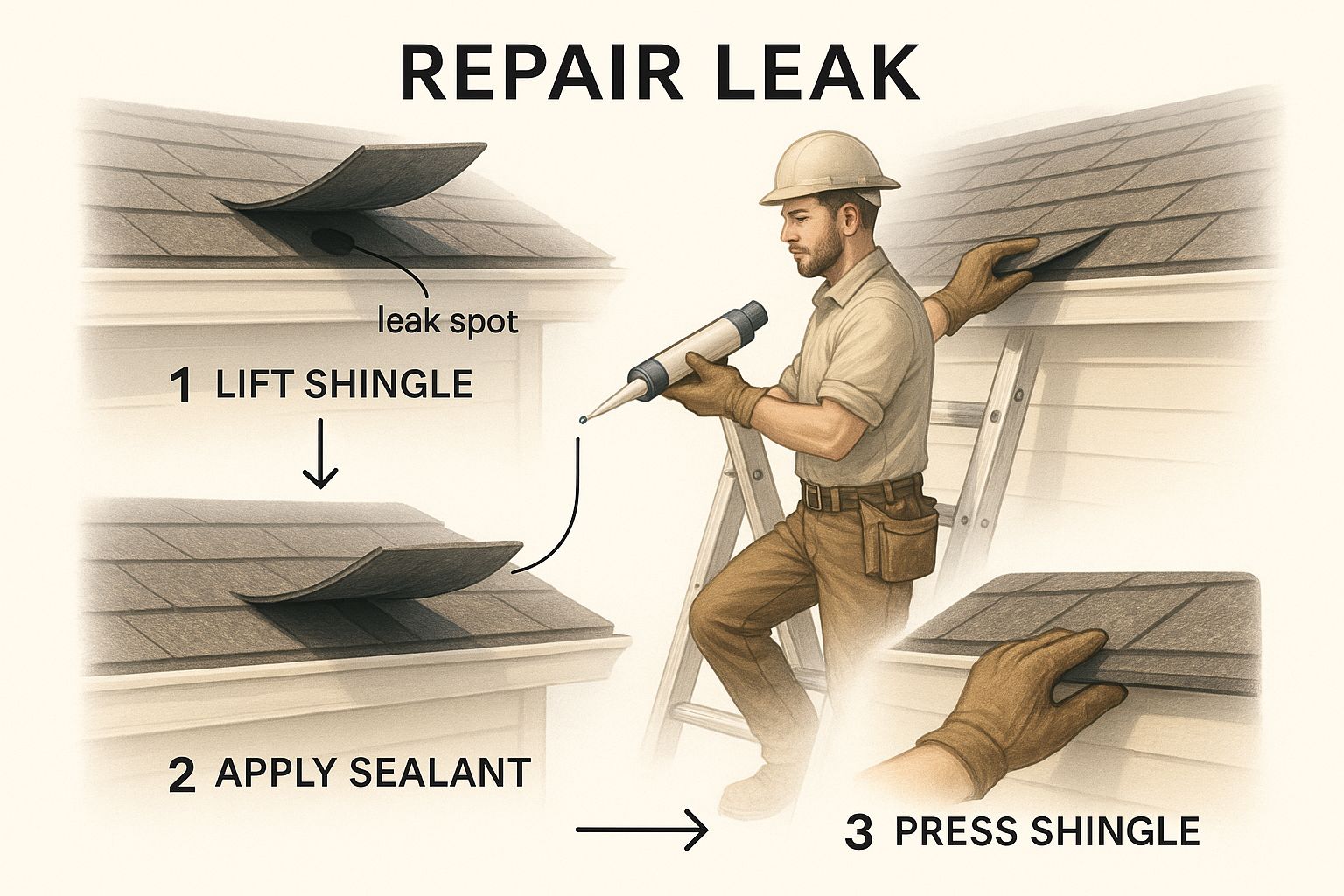
As you can see, there’s a real technique to properly sealing under a shingle to direct water away from vulnerable spots. It’s this kind of precision that makes a professional repair last.
How to Tarp Your Roof Safely
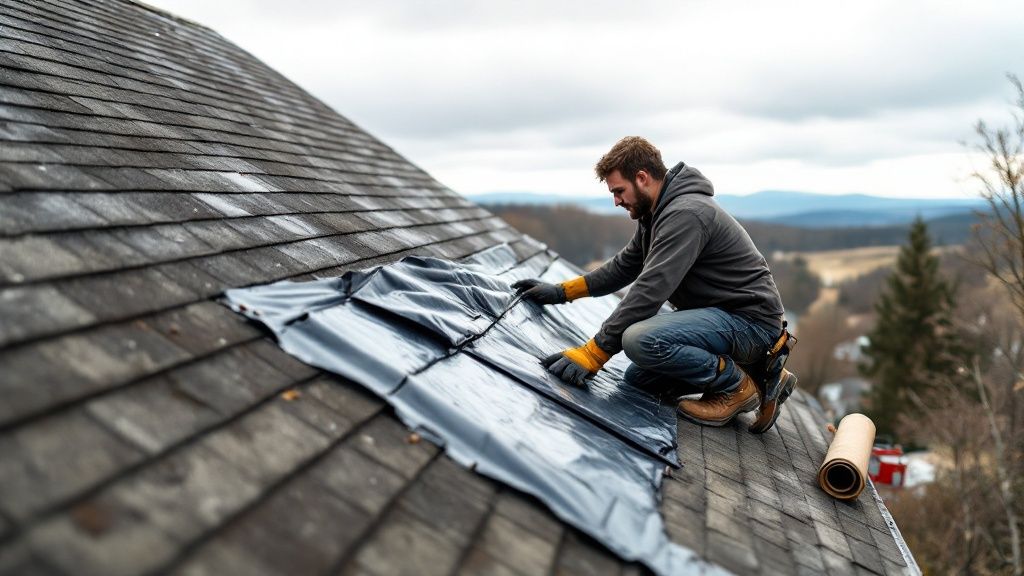
When you're dealing with a bigger leak or just can't find the source from inside, an exterior tarp is the way to go. This is a much more involved job and one you should only attempt if you can do it safely—meaning after the storm has passed and the roof is completely dry.
If conditions are safe, here’s how you can get a tarp securely in place:
- Get the Right Size: You’ll need a heavy-duty waterproof tarp. Make sure it's big enough to extend at least four feet above the damaged area and a few feet over the sides.
- Anchor the Top First: Lay a 2×4 board along the top edge of the tarp. Wrap the tarp around the board a couple of times, then nail or screw the board directly to the roof (through the tarp). Using roofing nails with rubber washers creates a much better seal.
- Pull It Taut and Secure the Bottom: Stretch the tarp down the slope of the roof until it’s tight. You don't want any slack where water can pool. Secure the bottom edge using the same board-and-nail method.
The market for these types of fixes is actually huge; the global Leak Repair Market was valued at USD 3.36 billion in 2023. While DIY products are becoming more common, nothing replaces professional expertise for complex roof issues. You can actually discover more about these market trends on wiseguyreports.com.
For those urgent situations that just can't wait, our guide on emergency roof repair in Sharon, PA has more in-depth advice. Just remember, these quick fixes are only temporary.
So, you’ve found a leak. Now comes the big question: do you try to fix it yourself or call in the pros? This is a choice every homeowner faces, and it's all about balancing the potential for upfront savings with the need for a lasting, safe repair for your home in Sharon, PA.
Frankly, most roof leaks are trickier than they look. That small water spot on your ceiling could be the end of a long, hidden trail of water coming from a completely different part of your roof. What seems like a quick patch job can easily become a much bigger headache if you don't address the real source of the problem.
When a DIY Fix Might Seem Tempting
I get it. The idea of saving money by handling a small repair yourself is appealing. If you've got a single, obvious nail pop in an easily accessible part of your attic, or a tiny crack in a vent boot you can reach without a ladder, you might be thinking, "I can handle this."
But even these "simple" fixes have their pitfalls. Using the wrong type of sealant or not prepping the area correctly can actually trap moisture and make the leak worse over time. If you're curious about what a proper patch involves, even for a minor issue, take a look at this guide on how to properly patch shingles. It gives you a good sense of the detail and materials required.
Let's be direct: The biggest risk with any DIY roof work isn't a botched repair—it's your personal safety. A fall from a ladder or a roof can be life-altering. No cost savings is worth that kind of danger.
Before you start, you have to be brutally honest with yourself about your skills and the actual scope of the damage.
The Clear Advantage of Calling a Professional
When you hire an experienced roofer, you’re not just paying for a patch. You're paying for peace of mind. A true professional brings years of diagnostic experience, specialized tools, and most importantly, the right safety gear to do the job correctly and securely. They don't just stop the drip; they find out why it started in the first place.
Here’s what you get with a pro that you just can’t replicate on your own:
- An Accurate Diagnosis: An expert can spot things an untrained eye will always miss, like improperly installed flashing, hidden wood rot under the shingles, or poor attic ventilation causing moisture issues.
- Warranty Protection: This is a big one. Many roofing material warranties are instantly voided if work is done by an unlicensed individual. A professional repair keeps your valuable warranty intact.
- A Lasting Solution: Pros use commercial-grade materials and industry-standard techniques that are built to withstand Pennsylvania weather. This saves you from the cycle of patching the same spot over and over.
- Safety and Full Insurance: A reputable company is fully insured. If an accident happens on your property, you're protected from liability.
To make the decision clearer, let's break down the key differences between tackling a repair yourself and bringing in a professional.
DIY vs Professional Roof Repair A Head-to-Head Comparison
| Factor | DIY Approach | Professional Service |
|---|---|---|
| Cost | Lower upfront material cost. | Higher initial cost for labor and expertise. |
| Quality | Varies with skill; often a temporary patch. | High-quality, durable repair with proper materials. |
| Safety | High personal risk of falls and injury. | Fully insured and equipped with safety gear. |
| Time | Can take significant time, especially for beginners. | Efficient and completed in a timely manner. |
| Diagnosis | Risk of misdiagnosing the root cause. | Expert diagnosis of the underlying problem. |
| Warranty | May void your existing roof warranty. | Protects manufacturer warranties. |
Ultimately, for anything beyond the most minor, ground-level issue, the choice is pretty clear. The security, quality, and long-term value of a professional repair far outweigh the short-term savings of a DIY attempt. It's about protecting your biggest investment—your home.
What to Expect From a Professional Repair Service
Hiring a professional for a roof leak repair in Sharon, PA shouldn't feel like a shot in the dark. When you pick up the phone, you’re not just calling for a quick fix; you’re starting a process that should be clear, professional, and designed to solve your problem for good. Knowing what to expect empowers you to ask the right questions and feel confident you've hired the right team.
From that first call to the final handshake, the entire experience should be built on transparency. Let's walk through what that looks like.
The First Call and On-Site Inspection
Your initial phone call is more than just booking a time. A good roofer will immediately start asking pointed questions to gauge the urgency. "Where is the leak showing up inside?" "How much water are we talking about?" This isn't just small talk—it helps them come prepared for the on-site assessment, which is where the real detective work begins.
When an experienced technician arrives, they won’t just glance at the ceiling stain and head for the roof. A real pro knows the water you see inside might have traveled a long way from where it’s actually getting in.
A proper inspection is a multi-point check:
- They’ll start in the attic, flashlight in hand, to trace the water trail back to its source.
- Then, they'll get up on the roof to meticulously check for damaged shingles, cracked flashing around chimneys or vents, and other obvious culprits.
- They’ll also look at the bigger picture, assessing gutters, vents, and other components that could be contributing to the problem.
This is all about finding the root cause, not just slapping a patch on the symptom.
Making Sense of the Estimate and Contract
After a thorough inspection, you should get a detailed, written estimate. If all you receive is a single number scribbled on a business card, consider it a major red flag. A professional quote breaks everything down: labor costs, the specific materials they plan to use, and a clear timeline for the job.
Never, ever move forward on a verbal promise. A written contract is your single best tool for protection. It should spell out the exact scope of work, the total cost, a payment schedule, and all the warranty details. This document ensures everyone is on the same page.
It’s a massive industry—worth around USD 56 billion annually in the U.S. alone, with more than 300,000 roofs being installed every single day. With that kind of scale, there are clear standards for service, and you can learn more about them on the Ridgeline Construction blog. You deserve a contractor who meets them.
The Repair Work and Final Cleanup
Once you give the green light, the crew gets to work. The first thing they should do is protect your property—laying down tarps to cover your garden beds, siding, and driveway. From there, they'll tear off the damaged materials, inspect and repair the underlying roof deck if needed, and install new, high-quality components according to industry best practices.
But here’s a little secret that separates the true professionals from the amateurs: the cleanup.
After the repair is done, a great crew will leave your property spotless. They'll haul away every last piece of old material and debris. They’ll even run magnetic rollers across your lawn and driveway to pick up stray nails. The job isn’t finished until they do a final walk-through with you, making sure you’re 100% satisfied and understand the warranty on their work. That pride in a job well done is what you're paying for.
Common Questions We Hear from Sharon Homeowners
Once you’ve stopped the immediate drip and called for help, your mind naturally starts racing with questions. It's completely normal. Understanding what to expect with costs, potential damage, and future prevention can really help put your mind at ease.
Here are some of the most common questions we get from homeowners here in Sharon.
What Does a Typical Roof Leak Repair Cost?
This is usually the first question on everyone's mind, and the honest answer is: it depends. The cost to repair a roof leak in Sharon, PA can swing pretty widely.
A simple fix, like caulking a popped nail head or swapping out a single cracked shingle, is on the lower end of the scale. But if that leak has been quietly causing trouble for a while, leading to rotted decking or damaged chimney flashing, the job becomes more involved, and the price will reflect that.
Several things will move the needle on your final quote:
- The Source of the Problem: Fixing a few loose shingles is a much quicker job than, say, re-flashing a poorly installed skylight that's been leaking for years.
- The Scope of the Damage: Has water gotten to the wood sheathing under your shingles? If we need to replace rotted plywood, that will add to the cost.
- Your Roof's Accessibility: Working on a steep, two-story roof takes more time, safety equipment, and labor than a low-slope roof you can easily walk on.
Can a Small Leak Really Cause That Much Damage?
Yes, and it’s one of the most deceptive—and destructive—problems a home can have. That slow, quiet drip seems like a minor annoyance, but it’s a constant, silent assault on your home's structure.
I always tell homeowners to think of a small leak like a cavity. If you ignore it, it doesn't just go away. It grows, spreads, and eventually turns into a much bigger, more painful, and more expensive problem. Your roof is no different.
Over time, that moisture soaks into your attic insulation, making it totally useless and hiking up your energy bills. It can also saturate ceiling joists and wooden rafters, leading to serious wood rot. This creates the perfect dark, damp breeding ground for dangerous black mold.
Beyond the physical repairs, dealing with insurance can be a whole other headache. It’s a good idea to know what your policy covers and, more importantly, what it doesn't. For a deeper dive into this, Understanding Your Roof Leak Insurance Claim offers some excellent insights.
How Can I Prevent Leaks from Happening Again?
The best way to deal with leaks is to stop them before they start. Our weather here in Sharon—from heavy snow loads to fierce summer thunderstorms—is tough on any roof. A little proactive maintenance makes all the difference.
Here’s what you can do:
- Keep Your Gutters Clear: When gutters get clogged with leaves, water has nowhere to go but up and under the edge of your shingles. This will rot the wood over time. A good cleaning every spring and fall is crucial.
- Get a Professional Inspection: Have an expert look at your roof every year or two. We can spot subtle signs of trouble, like cracked pipe collars or loose flashing, long before they turn into an active leak.
- Trim Overhanging Trees: Don’t let tree limbs hang over your roof. They can scrape away the protective granules on your shingles in the wind or, worse, break off in a storm and cause serious damage.
Staying ahead of these simple tasks is the single best way to protect your investment and avoid most common leaks.
Whether you’re dealing with a leak right now or just want to be proactive with an inspection, don't put it off. The problem will only get worse. Contact the team at Penn Ohio Roofing & Siding Group today. We’ll provide a free, no-pressure estimate and help you protect your home with confidence. Visit us at https://pennohiorc.com to get started.