That small stain on your ceiling or those few shingle pieces you found in the yard? They might seem like nothing, but they're often your roof's way of sending out an S.O.S. For homeowners needing roof repair in Youngstown OH, learning to read these early warnings is the best way to stop a minor problem from spiraling into a major, costly disaster.
Recognizing Your Roof's Warning Signs
Your roof is the single most important barrier protecting your home, but it can't last forever. Here in Northeast Ohio, our roofs take a beating from harsh winters and sticky, humid summers. All that stress eventually starts to show, sometimes in ways that are hard to miss, and sometimes in ways that are deceptively subtle.
Ignoring these signals is a bit like driving with your check engine light on. Sure, the car still runs, but you know a bigger, more expensive problem is likely just down the road. When you learn to spot the early signs of roof trouble, you can tackle issues head-on, saving yourself a lot of money and protecting your home's structure.
Obvious Signs of Roof Distress
Some roof problems are so blatant you can't help but notice them. After a heavy storm or a day of high winds, it's always a good idea to take a quick walk around your property and look up. You might be surprised by what you find.
Keep an eye out for these clear red flags:
- Missing or Damaged Shingles: Are there shingles that are cracked, curling up at the edges, or just gone? These bald patches expose the sensitive layers underneath to rain and snow.
- Bent or Damaged Flashing: Flashing is the thin metal that seals the joints around chimneys, vents, and skylights. If you see it bent, rusted, or pulling away from the roof, you've found a direct route for water to get inside.
- Sagging Roof Deck: A roof that looks droopy or warped is a serious structural red flag. It usually means trapped moisture has started to rot the wood deck underneath, and you need to call a pro immediately.
Think of your roof as a complete system, not just a bunch of shingles. A single missing shingle might look like a small problem, but it breaks the seal of that system. This compromises the entire roof's ability to do its job, which can lead to serious hidden damage if you don't get it fixed.
Subtle Clues You Should Not Ignore
Not all roofing issues scream for attention. Often, the first hints of a developing problem are quiet and easy to dismiss if you're not paying close attention.
A classic example is finding a lot of shingle granules—those sandy, gravel-like bits—in your gutters. These granules are essentially the protective coating for your shingles, shielding them from harsh UV rays. When they start washing off in droves, it's a sign your shingles are getting old, brittle, and weak. You can dive deeper into these common signs of roof damage to learn more.
Here are a few other subtle clues to watch for:
- Ceiling Stains or Discoloration: Even a tiny, light-brown spot on an upstairs ceiling or wall is a sure-fire sign you have a leak somewhere.
- Peeling Paint Near the Roofline: When moisture gets into the attic, it can cause the paint on your interior and exterior walls to bubble and peel right below the ceiling.
- Higher Energy Bills: If your heating or cooling costs suddenly jump for no reason, it could be a sign that a roofing issue is messing with your attic's ventilation.
Catching these smaller signs early is absolutely critical. The notorious freeze-thaw cycles we get in Youngstown can force a tiny crack to become a huge leak in just one season. Acting quickly means a simple fix won't have the chance to become a much bigger, more expensive headache.
Figuring Out Roof Repair Costs in Youngstown
Trying to nail down the exact cost of a roof repair can feel a bit like guesswork. You see national averages thrown around, but those numbers often don't quite match up with the reality here in the Mahoning Valley. The truth is, the final price for any roof repair in Youngstown OH isn't a single, fixed number. It’s a blend of several key factors that dictate just how big—or small—the job will be.
Everything from the type of shingles over your head to the steepness of your roof plays a part in the final bill. A simple patch on a low-slope asphalt shingle roof is one thing; a complex repair on a steep metal roof that demands special safety gear is another story entirely. Getting a handle on these variables is the first step to setting a realistic budget and confidently sorting through contractor quotes.
Key Factors That Shape Your Repair Bill
So, what really drives the cost? It almost always comes down to two things: the extent of the damage and the materials required to fix it. A few shingles ripped off by a gust of wind is a pretty straightforward fix. But if water has been quietly seeping under that spot for months, the project suddenly gets bigger. Now you’re talking about replacing rotted wood decking and underlayment, which adds to both the labor and material costs.
Here are the main things that will move the needle on your estimate:
- Roofing Material: Asphalt shingles are king in our area and are generally the most affordable to repair. If you have slate, tile, or metal, expect higher costs due to the price of the materials and the specialized skills needed to work with them.
- Extent of Damage: Is this a small, contained leak or is the damage spread across a large section of your roof? The bigger the problem area, the more you can expect to pay.
- Roof Complexity: A simple, straight-peak roof is much easier (and safer) for a crew to work on than a roof with a steep pitch, multiple valleys, and dormers. The more complex the architecture, the more time and risk are involved.
- Hidden Structural Issues: Sometimes what seems like a surface-level problem is actually masking deeper trouble. Rotted support beams or damaged decking are common culprits that have to be fixed for a lasting repair.
Think of a roof repair less as an expense and more as an investment in protecting your entire home. A solid repair stops water in its tracks, preventing much bigger, more expensive headaches down the road—like mold, ruined insulation, and even structural damage.
Typical Repair Costs in the Youngstown Area
While every single job is different, we can draw a pretty reliable baseline for what local homeowners should anticipate. Generally, roofing repairs in Youngstown fall somewhere between $380 and $1,800, with the average project landing around $1,100. This range typically covers common jobs like fixing leaks, replacing blown-off shingles, or patching up minor damage. Of course, significant issues or after-hours emergency calls can push that price higher.
This is a good time to check out recent roofing industry trends and data to get a broader perspective.
The infographic below shows some of the most common red flags that tell you it's time to call a pro.
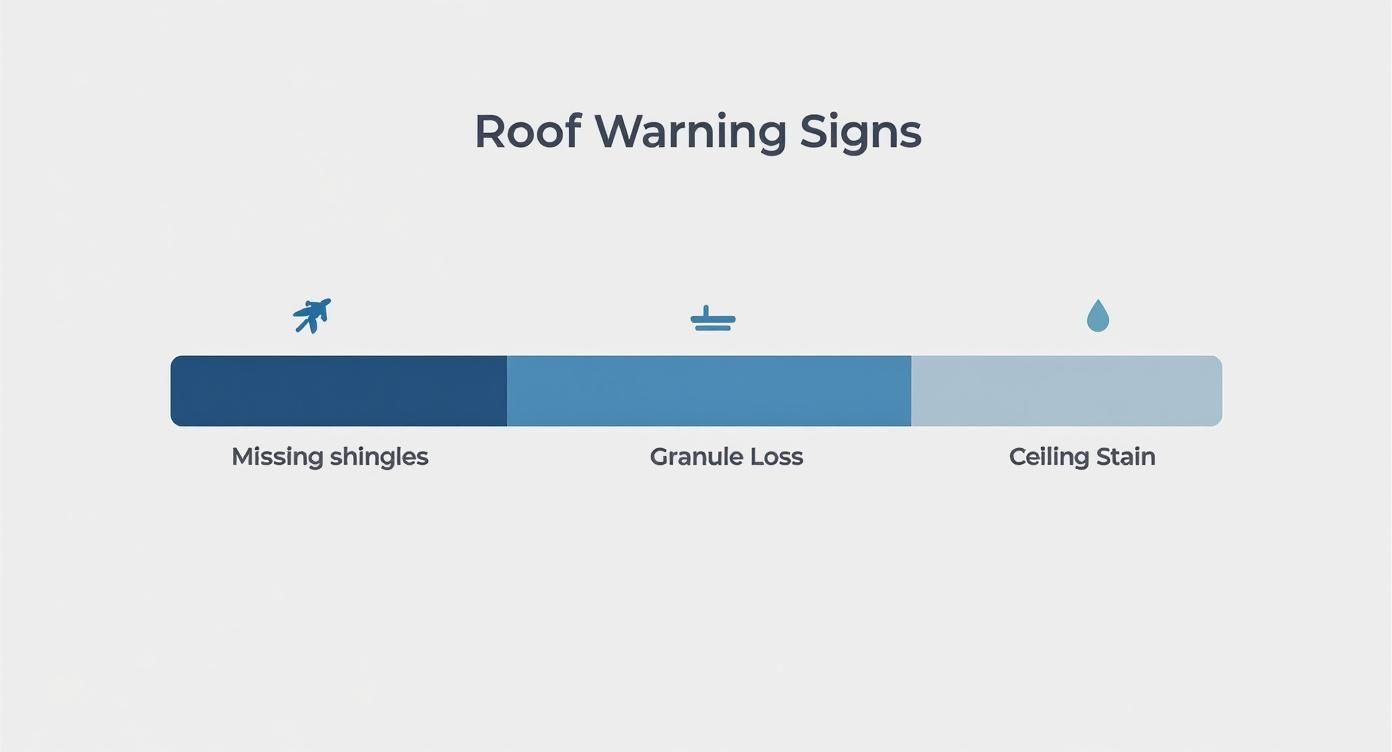
As you can see, missing shingles are often the first thing people notice, but those sneaky ceiling stains mean a leak has already made its way inside your home.
Budgeting for Different Types of Repairs
To give you an even clearer picture, let's look at some real-world repair scenarios and what they might cost. Flat roofs, for example, have their own unique set of challenges. If you have one on a part of your home, you can dive deeper by understanding flat roof repair costs.
To help you budget, we've put together a table outlining common repair jobs and what you can typically expect to pay for them right here in the Youngstown area.
Estimated Roof Repair Costs in Youngstown OH
Here’s a breakdown of common services and their typical cost ranges. Keep in mind these are estimates, and a formal quote from a contractor is the only way to get a precise figure for your specific situation.
| Type of Repair | Description of Service | Estimated Cost Range |
|---|---|---|
| Minor Shingle Replacement | Replacing a small section of missing or wind-damaged asphalt shingles on an easily accessible part of the roof. | $300 – $600 |
| Leak Detection and Patching | Finding the source of a minor leak (often around a vent pipe) and applying a professional-grade sealant or patch. | $400 – $850 |
| Flashing Repair or Replacement | Resealing or replacing the metal flashing around a chimney, skylight, or valley to prevent water from getting in. | $500 – $1,200 |
| Minor Structural Repair | Replacing a small piece of rotted plywood decking (sheathing) that's discovered during a shingle repair. | $700 – $2,000+ |
| Emergency Tarping Service | A temporary, after-hours fix to cover a severely damaged roof section after a storm to stop further water damage. | $250 – $750 |
Ultimately, getting a few detailed quotes from reputable local roofers is the best way to understand the true cost of your repair and find a team you can trust.
Solving Common Youngstown Roofing Problems
Every home in Youngstown tells a story, and its roof is the part that has to face the elements head-on. It weathers every storm, every foot of snow, and every scorching summer day. When a problem pops up, it feels personal and urgent, but most of the issues we see across the Mahoning Valley are familiar foes.
Figuring out what's really going on up there is the first step toward a real fix. A true roof repair in Youngstown OH isn't about slapping a patch on a symptom; it's about diagnosing the root cause and curing it for good. Let’s walk through the most common problems your roof might be having and what it actually takes to solve them.
Fixing Leaks from Failed Flashing
Nine times out of ten, that mysterious stain on your ceiling isn't from a random hole in your roof. It's coming from a failure at one of its weakest points. Flashing is the thin metal stripping that seals the gaps where your roof meets something else—think chimneys, vent pipes, or skylights. It’s like the waterproof gasket in a machine, designed to keep water out of the joints.
Over the years, our weather can cause this metal to rust, get bent out of shape, or pull away from the siding or shingles. When that happens, it’s like leaving a door wide open for water to sneak right under your roof and into your attic. A proper repair means tearing out the old, compromised flashing, checking the wood underneath for rot, and then installing new, perfectly fitted metal sealed with professional-grade materials to create a truly watertight barrier.
Repairing Wind and Storm Damage
It's a familiar sight after a big storm: shingles scattered across the lawn. A single missing shingle might not look like much, but it's a big deal. It breaks the overlapping, sealed pattern that makes your roof a single, waterproof shield, leaving a "bald spot" that exposes the underlayment to sun and rain.
Fixing storm damage isn't just about sticking a new shingle on. The process involves a few key steps:
- Careful Removal: Any torn or damaged shingles around the missing one have to be gently pried up and removed without harming their neighbors.
- Surface Prep: The decking below is cleaned and inspected to make sure it’s dry and there are no old nails sticking up.
- New Shingle Installation: We slide in new, matching shingles, nail them down according to code, and seal them to the surrounding ones to restore that protective layer.
Ignoring this kind of damage is a huge gamble. Water can easily seep into the nail holes left behind by the old shingle, leading to slow, hidden leaks that cause serious rot and mold down the road.
Correcting Rotten Soffit and Fascia
The boards running along your roof's edge have specific names: the fascia is the vertical board your gutters hang on, and the soffit is the finished surface underneath the overhang. These wooden components are prime targets for moisture damage, usually from clogged gutters overflowing or poor attic ventilation trapping humid air.
Once that wood starts to rot, it gets soft and spongy. It can no longer support the weight of the gutters and becomes an easy entry point for pests. The repair involves cutting out the rotted sections of wood, checking the ends of the roof rafters for any collateral damage, and replacing the boards with new, properly primed and painted wood or even a durable vinyl alternative.
A rotted fascia board is often a symptom of a larger problem. Simply replacing the wood without addressing the root cause—like overflowing gutters or attic moisture—means you’ll likely be facing the same repair again in a few years.
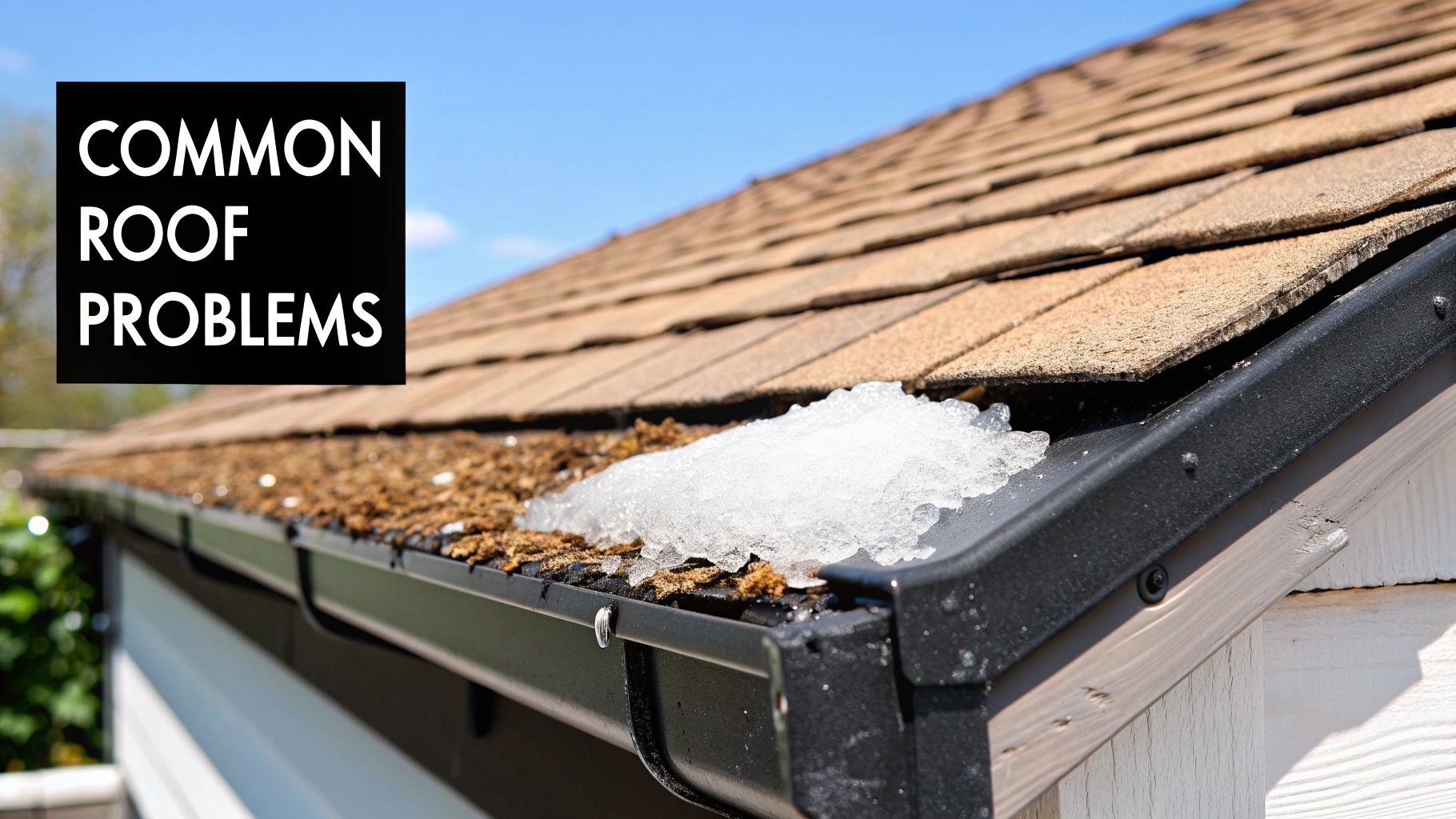
Tackling Destructive Ice Dams
Anyone who’s lived through a Youngstown winter knows about ice dams. These are the thick ridges of ice that build up at the edge of a roof, acting like a dam that prevents melting snow from draining away. The water gets trapped, backs up underneath your shingles, and then refreezes, expanding and pushing its way right into your home.
Ice dams are almost always caused by a warm attic. When you have poor insulation or ventilation, heat from your house escapes and melts the snow on the roof from the bottom up. That water runs down to the cold edge of the roof and freezes solid, starting the cycle. While steaming can get rid of an ice dam in an emergency, the only real, long-term fix is to tackle the attic by beefing up your insulation and improving airflow to keep the entire roof surface cold.
How to Choose a Reliable Local Contractor
Once you know your roof needs attention, the next step is the most critical one: finding the right contractor to handle the job. This single decision will shape the quality of the repair, how long it lasts, and ultimately, your peace of mind. For any roof repair in Youngstown OH, hiring a skilled and trustworthy local pro isn't just a good idea—it's your best defense against sloppy work and recurring problems down the road.
Think of it like choosing a surgeon for your house. You wouldn't just go with the cheapest option; you'd want someone with proven experience, solid credentials, and a history of success. Applying that same level of care when hiring a roofer is essential for protecting your home.

Verifying Credentials Is Your First Step
Before you even get into the details of your project, you need to confirm that any contractor you're considering is properly licensed and fully insured in Ohio. This isn't just red tape; it's your safety net. If an uninsured worker gets hurt on your property, you could be the one facing a lawsuit.
Always ask to see proof of these three key things:
- State Licensing: This shows the contractor has met Ohio's requirements for professional knowledge and conduct.
- General Liability Insurance: This protects your home and property from any accidental damage that might happen during the repair process.
- Workers' Compensation Insurance: This covers the contractor's employees if they get injured on the job, which protects you from liability.
Don't just take their word for it. A reputable professional will have no problem showing you physical copies of their insurance certificates and license. If they hesitate, that's a major red flag.
Reading Reviews and Checking Local References
Online reviews are a great starting point, but you have to know how to read them. Look past the simple star ratings and find reviews that tell a story, describing the specific project and the homeowner's actual experience. A consistent pattern of detailed, positive feedback is a good sign.
But don't stop online. The most reliable proof comes from your neighbors right here in the Youngstown area. Ask every potential contractor for a list of recent local jobs they’ve completed. Taking a quick drive by these homes lets you see the quality of their work for yourself. For a deeper dive, check out our guide on how to choose a great roofing contractor.
A truly confident and reputable contractor will always encourage you to speak with their past clients. They know that satisfied customers are their best advertisement and will have a portfolio of local work they are proud to showcase.
Understanding the Estimate and Asking the Right Questions
A professional estimate is much more than a number scribbled on a piece of paper. It should be a detailed, itemized document that breaks down every part of the job so you know exactly what you're paying for.
At a minimum, the estimate should include:
- A complete scope of the work to be performed.
- A clear breakdown of costs for both materials and labor.
- The specific brands and types of materials they plan to use.
- Warranty information for both the materials and their workmanship.
- A projected timeline with start and completion dates.
When you're comparing contractors, pay attention to how they run their business. Are they responsive and organized? Companies that use effective call management tips for tradespeople often bring that same level of professionalism to the job site.
Finally, show up to your meeting with questions. Ask how they plan to protect your landscaping, what their daily cleanup process looks like, and who will be your main point of contact. The way they answer will tell you a lot about their experience and their dedication to service, helping you feel confident you've found the right partner for the job.
Repair or Replace? Making the Right Call for Your Roof
It's the question every homeowner with a roof problem faces: Do I patch it up, or is it time for a total replacement? This is a huge decision, and frankly, it can be a stressful one. Getting it right for your roof repair in Youngstown OH means looking at the big picture—how old your roof is, how bad the damage really is, and what makes the most sense for your wallet in the long run.
Think of it like keeping an old car running. A flat tire? You just fix it. But when you’re dealing with a blown head gasket and a failing transmission, you know that sinking more cash into small fixes is just putting off the inevitable. Your roof is no different. Sometimes a simple patch does the trick, but other times, it's smarter to start over with a clean slate.
How Old Is Your Roof?
The first thing to consider, before anything else, is your roof's age. Every roofing material has a "best before" date, and trying to stretch it too far past its prime is asking for trouble.
In Youngstown, most of us have asphalt shingle roofs—they’re a solid, affordable choice for our area. A typical asphalt roof is designed to last 20 to 30 years. But Ohio’s weather, with its brutal freeze-thaw cycles and heavy snow, puts them to the test. You'll see them start to show their age with curling shingles, bare patches after a storm, or a whole lot of gritty granules washing into your gutters. If you want to know more, here are some great tips for extending your roof's life in Northeast Ohio.
So, if your roof is pushing that 20-year mark and you're seeing problems pop up all over, a full replacement is usually the wisest move. On the other hand, if your roof is only 10 years old and a stray branch took out a few shingles, a professional repair makes perfect sense.
What's the Real Scope of the Damage?
Next, you need an honest assessment of how widespread the problem is. Are we talking about one isolated trouble spot, or are you seeing signs of a much bigger failure?
Let's look at a couple of scenarios:
- A Clear Case for Repair: A nasty windstorm ripped off a handful of shingles on one side of your house. The rest of the roof looks great. This is a textbook repair job.
- Time for a Replacement: You’ve got water stains on the ceilings in multiple rooms. You can see big sections where the shingles are curling up or buckling. Your gutters are clogged with granules. These aren't separate issues; they're all symptoms of a roof that's at the end of its life. Patching one leak just means you'll be chasing the next one in a few months.
A good guideline to follow is the 25% rule. If more than a quarter of your roof is damaged or showing serious wear, a replacement is almost always more cost-effective than trying to piece together a massive repair.
Are You Throwing Good Money After Bad?
Finally, take a look at your roof's track record. Have you had a roofer on speed dial for the last few years? If you're scheduling repairs every time a big storm rolls through, those costs really start to add up.
This is where you have to balance short-term savings with long-term value. Yes, a single repair is always cheaper upfront than a new roof. But let's say you spend $1,500 on a repair this year, another $800 next spring, and $1,200 the year after. You’ve just spent $3,500 propping up a failing roof. That money could have been a solid down payment on a brand-new roof that comes with a warranty and, more importantly, peace of mind.
Don't forget the other perks of a new roof. A modern, properly installed system can make your home more energy-efficient, which means lower heating and cooling bills. It also gives your home's curb appeal a major boost and increases its value—a smart investment that protects your biggest asset for decades to come.
Got Questions About Roof Repair? We've Got Answers.
When you're facing a roof problem, a million questions can start running through your head. It's totally normal. Getting a handle on the process is the first step toward feeling in control again. We've gathered some of the most common questions we hear from homeowners in Youngstown to give you the straight-up answers you need.
Think of this as your quick guide to navigating roof repairs. Knowing what to expect makes everything, from budgeting to scheduling, a whole lot easier.
How Long is This Actually Going to Take?
This is usually the first thing people ask, and for good reason. The honest answer is: it depends entirely on what needs to be done.
A simple, straightforward fix? We're talking about replacing a handful of shingles that a windstorm ripped off. An experienced crew can knock that out in just a few hours. But if the problem runs deeper—say, we're chasing down a stubborn leak that has led to some rotted decking underneath—that’s a different story. A job like that could easily take up a full day or more.
And of course, we have to talk about Ohio weather. Rain, ice, or dangerous winds will put a stop to any roofing work for safety. A good contractor won't just guess; they'll do a thorough inspection first and then give you a realistic timeline with their quote.
Can I Just Fix My Own Roof and Save Some Cash?
The DIY temptation is real, especially when you're trying to save money. But when it comes to your roof, this is one area where trying to cut corners can backfire, big time. First and foremost, climbing around on a roof is seriously dangerous without proper safety gear and training. Falls are a leading cause of injury in construction, and it's a risk that's just not worth taking.
Safety aside, a botched repair can create even bigger, more expensive problems. You might fix one leak only to accidentally trap moisture elsewhere, creating a perfect breeding ground for mold and wood rot. Plus, most roofing material warranties are instantly voided if they aren’t installed by a certified professional. For the sake of your home and your own well-being, hiring a licensed and insured local roofer is always the smartest move.
A professional roofer isn't just a laborer; they're a diagnostician for the most important shield on your home. They understand the entire system and can spot underlying issues an amateur might miss, ensuring the fix is a real, long-term solution.
Will My Homeowners Insurance Help Pay for This?
This is a big one, and the answer comes down to one thing: what caused the damage?
Standard homeowners insurance policies are there for sudden, unexpected events—think "acts of God." Damage from a nasty hailstorm, high winds, or a fallen tree branch usually falls into this category. If a spring storm peels a section of your shingles back, your policy will likely help cover the repair, minus your deductible.
On the flip side, insurance almost never covers issues from old age, neglect, or general wear and tear. If your roof is leaking just because it’s 30 years old and the shingles are worn out, that cost is typically on you. Your best bet is to document any storm damage immediately with photos and call your insurance agent to see what your specific policy covers.
What Exactly is an Ice Dam, and Are They a Problem Here?
An ice dam is that thick ridge of solid ice that builds up right at the edge of your roof. It blocks melting snow from draining off, essentially creating a small, frozen lake. That trapped water has to go somewhere, and it often goes backward, under your shingles. From there, it can leak into your home, causing massive damage to your ceilings, walls, and insulation.
And yes, with our cold, snowy Youngstown winters, ice dams are a very real and serious threat. They’re usually caused by a warm attic, which happens when you have poor insulation or ventilation. Heat from your house rises, warms the roof, and melts the snow from the bottom up. That water runs down to the freezing cold edge of the roof and—boom—you have an ice dam. The only real, permanent fix is to make sure your attic is properly sealed, insulated, and ventilated, which keeps the whole roof a consistent cold temperature.
When it comes to protecting your home, you deserve a team that combines decades of experience with a commitment to quality. For a free, no-obligation estimate and the peace of mind that comes from working with a trusted local professional, visit us online today.