
You're probably looking at two roofing estimates right now. One says the roof comes with a long warranty. The other says the workmanship is covered, the materials are covered, and there may be an upgraded system warranty if certain products are used. On paper, both can sound reassuring. In real life, they aren't the same thing.
That confusion shows up all over western Pennsylvania. A homeowner in Pittsburgh may be comparing bids after a storm. Someone in Sharon may be replacing an aging shingle roof before selling. A property owner near Erie may just want to know one thing: if the new roof leaks, who fixes it and who pays for it?
That's where a roofing contractor warranty gets misunderstood. The paper matters, but the company behind it matters just as much. If the roofer disappears, won't return calls, or never gave you clear written terms in the first place, the warranty can become little more than a sales promise that's hard to enforce.
Table of Contents
- Why Your Roofing Warranty Matters More Than You Think
- The Two Pillars of Roof Protection
- Decoding Your Warranty's Fine Print
- How to Verify a Roofing Contractor Warranty
- Filing a Warranty Claim Step by Step
- Protecting Your Warranty Coverage for the Long Term
- A Warranty Is Only as Good as Your Roofer
- Common Roofing Warranty Questions
Why Your Roofing Warranty Matters More Than You Think
A new roof is a major home expense. Initial considerations often don't revolve around shingle color or underlayment details, but rather the warranty language. One quote promises long-term protection. Another gives a shorter labor term but includes more detail about what happens if flashing fails or a leak appears around a penetration.
That difference matters because roofing problems don't all come from the same source. Some come from the product itself. Others come from how the roof was installed. Homeowners in Sharon, Pittsburgh, and Erie often assume “warranty” means every roof problem will be handled the same way. It won't.
A warranty should tell you who is responsible, what conditions apply, and what you have to do to keep coverage valid.
The practical question isn't “Which roofer offers the longest promise?” It's “Which warranty can I effectively use if something goes wrong?” A shorter, clearly written warranty from a stable local contractor can protect you better than a vague promise with impressive wording and no path to a real claim.
The Two Pillars of Roof Protection
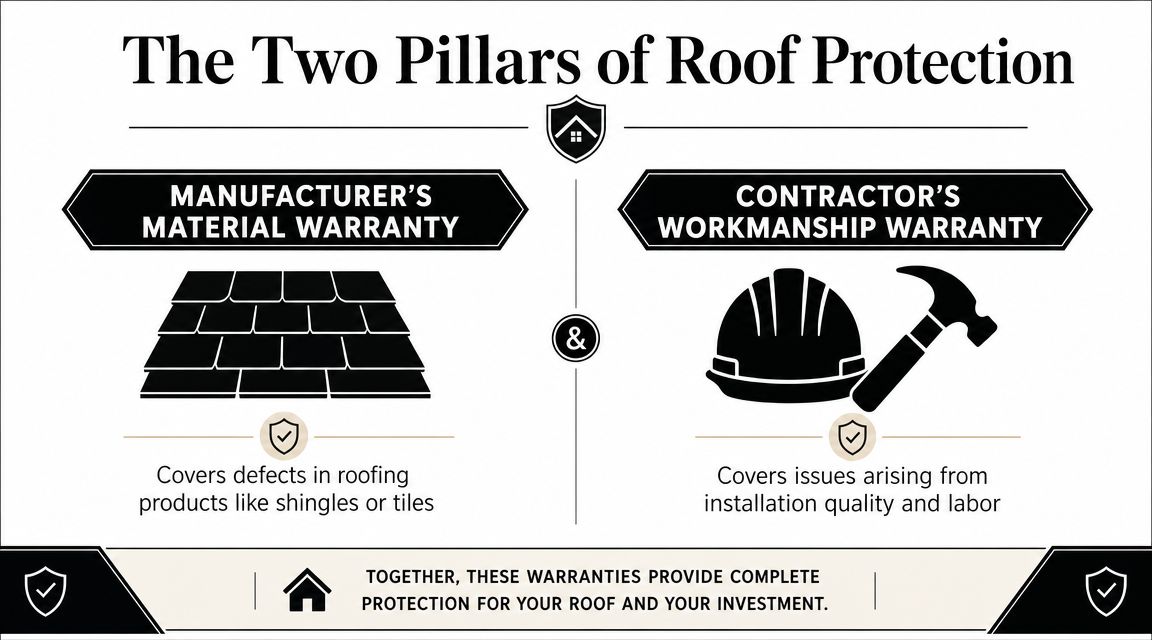
A roof warranty usually rests on two separate protections. One covers the roofing products. The other covers the installation work. Industry guidance explains that roofing warranties are commonly split between a manufacturer's material warranty and a contractor's workmanship warranty, with material coverage often running 10 to 50 years and workmanship coverage commonly 1 to 10 years depending on the contractor, as outlined in this roof warranty guide.
Material coverage and labor coverage are different
The easiest way to understand it is this. Think of the roof system like a recipe and the person cooking it.
The manufacturer's warranty covers defects in the ingredients. If the shingles themselves have a manufacturing problem, that's generally a material issue. The workmanship warranty covers the installation. If the leak comes from poor flashing, bad fastening, weak sealing, or another labor mistake, that falls on the contractor side.
That split is why the roofer you hire matters so much. Premium shingles can still fail on your house if someone cuts corners during installation. The roof deck, ventilation details, starter strips, flashing transitions, and the layers below the visible shingles all affect whether the system performs the way it should. If you want a better sense of one important hidden layer, this explanation of roof underlayment is worth reviewing.
Practical rule: The material warranty protects the product. The workmanship warranty protects you from installation errors.
A lot of homeowners focus on the longest term because it sounds safer. That can be a mistake. The workmanship side often matters most early on, because installation defects tend to show up sooner than true manufacturing defects.
Manufacturer Warranty vs. Workmanship Warranty at a Glance
| Aspect | Manufacturer Warranty | Workmanship Warranty |
|---|---|---|
| Main purpose | Covers defects in roofing materials | Covers installation and labor errors |
| Typical trigger | Shingles or other products fail because of a manufacturing issue | Leaks or failures tied to improper installation |
| Who stands behind it | Product manufacturer | Roofing contractor |
| Common time range | Often longer | Usually shorter |
| Example issue | Defective shingle performance | Improper flashing or fastening |
| Best use | Product protection | Quality control for the installer's work |
Some contractors can also offer enhanced coverage when they install a full manufacturer-approved system. That can give homeowners stronger protection than a basic material-only warranty. The key is making sure that upgraded coverage is real, written, and tied to the actual products installed on your home.
Decoding Your Warranty's Fine Print
Most warranty disappointments don't start when the roof is installed. They start when the owner files a claim and learns that the problem falls into an exclusion. That's why the fine print matters more than the headline term.
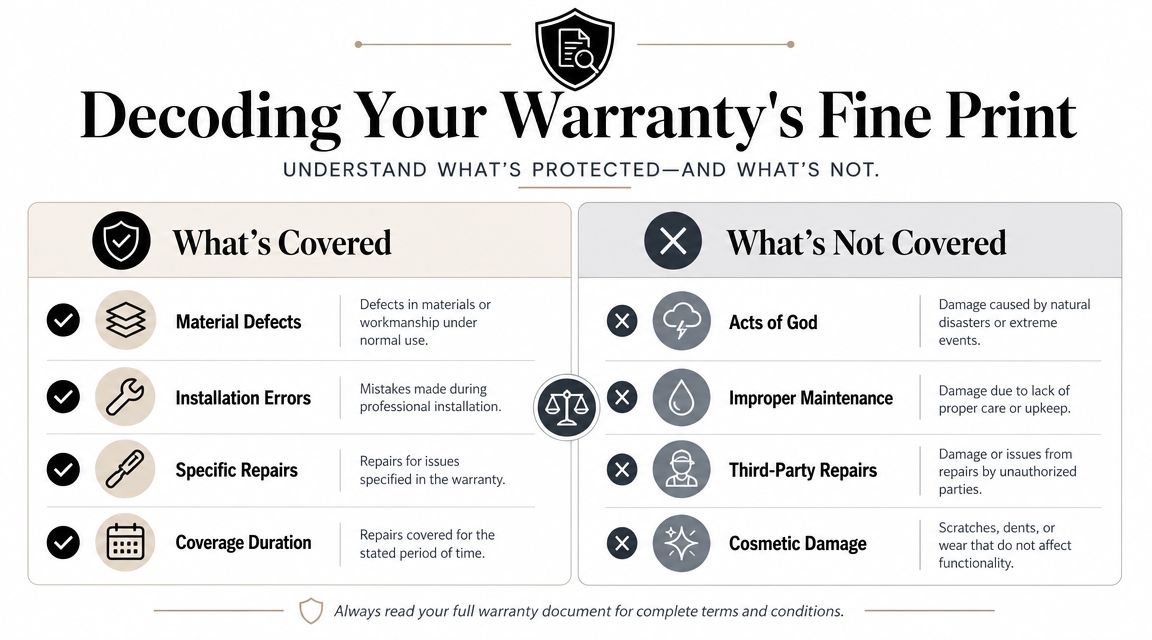
Industry guidance consistently points to the same weak spots. Common exclusions include damage from natural disasters, neglect, poor maintenance, unauthorized repairs, and improper modifications, and it also notes that regular inspections and maintenance help keep coverage valid while undocumented repairs can lead to denied claims, according to this roofing contractor warranty overview.
What usually knocks out coverage
For Pennsylvania homeowners, one of the biggest misunderstandings is storm damage. A roof warranty usually is not the same thing as homeowners insurance. If wind, hail, severe weather, or another event damages the roof, that often falls outside warranty protection unless the written terms say otherwise.
A few common claim problems show up again and again:
- Weather confusion: Owners assume leaks after a major storm should be a warranty issue, even when the damage is insurance-related.
- Maintenance gaps: Leaves pile up, gutters overflow, and nobody documents inspections or minor service work.
- Outside repairs: A handyman, siding crew, solar installer, or HVAC tech works on the roof and changes the conditions of coverage.
- Unapproved changes: New penetrations, equipment mounts, or alterations affect roof performance and create a dispute over who caused the issue.
If you can't show how the roof was maintained, you make a claim harder to prove even when the original installation was sound.
What prorated coverage means in plain English
Another term that catches people off guard is prorated. Some manufacturer warranties don't keep the same level of coverage from day one to the final year. Instead, coverage may decline over time. That means a long warranty term can still provide less protection later than many homeowners assume.
Here's the practical takeaway. Don't judge a roofing contractor warranty by the front page alone. Read what voids it. Read who decides whether a claim qualifies. Read whether labor is included, whether replacement materials must match the original system, and whether the roof needs documented inspections to remain in good standing.
When I explain this to homeowners around Sharon, I put it this way. The bold print sells the roof. The exclusions decide whether the warranty will help when you need it.
How to Verify a Roofing Contractor Warranty
A workmanship warranty has one weak point people don't talk about enough. It depends on the contractor still being around to honor it. If the company closes, merges, changes hands, or fails to return calls, your paperwork may not help much.
That isn't guesswork. Industry guidance warns that contractor workmanship warranties are only as strong as the contractor behind them, and homeowners should verify written terms, transferability, and who administers claims because the warranty depends on the contractor still being in business and reachable years later, as explained in this home roofing warranty resource.

Questions worth asking before you sign
Ask for the actual warranty document before the job starts. Not a verbal summary. Not a line item on an estimate. The complete written terms.
These questions usually tell you whether the promise has substance:
- Who handles claims: Ask whether the contractor, the manufacturer, or both may be involved depending on the problem.
- Is it written clearly: Look for specific language on labor defects, exclusions, and what the contractor will do if covered work fails.
- Can it transfer: If you sell the home, find out whether the next owner can receive coverage and what conditions apply.
- Is the system manufacturer-certified: Some warranties carry more weight when the contractor installs approved products under a certified program.
- What records do you need: Good contractors tell you upfront what maintenance documents, inspection notes, and photos you should keep.
Signs the warranty is enforceable
In this part of Pennsylvania, local stability matters. A contractor with a physical presence in the region offers more practical security than a storm-driven outfit that appears after weather events and disappears after the checks clear.
A manufacturer-certified installer can add another layer of confidence. Certification doesn't guarantee every claim will be approved, but it can signal that the contractor follows a recognized installation framework and may have access to stronger system-backed options. Penn Ohio Roofing & Siding Group is one local example. The company states that it has over 25 years of experience and has earned the GAF Triple Excellence Award, which gives homeowners another concrete credential to verify when comparing roofers.
Don't buy a warranty based on adjectives like “lifetime” or “premium.” Buy it based on written terms, who backs it, and whether the company is likely to answer the phone years from now.
Red flags are usually easy to spot once you know what to look for. Vague verbal promises. No written exclusions. No explanation of transfer rules. No proof of manufacturer certification. No office, no local track record, and no clear process for service after the job is done.
Filing a Warranty Claim Step by Step
When a leak shows up, most homeowners jump straight to the question of fault. Start somewhere else. Start with documentation. A claim goes smoother when you can show what happened, when you noticed it, and what the conditions looked like before anyone touched the roof.
Start with evidence, not assumptions
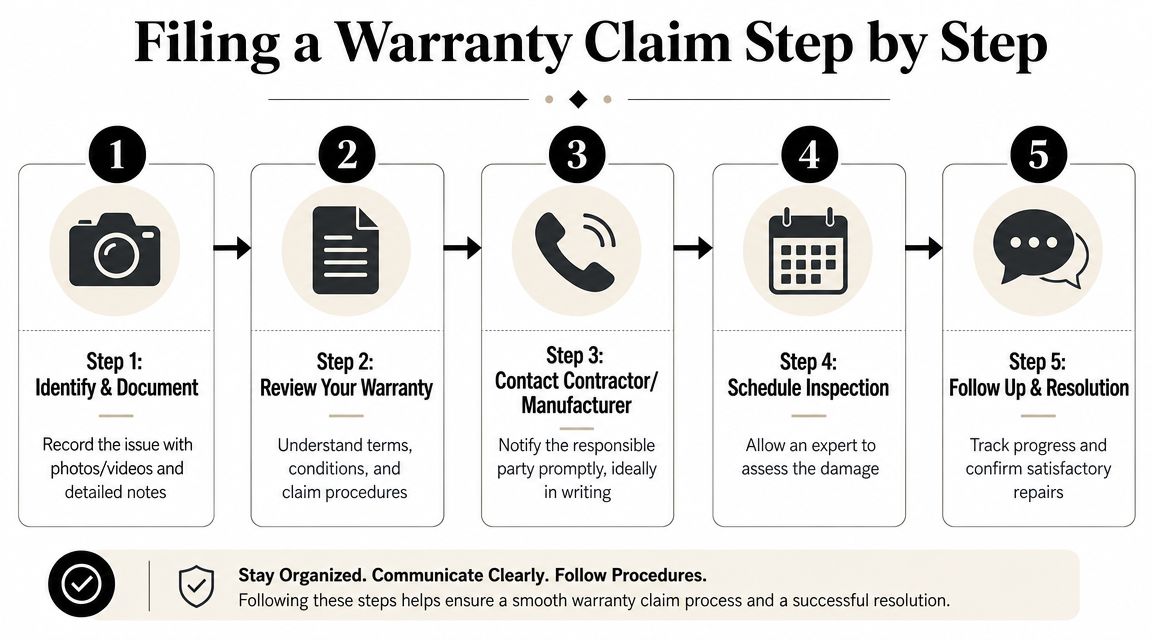
A simple process works well:
- Document the issue right away. Take photos of stains, drips, shingles, flashing areas, ceiling damage, and anything else you can safely capture from the ground or attic.
- Pull out your paperwork. Review the contract, warranty certificate, proof of installation date, and any maintenance records.
- Contact the original roofing contractor. Put it in writing if possible so there's a clear timeline.
- Allow an inspection. The contractor may need to determine whether the problem came from installation, materials, storm impact, or another trade's work.
- Get the proposed resolution in writing. That includes what they'll repair, what isn't covered, and whether additional steps are needed.
If the damage may involve weather, insurance can enter the picture quickly. This overview of the roof insurance claim process can help you separate a likely insurance issue from a workmanship issue before you make the wrong call first.
What to do if the roofer is hard to reach
If the original contractor is slow to respond, stay organized. Save emails, text messages, call logs, inspection photos, and any notes from follow-up conversations. If the roof was installed under a manufacturer-backed system, review those documents to see whether another claims path exists.
For commercial owners, the paper trail matters even more. A commercial roof warranty resource notes that contractor workmanship coverage usually focuses on installation defects, often has the most practical value in the first 1 to 5 years, and many contractor warranties average about 2 years in commercial work and are often 1 to 2 years in residential settings, as described in this commercial roof warranty article.
That's why timing matters. Report issues early. Don't wait through multiple storms. Don't let another trade make a “small fix” before the original roofer has a chance to inspect it.
Protecting Your Warranty Coverage for the Long Term
The easiest warranty to use is the one you never accidentally void. A lot of homeowners think coverage rises or falls on the shingles alone. In practice, it often comes down to what happened after installation.
Current guidance warns that exclusions commonly include neglect and unauthorized modifications, and that pressure washing, adding unapproved rooftop equipment like solar panels, or letting non-approved contractors perform repairs can void coverage, as explained in this roof warranty inspection article.
Simple habits that help keep coverage intact
You don't need a complicated system. You need consistency.
- Keep records: Save invoices, inspection reports, photos, and any communication about maintenance or repairs.
- Inspect after rough weather: If wind-driven rain or debris hits your area, take a careful look from the ground and note any changes.
- Clean gutters and remove debris: Basic drainage maintenance helps prevent standing water and edge problems.
- Report issues promptly: A small leak that gets ignored can turn into a coverage dispute later.
A practical homeowner checklist can help with the routine side of roof care. This 8-point roof maintenance guide is a useful reference for the kinds of simple tasks and observations that help you stay organized.
Changes that often require approval first
Often, people encounter significant problems. The roof looks fine, so they assume a small change won't matter. Then a claim comes in and the warranty provider points to an unauthorized modification.
Be careful before any of the following:
- Solar work: Panel mounts and wiring routes can affect flashing, penetrations, and load points.
- HVAC replacement: Equipment swaps often involve roof access, curb work, and nearby membrane or shingle disturbance.
- Third-party leak patches: Quick service calls may solve today's drip while damaging tomorrow's claim.
- Pressure washing: Aggressive cleaning can strip granules, disturb seals, or create cosmetic and performance issues.
Treat the roof like a managed system, not a surface anyone can work on.
If another trade needs roof access, get approval first. If you're not sure whether a maintenance action is safe, ask before anyone steps onto the roof with tools.
A Warranty Is Only as Good as Your Roofer
The value of a roofing contractor warranty comes down to one question. Will the company that issued it still stand behind the work if you need help later?
That's why warranty shopping shouldn't stop at the term length. You need clear written coverage, realistic exclusions, a workable claim path, and a contractor with local roots and manufacturer-backed credibility. That matters whether you own a home in Sharon, manage property near Pittsburgh, or are replacing a roof closer to Erie.
For homeowners who are still comparing estimates, it helps to review what separates a dependable contractor from a risky one. This guide on how to choose a roofing contractor is a good place to start.
A good roof system protects the house. A good contractor makes sure the warranty protects the investment.
Common Roofing Warranty Questions
A few questions come up in almost every roofing conversation, especially when homeowners are buying, selling, or dealing with leaks after weather.
| Question | Answer |
|---|---|
| Can I transfer my roof warranty when I sell my house? | Sometimes, but you need to check the written transfer terms. Some warranties allow transfer under certain conditions, while others don't. |
| Is a roof warranty the same as homeowners insurance? | No. A warranty generally addresses product defects or installation errors. Insurance usually addresses covered storm or accidental damage. |
| Will a repair by another contractor affect my coverage? | It can. If the warranty excludes unauthorized repairs or modifications, third-party work may create problems when you file a claim. |
If you're reviewing a roof contract right now, slow down on the warranty page. Check who backs the coverage, what actions can void it, and what records you'll need to keep. Those details matter more than a flashy headline term.
The smartest move is to treat the warranty as part of the roof system itself. If the paperwork is unclear at the start, it usually won't get clearer when there's water on the ceiling.
If you want help reviewing a roofing contractor warranty before you sign, or you need a second look at the coverage tied to an existing roof, Penn Ohio Roofing & Siding Group serves homeowners and property owners across western Pennsylvania with roofing inspections, repairs, replacements, and written warranty information.