
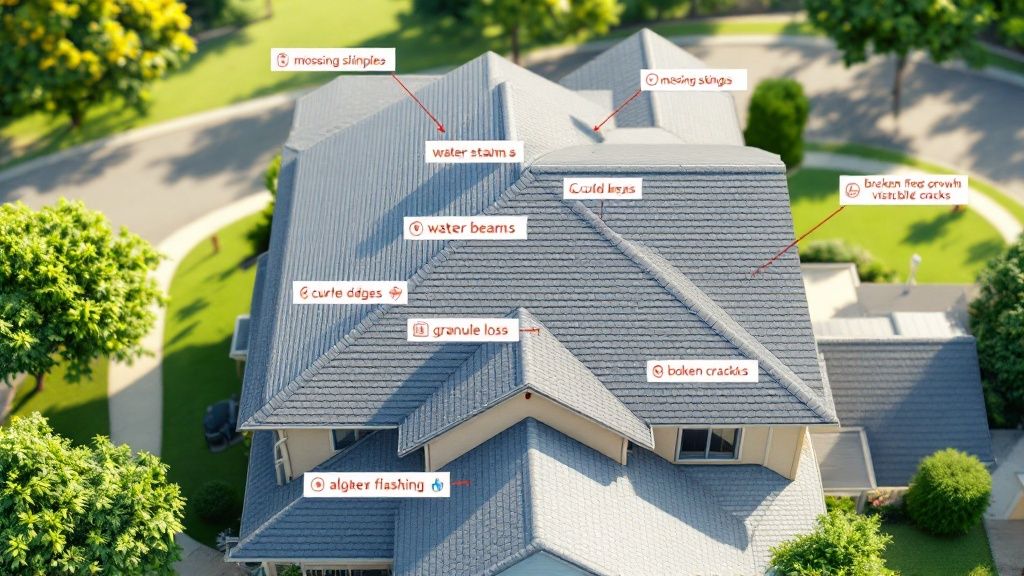
That small water stain on the ceiling is often just the final cry for help from a roof that has been failing for months, or even years. Your roof is your home's primary shield against the elements, and its gradual decline can be easy to overlook until a catastrophic failure occurs. Recognizing the early and subtle warnings is crucial for protecting your property, preventing costly structural damage, and ensuring your family's safety. Before even considering major home upgrades, it's essential to thoroughly assess your roof's condition, especially if you're currently acquainted with resources for planning your DIY solar home project. A compromised roof cannot support new installations and will undermine any significant investment.
This guide moves beyond the obvious leaks to detail the most critical signs you need a new roof, providing actionable insights to help you assess your situation with confidence. Understanding these indicators allows you to transition from reactive panic to proactive planning, saving you stress and significant expense in the long run. We will explore the key signals that tell you it's time to consider a full roof replacement, empowering you to make an informed decision for your home's long-term health.
1. Age of the Roof (20+ Years)
The single most reliable, yet often overlooked, sign you need a new roof is its chronological age. While a roof might look fine from the ground, the materials that protect your home have a finite lifespan. Once a roof passes its prime, its structural integrity and ability to repel water, resist high winds, and insulate effectively begin to degrade, even without obvious signs of damage. Think of it as preventative care; addressing an aging roof before it fails is always less stressful and costly than dealing with an emergency leak.
Why Age is a Critical Factor
Different roofing materials are engineered to last for specific periods. The most common material, asphalt shingles, typically has a lifespan of 20-25 years. Environmental factors like harsh sunlight, heavy snowfall, and dramatic temperature swings can accelerate this timeline. A 25-year-old asphalt shingle roof, for instance, has endured thousands of weather cycles, causing granules to wear away and the material to become brittle and less effective.
Key Takeaway: An aging roof is a liability waiting to happen. The protective oils in asphalt shingles dry out over time, making them less flexible and more prone to cracking, which creates hidden pathways for water to seep into your home.
Understanding Your Roof's Lifespan
The lifespan of your roof is entirely dependent on the material used during its installation. The bar chart below illustrates the average expected lifespans for three popular roofing materials, providing a clear visual comparison for homeowners.
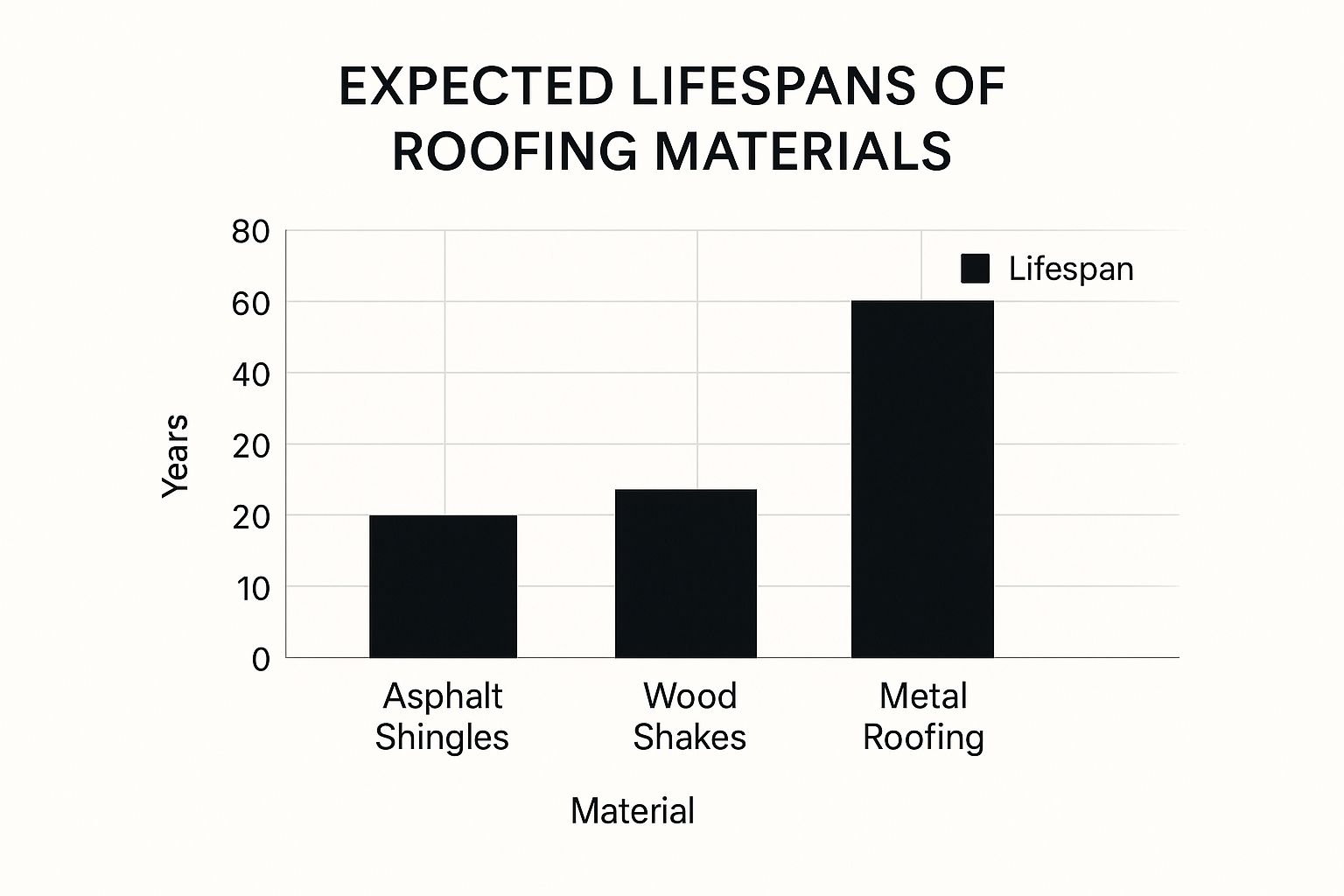
As the chart highlights, materials like metal offer significantly more longevity than standard asphalt shingles, which is a crucial factor to consider when planning a replacement. This data helps you gauge where your current roof stands and what to expect from potential new materials. To better understand how these timelines align with your home's needs, you can explore the best time to replace your roof and plan your project accordingly.
2. Curling, Cracked, or Missing Shingles
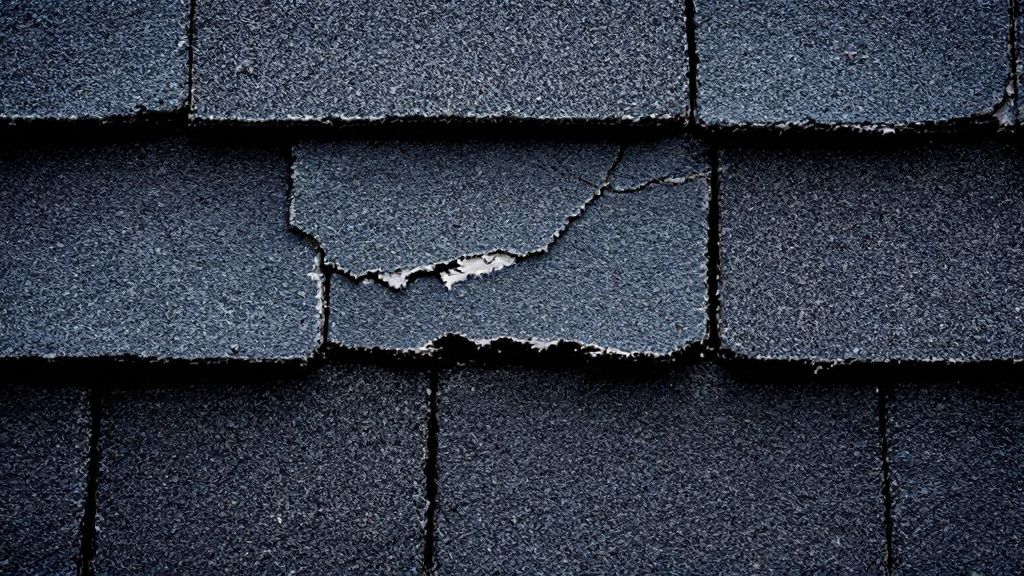
Visible shingle damage is one of the most direct and unmistakable signs you need a new roof. Unlike age, which is a passive indicator, damaged shingles are an active problem. Shingles that are curling, cracked, or completely missing have lost their ability to create a watertight seal, leaving the underlayment and decking vulnerable to the elements. This type of decay is a clear signal that your roof's primary defense has been compromised.
Why Shingle Condition is a Critical Factor
Shingles serve as the armor for your home, deflecting UV rays, shedding rainwater, and resisting wind uplift. When this armor is damaged, your entire roofing system is at risk. For example, curling shingles often lift at the edges, creating a perfect entry point for wind-driven rain. Similarly, cracked shingles allow moisture to seep through to the materials below, while missing shingles expose the underlayment directly to sun and water, which can cause it to degrade rapidly. A few damaged shingles can quickly escalate into widespread leaks and structural rot.
Key Takeaway: Shingle damage is not just a cosmetic issue; it's a functional failure. Each cracked, curled, or missing shingle is a breach in your roof's protective barrier, significantly increasing the likelihood of leaks and costly water damage to your home's interior.
How to Inspect for Shingle Damage
Safely identifying shingle damage is a crucial step in assessing your roof's health. While a professional inspection is always recommended, homeowners can look for key indicators from the ground. Use a pair of binoculars to get a closer look at your roof's surface without climbing a ladder. Pay close attention to areas that receive direct sunlight, as these are often the first to show signs of curling or cracking due to heat exposure. Also, check around your yard and in your gutters for shingle tabs or an accumulation of asphalt granules that have washed away, which is another sign of advanced wear. Documenting any damage you find with photos will be extremely helpful when consulting with a roofing professional to determine the best course of action.
3. Granule Loss in Gutters
Finding a collection of tiny, sand-like particles in your gutters can be alarming, and for good reason. These are the protective granules from your asphalt shingles, and their presence is a critical sign you need a new roof. While a small amount of shedding is normal, especially on a new roof, significant or ongoing granule loss means your shingles' primary layer of defense against UV radiation and weather is wearing away, leaving them vulnerable to accelerated decay.
Why Granule Loss is a Critical Factor
Asphalt shingles are coated with these mineral granules to protect the underlying asphalt mat from sun damage, which causes it to dry out, become brittle, and crack. When these granules are gone, the shingles can no longer effectively shield your home from the elements. You might notice dark, "bald" spots on your roof where the granules have washed away, a clear indication that the shingles are failing and their lifespan is nearing its end.
Key Takeaway: Excessive granule loss is like a warning light for your roof. It signals that the shingles are losing their ability to protect your home from UV rays and moisture, dramatically increasing the risk of leaks and structural damage over time.
Identifying and Monitoring Granule Accumulation
The most common place to spot this issue is during your seasonal gutter cleaning. If you consistently find handfuls of granules in your gutters, it’s a strong signal that your roof is aging. For example, an 18-year-old roof shedding significant amounts of granules is a classic sign of wear and tear that shouldn't be ignored.
Pay close attention to the areas around your downspouts, as granules will often collect there after a heavy rainstorm. You can also monitor the situation by taking photos of your roof slopes from the same angle each year to visually track any changes or increased "balding." If granule loss has exposed the dark underlayer of the shingle, it's time to seriously consider a roof replacement to prevent more significant problems from developing.
4. Daylight Through Roof Boards
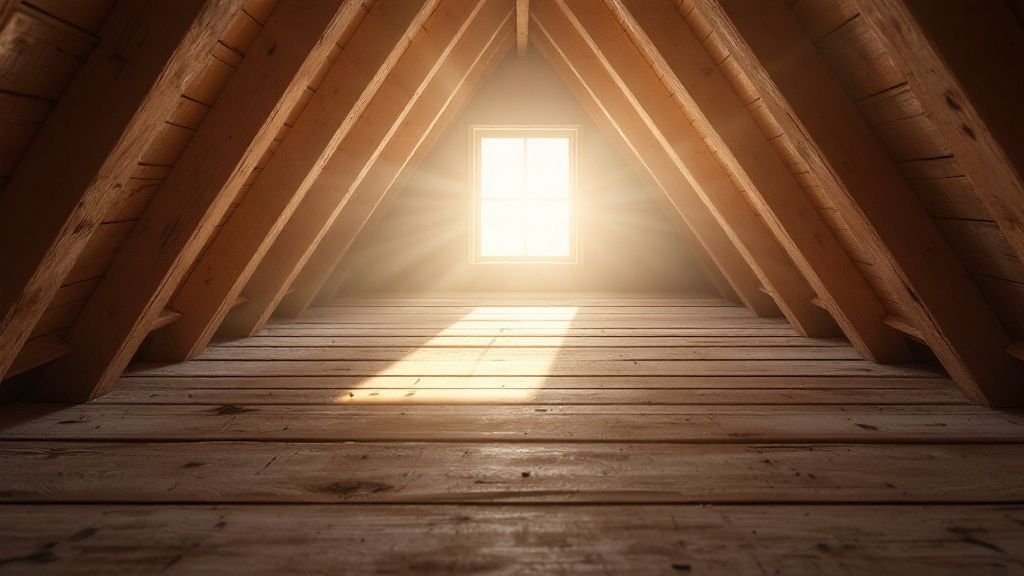
Among all the signs you need a new roof, seeing sunlight piercing through your roof boards into the attic is one of the most urgent and unambiguous. If you can see the sky from inside your attic, it means there are direct, unfiltered paths for water, pests, and outside air to enter your home. This is not just a sign of a potential leak; it's confirmation that your roof's primary line of defense has been completely breached in one or more spots.
Why Daylight is a Critical Factor
Visible light indicates that shingles are missing, the underlying decking has rotted away, or flashing has failed around vents and chimneys. These openings compromise your home's entire protective envelope, leading to immediate water damage during the next rainstorm and significant energy loss as conditioned air escapes. Ignoring this problem can quickly escalate from a simple roof repair to extensive structural damage involving rotted wood, saturated insulation, and mold growth.
Key Takeaway: Daylight in your attic is a critical warning. What starts as a small pinhole of light can quickly become a major leak, leading to costly water damage to your attic, ceilings, and walls. Immediate action is required to prevent further deterioration.
How to Check for and Address Light Penetration
The best way to check for this issue is to go into your attic on a bright, sunny day without turning on any lights. Let your eyes adjust to the darkness and carefully scan the underside of the roof deck for any beams or patches of light.
- Look for small pinpricks of light, which often indicate nail holes where shingles have lifted or fallen off.
- Search for larger patches of light, which signal severe damage, such as rotted or missing sections of roof decking.
- Inspect around vents and chimneys, as these are common areas for flashing to fail and create gaps.
If you discover any light coming through, mark the location from the inside so a professional can easily find it from the exterior. This is a definitive sign your roof is failing, and you should schedule a professional inspection without delay to assess the extent of the damage and determine the best course of action.
5. Sagging Roof Deck
One of the most alarming signs you need a new roof is a visible sag, dip, or curve in the roofline. This is not a cosmetic issue; it's a clear indication of a significant structural problem that requires immediate attention. A sagging roof deck suggests that the underlying structure, which supports the entire roofing system, has been compromised, often due to prolonged moisture exposure, inadequate support, or excessive weight. Ignoring this can lead to catastrophic failure and poses a serious safety risk to your home and its occupants.
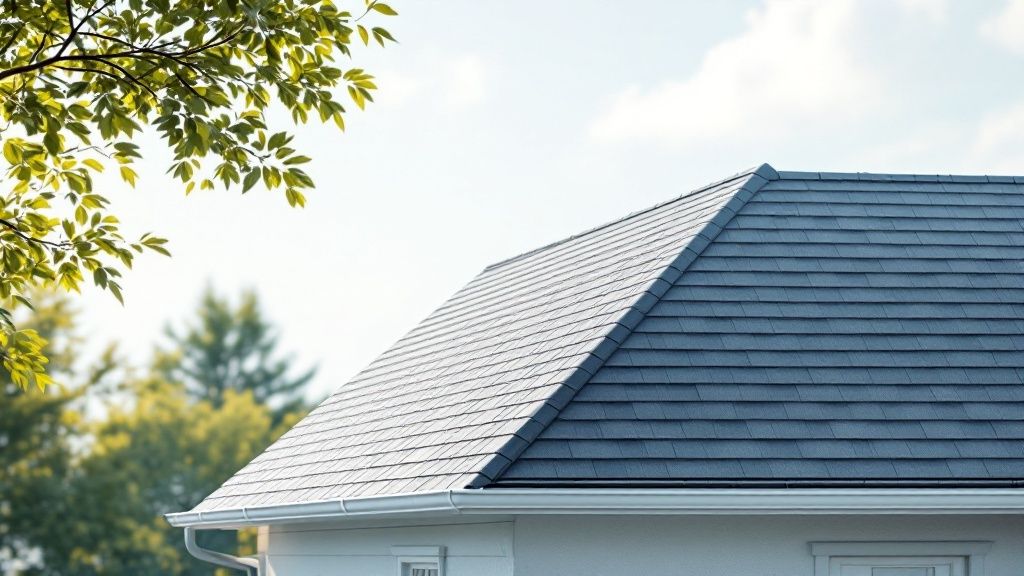
Why a Sagging Deck is a Critical Factor
The roof deck is the foundation of your roofing system, typically made of plywood or OSB sheathing. When moisture penetrates past the shingles and underlayment, this wooden deck can absorb water, rot, and lose its structural integrity, causing it to bend under the weight of the roofing materials. Other causes can include undersized rafters or failed support beams. You might notice a wave-like appearance from the street or a distinct dip in the roof ridge, both of which are urgent signals that the underlying framework is failing.
Key Takeaway: A sagging roof is a symptom of a deep-rooted problem. The deck, rafters, or ceiling joists are compromised, meaning simply replacing shingles is not a solution. The root cause must be addressed to ensure your home's safety and structural stability.
Taking Immediate Action
A sagging roof deck is a true roofing emergency. The weight of snow, ice, or even heavy rain can exacerbate the problem, potentially leading to a collapse. The first step is to have a professional inspection to assess the extent of the damage to both the decking and the structural supports. The compromised sheathing will need to be replaced, and in many cases, this also involves repairing or reinforcing the rafters. This is also an opportunity to ensure that the protective layers are properly installed; you can learn more about the role of the roof underlayment in preventing the moisture damage that leads to sagging. It is crucial to never walk on a sagging area and to contact a qualified roofing professional immediately for a thorough evaluation.
6. Water Stains on Ceilings and Walls
One of the most undeniable signs you need a new roof is the appearance of water stains on your interior ceilings or walls. These discolored patches, often brown, yellow, or gray, are definitive proof that your roofing system's waterproof barrier has failed. Ignoring them is a costly mistake, as even a small, seemingly harmless stain can signify a much larger, hidden leak that is causing structural damage, rot, and mold growth in your attic or wall cavities.
Why Water Stains are a Critical Factor
A water stain is the final symptom of a prolonged roofing problem. By the time water has saturated your drywall or plaster enough to become visible, it has likely been seeping through your roof deck, insulation, and framing for some time. This prolonged moisture exposure compromises your home's structural integrity and creates an ideal environment for hazardous mold. Causes can range from failed flashing around chimneys and vents to widespread shingle deterioration that allows water to penetrate the underlayment.
Key Takeaway: A water stain is never just a cosmetic issue. It is a clear warning that water has breached your primary line of defense, and the longer you wait, the more extensive and expensive the resulting interior and structural repairs will become.
Identifying the Source and Taking Action
When you spot a stain, it's crucial to act quickly to mitigate further damage. The location of the stain provides clues; for instance, a brown ring on a bedroom ceiling after a heavy snow might indicate an ice dam, while stains along an exterior wall could point to flashing failure. It is essential to trace the water's path to its highest point, as water can travel along rafters and joists before dripping down.
To properly diagnose the extent of the problem and identify the exact failure point, a professional assessment is your safest bet. You can learn more about the critical details uncovered during a thorough evaluation by exploring the importance of professional roof inspections and how they can prevent minor leaks from turning into major catastrophes. Documenting all stains with photos before repairs begin is also a smart step, especially for insurance purposes.
7. Moss, Algae, or Fungus Growth
While a touch of green might seem like a harmless, rustic aesthetic, the presence of moss, algae, or fungus on your roof is a clear warning sign of underlying moisture problems. These living organisms don't just sit on the surface; they actively trap water against your shingles and can physically damage them over time. Ignoring this growth can accelerate your roof's deterioration, turning a manageable issue into a reason for a full replacement.
Why Organic Growth is a Critical Factor
Moss is particularly destructive because it acts like a sponge, holding moisture against the shingle surface. During winter, this trapped water freezes and expands, widening cracks and dislodging the protective granules. Its root-like structures can also lift shingles, creating gaps where water can easily penetrate the roof deck. Similarly, the dark streaks caused by algae (Gloeocapsa magma) retain heat and moisture, which breaks down the shingle's composition over time.
Key Takeaway: Moss, algae, and fungus are more than cosmetic issues; they are direct indicators of excess moisture that is compromising your roof's integrity. This damp environment can lead to rot, structural decay, and even interior water damage if not addressed.
Addressing the Root Cause
Simply cleaning the growth off isn't enough; you must address the conditions that allow it to thrive. This often involves improving drainage, increasing sunlight exposure, and ensuring proper attic ventilation. For instance, trimming overhanging tree limbs can reduce shade and debris, while installing zinc or copper strips near the roof's peak can prevent regrowth over the long term. If the infestation is severe or has caused extensive damage, it's a strong sign you need a new roof.
Furthermore, persistent moisture on a roof's surface can often be a symptom of a much larger problem beneath. If water isn't just sitting on top but is also getting underneath, it can lead to dangerous complications inside your home. A comprehensive guide to attic mold removal explains how unchecked moisture can create hazardous conditions, reinforcing why addressing rooftop growth is so crucial for the overall health of your home.
8. Damaged Flashing
One of the most critical yet frequently overlooked signs you need a new roof is compromised flashing. Flashing consists of thin pieces of metal, typically steel or aluminum, installed around roof penetrations like chimneys, vents, and skylights, as well as in valleys and along edges. Its sole purpose is to create a watertight seal and direct water away from the most vulnerable points of your roof. When this material cracks, corrodes, or pulls away, it creates a direct and often hidden entryway for moisture.
Why Damaged Flashing is a Critical Factor
Unlike a widespread shingle failure that might cause a slow, dispersed leak, a flashing failure creates a concentrated point of water entry. This can lead to rapid and severe damage to your roof decking, attic insulation, and even the structural framing of your home. Flashing often fails due to improper installation, storm damage, or the natural expansion and contraction of materials over time, which breaks the seal. It is a common source of leaks that are otherwise hard to diagnose.
Key Takeaway: Damaged flashing is a direct invitation for water intrusion. Even a small gap or crack can channel a surprising amount of water into your home's structure, making it a high-priority issue that often signals the end of your roof’s reliable service life.
Identifying and Addressing Flashing Issues
You can often spot flashing problems from the ground, but a closer inspection is usually necessary for a definitive diagnosis. Look for pieces that are bent, separated from the roof, or show signs of rust and corrosion. For example, rust stains on your shingles or siding below a chimney often point to deteriorating chimney flashing. Similarly, missing step flashing along a dormer wall is a major red flag.
When you notice these issues, it is crucial to act quickly. While minor repairs are sometimes possible, widespread flashing failure is one of the clearest signs you need a new roof, as it indicates the entire system is likely at the end of its lifespan. During a full replacement, all flashing should be replaced with new, high-quality materials to ensure a durable and long-lasting seal for your entire roofing system.
8 Key Roof Replacement Warning Signs Comparison
| Condition | Implementation Complexity 🔄 | Resource Requirements ⚡ | Expected Outcomes 📊 | Ideal Use Cases 💡 | Key Advantages ⭐ |
|---|---|---|---|---|---|
| Age of the Roof (20+ Years) | Low – easy to assess from records | Low – requires records & inspections | Preventive replacement, planned budgeting | Homes with roofs nearing or exceeding lifespan | Proactive maintenance, avoids emergencies |
| Curling, Cracked, or Missing Shingles | Medium – visual inspection needed | Medium – partial repairs or full replacement | Stops water infiltration, indicates damage extent | Obvious shingle damage, weather-exposed roofs | Easily visible damage, timely repairs |
| Granule Loss in Gutters | Low – visible during routine cleaning | Low – gutter inspection and photo tracking | Early warning of aging, gradual deterioration | Routine maintenance checks, aging asphalt roofs | Detects aging before severe failure |
| Daylight Through Roof Boards | Medium – attic inspection required | High – emergency repairs often needed | Immediate breach of roof barrier, urgent fix | Severe structural failure, visible attic light | Clear sign of urgent structural breach |
| Sagging Roof Deck | High – professional structural assessment | High – structural repairs required | Safety hazard, potential structural failure | Water-damaged or overloaded roofs | Visible warning, directs focused assessment |
| Water Stains on Ceilings and Walls | Low – simple interior inspection | Medium – roof and interior repairs | Confirmed water intrusion, may indicate mold | Interior damage suspected, leak identification | Clear evidence for insurance or repair claims |
| Moss, Algae, or Fungus Growth | Medium – visual attention and cleaning | Medium – cleaning and ventilation improvements | Prevents accelerated shingle damage | Shaded, humid roofs prone to moisture retention | Early moisture issue indicator, extends roof life |
| Damaged Flashing | Medium – inspection often requires pro | Medium – localized flashing repair | Allows water entry, major leak contributor | Roofs with penetrations or older flashing | Targeted repairs can extend roof lifespan |
From Warning Signs to a Watertight Solution
Recognizing the subtle and overt signs you need a new roof is the most critical first step in safeguarding your home's structural integrity and your family's comfort. From spotting the age of your roof creeping past the two-decade mark to noticing those tell-tale granules in your gutters, each sign we've explored is a direct communication from your home, signaling a need for attention. Ignoring curling shingles, moss growth, or a slight sag in the roof deck can quickly turn a manageable issue into a catastrophic and costly failure.
These warning signs are not isolated incidents; they are interconnected pieces of a larger puzzle. For instance, granule loss directly contributes to shingles becoming brittle, which leads to cracking and curling. Damaged flashing can accelerate water intrusion, causing the water stains and sagging deck we discussed. Understanding this cause-and-effect relationship transforms you from a passive homeowner into a proactive guardian of your most significant investment.
Taking Action: Your Next Crucial Steps
Identifying a problem is only half the battle. The next phase involves professional assessment and decisive action. A single missing shingle might be a simple repair, but when combined with widespread granule loss and an advanced age, it points toward a systemic failure that only a full replacement can remedy. This is where a professional, on-site evaluation becomes indispensable. An expert can climb onto your roof and into your attic, providing a comprehensive diagnosis that goes far beyond what you can see from the ground.
Choosing the right team for this crucial project is paramount. You need a partner who can translate their findings into a clear, actionable plan. To ensure you vet potential partners thoroughly, using an ultimate contractor hiring checklist can provide an invaluable framework, helping you ask the right questions and verify credentials before making a commitment. This due diligence ensures that the investment you make in a new roof is protected by quality workmanship and professional integrity from start to finish.
Ultimately, your roof is more than just a layer of shingles; it's the primary shield that protects your home, your belongings, and your loved ones from the elements. By learning to spot these critical signs you need a new roof and acting on them swiftly, you are not just performing maintenance. You are making a powerful investment in long-term security, preventing future water damage, improving energy efficiency, and preserving the value of your property for years to come.