
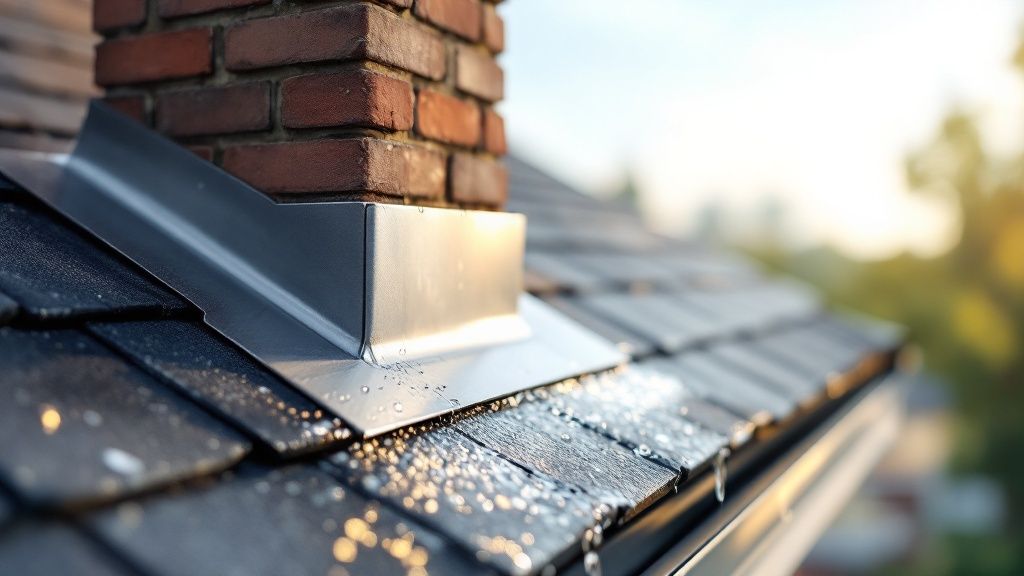
When you think about your roof, you probably picture the shingles, tiles, or metal panels that make up the vast majority of its surface. But some of the most important components are the ones you barely notice. Roof flashing is one of these quiet workhorses, a thin material—usually metal—that directs water away from the most vulnerable spots on your roof.
It’s the secret weapon that seals the gaps around chimneys, vents, and skylights, preventing costly water damage.
What Is Roof Flashing? Your Home's First Line of Defense
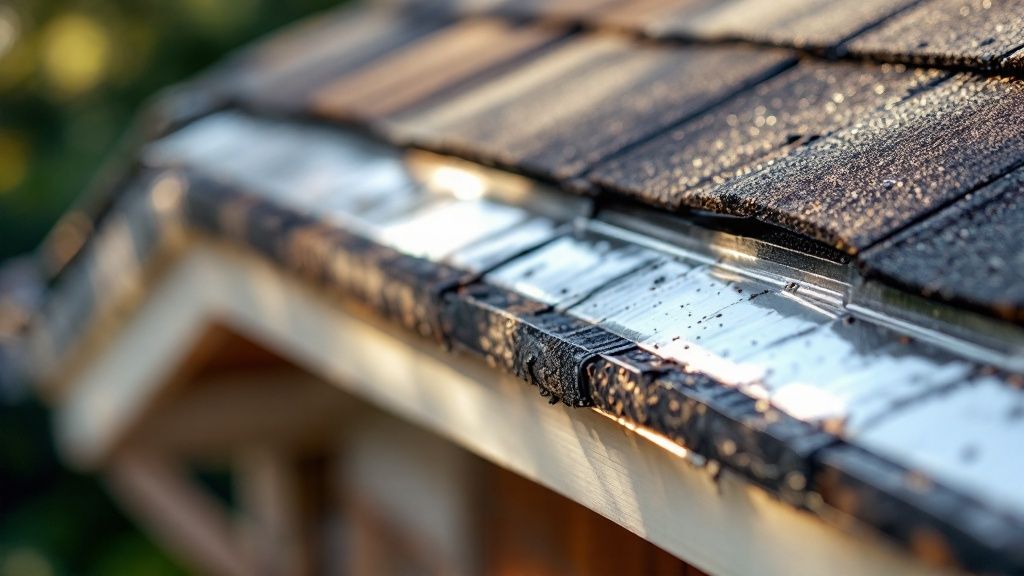
Imagine your roof as a complete, interconnected system designed to keep your home safe and dry. Shingles are the main shield, but they can't perfectly seal every joint, valley, or protrusion by themselves. That’s where roof flashing steps in. It's essentially a custom-fit raincoat for the seams and interruptions on your roof, bridging the gaps where leaks are most likely to start.
Anywhere two roof surfaces meet, or where something sticks out through the roof, you'll find flashing. Without it, rainwater would have a clear path into your attic, setting the stage for some serious problems down the road.
To give you a clearer picture, here's a quick overview of what roof flashing is all about.
Roof Flashing At A Glance
| Aspect | Description |
|---|---|
| Main Purpose | To create a waterproof barrier at roof joints, valleys, and penetrations, directing water safely into the gutters. |
| Common Materials | Typically durable, corrosion-resistant metals like aluminum, galvanized steel, or copper. |
| Key Installation Areas | Around chimneys, skylights, vents, in roof valleys, and where a roof meets a wall (dormers). |
This table covers the basics, but the real importance of flashing lies in how it protects your home from the persistent threat of water.
The Real Job: Strategic Water Management
The primary function of roof flashing is simple but absolutely critical: to channel water away from weak points and guide it toward your gutters. Water is relentless; it will find and exploit any tiny crack or crevice. Flashing creates a smooth, impenetrable surface that forces water to follow a safe path, preventing it from getting trapped and seeping into your home’s structure.
Flashing isn't just a "nice-to-have"—it's a non-negotiable part of any well-built roof. It’s often the key difference between a roof that lasts for decades and one that fails prematurely, leading to expensive structural damage, hidden wood rot, and unhealthy mold growth.
It works hand-in-hand with other roofing materials. For instance, you can learn all about https://pennohiorc.com/what-is-roof-underlayment/ and its role, but flashing provides the targeted protection that underlayment can’t offer alone. In the same way that flashing defends against water from above, it's just as vital to understand how to handle other water threats, like learning how to prevent basement flooding. By securing every potential entry point, you ensure your home stays dry and sound from top to bottom.
Why Flashing Is Your Roof's Most Critical Component
Shingles and tiles get all the credit, but it's the roof flashing that truly guards the most vulnerable parts of your home. Think of rainwater as a relentless detective, always searching for the tiniest crack or seam to sneak through. Flashing is the silent, unsung hero that blocks its path at every critical junction.
Without properly installed flashing, even a brand-new roof is set up for failure from day one. Water that slips past the shingles gets trapped, and that’s when the real problems begin, compromising the health and safety of your entire home.
The True Cost Of Flashing Failure
When flashing gives way, it’s rarely a dramatic event. The real danger is the slow, silent damage that happens long before a telltale stain appears on your ceiling. It’s a quiet disaster unfolding behind the scenes.
- Hidden Mold Growth: Trapped moisture is an open invitation for mold and mildew to thrive in your attic and walls, which can seriously impact your home's air quality.
- Structural Rot: Constant dampness will eventually cause the wood sheathing, rafters, and joists to rot, weakening the very bones of your house.
- Costly Interior Damage: Once a leak makes its way inside, it can destroy insulation, drywall, and ceilings, leaving you with messy and expensive repairs.
This is why flashing isn't just another building material—it's essential. It might seem like a minor detail in the grand scheme of a roofing project, but its performance is absolutely crucial to your home’s longevity.
A roof is a complete system, but it's only as strong as its weakest link. In almost every case of a premature roof leak, failed or improperly installed flashing is the culprit.
This small component carries a massive responsibility. In fact, roof flashing typically accounts for less than 0.5% of a building project's total construction cost, yet it's one of the most vital defenses against catastrophic water damage. This tiny investment prevents thousands of dollars in future repairs from leaks, mold, and rot. It's no wonder that modern building codes have made effective flashing non-negotiable. To see how this became standard practice, you can dive into the evolution of construction standards over at CheneyFlashing.com.
Understanding The Different Types Of Roof Flashing
Roof flashing isn't a one-size-fits-all solution. Think of it more like a toolkit, where each tool is designed for a very specific job. These custom-fit pieces work together to create a complete, watertight shield for your home, protecting all the tricky spots.
Getting to know the different kinds of flashing helps you see exactly how every seam and angle on your roof is protected. Each piece is placed precisely where your main roofing material can't do the job alone, making sure even the most vulnerable areas stay dry.
Flashing For Walls And Intersections
Anywhere your roof meets a vertical surface—like a wall or a dormer—is a prime spot for leaks if not handled correctly. Water loves to sneak into these seams, so a special approach is needed.
-
Step Flashing: This is the classic solution for these intersections. It involves weaving small, rectangular pieces of metal into the shingles in a layered, step-like pattern. Each piece overlaps the one below it, creating a "staircase" that forces water to run down the roof and away from the wall.
-
Counter Flashing: This is the partner to step flashing, especially around chimneys. Counter flashing is a second piece of metal that's set into the brick or masonry above the step flashing. It overlaps the top edge of the step flashing, forming a two-layer defense that blocks water from ever getting behind the primary flashing.
Protecting Valleys And Penetrations
Two of the most vulnerable spots on any roof are the valleys where two slopes come together and any place a pipe or vent pokes through. These areas see a ton of concentrated water flow and need heavy-duty protection.
A roof valley is like a natural funnel during a rainstorm. It channels an incredible amount of water, and without proper flashing, it becomes a superhighway for leaks right into your home.
This is where specialized flashing comes into play:
-
Valley Flashing: This is a large, W-shaped piece of metal installed right in the "valley" where two roof planes meet. It creates a durable, waterproof channel that directs the torrent of water safely down into your gutters. This is especially crucial for complex rooflines, something you'll see a lot in metal roof designs. You can learn more in a detailed metal roofing installation guide.
-
Vent Pipe Flashing: You might hear this called a pipe boot. It's a cone-shaped fitting with a wide, flat base that sits on the roof. The cone fits tightly around any pipe coming through your roof, while the base is woven into the shingles to form a perfect, waterproof seal.
How To Choose The Best Flashing Material For Your Roof
Picking the right material for your roof flashing isn't just a minor detail—it's a critical choice that hinges on your budget, your local weather, and how long you want it to last. Think of it this way: while the shape of the flashing is designed for a specific job, the material it's made from dictates its entire performance over the years.
Getting this right from the start means your roof's weakest points will be sealed tight against the elements for decades to come.
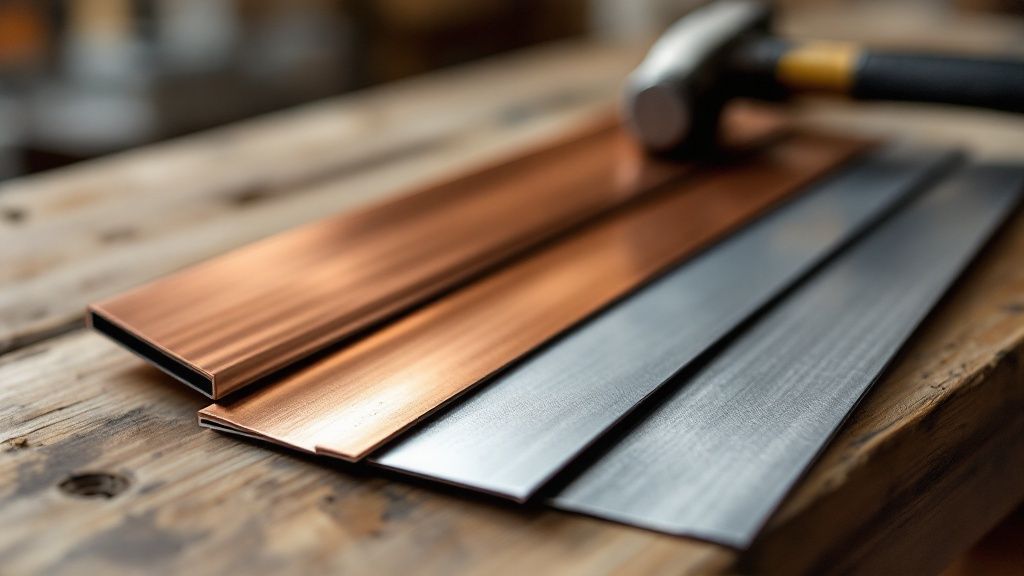
The three materials you’ll see most often are galvanized steel, aluminum, and copper. Each has its own distinct pros and cons, which makes them a better fit for different situations and price points. Let's break down what you're really getting with each one.
Comparing Your Options
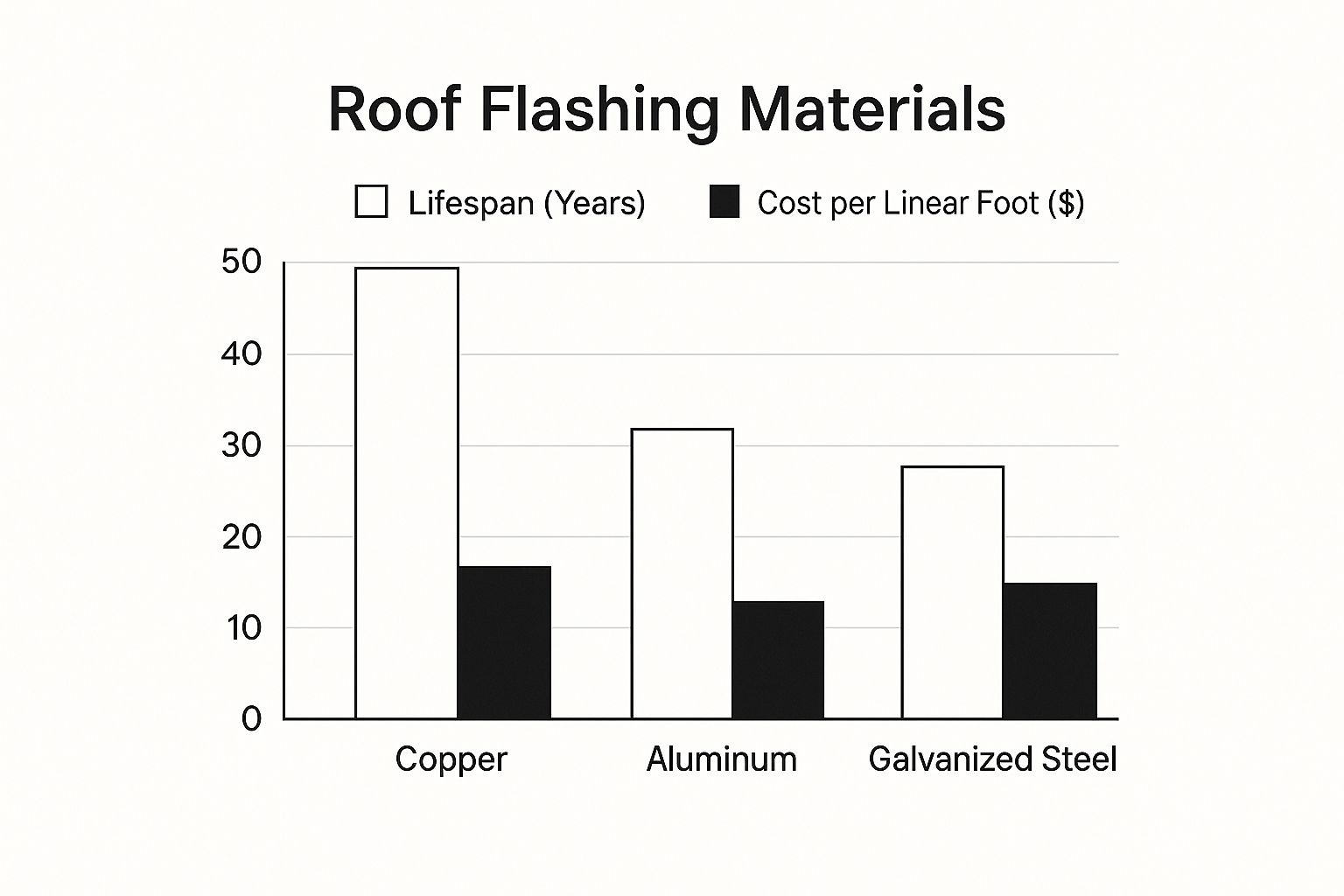
The material you choose has a direct impact on your roof’s long-term health. For example, aluminum is a great rust-free and lightweight option, but it won’t stand up to a hailstorm as well as steel. On the other end of the spectrum, copper is the gold standard for longevity, but it comes with a price tag to match.
- Galvanized Steel: A go-to for a reason. It's affordable, tough, and the zinc coating does a great job of fighting off rust and corrosion. For most homes, galvanized steel hits that perfect sweet spot between performance and cost.
- Aluminum: This material is lightweight and incredibly easy for roofers to bend and shape on-site, which is a huge plus. It's also naturally rust-proof. The downside? Aluminum is a softer metal, so it's more likely to get dented or damaged in a severe storm.
- Copper: If you're looking for the best of the best, this is it. Copper is incredibly durable and can last for over 60 years. Over time, it develops a beautiful green patina that adds a classic, elegant look to a roof. Of course, this premium performance comes at a premium price.
To make this even clearer, let's lay out the key differences side-by-side.
Comparison Of Common Roof Flashing Materials
This table gives you a quick snapshot of how these materials stack up against each other in the areas that matter most: cost, lifespan, and key benefits.
| Material | Average Lifespan | Cost Level | Key Advantages |
|---|---|---|---|
| Galvanized Steel | 20-30 years | Low to Mid | Strong, durable, and cost-effective. A reliable workhorse for most residential roofs. |
| Aluminum | 20-30 years | Low to Mid | Lightweight, rust-proof, and easy to form into custom shapes. |
| Copper | 60+ years | High | Exceptionally long-lasting, highly durable, and develops an attractive patina over time. |
Ultimately, the best choice depends on your priorities. If you're looking for a solid, budget-friendly solution, galvanized steel is a safe bet. But if you're investing in a "forever" roof and want the flashing to last just as long, copper is unmatched.
A Quick Look Back In Time
The idea of using metal to seal a roof’s joints is anything but new. The practice actually dates back more than a thousand years, with skilled builders using lead and copper way back in the 12th century to protect castles and cathedrals.
For centuries, lead was a popular choice because it was so easy to work with. Today, however, health and environmental concerns have pushed it aside in favor of safer, more effective materials. Copper, in particular, has stood the test of time and remains a top choice, often lasting as long as the roof itself. You can learn more about this and other fascinating roofing facts at ArtisanQualityRoofing.com.
Common Signs Of Roof Flashing Failure
Roof flashing is your home's quiet guardian, but even the toughest materials can fail. Over time, constant exposure to the elements, age, or even a subpar installation job can cause problems. Spotting the trouble early is the real secret to preventing a minor headache from turning into a major disaster.
The good news? Failing flashing almost always leaves clues. Think of these red flags as your roof's way of asking for help. If you see any of them, it's a clear signal that your home's primary defense against water is on the verge of being breached.

Exterior Warning Signs
Often, the most obvious signs of flashing failure are right there in plain sight. You just have to know what to look for. A quick walk around your property can tell you a lot about the health of your flashing.
- Visible Rust or Corrosion: This is a big one. If you see ugly rust stains running down your shingles or siding, it’s a dead giveaway. It means the protective coating on your steel flashing is gone, and the metal is actively breaking down.
- Cracks, Bends, or Splits: Take a close look at the flashing around your chimney, vents, and walls. Any visible damage—cracks, deep dents, or bent-up sections—is an open invitation for rainwater to get inside.
- Loose or Pulled-Away Sections: Flashing needs to sit perfectly snug against the roof and whatever it’s sealing. If you spot pieces that are lifting up or pulling away from the surface, they’re not doing their job anymore.
Interior Red Flags
Sometimes, the first sign that something is wrong with your roof shows up inside your house. These clues often point directly to failed flashing as the root cause.
By the time a water stain appears on your ceiling, the leak has probably been happening for a while. It’s a late-stage warning that water has already made its way through your roof, insulation, and drywall.
Keep an eye out for these common interior signs:
- Water Stains on Ceilings or Walls: Pay special attention to areas around your fireplace, skylights, or attic vents. Those tell-tale brownish spots are a classic symptom of a flashing leak.
- Dripping Sounds: If you hear a faint dripping in your attic or walls during a rainstorm, don't ignore it. That’s an urgent signal that water has found a way in.
- Mold or Mildew: A musty smell or the sight of mold in your attic points to a persistent moisture problem. More often than not, that problem can be traced right back to failing flashing.
Recognizing these issues is the first step, and understanding other common signs of roof damage will give you a fuller picture of your roof's condition. When it comes to your home's structural integrity, catching problems early makes all the difference.
Got Questions About Roof Flashing? We’ve Got Answers.
Even after you get the basics down, you might still have a few questions about your roof's flashing. It's a critical part of your roofing system, so it pays to be informed. Let's tackle some of the most common questions homeowners ask.
Can I Repair Roof Flashing Myself?
Tempted to grab a tube of sealant and call it a day? It's best to reconsider. While it might look like a simple patch job, fixing flashing is a job that's deceptively tricky and really needs a professional touch.
If you don't install or seal it just right, you can accidentally create a dam that traps water underneath your shingles. This makes the leak far worse than it was before and can lead to serious rot. A professional roofer has the right tools, safety gear, and, most importantly, the know-how to weave the new flashing into your roof system for a truly watertight fix.
DIY flashing repair is a big gamble. A small misstep can cause major water damage, turning a simple repair into a huge, expensive headache. Trusting an expert is almost always the safer—and smarter—bet in the long run.
How Long Does Roof Flashing Last?
The lifespan of your flashing really comes down to three things: what it’s made of, how well it was installed, and the weather it has to endure year after year.
Here’s a general idea of what to expect:
- Aluminum & Galvanized Steel: These are the workhorses of the industry. You can expect them to last 20-30 years, which lines up perfectly with the lifespan of most asphalt shingle roofs.
- Copper: This is the premium choice for a reason. Copper flashing can easily last for over 60 years, and it often outlives the very roof it was installed on.
No matter the material, regular check-ups are your best friend. Spotting a small problem early on is the key to making sure your flashing lasts as long as it should.
Does Homeowners Insurance Cover Flashing Repairs?
Whether your insurance will cover a flashing repair all depends on why it failed. If the damage was caused by a specific, covered event—think a severe storm, powerful winds, or a tree branch falling on it—then your policy will almost certainly help with the cost.
On the other hand, insurance typically won't cover damage that comes from simple old age, general wear and tear, or neglect. If the flashing failed just because it wasn't maintained, you'll likely have to pay for the repair out of pocket. It's always a good idea to dust off your policy and give it a read to know exactly where you stand.
If you've noticed any of the warning signs we've talked about, or you just want a professional to take a look, don't wait for a drip from the ceiling to make the call. For a free estimate and service you can rely on, visit us at https://pennohiorc.com.