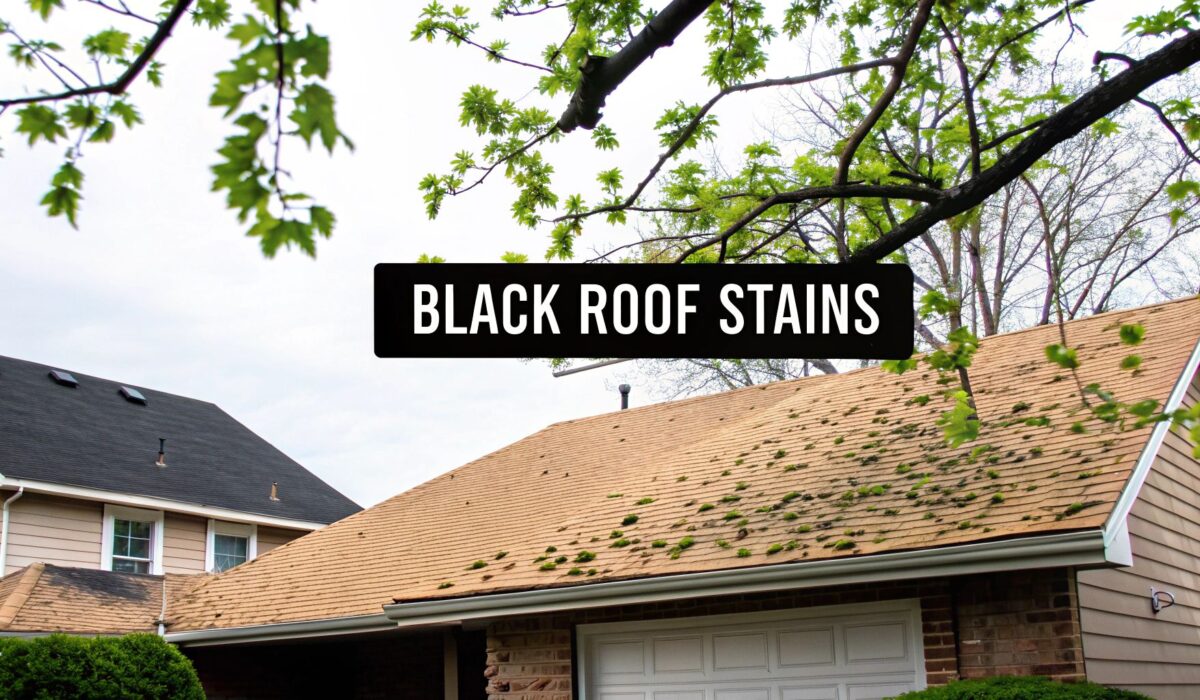
Ever looked up at your roof and wondered what those ugly, dark streaks are? It’s not dirt or soot. The real culprit is almost always a hardy, airborne algae called Gloeocapsa magma.
Unmasking the Culprit Behind Black Roof Stains
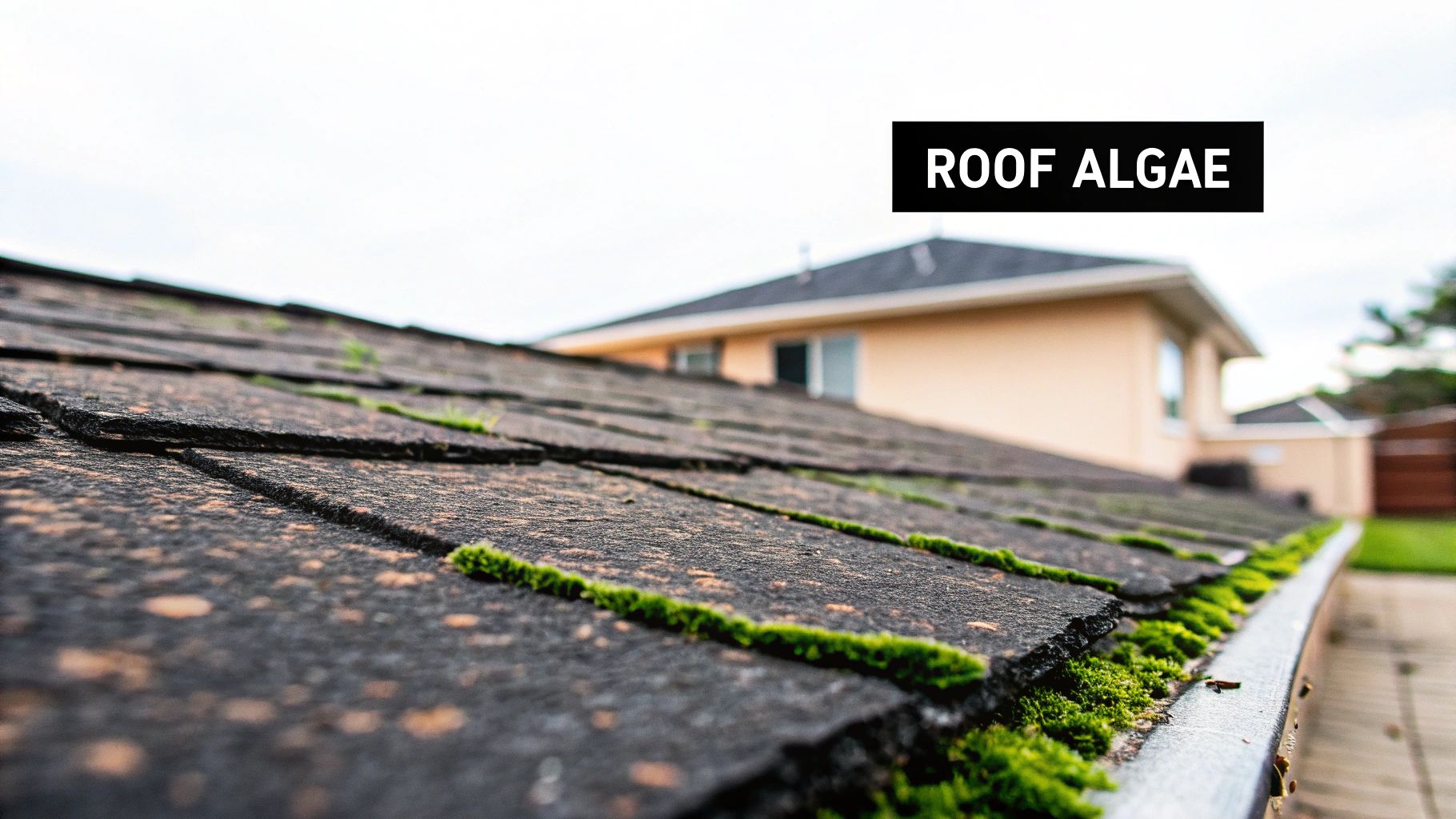
Think of Gloeocapsa magma as a microscopic squatter that lands on your roof and discovers an all-you-can-eat buffet. What's on the menu? The limestone filler used in most asphalt shingles.
As the algae feast and multiply, the colonies develop a dark, protective outer shell. This dark sheath acts like sunscreen, shielding the algae from the sun's harsh UV rays. It's this protective layer that we see as those distinctive black stains on your roof.
If you're seeing this, you're not alone. Black roof stains are an incredibly common headache for homeowners all over North America, especially in warm, humid climates where moisture is abundant. The algae just love the calcium carbonate in the shingles, and the result is those familiar black streaks. You can discover more insights about algae growth on shingles to understand just how widespread this issue is.
Why Some Roof Areas Are More Vulnerable
Have you ever noticed the stains are usually worse on certain parts of your roof? The north-facing slope, for instance? That's no accident. The north side of a home gets less direct sunlight, which means it stays damp much longer after it rains or even from morning dew.
This lingering moisture creates the perfect environment for Gloeocapsa magma to set up camp and flourish. The main things that encourage its growth are:
- High Humidity: Damp, sticky air provides the constant moisture the algae needs to survive and spread.
- Shade and Lack of Sun: Areas shaded by large trees or facing north simply don't dry out as quickly.
- Shingle Composition: That limestone filler in standard asphalt shingles is its primary food source.
The combination of shade, moisture, and a built-in food supply turns north-facing roof slopes into a five-star resort for algae. It's not just surviving there; it's thriving, which is why the stains look so much darker and more dramatic on those sections.
Why Roof Stains Are More Than Just an Eyesore
It's tempting to look at those dark streaks on your roof and just write them off as dirt or a minor cosmetic flaw. But the truth is, those stains are a clear sign of a living organism that's slowly eating away at your roof's structure. This is far more than a simple curb appeal problem.
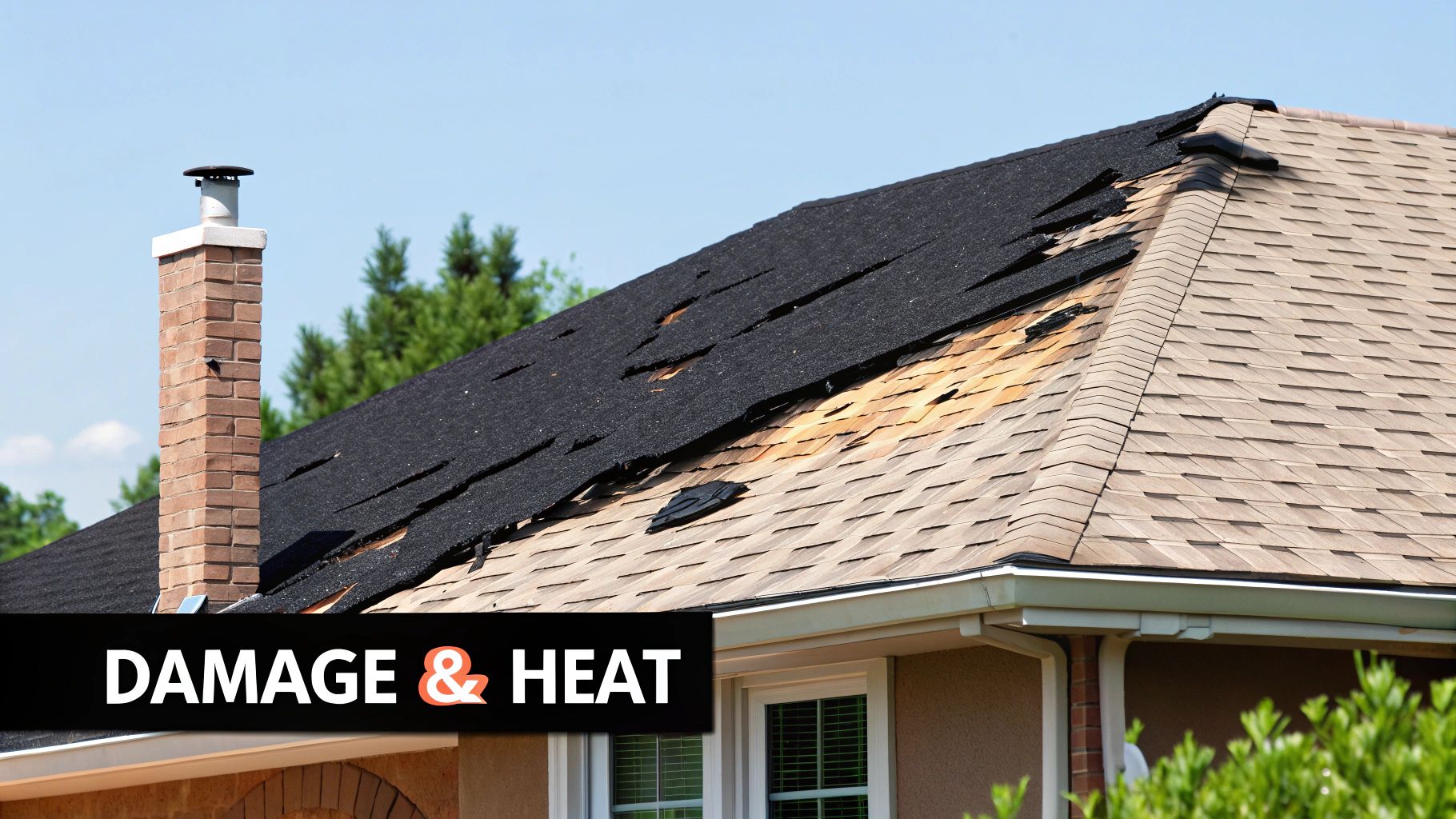
The culprit is an algae called Gloeocapsa magma, and it doesn't just sit harmlessly on top of your shingles. It's actually feeding on the limestone filler that's a key ingredient in modern asphalt shingles. As this algae feasts, its tiny root-like filaments dig in, prying loose the very granules that are meant to protect your roof. With every storm, more of these essential granules get washed away.
The Real Damage Happening Underneath
Think of the granules on your shingles as a suit of armor. This gritty top layer has one primary job: to shield the asphalt underneath from the sun's brutal UV rays and the harsh weather. When Gloeocapsa magma starts dislodging that armor, it leaves the core of the shingle exposed and incredibly vulnerable.
This exposure kicks the aging process of your roof into high gear. Without its protective granule coating, the asphalt heats up, dries out, and becomes brittle far more quickly. Before you know it, you'll see cracking and curling, which can drastically shorten your roof's lifespan and turn a manageable issue into a costly replacement. It's crucial to spot these problems early; you can learn more about what to look for by reading up on the common signs of roof damage.
This creates a whole cascade of problems:
- Premature Aging: An unprotected roof will fail years before its time as the asphalt breaks down under the sun.
- Reduced Protection: As granules disappear, shingles become less effective at repelling water, which increases the long-term risk of leaks.
- Structural Weakness: What began as a surface-level algae problem can eventually lead to moisture reaching and rotting the underlying roof deck.
The Hidden Costs to Your Wallet
On top of the physical damage, those black stains are hitting you directly in the wallet. The dark blanket of algae covering your roof has a surprisingly big impact on your home's energy efficiency.
A roof covered in dark algae stains basically becomes a giant heat sponge. It soaks up the sun's energy all day long, radiating that heat down into your attic and home, which can make your upper floors feel like an oven.
This extra heat puts a massive strain on your air conditioning system. It has to run harder and longer just to keep your home comfortable, leading to a very noticeable spike in your energy bills, especially during the summer. Getting rid of those stains isn't just about making your roof look good—it's about protecting your biggest investment and keeping your cooling costs down.
How To Safely Clean Black Stains From Your Roof
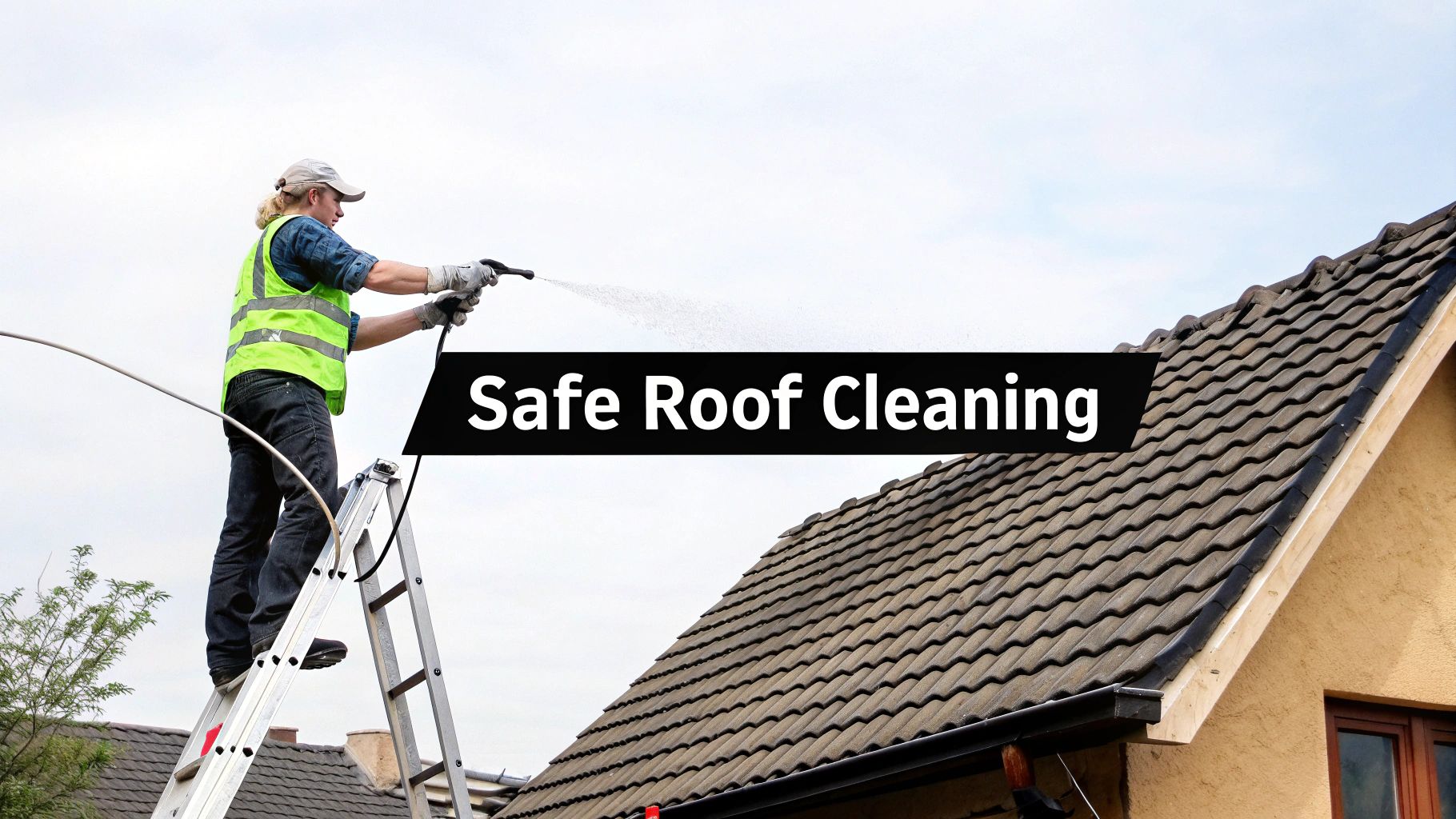
If you're thinking about tackling those black stains on your roof yourself, you're not alone. It can be a really satisfying project, but you have to go into it with a safety-first mindset. Let's be honest: getting up on a roof is risky business, so your top priority is always protecting yourself from a fall.
Before you even touch a cleaning solution, you need to set the stage. Pick an overcast, calm day if you can. This is key because it stops the cleaner from drying out in seconds under a hot sun, which gives it the time it needs to actually work on the algae.
Essential Safety Preparations
Let's talk about the non-negotiable stuff first. Your safety setup is the most important part of this whole job. Skimp on this, and you're asking for trouble.
- Secure Your Ladder: Make sure your ladder is on solid, level ground. It needs to stick up at least three feet above the edge of the roof so you can get on and off safely.
- Wear Proper Footwear: This is a big one. You need slip-resistant, rubber-soled shoes. A roof coated in wet algae is like an ice rink, and good grip is everything.
- Protect Yourself and Your Plants: Throw on some safety glasses to keep splashes out of your eyes. Also, take a minute to cover your landscaping with plastic sheeting to protect it from the cleaning solution that will run off the roof.
Crafting a Shingle-Safe Cleaning Solution
The secret to getting rid of those black stains without wrecking your roof is using the right cleaning mix. Aggressive chemicals, especially chlorine bleach, can eat away at asphalt shingles and corrode your metal gutters. A much better option—one that's still tough on algae—is an oxygen bleach solution.
Crucial Tip: Whatever you do, never use a pressure washer on an asphalt shingle roof. That intense blast of water will strip the protective granules right off your shingles. It’s a surefire way to shorten your roof's life and could even void its warranty.
To mix up a batch of shingle-safe cleaner, grab a garden pump sprayer. Combine one part oxygen bleach powder (like OxiClean) with four parts warm water. Stir it up until the powder is totally dissolved. This formula is gentle enough that it won't harm your shingles but powerful enough to kill the Gloeocapsa magma.
Keep in mind, this mix is great for algae, but if you've got other things growing up there, you might need a different plan. We cover that in our guide on the https://pennohiorc.com/best-way-to-remove-moss-on-roof/, as moss and algae often show up to the party together.
The Gentle Cleaning Process
Okay, you've got your safety gear on and your solution is mixed. Time to get to work. This process is all about patience, not brute force.
- Saturate the Stains: Work in smaller, more manageable sections. Use the pump sprayer to completely wet the stained areas. Always spray from the bottom up to avoid creating clean streaks.
- Let the Solution Dwell: This is where the magic happens. Let the cleaner sit on the shingles for a good 15-20 minutes. This dwell time is what allows the oxygen bleach to break down and kill the algae. You should start to see the black stains fade a bit.
- Rinse Gently: Grab a regular garden hose and use a standard nozzle to gently rinse the roof, working from the top down. You're not trying to blast anything off; you're just washing away the dead algae and the leftover cleaner.
Don't be discouraged if your roof doesn't look perfect right away. It can take a few weeks and a couple of good rainstorms to wash all the dead algae off completely. This gentle, patient approach is the best way to get your roof looking good again without causing any long-term damage.
Should You DIY or Hire a Pro to Clean Your Roof?
So you've spotted those ugly black streaks on your roof. The big question now is: do you tackle this yourself, or do you call in the professionals? Honestly, there’s no single right answer. It really boils down to your budget, how comfortable you are on a ladder, and what your time is worth.
Deciding whether to go it alone or hire someone is a classic homeowner dilemma. The same logic applies whether you're debating DIY or hire a handyman for cleaning tasks or dealing with your roof. The appeal of saving a few bucks is strong, but cleaning a roof isn't like scrubbing the kitchen floor—it's a tough, risky job.
The Do-It-Yourself Approach
Going the DIY route puts you in the driver's seat, but it also means you’re on the hook for everything. You’ll need to gear up with the right cleaning solution (oxygen bleach is a good bet), a garden sprayer, and non-negotiable safety equipment. We're talking a solid, well-placed ladder and shoes with excellent grip.
The real trade-off here is your time and personal safety. This isn't a quick 30-minute task; it’s an all-afternoon affair. Let's be blunt: working high up on a potentially wet, slippery roof is dangerous. One wrong move could end in a serious fall. While you save money on labor, a slip-up could easily damage your shingles or, far worse, land you in the hospital.
The DIY method can work well if you have a low-pitched roof, the stains aren't too severe, and you are 100% confident and experienced with working safely at heights. But you have to accept that the risk of injury and roof damage is always there.
Calling in a Professional Service
Hiring a professional service will cost you more upfront, but what you’re really paying for is expertise, safety, and a job done right. These crews roll up with commercial-grade equipment and specialized cleaning formulas designed to kill the algae without harming your shingles. They know the exact pressure and technique to use.
Professionals also carry liability insurance, which is a huge deal. If someone gets hurt on your property, you're covered. They take on all the risk, from navigating steep rooflines to protecting your garden beds below. It's a bigger initial investment, for sure, but the peace of mind and lasting results often make it the smarter choice, especially for two-story homes or roofs with tricky angles.
Comparing DIY vs Professional Roof Cleaning
To help you decide, let's break down the key differences side-by-side.
| Factor | DIY Cleaning | Professional Treatment |
|---|---|---|
| Cost | Lower initial cash outlay. You only pay for supplies and equipment. | Higher upfront cost for labor, equipment, and expertise. |
| Safety | High risk. You are responsible for all safety precautions on a slippery, elevated surface. | Low risk for the homeowner. Professionals are trained, equipped, and insured for this work. |
| Effectiveness | Can be effective for light stains, but results may vary. Risk of using the wrong products or pressure. | Highly effective. Pros use commercial-grade solutions that provide a deep, long-lasting clean. |
| Time & Effort | Very time-consuming and physically demanding. It can take up an entire weekend day. | Quick and hassle-free. The crew handles everything, usually in just a few hours. |
| Equipment | You'll need to buy or rent a ladder, sprayer, safety gear, and cleaning solutions. | No equipment needed on your end. The service brings everything required for the job. |
| Risk of Damage | Moderate to high. Using too much pressure or harsh chemicals can damage shingles and void warranties. | Very low. Experienced cleaners know how to protect your roof, gutters, and landscaping. |
Ultimately, choosing between DIY and a professional comes down to a personal risk-reward calculation. If you're an experienced and cautious DIYer with a simple, one-story roof, you might be fine. But for most people, especially with steeper or more complex roofs, letting a pro handle it is the safer, more effective path to a clean roof.
Keeping Future Roof Stains at Bay: A Long-Term Game Plan
Getting those black streaks off your roof is a great start, but it's really just treating the symptom. If you don't have a long-term strategy, you'll find yourself battling the same problem every couple of years. The real win comes from shifting your mindset from reactive cleaning to proactive prevention. It's the best way to keep your roof looking clean and protect its lifespan.
One of the smartest, most effective methods is to use metal strips to create an environment where algae just can't get a foothold. By installing thin strips of zinc or copper along the peak of your roof, you create a powerful, hands-off cleaning system that works around the clock.
Here’s how it works: whenever it rains, water flows over these metal strips. As it does, it picks up tiny metal ions that are toxic to algae. This ion-infused rainwater then washes down your entire roof, creating an invisible, protective shield that stops new algae colonies from ever forming. It’s like giving your roof a gentle, preventative cleaning with every single rainfall.
Your Yard and Roof are a Team
Believe it or not, your landscaping and routine upkeep play a massive role in whether black stains show up. Algae absolutely love damp, shady spots, so your main goal should be to maximize sunlight and airflow across your roof's surface.
Take a look at your tree canopy. Overhanging branches are a double-whammy—they cast long shadows and drip water onto your shingles long after a storm has passed, keeping them damp.
- Trim Those Trees: Cutting back limbs that hang over your roof is a game-changer. It lets direct sunlight hit the shingles, helping them dry out much faster.
- Let the Air Flow: Good air circulation is one of algae's worst enemies. Trimming back any dense bushes or trees right next to the house lets the breeze move freely across the roof.
- Clean Your Gutters: Clogged gutters are a breeding ground for problems. They trap moisture and rotting leaves right at the edge of your roof, creating the perfect damp, nutrient-rich environment for algae to thrive. This is a critical task, and our guide on how to clean downspouts and gutters walks you through it.
Here’s a simple way to think about it: if a section of your roof stays in the shade and looks damp for most of the day, it's practically rolling out the welcome mat for algae. A little strategic tree trimming can completely change the environment up there, making your roof a much less friendly place for that gunk to grow.
Consider Algae-Resistant Shingles for Your Next Roof
If a full roof replacement is on the horizon, you have the opportunity to install the ultimate long-term solution: algae-resistant (AR) shingles. This isn't just a coating; the protection is literally baked into the shingle itself.
These advanced shingles are made with copper granules mixed right in with the standard colored granules. It works on the same principle as the metal strips—rainwater washes over them, releasing those algae-killing copper ions that continuously protect the roof. It’s a built-in defense that stops black stains before they ever have a chance to start.
Thanks to technology, these shingles have become incredibly popular. By the 2020s, their market share had climbed to an impressive 30-40% of all asphalt shingle sales in the U.S. You can learn more about algae-resistant shingle technology to see just how far the industry has come in fighting this common problem.
When You Should Call A Roofing Professional
While the DIY route can be tempting for a few minor stains on a low-slope roof, there are definitely times when it’s best to call in the pros. Knowing when to hang up the sprayer and pick up the phone is key to protecting your roof and, more importantly, yourself.
Safety always comes first. If you have a steep roof, a multi-story house, or just aren't comfortable with heights, hiring a professional is a no-brainer. Roofs get slick when they're wet, and a fall is a life-altering risk that simply isn't worth a few saved bucks.
Spotting Deeper Issues
Beyond the safety aspect, those black streaks can sometimes be a symptom of a much bigger problem—one that a quick cleaning won't fix. In fact, trying to clean a roof that’s already compromised can do more harm than good.
Give a roofer a call right away if you see any of these red flags:
- Damaged Shingles: Keep an eye out for shingles that are cracked, curling up at the edges, or have obvious bald spots where the protective granules have worn away.
- Widespread Growth: If huge patches of your roof are covered in a thick blanket of algae, moss, or lichen, it's a sign the problem has gotten out of hand.
- Signs of Leaks: Water stains on your ceiling or in the attic are a sure sign that the problem goes far deeper than just surface-level stains.
Honestly, the smartest and most cost-effective move is often just getting an expert opinion. A pro can tell you if those black streaks are purely cosmetic or if they're a warning sign that your roof is in trouble, saving you from major headaches down the road.
This infographic lays out a couple of simple, proactive steps you can take to stop roof stains before they even start.
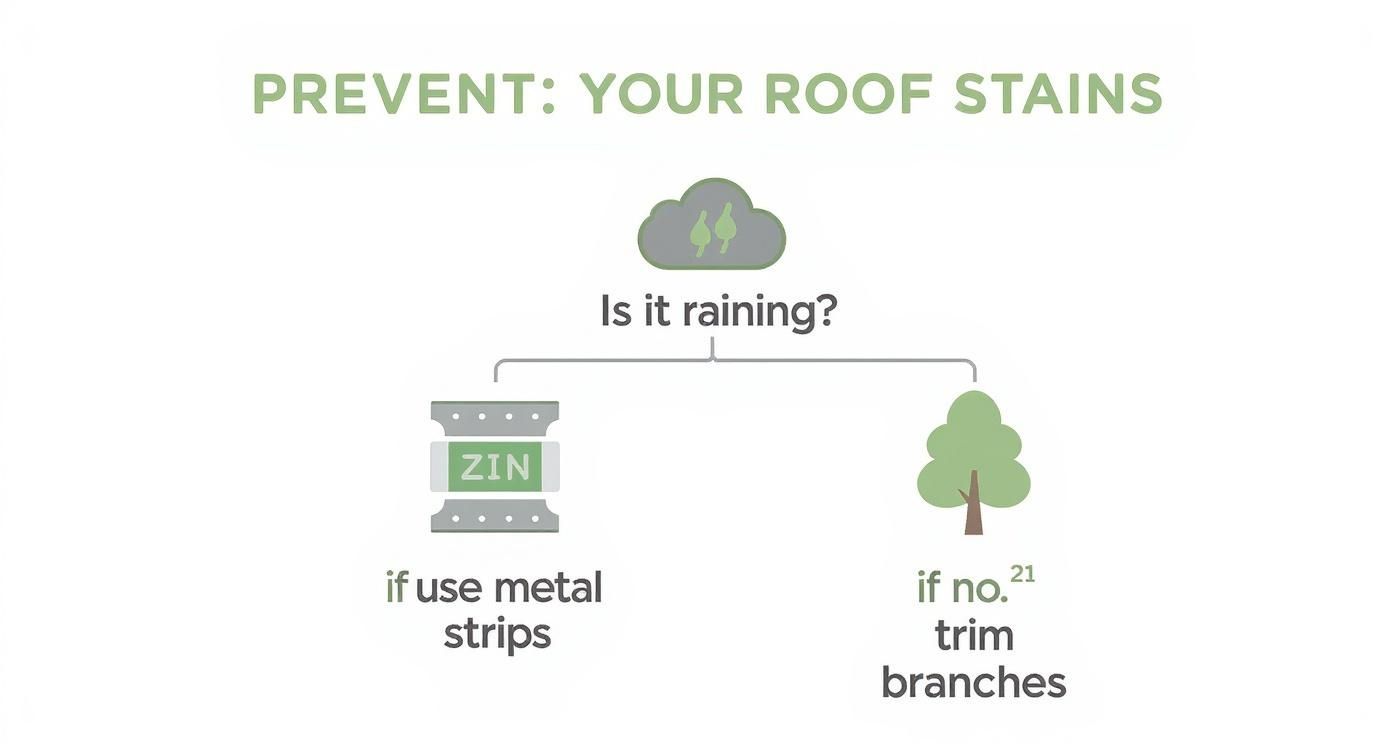
As you can see, a little bit of maintenance—like trimming back tree branches—goes a long way in making your roof a less friendly place for algae to grow. But when you do need to bring in a professional for stubborn stains or other roofing work, knowing how to choose a reputable roofing contractor is the first step toward getting the job done right.
A Few Common Questions We Hear About Black Roof Stains
When those ugly black streaks first appear on a roof, most homeowners have the same set of questions. Getting straight answers can help you figure out the best way to protect your home's most important asset.
"How long will a professional roof cleaning last?"
This is probably the number one question we get. A professional soft wash treatment will typically keep those black stains on your roof away for anywhere from one to three years.
What makes the difference? It really boils down to your local climate and your property's specific environment. If you live in a particularly humid part of the country or your roof is shaded by large trees, you might be on the shorter end of that timeline.
"Do these black stains mean I need a brand new roof?"
It's easy to see those streaks and immediately think the worst, but take a breath. In most cases, black stains are just a cosmetic problem caused by algae. It doesn't automatically mean your roof is failing or that you need to start pricing a full replacement. The algae is just sitting on the surface.
That said, you do need to be a savvy homeowner and look for other signs of trouble. If you see the stains along with things like piles of shingle granules in your gutters, shingles that are cracking or curling up at the edges, or, of course, active leaks inside, then you've got a much bigger issue on your hands.
The most important thing to remember is this: Algae stains are a maintenance problem, not a sign of imminent roof failure. But dealing with them early on prevents the kind of slow decay that can lead to much more expensive problems down the road.
"Will cleaning my roof void my shingle warranty?"
This is a fantastic question, and the answer is: it absolutely can, if you do it wrong. Blasting your shingles with a high-pressure washer or dousing them in harsh chemicals like undiluted chlorine bleach is a fast way to cause damage. That kind of aggressive approach will almost certainly void your manufacturer's warranty.
To stay protected, you have to follow the shingle manufacturer's specific cleaning recommendations. The safest bet is to hire a professional who knows the right way to do it using a gentle, approved soft washing method. This keeps your roof clean and your warranty valid.
Not sure if your roof just needs a good cleaning or if there's a more serious problem lurking? The experienced team at Penn Ohio Roofing & Siding Group can give you an honest, expert assessment. Contact us today for a free estimate and we'll help you figure it out.