

If you're reading this, there’s a good chance your roof has started forcing the issue. Maybe you found shingle grit in the gutters. Maybe a windstorm pulled a few tabs loose. Maybe you noticed a ceiling stain and realized the problem isn’t going away on its own.
That’s usually how Asphalt shingle roof replacement Mercer PA starts for most homeowners. Not with a perfect plan, but with a problem that keeps showing up.
Generic roofing advice doesn’t help much in Mercer County. Local weather is hard on shingles. Township permit rules can trip up a job before it starts. And if money is tight, there are local funding options many homeowners never hear about. A good replacement isn’t just about putting on new shingles. It’s about making the right calls before tear-off, during installation, and after the crew leaves.
Telltale Signs Your Mercer PA Roof Needs Replacement
A failing roof usually gives warnings before it leaks badly. The trouble is that many of those warnings look small at first.
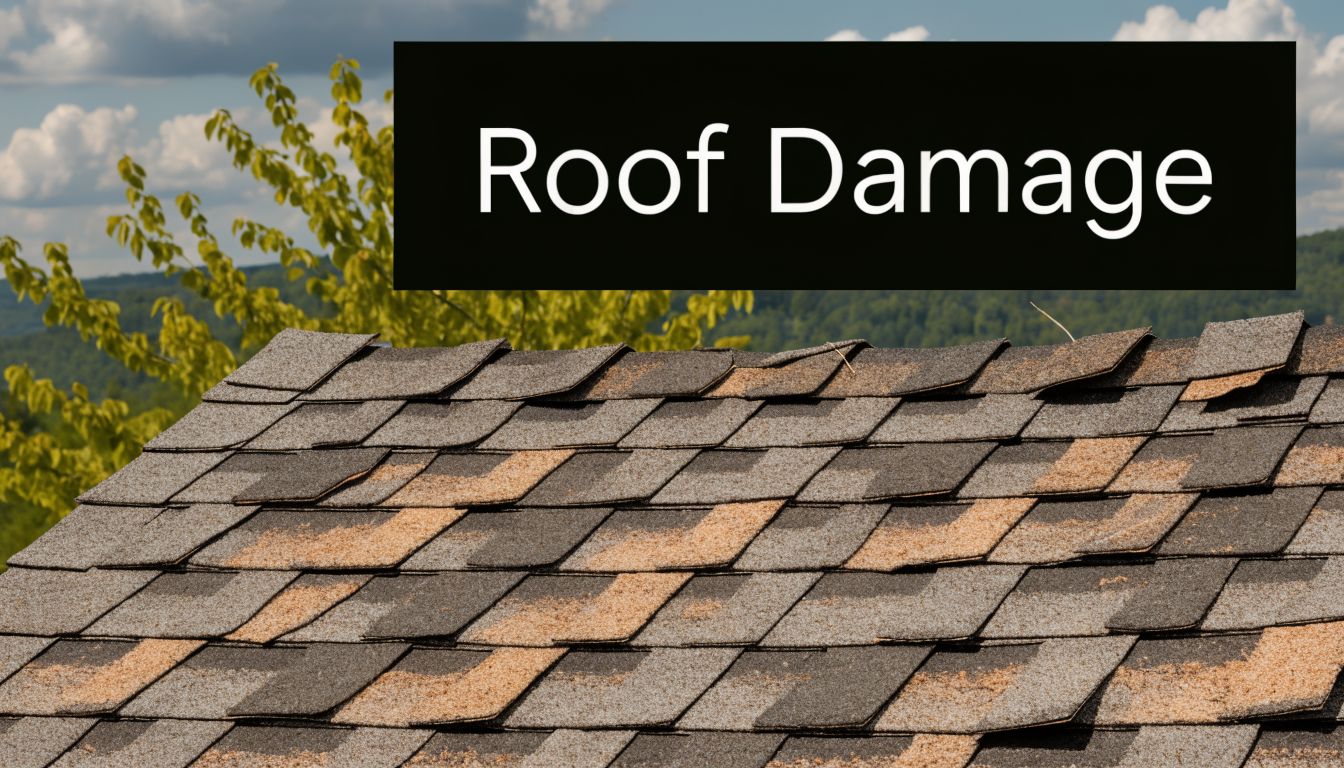
One of the first things homeowners notice is granule loss. It looks like coarse black or gray sand collecting in gutters or at the bottom of downspouts. Those granules protect the shingle surface. When they start washing off in a noticeable amount, the shingles are wearing out.
Start with what you can see from the ground
Stand back from the house and look at the roof in full daylight. Don’t just scan for missing pieces. Look for uneven wear.
Common warning signs include:
- Curling edges that lift instead of lying flat.
- Cracked tabs after repeated freeze and thaw cycles.
- Bald spots where granules are gone and the asphalt mat shows through.
- Dark streaks that often show up in humid conditions.
- Patchwork repairs where one section looks much newer than everything around it.
A few damaged shingles can sometimes be repaired. Widespread aging usually means the roof system is at the end of its useful life.
In Mercer County, roofs over 15 years old are often prime candidates for replacement because seasonal weather speeds up granule loss and cracking, which is one reason homeowners start looking at full replacement to protect structural integrity (local Mercer County roofing permit and replacement guidance).
Look inside the house too
A roof problem doesn’t always announce itself on the roof. Sometimes the first clue shows up in the attic, on an upstairs ceiling, or inside an exterior wall.
Check for:
- Water stains in the attic on the underside of decking
- Damp insulation near the eaves or around penetrations
- Musty smells after rain or snow melt
- Peeling paint near upper wall lines
- Soft drywall around ceiling corners
If you’ve seen interior symptoms but you’re not sure whether they’re tied to roofing, this guide to critical signs of water damage in walls helps connect what you’re seeing indoors to possible hidden moisture problems.
A roof leak rarely stays a roof-only problem. Once water gets in, it starts affecting insulation, framing, drywall, and trim.
When replacement makes more sense than repair
Repairs work when the damage is isolated. They don’t work well when the roof is failing across the whole surface.
That’s usually the case when you see several of these at once:
- Multiple leak areas instead of one obvious entry point
- Shingles lifting in several slopes after wind
- Visible sagging or soft spots that hint at deck trouble
- Repeated repair history with no lasting fix
If you can walk a property and find issues on the front slope, back slope, around penetrations, and near the ridge, that’s no longer a small repair conversation. That’s a replacement conversation.
Mercer weather tends to expose weak roofs fast. Winter moisture, spring storms, summer humidity, and fall wind all test the same roof in different ways. When the shingles are already tired, each season makes the next problem easier to spot.
Choosing Asphalt Shingles and Understanding Costs in Mercer
Most homeowners start with one question. What’s this going to cost me?
The short answer is that in Pennsylvania, a typical asphalt shingle roof replacement for an average-sized home runs about $5,000 to $12,000, and permit costs can add $100 to $500 depending on the municipality. Roof size, pitch, and local labor rates all affect the final number (Pennsylvania asphalt roof cost guide).
The longer answer is that cost depends heavily on what type of shingle you choose and what the roof reveals once the old system comes off.
The three shingle tiers most homeowners compare
Not all asphalt shingles are built for the same budget or the same house.
| Asphalt Shingle Options and Cost Comparison for Mercer PA Homes | |||
|---|---|---|---|
| Shingle Type | Average Lifespan | Typical Wind Warranty | Estimated Cost (Installed) |
| 3-tab | Shorter end of the asphalt category | Lower-end ratings are common | Lower overall project cost |
| Architectural | Common choice for balanced durability and appearance | Often stronger than basic 3-tab options | Mid-range overall project cost |
| Luxury | Designed for upgraded appearance and heavier build | Premium-rated options can offer stronger wind performance | Higher overall project cost |
That table stays qualitative on purpose because the final installed number depends on the roof itself. Two homes in the same Mercer neighborhood can land in very different price ranges if one has steep slopes, multiple valleys, chimney flashing, and deck repairs.
What changes the final number
A homeowner often hears the base roof price and assumes that’s the whole job. It usually isn’t.
Here’s what moves the price up or down:
- Roof size and layout. A simple ranch is different from a cut-up roof with dormers and intersecting ridges.
- Pitch. Steeper roofs slow production and require more safety setup.
- Tear-off condition. One layer comes off differently than a roof with old problem areas.
- Deck repairs. Rotten or delaminated sheathing has to be replaced before the new system goes on.
- Accessories. Flashing replacement, ventilation updates, and ridge cap work all matter.
- Township permit costs. Those vary across Mercer County.
For a broader breakdown of local price drivers, this page on cost to replace asphalt shingles is useful if you want to compare estimate line items before signing anything.
What tends to work best in Mercer
In this area, architectural shingles are usually the practical middle ground. They suit most homes, hold their appearance better than basic options, and fit the kind of weather exposure Mercer roofs see year-round.
Premium shingles make sense when appearance matters a lot or when a homeowner wants a more upgraded profile. Basic 3-tab shingles still have a place on tighter budgets, but they’re often chosen for cost first, not long-term performance.
Practical rule: Buy the roof system that fits your house and exposure, not just the cheapest shingle bundle on paper.
A simple, low-slope roof in a sheltered spot gives you more flexibility. A roof that catches wind, shade, and constant moisture needs a more careful material choice. That’s where a good estimate should explain trade-offs clearly, not just hand over one lump-sum price.
The Roof Replacement Process From Tear-Off to Cleanup
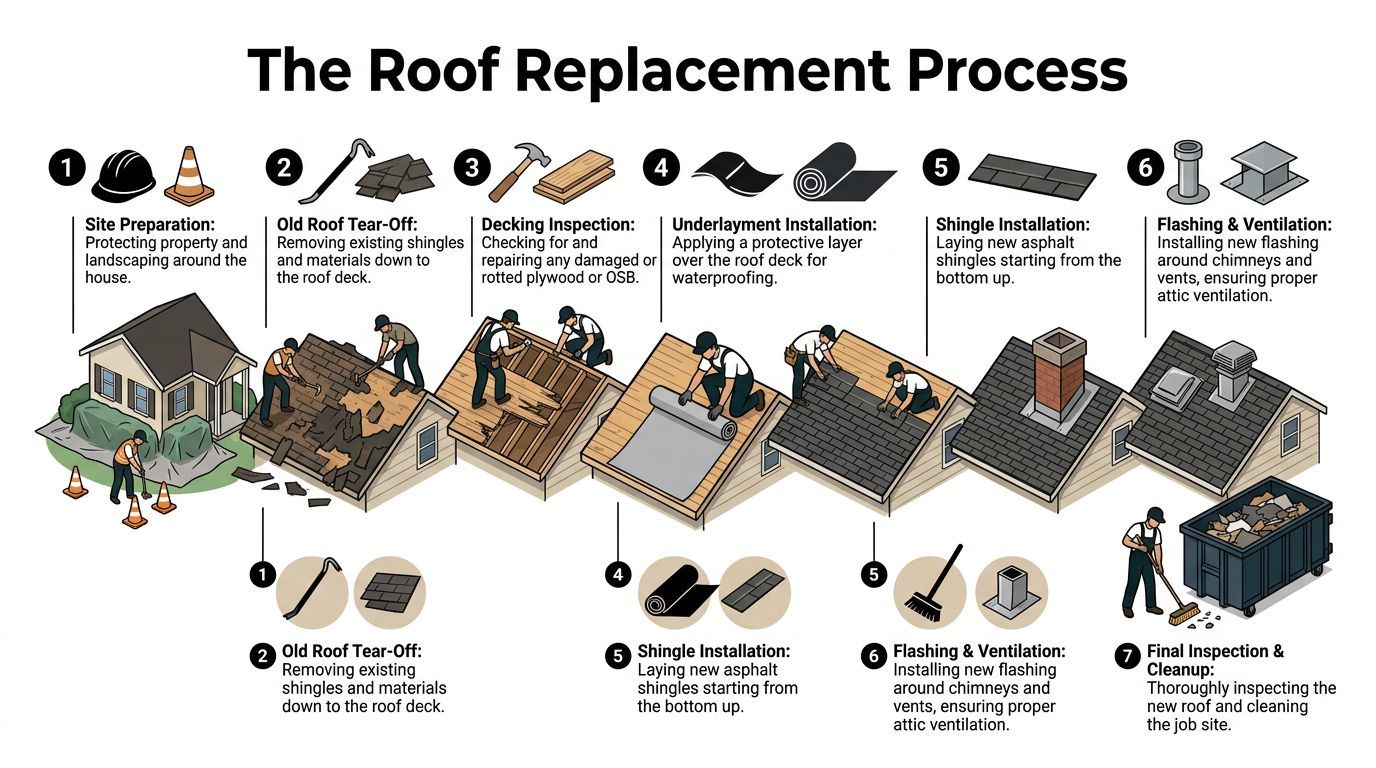
A Mercer roof replacement usually starts before sunrise, with a dumpster in the drive, tarps set around the foundation, and a crew checking where debris will fall before anyone touches the first shingle. That early setup matters here. Many homes have tight driveways, mature landscaping, detached garages, or soft yard conditions from spring rain and snowmelt.
What happens before the first shingle comes off
A disciplined crew protects the property first. Tarps go over shrubs and walkways, plywood may be used where heavy equipment could mark a driveway, and safe ladder access gets set before tear-off starts.
Homeowners should also know whether the crew expects a one-day tear-off and dry-in or a multi-day job. In Mercer County, weather can change fast. A forecast with afternoon storms or gusty lake-effect wind calls for tighter staging and a clear plan for keeping the house watertight if the roof is opened up.
Permit timing can affect the schedule too. Some homeowners compare roofing paperwork to understanding local permit requirements for other exterior projects, but roofing often moves faster and leaves less room for delay once materials are on site.
Tear-off is the inspection stage
The old roof needs to come off all the way to the deck if you want to know what condition the house is really in. That is where hidden trouble shows up. I usually tell homeowners this is the most honest part of the job, because stained sheathing, soft spots near eaves, and old flashing repairs cannot hide once the shingles are gone.
A proper sequence looks like this:
- Strip shingles and old accessories down to the wood deck.
- Inspect the sheathing for rot, delamination, sagging, and past leak areas.
- Replace damaged decking before any new roofing goes on.
- Re-nail loose sections so the deck is solid for the new system.
- Install underlayment and waterproofing layers before shingles, flashing, and ridge components.
If you want to see what those water-shedding layers do, this guide on roof underlayment and where it fits in the system explains it clearly.
The rebuild matters as much as the shingles
Once the deck is sound, the roof gets rebuilt from the bottom up. Ice and water protection goes in the vulnerable areas first, then the rest of the underlayment, then starter shingles, field shingles, flashing, hip and ridge pieces, and ventilation components.
Mercer weather is hard on weak details. Snow sits at eaves. Wind pushes rain into sidewalls and chimney joints. Summer heat bakes south-facing slopes, while shaded north slopes can stay damp longer after a storm. That is why correct nailing, clean flashing work, and balanced ventilation matter more than the shingle color or brand name on the wrapper.
Good crews also watch the small things during installation. Valleys need to stay clean and straight. Pipe boots should fit tightly and sit flat. Chimney flashing should be rebuilt when needed, not smeared with roofing cement and called done.
Cleanup tells you how the crew works
The last hour of the job says a lot about the whole job.
Cleanup should include hauling away all tear-off debris, picking scraps out of mulch beds, checking window wells and porches, and running a magnetic roller through the lawn, driveway, and around garage doors. On rural Mercer properties, I also like to see a wider nail sweep around side yards and gravel areas where kids, pets, or mower tires will find what the crew missed.
The final walkthrough should be simple and specific. Homeowners should be shown any decking that was replaced, any flashing areas that needed extra work, and any items worth watching after the first heavy rain. You should also leave that conversation with photos, warranty paperwork, and a clear invoice that matches the work performed.
A roof replacement is not just a shingle delivery and a fast cleanup. It is site protection, tear-off, deck inspection, weather-tight installation, and a jobsite left safe enough that you are not finding nails in the driveway next month.
Navigating Mercer PA Roofing Permits and Local Codes
Permits are where many roofing jobs get confusing for homeowners. The state rules are one thing. Township enforcement is another. That’s why generic advice often falls short in Mercer County.
The part many homeowners miss
In Mercer County, many townships require permits for full tear-offs, and eligible rural homeowners may be able to access USDA repair loans up to $50,000, which makes permitting and financing part of the same conversation for some households (Mercer County permit and USDA repair loan overview).
That’s one of the biggest local blind spots. Homeowners often focus on shingles and color choices, then get surprised when a township asks for paperwork or when financing help was available but never explored.
How local code questions usually play out
Pennsylvania roofing rules often apply a 25% rule for repairs versus larger replacement scope. In practical terms, small repairs under that threshold may be treated differently than major work. Full stripping to the sheathing or larger overlay work typically triggers a permit requirement, and approval can take anywhere from days to weeks depending on the municipality and workload.
What matters most is this: don’t assume your township handles roofing the same way as the next one over.
A safe approach is to verify:
- Whether your municipality requires a permit for a full tear-off
- Whether deck replacement changes the scope of review or inspection
- Whether insurance-related work needs extra documentation
- How the application is submitted, whether online, by email, or in person
If you’ve ever dealt with sheds, additions, or detached structures, the logic is similar. This guide on understanding local permit requirements gives a useful example of why local review matters even when people assume a project is too simple to require paperwork.
Why permit compliance protects the homeowner
A permit isn’t just bureaucracy. It creates a paper trail. That matters when you sell the house, file an insurance claim, or need to show the replacement was done properly.
Some of the most expensive roofing problems aren’t installation mistakes. They’re jobs done without the approvals that should have been pulled in the first place.
For homeowners in qualifying rural parts of Mercer County, the financing side deserves attention too. If a roof is failing and money is the obstacle, USDA repair assistance may be worth exploring before delaying the work. A delayed roof often becomes a larger project once water reaches framing, insulation, or interior finishes.
How to Select a Qualified Mercer PA Roofing Contractor
Shingles matter. Underlayment matters. Flashing matters. But the contractor still decides whether those materials are installed correctly.
A poor crew can ruin a good product. A disciplined crew can make a standard asphalt system perform the way it should.

What to verify before you sign
Start with the essentials.
- Insurance. Ask for proof of liability coverage and workers’ compensation.
- Licensing and business identity. Make sure you know exactly who is contracting the job.
- Written scope. The estimate should say whether it includes tear-off, flashing, ventilation components, disposal, and permit handling.
- Local familiarity. Mercer County weather and township processes aren’t the same as in every nearby market.
A good contractor should also be comfortable discussing deck repair allowances, attic ventilation concerns, and how they handle weather interruptions.
Questions that reveal whether the contractor knows the work
Some estimate conversations sound polished but stay vague. That’s a warning sign.
Ask direct questions such as:
- Will you do a full tear-off or propose an overlay?
- How do you handle damaged decking if you find it?
- Which flashing components are replaced as part of the job?
- Who pulls the permit if the township requires one?
- How is cleanup handled at the end of the project?
The answers matter as much as the price. A contractor who gets irritated by basic scope questions usually isn’t the one you want on your roof.
Certifications and reputation
Manufacturer certifications can be useful when they reflect training and installation standards. They shouldn’t be the only factor, but they do tell you the contractor has met a higher bar with a manufacturer program.
Penn Ohio Roofing & Siding Group has over 25 years of experience and has received the GAF Triple Excellence Award, according to the verified company background provided for this article. That doesn’t mean homeowners should stop vetting. It means credentials should be part of the review, alongside insurance, local track record, and proposal clarity.
For readers comparing local options, the company’s Mercer service page is here: roofing contractor Mercer PA.
The right hire doesn’t just promise a new roof. They explain the system, document the scope, and answer hard questions without dodging them.
Your Post-Installation Checklist for Warranty and Peace of Mind
When the last bundle is gone and the truck pulls away, the project isn’t fully done until the paperwork and final review are handled.
A homeowner should do one last walk-around with the contractor. Look at the ground first. Nails, wrapper scraps, and flashing cutoffs are the easiest clues that cleanup was rushed. Then step back and check the roof lines from multiple angles to make sure the shingle courses look even and the ridge line is clean.
What to collect before you file the project away
Keep all project documents together in one folder, whether digital or paper.
That should include:
- Final invoice
- Permit documentation, if one was required
- Manufacturer warranty paperwork
- Workmanship warranty details
- Any photos of deck repairs or concealed damage found during tear-off
If you sell the home later, that file helps answer buyer questions fast. If an issue comes up after a storm, you won’t be searching for missing documents.
What to ask before the contractor leaves
Don’t settle for “you’re all set.”
Ask:
- What warranty covers the shingles and what covers labor
- What maintenance could affect warranty coverage
- Which roof areas deserve occasional visual checks
- Who to call if you notice an issue after a major storm
Simple habits that protect the investment
You don’t need to baby a new asphalt roof. You do need to stay observant.
Keep gutters flowing, watch for tree limbs rubbing the roof surface, and pay attention after high wind or ice events. If something looks off, address it early. A small flashing issue is easier to solve than months of hidden moisture.
A new roof should bring relief, not uncertainty. The final checklist is what turns a finished job into a protected investment.
Frequently Asked Questions About Roof Replacement in Mercer
Can a roof really be replaced during winter in Mercer
Yes, if the weather gives the crew a safe window.
Mercer County winters are less predictable than many homeowners expect. One week can bring frozen mornings and wind across open farmland. The next can be mild enough for a full tear-off and dry-in. Winter roof replacement comes down to surface safety, how shingles are stored and handled, and whether the installer follows cold-weather application guidance from the manufacturer. GAF, for example, notes that asphalt shingles can be installed in colder conditions with extra care for sealing and handling (GAF cold weather roofing guidance).
The catch is simple. Winter jobs leave less room for mistakes. Seal strips may take longer to bond, brittle shingles can scuff or crack if handled roughly, and short daylight hours tighten the schedule. An experienced Mercer roofer watches the forecast closely and does not force a tear-off on a day that should be rescheduled.
Will insurance pay for a roof replacement after storm damage
Sometimes. The key question is whether the loss came from a covered event or from age and wear.
In Mercer, wind is the more common trigger for claims than homeowners realize, especially on older three-tab roofs and on slopes exposed to open gusts. Hail can qualify too, but the issue is usually functional damage, not just cosmetic marks. Good documentation helps. Take clear photos, note the date of the storm, and save any pieces of shingle that blew into the yard if you can do it safely.
A contractor can point out storm-related damage and provide photos. The carrier still decides coverage.
How long is my house going to be disrupted
For a standard asphalt shingle replacement on a typical home, the loudest disruption is usually concentrated into one working day, with more time added if the roof is large, steep, cut up with valleys and dormers, or if bad decking shows up after tear-off.
Expect steady noise, delivery traffic, and limited access around part of the house.
Families in Mercer often ask about pets, home offices, and school-day schedules. Those are the right questions. Dogs often need to be boarded or kept well away from the work area, and anyone on calls all day should plan to work elsewhere during tear-off. If your driveway is narrow or shared, ask in advance where the dump trailer and shingle delivery will sit.
Do I need a permit for a roof replacement in Mercer
Sometimes yes, sometimes no, making local advice essential.
Permit expectations can vary by municipality in Mercer County. A borough may want a straightforward roofing permit, while a township may ask different questions about sheathing repair, number of existing layers, or disposal. If the house is in a historic area or part of a planned development, there may be another layer of approval beyond the roofing permit itself. The Pennsylvania Uniform Construction Code also affects when structural repairs trigger inspection requirements (Pennsylvania Department of Labor and Industry UCC information).
Homeowners should not guess. Ask the contractor who is pulling the permit, what the local office requires, and whether the contract price includes that cost.
Is a cheap estimate a bargain or a warning sign
Usually it means the scope is thin.
In Mercer, the low number often leaves out one of the items that causes trouble later. Flashing replacement around chimneys and walls. Ice and water protection at eaves and valleys. Permit fees. Dump costs. Realistic allowance for bad OSB or plank decking. You do not see that gap until the roof is open and the change orders start.
Read the estimate line by line. If one bid is far lower than the others, ask exactly what gets replaced and exactly what does not.
Are there financing or assistance options for roof replacement in Mercer
Yes, and rural homeowners should ask about them early.
Parts of Mercer County may qualify for USDA-backed repair or improvement financing, depending on the property and borrower situation. Some homeowners also use home equity products or contractor-arranged financing. The better approach is to compare the terms before the project starts, not after a leak turns urgent. The USDA Rural Development program is one place to review current Pennsylvania housing repair options (USDA Rural Development Pennsylvania housing programs).
A good contractor will not try to play loan officer. They should be able to tell you which projects commonly fit financing and where to start looking.
What should I do before the crew arrives
A little prep makes the day easier.
- Move vehicles out of the driveway and away from the garage.
- Cover or relocate attic storage if dust would be a problem.
- Take down fragile wall hangings on upper floors.
- Provide access to any gates the crew needs for material access and cleanup.
- Let close neighbors know there will be noise and delivery traffic.
Homes in Mercer often have detached garages, narrow drives, and mature trees. Mention those details before delivery day so the crew can plan trailer placement and shingle loading.
How do I know the replacement was worth doing
You should see it in the roof, and feel it the next time a hard Mercer storm rolls through.
The roof line should look straight. The shingle courses should track cleanly. Flashings at walls, chimneys, and pipe boots should look deliberate, not reused and bent back into place. Inside the house, the bigger change is peace of mind. No buckets in the hallway. No checking the attic after every wind event. No wondering whether the next freeze-thaw cycle will open the same leak again.
If you need a straight answer about whether your roof needs repair or full replacement, Penn Ohio Roofing & Siding Group serves Mercer County with residential and commercial roofing services, free estimates, and emergency availability. A good next step is a site inspection that looks at the shingles, decking condition, permit needs, and whether financing options may apply to your property.