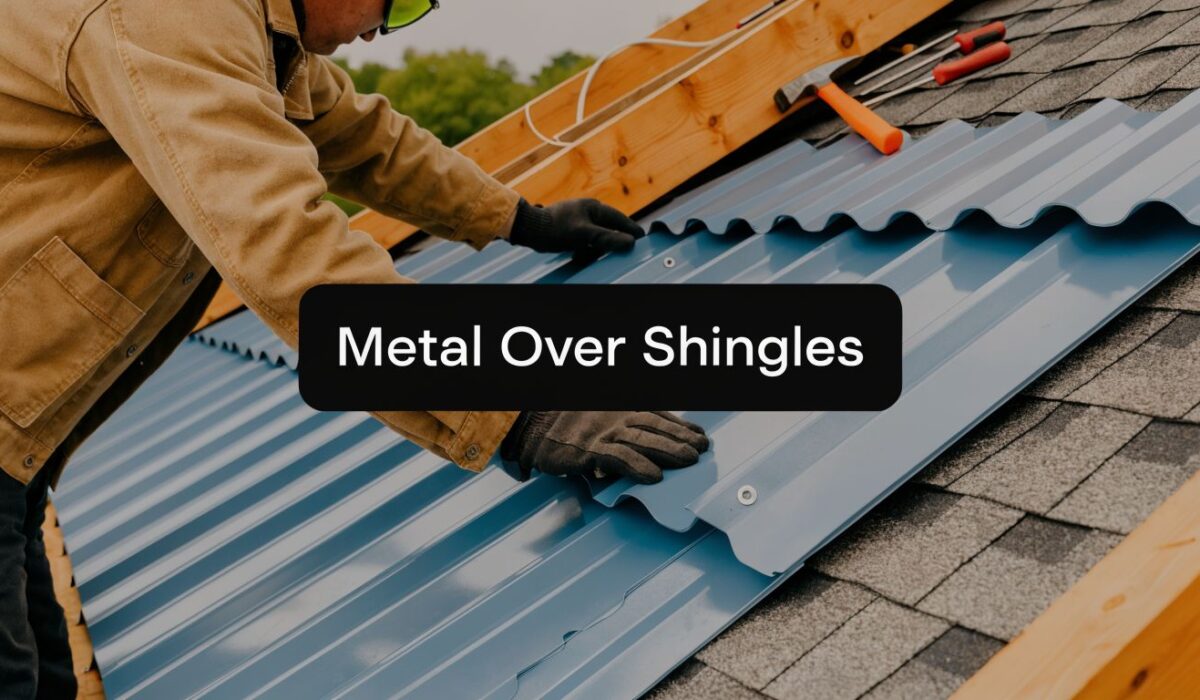
Yes, in many cases you can install a metal roof over a single layer of asphalt shingles, but several critical conditions must be met. If the roof already has more than one shingle layer, if the deck is weak, or if the shingles are badly worn, the shortcut can turn into an expensive problem instead of a smart upgrade.
That's the situation many homeowners are in when they start looking at metal roofing. They want the longer service life, lower maintenance, and cleaner look of metal, but they'd also like to avoid the mess and cost of tearing off the old roof. That instinct makes sense. An overlay can work.
The part most articles skip is the financial risk. The main question usually isn't only whether can metal roof be installed over shingles. It's whether doing it that way protects your warranty, satisfies code, and keeps future insurance claims from turning into an argument. A roof-over can save money up front, but the wrong install method or a hidden deck issue can erase those savings later.
Table of Contents
- Is Installing a Metal Roof Over Shingles a Good Idea
- Understanding Code Requirements and Structural Limits
- Comparing Metal-Over-Shingle Installation Methods
- Weighing the Pros and Cons of a Roof Overlay
- Your Pre-Installation Roof Condition Checklist
- The Hidden Dangers of Warranty and Insurance Voids
- The Final Verdict When to Remove and Your Next Steps
Is Installing a Metal Roof Over Shingles a Good Idea
Sometimes yes. Often no. It depends on the roof you already have, not just the roof you want.
A metal overlay makes sense when a home has one existing layer of shingles, the structure is sound, and the shingle surface is still flat enough to support the new system properly. In that situation, skipping tear-off can reduce labor and disruption while still giving you the long lifespan people want from metal roofing.
It becomes a bad idea when homeowners treat it like a universal shortcut. If the old roof is uneven, soft, damp, or hiding previous leak damage, covering it up only delays the repair and usually makes diagnosis harder later.
Practical rule: A roof-over is a conditional option, not a default option.
Homeowners comparing roof types often start with cost and lifespan, which is reasonable. If you're still weighing materials, this metal roofing vs asphalt shingles comparison helps frame why people move toward metal in the first place.
Before any contractor talks panel color or profile, three questions have to be answered:
- How many layers are on the roof now. One layer may qualify. More than that usually ends the conversation.
- Is the roof structure sound. A light metal panel still adds weight, and the framing and decking have to handle it safely.
- Will the installation keep warranty and insurance protection intact. Many low-price proposals often fall apart here.
That last point matters more than many homeowners expect. A metal roof can last a very long time, but only if the substrate under it is worth building on.
Understanding Code Requirements and Structural Limits
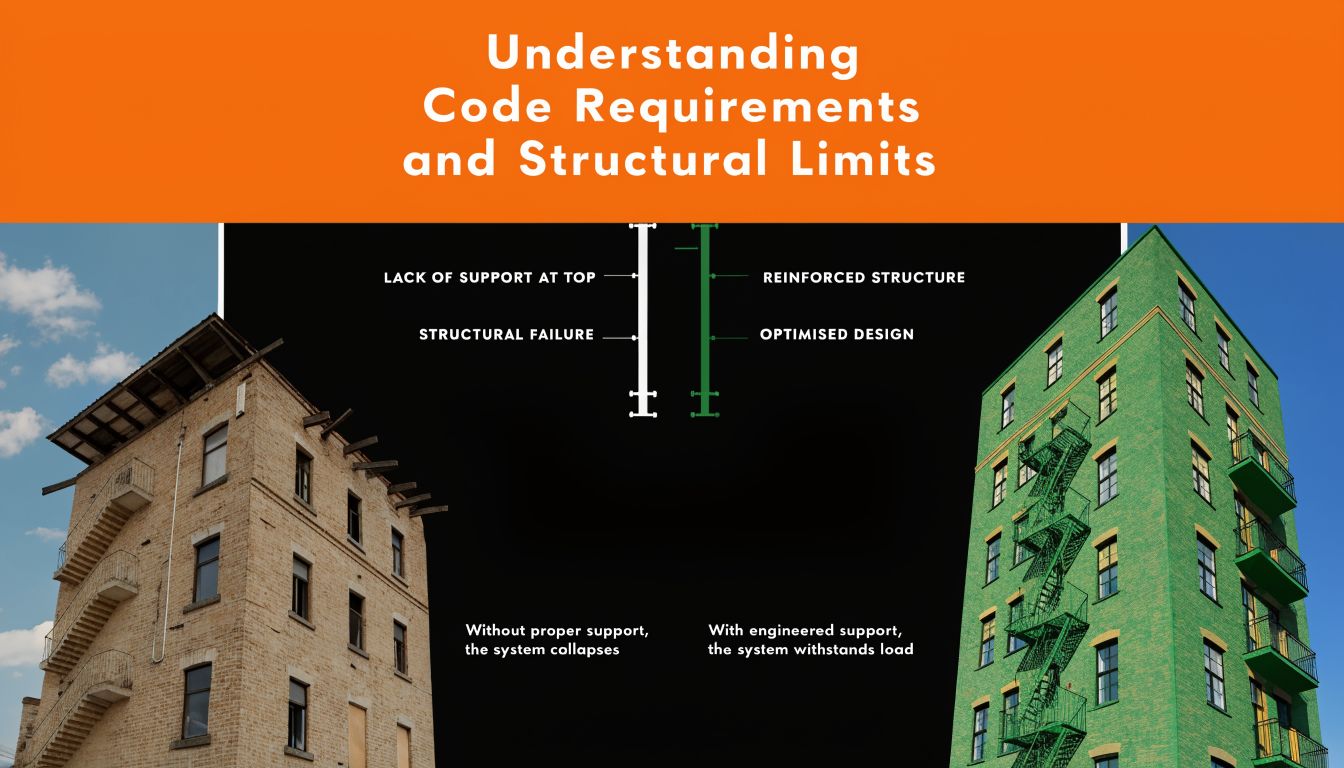
A homeowner gets an overlay quote, sees that it avoids tear-off labor, and assumes the decision is mostly about price. The actual decision starts with code, structure, and liability. If the roof fails any one of those checks, the lower upfront number can turn into denied warranty coverage, insurance disputes after a storm, or a full tear-off much sooner than expected.
The one-layer rule matters
Local code is usually the first hard stop. In much of western Pennsylvania and eastern Ohio, a metal roof can often go over one existing layer of shingles, but a third roof layer is not allowed. The same MBCI overview of metal roofing retrofits over asphalt shingles also explains why metal is even considered for overlays in the first place. It is lighter than another layer of asphalt, which is why some homes can carry it without pushing the structure past reasonable load assumptions.
That does not mean every one-layer roof qualifies.
Code sets the outer limit. The house still has to earn the overlay in the field. I have seen roofs that met the layer-count rule and still should never have been covered because the decking had soft spots around plumbing boots, the rafters had visible sag, or past leaks had already weakened the substrate.
Structural approval is more than weight
Weight is only one part of the review. Attachment matters just as much.
A metal system has to fasten through the existing assembly into material that can still hold properly under wind load. If the old shingles are curled, spongy, or uneven, the new roof may not sit flat, the fasteners may not perform the way the manufacturer expects, and the finished roof can inherit problems from a surface that should have been removed. Homeowners who want a clearer picture of how those fastening details are supposed to work should review this metal roofing installation guide for fastening and substrate prep.
Flashing details deserve the same level of scrutiny. Roof penetrations, sidewalls, chimneys, and skylights are common leak points, and overlays make those transitions less forgiving if the old roof is uneven or built up too high. The Vivid Skylights guide to sealing roofs is a useful reference for understanding why flashing type and placement matter so much once roof layers start stacking.
Problems that usually stop an overlay
These conditions commonly turn a roof-over from possible to unwise:
- Sagging ridges or roof planes, which can point to framing movement or deck fatigue
- Soft decking near valleys, penetrations, and eaves, where leak history tends to show up first
- Uneven shingle surfaces, including curling, heavy cupping, or pronounced ridging telegraphing through
- Evidence of trapped moisture, mold, or long-term staining in the attic
- More than one existing layer, which usually ends the option before pricing should even begin
A contractor who skips those checks is not saving time. They are shifting risk onto the homeowner.
Questions worth asking before you approve the job
Good proposals answer technical and financial risk at the same time.
| Question | Why it matters |
|---|---|
| How many roofing layers are on the house right now? | This decides whether an overlay is even allowed under code. |
| Did you inspect the attic, decking condition, and roof plane for movement or soft spots? | Hidden damage changes whether the roof should be covered or removed. |
| Will this installation method keep the manufacturer warranty valid? | Some systems and attachment methods do not qualify over existing shingles. |
| Have you confirmed my insurer will not object to a roof-over after a future claim? | Some claim disputes start when adjusters find layered assemblies and undocumented pre-existing damage. |
| If damaged decking is found during the job, what is the written change-order process? | You need a defined plan before the roof is opened up. |
The safest overlay is the one that survives inspection, meets fastening requirements, and does not create warranty or insurance problems later. If those answers are vague, the cheaper quote is often the expensive one.
Comparing Metal-Over-Shingle Installation Methods
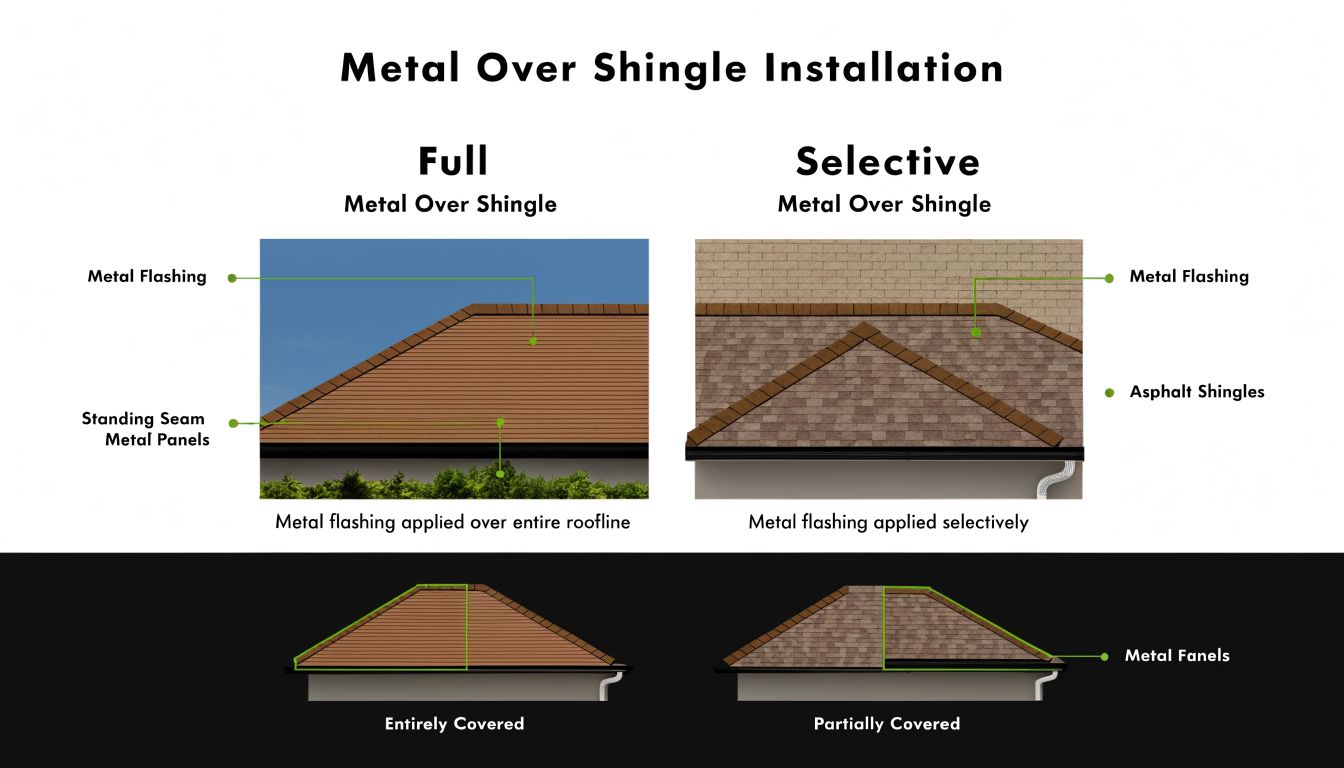
A roof-over can be installed two very different ways, and the choice affects more than appearance. It affects fastening, heat buildup, service access, and whether the assembly creates problems for a future warranty or insurance claim.
Direct attachment with underlayment
The simpler method is direct attachment. The installer lays a synthetic underlayment over the existing shingles and fastens the metal system through that layer into the deck or framing below.
It is faster. It also leaves less margin for error.
This approach only makes sense on a roof with flat shingles, a stable deck, and clean fastening lines. If the old roof has humps, ridges, or soft spots, the metal can mirror those defects. Service work also gets harder later because the assembly has no built-in cavity to help with drying or conceal minor irregularities.
Walker Metals notes that a separator layer helps reduce contact between the back of the metal and the abrasive shingle surface, and that raised batten assemblies can improve ventilation and cooling performance compared with direct attachment over shingles. That is the practical trade-off. Direct attachment saves labor up front, but it does less to manage heat, moisture, and long-term wear.
Batten systems and where they earn their cost
A batten system adds wood battens above the shingles before the metal panels go on. That creates an air space between the old roof and the new one.
In field terms, this method is more forgiving.
That gap helps the roof dry, reduces direct rubbing between shingles and metal, and gives installers a more controlled plane for panel attachment. On homes with minor surface irregularities, battens can produce a straighter finished roof than direct attachment. They also make more sense on projects where the owner plans to keep the house for a long time and wants fewer unknowns buried in the assembly.
The downside is cost and detailing. Battens add labor, layout time, and fastening requirements. They also raise the roof height slightly, which can affect trim, transitions, and penetration flashing. If the crew is casual about those details, the extra money does not buy extra protection.
Homeowners comparing proposals should ask what the battens are fastened into, how spacing is determined, and how the installer handles eaves, rakes, valleys, and sidewalls. A bid that just says "metal over shingles" is not enough. For a closer look at components and sequencing, this metal roofing installation guide is a solid reference before you sign a contract.
Flashing details decide whether the system stays dry
Overlay jobs often fail at the edges and penetrations, not in the middle of the panel field. Skylights, chimneys, plumbing vents, valleys, and wall intersections need method-specific flashing details because the old shingle roof changes the surface height and water path.
That is one reason cheap overlays become expensive claims. If flashing is improvised and water gets in, the homeowner can end up arguing over whether the leak came from new metal work, old roof conditions, or excluded pre-existing damage. A visual reference like the Vivid Skylights guide to sealing roofs helps show why those transition points need careful planning before the first panel is installed.
Which method works best
The right choice depends on roof condition, profile, budget, and risk tolerance.
| Method | Best use | Main limitation |
|---|---|---|
| Direct attachment over separator underlayment | Very flat, uniform shingles over a confirmed sound deck | Less drying potential, less forgiveness, and more dependence on perfect substrate conditions |
| Batten system over shingles | Roofs where service life, ventilation, and straighter panel alignment matter more | Higher cost, more trim and flashing work, and more chances for poor detailing if the crew is inexperienced |
From a project management standpoint, battens usually make the better case when the overlay is justified. Direct attachment can still be acceptable on the right house, but it leaves less room for hidden defects and less protection against the kind of moisture or documentation disputes that show up years later.
Weighing the Pros and Cons of a Roof Overlay
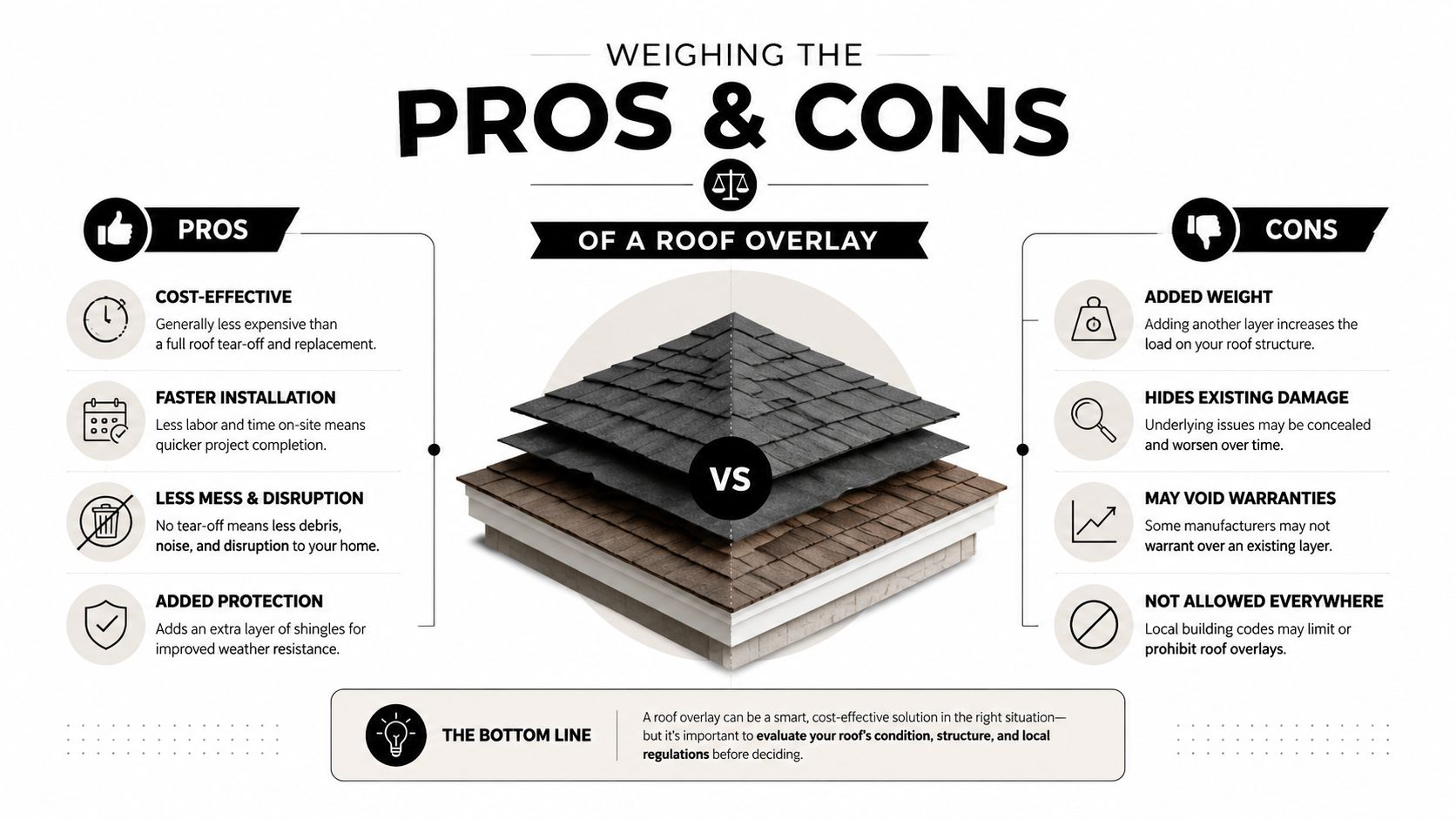
A roof overlay has real benefits. It also has a habit of looking better on paper than it does twenty years later if the prep work was weak.
Where the overlay makes sense
The strongest argument for a metal roof over shingles is efficiency. According to this metal-over-shingles overview, a metal overlay can last 50 to 75 years, compared with 20 to 30 years for asphalt shingles. The same source states that metal roofs can increase resale value by 10 to 15% and that DOE studies confirm they can reduce attic temperatures by 30 to 40°F, cutting A/C use by up to 20%.
Those are meaningful long-term benefits when the roof assembly underneath is sound. Homeowners also like the cleaner jobsite and shorter disruption that come with skipping tear-off.
A roof-over may fit if your priorities look like this:
- You want less disruption while replacing a roof on an occupied home
- Your current shingles are still lying flat and the roof hasn't shown signs of hidden water damage
- You plan to stay in the home long enough to benefit from metal's service life
- You're balancing budget with durability, not just chasing the lowest bid
For homeowners trying to understand how replacement budgets vary by region and scope, this average roof replacement cost in Marietta offers a useful outside-market comparison of what typically drives project pricing.
Where the overlay becomes risky
The downside is less visible on day one. A roof-over hides the deck, hides prior repairs, and hides some moisture problems until they become interior stains or structural repair bills.
Common failure patterns include:
- Concealed rot around pipe boots, chimneys, and valleys
- Uneven panel appearance because old shingle texture prints through the metal
- More difficult leak tracing when there are multiple roof layers
- Complicated future repairs because crews have to work through a layered assembly
Good overlays save teardown labor. Bad overlays postpone expensive carpentry.
Side-by-side trade-offs
| Potential benefit | Real-world trade-off |
|---|---|
| Less mess during installation | Less visibility into deck condition |
| Faster project flow | Problems underneath stay buried |
| Long metal lifespan | Only if the substrate and attachment are right |
| Better energy performance | Reduced if the assembly traps heat or moisture |
| Higher resale appeal | Buyers and inspectors may question undocumented overlays |
The practical decision isn't whether an overlay is cheaper this month. It's whether the current roof is good enough to deserve being covered instead of removed.
Your Pre-Installation Roof Condition Checklist
A metal roof quote can look attractive until the installer finds soft decking, old leak paths, or a second shingle layer that should have been removed years ago. At that point, the low overlay price stops being a real number. It becomes a partial number that excludes the repairs needed to make the roof insurable, warrantable, and safe to fasten into.
What to check before you even ask for a quote
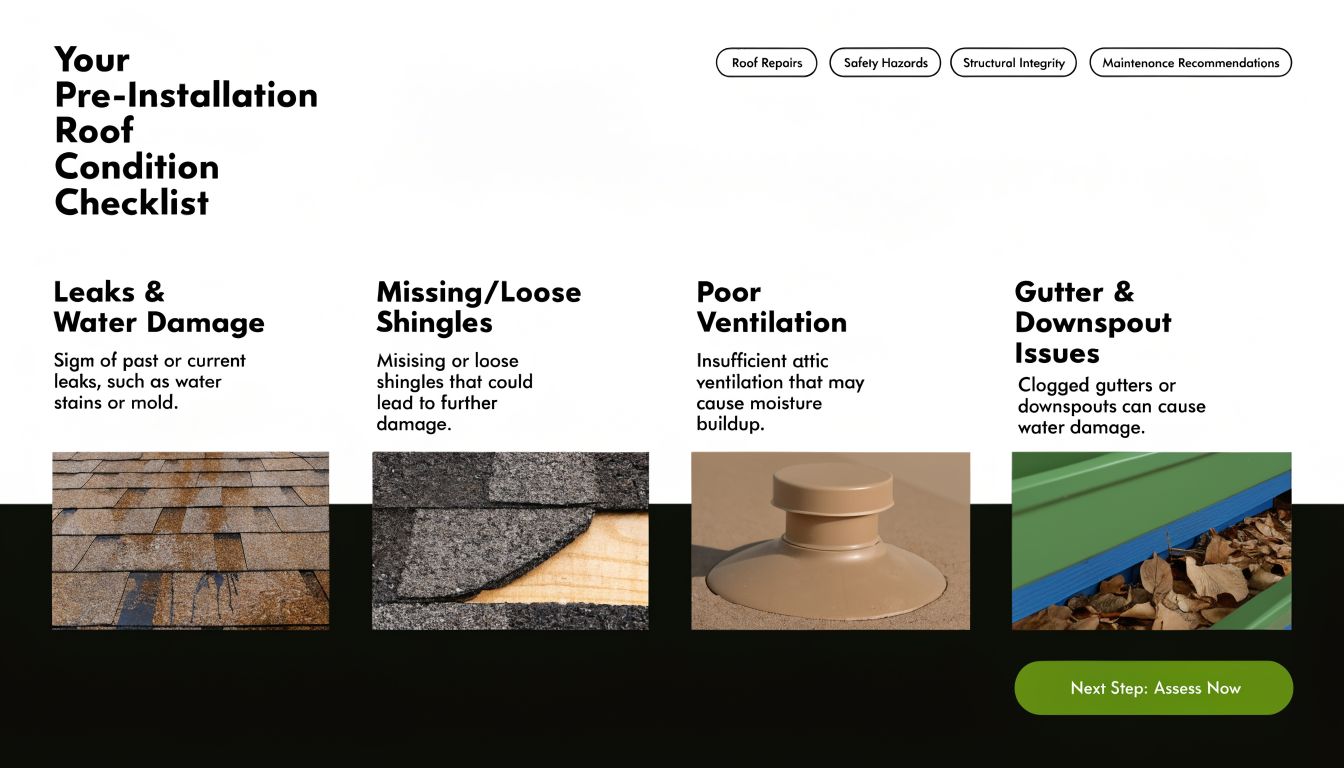
Start with the parts of the roof that change the job scope. Count the existing layers first. If the house already has multiple layers, many jurisdictions and many installers will push the project toward tear-off because the assembly is heavier, harder to inspect, and harder to document for future claims.
Then look at the roof lines. Sagging ridges, dips in the field, and uneven eaves usually point to deck movement or framing issues. Metal does not hide that. It makes it easier to see from the street.
The shingle surface matters too. As noted in this Mid Michigan Metal Sales article on installing metal over an old roof, overlays work only when the shingles are relatively flat and stable. The same source warns that pronounced shingle wear and trapped moisture can telegraph through the finished roof and contribute to plywood delamination underneath. That is a structural concern, not just a cosmetic one.
Use this checklist before you call for pricing:
- Count roof layers. More than one layer usually changes the conversation from overlay to removal.
- Check ridges and roof planes for sagging. A wavy substrate creates a wavy finished roof.
- Look for curled, cupped, or brittle shingles. Uneven shingles reduce panel support and can affect fastening.
- Check gutters and downspouts for heavy granule buildup. That usually signals advanced shingle wear.
- Inspect the attic for stains, mold smell, damp insulation, or daylight. Those signs point to leaks, condensation, or deck failure.
- Review past leak history. A roof with repeat leak repairs deserves extra scrutiny before anyone covers it.
- Ask whether the condition has been documented well enough for a future claim. If storm damage is part of the story, this guide to the roof insurance claim process helps explain what carriers usually want to see.
What usually disqualifies the roof
Some roof conditions end the overlay discussion fast.
| Condition | Why it matters |
|---|---|
| Soft or rotted decking | Fasteners need sound wood to hold the metal system in place |
| Active leaks or recent water entry | Covering wet materials can trap damage and hide the source |
| Major shingle distortion | Panels can mirror humps, dips, and raised edges |
| Multiple existing layers | Weight, code limits, and inspection limits become harder to justify |
| Signs of long-term moisture in the attic | The problem may involve ventilation or deck deterioration, not just the top layer |
One more point matters to homeowners watching the budget. A roof that barely qualifies for an overlay can still be a poor financial decision if the installer cannot verify deck condition well enough to support warranty paperwork or satisfy an insurance adjuster later. Saving tear-off labor now does not help much if hidden substrate problems turn a future repair into an uncovered claim.
If the existing roof has a leak history, visible distortion, or signs of deck damage, price the tear-off option at the same time. That gives you a real decision based on total risk, not just the smaller number on the first estimate.
The Hidden Dangers of Warranty and Insurance Voids
This is the part many homeowners learn too late. The metal panels may be installed correctly, the roof may look excellent from the driveway, and you can still end up with weak warranty coverage.
Many manufacturers won't fully stand behind a metal roof installed over shingles. Some refuse warranty coverage for that installation method altogether. Others narrow the coverage so much that the homeowner assumes they have decades of protection when they really don't.
According to this warning on metal roofing over shingles and warranty limitations, many manufacturers either refuse to warranty metal roofs installed over shingles or void existing warranties because of the installation method. The same source highlights the liability gap this creates when a homeowner believes they have a 40-year warranty but may have limited or no coverage if the roof fails prematurely.
Why warranty language matters more than the sales pitch
A contractor can say a roof system is “warrantied,” but that statement is incomplete unless you know:
- Who issued the warranty
- Whether the manufacturer approved the install method
- What substrate conditions were required
- Whether ventilation and attachment details had to be documented
If a metal manufacturer requires battens, specific underlayment, or direct fastening to approved substrate conditions, an overlay that skips those details can leave the homeowner holding the repair bill.
The best time to read the warranty is before the first panel goes on the roof.
Insurance can get complicated too
Insurance carriers focus on cause, condition, and compliance. If a roof leak or wind event leads to a claim, the adjuster may want to know whether the roof was installed according to code and manufacturer instructions. If the system was laid over failing shingles, undocumented layers, or a compromised deck, that can create friction during the claim process.
That doesn't mean every overlay causes an insurance dispute. It means a poorly documented overlay gives the insurer more room to question what failed and why. If you've never dealt with that process before, this roof insurance claim process guide explains the kind of paperwork and evidence that usually matters.
Questions to ask before signing
Don't settle for “yes, it's covered.” Ask for specifics.
- Will the manufacturer warranty this exact metal product over my existing shingles
- Do battens or a specific underlayment have to be used for warranty validity
- What documentation will I receive after installation
- Will the proposal state what happens if bad decking is found
- Have you confirmed the roof-over method won't conflict with my policy requirements
Up-front savings are real. Uninsured repair costs are real too. That's why warranty review belongs in the estimate stage, not after the contract is signed.
The Final Verdict When to Remove and Your Next Steps
A metal roof over shingles can be a sound solution, but only under narrow conditions. The roof needs one existing layer, a solid deck, flat shingles, code compliance, and an installation method that preserves manufacturer requirements. If any of those are missing, the overlay stops being a smart shortcut.
A tear-off is the right call when the roof has hidden leak history, surface distortion, soft decking, or more than one existing layer. It's also the better path when the homeowner wants full visibility into the roof deck before investing in a long-life metal system. Removing the old roof gives everyone a clean substrate, clearer fastening conditions, and fewer future surprises.
Use this simple decision guide:
| If this is true | Best path |
|---|---|
| One layer, flat shingles, sound deck, code allows overlay | Overlay may be appropriate |
| Two or more roofing layers | Tear-off is required |
| Signs of trapped moisture or rot | Tear-off is the safer choice |
| Warranty terms are unclear | Pause and verify before proceeding |
| You want the lowest long-term risk | Tear-off usually makes more sense |
In practice, most bad outcomes start with one bad assumption. A homeowner assumes the old roof is “probably fine.” A contractor assumes the deck is solid without opening anything up. A manufacturer assumes its instructions were followed. Those assumptions are where expensive roofing disputes begin.
Penn Ohio Roofing & Siding Group can inspect the existing roof, verify layer count, review deck condition, and determine whether a metal overlay is viable under local code and manufacturer requirements for homes in Hermitage and throughout Mercer, Beaver, and Lawrence counties.
If you're trying to decide between a metal roof overlay and a full tear-off, Penn Ohio Roofing & Siding Group can help you make that call based on the roof you have, not a generic rule of thumb. A professional inspection can identify layer count, deck condition, moisture issues, and the warranty implications before you commit to the wrong installation method.