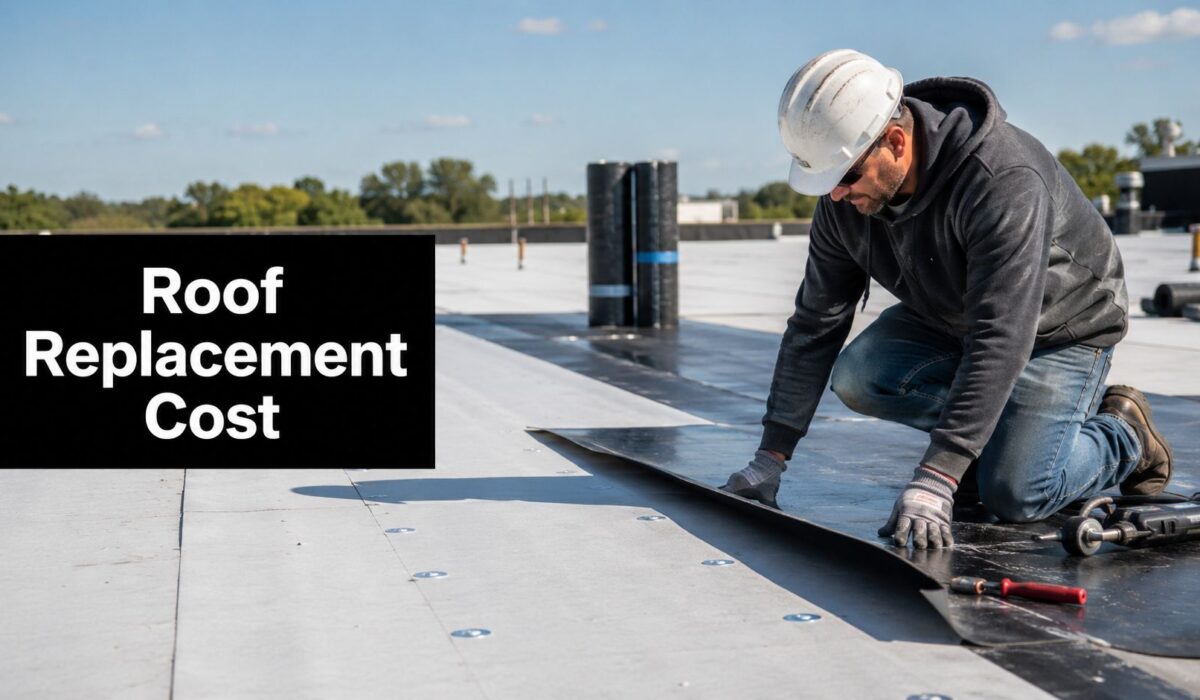
Most commercial roof replacement projects start around $5.50 to $15.00 per square foot installed, with TPO often landing at $6.00 to $10.00, EPDM at $5.50 to $8.50, and standing-seam metal at roughly $10.00 to $15.00+ per square foot. That range is a real starting point for owners in western Pennsylvania and eastern Ohio, but your final number depends on what's on the roof now, what's hiding underneath it, and how hard your building is to work on.
If you're reading this, there's a good chance you've already had the moment every commercial owner dreads. A ceiling stain showed up. A tenant called about a drip. A maintenance manager said the roof has reached the end of its service life. In Sharon, Pittsburgh, Erie, and across the Penn-Ohio region, that usually leads to the same first question: what's this going to cost me, and how do I avoid getting burned?
After a couple decades in roofing, here's the straight answer. Square-foot pricing gives you a budget range. It does not give you a contract price. The difference between a manageable project and an ugly one usually comes down to tear-off, deck condition, penetrations, access, weather timing, and whether the estimate spells out the scope.
Table of Contents
- Understanding Your Commercial Roof Investment
- Typical Commercial Roof Replacement Costs Per Square Foot
- The Major Factors Driving Your Final Project Cost
- How Building and Regional Conditions Impact Price
- Commercial Roofing Cost Examples In Practice
- Budgeting Smartly And Reducing Your Overall Cost
- Your Checklist For An Accurate Contractor Estimate
Understanding Your Commercial Roof Investment
A commercial roof replacement usually starts with a problem that looks small from the ground. One leak. One wet ceiling tile. One complaint from a tenant. Then the inspection happens, and you find out the issue isn't just the membrane. It might be trapped moisture, failed flashing around rooftop equipment, or a roof that's old enough that repairs are buying time instead of solving anything.
That's why owners need to think of this as an asset protection decision, not just a patch job. The roof protects inventory, equipment, tenants, operations, and the structure below it. A cheap decision up top can turn into interior damage, downtime, and repeat contractor visits.
In broad terms, commercial roof replacement cost starts with the installed square-foot range already mentioned. But before you settle on a system, it helps to understand the basic categories of low-slope and steep-slope options used on commercial buildings. If you want a primer on common assemblies, membranes, and metal systems, this overview of commercial roofing systems is a useful starting point.
Why owners in Sharon, Pittsburgh, and Erie need a realistic scope
Buildings in the Penn-Ohio region rarely fit a clean national template. A flat warehouse outside Sharon may be simple and accessible. A mixed-use building near Pittsburgh may have tight staging, multiple penetrations, and limited work hours. A lake-effect weather pattern near Erie can disrupt scheduling and expose weaknesses in older details around drains, edges, and rooftop units.
Practical rule: The first budget number is only useful if the scope matches the building you actually own.
A good estimate accounts for what's on the roof, what's under it, and what local conditions demand. If a contractor gives you a one-line number without explaining substrate condition, tear-off assumptions, flashing scope, and cleanup, you're not looking at a reliable project price. You're looking at a guess.
What a sound decision looks like
Owners make better choices when they compare bids on scope, not just price. That means asking what system is being installed, how the existing roof will be removed, what happens if damaged deck is found, and whether permits and disposal are included.
Those details separate a durable replacement from a low bid that gets expensive halfway through the job.
Typical Commercial Roof Replacement Costs Per Square Foot
A Sharon warehouse owner and a Pittsburgh retail owner can both hear "$8 a foot" and still end up with very different final numbers. Per-square-foot pricing is a starting range, not a purchase order. In the Penn-Ohio market, it helps owners sort options early, then narrow the field once the roof is measured, inspected, and scoped correctly.
One widely cited industry benchmark puts commercial roof replacement in major U.S. markets at about $5.50 to $15.00 per square foot installed, with TPO at $6.00 to $10.00, EPDM at $5.50 to $8.50, and standing-seam metal at roughly $10.00 to $15.00+ per square foot. That same source says a 20,000-square-foot membrane roof can take two to three weeks to complete, which helps frame both cost and disruption for ownership teams (commercial roof cost guide).
What the baseline numbers look like
Use these ranges for budgeting, not for contractor comparison.
| Roofing System | Average Cost per Sq. Ft. | Typical Lifespan |
|---|---|---|
| EPDM | $5.50 to $8.50 | Varies by building, installation quality, maintenance, and exposure |
| TPO | $6.00 to $10.00 | Varies by building, installation quality, maintenance, and exposure |
| Standing-Seam Metal | $10.00 to $15.00+ | Varies by building, installation quality, maintenance, and exposure |
Each system solves a different problem.
TPO is a common fit for owners who want a mainstream single-ply system with predictable installed cost. EPDM can make sense on the right low-slope building where the assembly and attachment method line up with the use of the property. Standing-seam metal costs more up front, but on the right sloped or highly visible building, the longer service life and appearance can justify the premium.
If metal is on your shortlist, review this guide to standing-seam metal roofing pricing before you compare bids.
How to use square-foot pricing without fooling yourself
Square-foot numbers are useful for first-pass budgeting. They break down when owners treat them like guaranteed project pricing.
A small roof with tight access, parapet detail, and a lot of rooftop equipment can cost more per square foot than a larger open roof. In western Pennsylvania and eastern Ohio, that gap shows up often on older commercial buildings where the layout looked simple from the ground but the roof is full of curbs, drains, patched areas, and old flashing repairs.
On commercial work, roof size matters. Roof complexity changes the bill.
Roof pricing is also based on actual roof area, not the building footprint you see on a site plan and not a rough guess from the parking lot. As noted earlier from the same source, even a small commercial office roof can climb in total cost quickly once installed rates are applied to measured roof area.
Owners planning broader capital improvements should also look at roof work alongside energy upgrades. A replacement cycle is often the right time to compare insulation, coating options, and the ROI for commercial solar systems if rooftop solar is part of the long-term plan.
For budgeting in the Penn-Ohio region, use the per-square-foot range to sort projects into three buckets. Light membrane replacement. Full replacement with moderate detail work. Premium or high-complexity assemblies such as metal or roofs with demanding access and staging. The exact number comes from a local site visit with clear assumptions about what stays, what gets removed, and what happens if the deck or insulation is compromised.
The Major Factors Driving Your Final Project Cost
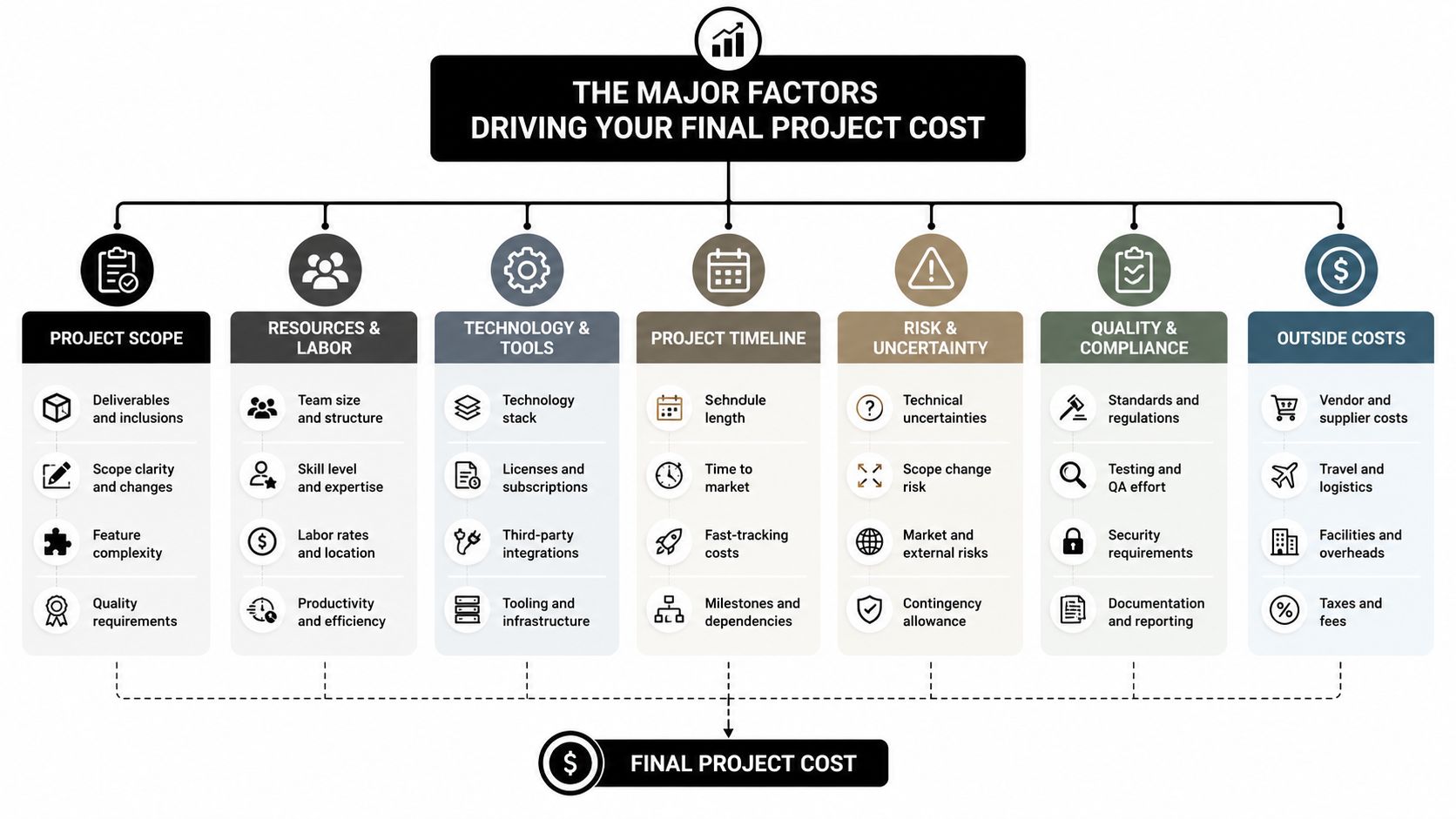
A commercial roof replacement rarely goes over budget because of membrane choice alone. In the Penn-Ohio market, final cost usually shifts on labor hours, tear-off scope, disposal, permit requirements, and what the crew finds after the old roof is opened up.
One published cost breakdown puts the installed price at roughly 40% materials and 60% labor, with tear-off labor and disposal adding $1 to $3 per square foot or more, and permit fees often landing between $500 and $3,000 depending on the municipality and project size (commercial roof replacement cost breakdown).
Why labor changes everything
After 25 years in roofing, I can tell you the same square footage can produce two very different bids if one roof is clean and open and the other is crowded with units, piping, skylights, old patches, and failing edge details.
Labor is where that difference shows up. A straightforward warehouse roof in eastern Ohio is usually faster to stage and replace than an older commercial building in Pittsburgh or Erie with tight access, occupied spaces below, multiple penetrations, and flashing details that have already been repaired three different ways. The material may be similar. The crew time is not.
That is also why low bids deserve a hard review. If a number comes in well under the rest, check whether it includes full tear-off, dumpsters, permit handling, edge metal, sheet metal work, and detail repairs around rooftop equipment.
Where owners usually get hit with added cost
The surprises are usually in the exclusions, not the roof system.
- Tear-off and disposal: Removing an existing roof adds real cost before new installation even starts. On a 10,000-square-foot building, a $1 to $3 per square foot tear-off and disposal range adds $10,000 to $30,000 to the project total.
- Permit and inspection requirements: Local rules vary across western Pennsylvania and eastern Ohio. Some jurisdictions are simple. Others require more review, more documentation, and more waiting time.
- Hidden wet insulation or deck repairs: These are common on older buildings with a long leak history. If the bid assumes a sound substrate and the deck is not sound, the number changes.
- Detail work around equipment and edges: Drains, curbs, parapets, coping, wall flashings, and serviceable rooftop units all slow production and raise labor cost.
Owners planning a broader capital cycle should also look at roof timing against energy upgrades. If solar is part of the long-term plan, compare the replacement scope with the ROI for commercial solar systems before signing off, because it is far cheaper to coordinate penetrations, attachment planning, and roof life now than to reopen finished work later.
In this region, accurate pricing comes from honest job conditions, not a national average pasted into a proposal. A contractor who measures the roof, checks the deck assumptions, reviews access, and spells out exclusions will usually save you money compared with a cheap number that changes after the tear-off starts.
How Building and Regional Conditions Impact Price
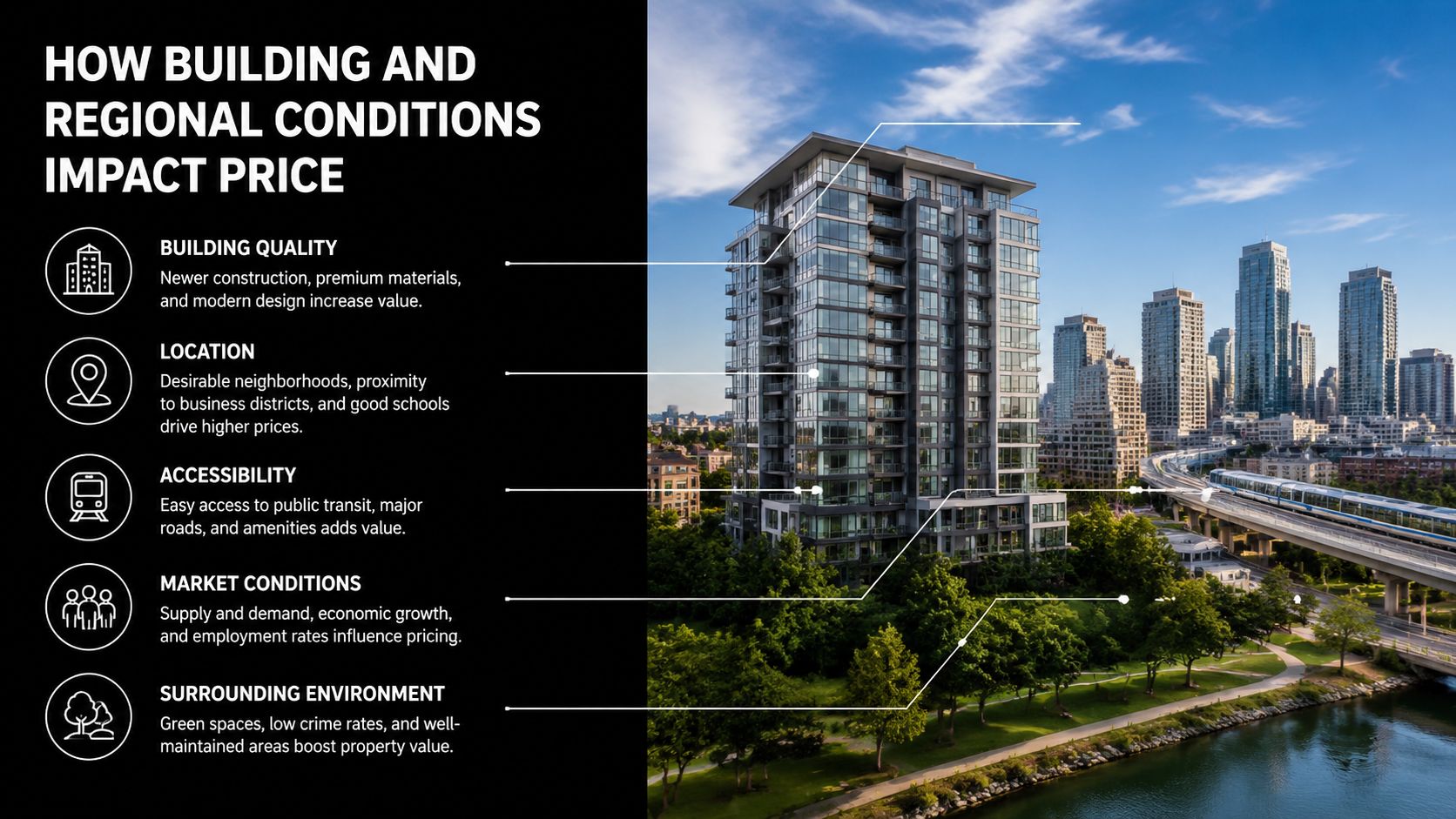
Two roofs can have the same square footage and very different replacement costs. The reason is field conditions. That's what separates spreadsheet pricing from jobsite reality.
Independent guidance for larger commercial buildings says cost is driven less by a simple average and more by tear-off depth, deck repair, access constraints, and code-driven fastening requirements. That same guidance puts a full tear-off at an additional $2 to $3 per square foot, with custom attachments for wind-load adding another $2 to $5 per square foot when conditions require it (commercial roof replacement field condition estimates).
What roofers see that owners often miss
From the ground, many commercial roofs look simple. From the roof, the labor picture changes fast.
A building with multiple HVAC units, gas lines, vents, exhaust fans, and old patched penetrations takes longer to replace cleanly. The crew has to work around every obstruction, maintain dry-in protection, and rebuild details that often caused the leaks in the first place.
Height and access matter just as much. A one-story warehouse with open staging is a different job than a busy urban property with limited material loading, tenant traffic, and restricted dumpster placement. In those cases, the roof system may be straightforward while logistics drive the cost.
The more a crew has to stop, work around something, or protect occupied space below, the less useful a generic square-foot average becomes.
Why Penn-Ohio conditions matter
Local weather and local code expectations influence scope even when the roof type stays the same. In Pittsburgh, dense development and access limitations can complicate staging and disposal. In Erie, exposure and seasonal weather windows can affect scheduling and detailing choices. In Sharon and surrounding smaller markets, access may be easier, but older building stock often introduces deck surprises and previous repair layers.
Owners in this region should pay close attention to these items during estimating:
- Attachment requirements: Wind and substrate conditions can change fastening methods.
- Existing roof layers: Multiple old layers often push a project toward full removal instead of a simpler recover.
- Drainage trouble spots: Low-slope roofs in freeze-thaw territory punish weak drain details and ponding areas.
- Occupied-building logistics: Medical, retail, office, and light industrial buildings all have different noise, odor, and access constraints.
A fair estimate doesn't just price the roof system. It prices the building you have.
Commercial Roofing Cost Examples In Practice
The easiest way to understand commercial roof replacement cost is to look at realistic scenarios. Not exact jobs. Not sales stories. Just practical examples built from verified installed ranges and the field conditions owners deal with every day.
The useful benchmark for flat roof systems is this: installed pricing commonly clusters around EPDM at $4 to $8 per square foot, TPO at $5 to $9, PVC at $6 to $11, and built-up roofing at roughly $5 to $10. Higher-cost systems are typically selected when a roof needs better puncture resistance, chemical resistance, or long-term performance under harsher conditions (commercial flat roof replacement calculator benchmarks).
Example one small retail flat roof
Take a 5,000-square-foot retail building in a suburban market near Hermitage. The roof is low-slope, the access is decent, and the owner wants a practical replacement without stepping into a premium system.
TPO is often a logical fit here because the verified installed range of $5 to $9 per square foot gives a workable budget band for a standard low-slope application. If the roof has a straightforward layout and no unusual exposure issues, that range gives the owner a reasonable planning number before site-specific variables are priced in.
What can push that project upward? A cluttered roof plan, heavy tear-off scope, or damaged substrate. What usually keeps it controlled? Open access, limited penetrations, and a clean existing assembly.
Example two large industrial roof
Now take a 50,000-square-foot warehouse or light industrial building with a more demanding use case. The roof has multiple penetrations and venting conditions that raise concern about chemical exposure. In such instances, owners often look harder at PVC, because the verified installed range of $6 to $11 per square foot reflects a system often chosen when a building needs stronger chemical resistance and long-term durability.
The bigger roof doesn't automatically mean a lower installed number. Large buildings can become detail-heavy fast. Long material runs help production, but penetrations, curb work, staging lanes, and occupied operations can erase those efficiencies.
A large roof only gets cheaper by the foot when the building is simple enough to let the crew move efficiently.
The practical takeaway is that material choice and roof size don't operate on their own. Use, exposure, penetrations, and work conditions shape the actual cost. That's why owners should treat examples like these as planning models, not promises.
Budgeting Smartly And Reducing Your Overall Cost
A new roof is a major capital expense. The smart move isn't chasing the cheapest number. It's controlling the total life-cycle cost without inviting early failure.
That starts with knowing the difference between a cost reduction and a bad shortcut. Reducing disruption through better planning is smart. Skipping tear-off where moisture is trapped is not. Choosing a system that fits the building is smart. Buying a lower-grade scope that leaves major details vague is not.
Where to spend and where not to cut
Some upgrades protect the investment. Others only make a bid look smaller on paper.
- Spend on defined scope: If the estimate clearly identifies material specs, flashing work, edge conditions, and cleanup, you're less likely to pay for avoidable change orders later.
- Spend on workmanship: Commercial roofs fail at seams, penetrations, transitions, and terminations. That's labor quality, not brochure language.
- Don't cut insurance and documentation: An uninsured or poorly documented contractor can turn a lower bid into a legal and financial problem.
- Don't ignore maintenance planning: A roof replacement isn't the end of the cost conversation. It's the start of preserving a new asset.
For ongoing protection, a structured commercial roof maintenance plan helps owners catch minor issues before they become expensive callbacks or interior damage.
A smarter budgeting approach
Good budgeting starts with a realistic base scope, then adds room for unknowns that often appear once the old roof comes off. Owners should also talk with their accountant, insurance carrier, and facilities team before the project starts, especially if storm damage, tenant obligations, or timing with other upgrades may affect the decision.
A sound financial approach usually includes:
- Separating urgent needs from optional upgrades. Get the watertight scope right first.
- Reviewing insurance applicability. Some replacement costs may interact with a claim, depending on cause and policy terms.
- Planning around operations. If your roof sits over sensitive inventory, electronics, or occupied tenant space, scheduling matters as much as the installed system.
One bad habit I've seen for years is owners trying to “save” money by accepting an estimate that looks clean only because it leaves out the messy parts. That never stays cheap for long.
Your Checklist For An Accurate Contractor Estimate
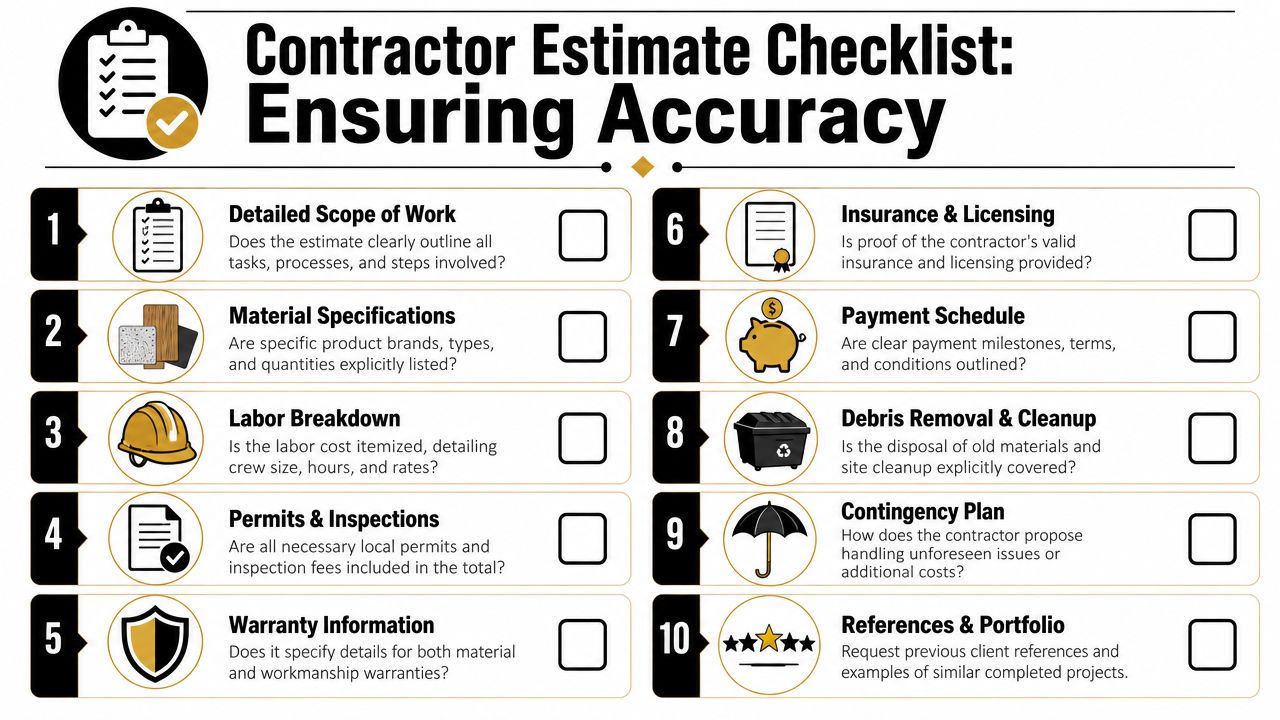
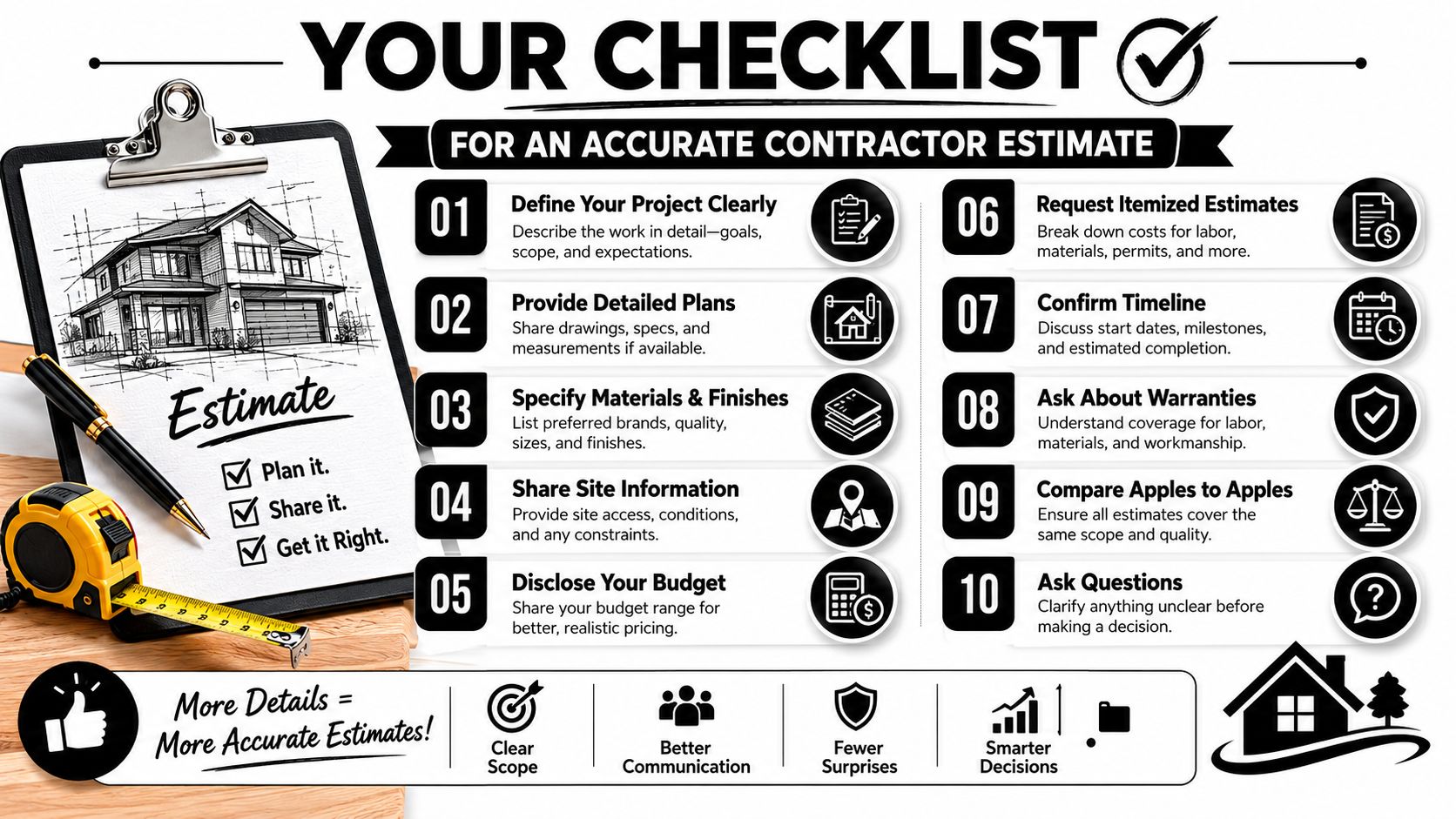
The best protection against a bad roofing decision is a bid that's specific enough to compare line by line. If two estimates use different assumptions, they're not really competing prices. They're different jobs.
A contractor should be able to explain what's being removed, what's being installed, how details are handled, what happens if damaged deck is uncovered, and who is responsible for permits, disposal, and final cleanup.
What your bid should include
Use this checklist before you compare numbers.
- Detailed scope of work: The proposal should state tear-off assumptions, deck review, insulation scope, flashing work, edge details, and cleanup responsibilities.
- Material specifications: The bid should identify the exact system type, not just “new roof.”
- Permit handling: Someone needs to own permits, inspections, and any municipal paperwork.
- Waste removal: Debris disposal should be written into the job, not implied.
- Warranty terms: Material and workmanship coverage should both be clear.
- Insurance proof: Ask for current documentation, not verbal reassurance.
If you want to understand how serious contractors think about coverage and risk, resources on how to secure your contracting business can help you see why insurance documentation matters so much before any crew steps on your property.
Questions that protect you before signing
Ask these directly.
Owner's check: “What exactly is excluded from this estimate?”
That one question exposes more than one might expect.
Then keep going:
- If deck damage is found, how is it documented and priced?
- Who photographs progress and problem areas?
- How will tenant access, noise, and debris control be managed?
- What's the daily dry-in plan if weather changes?
- Who is the site contact when an issue comes up mid-project?
A reliable estimate should also tell you how the contractor plans to protect the building during removal and installation. Commercial roofing isn't just about installing a finished system. It's about managing risk every day the roof is open.
One more point matters in the Penn-Ohio market. Local experience isn't just a talking point. Buildings in Mercer, Beaver, and Lawrence counties, along with properties tied to Pittsburgh and Erie markets, often come with older assemblies, previous repairs, and weather exposure patterns that don't show up in generic estimating templates. Contractors who know the region tend to ask better questions earlier.
If a bid is vague, push back. If a contractor gets annoyed by detailed questions, that tells you something too.
If you want a quote that reflects real field conditions in western Pennsylvania and eastern Ohio, contact Penn Ohio Roofing & Siding Group. Their team serves commercial property owners across the region and can help you evaluate scope, compare system options, and get a clearer estimate before you commit.